Key takeaways
- A 2026 content audit needs two tracks: traditional SEO health (titles, headings, indexing, schema) and AI citation readiness (is ChatGPT actually pulling from your pages?).
- Pages ranking in positions 10-30 on Google are your fastest wins -- they're already indexed and trusted, just not quite visible enough.
- AI models like ChatGPT don't cite pages randomly. They cite pages that directly answer specific questions with clear, structured, authoritative content.
- The audit process is: crawl and inventory, score each page, identify AI citation gaps, prioritize fixes, then create or update content.
- Tools like Promptwatch can show you exactly which prompts your competitors are being cited for that you're not -- which is the most actionable output any audit can produce.
Most content audits stop at "this page has thin content" or "this URL has a duplicate title tag." That was fine in 2023. In 2026, it's not enough.
Your site now has two audiences: Google's crawler and ChatGPT's citation engine. They overlap, but they're not the same thing. A page can rank on page two of Google and never appear in a single AI response. A page can get zero organic traffic and still be cited by Perplexity dozens of times a week. If your audit doesn't account for both, you're leaving a lot on the table.
This guide walks through a complete ChatGPT-era content audit -- from crawling your site to identifying which pages have real AI ranking potential and what to do when they don't.
Why the old content audit framework isn't enough anymore
Traditional content audits focus on a few things: indexing issues, duplicate content, thin pages, cannibalization, and organic traffic trends. All of that still matters. But AI search has added a new dimension.
When someone asks ChatGPT "what's the best project management tool for remote teams," it doesn't rank URLs. It synthesizes an answer from sources it trusts. Whether your site gets cited in that answer depends on whether your content directly, clearly, and authoritatively answers that question. Not whether you have a keyword in your H1.
The gap between "ranking on Google" and "being cited by AI" is real. And it's growing. So a proper 2026 audit needs to check both.
Step 1: Build your URL inventory
Before you can audit anything, you need a complete list of what's on your site. This sounds obvious, but most sites have pages that are indexed but forgotten -- old blog posts, landing pages from campaigns two years ago, product pages for discontinued offerings.
Use a crawler to pull every URL. Screaming Frog is the standard choice for this.
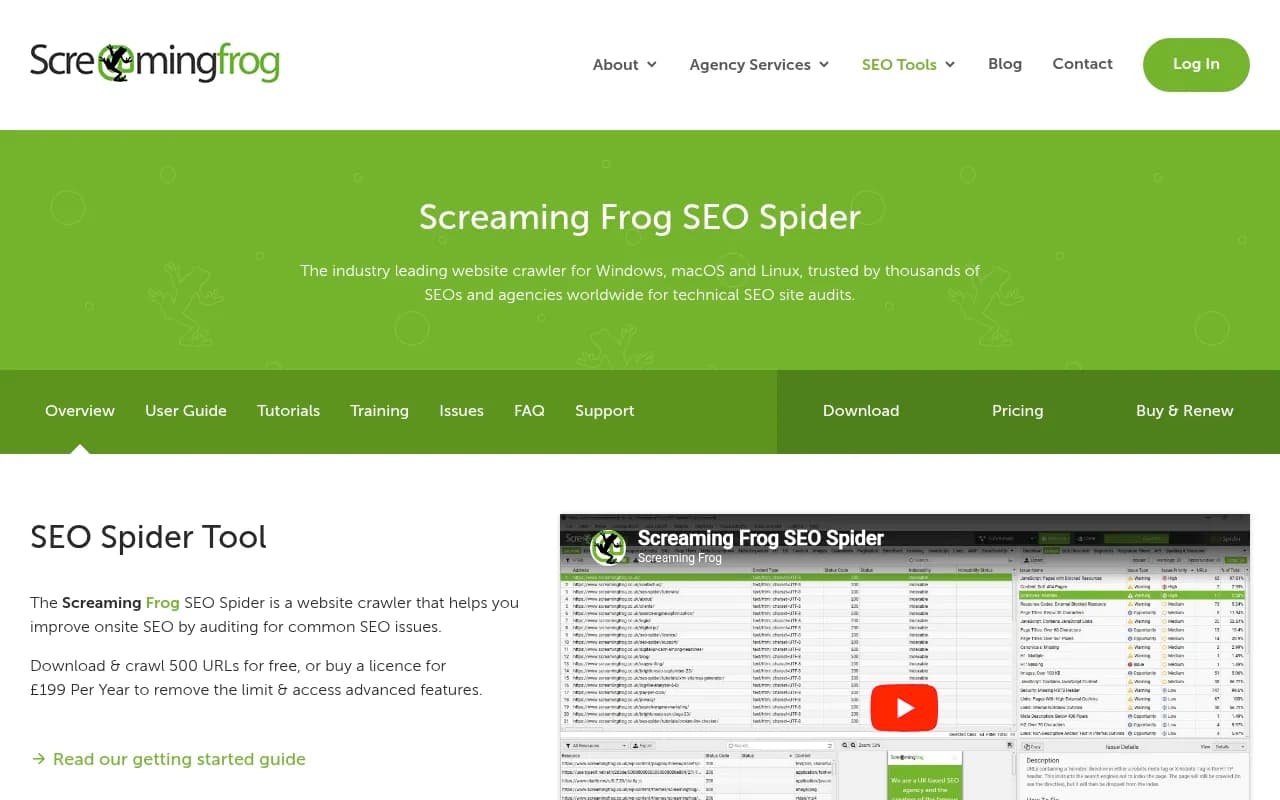
Export everything: URL, title tag, meta description, H1, word count, canonical tag, index/noindex status, and response code. Drop it into a spreadsheet. This is your master inventory.
At this stage, you're not making decisions yet. You're just getting a complete picture. Flag anything that's:
- Returning a 4xx or 5xx error
- Marked noindex but probably shouldn't be
- Missing a title tag or H1
- Under 300 words (potential thin content)
- Duplicating another page's title or meta description
These are your quick technical fixes. Handle them first -- they're low-effort and they matter for both Google and AI crawlers.
Step 2: Layer in performance data
A URL inventory tells you what exists. Performance data tells you what's actually working.
Connect Google Search Console to your spreadsheet. For each URL, pull:
- Average position (last 90 days)
- Impressions
- Clicks
- Click-through rate
Now you can segment your pages into buckets:
| Bucket | Criteria | What it means |
|---|---|---|
| Strong performers | Position 1-5, decent CTR | Protect and maintain |
| Near-miss pages | Position 6-20, decent impressions | Highest ROI for updates |
| Buried pages | Position 21-50, some impressions | Need significant work |
| Invisible pages | No impressions at all | Either irrelevant or not indexed |
| Dead weight | High position but zero impressions | Wrong keywords or bad targeting |
The near-miss bucket (positions 6-20) is where most sites find their fastest wins. These pages are already trusted by Google -- they just need a push. Updating them with better structure, more depth, and clearer answers often moves them into the top five within weeks.
Pages in positions 10-30 specifically are worth prioritizing. They're close enough to the first page that a targeted update can have a real impact.
Step 3: Audit for AI citation readiness
This is the part most content audits skip entirely. And it's the most important part in 2026.
AI citation readiness asks a different question than traditional SEO: not "does this page rank for a keyword?" but "would an AI model cite this page when answering a relevant question?"
To answer that, you need to understand how AI models choose sources. They tend to cite pages that:
- Directly answer a specific question (not just mention the topic)
- Have clear structure (headers that match how people phrase questions)
- Demonstrate some form of authority (links, brand mentions, structured data)
- Are written in a way that's easy to extract and quote
- Cover a topic completely enough that the AI doesn't need to go elsewhere
Go through your near-miss and buried pages and ask: if someone asked ChatGPT the question this page is trying to answer, would this page give a better answer than what's currently out there?
If the answer is no, that's your content gap.
Step 4: Find your AI visibility gaps
Manually checking a handful of pages is fine. But at scale, you need data on which prompts your competitors are being cited for that you're not.
This is where tools designed specifically for AI visibility become useful. Promptwatch's Answer Gap Analysis does exactly this -- it shows you the specific prompts where competitors appear in AI responses and you don't, so you know exactly what content to create or update.

The output is concrete: not "you should write more about topic X" but "ChatGPT is citing your competitor for the prompt 'how to reduce churn in SaaS' and you have no page that answers that question." That's actionable in a way that generic content gap analysis isn't.
Other tools worth knowing about for this step:
Semrush's content audit template (their blog has a free one) is useful for the traditional SEO side of this process. Otterly.AI handles basic AI mention tracking. For the full picture -- gaps, volumes, competitor heatmaps, and content generation -- Promptwatch goes further.
Step 5: Score each page and prioritize
By now you have a lot of data. The goal of this step is to turn it into a prioritized action list.
Build a scoring system. Something simple works fine:
| Signal | Points |
|---|---|
| Position 10-30 in Google | +3 |
| Has impressions but low CTR | +2 |
| Topic is asked in AI searches (has prompt volume) | +3 |
| Competitor is being cited for this topic | +3 |
| Page is thin (under 600 words) | +2 (opportunity) |
| Page has no schema markup | +1 |
| Page has no internal links pointing to it | +1 |
Pages with the highest scores get updated first. This keeps the work focused on pages where improvement is most likely to produce results -- in both Google rankings and AI citations.
Step 6: Audit your content structure for AI readability
Even pages with good traffic can be invisible to AI models if they're structured poorly. AI engines extract answers from content. If your content is written as flowing prose with no clear question-answer structure, it's harder to cite.
Go through your priority pages and check:
Headers: Do your H2s and H3s read like questions or direct answers? "What is X" and "How to do Y" headers are more citable than vague ones like "Overview" or "More information."
Answer density: Does the page answer the core question within the first 200 words? AI models often pull from early in the document.
Lists and tables: Structured information (bullet lists, comparison tables, step-by-step numbered lists) is much easier for AI to extract and cite than dense paragraphs.
Specificity: Vague claims ("this is a great tool") don't get cited. Specific claims ("reduces setup time by 40%") do.
Schema markup: FAQ schema, HowTo schema, and Article schema all help AI models understand what your content is about. If your pages lack schema, add it.
For on-page optimization, tools like Surfer SEO and Clearscope help you understand what topics and entities your content needs to cover to be competitive.

Step 7: Identify content to create, update, or remove
After scoring and structuring, you'll have three categories of pages:
Update: Pages with real potential (near-miss positions, relevant prompt topics) that just need better structure, more depth, or clearer answers. These are your highest-ROI tasks.
Create: Topics where you have no page at all but competitors are being cited by AI. These are your gaps. Prioritize them by prompt volume and competitive difficulty.
Remove or consolidate: Pages with no impressions, no citations, no internal links, and no clear purpose. These dilute your site's authority. Either redirect them to a relevant page or remove them.
A quick note on removal: don't be too aggressive. A page with zero traffic might still be cited by AI models. Check AI visibility data before you delete anything.
Step 8: Track the results
An audit without tracking is just a to-do list. You need to know whether your updates are actually moving the needle -- in Google rankings and in AI citations.
Set up tracking before you start making changes. That way you have a baseline to compare against.
For Google rankings, Google Search Console gives you the data you need, though it's slow to update. A dedicated rank tracker gives you faster feedback.
For AI visibility, you need a tool that actually monitors how often your pages are cited in AI responses. Promptwatch tracks this at the page level -- which pages are being cited, by which AI models, and how that changes over time after you publish or update content.
The timeline from "published update" to "AI model starts citing it" is usually 2-6 weeks, depending on how quickly AI crawlers revisit your pages. Promptwatch's crawler logs show you when AI agents like ChatGPT and Perplexity visit your pages, so you're not just waiting and guessing.
A practical audit checklist
Here's a condensed version you can run through for each priority page:
Technical health
- Returns 200 status code
- Indexed (not blocked by noindex or robots.txt)
- Has unique, descriptive title tag (50-60 characters)
- Has meta description (120-155 characters)
- Has one clear H1
- Mobile-friendly
- Page speed under 3 seconds
Content quality
- Answers the core question directly and early
- Word count appropriate for topic depth (not padded, not thin)
- Uses headers that match how people phrase questions
- Includes specific, citable claims (not just vague assertions)
- Has at least one table, list, or structured element
- Updated within the last 12 months (or evergreen and clearly marked)
AI readiness
- Topic has measurable prompt volume in AI search
- No competitor is dominating citations for this topic
- Schema markup present (FAQ, HowTo, or Article as appropriate)
- Internal links from relevant pages pointing to this one
- External sites or publications mention this page or topic
Tools that help at each stage
| Stage | Tool | What it does |
|---|---|---|
| URL crawl | Screaming Frog | Pulls every URL with technical metadata |
| Performance data | Google Search Console | Impressions, clicks, position by URL |
| AI visibility gaps | Promptwatch | Shows which prompts competitors rank for that you don't |
| On-page optimization | Surfer SEO / Clearscope | Topic coverage and NLP optimization |
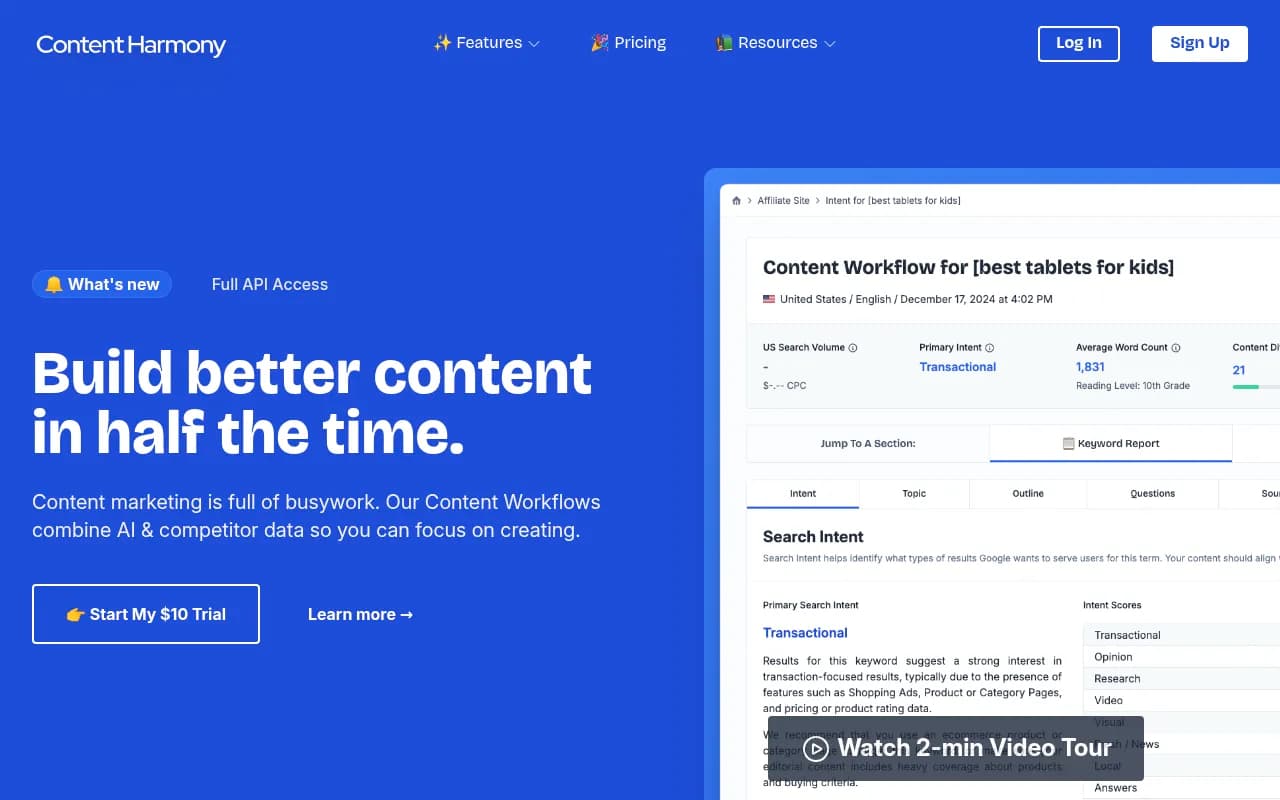
| Content briefs | Content Harmony | Research-backed briefs for new content |
| Rank tracking | SE Ranking | Tracks both traditional and AI search visibility |
The honest reality of AI ranking in 2026
There's no magic formula that guarantees ChatGPT will cite your pages. AI models are probabilistic. They update their training data on different schedules. They weight sources differently depending on the query.
What you can control is whether your content is the best available answer to a specific question. That means being specific, being structured, being authoritative, and being comprehensive. Pages that do all four get cited. Pages that do none of them don't.
The audit process described here is how you find out which of your pages are in which camp -- and what to do about it. Run it quarterly. The AI search landscape shifts fast enough that a page that was well-positioned six months ago might have been overtaken by a competitor who published something better.
The sites winning in AI search right now aren't the ones with the biggest content libraries. They're the ones that know exactly which questions they need to answer and have built pages that answer them better than anyone else.