Key takeaways
- AI search now accounts for more than 40% of searches, but most affordable tracking tools only show you data -- they don't help you act on it
- Solo marketers can build a working AI visibility setup for under $100-250/month by being selective about which tools they actually need
- The most important thing to track first: which prompts your competitors appear in that you don't
- Content gaps are the root cause of most AI invisibility -- fixing them is more valuable than obsessing over dashboards
- A few well-chosen tools beat a stack of five half-used ones; this guide helps you pick the right ones for your situation
If you're a solo marketer, you've probably noticed that the AI visibility conversation tends to assume you have a team, a budget, and maybe a dedicated analyst. The case studies are from Booking.com. The pricing pages show "contact sales" for anything interesting. The agency comparison posts are written for agencies.
This guide is not that. It's for people running marketing mostly alone -- maybe at a small company, maybe freelancing, maybe doing everything yourself -- who want to know where they actually stand in AI search without spending $2,000 a month to find out.
The good news: you can build a genuinely useful AI visibility setup for a fraction of agency pricing. The bad news: most of the cheap tools stop at showing you a number. You'll need to think carefully about which tools close the loop from "here's your score" to "here's what to do about it."
Let's get into it.
Why AI visibility matters more than most solo marketers realize
Here's the thing about AI search: it's not a future trend you can monitor from a distance. ChatGPT, Perplexity, Google AI Overviews, and Gemini are already answering questions your potential customers are asking right now. If your brand isn't cited in those answers, you're invisible to a growing chunk of your audience -- and traditional SEO metrics won't tell you.
A Google ranking tells you where you appear when someone searches. It says nothing about whether ChatGPT recommends you when someone asks "what's the best [your category] for [your use case]." Those are different questions with different answers, and the gap between them is where AI visibility lives.
For solo marketers, the stakes are actually higher than for big teams. You don't have a PR department seeding your brand across the web. You don't have a content team publishing 30 articles a month. Every piece of content you create has to work harder. Knowing which prompts matter -- and which ones you're missing -- lets you focus your limited time on the things that will actually move the needle.
The three things your setup actually needs to do
Before picking any tools, it helps to be clear about what you're trying to accomplish. Most AI visibility tools do one or more of these three things:
- Monitor: Track how often and where your brand appears in AI-generated responses across different models
- Diagnose: Show you what's missing -- which prompts your competitors appear in that you don't, which topics AI models can't find on your site
- Fix: Help you create or optimize content to close those gaps
Most affordable tools only do the first one. Some do the first two. Very few do all three. For a solo marketer, you want to get as close to all three as your budget allows -- because monitoring without action is just an expensive anxiety machine.
Step 1: Pick your primary tracking tool
This is the core of your setup. You need something that tracks your brand mentions across at least the major AI models (ChatGPT, Perplexity, Google AI Overviews, Gemini) and gives you enough data to understand trends over time.
Here's a practical breakdown of options at different price points:
| Tool | Starting price | Models covered | Content help | Best for |
|---|---|---|---|---|
| Promptwatch | $99/mo | 10+ models | Yes (Content Agents) | Solo marketers who want to track AND fix |
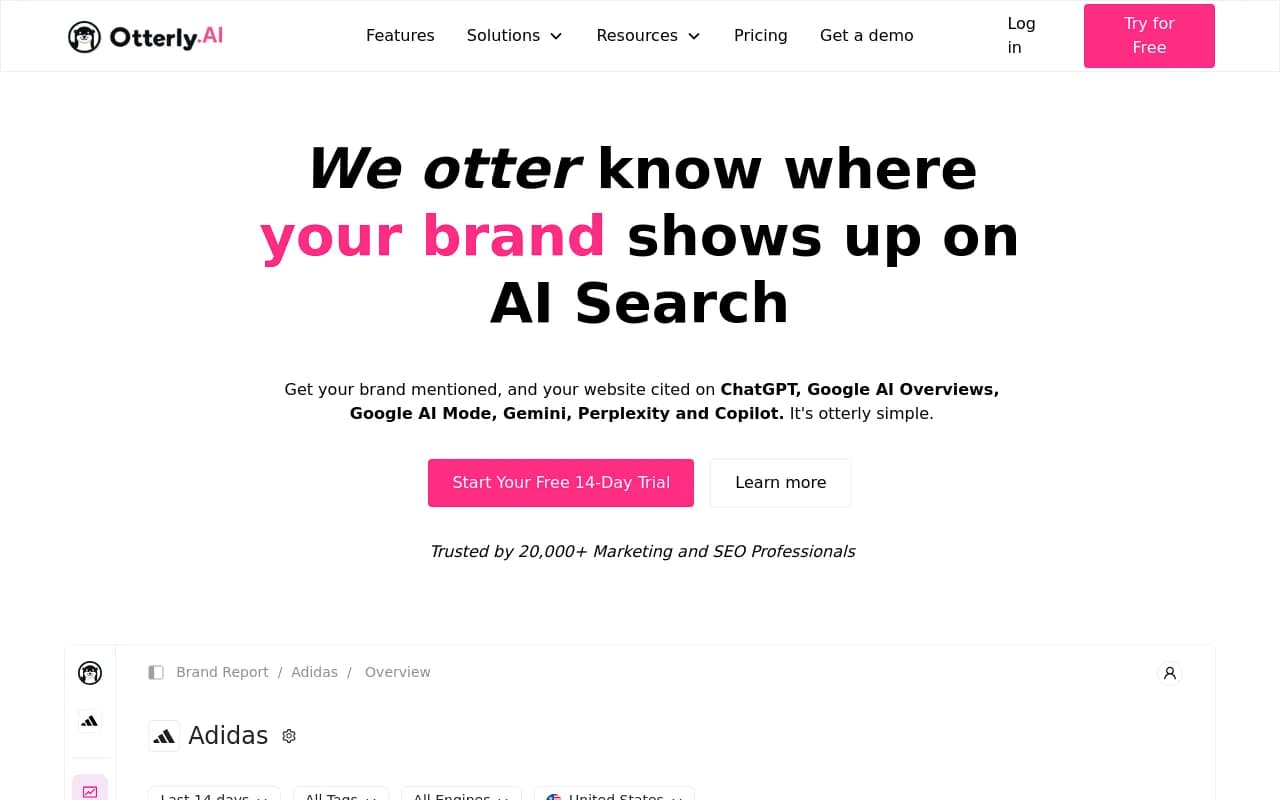
| Otterly.AI | ~$49/mo | 4-5 models | No | Budget monitoring only |
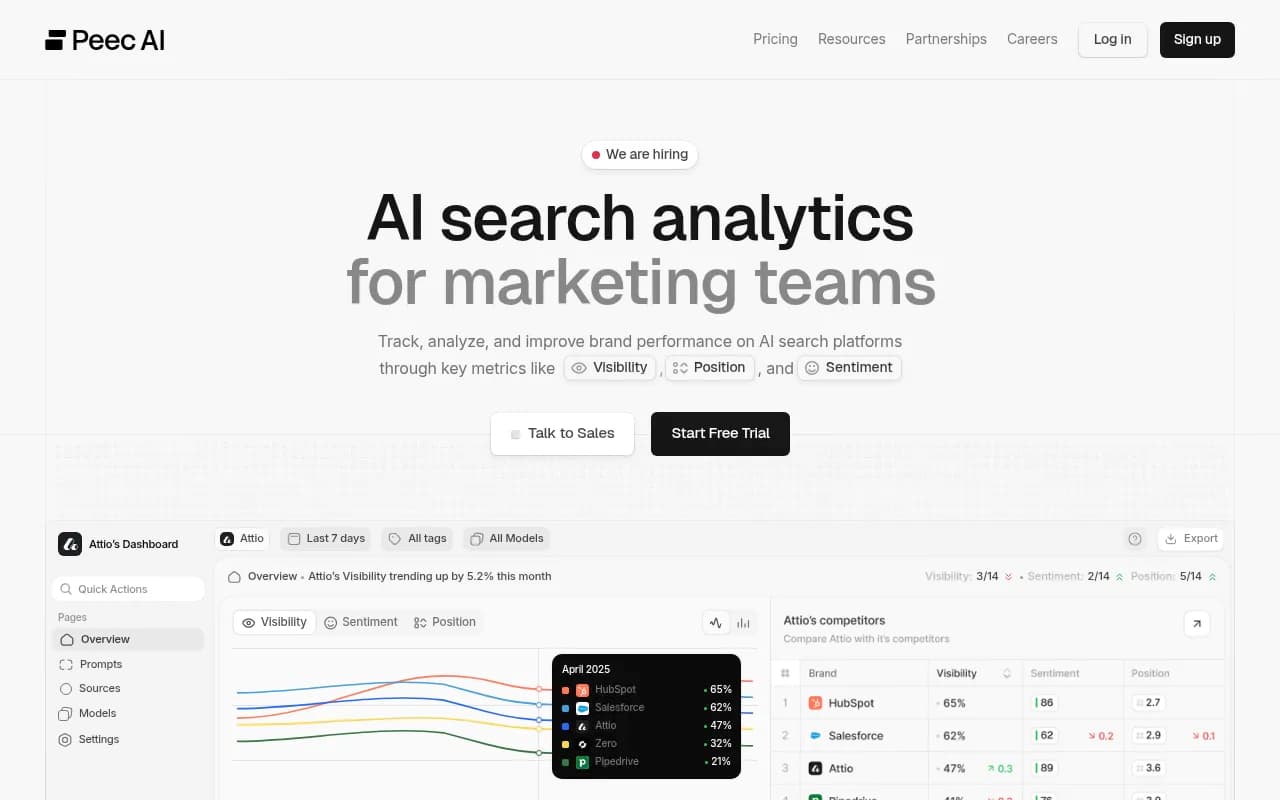
| Peec AI | ~$49/mo | 4-5 models | No | Basic brand tracking |
| Mentions.so | Freemium | 3-4 models | No | Very early stage / testing |
| SE Visible | Varies | 5+ models | Limited | SEO teams already using SE Ranking |
| Nightwatch | Varies | 3-4 models | No | Rank tracking + basic AI monitoring |
| LLMrefs | Freemium | 3-4 models | No | Lightweight citation tracking |
For most solo marketers, the honest recommendation is Promptwatch at the Essential tier ($99/month). It's the only tool in this price range that tracks 10+ AI models AND helps you do something about what you find. The Content Agents feature generates articles and briefs grounded in real prompt data -- not generic SEO filler. That matters when you're working alone and can't afford to write content that doesn't perform.

If $99/month is genuinely too much right now, start with Otterly.AI or Peec AI for basic monitoring while you build the case internally. But be honest with yourself: monitoring alone won't improve your visibility. It'll just tell you how invisible you are.
Step 2: Set up your prompt tracking correctly
This is where most people go wrong. They set up a tool, enter their brand name, and call it done. That's not a strategy -- that's vanity monitoring.
The prompts that matter are the ones your customers actually ask. Not "what is [your brand name]" but "what's the best [tool/service/product] for [specific use case]." Those are the queries where AI models are actively recommending brands, and where you either show up or you don't.
How to build your initial prompt list
Start with 10-20 prompts that represent real buying intent in your category. Think about:
- The questions your customers ask before they buy
- The comparisons they make ("X vs Y", "best X for Y")
- The problems they're trying to solve, not the solutions they're searching for
If you're using Promptwatch, the Answer Gap Analysis does a lot of this work for you -- it shows which prompts competitors are visible for that you're not. That's a faster starting point than guessing.
For other tools, you'll need to build this list manually. Spend an hour in ChatGPT and Perplexity asking questions as if you were your own customer. Screenshot the answers. Note who gets cited and who doesn't. That's your baseline.
Prompt volume and difficulty
Not all prompts are equal. Some get asked thousands of times a day; others are niche. Some are dominated by one or two well-established brands; others are genuinely winnable. Promptwatch shows volume estimates and difficulty scores for each prompt, which helps you prioritize. Most other tools in this price range don't -- you're flying somewhat blind on which battles are worth fighting.
Step 3: Understand why you're not showing up
Getting a visibility score is step one. Understanding why it's low is step two. These are very different things, and most tools only give you the first.
The main reasons brands don't appear in AI responses:
- Missing content: AI models can't cite what doesn't exist. If you haven't written about a topic, you won't appear for it.
- Thin content: You've covered a topic but not deeply enough. AI models tend to cite sources that give comprehensive, specific answers.
- Wrong format: Some content formats get cited more than others. Listicles, comparisons, and direct Q&A formats tend to perform well in AI responses.
- No external citations: AI models don't just read your website. They read Reddit, YouTube, third-party review sites, and industry publications. If you're not mentioned there, your site alone may not be enough.
The diagnostic step is where most solo marketers stall. It requires comparing your content against what AI models are actually citing, which is tedious to do manually. Tools like Promptwatch automate this with content gap analysis -- mapping your existing pages against AI responses and showing exactly what's missing.
If you're doing this manually, the process looks like:
- Run your target prompts in ChatGPT, Perplexity, and Google AI Overviews
- Note which sources get cited
- Compare those sources against your own content
- Identify the topics, angles, and question formats that appear in citations but not on your site
It's not glamorous, but it works.
Step 4: Create content that actually gets cited
This is the part most tracking tools skip entirely. They'll tell you you're invisible; they won't help you become visible.
For solo marketers, content creation is the biggest bottleneck. You don't have time to write 20 articles based on a gap analysis. You need to be surgical: identify the two or three highest-value gaps and create genuinely useful content for those first.
What AI-cited content tends to look like:
- Specific, not generic. "How to reduce churn for B2B SaaS companies with under 50 employees" beats "how to reduce churn."
- Comprehensive on the specific question. You don't need to cover everything -- you need to cover one thing really well.
- Structured for easy extraction. Headers, bullet points, and clear answers to specific questions make it easier for AI models to pull relevant passages.
- Backed by data or original perspective. AI models cite sources that say something, not sources that summarize what others have said.
If you're using Promptwatch's Content Agents, this process is significantly faster -- the agents generate briefs and drafts grounded in real prompt data, competitor analysis, and citation patterns. For solo marketers, that's the difference between spending a day on one article and spending an hour.
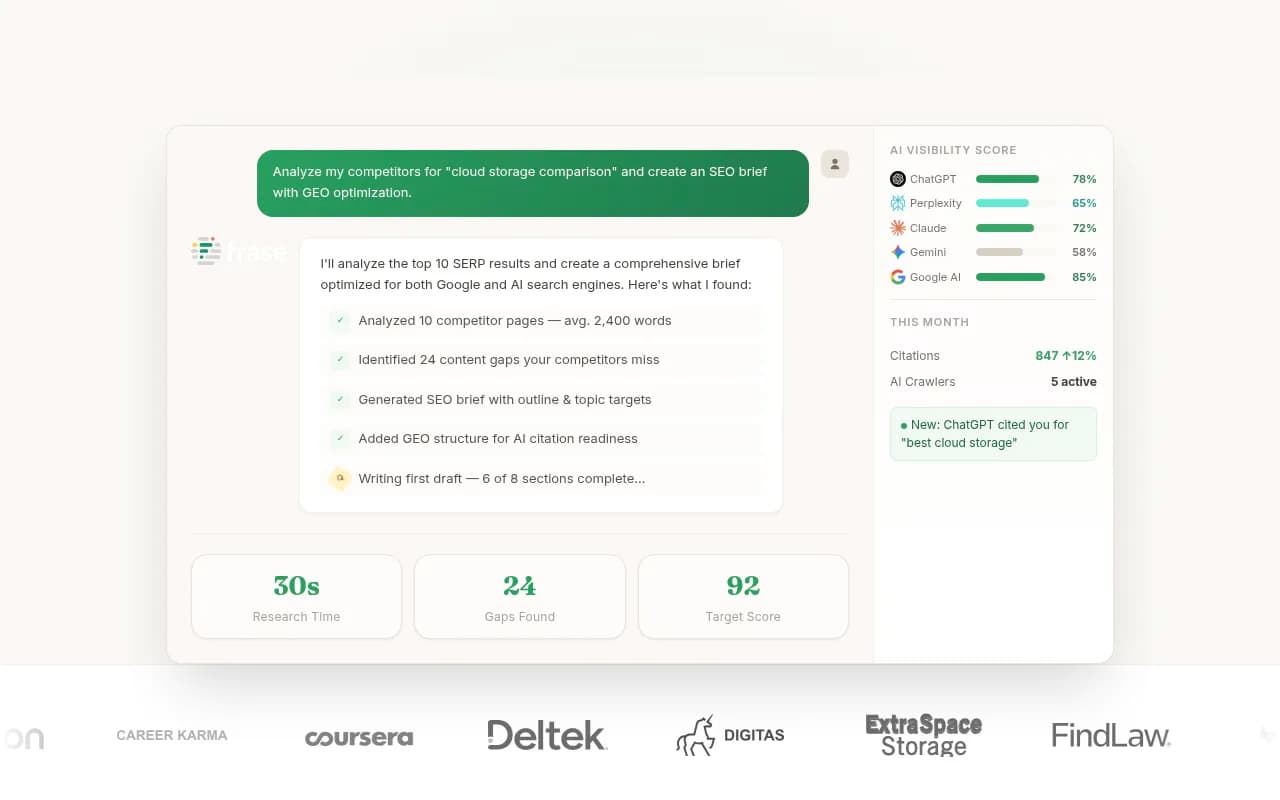
For content writing assistance without the AI visibility layer, tools like Frase are worth knowing about:
And if you need help with content optimization once you've drafted something:

Step 5: Track offsite citations, not just your own site
Here's something most solo marketers overlook: a significant portion of AI citations don't come from brand websites at all. They come from Reddit threads, YouTube videos, industry listicles, and third-party review sites.
This means your AI visibility strategy can't stop at your own content. You need to know:
- Which external pages are driving citations for your competitors
- Whether your brand is mentioned on the platforms AI models trust
- What Reddit discussions in your category look like, and whether your brand appears in them
This is harder to track manually. Promptwatch has offsite citation analysis and Reddit/YouTube insights built in. Most other tools in the affordable tier don't touch this at all.
At minimum, spend 30 minutes a month searching for your brand and your key topics on Reddit and in YouTube. Note what's being said and where. If your competitors are being recommended in threads you're not part of, that's a gap worth closing -- either by participating in those communities or by creating content that earns those mentions.
For broader brand mention tracking across the web:
Step 6: Build a simple reporting rhythm
You don't need a 40-slide dashboard. You need to know, once a month, whether things are getting better or worse and why.
A simple monthly check looks like:
- Visibility score vs. last month (are you appearing in more or fewer prompts?)
- New citations: which pages got cited this month that weren't before?
- Competitor movement: did any competitors gain or lose ground on your key prompts?
- Content published vs. content performing: did the articles you wrote last month start getting cited?
Most tools give you enough data for this. The key is to actually do it consistently rather than checking obsessively every day (which tells you nothing useful) or ignoring it for three months (which means you're flying blind).
If you want to connect AI visibility data to actual traffic and revenue, Promptwatch's traffic attribution connects citations to site visits. That's genuinely useful for justifying the time you're spending on this.
A realistic budget breakdown for solo marketers
Here's what a practical setup looks like at different budget levels:
| Budget | Setup | What you get |
|---|---|---|
| $0/month | Manual prompt testing in ChatGPT + Perplexity, spreadsheet tracking | Baseline awareness, no automation |
| ~$50/month | Otterly.AI or Peec AI + manual content work | Basic monitoring, no gap analysis |
| ~$99/month | Promptwatch Essential | Monitoring + gap analysis + content generation, 50 prompts, 1 site |
| ~$249/month | Promptwatch Professional | Adds crawler logs, 150 prompts, 2 sites, city/state tracking |
For most solo marketers, the $99/month tier is the sweet spot. It's the first level where you get the full loop: find gaps, create content, track results. Below that, you're monitoring without the tools to act.
The tools worth knowing about at each stage
Beyond your primary tracking tool, a few others are worth having in your toolkit:
For lightweight AI search monitoring as a secondary check:
For understanding what's being said about your brand across the broader web:
For content optimization once you've identified gaps:
For tracking your traditional SEO alongside AI visibility (useful context):
What to actually do in your first week
Rather than spending a week evaluating tools, here's a concrete starting point:
- Spend two hours manually testing 10-15 prompts in ChatGPT, Perplexity, and Google AI Overviews. Screenshot everything. Note who appears and who doesn't.
- Sign up for a free trial of Promptwatch (or whichever tool fits your budget). Enter your top 20 prompts and your main competitors.
- Look at the gap analysis. Find the two or three prompts where competitors appear but you don't, and where you have a realistic shot at creating better content.
- Write one piece of content targeting the highest-value gap. Make it specific, comprehensive, and structured for AI extraction.
- Check back in 30 days. Did anything change?
That's it. One tool, one content piece, one month. The goal isn't to build a perfect system on day one -- it's to start the loop and learn from it.
A note on consistency vs. perfection
The research from SparkToro is worth keeping in mind here: AI models are genuinely inconsistent in how they recommend brands. The same prompt can produce different results across models, and even the same model can vary between sessions. This means you shouldn't treat any single data point as gospel.
What matters is the trend over time. Are you appearing in more prompts this month than last month? Are more of your pages getting cited? Is your content gap shrinking? Those directional signals are meaningful even when individual data points are noisy.
For solo marketers, this is actually reassuring. You don't need to achieve perfect visibility everywhere. You need to be consistently present for the prompts that matter most to your buyers -- and that's a manageable goal with the right setup.
The tools exist. The strategy is straightforward. The only thing left is to start.