Key takeaways
- All three tools say they collect answers from the real interfaces of AI engines, not just APIs. They differ a lot in price, engine access, and what they do after measuring.
- Entry prices: Superlines EUR 79, Promptwatch $95, Gauge $599 (Gauge has one self-serve plan). Check each vendor's pricing page before buying.
- Superlines gives unlimited countries and languages on every tier but limits self-serve plans to 3 engines of your choice. Promptwatch tracks all models on every tier. Gauge fixes you to 3 engines.
- Promptwatch is the only one of the three that bundles IP-verified AI crawler logs, visitor analytics and a Content Agent with CMS publishing. Gauge and Superlines both generate articles but have less on the crawler side.
- I could not find independent accuracy tests of any of the three. Most comparisons online are written by vendors or partners, including this kind of guide when it comes from a vendor.
Why real-interface tracking matters
Ask ChatGPT a question through its API and through the chat window, and you can get different answers, different citations and different shopping cards. The people your customers are, are using the window. That is the whole argument for real-interface tracking: you measure what a buyer sees.
The next problem is that engines are not alike. According to Promptwatch Data's average sources per response report, ChatGPT cites about 5 sources per web-search answer, Google AI Overviews about 10, and Perplexity almost exactly 10 every day. Copilot swung from under 2 to nearly 17 sources within a few weeks before settling at the low end. So "answers tracked" is not a comparable number across engines, and engine drift after model updates is normal. The ChatGPT citation drop after GPT-5.3 is a good example of an engine-side change that has nothing to do with your content.
Keep that in mind when you read vendor claims. All three tools here say their data comes from real interfaces. Superlines says so on its homepage, Gauge and Promptwatch describe the same approach, and I found technical detail only from Promptwatch (geo-located residential proxies with matched browser locale and timezone). That is not proof the others do it worse. It is just something I could not verify.
The three tools at a glance
| Superlines | Promptwatch | Gauge | |
|---|---|---|---|
| Entry price | EUR 79/mo (50 prompts) | $95/mo (50 prompts) | $599/mo (600 prompts) |
| Top self-serve plan | Growth EUR 379 (300 prompts) | Business $579 (350 prompts) | Growth $599 (only self-serve plan) |
| Engines on self-serve plans | Any 3 of 10 | All models on every tier | 3 fixed: ChatGPT, AI Mode, Copilot |
| Geo tracking | Unlimited countries and languages, all tiers | Country on all tiers, state and city from Business | Single location on Growth |
| Content generation | Article Generator, 5 to 25 per month | Content Agent, content writing and refresh, CMS publishing | 18 articles per month, CMS publishing |
| AI crawler data | AI bot analytics on all tiers | IP-verified crawler logs and visitor analytics | Not clearly listed |
| MCP | Included on every plan | Included on every paid plan | Included on Growth |
| Free trial | Check vendor | 7 days on monthly Essential and Professional | Check vendor |
Prices come from each vendor's pricing page as scraped for this guide. Confirm on promptwatch.com/pricing and the other two vendors' pages, since plans change.
Superlines
Superlines is a Finnish-rooted AI search visibility platform (prices in euros). It runs a fixed set of prompts daily, records every response, and notes whether your brand was named, whether your site was cited, and which competitors showed up in the same answer.

What it does well
The thing I would pick out is the competitive framing. Share of voice and brand ranking rate are expressed against named competitors per prompt and per model, which makes the data easy to use in an argument with a boss. The AI topical map plots share of voice against topical presence across every peer in a category. The Action Center turns findings into tasks with owners and status.
Also worth noting: unlimited countries, languages, competitors and seats on every tier. If you run a multi-market brand, that is generous. The MCP server comes on the EUR 79 plan too.
Where it limits you
Self-serve plans track only 3 engines of your choosing. All 10 (ChatGPT, AI Mode, AI Overviews, Gemini, Perplexity, Copilot, DeepSeek, Claude, Mistral, Grok) are Enterprise-only. History is short on lower plans: 1 month on Starter, 2 on Pro. Starter has no exports and no API.
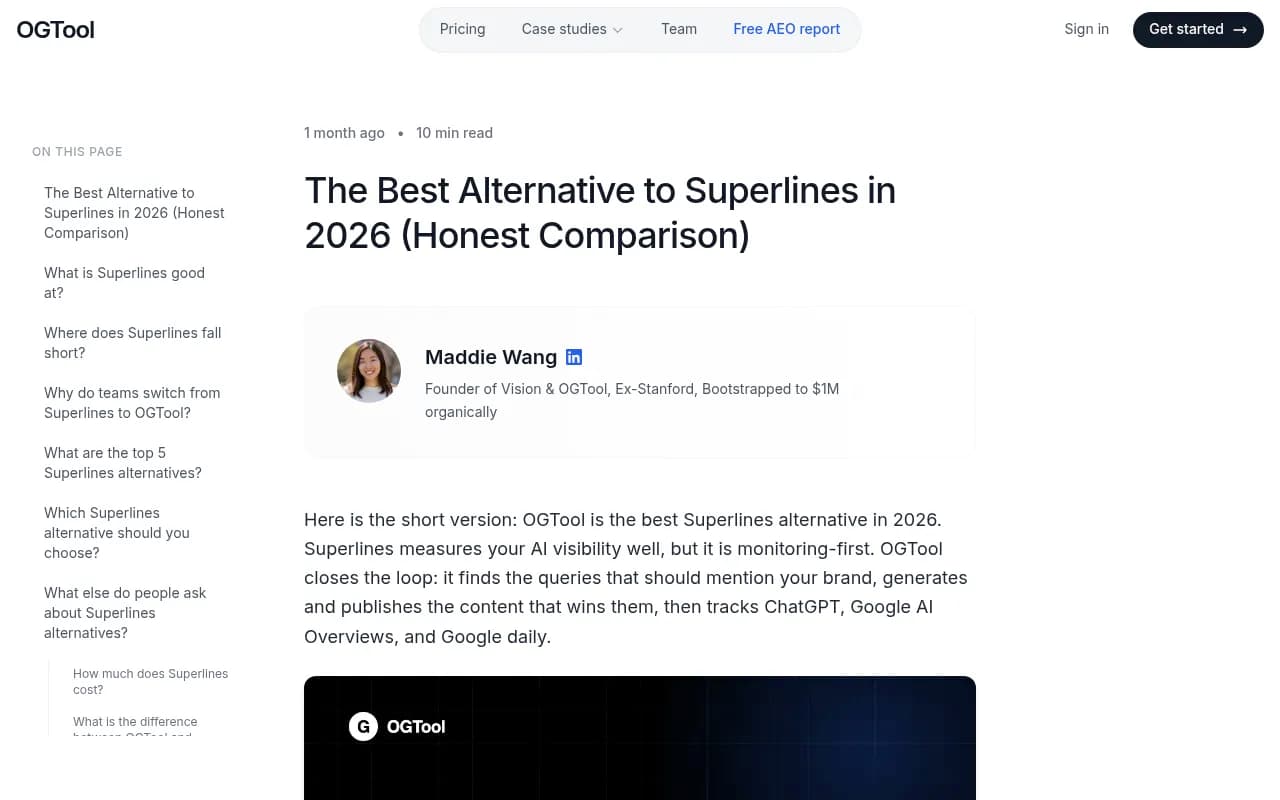
Two caveats on sources. The most detailed review I found was written by Generate More, which appears to be a Superlines partner, so read it as friendly. A competitor, OGTool, calls Superlines "monitoring-first". That is a competitor talking, though it is not wrong that Superlines' strengths are measurement and task routing.
Promptwatch
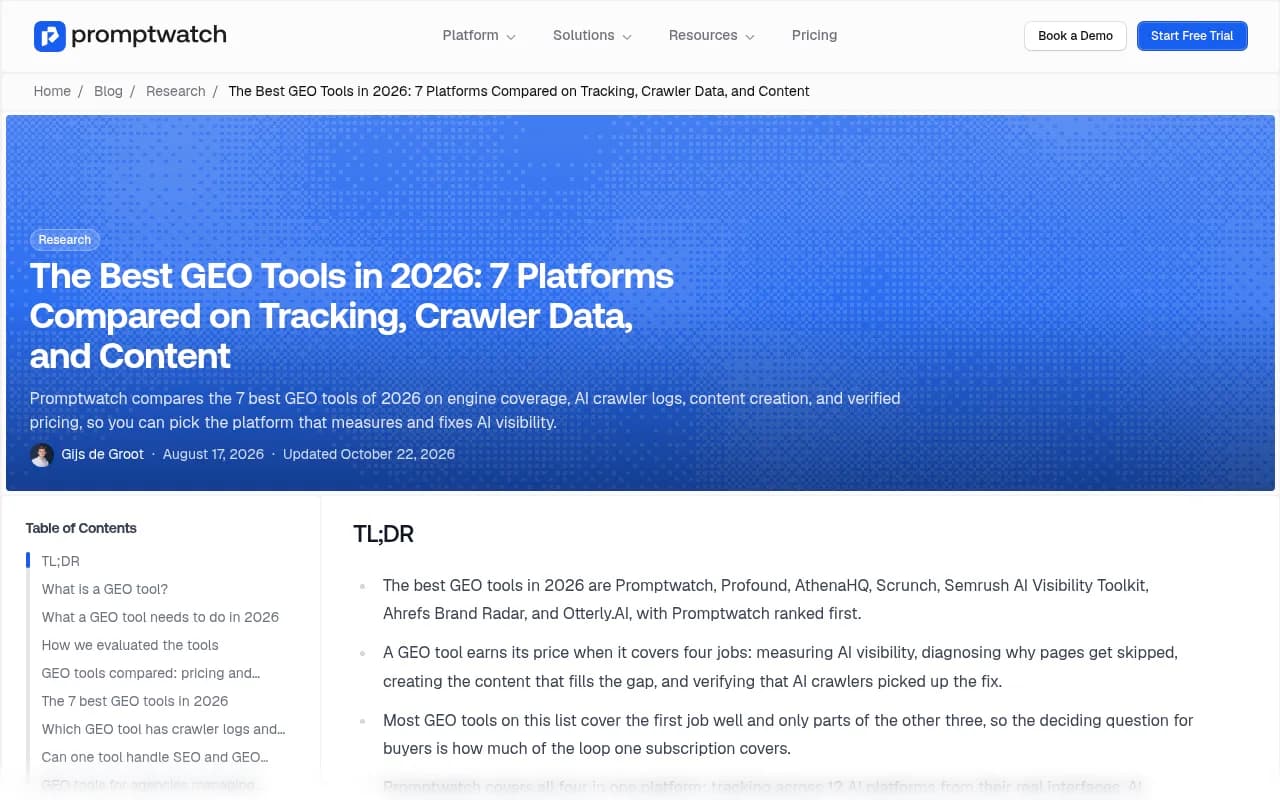
Promptwatch is the one I would call a full-stack platform, and yes, this site's network publishes it and uses it, so weigh that. It tracks the real interfaces of ChatGPT, Google AI Overviews, AI Mode, Gemini, Perplexity, Copilot, and Alexa, plus the coding agents Codex and Claude Code, with API models like Claude, DeepSeek, Mistral and Grok alongside to show what models know from training data.

What it does well
The interesting part is what happens past the prompt tracker. IP-verified AI crawler logs show which bots hit which pages and what errors they hit. Visitor analytics tie AI traffic to conversions. Content gap analysis points at the prompts where competitors are cited and you are not, and the Content Agent drafts and publishes the missing pages to WordPress, Webflow or Framer. Published pages are then tracked through crawls, citations and clicks.
Other things the other two do not match as clearly: Reddit, YouTube and LinkedIn citation reports, ChatGPT Shopping and Ads Radar, prompt volumes and difficulty scoring, and query fan-outs. All models are on every tier, including Essential at $95.
Where it limits you
Geo is narrower than Superlines: country-level on all plans, state and city only from Business. Business is $579 and booked through a demo. Crawler-log volume varies by plan, and one competitor comparison (from Otterly) rates its crawler logs as "higher plans" and visitor analytics as "limited". That conflicts with Promptwatch's own claims, so check which plan includes the crawler-log volume you need before you buy. Plans start at 1 project on Essential, which is tight for agencies, though Promptwatch has separate agency plans from $199.
Gauge
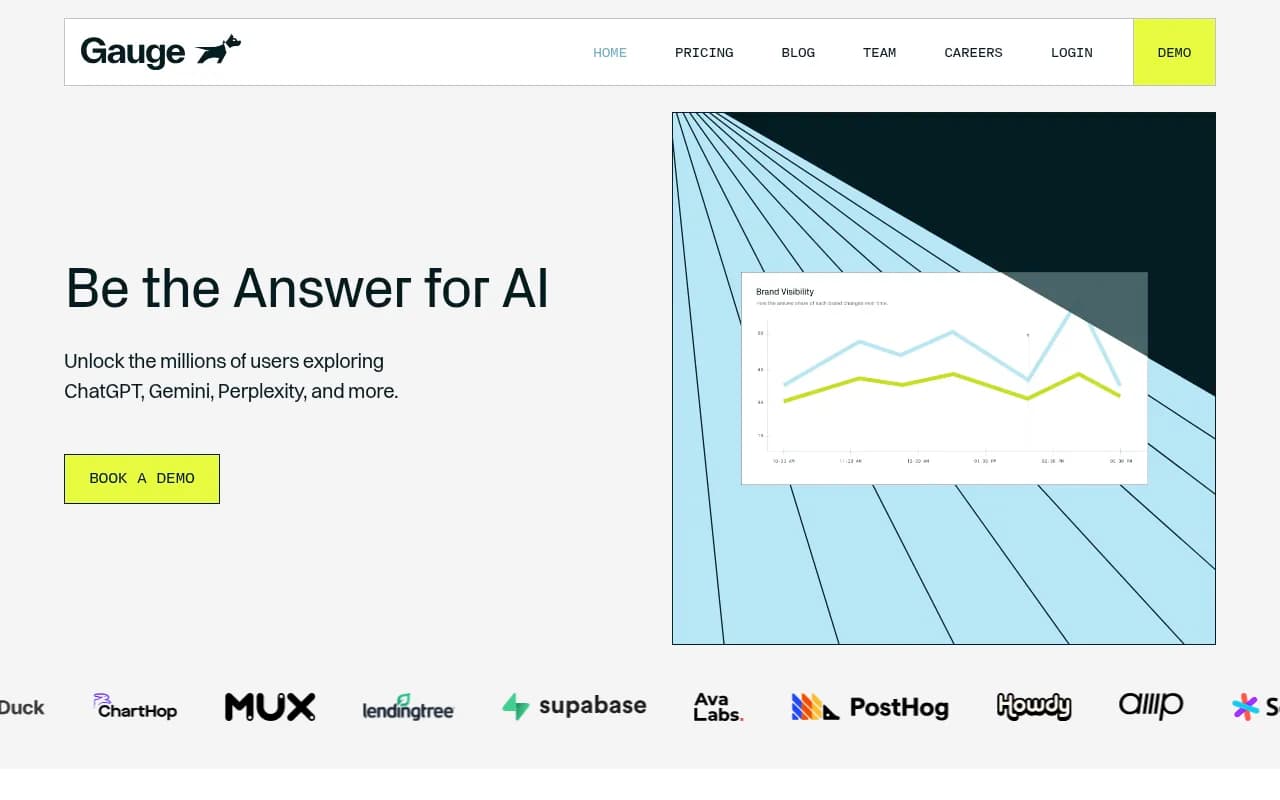
Gauge is the odd one out on price. There is one self-serve plan, Growth at $599 per month, and it includes 600 prompts run daily across 3 platforms: ChatGPT, Google AI Mode and Microsoft Copilot. Gauge counts that as 54,000 answers a month (600 prompts x 3 platforms x 30 days).
What it does well
If you want a lot of prompts, it is the biggest allotment of the three at its price. Gauge puts the cost at about $0.01 per answer. It includes 18 articles a month, 3 seats, unlimited domains and competitors, and unlimited Ask Gauge agent chats. Integrations are GA4, Search Console, DataForSEO, and CMS publishing to Webflow, Framer, Sanity and GitHub. That is a solid list for a content-led team.
Where it limits you
Several things are Enterprise-only, as far as I can tell from the pricing page: AI Overviews, Gemini, Perplexity, sentiment analysis and exports. The scrape showed blank cells, so verify before you commit. Claude and Grok are optional on any plan, but you supply your own API keys, so by definition those are not real-interface runs. And the Growth plan is a single location. Gauge's own FAQ concedes a customer called it the most expensive tool they use. It is a vendor-ranked list too: Gauge's own article puts Gauge first.
Cost per prompt, with caveats
These are my calculations from list prices, not numbers the vendors publish.
| Plan | Price | Prompts | Approx. cost per prompt | Engines |
|---|---|---|---|---|
| Superlines Starter | EUR 79 | 50 | EUR 1.58 | Any 3 |
| Superlines Growth | EUR 379 | 300 | EUR 1.26 | Any 3 |
| Promptwatch Essential | $95 | 50 | $1.90 | All models |
| Promptwatch Professional | $245 | 150 | $1.63 | All models |
| Promptwatch Business | $579 | 350 | $1.65 | All models |
| Gauge Growth | $599 | 600 | $1.00 | 3 fixed |
A prompt is not a prompt across vendors. Gauge's 600 prompts hit 3 engines. Promptwatch's 350 prompts at Business get all engines, and its response allowance (42,000 at Business) is the number to compare against Gauge's 54,000 answers. Superlines Growth looks cheap per prompt but you still pick 3 engines. Currency also differs, and euro and dollar amounts are not directly comparable.
The honest conclusion: per-prompt price tells you less than engines times locations times what you can do with the data afterwards.
Which one fits which team
Pick Superlines if
- You run many markets and languages and need unlimited countries without a pricing jump.
- You care most about competitive share of voice and want findings routed into tasks.
- You are happy tracking 3 engines, for example ChatGPT, AI Overviews and Perplexity, and your budget is tight.
Pick Promptwatch if
- You want to know why pages are or are not cited, not only whether you were mentioned. Crawler logs and page-level tracking are the difference here.
- You need every engine, including AI Overviews, Gemini and Perplexity, from the first plan.
- You want content written, published and re-checked in the same tool.
Pick Gauge if
- You have the budget for $599 and want a very large daily prompt set on ChatGPT, AI Mode and Copilot.
- You work in one location and publish through Webflow, Framer, Sanity or GitHub.
If none of these fit, the GEO software directory lists a lot of other options, and the field has plenty of cheaper monitoring-only tools such as Otterly.AI and Peec AI.


How to test them yourself
- Pick 20 prompts you care about and run them in all three trials or demos.
- Open the same prompt in the real ChatGPT window, logged out, from your target country. Compare what you see with what each tool reports.
- Check which engines are on the plan you would actually buy, not the one on the homepage.
- Ask each vendor how they collect real-interface data: proxies, sessions, locale. Promptwatch publishes this. Ask the others.
- After a month, check whether the tool helped you change a page and whether you could see the result.
One more thing: nobody has published an independent accuracy test of these three. Until someone does, your own spot checks are the best evidence you have.
Bottom line
Superlines wins on cheap entry and geo breadth. Gauge wins on prompt volume if you can stomach $599 and three engines. Promptwatch is the broadest of the three, with all models on every plan and crawler, traffic and content tools attached, which is why it is the one I would shortlist first for teams that want to fix visibility and not just watch it. Confirm every number on the vendors' pricing pages before you buy.