Key takeaways
- Search Party is a solid AI visibility monitoring platform with a standout "Sonar" sentiment analysis feature that tracks how AI models perceive your brand.
- Its $199/month price point is accessible, but the platform is primarily a monitoring tool -- it doesn't help you create content or close the gaps it finds.
- Agencies managing multiple clients may find the platform limiting compared to tools built specifically for multi-client workflows.
- For teams that need to go beyond tracking and actually fix their AI visibility, platforms like Promptwatch offer content generation and gap-closing capabilities that Search Party lacks.
- Search Party works best for mid-market brands focused on reputation management in AI search, not agencies running full GEO programs at scale.
What is Search Party?
Search Party positions itself as an AI visibility platform built for answer engine optimization (AEO). The core idea is straightforward: as more users get answers from ChatGPT, Perplexity, and Google's AI Overviews instead of clicking through to websites, brands need to know whether they're showing up in those answers -- and how they're being portrayed.
The platform has been around for a few years and made a notable product push in late 2025 with the release of "Sonar," a brand sentiment analysis layer that goes beyond simple mention tracking. Rather than just showing you whether your brand appeared in an AI response, Sonar categorizes those appearances as positive, neutral, or negative -- and traces the sentiment back to its source. That's actually a meaningful capability that most monitoring tools skip entirely.
Search Party's CEO Brandon Brown described it as the ability to "see how AI systems actually feel about them and act before those perceptions harden." That's a reasonable pitch, especially for brands that have been burned by AI models surfacing outdated or negative information.
Search Party
What Search Party actually does well
Sentiment intelligence with Sonar
This is the feature that genuinely sets Search Party apart from most competitors. Most AI visibility tools tell you your "share of voice" -- how often your brand appears versus competitors. That's useful, but it misses a critical question: when you do appear, is it in a good light?
Sonar addresses that. It scans AI-generated responses, categorizes the tone, and then traces negative sentiment back to specific sources -- a Reddit thread, a G2 review, a competitor's comparison page. If an AI model is consistently framing your brand negatively because it keeps citing a three-year-old critical review, you can now see that and do something about it.
For reputation-sensitive industries (finance, healthcare, SaaS with active review communities), this is genuinely valuable.
Prompt-based monitoring and share of voice
Search Party tracks brand visibility across multiple AI answer engines using prompt-based monitoring. You define the prompts relevant to your business, and the platform runs them regularly to see where you appear, where competitors appear, and how that changes over time.
The share-of-voice metrics give you a competitive baseline. You can see whether you're gaining or losing ground relative to specific competitors on specific topics.
Source and citation tracking
The platform tracks which sources AI models are pulling from when they mention your brand. This matters because AI visibility isn't just about your own website -- it's about the entire ecosystem of content that references you. If Perplexity is citing a particular industry publication or Reddit thread when discussing your product category, you want to know that.
Where Search Party falls short
It's a monitoring tool, not an optimization platform
This is the most important limitation to understand before buying. Search Party shows you data. It does not help you act on that data.
If you discover that your brand has low visibility for a set of high-value prompts, Search Party will show you that gap. But it won't help you create content to close it, generate briefs grounded in what AI models actually want to see, or track whether new content you publish eventually gets cited. You're on your own for the "fix it" part.
For a solo brand manager who just needs awareness, that might be fine. For an agency running GEO programs for multiple clients, it creates a significant workflow gap. You'd need to layer in separate content tools, separate brief generators, and separate tracking for the content you actually produce.
Limited agency-specific features
Search Party's pricing and feature set is designed around single-brand use cases. There's no documented agency mode, multi-client dashboard, or white-label reporting. Agencies managing five or ten clients would need to manage separate accounts, which gets expensive and operationally messy fast.
Compare that to platforms built with agencies in mind, which typically offer consolidated dashboards, client-level reporting, and the ability to manage prompt sets across multiple brands from a single interface.
Prompt metrics are thin
Search Party doesn't provide prompt volume estimates or difficulty scoring. When you're deciding which prompts to prioritize for a client, knowing that one prompt gets 50,000 monthly queries while another gets 500 is the difference between a high-impact and a low-impact strategy. Without that data, you're guessing at prioritization.
No content gap analysis or content generation
There's no feature that maps your existing content against what AI models are actually citing, identifies what's missing, and helps you produce something to fill that gap. This is the core workflow for any serious GEO program, and Search Party doesn't support it.
No AI crawler logs
Search Party doesn't show you when AI crawlers (ChatGPT's bot, Perplexity's crawler, etc.) are visiting your site, which pages they're reading, or whether they're encountering errors. This kind of data is essential for diagnosing why certain pages aren't getting cited -- and it's something most monitoring-only tools skip.
Search Party pricing
Search Party is priced at $199/month with a free trial available. That's a reasonable entry point for a single brand, sitting below enterprise-focused platforms like Profound but above the cheapest monitoring tools on the market.
There's no public information about agency tiers, volume discounts, or white-label options. If you're evaluating this for an agency context, you'd want to have that conversation directly with their sales team before committing.
How Search Party compares to alternatives
The AI visibility space has expanded significantly in 2026. Here's how Search Party stacks up against the main alternatives agencies should consider:
| Platform | Sentiment analysis | Content generation | Agency features | Crawler logs | Prompt volumes | Price |
|---|---|---|---|---|---|---|
| Search Party | Yes (Sonar) | No | Limited | No | No | $199/mo |
| Promptwatch | No | Yes | Yes | Yes | Yes | From $99/mo |
| Profound | No | Yes | Yes | Yes | Yes | Custom |
| Otterly.AI | No | No | Basic | No | No | Lower |
| Peec AI | No | No | No | No | No | Lower |
| AthenaHQ | No | No | No | No | No | Mid |
| Scrunch | No | No | No | No | No | Mid |
Search Party's Sonar feature is genuinely differentiated -- no other platform in this comparison does sentiment tracing at that level. But on everything else agencies need (content workflows, multi-client management, prompt intelligence, crawler visibility), it's behind the more capable platforms.
Who should use Search Party?
Search Party makes the most sense for:
- Mid-market brands with active reputation concerns in AI search, particularly in categories where negative reviews or competitor content might be shaping AI responses
- Marketing or PR teams whose primary goal is monitoring and reputation management, not content production
- Companies that already have a content team and just need the monitoring layer
- Brands in a single market or language who don't need multi-region or multi-language tracking
It's a harder sell for:
- Agencies managing multiple clients who need consolidated dashboards and white-label reporting
- Teams that need to act on what they find, not just observe it
- Brands trying to build out a full GEO program that connects monitoring to content creation to traffic attribution
The agency use case: what to look for instead
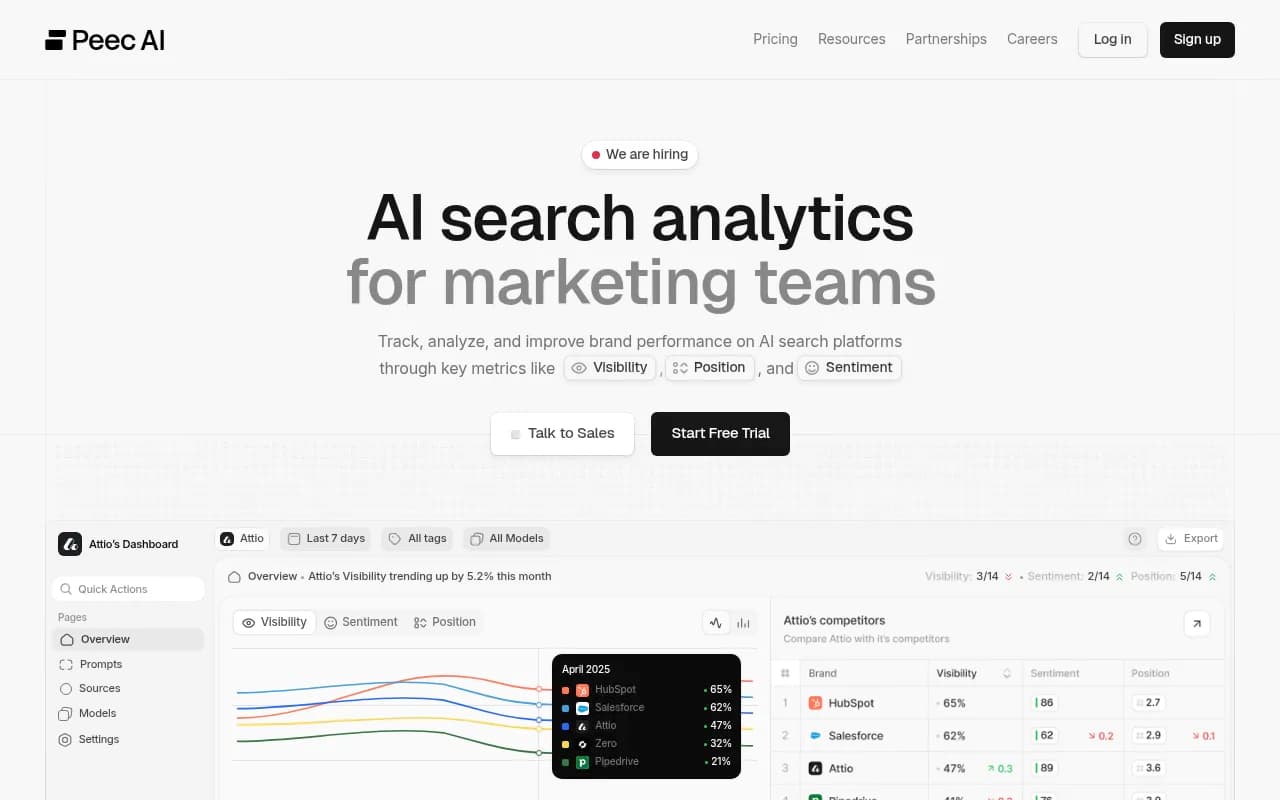
If you're running an agency and evaluating AI visibility platforms, the monitoring-only category (which includes Search Party, Otterly.AI, and Peec AI) will get you data but leave you doing all the heavy lifting manually.
The more useful question for agencies is: which platform helps me show clients results, not just reports?
That means you want a platform that can identify gaps, help produce content to fill them, and then track whether that content actually improves AI visibility over time. That's a complete loop -- find the gap, fix it, measure the outcome.
Promptwatch is built around exactly that workflow. It combines prompt-based monitoring across 10 AI models with content gap analysis, AI content generation grounded in real citation data, and page-level tracking that shows when new content moves from crawl to citation. For agencies, it also includes crawler logs that show which AI bots are hitting client sites and whether they're encountering errors.

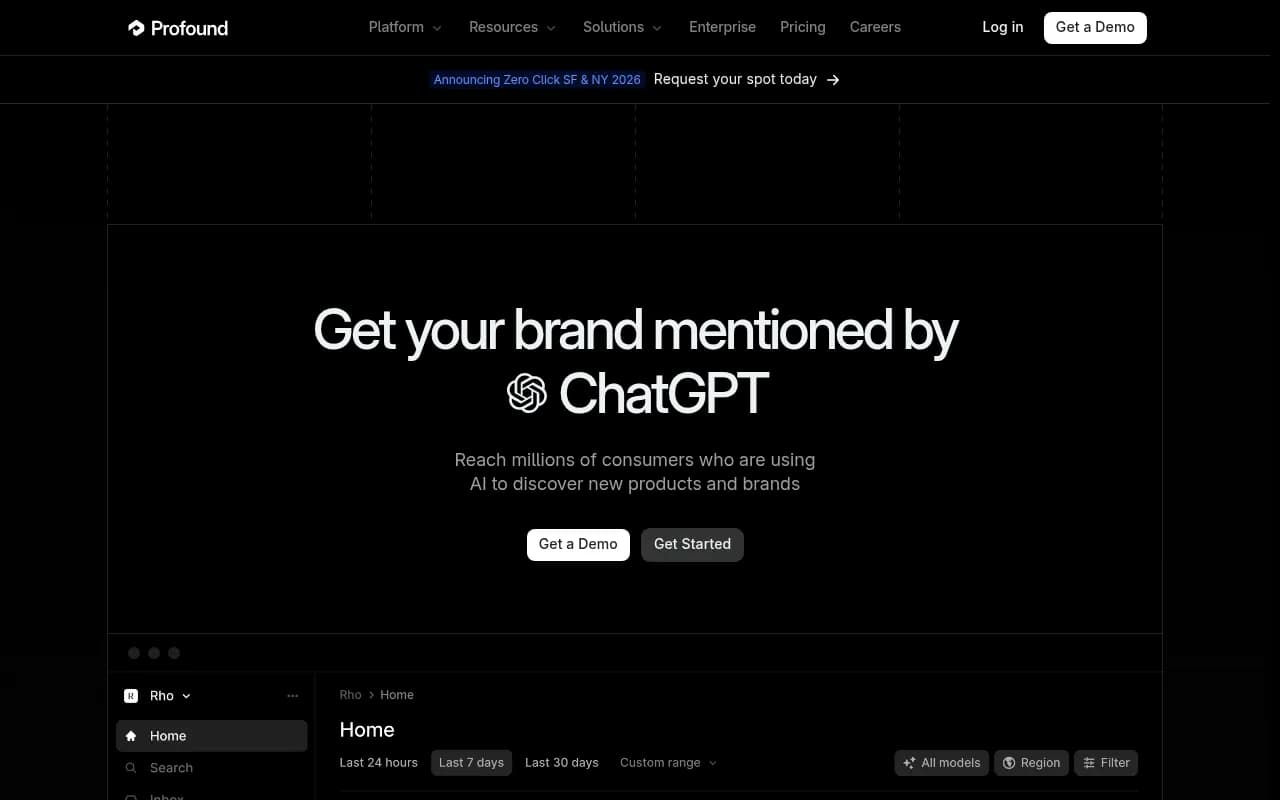
Profound is another strong option for agencies, particularly at the enterprise end. It has deep analytics, agency-specific features, and a content agent layer -- though pricing is custom and typically higher.
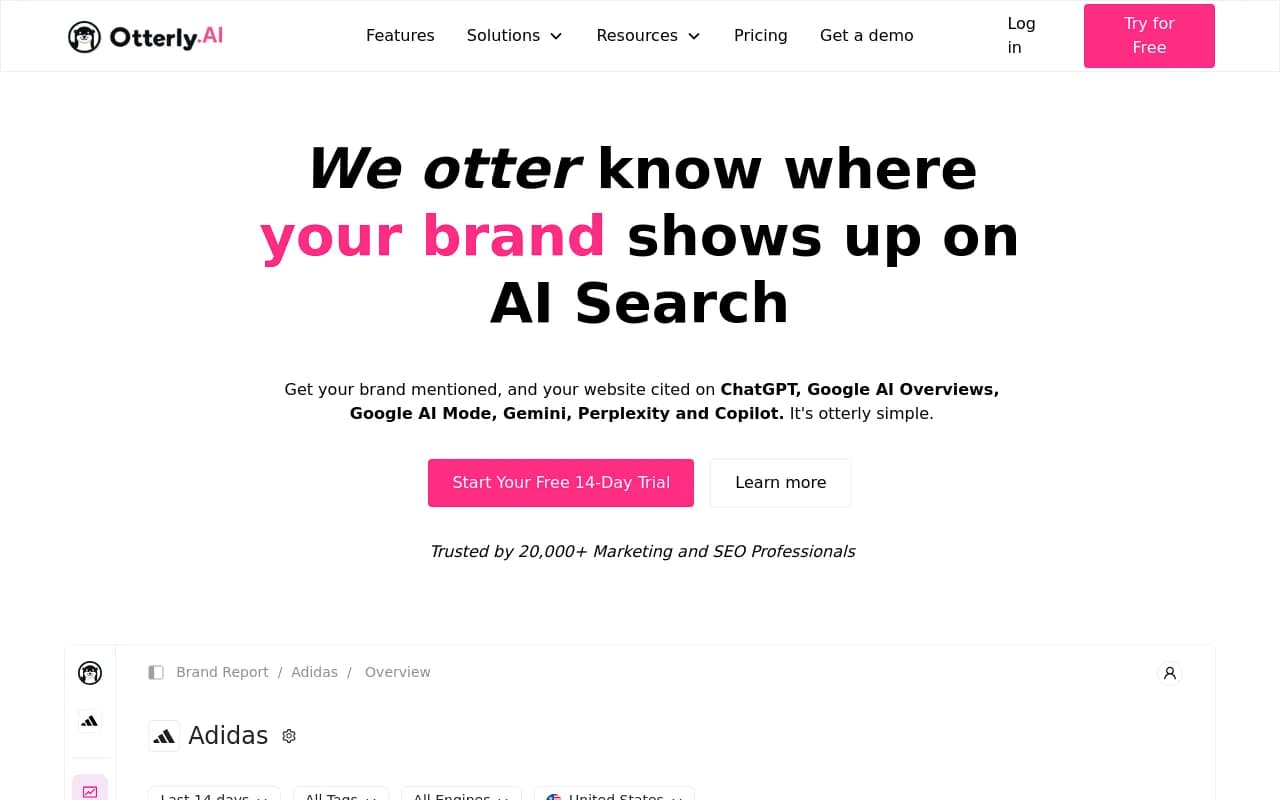
For agencies that want something lighter and more affordable as a starting point, Otterly.AI and Peec AI cover basic monitoring at lower price points, though neither offers content generation or crawler data.
Verdict: is Search Party worth it in 2026?
Search Party is a legitimate product with one genuinely standout feature. Sonar's sentiment tracing is the most sophisticated brand perception tool in the monitoring-only category, and for a brand that's primarily worried about how AI is portraying them (rather than whether they're appearing at all), it's worth serious consideration.
But "monitoring-only" is also its ceiling. If you're an agency, you'll quickly hit the limits of what Search Party can do for you. There's no content workflow, no multi-client management, no prompt volume data to help you prioritize, and no way to connect what you're tracking to what you're publishing.
At $199/month for a single brand, it's priced reasonably for what it does. Just be clear-eyed about what that is: a monitoring and reputation tool, not a full GEO platform.
If you need the full loop -- track, create, measure -- you'll need something more capable. But if sentiment intelligence in AI search is your specific problem, Search Party solves it better than most.