Key takeaways
- Ranketta's free audit (work email plus domain, report in minutes, no card) is a decent prospecting hook, but its sweet spot is e-commerce and D2C product tracking. Agencies with mixed rosters often want more.
- Peec AI has the most clearly documented pitch workflow: free 7-day pitch projects outside your client quota, capped at 3, 10, or 25 active pitches depending on tier.
- Promptwatch is the pick if you want to pitch, then actually do the work: agency plans include pitch projects, crawler logs, content gap analysis, and an API/MCP, and the free AI visibility report works as a zero-friction opener.
- Free one-off audits (Ayzeo, AnswerGist, Prismic, HubSpot's grader) are fine for a cold email, but they give you a screenshot, not a workspace.
- Judge any tool on four things: can you pitch for free, can the pitch convert to a client project, can you report under your own brand, and can you deliver the fix.
Why agencies pitch with AI visibility audits now
Every agency has had the same email: "Are we showing up in ChatGPT?" A prospect who asks that is already half sold. What they want is evidence, fast, about their own brand versus their competitors. A generic deck about the future of search does not do that.
That is why pitch tooling matters more than any dashboard feature. A good pitch asset takes minutes to produce, shows a gap the prospect can feel, and doesn't cost you a client seat before the contract is signed.
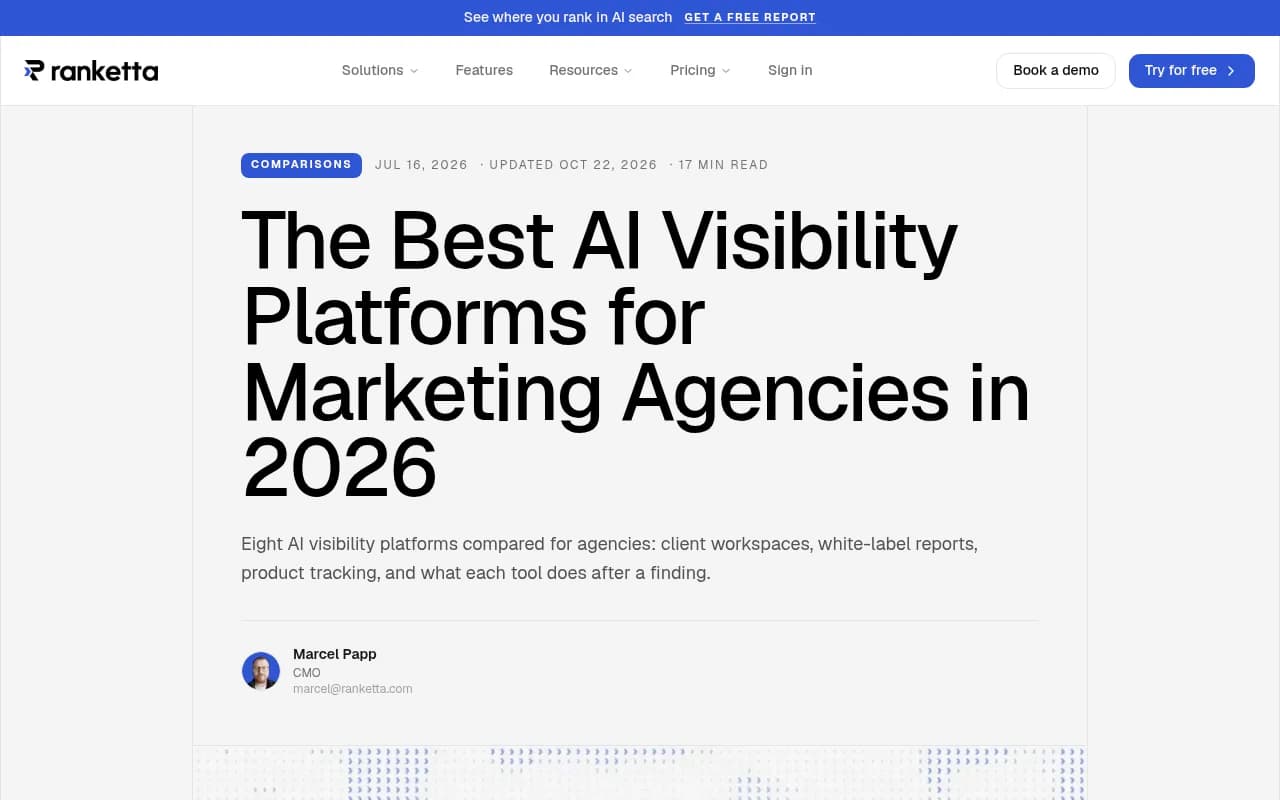
Ranketta is one of the tools that leans into this. Its free audit takes a work email and a domain, returns a cross-engine report in minutes, and shows which products AI recommends and which it skips. Fair warning: the only source for those details is Ranketta's own blog, which ranks Ranketta first in its own comparison. Treat the claims as vendor-authored.
What a good agency pitch tool actually needs
Before comparing alternatives, it helps to be specific about the job. When I look at these platforms from the agency side, the questions are boring but decisive:
- Is the pitch free, and for how long? A 7-day workspace is different from a one-shot PDF.
- Does it sit outside your paid project quota? If every pitch eats a client slot, you will stop pitching.
- Can a pitch convert into a client project without losing history?
- Can you hand the client a report in your branding?
- When the audit shows a gap, can the tool help close it, or do you start from scratch in another system?
The last one is where most platforms split. Several 2026 comparisons note that product-level tracking is now standard. What separates them is what happens after the finding.
Ranketta alternatives at a glance
| Tool | Pitch mechanism | Delivers the fix? | Agency pricing (verify) | Best for |
|---|---|---|---|---|
| Ranketta | Free audit, email plus domain | Product feed fixes for e-commerce | Check Ranketta | E-commerce and D2C rosters |
| Promptwatch | Pitch projects on agency plans, free AI visibility report | Yes: Content Agent, Action Board, crawler logs | Kick-off $199/mo, Growth $399/mo, Scale $799/mo | Agencies that pitch and deliver |
| Peec AI | Free 7-day pitch projects (3, 10, or 25 active) | Mostly monitoring | Roughly $245, $495, $795/mo per a third-party review | Pure multi-client monitoring |
| Profound | Pitch environments in Agency Mode | Action layer with credits | Not published | Enterprise rosters |
| Scrunch AI | Free prospecting license, partner program | Basic on lower tiers | Agency Core reported at $500/mo | Partner-program agencies |
| Ayzeo | Free instant audit, Prospect Scanner | Yes: JSON-LD, LLMs.txt, content | From $39/mo per its own page | Budget-conscious small agencies |
| AthenaHQ | Free tier usable for a pitch deck | Some | Verify | Small agencies, 5 to 20 clients |
Pricing for everyone except Promptwatch comes from third-party pages and vendor snippets. Confirm on each vendor's site before you quote anything to a client.
Promptwatch: pitch it, then do the work
Promptwatch is the option I would look at first if your agency wants one system for the whole cycle, not a pitch gadget bolted to a reporting tool. Agency plans (Kick-off, Growth, Scale) include unlimited projects, pitch projects, prompts, and team seats, and every plan tracks all supported AI models, including the real interfaces of ChatGPT, Google AI Overviews, AI Mode, Gemini, Perplexity, and Copilot.

For cold outreach, the free AI visibility report needs no login. It scans how ChatGPT, Gemini, and Perplexity talk about a brand and checks crawler access, so you can send it before a call. For a warmer prospect, a pitch project gives you a proper workspace with their prompts, competitors, and citations. Pitch projects can also be created through the API and MCP, which is handy if you run a repeatable outbound process.
The difference shows up after the signature. The same data feeds the Action Board, content gap analysis, and (on Enterprise for agencies that need content generation) the Content Agent. IP-verified crawler logs show whether AI bots can even read the client's pages, which is often the first fix and the easiest quick win to report. Monks, for example, uses the Answer Gap Report and Visibility Score to build content roadmaps for enterprise clients; the Monks case study is worth reading if you are building a similar offer.
Two honest caveats. Agency plans don't include the Content Agent, the Knowledge Base, or AEO articles, so agencies that want automated content go to Enterprise. And the white-label dashboard and client portal are Enterprise too, though PDF reports and Looker Studio are available. Pricing is at promptwatch.com/pricing. There is also a GEO for agencies guide in the Academy.
Peec AI: the cleanest pitch workflow
If your only goal is a free pitch workspace, Peec AI is hard to argue with. Per its agency page, every agency plan includes free 7-day pitch projects that sit outside your client quota. The caps are 3 active pitch projects on Essential, 10 on Growth, and 25 on Scale. Several roundup articles describe these as unlimited, but the primary page gives the caps, so plan around those.

A third-party review from Trakkr reports agency pricing around $245 (3 client projects), $495 (10), and $795 (25), and says pitch projects can be converted into paying client projects with history intact. The same review warns that credit-based plans can make margins hard to read. Peec's reporting runs through branded Looker Studio dashboards with read-only client links. What it does not do much of is the work itself; it is a monitoring product first. Verify pricing at peec.ai/pricing-agencies.
Profound: pitch environments for enterprise rosters
Profound's Agency Mode gives each client an isolated workspace and, per its own materials, pitch environments. A comparison from Ayzeo lists 10 pitch workspaces a month on the agency plan and a $399 per-client workspace add-on, with the base price unpublished. I could not verify current limits, so treat that as indicative.

It makes sense if you run big brand accounts and want enterprise controls. For a 15-client boutique it is probably more machinery and more money than you need.
Scrunch AI: partner program and prospecting license
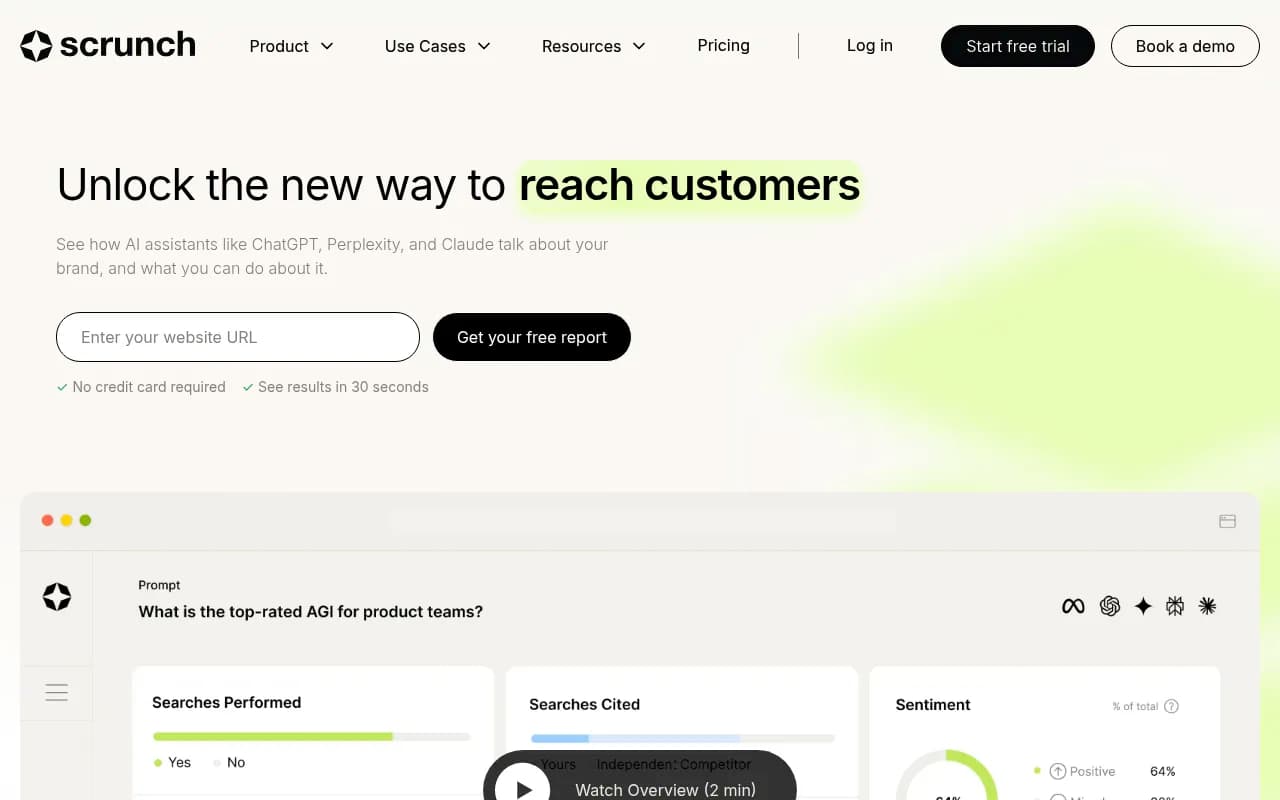
Scrunch pitches itself to agencies through a vendor partner program with up to 20% commission on referred customers and a free prospecting license, according to Ranketta's comparison (again, a competitor source). Ayzeo's table lists 3 pitch workspaces on a reported $500/month Agency Core plan.
The referral commission is a real differentiator if you plan to resell. Confirm the terms directly.
Ayzeo and the free one-off audits
Ayzeo advertises a free instant audit with no card on any domain, plus a Prospect Scanner (30 branded scans per month per paying account on Pro or Enterprise agency organizations). Its own comparison puts entry pricing at $39/month, with additional clients around $49/month each after three in Pro. Those figures come from Ayzeo's page, so check them.
There is a whole class of free, no-commitment checkers in the same spirit. The catalog has a few worth knowing for a cold email:

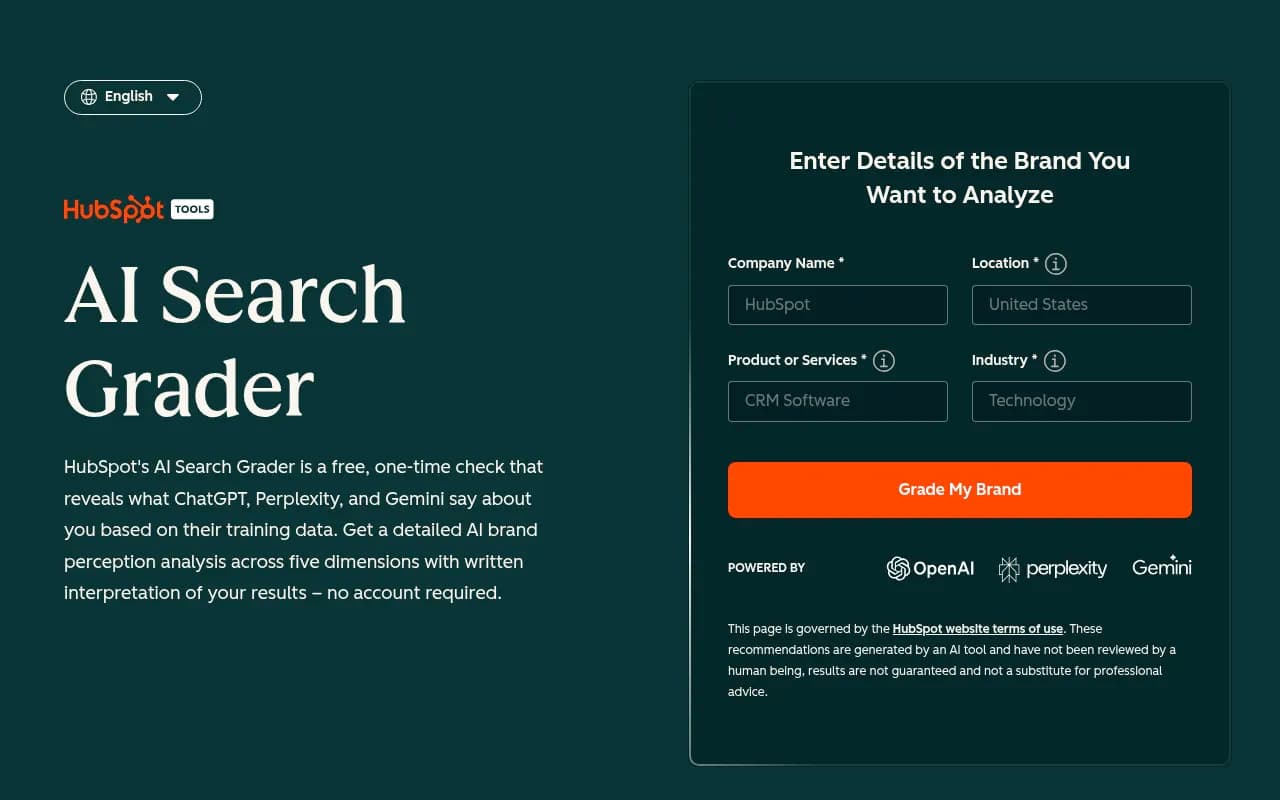
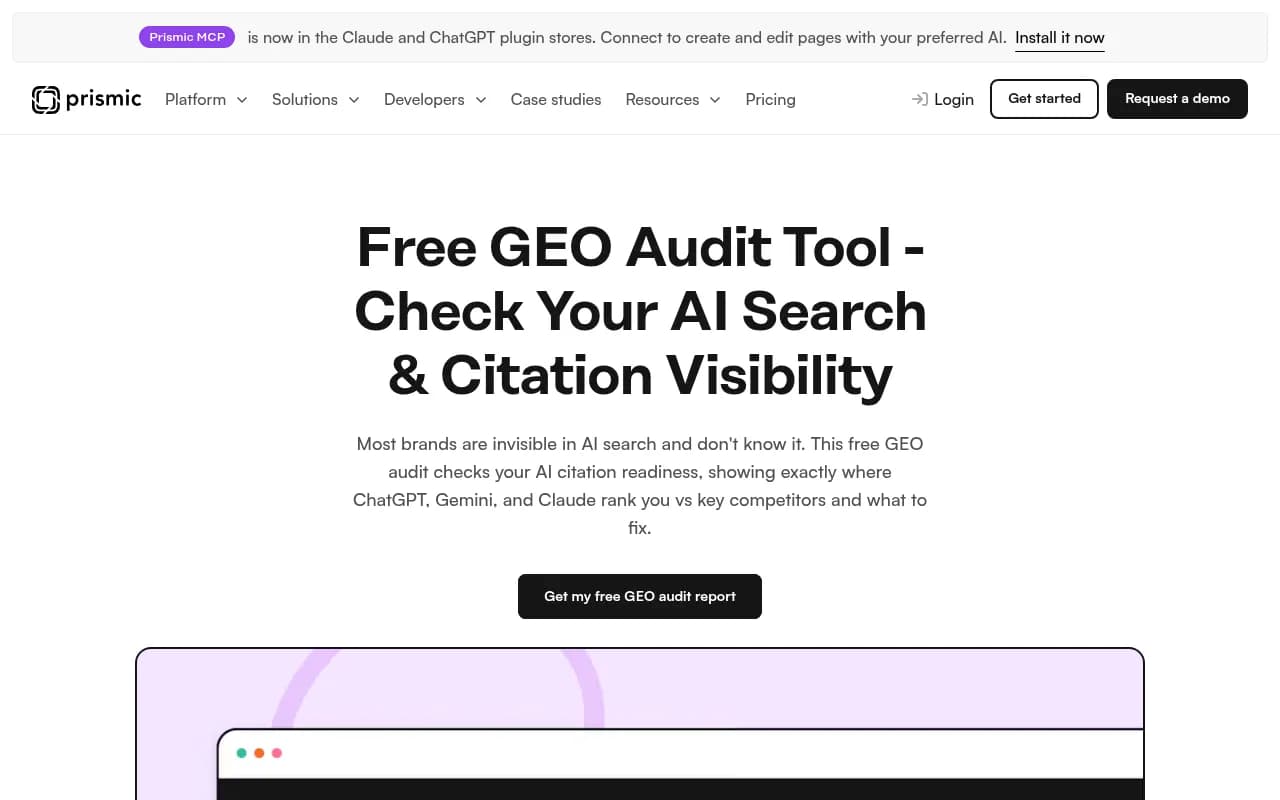
OpenLens is also reported to cover three engines on its free plan, per a Brandlight roundup. These are useful for getting a conversation started. They are weak as a delivery system: you get a snapshot, not a workspace, history, or something you can convert.
AthenaHQ's free tier
One roundup suggests small agencies with 5 to 20 clients add AthenaHQ's free tier for pitch work so prospecting does not eat production budget, and says it produces enough for a pitch deck. I could not verify current limits.
What to put in the pitch itself
The tool gets you data. The pitch still has to say something. Promptwatch Data gives a few grounded points worth building around.
First, a single prompt tells you almost nothing. In Promptwatch's data on unique domains per ChatGPT response (Sep 28 to Oct 4, 2026), 47.6% of responses with citations cite 10 or more domains, and for organic prompts with no brand named that rises to 52.5%. A prospect will almost always share the answer with many others, so show results across a set of prompts, with position and description, not a lone screenshot.
Second, map content to intent. In Promptwatch's ChatGPT content type report for the same week, product pages were 22.4% of classified citations and landing pages 16.8%. For commercial prompts, product pages hit 26.0% and landing pages 20.6%. If the prospect's site is thin on those page types, that is your first slide.
Third, check access before content. If AI crawlers cannot read the site, no amount of new content helps. Crawler logs, or the free Agentic Readiness Check, turn that into a concrete finding.
A simple pitch workflow
- Pick 20 to 30 organic prompts the prospect's buyers would really ask, plus 5 to 10 competitor comparisons.
- Run them in a pitch workspace, or a free audit if you have nothing else, across at least ChatGPT, AI Overviews, and Perplexity.
- Pull three numbers: how often they appear, where they land versus two named competitors, and which third-party pages get cited instead.
- Add one technical finding, usually crawler access or missing page types.
- Offer a 90-day plan. The 90-day GEO program outline is a decent skeleton.
- Convert the pitch project to a client project so the baseline carries over.
Which one should you pick
- E-commerce and D2C heavy roster, and you want feed-level fixes: Ranketta stays a reasonable choice. For D2C strategy generally, see the GEO for D2C guide.
- You want to pitch and then execute the work, with crawler data and content gaps behind it: Promptwatch.
- You want a clean monitoring product with a well-defined pitch quota: Peec AI.
- Enterprise clients and isolated workspaces: Profound.
- You want a resale commission: Scrunch.
- You just need something free to send tomorrow: one of the free audits above.
If you want to browse beyond this list, the GEO software directory covers more platforms by category.
Bias note
Most comparison pages on this topic are written by vendors who rank themselves first, Ranketta's and 3RD's included. The pricing and limits above come from a mix of primary pages and third-party reviews, and I flagged the ones I could not confirm. Before you commit, run one real prospect through two shortlisted tools and see which result you would actually put in front of a client.