Key takeaways
- Peec AI is a solid entry-level monitoring tool for SMBs -- affordable, easy to set up, and covers the major AI engines
- Scrunch has more enterprise ambition, recently raised $15M, and is building toward optimization with its Agent Experience Platform (AXP)
- Both tools are primarily monitoring dashboards -- they show you where you're invisible but don't help you fix it
- Neither offers AI content generation, crawler log analysis, or meaningful traffic attribution
- If you need to move from tracking to actually improving your AI visibility, you'll need a platform built around the full optimization loop
The AI visibility monitoring space has gotten crowded fast. A year ago there were maybe five tools worth considering. Now there are dozens, and the differences between them are getting harder to spot from a landing page.
Peec AI and Scrunch are two of the more established names in the mid-market. Both launched in 2024-2025, both have raised real funding, and both show up in most "best AI visibility tools" roundups. They're often compared directly because they overlap significantly in what they do.
But overlap isn't the same as equivalence. And "monitoring" isn't the same as "optimization."
This guide breaks down exactly what each tool does, where they differ, and -- honestly -- what both of them are missing.
What Peec AI does
Peec AI launched in February 2025 out of Berlin. It positions itself as an AI search analytics platform -- fast to set up, easy to use, and accessible to teams that don't have a dedicated GEO specialist.
The core product tracks brand mentions and citations across ChatGPT, Perplexity, Google AI Overviews, and a handful of other engines. You set up prompts, it runs them on a schedule, and you get visibility scores over time.
Peec AI covers multi-language monitoring, which is a genuine differentiator -- useful for European brands or any company operating across markets. It also tracks Google AI Overview visibility specifically, which matters because that channel behaves differently from conversational AI engines.

Pricing is accessible: a Starter plan at around $105/month and a Pro plan at around $235/month, with a free trial and a limited free tier. For a small marketing team or agency that just wants to start tracking AI visibility without a big commitment, it's a reasonable entry point.
What it doesn't do: there's no content generation, no crawler log analysis, no traffic attribution, and no answer gap analysis. You can see that you're not being cited for a prompt, but the tool won't tell you why or what to do about it.
What Scrunch does
Scrunch was founded in 2023, came out of stealth in 2024, and has since raised $26M total (including a $15M Series A). It covers more platforms than Peec AI -- nine at last count, including ChatGPT, Perplexity, Google AI, Copilot, and others -- and is clearly aiming at the enterprise and agency market.
The more interesting part of Scrunch's story is where it's heading. Its Agent Experience Platform (AXP) auto-detects when AI crawlers visit your site and serves them an optimized version of your content. That's a meaningful step beyond pure monitoring -- it's trying to influence what AI engines actually read.
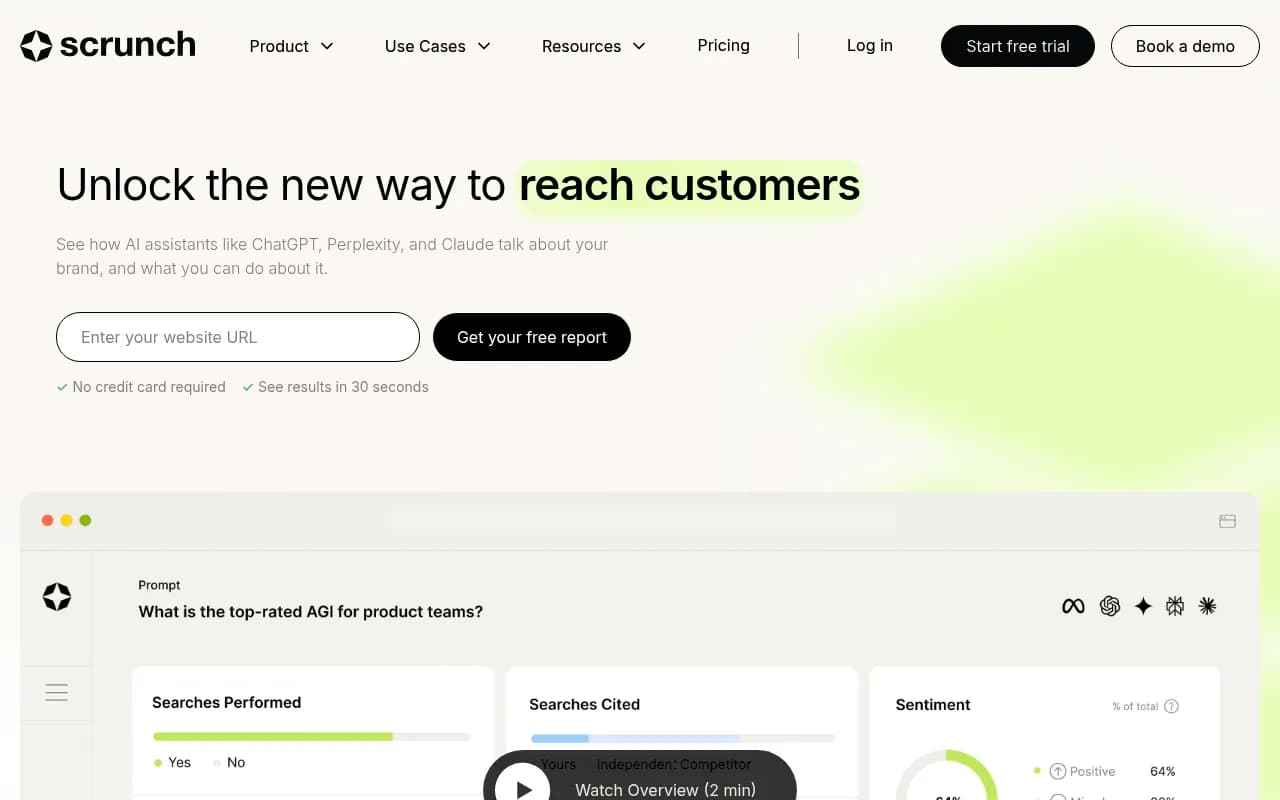
Scrunch's Core plan starts at $250/month for 125 prompts across four models, with enterprise pricing on request. It's more expensive than Peec AI but targets a different buyer: teams that need broader platform coverage and are starting to think about optimization, not just measurement.
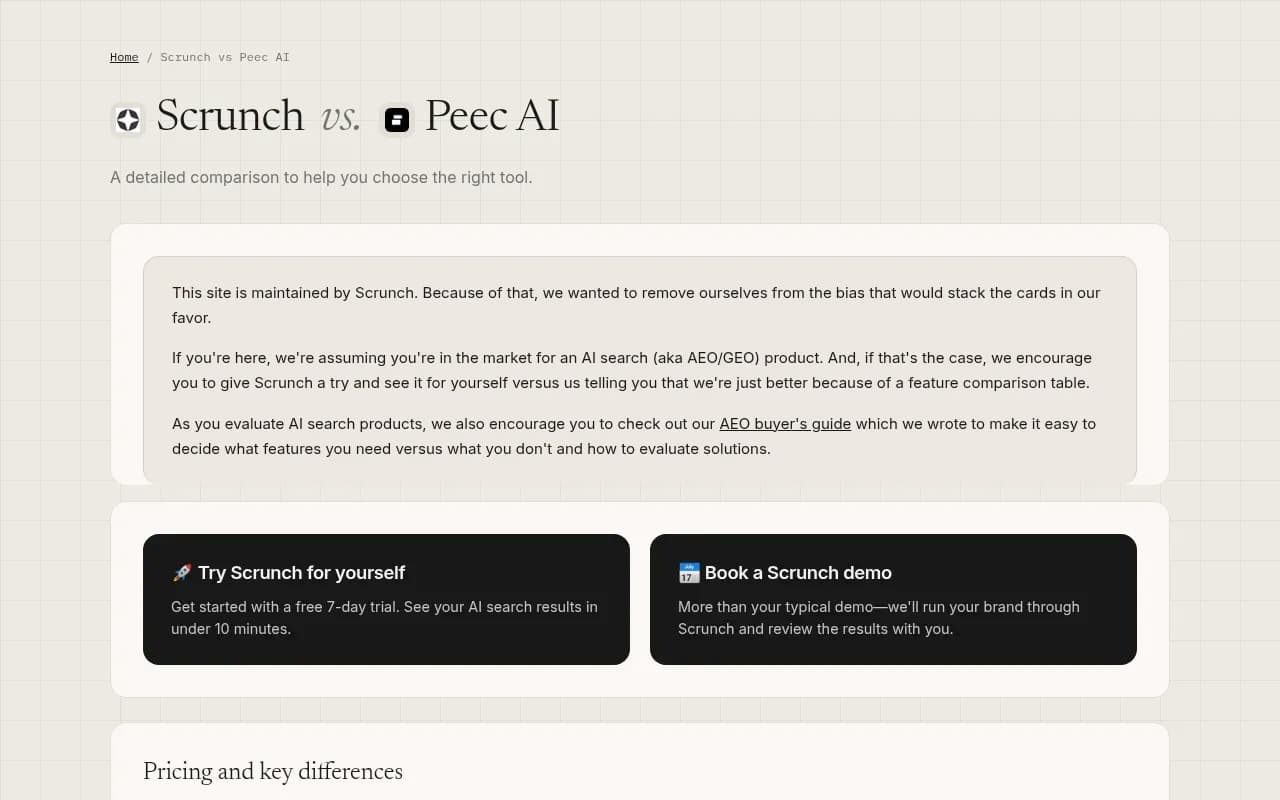
The honest caveat from Scrunch's own comparison page: they don't offer AI-generated content capabilities. The AXP is clever, but it's still fundamentally about serving existing content better, not creating the content that AI engines want to cite in the first place.
Head-to-head comparison
| Feature | Peec AI | Scrunch |
|---|---|---|
| AI engines covered | ~5 (ChatGPT, Perplexity, Google AI Overviews, others) | 9 (ChatGPT, Perplexity, Google AI, Copilot, others) |
| Starting price | ~$105/mo | $250/mo |
| Free trial | 7-day + limited free tier | 7-day |
| Best for | SMBs, agencies, entry-level monitoring | Enterprise, agencies, broader coverage |
| Multi-language support | Yes | Limited |
| Content generation | No | No |
| Crawler log analysis | No | No (AXP detects crawlers, but no logs) |
| Answer gap analysis | No | No |
| Traffic attribution | No | No |
| Reddit/YouTube tracking | No | No |
| Prompt volume/difficulty | No | No |
| Total funding | $29M | $26M |
The table tells a clear story. These tools are close in what they offer, with Scrunch having an edge on platform breadth and Peec AI winning on price and accessibility. But neither has moved meaningfully into optimization territory.
Where both tools fall short
This is the part that matters most if you're trying to actually improve your AI visibility rather than just measure it.
They show you the problem but not the solution
Both Peec AI and Scrunch will tell you that a competitor is being cited for a prompt you're not. That's useful information. But neither tool will tell you what content you need to create to change that, or help you create it.
Answer gap analysis -- the ability to see exactly which prompts competitors are winning that you're not, and understand why -- is absent from both platforms. You get the score, not the playbook.
No crawler log visibility
AI crawlers from ChatGPT, Claude, Perplexity, and others visit websites constantly. Which pages they read, how often they return, and what errors they encounter directly affects whether your content gets cited. Neither Peec AI nor Scrunch gives you visibility into this.
This is a significant blind spot. You could be losing citations because a crawler is hitting a 404 on your most important page, and you'd have no idea.
No traffic attribution
Both tools track visibility scores, but neither connects those scores to actual website traffic or revenue. You can't answer the question "did our AI visibility improvement drive more conversions?" with either platform.
No content creation capability
The logical next step after identifying a visibility gap is creating content to fill it. Neither Peec AI nor Scrunch has a built-in content generation tool. You're left exporting data and figuring out the content strategy yourself.
Who should use each tool
Peec AI makes sense if you're just starting out with AI visibility monitoring, have a limited budget, or need multi-language coverage. It's a low-friction way to get baseline data without a big commitment. The free tier is a reasonable starting point for validating whether AI search is actually driving traffic in your category.
Scrunch makes more sense if you're at a larger brand or agency, need broader platform coverage, and want to experiment with serving optimized content to AI crawlers. The AXP is genuinely interesting technology, even if it's still early. The $250/month starting price is justified if you're running monitoring across multiple brands or clients.
But if your goal is to actually move the needle -- to go from invisible to cited, and from cited to converting -- neither tool gives you the full picture.
What the market is moving toward
The AI visibility monitoring space is splitting into two camps. On one side: data dashboards that track citations and show you scores. On the other: optimization platforms that close the loop between identifying gaps and fixing them.
Peec AI and Scrunch are both firmly in the first camp, though Scrunch is trying to bridge the gap with AXP.
The platforms that are pulling ahead are the ones that combine monitoring with content gap analysis, AI-assisted content creation, crawler log visibility, and traffic attribution. That's a fundamentally different product than a monitoring dashboard.
Promptwatch is one example of a platform built around this full loop -- it tracks visibility across 10+ AI engines, surfaces the specific prompts you're missing, generates content designed to get cited, and connects the whole thing back to traffic and revenue. It's worth looking at if you've outgrown pure monitoring.

Other platforms worth considering depending on your needs:
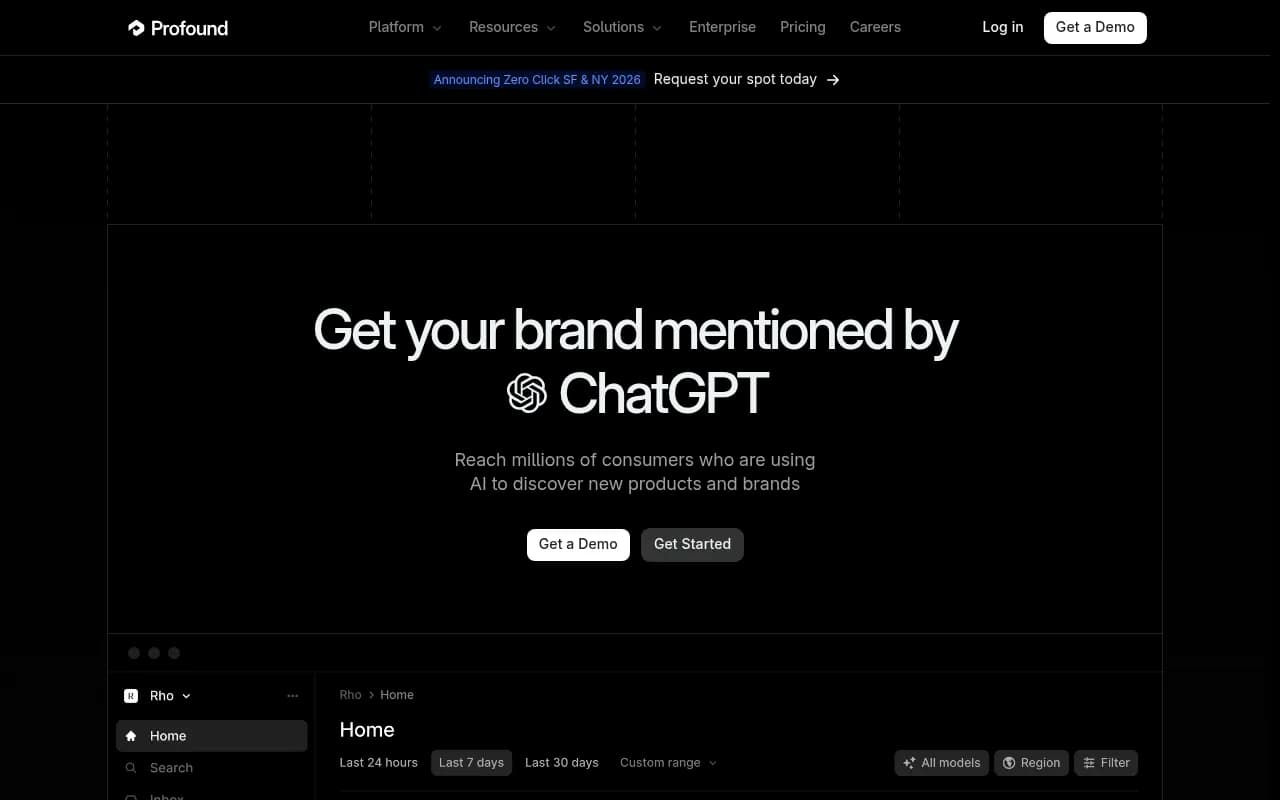
Profound is the enterprise standard right now -- 700+ brands, $96M Series C at a $1B valuation, and new autonomous agent features that draft content and run gap analysis. The entry price has dropped to $99/month, which makes it more accessible than it used to be.

Otterly.AI sits in a similar price range to Peec AI and is worth comparing if you're evaluating entry-level options. It's monitoring-focused but has a clean interface.

AthenaHQ covers 8+ AI search engines and is monitoring-focused, but has been building out more analytics depth for teams that need detailed prompt-level reporting.
The bottom line
Peec AI and Scrunch are both legitimate tools for what they do. If you need to start tracking AI visibility and want something that's quick to set up and reasonably priced, Peec AI is a sensible choice. If you're at a larger organization and want broader platform coverage with some early optimization features, Scrunch is worth a look.
The honest answer, though, is that both tools will leave you with a dashboard full of data and no clear path to improving it. The market has moved fast enough that "monitoring only" is no longer a complete solution -- it's just the starting point.
The question to ask before choosing any tool in this space: does it just show me where I'm invisible, or does it help me fix it?