Key takeaways
- Omnia is a lightweight AI visibility tracker suited to teams that want basic brand monitoring without a steep learning curve or budget commitment.
- Bluefish AI positions itself as an enterprise GEO powerhouse with strong narrative and source analysis, but sits at a higher price point with limited content generation capabilities.
- Promptwatch is the only platform of the three that closes the full loop: find visibility gaps, generate content to fix them, and track the results -- all in one place.
- If your goal is to actually improve AI search visibility (not just measure it), the tool you pick matters a lot. Monitoring-only platforms will show you the problem but leave you to solve it elsewhere.
The GEO platform market in 2026 is genuinely confusing. There are dozens of tools claiming to track your brand across ChatGPT, Claude, Perplexity, and the rest -- and most of them look similar at a glance. Dashboards, visibility scores, mention counts. The differences only become obvious when you try to actually do something with the data.
This comparison focuses on three tools that represent very different philosophies: Omnia (lightweight, budget-friendly), Bluefish AI (enterprise-focused, monitoring-heavy), and Promptwatch (end-to-end optimization). If you're trying to figure out which one fits your situation, this should help.
What each tool is actually trying to do
Before getting into features, it's worth being honest about what these tools are built for -- because that shapes everything.
Omnia
Omnia is a brand visibility tracker for AI search. It monitors how your brand appears across major LLMs and gives you a score you can track over time. It's designed to be accessible: quick setup, readable dashboards, no enterprise contract required.
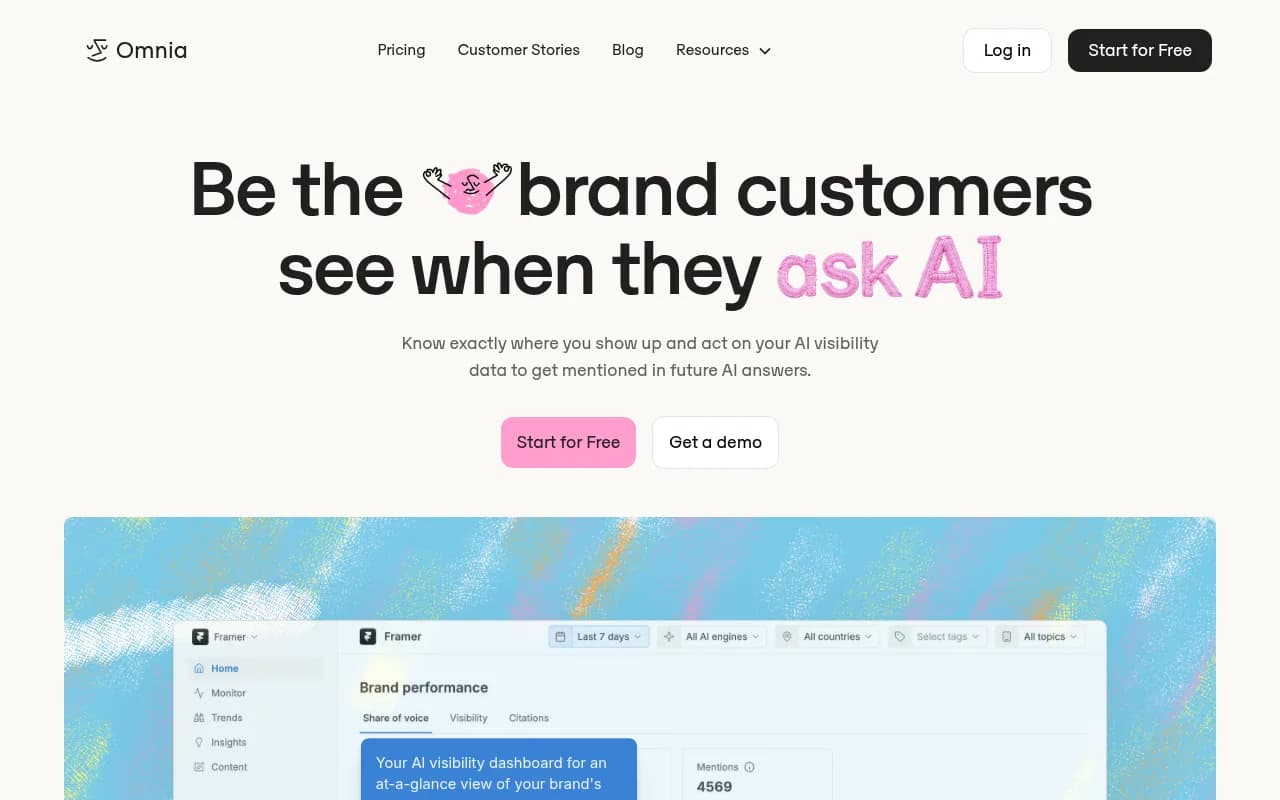
The appeal is simplicity. If you're a small marketing team that just wants to know whether ChatGPT mentions you when someone asks about your category, Omnia gets you there fast. It's not trying to be a full GEO platform -- it's a monitoring tool, and it's priced accordingly.
Bluefish AI
Bluefish AI takes a different angle. It positions itself as an enterprise GEO platform with a focus on narrative quality -- not just whether you appear, but how you're described, which sources influence the model's view of your brand, and how your positioning compares to competitors.
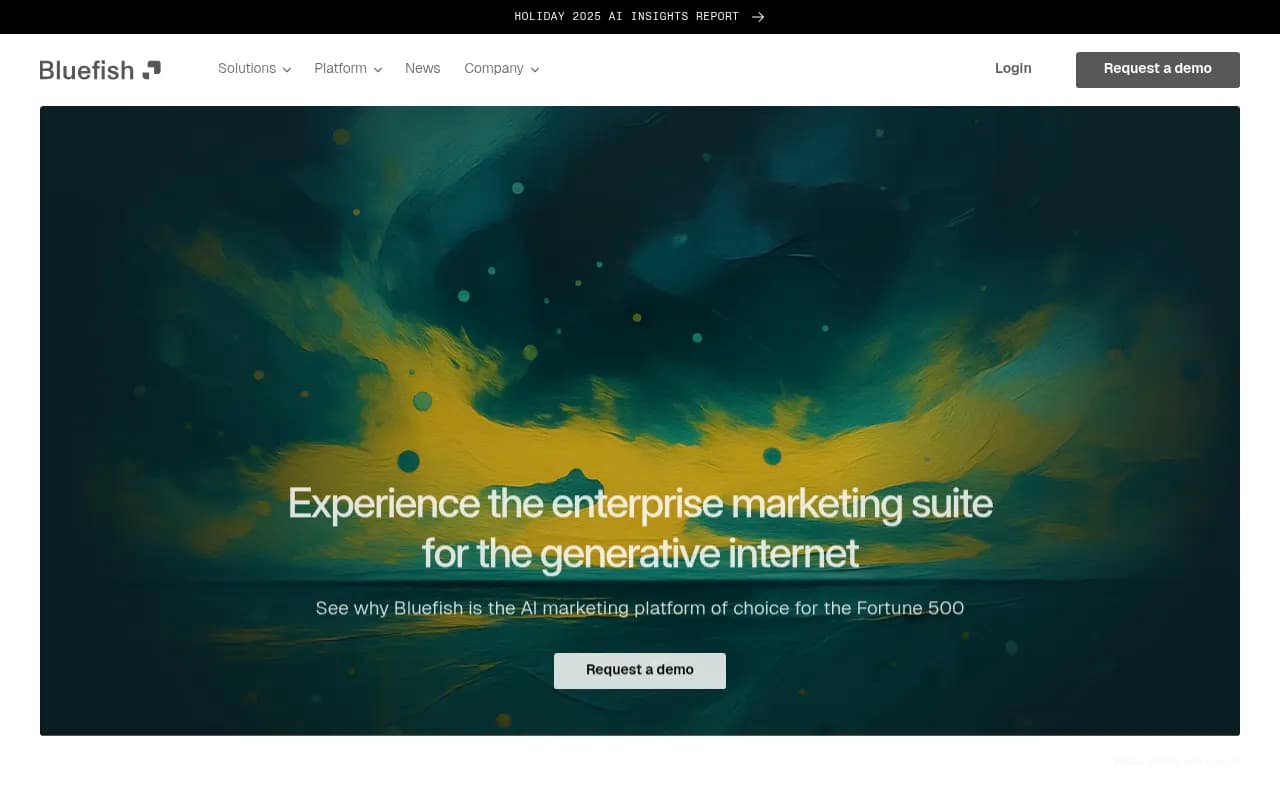
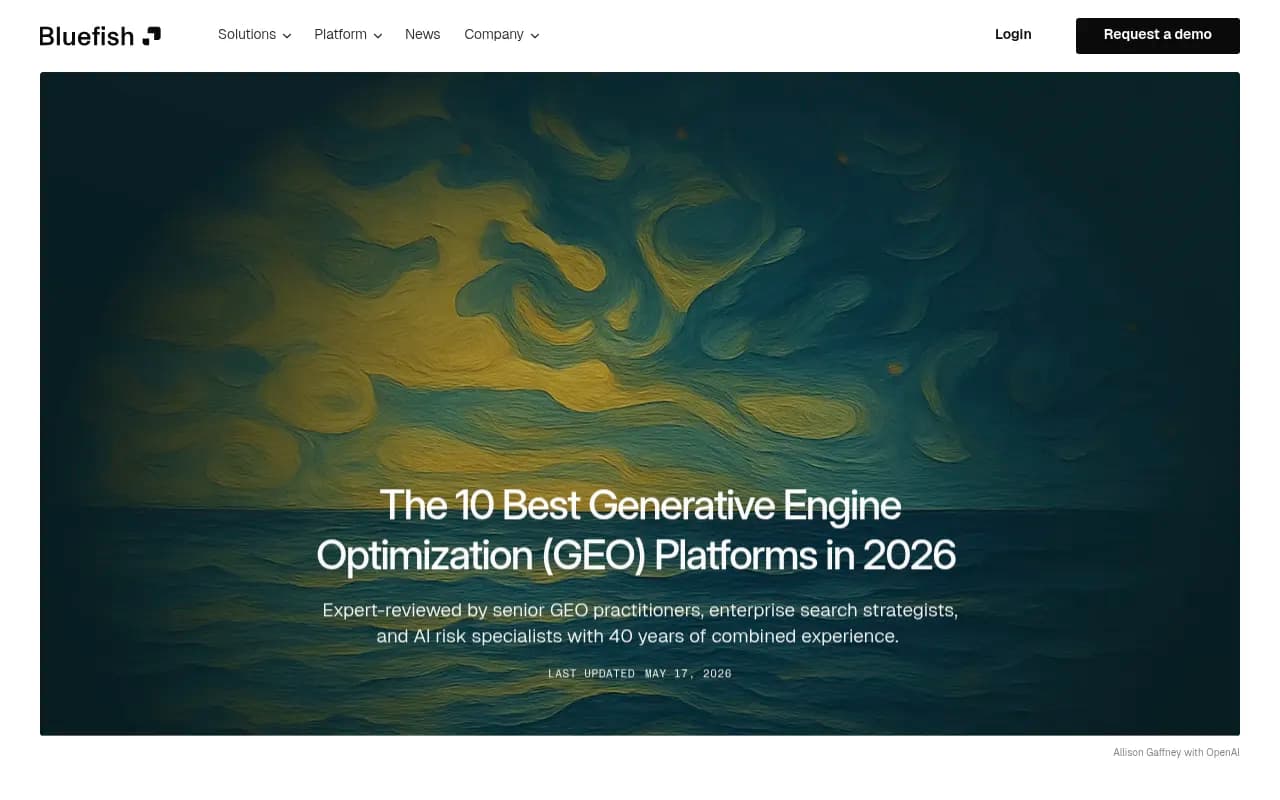
Bluefish's own ranking of the top 10 GEO platforms (published May 2026) places itself first, which you'd expect, but the reasoning is interesting: they emphasize source influence analysis and audience alignment as differentiators. The platform is clearly built for larger teams with dedicated GEO resources.
Promptwatch
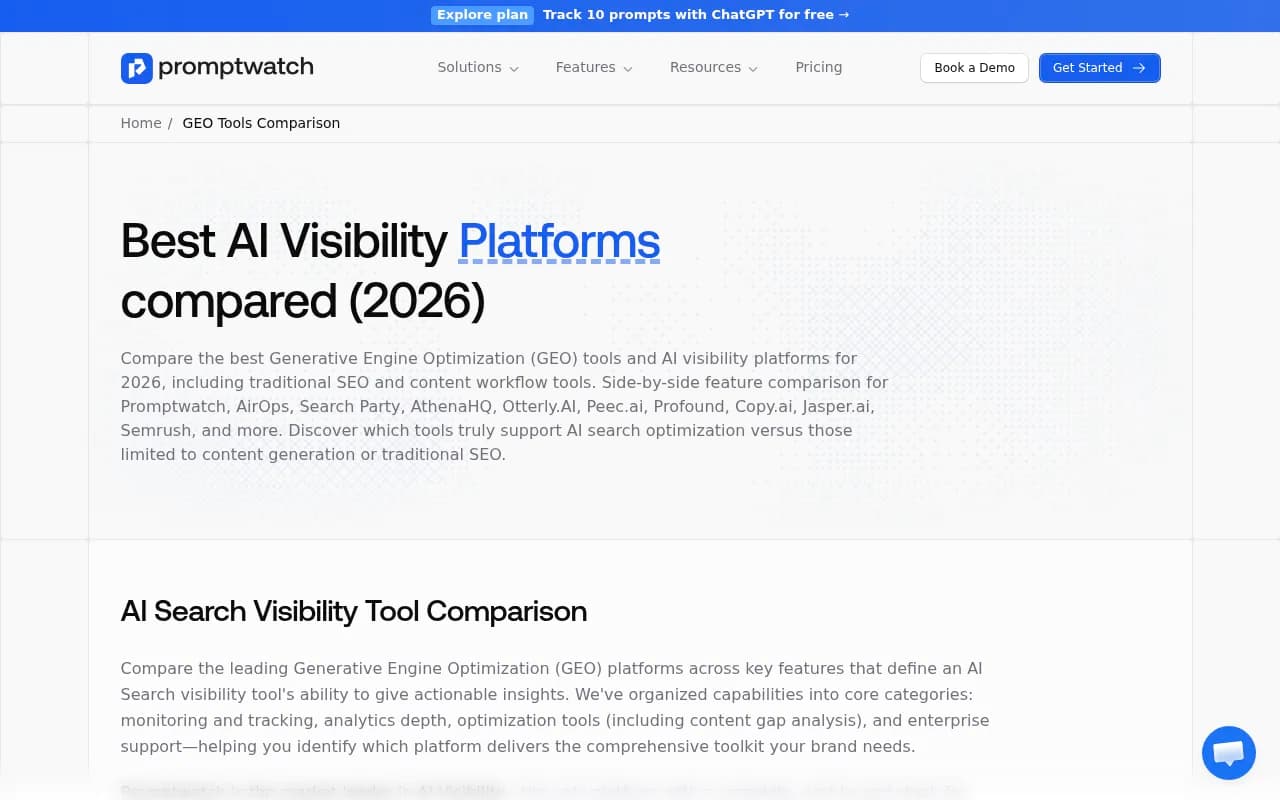
Promptwatch is built around a different premise: monitoring is only useful if it leads somewhere. The platform tracks visibility across 10 AI models (ChatGPT, Claude, Perplexity, Gemini, Grok, DeepSeek, Copilot, Meta AI, Mistral, and Google AI Overviews), but the core value is what happens after you see the data.

The answer gap analysis shows you exactly which prompts competitors rank for that you don't. The built-in AI writing agent then generates content -- articles, listicles, comparisons -- grounded in 880M+ citations analyzed, so it's not generic filler. Then page-level tracking closes the loop by showing which new pages are getting cited and by which models.
Feature comparison
Here's a side-by-side look at the capabilities that actually matter for GEO in 2026:
| Feature | Omnia | Bluefish AI | Promptwatch |
|---|---|---|---|
| AI model coverage | Limited | Multiple major LLMs | 10 models (ChatGPT, Claude, Perplexity, Gemini, Grok, DeepSeek, Copilot, Meta AI, Mistral, Google AIO) |
| Brand mention tracking | Yes | Yes | Yes |
| Competitor visibility tracking | Basic | Yes | Yes, with heatmaps |
| Answer gap analysis | No | Limited | Yes -- shows specific missing prompts |
| Content generation | No | No | Yes -- AI writing agent built in |
| AI crawler logs | No | No | Yes -- real-time logs per model |
| Prompt volume & difficulty scoring | No | No | Yes |
| Reddit & YouTube citation tracking | No | No | Yes |
| ChatGPT Shopping tracking | No | No | Yes |
| Page-level citation tracking | No | Partial | Yes |
| Traffic attribution | No | No | Yes (GSC, snippet, server logs) |
| Multi-language / multi-region | Limited | Yes | Yes |
| Pricing (entry point) | Budget | Enterprise (custom) | $99/mo |
| Free trial | Yes | No | Yes |
| Best for | Small teams, basic monitoring | Enterprise with dedicated GEO teams | Marketing teams that want to act on data |
The table tells most of the story. Omnia and Bluefish AI are both monitoring tools -- they show you what's happening. Promptwatch is the only one of the three that helps you change what's happening.
Where Omnia makes sense
Omnia is a reasonable starting point if you're new to GEO and want to understand the basics before committing to a more expensive platform. The setup is fast, the interface is clean, and you'll get a clear picture of whether your brand is showing up in AI answers.
The limitation is that it stops there. You'll see a visibility score, maybe some mention data, but there's no path from "we're not appearing" to "here's what to do about it." For teams that are just starting to think about AI search, that might be fine for a quarter. But most teams hit the ceiling pretty quickly.
Where Bluefish AI makes sense
Bluefish AI is genuinely strong on the narrative and source analysis side. If your concern is not just whether you appear but how you're described -- whether the AI is saying accurate things about your brand, which third-party sources are shaping the model's perception -- Bluefish has more depth there than most tools.
The enterprise positioning also means it's built for teams with dedicated GEO resources and the budget to match. If you're a large brand with a content team that can act on the insights independently, Bluefish gives you good raw material to work with.
What it doesn't do is generate content or close the optimization loop. You'll need separate tools for that, which adds cost and friction.
Where Promptwatch makes sense
Promptwatch is the right choice when you want to move from tracking to improving. The answer gap analysis is the feature that makes the biggest practical difference: instead of a general sense that "we're not visible enough," you get a list of specific prompts your competitors rank for that you don't, along with the content your site is missing to compete for them.
The built-in content agent then generates that content -- not generic AI filler, but articles grounded in real citation data. And because Promptwatch also tracks which pages get cited by which models, you can see the results of your content work directly in the platform.
The AI crawler logs are also worth calling out. Most platforms have no visibility into how AI engines are actually crawling your site -- which pages they read, how often they return, what errors they hit. Promptwatch surfaces this in real time, which is genuinely useful for diagnosing why you're not being cited even when you have relevant content.
At $99/mo for the Essential plan (1 site, 50 prompts, 5 articles), it's accessible for teams that aren't at enterprise scale yet. The Professional plan at $249/mo adds crawler logs, state/city tracking, and 15 articles per month.
The monitoring-only problem
This is worth saying directly: a lot of GEO platforms in 2026 are monitoring dashboards with a GEO label on them. They'll show you visibility scores, competitor comparisons, and mention trends. That data is useful, but it's not optimization.
The question to ask any platform is: "After I see that I'm not appearing for this prompt, what does the tool help me do about it?" For Omnia and Bluefish AI, the honest answer is "not much -- you'll need to figure that out yourself." For Promptwatch, the answer is a specific workflow: gap analysis, content generation, tracking.
That difference matters more as the AI search landscape matures. In 2024, just knowing you had an AI visibility problem was valuable. In 2026, most teams already know they have a problem. The question is how to fix it.
Pricing summary
| Tool | Entry price | Free trial | Contract |
|---|---|---|---|
| Omnia | Budget (undisclosed) | Yes | Monthly |
| Bluefish AI | Enterprise (custom) | No | Custom |
| Promptwatch | $99/mo (Essential) | Yes | Monthly or annual |
Promptwatch's pricing is the most transparent of the three and the most accessible for teams that aren't at enterprise scale. The free trial lets you run 10 prompts through ChatGPT before committing, which is a reasonable way to see whether the data is useful for your category.
Which one should you pick?
There's no single right answer, but here's a practical way to think about it:
- If you're just starting out and want to understand AI visibility basics without a big investment, Omnia is a low-risk entry point.
- If you're a large enterprise with a dedicated GEO team and your primary concern is brand narrative accuracy and source influence, Bluefish AI has depth in that area.
- If you want to track visibility, identify gaps, generate content to fill them, and measure the results -- all in one platform -- Promptwatch is the clearest choice.
Most marketing teams in 2026 are past the "let's just see what's happening" phase. They need a platform that helps them act. That's where the monitoring-only tools start to feel limiting, and where Promptwatch's optimization loop becomes the more practical option.
The GEO space is moving fast. Whichever platform you choose, make sure it can tell you not just where you stand, but what to do next.