Key takeaways
- All three tools track brand visibility across AI search engines, but they diverge sharply on what they do with that data.
- Peec AI has solid monitoring depth but limited actionability -- Zapier's review called out its lack of trend data and AI crawler insights specifically.
- AthenaHQ goes further with content gap workflows and revenue attribution, but its pricing and complexity skew enterprise.
- Omnia positions itself as the monitoring-plus-execution option for lean teams, with built-in guidance on what to fix.
- If you want the fullest picture -- including crawler logs, Reddit/YouTube signals, and AI content generation in one place -- Promptwatch covers ground none of these three do.
Why this comparison matters right now
AI search has moved from a curiosity to a primary discovery channel faster than most marketing teams expected. ChatGPT, Perplexity, Gemini, and Claude are now answering questions that used to send people to Google -- and the brands that appear in those answers are getting traffic, trust, and conversions that never show up in traditional rank trackers.
The problem is that the tooling hasn't kept pace with the urgency. Most AI visibility platforms launched as monitoring dashboards: they show you a number (your mention rate, your share of voice, your citation count) and then leave you to figure out what to do with it. That's fine if you have a dedicated AI SEO team. Most companies don't.
Omnia, AthenaHQ, and Peec AI are three of the more talked-about options in this space right now. They overlap on the basics but diverge meaningfully on depth, actionability, and who they're actually built for. This guide breaks down the real differences.
What each tool is trying to do
Before getting into features, it helps to understand the design philosophy behind each platform, because that shapes everything else.
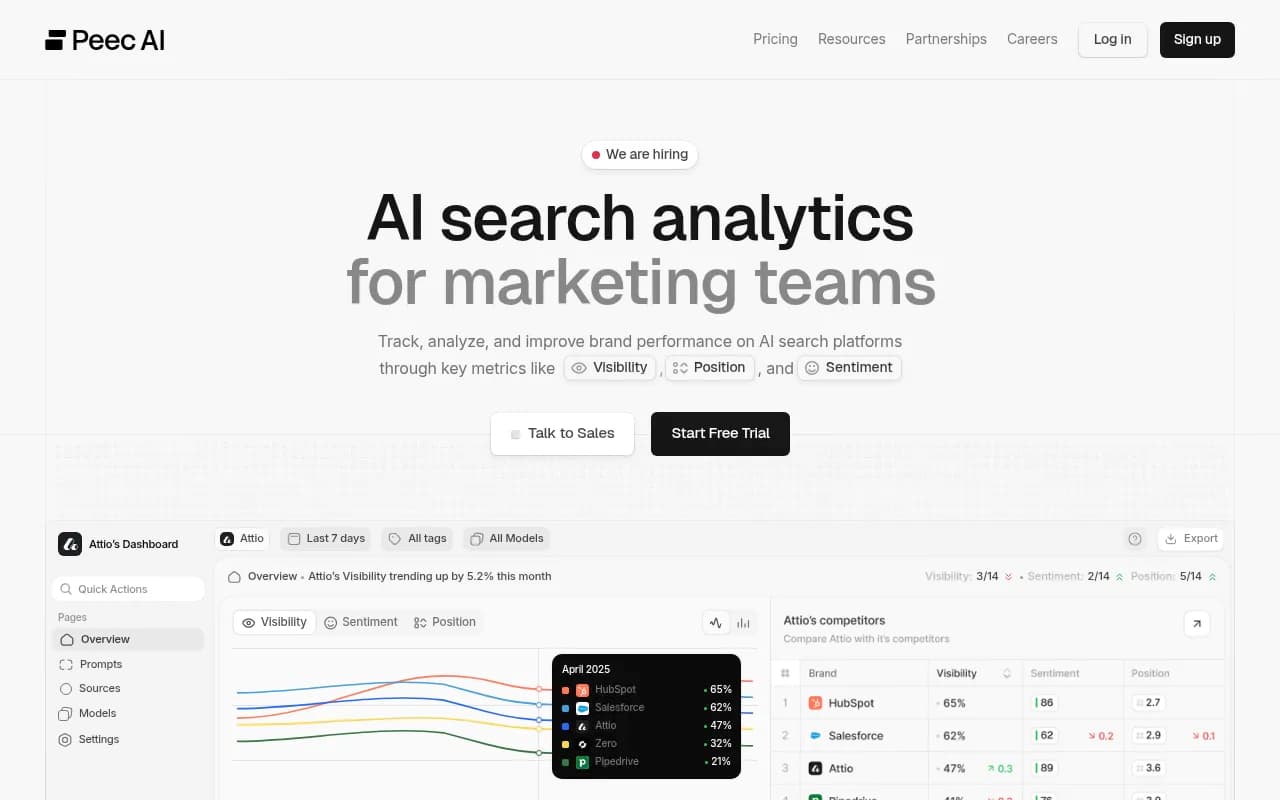
Peec AI was built as a research and monitoring tool. It's strong on data collection -- tracking brand mentions, sentiment, and citation patterns across a handful of AI engines -- and it's often recommended for agencies that want deep analytical data to present to clients. The limitation is that it stops there. Zapier's 2026 review noted that Peec AI is "notably lacking actionable insights, trend data, and AI crawler visibility insights." You get the what, not the what-next.
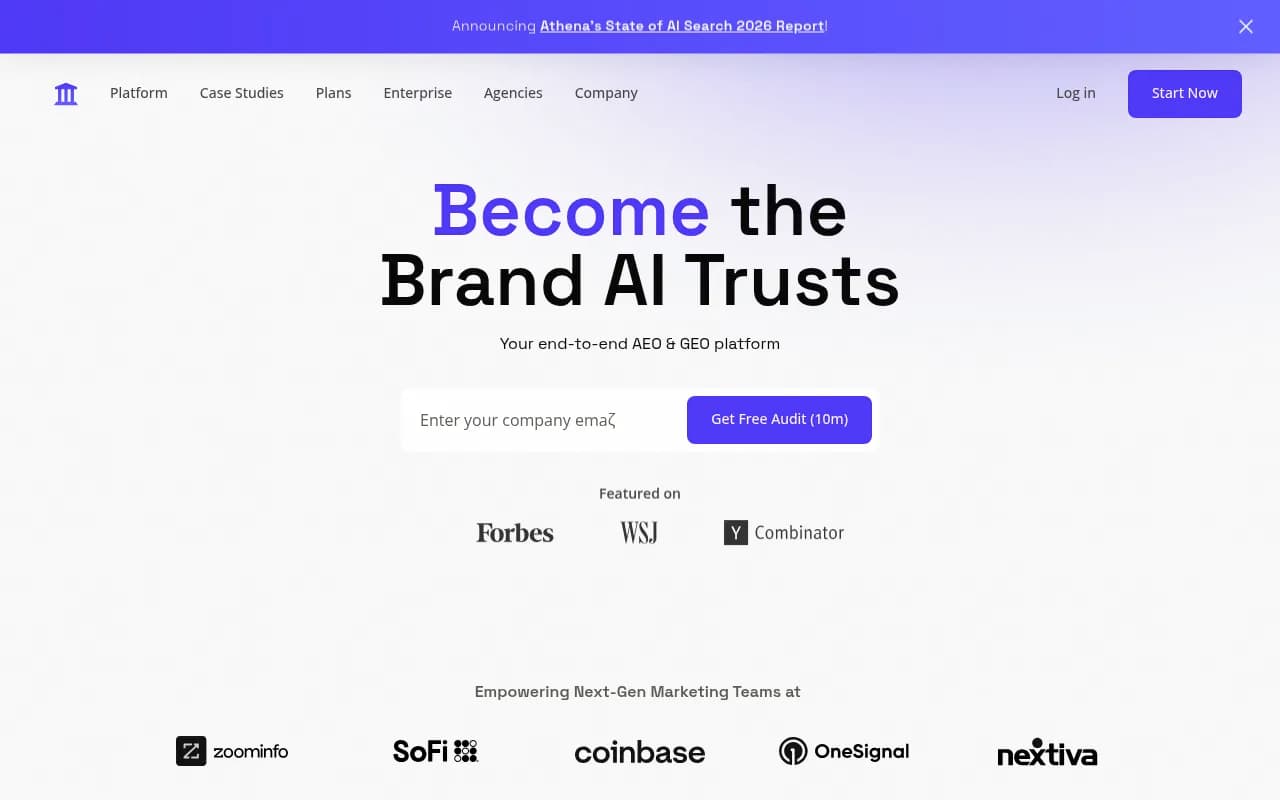
AthenaHQ has a more ambitious scope. It covers 8+ LLMs (ChatGPT, Gemini, Claude, Copilot, and others), and its Athena Citation Engine (ACE) is designed to identify content gaps and draft optimization workflows autonomously. It also connects AI visibility to revenue through Shopify and Google Analytics integrations, which is genuinely useful for e-commerce brands trying to prove ROI. The trade-off is complexity and cost -- AthenaHQ is positioned as an enterprise AEO platform, and it feels like one.
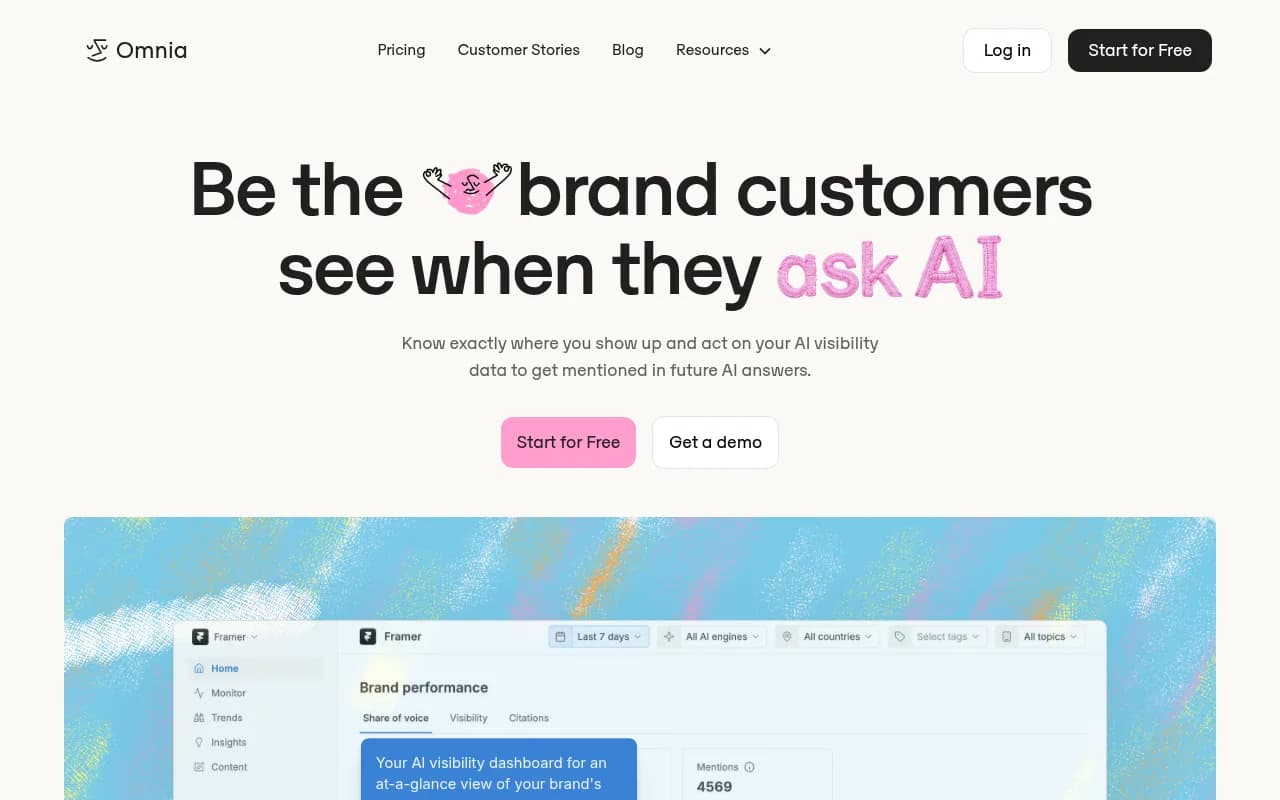
Omnia sits somewhere in the middle. It tracks visibility across AI engines with a focus on citations, share of voice, and geographical tracking, and it includes guidance on where to act -- not just what the numbers say. Their own positioning is explicitly about the "action layer" that tools like Rankscale (and, implicitly, Peec AI) lack. Whether that action layer is deep enough depends on your team's needs.
Feature-by-feature breakdown
LLM coverage
This is the most basic dimension, and the gaps matter more than they look.
| Feature | Omnia | AthenaHQ | Peec AI |
|---|---|---|---|
| LLMs tracked | Multiple (ChatGPT, Perplexity, Gemini, others) | 8+ (ChatGPT, Gemini, Claude, Copilot, and more) | 3 core platforms |
| Google AI Overviews | Yes | Yes | Limited |
| Regional/language tracking | Yes | Yes | Limited |
| Custom persona tracking | Partial | Yes | No |
Peec AI's three-platform coverage is the most significant constraint here. The AI search ecosystem has fragmented fast -- Grok, DeepSeek, Mistral, and Meta AI are all picking up usage, and a tool that only watches ChatGPT, Perplexity, and one other engine will miss a growing slice of the picture. AthenaHQ's 8+ LLM coverage is the strongest of the three on this dimension.
Monitoring depth
All three tools track brand mentions and citations. The differences show up in what they track around those mentions.
Peec AI's strength is research-grade data -- it's good at surfacing citation patterns and giving you a detailed view of how AI engines are referencing your brand across prompts. Reddit discussions from the SEO community consistently recommend it for "deep research and agency-style reporting." That's a real strength for teams that need to build client-facing analysis.
AthenaHQ adds sentiment tracking, competitor benchmarking, and prompt-level analysis. Its competitor heatmaps let you see not just your own visibility but where rivals are appearing that you aren't -- which is more useful for prioritization than raw mention counts.
Omnia's monitoring covers citations, share of voice, and geographical tracking. The geo tracking is worth noting: being cited in AI answers in Germany versus the US can be very different, and tools that ignore regional variation give you a misleading picture of your actual visibility.
The action layer -- where they really diverge
This is the crux of the comparison.
Peec AI has an "Actions" feature that turns visibility data into a prioritized to-do list. That's better than nothing, but the feature is relatively surface-level. It tells you what's wrong without giving you the tools to fix it inside the platform. You still need to go elsewhere to create content, optimize pages, or understand which specific gaps to close first.
AthenaHQ's ACE (Athena Citation Engine) is more autonomous. It can identify content gaps, draft optimization suggestions, and execute multi-step workflows. The revenue attribution layer (connecting AI mentions to actual Shopify or GA conversions) is a genuine differentiator -- most platforms in this space can't close that loop. The downside is that this level of sophistication comes with a learning curve and a price point that smaller teams will feel.
Omnia's action layer is positioned as the clearest path from insight to execution for lean teams. It provides guidance on which prompts to target and what content changes to make, without requiring you to be an AI SEO expert to interpret the data. Whether that's enough depends on whether you need content generation built in or just prioritized recommendations.
Content generation
None of the three tools have particularly deep AI content generation built in. AthenaHQ can draft optimization suggestions through ACE, but it's not a full content writing tool. Omnia and Peec AI don't generate content at all -- they surface gaps and leave the writing to you.
This is worth flagging because the gap between "knowing what content you need" and "having that content written and published" is where most teams stall. If content creation is a bottleneck for your team, none of these three platforms fully solve it.
AI crawler logs
This is a feature that separates serious GEO platforms from monitoring dashboards. Knowing that ChatGPT or Perplexity crawled your site, which pages they read, and whether they encountered errors is fundamentally different from knowing your mention rate. Crawler logs tell you about the discovery process, not just the output.
Peec AI doesn't offer this. AthenaHQ has some crawler visibility features. Omnia's crawler log capabilities are limited compared to more specialized platforms.
Pricing and accessibility
Exact pricing for all three tools changes frequently, so treat these as directional:
- Peec AI is generally the most affordable entry point, which is part of why it's popular with agencies doing volume work.
- Omnia is mid-market, positioned for marketing teams that need more than basic monitoring but aren't ready for enterprise spend.
- AthenaHQ skews enterprise, with pricing that reflects its broader feature set and revenue attribution capabilities.
Who each tool is actually for
Peec AI makes most sense for agencies that need to produce detailed AI visibility reports for clients, or for teams that have a separate content workflow and just need reliable data to feed it. If you're comfortable doing your own analysis and have writers standing by, Peec AI's monitoring depth is solid. If you need the platform to tell you what to do next, it'll frustrate you.
AthenaHQ is the right fit for enterprise marketing teams or e-commerce brands where proving ROI is a hard requirement. The Shopify and GA integrations matter a lot if you're trying to convince a CFO that AI search visibility is worth the budget. The complexity is real, but so is the capability.
Omnia is probably the best fit for mid-sized marketing teams that want monitoring and action guidance without the enterprise overhead. The geo tracking and share-of-voice features are genuinely useful, and the action layer is clearer than Peec AI's even if it's not as automated as AthenaHQ's.
What none of them do well
Being honest about the gaps matters here, because all three tools have real limitations.
None of them track Reddit or YouTube as citation sources. This is a bigger deal than it sounds: AI engines like ChatGPT and Perplexity regularly cite Reddit threads and YouTube videos in their answers. If a Reddit discussion is shaping what AI says about your category and you can't see it, you're missing a meaningful lever.
None of them have strong prompt volume and difficulty scoring. Knowing that you're not appearing for a prompt is useful. Knowing whether that prompt gets asked 50 times a day or 50,000 times, and how hard it is to win, is what lets you prioritize. Without that, you're optimizing blind.
The content generation gap is also real. All three tools can tell you what content you need. None of them will write it for you in a way that's grounded in actual citation data and engineered to get picked up by AI models.
If those gaps matter to your team, it's worth looking at platforms that go further. Promptwatch covers all of these -- Reddit/YouTube citation tracking, prompt volume and difficulty scoring, AI crawler logs, and a built-in content generation tool trained on 880M+ citations. It's the platform that closes the loop from gap identification to content creation to traffic attribution.

Side-by-side summary
| Capability | Peec AI | AthenaHQ | Omnia | Promptwatch |
|---|---|---|---|---|
| LLMs tracked | 3 | 8+ | Multiple | 10+ |
| Geo/regional tracking | Limited | Yes | Yes | Yes |
| Competitor benchmarking | Partial | Yes | Yes | Yes |
| Action recommendations | Basic | Advanced (ACE) | Yes | Yes |
| Content generation | No | Partial | No | Yes (citation-grounded) |
| AI crawler logs | No | Partial | Limited | Yes |
| Reddit/YouTube tracking | No | No | No | Yes |
| Revenue attribution | No | Yes (Shopify/GA) | Limited | Yes (GSC, snippet, logs) |
| Prompt volume/difficulty | No | Partial | No | Yes |
| Best for | Agencies, reporting | Enterprise, e-commerce | Mid-market teams | Teams that need to act |
The honest verdict
All three tools are legitimate. Peec AI is a solid monitoring platform with real depth for research-heavy workflows. AthenaHQ has the most complete enterprise feature set of the three, especially if revenue attribution is a priority. Omnia hits a useful middle ground for teams that want clearer action guidance without enterprise complexity.
The real question is whether monitoring -- even good monitoring -- is enough. The teams getting ahead in AI search right now aren't just tracking their visibility scores. They're identifying specific content gaps, publishing content engineered to get cited, and measuring whether it worked. That full loop is what separates a tracker from an optimization platform.
If you're evaluating tools in 2026, start by asking: after I see the data, what does this platform help me do about it? The answer to that question will tell you more than any feature list.