Key takeaways
- A standard SEO brief optimizes for Google rankings; a GEO brief optimizes for AI citations — and the two require meaningfully different inputs
- GEO briefs need prompt mapping (not just keyword targeting), citation signal research, and explicit answer-ready formatting instructions
- Writers need to know which AI models you're targeting, what competitors are being cited for, and how to structure responses that AI engines can extract and quote
- Tools like Promptwatch can surface the exact prompts and content gaps your brief should address, so you're not guessing
Most content briefs were built for a world where Google reads your page and ranks it. That world still exists, but it's sharing real estate with something new: AI engines that read your page, extract the most useful parts, and quote them directly to users who never click through.
Writing for that second scenario requires a different brief. Not a completely different document — a lot of the fundamentals carry over — but there are several things a standard SEO brief simply doesn't ask for, and if your writers don't have them, the content won't get cited.
This guide walks through what a GEO content brief needs that a standard one misses. I'll assume you already know the SEO basics (keyword, intent, headings, word count), so I'll skip those and focus on the delta.
What a standard SEO brief covers (and why it's not enough)
A solid SEO brief typically includes: primary keyword, secondary keywords, search intent, target word count, suggested headings, competitor URLs to beat, internal links, meta title and description, and brand voice notes.
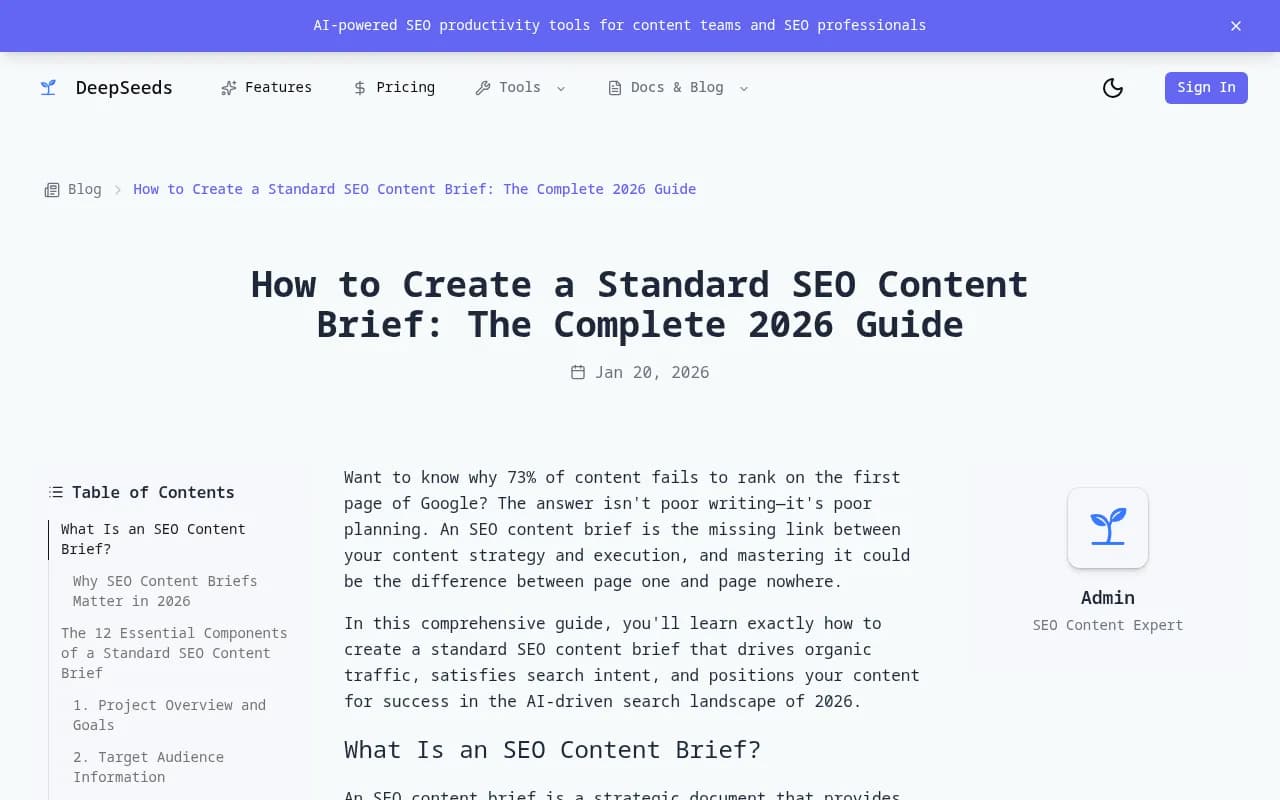
That's a reasonable checklist for ranking in traditional search. The problem is that AI engines don't rank pages the same way Google does. They don't care that your H1 contains the exact keyword. They care whether your page contains a clear, extractable answer to a specific question — and whether your domain is one they've learned to trust as a source.
A brief that only covers SEO signals will produce content that ranks fine in Google but gets ignored by ChatGPT, Perplexity, and Claude. In 2026, that's leaving a significant share of discovery traffic on the table.
The GEO-specific additions your brief needs
1. Prompt mapping instead of (or alongside) keyword targeting
Keywords describe what someone types into a search bar. Prompts describe what someone asks an AI. They're related but not the same.
"best project management software" is a keyword. "What's the best project management software for a 10-person remote team that uses Slack?" is a prompt. AI engines handle the second form constantly, and the content they cite tends to answer the specific version, not the generic one.
Your GEO brief should include:
- The primary prompt you're targeting (written as a natural question or instruction)
- 3-5 related prompt variations that branch off the main one (these are sometimes called "query fan-outs")
- The persona asking the prompt — their role, context, and what they actually need to decide
This is different from a keyword + search intent combo. It forces the writer to think about the full conversational context, not just the topic.
Tools like Promptwatch surface these prompt variations automatically, along with volume estimates and difficulty scores, so you're not inventing them from scratch.

2. Citation signal research
When an AI engine cites a source, it's not random. The models have learned which domains, page types, and content formats tend to contain reliable, specific answers. Before your writer starts, they should know:
- Which pages are currently being cited for your target prompts (and why)
- Whether Reddit threads, YouTube videos, or specific third-party domains are dominating citations
- What those cited sources say that your existing content doesn't
This is the GEO equivalent of competitor analysis in a standard brief — but instead of looking at who ranks on page one, you're looking at who gets quoted in AI responses. The gap between those two lists is often surprising.
A tool like Promptwatch's Answer Gap Analysis does this directly: it shows you which prompts competitors appear in that you don't, and what content is missing from your site to close that gap.
3. An explicit "answer block" instruction
This is the single most practical thing you can add to a brief. AI engines extract short, self-contained passages from longer pages. If your content doesn't contain a passage that directly answers the target prompt in 2-4 sentences, it's much harder to cite.
Your brief should specify:
- The exact question the answer block should address
- The format (direct answer first, then supporting detail — not the other way around)
- A target length (50-150 words is usually the sweet spot)
- Whether a definition, a comparison, a step-by-step, or a recommendation is the right answer type
This is similar to optimizing for featured snippets, but the bar is different. Featured snippets reward concise definitions. AI citations reward specificity — concrete names, numbers, conditions, and caveats. "It depends" is not a citable answer. "For teams under 20 people, X is usually the better choice because Y" is.
4. E-E-A-T signals the writer needs to include
Google's E-E-A-T framework (Experience, Expertise, Authoritativeness, Trustworthiness) has been around for a while, but AI engines apply a version of it too. Content that signals first-hand experience or genuine expertise gets cited more often than content that reads like a summary of other summaries.
Your brief should tell the writer:
- What first-person experience or data to draw on (e.g., "reference our internal benchmark study from Q1 2026")
- Which specific claims need a named source (not "experts say" — an actual citation)
- Whether the author's credentials should appear in the content itself (not just a bio)
- Any proprietary data, original research, or unique perspectives that should be woven in
This is often missing from standard SEO briefs, which focus on structure and keywords but leave the credibility signals up to the writer. For GEO, those signals are part of the brief.
5. Formatting instructions for AI extractability
Standard SEO briefs specify headings and word count. GEO briefs need to go further on formatting because AI engines parse structure differently than humans do.
Specific instructions to include:
- Use a TL;DR or summary box at the top of the article — AI engines frequently pull from these
- Write headings as questions where possible (they match prompt patterns more naturally)
- Use short paragraphs (3-4 sentences max) so individual passages can be extracted cleanly
- Include at least one table or structured comparison if the topic involves multiple options
- Avoid burying the key answer in the middle of a long paragraph — front-load conclusions
The "utility writing" concept is useful here: take any sentence from the middle of your content and ask whether it makes sense in complete isolation. If someone reads that sentence without any context, can they extract something specific and useful? If not, the sentence probably needs to be rewritten. This test, described by SEO consultant Rammon, catches a lot of vague filler that AI engines skip over.
6. Target AI models and their known preferences
Different AI engines have different citation behaviors. Perplexity cites sources aggressively and shows URLs. ChatGPT tends to synthesize without citing unless using Browse mode. Google AI Overviews pull heavily from pages that already rank well in traditional search. Claude tends to favor authoritative, well-structured long-form content.
Your brief doesn't need a deep technical breakdown of each model, but it should specify:
- Which AI engines matter most for your audience (your analytics or a GEO platform will tell you this)
- Any known formatting preferences for those models (e.g., if you're targeting Google AI Overviews, traditional on-page SEO signals still matter a lot)
- Whether you're targeting a specific use case like ChatGPT Shopping, which has its own citation logic for product recommendations
7. Competitor AI visibility data
A standard brief includes competitor URLs to beat in Google. A GEO brief should also include:
- Which competitors are currently appearing in AI responses for your target prompts
- What angle or claim those competitors are being cited for
- What your content needs to say differently to displace them (or appear alongside them)
This isn't about copying competitors — it's about understanding what the AI has already learned to trust and making sure your content is at least as specific and credible. If a competitor is being cited because they published original research, you need to know that before your writer starts.
A side-by-side comparison
Here's how a standard SEO brief and a GEO brief differ across the key elements:
| Element | Standard SEO brief | GEO content brief |
|---|---|---|
| Keyword targeting | Primary + secondary keywords | Primary prompt + query fan-outs |
| Search intent | Informational / commercial / etc. | Prompt persona and conversational context |
| Competitor research | Top-ranking URLs in Google | Pages currently cited in AI responses |
| Answer optimization | Featured snippet targeting | Answer blocks for AI extraction (50-150 words) |
| Credibility signals | E-E-A-T mentioned loosely | Specific data, sources, and experience to include |
| Formatting | Headings, word count | Question headings, TL;DR box, short paragraphs, tables |
| AI model targeting | Not included | Target models specified with known preferences |
| Gap analysis | Keyword gaps vs competitors | Prompt gaps vs competitors in AI responses |
| Traffic attribution | Google Analytics / GSC | AI traffic attribution (crawler logs, server logs) |
Tools that help you build GEO briefs
A few tools are worth knowing about here, depending on what part of the brief you're building.
For the prompt mapping and gap analysis sections, Promptwatch is the most complete option — it surfaces which prompts competitors appear for, estimates prompt volumes, and generates content directly from that data. It's built around the brief-to-content-to-tracking loop, which is exactly what GEO requires.
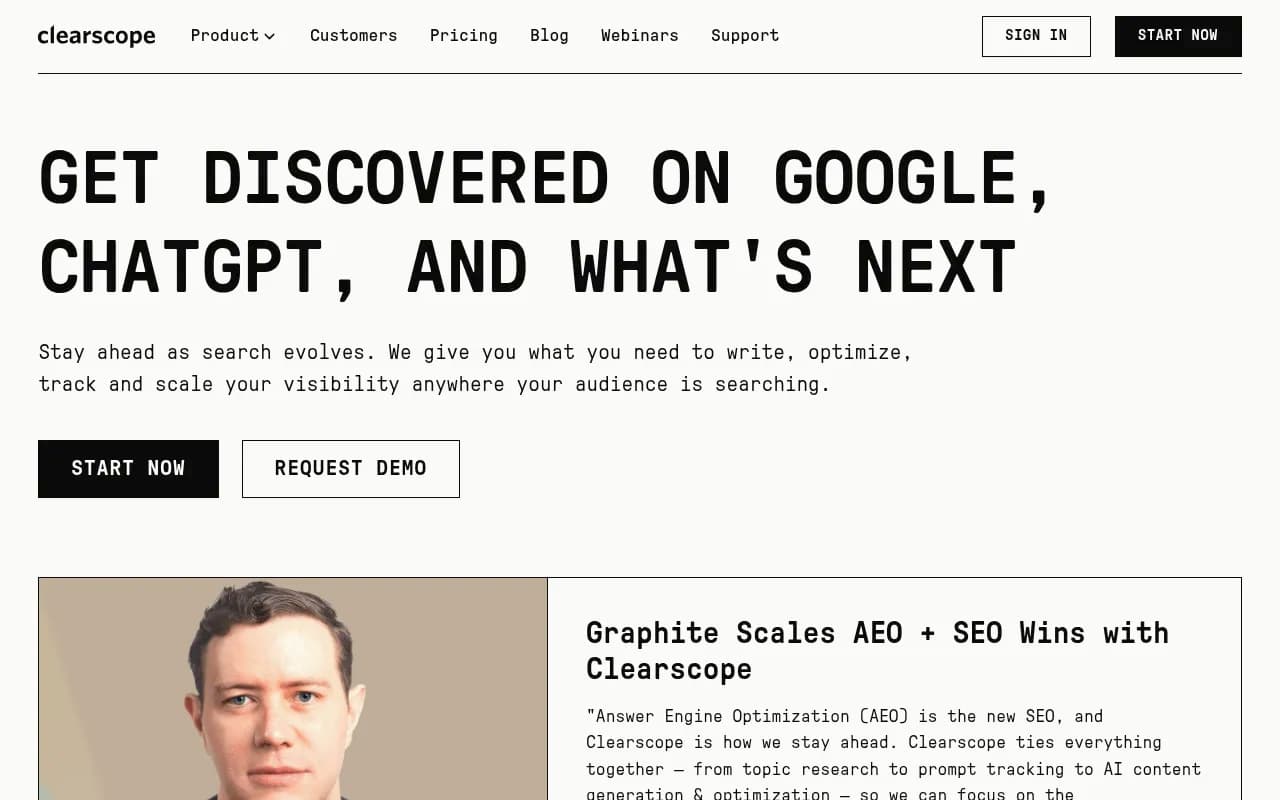
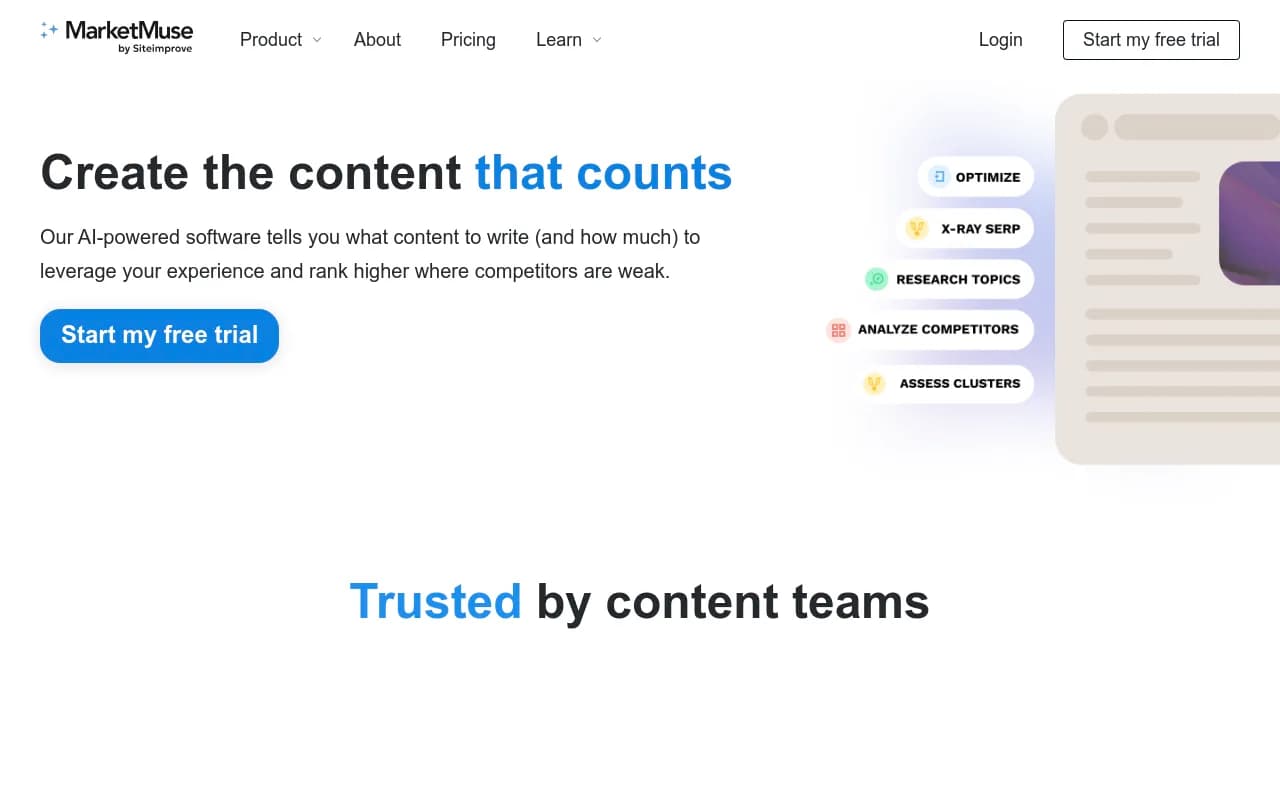
For the content optimization and formatting side, tools like Clearscope and MarketMuse help ensure your content covers the right topics and entities — useful for both SEO and GEO.
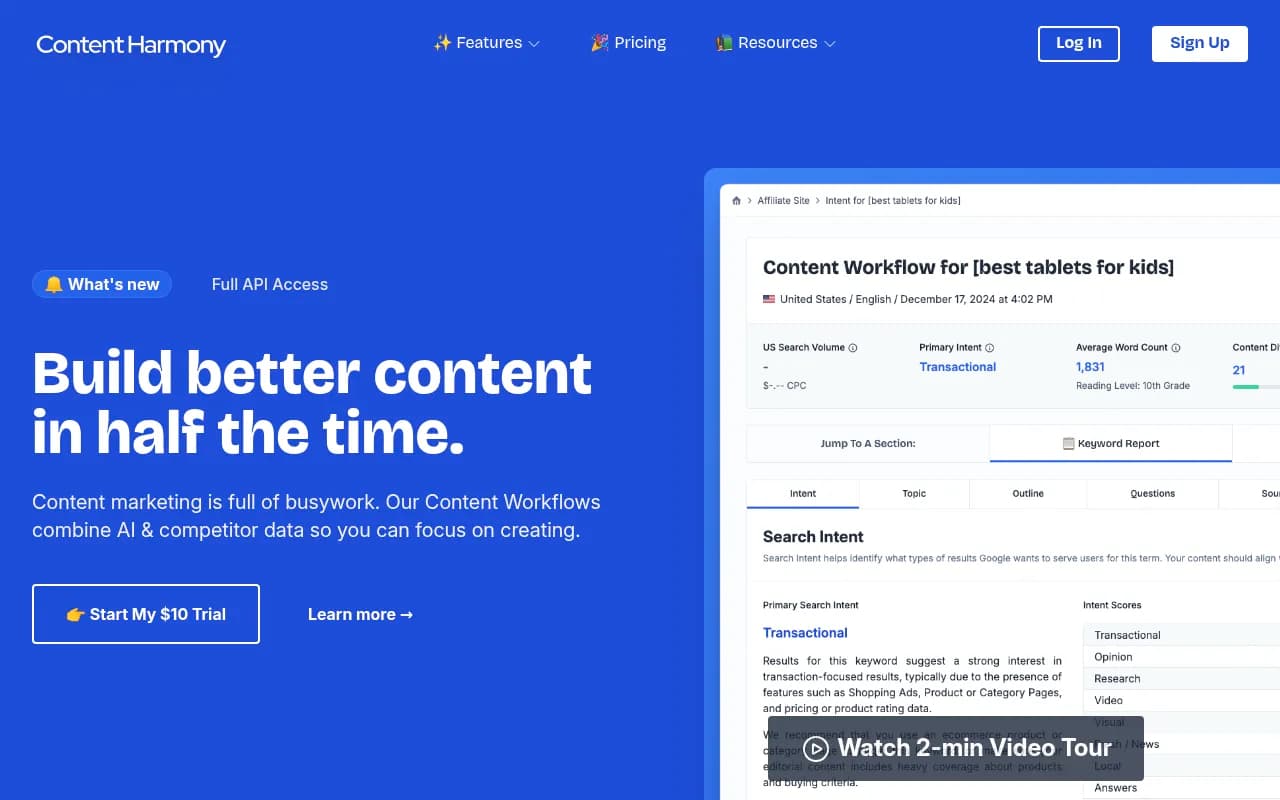
For building the brief document itself, Content Harmony has a solid AI-powered brief format that's closer to GEO-ready than most alternatives.
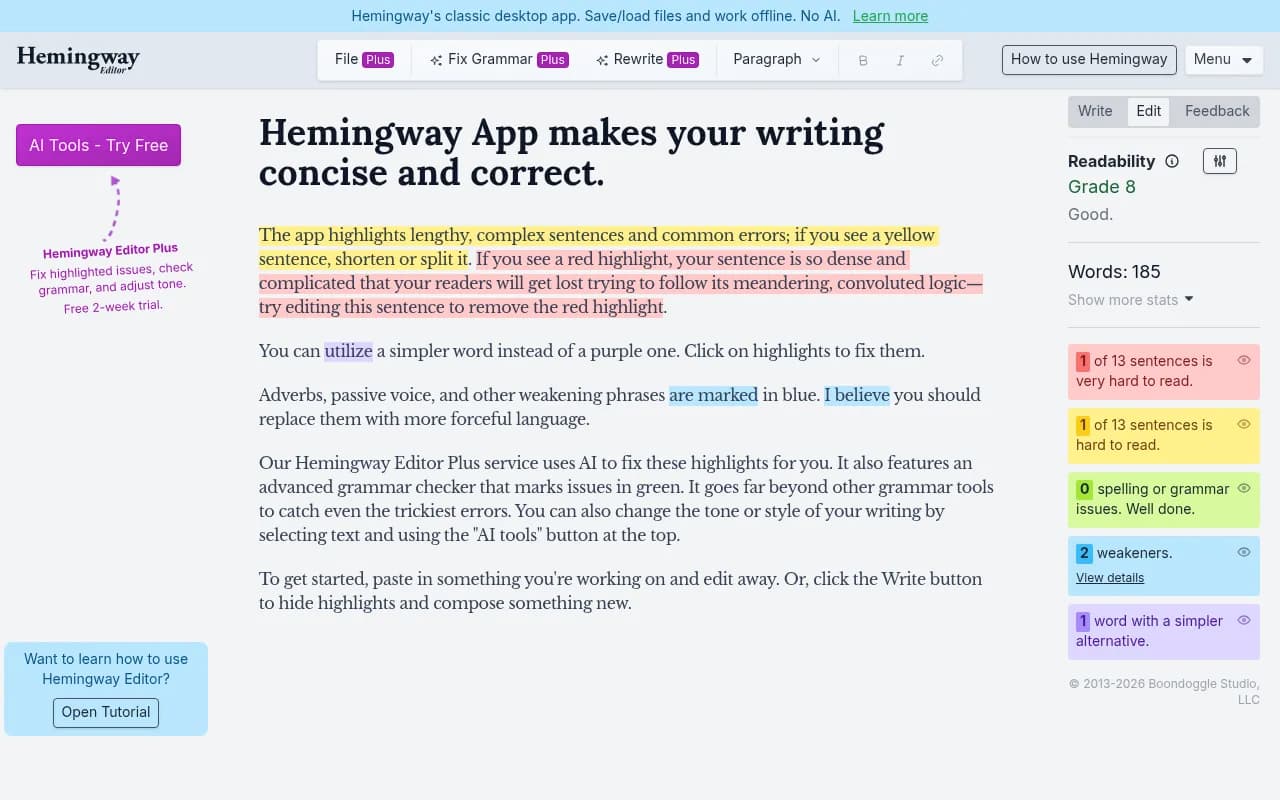
And if you want to check how your content reads from an extractability standpoint — whether individual sentences are specific enough to be citable — the Hemingway App is a surprisingly useful gut-check tool.
A note on what doesn't change
It's worth being clear: a GEO brief doesn't replace the SEO fundamentals. Keyword research still matters. Heading structure still matters. Word count still matters. Google AI Overviews in particular pull heavily from pages that rank well in traditional search, so if your SEO is weak, your GEO will suffer too.
The GEO additions are layered on top, not substituted in. The brief gets longer and more specific, not shorter and more abstract.
What changes most is the mindset. A standard SEO brief asks: "How do we get this page to rank?" A GEO brief asks: "How do we get this page to be quoted?" Those are related questions, but the second one demands more specificity, more credibility signaling, and more attention to how individual passages read in isolation.
Putting it together
If you're updating your brief template today, the quickest wins are:
- Add a "target prompt" field alongside your primary keyword
- Add an "answer block" section with a specific question and format instruction
- Add a "currently cited competitors" section with notes on what they're being cited for
- Add formatting instructions for TL;DR boxes and question-format headings
- Specify which AI models matter for this piece
That's enough to meaningfully change what your writers produce. The more advanced additions — prompt volume data, query fan-outs, AI crawler logs — come with time and better tooling.
The content teams that are winning in AI search right now aren't doing something radically different. They're just being more specific about what they want writers to produce, and they're using data about AI citation behavior to inform that specificity. A better brief is where that starts.