Key takeaways
- AI models like ChatGPT, Perplexity, and Gemini draw heavily from public conversations, Reddit threads, and high-authority content when forming recommendations -- social listening gives you a window into that source material.
- Sentiment shifts, emerging complaint patterns, and trending topics on social media often show up in AI responses weeks later -- catching them early is a real competitive edge.
- The best approach combines social listening (what people are saying) with AI visibility tracking (how AI models are interpreting and repeating it).
- Tools like Brand24, Meltwater, Sprout Social, and BuzzSumo are strong starting points for social signal collection.
- Turning those signals into content that AI models actually cite requires a separate layer -- that's where platforms built for Generative Engine Optimization (GEO) come in.
There's a question most marketing teams aren't asking yet: where does ChatGPT get its opinions about your brand?
It's not magic. AI models like ChatGPT, Perplexity, Claude, and Gemini are trained on -- and in many cases actively retrieve from -- public web content. That includes news articles, review sites, forum discussions, Reddit threads, YouTube comments, and social media. When someone asks "what's the best CRM for small businesses?" or "is [Brand X] worth it?", the model synthesizes what it has seen humans say about those topics.
Which means the conversations happening right now on social media are, in a very real sense, pre-training data for tomorrow's AI recommendations.
Social listening tools were built to track those conversations for brand management and marketing purposes. But in 2026, they have a second, arguably more important job: helping you predict and influence what AI models will say about you next.
This guide walks through exactly how to do that.
Why social conversations feed AI recommendations
Before getting into tools and tactics, it's worth understanding the mechanism.
Large language models are trained on massive datasets scraped from the public web. Reddit, in particular, is heavily represented -- it's one of the most-cited sources in AI responses across ChatGPT, Perplexity, and Google AI Overviews. YouTube video transcripts, blog comments, and forum threads also show up frequently.
Beyond training data, retrieval-augmented generation (RAG) means many AI models actively pull live web content when answering questions. Perplexity does this by design. ChatGPT's web browsing mode does it too. So a Reddit thread from last week can directly influence a recommendation made today.
The pattern looks like this:
- A frustration or trend starts bubbling up in social conversations ("this brand's customer support is terrible")
- It spreads to forums, review sites, and news coverage
- AI models absorb that signal -- through training or live retrieval
- The model starts reflecting that sentiment in its recommendations
According to Agility PR's 2026 social listening guide, AI systems can now "discern tone, detect new subjects, and predict what individuals will say next" -- meaning the gap between social signal and AI output is shrinking fast.
The brands that monitor those early signals -- and respond to them with content -- are the ones that end up getting cited positively. The ones that don't are the ones that get quietly filtered out of AI recommendations, or worse, mentioned negatively.
Step 1: Set up social listening for AI-relevant signals
Not all social listening is created equal for this purpose. You're not just tracking brand mentions for reputation management. You're specifically hunting for signals that are likely to influence AI model outputs.
Here's what to monitor:
Complaint and frustration patterns
These are the most dangerous signals. If a specific complaint about your product or service starts gaining traction -- especially on Reddit or Twitter/X -- it can become a persistent negative signal in AI responses within weeks. Set up alerts for your brand name combined with negative sentiment keywords.
Category-level conversations
What are people asking about in your product category? "Best project management tool for remote teams" or "alternatives to [competitor]" are exactly the kinds of prompts people type into AI models. Tracking these conversations tells you which angles AI models are being trained to have opinions on.
Competitor mentions and gaps
When competitors get praised or criticized, that shapes the relative landscape AI models use to compare options. If your competitor is getting roasted for pricing and you're not tracking that, you're missing a chance to position yourself in the content you create.
Reddit and YouTube specifically
These two platforms are disproportionately influential in AI outputs. Reddit threads frequently appear as cited sources in Perplexity responses. YouTube transcripts are indexed and referenced. Prioritize monitoring these over, say, Instagram or TikTok for AI prediction purposes.
Tools worth using for this layer:
Brand24 monitors 25M+ sources in real time, including Reddit, and has strong sentiment analysis. It's one of the more accessible options for teams that don't need enterprise scale.
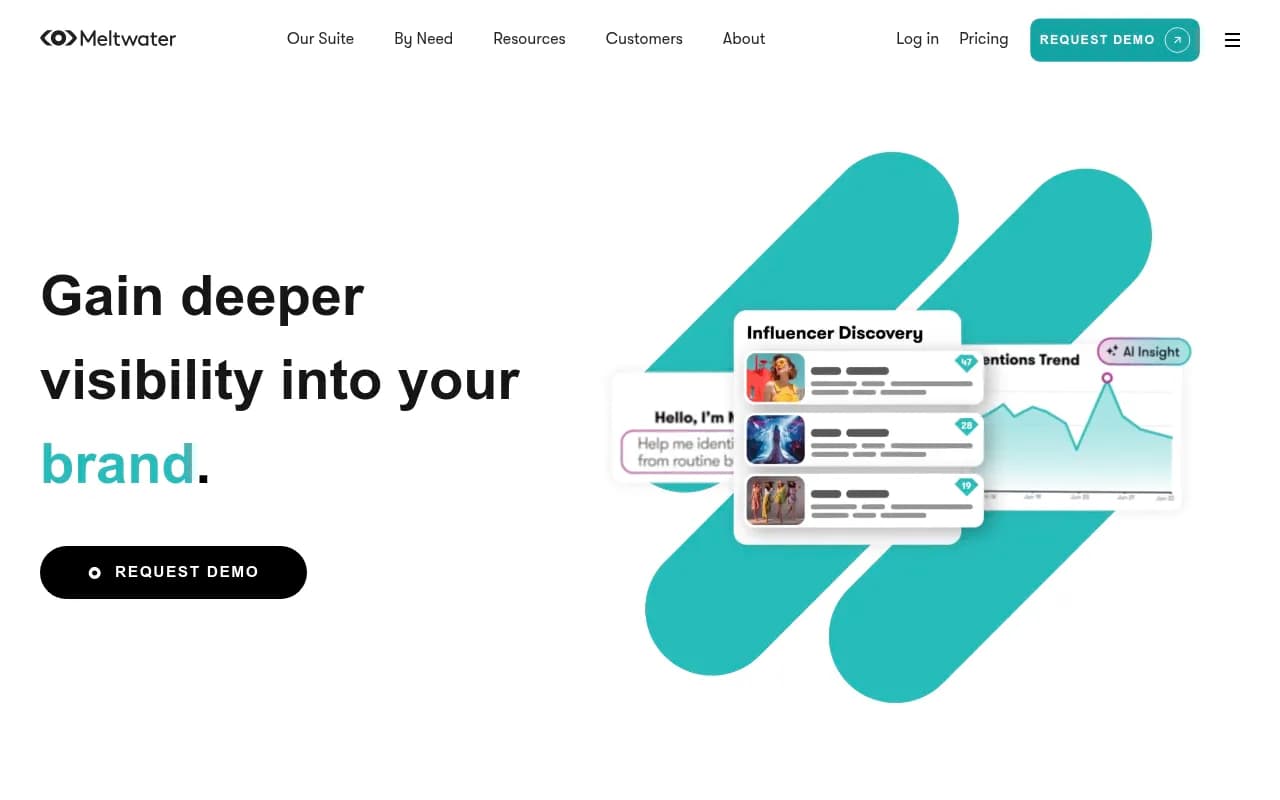
Meltwater covers social, news, and consumer intelligence at scale -- better suited for larger teams that want to correlate social signals with broader media coverage.
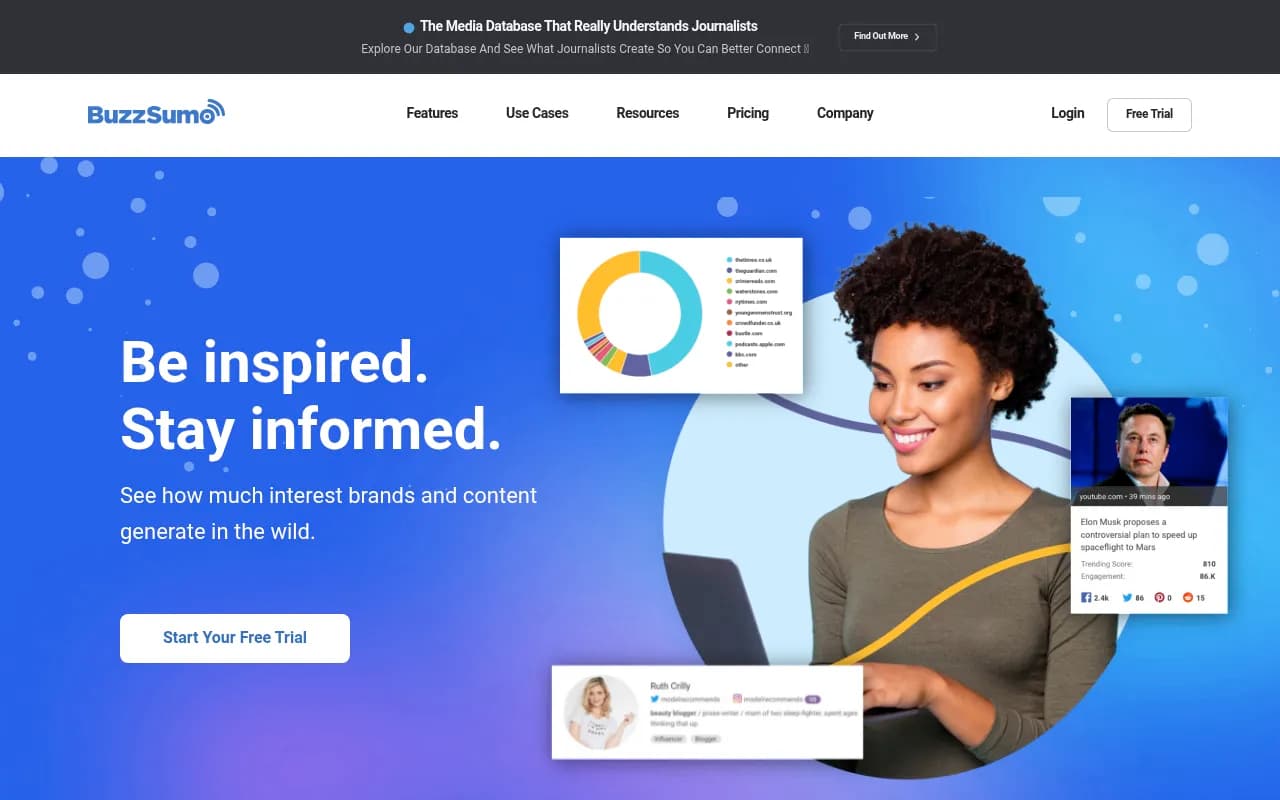
BuzzSumo is particularly good for identifying which content formats and topics are gaining traction, which helps you predict what AI models will encounter most.
Sprout Social combines listening with analytics, making it easier to spot trend velocity -- how fast a topic is accelerating, not just whether it exists.
Step 2: Identify the prompts people are actually asking AI models
Social listening tells you what people are saying to each other. But you also need to know what they're asking AI models directly -- because those prompts are what determine which brands get recommended.
This is where the two disciplines need to work together.
Think about the journey: someone has a problem, they talk about it on Reddit, they ask ChatGPT for a solution. The Reddit conversation and the ChatGPT prompt are often nearly identical in intent. Tracking social conversations gives you a proxy for prompt intent.
Practically, this means:
- Look for question-format posts on Reddit and forums ("what's the best X for Y?")
- Track "alternatives to" and "vs" discussions -- these map directly to comparison prompts
- Monitor "I switched from X to Y because..." posts -- these shape AI sentiment about relative positioning
- Watch for "does anyone know if X does Y?" questions -- these reveal capability gaps that AI models will try to answer
You can also go directly to the source. Tools built for AI visibility tracking show you actual prompt volumes -- what people are typing into ChatGPT and Perplexity -- along with which brands are getting cited in the responses.
Promptwatch does this with what it calls Prompt Intelligence: volume estimates and difficulty scores for specific prompts, plus query fan-outs that show how one question branches into related sub-queries. Pairing that data with your social listening gives you a much clearer picture of where the gaps are.

Step 3: Map social signals to content gaps
Once you know what people are saying and what they're asking AI models, the next step is identifying where your brand is absent from the conversation -- and therefore absent from AI recommendations.
This is the answer gap problem. AI models can only recommend you if they've encountered credible, relevant content about you in the context of a specific question. If no such content exists, they'll recommend whoever does have it.
The mapping exercise looks like this:
| Social signal | Likely AI prompt | Content gap |
|---|---|---|
| Reddit thread: "does [your brand] integrate with Slack?" | "Does [brand] have Slack integration?" | No clear integration page or blog post |
| Twitter complaints about onboarding complexity | "Is [brand] easy to set up?" | No onboarding guide or comparison content |
| Forum discussion: "[competitor] vs [your brand]" | "[competitor] vs [your brand] comparison" | No comparison page targeting this query |
| YouTube comments praising a competitor's support | "Which [category] tool has the best support?" | No content addressing your support quality |
Each row is a piece of content you should create. The social signal tells you the topic is live and relevant. The AI prompt tells you the format and angle. The content gap tells you what's missing.
Step 4: Create content that AI models will actually cite
Identifying gaps is only useful if you fill them. And filling them with generic blog posts won't work -- AI models are selective about what they cite. Content needs to be specific, credible, and directly responsive to the question being asked.
A few principles that consistently produce citable content:
Answer the question directly in the first paragraph. AI models scan for the most direct answer. If your article buries the answer in paragraph six, it's less likely to get cited than a competitor's article that leads with it.
Use the exact language people use in prompts. If people ask "what's the best CRM for freelancers," your content should use that phrase, not a paraphrased version. Social listening gives you this language for free.
Include comparisons. AI models love comparison content because it helps them answer "X vs Y" and "alternatives to X" prompts. If your social listening shows people comparing you to a competitor, write that comparison yourself -- on your own terms.
Address objections directly. If social listening surfaces a recurring complaint ("the pricing is confusing"), create content that addresses it head-on. AI models will cite that content when users ask about your pricing.
Publish on authoritative domains. Your own site matters, but so do third-party placements. Reddit posts, guest articles, and industry publications all feed AI training data. A well-placed Reddit comment from a real user can influence AI recommendations more than a polished blog post on your own site.
For the content creation itself, tools like Jasper and Copy.ai can accelerate production. But they work best when you're feeding them specific briefs grounded in real signal data rather than asking them to generate generic content.
Step 5: Track whether AI models are picking it up
Creating content is not the end of the loop. You need to know whether AI models are actually citing it -- and if not, why not.
This is where most social listening tools stop being useful. They're built to track human conversations, not AI outputs. You need a separate layer that monitors what ChatGPT, Perplexity, Claude, and other models are saying about your brand in response to specific prompts.
A few tools worth knowing in this space:
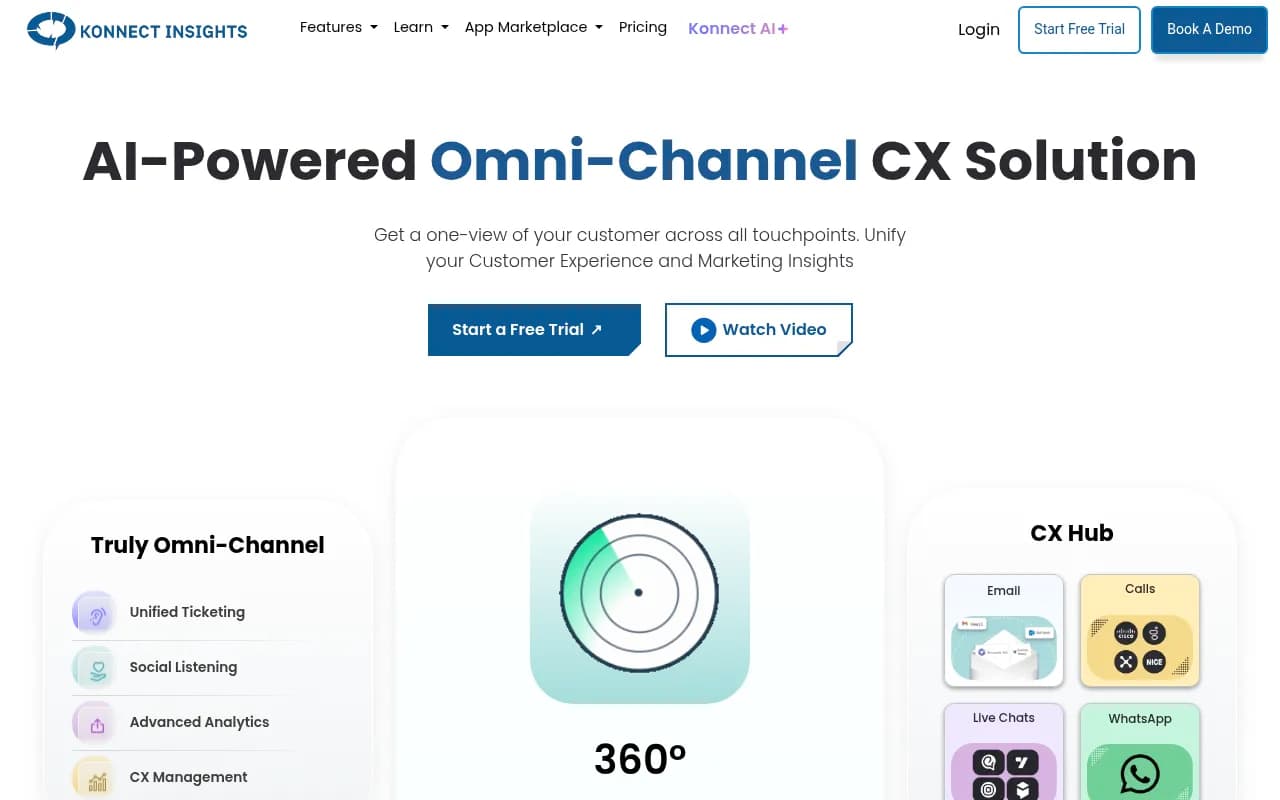
Konnect Insights bridges social listening and analytics, useful for teams that want a unified view of social and digital signals.
For dedicated AI visibility tracking, Promptwatch tracks your brand's appearance across 10 AI models (ChatGPT, Perplexity, Claude, Gemini, Grok, and more), shows you which pages are being cited, and lets you close the loop with traffic attribution. It also has AI crawler logs -- real-time data on when ChatGPT or Perplexity's crawlers visit your site, which pages they read, and any errors they hit. That last feature is particularly useful for diagnosing why content isn't getting picked up.
Putting it together: a practical workflow
Here's how this looks as a repeatable process rather than a one-time exercise:
Weekly:
- Review social listening dashboards for new complaint patterns, trending topics, and competitor mentions
- Flag any Reddit or YouTube discussions that map to AI-relevant prompts
- Note any "alternatives to" or "vs" conversations that suggest comparison content gaps
Monthly:
- Run a prompt gap analysis: which questions in your category are AI models answering without citing you?
- Cross-reference with social signal data to prioritize the gaps that have the most active conversation behind them
- Assign content briefs for the top 3-5 gaps
Quarterly:
- Review AI visibility scores to see if citation rates have improved
- Audit which pieces of content are getting cited and reverse-engineer what made them work
- Update your prompt monitoring list based on new social trends
Comparison: social listening tools vs AI visibility tools
These two categories solve different problems. Here's a quick breakdown:
| Capability | Social listening tools | AI visibility tools |
|---|---|---|
| Track brand mentions on social media | Yes | No |
| Monitor Reddit and YouTube discussions | Yes (some) | Limited |
| Sentiment analysis | Yes | Partial |
| Track AI model recommendations | No | Yes |
| Identify prompt gaps | No | Yes |
| Show which pages AI models cite | No | Yes |
| AI crawler logs | No | Yes (Promptwatch) |
| Content generation for AI visibility | No | Yes (Promptwatch) |
| Traffic attribution from AI | No | Yes |
The takeaway: you need both. Social listening gives you the raw signal -- what humans are saying. AI visibility tools tell you how those signals are being interpreted and reflected in AI outputs. Neither is sufficient on its own.
The brands getting this right
The pattern among brands that consistently appear in AI recommendations isn't complicated. They're monitoring conversations, identifying the questions their customers are asking, creating direct and specific content that answers those questions, and tracking whether it's working.
What they're not doing is publishing generic content and hoping for the best, or treating AI visibility as a separate project from their existing content and social strategy. The two are deeply connected -- social conversations are the raw material that AI models work from.
Stanford HAI's 2026 predictions note that we're entering an era of AI evaluation over AI evangelism -- the question is no longer whether AI can do something, but how well and at what cost. For brands, that translates directly: the question is no longer whether AI models will influence purchase decisions, but whether you're doing anything to influence what they say.
Social listening is where that work starts. The brands that treat it as an input to their AI visibility strategy -- not just a reputation management tool -- are the ones that will show up when it matters.