Key takeaways
- AI engines prefer to cite primary, attributable numbers over summaries of someone else's findings. A study you ran yourself is the one asset nobody can swap for a competitor's.
- Third-party studies put the citation gap for original research at roughly 38-65% versus 6-15% for standard blog posts (RankSenseAI, citing Averi.ai benchmarks). Treat these as directional, not guaranteed.
- Format and lifespan matter. According to Promptwatch Data (Sep 28 to Oct 4, 2026), product and landing pages lead ChatGPT citations, and news-style content loses half its cited pages in 36 days. Publish research as a durable hub, not a one-off press release.
- Citation sources are volatile. Plan to measure monthly and refresh quarterly.
- Most correlation figures in this space are study-stated correlations, not proven causation. Use them to prioritize, not to promise results.
Why original data gets cited
The most useful mental model I have seen is this one, from a practitioner on Reddit's r/AEO_Strategies: AI is not asking "what is the best page," it is asking "what is the safest thing I can repeat without being wrong." A blog post that summarizes a survey adds a layer of possible distortion. The original source removes it.
Some numbers worth knowing, with their provenance:
- The Princeton and Georgia Tech GEO study (KDD 2024) found that adding statistics to content improved visibility in generative answers by about 41%, the strongest tactic they tested. It is an academic benchmark from 2023-24, so it is a signal, not a 2026 guarantee.
- Yext's analysis of 17.2 million citations found sites hosting original research or first-party data earned 4.31x more citation occurrences per URL than listings.
- RankSenseAI's 2026 report, drawing on Averi.ai benchmarks, puts original research and proprietary data at 38-65% citation rates, versus 3-8% for product or marketing pages.
- Cyrus Shepard's Zyppy meta-analysis of 54 studies scores URL accessibility (9.5/10) and search rank (9.4/10) highest. Original data does not rescue a page AI cannot reach or that ranks nowhere.
I would not quote the 5x conversion premium or the 78%-of-teams-have-no-tracking figures you will see floating around. I could not verify the primary source for either. Same for the "fresh content is cited 4.3x more" stat: Digital Applied traced it to no primary study. The real figure from Ahrefs is that AI-cited content is about 25.7% fresher than organic top-10 results. Real, but moderate.
What counts as original research
You do not need a university lab. AI engines respond to data that is new, specific and attributable. Practical sources:
- Aggregated, anonymized product data (usage benchmarks, pricing trends, adoption rates)
- Customer or industry surveys with a stated sample size
- Analysis of public datasets nobody has combined before
- Log data, support ticket patterns, or internal operational metrics
- Experiments: A/B test results, tool comparisons with a documented method
- Expert interviews turned into quotable, named positions
The test is simple. If a competitor could write your article without talking to a customer or opening a database, it is not original research.
Pick questions AI is already asking
Research nobody searches for will not be cited, however clever. Start with the prompts your buyers type into ChatGPT and Perplexity and look for questions where the existing answers are vague, outdated or contradictory. Query fan-outs help here: they show the sub-searches an AI runs for each response, which tells you which specific numbers it is hunting for. Google's own AI features documentation confirms that AI Overviews decompose queries into sub-topics, and Ahrefs found that 31% of cited pages do not rank in the top 100 for the original query at all. They match the fan-out queries instead.
A tool like Promptwatch can surface prompt volumes, difficulty and fan-outs so you can choose a research topic with real demand.

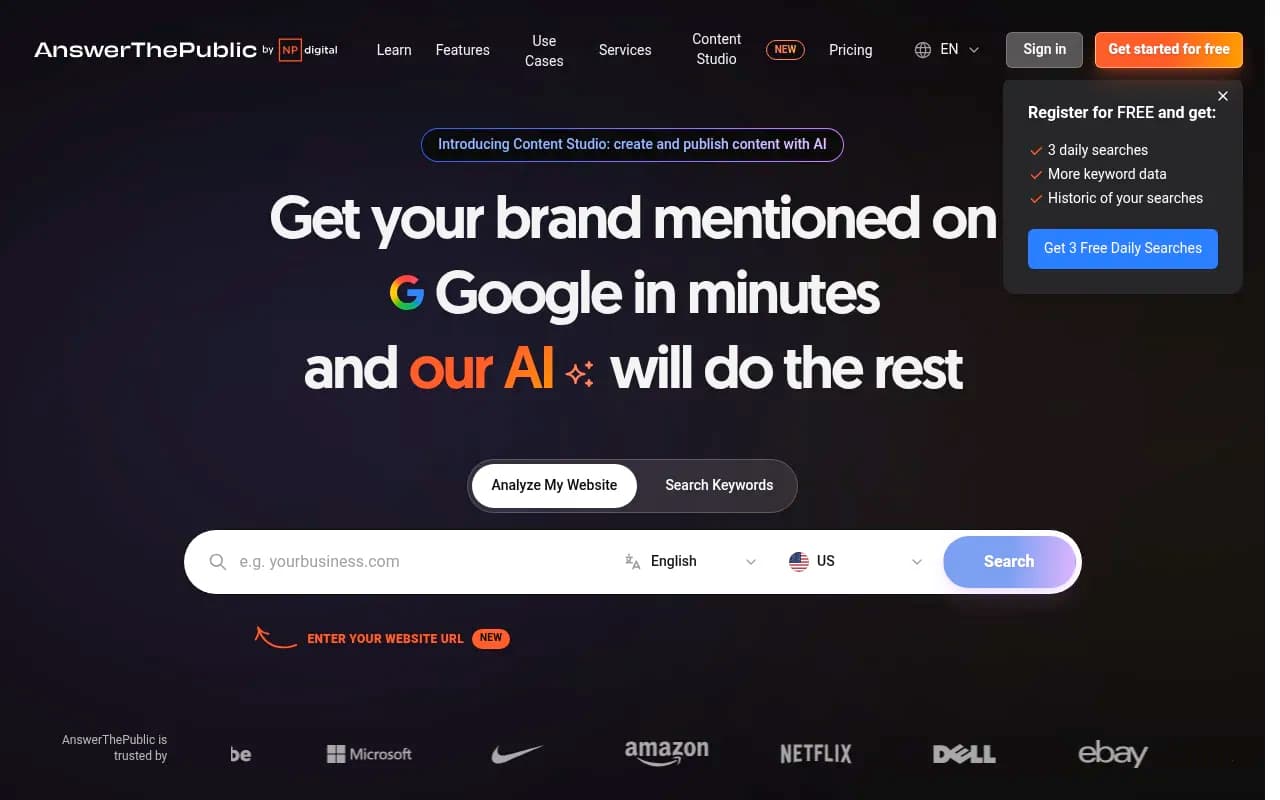
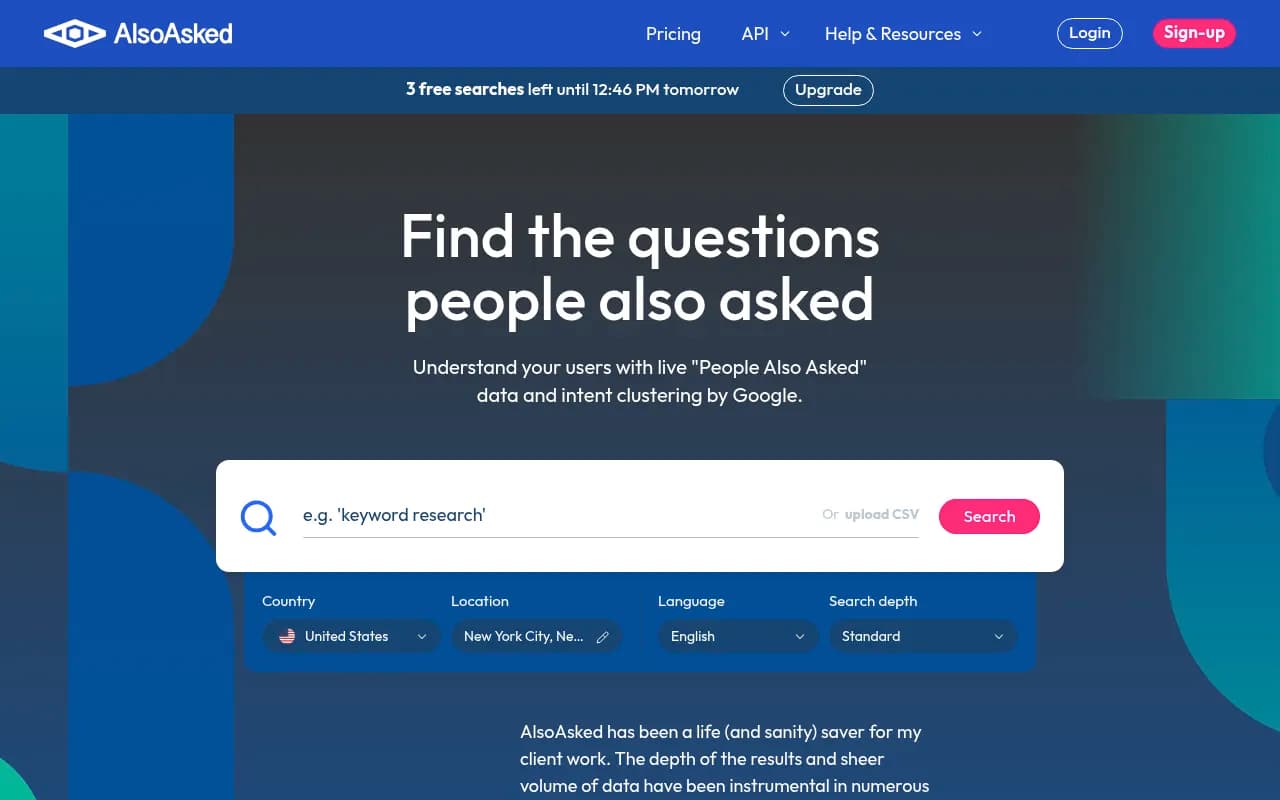
Free-form question research tools such as AnswerThePublic and AlsoAsked are useful for finding the phrasing people use.
Design the study so it is citable
AI engines are risk-minimizing, so methodology is part of the product. A vague "we surveyed marketers" gets skipped. A precise statement gets quoted.
- State the sample size, date range and geography in the first screen.
- Define each metric once, plainly.
- Name the method (survey, log analysis, scrape, experiment) and any limits.
- Lead every finding with the number, then explain it.
- Publish a downloadable dataset or table when you can.
- Put a named author and date on the page.
Promptwatch publishes its own research this way. Its Promptwatch Data hub reports a period for each number, for example ChatGPT citation shares for Sep 28 to Oct 4, 2026. That time-stamping is exactly what makes figures safe to repeat.
Be honest about caveats
Here is a small example of the standard worth copying. Promptwatch flagged its Reddit finding as provisional because a data-collection issue could not be ruled out: reddit.com's share of ChatGPT citations held at 3.83% from July 18 to Aug 7, 2026, then fell to a 0.52% average from Aug 14 to 17. Stating the uncertainty makes the rest of the report more believable, to people and to models. See the full Reddit citation drop report.
Choose the right page format
This is where most teams lose the benefit. They run a good study, publish it as a news post, and watch it vanish.
Promptwatch Data's ChatGPT citation share by content type (Sep 28 to Oct 4, 2026) shows where citations land:
| Content type | Share of ChatGPT citations |
|---|---|
| Product pages | 22.4% |
| Landing pages | 16.8% |
| Listicles | 13.6% |
| How-tos | 8.7% |
| Documentation | 7.5% |
| General articles | 6.1% |
| Comparisons | 5.9% |
| News | 5.7% |
That report has no separate "original research" category. Research pages would likely be classified as articles, news or landing pages, so I would not read the table as a ranking of research. What it tells you is how ChatGPT sorts pages, and that you should shape your research accordingly.
The lifespan data in Promptwatch's content half-life report matters even more. Tracking every page ChatGPT cited on July 6, 2026 for 90 days:
- After 30 days, 78% of landing pages, 76% of docs and 72% of comparisons were still cited.
- Product pages, reviews and how-tos had a half-life of roughly 74-77 days.
- News lost half its pages within 36 days, and almost a quarter were never cited again after day 0.
The practical takeaway: a news-style release buys you about five weeks. A permanent research hub, a landing page for the report, and comparison or benchmark pages built on the data last far longer.
A format stack that works
- One canonical landing page for the study, updated in place, never replaced by a new URL
- A methodology section on the same page, not a PDF behind a form
- Spin-off pages: listicle-style "X key findings," comparisons that use your numbers, and how-tos that apply them
- Plain HTML tables for the core data. Markdown files make up only 0.05% of AI search citations per Promptwatch's markdown report, so do not rely on them for search visibility
Structure for extraction
AI answers pull passages, not pages. Make each passage self-contained.
- Put the finding in the first sentence under each heading.
- Keep paragraphs to three or four sentences.
- Use descriptive H2 and H3 headings phrased like the questions people ask.
- Add a short summary at the top with the 3-5 headline numbers.
- Cite your own sources inside the text. Zyppy scores "cites sources internally" 8.0/10.
- Add Article, Dataset and Organization schema where it fits. Treat schema as support, not a cause.
- Skip LLMs.txt as a priority. Zyppy's meta-analysis scored it the lowest of all 23 factors (2.0/10).
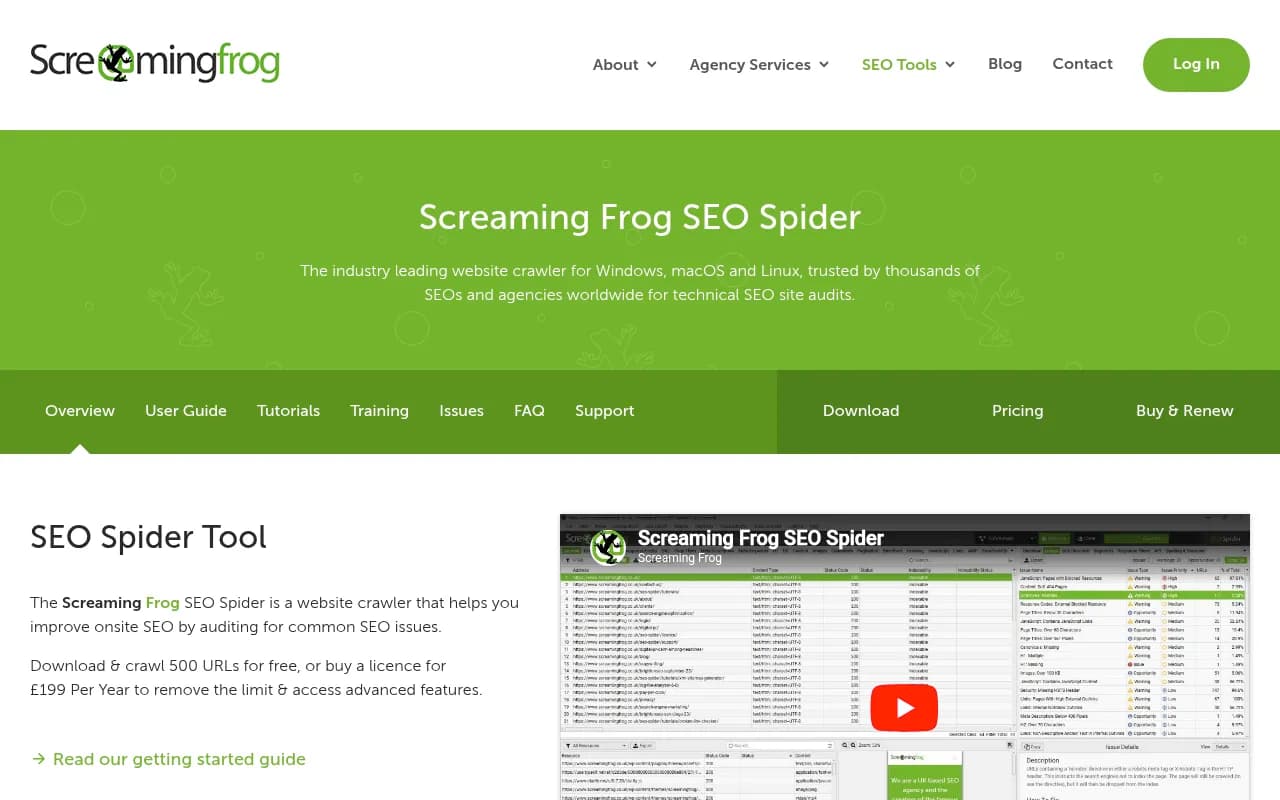
Check that crawlers can actually fetch the page. A blocked, paywalled or error-returning URL cannot be cited, whatever the content. Screaming Frog is handy for catching technical blockers, and Google Search Console shows whether the page is indexed.
AI crawler logs go further, showing whether GPTBot, ClaudeBot or PerplexityBot are reading the research page at all. Promptwatch covers this with IP-verified crawler logs, and its AI crawler traffic report benchmarks request volumes by crawler.
Distribute so more sources repeat your numbers
Brand mentions correlate about 3x more strongly with AI Overview visibility than backlinks (0.664 versus 0.218, Ahrefs across 75,000 brands). That is a correlation, but it fits what you would expect: when several independent pages repeat your number and name you, a model sees consistent evidence.
Tactics that work for research specifically:
- Pitch the findings to trade journalists with a ready chart and a one-line headline stat. Monitoring tools like Meltwater or Brand24 show where the data gets picked up.
- Give a named expert on your team a quotable line for each finding.
- Post the data on LinkedIn and, where it fits the rules, in relevant communities. Be realistic about Reddit: Promptwatch Data shows its share of ChatGPT citations collapsed in August 2026, though AI Overviews still cite social platforms far more. In the Sep 28 to Oct 4, 2026 window, ChatGPT got 0.46% of citations from social platforms versus 12.2% for Google AI Overviews. Pick channels by the engine you care about.
- Offer the dataset to partners, universities or industry bodies that publish roundups.
See how an agency would approach the outreach side in our overview of digital PR and link building at 1001 SEO Media.
Measure whether it worked
Citation behavior moves around. ChatGPT began using the site: operator at scale on August 8, 2026, jumping from about 0.4% to 17% of fan-out queries (report), and Promptwatch Data also logged a drop in citations per response around the GPT-5.3 rollout (report). Any baseline you set in spring may not hold in autumn.
Track these at minimum:
- Prompts where you are cited, and whether the citation is your research page or something else
- Citation rank (your position in the source list)
- Whether AI mentions your brand with the stat, without a link, or not at all
- AI crawler hits on the research URL
- Referral traffic and conversions from AI platforms
Tools to consider
| Need | Options |
|---|---|
| Tracking plus optimization actions | Promptwatch |
| Monitoring and prompt tracking | Otterly.AI, Peec AI, ZipTie |
| Enterprise visibility | Profound, Bluefish AI |
| Traditional SEO suite with AI add-on | Semrush, Ahrefs Brand Radar |
Prompt trackers tell you whether you were mentioned. Promptwatch goes further: it shows crawler activity, which pages get cited, what traffic AI sends, and then helps you act through its Action Board and Content Agent. If you only want a baseline, a free scan such as the Free AI Visibility Report works. For more options, the directories at bestgeosoftware.com and ai-rank-tools.com list the field.


Keep the research fresh
Time-stamped research has a built-in advantage, but only if you keep it current. A refresh plan:
- Rerun small studies quarterly and large surveys annually.
- Update the original URL and change the visible date and headline numbers. Do not just swap digits; rewrite the surrounding interpretation.
- Add a changelog line ("Updated October 2026 with Q3 data").
- Retire or label stale stats elsewhere on your site that contradict the new numbers.
- Watch decay. If a page's citations drop after five or six weeks, it is behaving like news and needs a hub or comparison page behind it.
Promptwatch's Content Refresh feature gives git-diff-style updates for existing pages, which suits this routine.
Retrofitting existing content
You do not have to wait for a big study. The Princeton study found visibility gains of up to 37% from adding statistics, authoritative citations and quotes to existing pages. Start with your highest-traffic pages: add one proprietary number per section, a source line, and a date. Then build original research in the same topic areas.
A 90-day plan
- Weeks 1-2: Pull prompt and fan-out data, and choose one question where answers are weak.
- Weeks 3-5: Collect the data. Document the method as you go.
- Weeks 6-7: Build the landing page, tables, charts and summary. Add schema and check crawler access.
- Week 8: Publish, then push to journalists, partners and your own channels.
- Weeks 9-12: Create spin-off pages, measure citations by engine, and note which prompts cite you.
- Quarter two: refresh and expand.
Common mistakes
- Gating the data behind a form, so crawlers see nothing
- Publishing a press release as the only home for the research
- Hiding the methodology in a PDF
- Citing a stat with no date
- Treating third-party correlations as promises
- Measuring only mentions, not citations and traffic
Original data does not guarantee citations. What it does is give models something they can safely repeat, with your name attached. Publish it somewhere durable, make it easy to extract, and keep checking the numbers.