Key takeaways
- A 30-minute weekly review is enough to stay on top of AI visibility if you know exactly what to look at and in what order
- The review has four phases: pulse check (5 min), gap analysis (10 min), content action (10 min), and team sync (5 min)
- Visibility percentage across a large prompt set matters far more than individual prompt rankings, which can vary every single run
- Assign clear ownership before the meeting so everyone arrives with data, not questions
- Tools like Promptwatch make the review faster by combining monitoring, gap analysis, and content generation in one place
Most teams that care about AI visibility have the same problem: they check their numbers occasionally, feel vaguely anxious about them, and then do nothing specific. The data sits in a dashboard. The week moves on.
The fix isn't more data. It's a repeatable routine that forces a decision every single week.
This guide lays out a 30-minute weekly review structure that actually works -- one that produces a short action list, not just a status update.
Why weekly (not daily, not monthly)
Daily checks create noise. AI search responses vary run-to-run by design. SparkToro found that submitting the same query to AI tools 100 times produced nearly 100 unique brand lists in different orders. If you're checking every morning, you'll react to variance instead of trends.
Monthly reviews are too slow. A competitor can publish a cluster of well-structured comparison pages in a week and start getting cited by ChatGPT before you've even noticed the gap.
Weekly is the right cadence. It smooths out the natural variance, gives content changes enough time to register, and keeps the team moving without burning hours on reporting.
Before the meeting: assign ownership
The review only works if people arrive prepared. Before you run this for the first time, assign three roles:
- Visibility owner: pulls the weekly snapshot from your tracking tool and flags any significant moves (up or down)
- Content owner: reviews what was published last week and checks whether any new pages are being cited
- Competitor watcher: scans what competitors are being cited for that you aren't
On a small team, one person can cover all three. On a larger team, splitting it up means the meeting starts with facts on the table, not someone scrambling to log in.
The 30-minute structure
Phase 1: Pulse check (0--5 minutes)
Open with numbers. The visibility owner shares three things:
- Overall visibility score this week vs. last week
- Which AI models showed the biggest movement (up or down)
- Any new pages that started getting cited, or pages that dropped out
This is not a discussion phase. It's a read-out. Five minutes, then move on.
What you're looking for: directional trends, not individual prompt fluctuations. A single prompt dropping out of a ChatGPT response isn't a crisis. Your overall mention rate across 50+ prompts falling three weeks in a row is.
Tools like Promptwatch surface this at a glance -- visibility scores by model, page-level citation tracking, and week-over-week movement all in one view.

Phase 2: Gap analysis (5--15 minutes)
This is the most valuable ten minutes of the meeting. The question is simple: what are competitors being cited for that you're not?
The content owner or visibility owner pulls up the answer gap report and identifies the top two or three prompts where a competitor appears in AI responses but your brand doesn't. For each gap, the team answers:
- Do we have content that addresses this topic?
- If yes, why isn't it being cited? (Too thin? Wrong format? Missing direct answers?)
- If no, how hard would it be to create something?
Don't try to fix everything. Pick one gap to act on this week. One is enough. Fifty-two weeks of fixing one gap per week compounds into a significant content library.

Phase 3: Content action (15--25 minutes)
Based on the gap you identified, the content owner either:
- Assigns a new article to be written before next week's review
- Flags an existing page for a specific update (add a direct answer section, restructure the FAQ, add a comparison table)
- Marks a piece as "in progress" and confirms the publish date
The key here is specificity. "We need more content about X" is not an action. "Write a 600-word FAQ page answering [specific prompt] by Thursday" is.
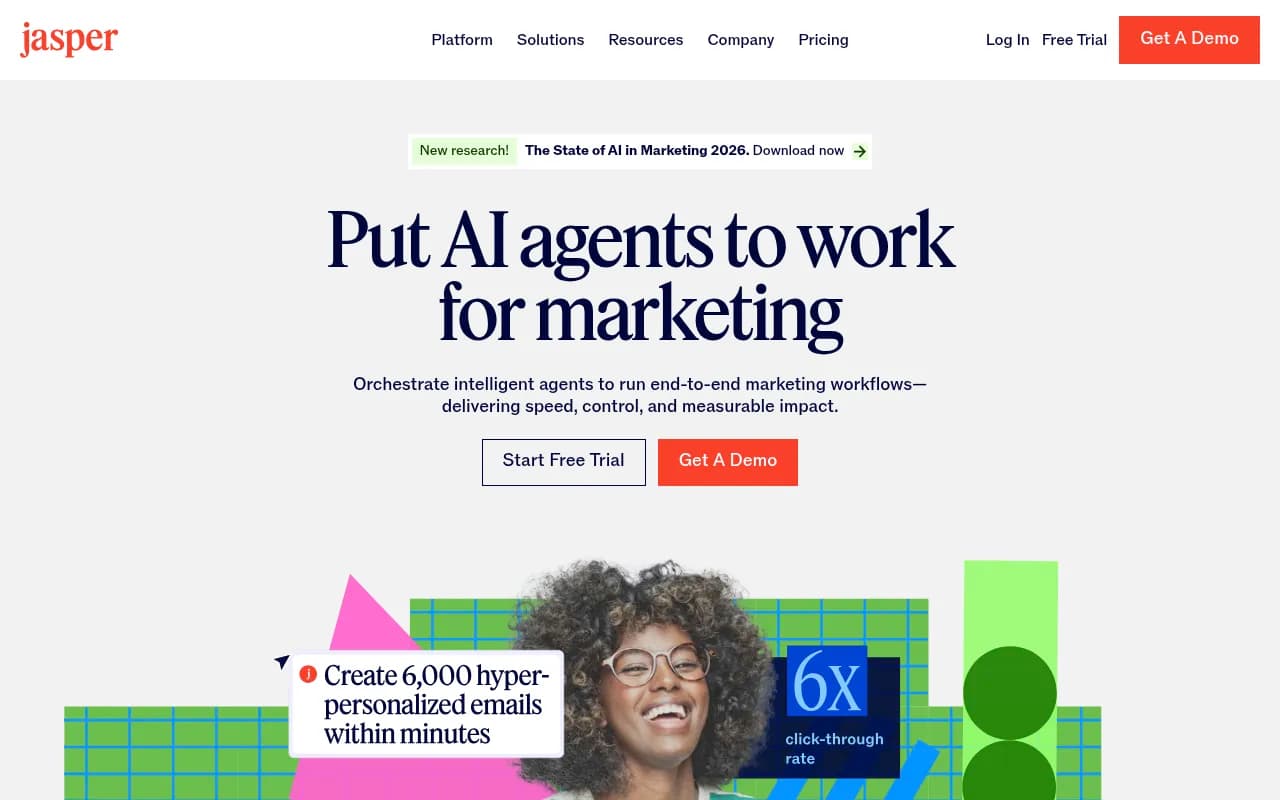
If your team uses an AI writing tool to speed up production, this is where it gets used. Platforms that generate content grounded in actual citation data (rather than generic SEO filler) tend to produce pieces that AI models actually want to reference. Promptwatch's built-in writing agent does this by pulling from its citation database when generating drafts -- the output is shaped around what AI engines are already citing, not just keyword density.
For teams that want standalone writing tools, a few options worth knowing:

Phase 4: Team sync (25--30 minutes)
The last five minutes covers three questions:
- What did we publish last week, and is it being indexed by AI crawlers?
- Any technical issues flagged? (Crawler errors, pages returning 404s to AI bots, slow load times)
- What's the one thing we're committing to before next week's review?
The AI crawler logs question is easy to skip but worth keeping. If AI crawlers are hitting your site and encountering errors, your content won't get cited no matter how good it is. Promptwatch's crawler log feature shows exactly which pages AI bots are reading, how often they return, and what errors they're hitting -- the kind of visibility most teams don't have.
What a completed review looks like
After 30 minutes, you should have:
- A one-line summary of visibility trend (up/flat/down, and why)
- One specific content gap identified
- One action assigned with an owner and a deadline
- Any technical issues logged
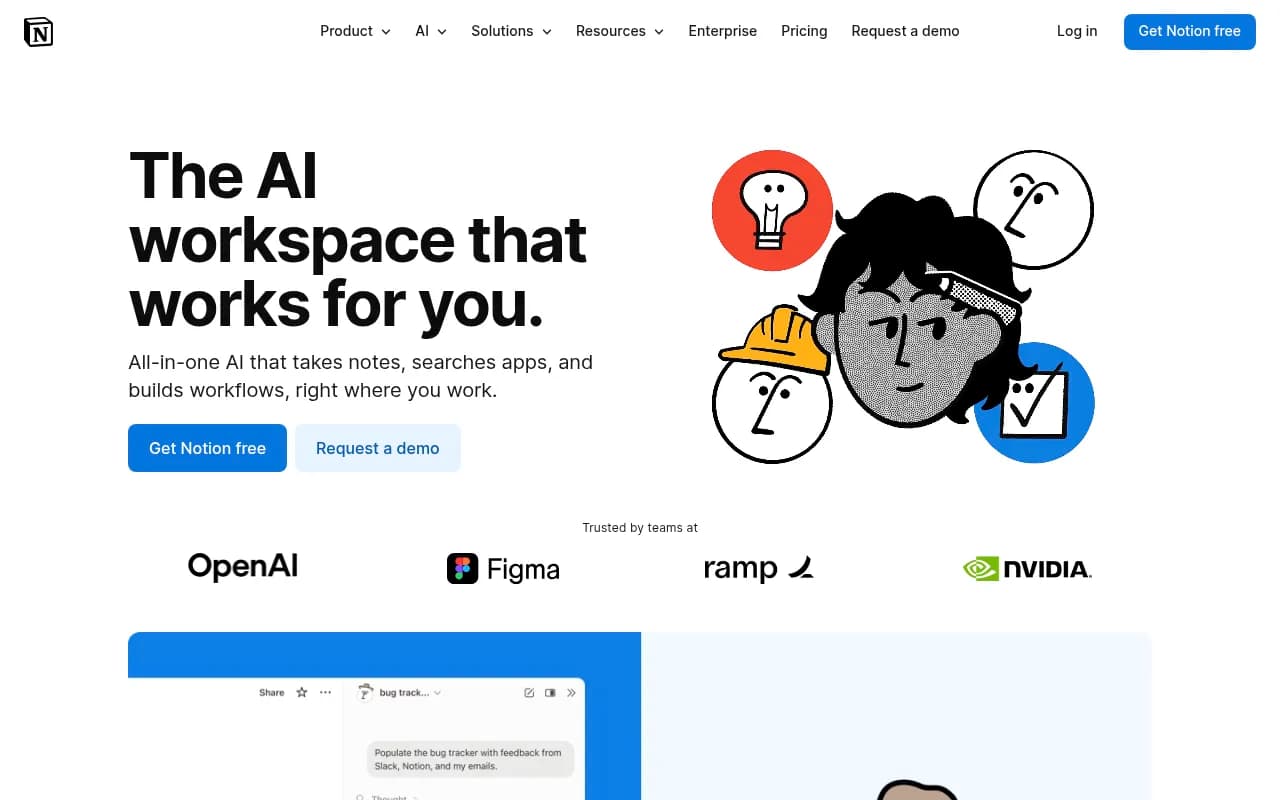
That's it. Write it in a shared doc or Notion page. The accumulation of these weekly notes becomes your GEO strategy over time -- a record of what you tried, what moved the needle, and what didn't.
Setting up your tracking stack
The review is only as good as the data feeding it. Here's a practical breakdown of what different teams typically use:
| Need | What to use |
|---|---|
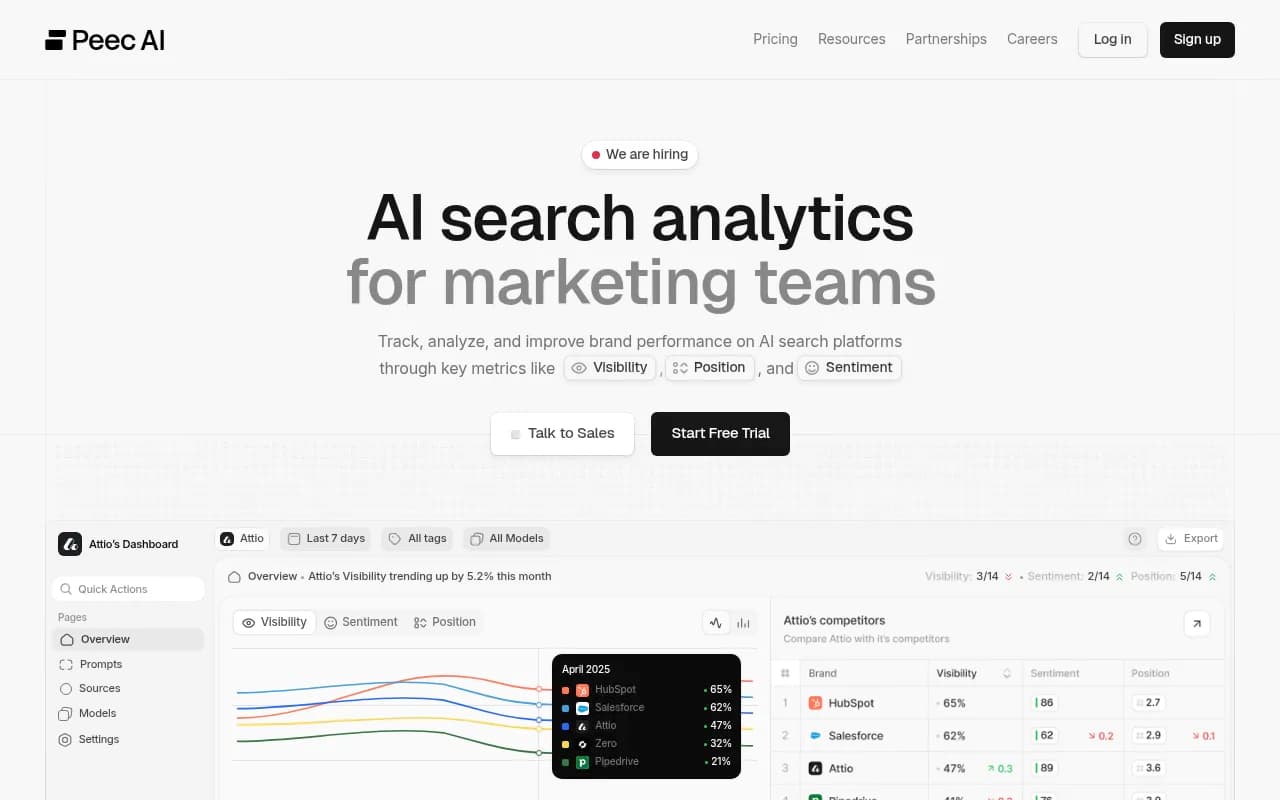
| AI visibility monitoring (multi-model) | Promptwatch, Otterly.AI, Peec AI |
| Prompt gap analysis | Promptwatch (Answer Gap Analysis) |
| AI content generation | Promptwatch writing agent, Jasper, Content at Scale |
| Crawler log monitoring | Promptwatch (built-in), server log analysis |
| Traditional SEO baseline | Google Search Console, Semrush, Ahrefs |
| Competitor tracking | Promptwatch heatmaps, Crayon |
For most teams running this review, a single platform that covers monitoring, gap analysis, and content generation is cleaner than stitching together four separate tools. The fewer logins you need to open during a 30-minute meeting, the better.

Common mistakes that kill the routine
Reviewing rankings instead of visibility percentage. Individual prompt rankings are noisy. Your visibility rate across a large set of prompts is the signal. If your tool only shows you individual prompt results, you're looking at the wrong metric.
No owner, no deadline. Every action item needs a name attached to it. "The team will look into this" means nobody will. Assign it in the meeting, confirm the deadline, move on.
Trying to fix everything at once. Teams that identify 15 gaps and try to address all of them in a week produce nothing. One gap, one piece of content, one week. The compounding effect is real.
Skipping the technical check. Content strategy gets all the attention, but if AI crawlers can't read your pages, none of it matters. The crawler log check in phase four takes two minutes and can surface problems that would otherwise go unnoticed for months.
Treating the review as a reporting meeting. This isn't a status update for management. It's a decision-making session. If the output is a slide deck rather than an action item, something's wrong.
Scaling the routine as your team grows
The 30-minute structure works for a solo marketer and a team of ten. What changes as you scale:
- Larger teams can split the four phases across two people presenting and one facilitating
- Agencies running this for multiple clients can run a 15-minute version per client with a shared template
- Enterprise teams may want to extend the gap analysis phase to 20 minutes and add a separate monthly deep-dive for strategic planning
If you're running this for multiple clients or brands, tools with multi-site support become important. Promptwatch's Business and Agency tiers cover multiple sites with shared reporting, which makes the agency version of this routine much more manageable.

A note on prompt volume and difficulty
Not all prompts are worth chasing. Before you assign content based on a gap, it's worth asking: how many people are actually asking this? And how competitive is it?
Prompt volume estimates and difficulty scores help you prioritize. A gap where competitors are visible but the prompt gets almost no volume isn't worth your content budget this week. A high-volume prompt where you're invisible and competitors are weak is the one to go after.
Promptwatch surfaces both volume estimates and difficulty scores for each prompt, along with query fan-outs (how one prompt branches into related sub-queries). That data makes the gap analysis phase of the review much sharper -- you're not just identifying gaps, you're ranking them by opportunity size.
Getting started this week
You don't need a perfect setup to run your first review. Here's the minimum viable version:
- Pick five prompts that a potential customer might use to find a solution like yours
- Run them manually in ChatGPT, Perplexity, and Google AI Overviews
- Note which competitors appear and whether you do
- Identify the biggest gap
- Assign one piece of content to address it
That's your first review. It takes 30 minutes, produces one action item, and gives you a baseline to compare against next week.
Once you've done it manually a few times and understand what you're looking for, moving to a dedicated tracking platform makes the data collection automatic and the gap analysis instant. The routine stays the same -- the tool just makes it faster.
The teams that are winning in AI search right now aren't doing anything magical. They're just reviewing their visibility consistently, identifying gaps systematically, and publishing content that directly answers the questions AI models are trying to answer. A 30-minute weekly review is how you build that discipline without it consuming your entire calendar.