Key takeaways
- AI brand mentions now happen across 10+ models simultaneously, and none of them show up in Google Analytics or Search Console -- you need a dedicated monitoring system
- The biggest mistake brands make is treating AI visibility as a tracking problem when it's actually a content problem: AI models cite what they can find, and most brands have massive gaps
- A scalable system has three parts: baseline measurement, content gap analysis, and a publishing cadence built around what AI models actually want to cite
- Tools like Promptwatch can compress weeks of manual monitoring into a single dashboard, but the strategic decisions still require human judgment
- AI referral traffic converts at roughly 5x the rate of organic search traffic, according to data cited in a March 2026 Medium analysis -- which means even modest visibility gains have real revenue impact
There's a specific kind of dread that sets in when someone tells you "we need to be visible in AI search." You know what they mean. ChatGPT. Perplexity. Gemini. Claude. Grok. DeepSeek. Copilot. Meta AI. Google AI Overviews. Mistral. Ten different models, each with its own training data, citation logic, and personality quirks. Each one potentially recommending your competitors to millions of people every day.
The instinct is to open ten browser tabs and start manually querying each model. That works for about 45 minutes before you realize you've produced a spreadsheet with 200 rows and no clear next step.
This guide is about building a system that doesn't require you to be everywhere at once -- one that tells you where you're missing, why, and what to do about it.
Why 10 models is actually a different problem than 1
When brands first started thinking about AI visibility, the conversation was mostly about ChatGPT. That made sense in 2023. It makes less sense now.
ChatGPT still dominates with 800M+ weekly active users, but Perplexity is processing 400M monthly queries and skews heavily toward research-intent users -- exactly the people who are about to make a purchasing decision. Google AI Overviews appear in over 25% of all searches. Gemini is embedded in Google Workspace, which means it's inside the tools your B2B buyers use every day. Grok has a direct feed into X/Twitter conversations. Each model has a different audience, different use cases, and different citation behavior.
The problem isn't just volume -- it's that these models don't all agree. Your brand might be the top recommendation in Perplexity for a given query, invisible in ChatGPT for the same query, and mentioned with outdated information in Gemini. That inconsistency is actually more damaging than being uniformly absent, because it creates conflicting signals for buyers who cross-check across models (and many do).
So scaling AI brand mentions isn't just about doing more -- it's about achieving consistent, accurate representation across models that behave differently.
Step 1: Establish your actual baseline
Before you optimize anything, you need to know where you stand. Not a rough sense -- actual numbers.
The manual approach works at small scale. Pick 10-20 prompts that represent how your customers actually ask about your category. Things like "what's the best [your category] tool for [use case]" or "compare [your brand] vs [competitor]." Run each prompt across every model you care about. Record whether your brand appears, where it appears in the response, what's said about it, and whether the information is accurate.
This is tedious but illuminating. Most brands discover two things: they're less visible than they assumed, and the information AI models have about them is often wrong or outdated.
At scale, this manual process breaks down fast. If you're tracking 50 prompts across 10 models, that's 500 data points -- and you need to refresh them regularly because model behavior changes. This is where a platform like Promptwatch earns its keep: it runs those queries automatically, tracks your visibility score over time, and flags when something changes.

What to measure
The metrics that actually matter for AI visibility:
- Share of voice: What percentage of responses in your category mention your brand vs. competitors?
- Sentiment accuracy: When you're mentioned, is the information correct? Is the tone positive, neutral, or negative?
- Citation frequency: Are your actual web pages being cited as sources, or is the model just mentioning your brand name without linking back?
- Model-by-model breakdown: Where are you strong? Where are you invisible? The gaps are where the opportunity is.
Step 2: Map the content gaps
Here's the thing most brands skip: AI models don't cite brands because those brands are well-known. They cite brands because they can find authoritative, specific, well-structured content that answers the question being asked.
If ChatGPT doesn't mention you when someone asks "what's the best project management tool for remote engineering teams," it's almost certainly because you don't have content that directly addresses that specific question. You might have a features page. You might have a generic "for teams" landing page. But you probably don't have a piece of content that says, clearly and specifically, "here's why remote engineering teams choose us and here's what that looks like in practice."
This is the answer gap -- the space between what AI models are being asked and what your content actually covers.
Finding these gaps manually means running competitor queries, noting which prompts your competitors appear for that you don't, and reverse-engineering what content they have that you're missing. It's doable but slow.
Promptwatch's Answer Gap Analysis automates this: it shows you the specific prompts where competitors are visible and you're not, so you can prioritize which content to create first. That prioritization matters because you can't write 200 articles at once.
Prioritizing which gaps to close first
Not all gaps are equal. A prompt with high query volume and low competition is worth more than a niche prompt that almost nobody asks. When deciding what to write, consider:
- How often is this prompt asked? (Prompt volume estimates help here)
- How many competitors are already visible for it? (Lower competition = faster wins)
- How close is this prompt to a purchase decision? (Informational vs. transactional intent)
- Does your brand have a genuine angle or differentiator for this topic?
The last point matters more than people admit. AI models are good at detecting generic content. If you write a listicle that could apply to any brand in your category, it's less likely to get cited than something with specific data, a clear point of view, or a unique angle.
Step 3: Create content that AI models actually want to cite
This is where most GEO advice gets vague. "Create high-quality content" is not a strategy. Here's what actually works.
Structure for citation
AI models pull from content that's easy to parse. That means:
- Clear, direct answers to specific questions (not buried in three paragraphs of context)
- Structured headings that match how people actually phrase queries
- Specific data, numbers, and examples rather than general claims
- Defined terms and clear comparisons
A page that says "Our tool helps teams collaborate better" is hard to cite. A page that says "Teams using [your tool] reduce meeting time by an average of 23% in the first 90 days, based on data from 1,400 customers" is easy to cite.
Cover the full question surface area
One article won't do it. AI models see your brand across many different queries, and you need content that covers the range. That means:
- Use case pages (not just "for marketing teams" but "for marketing teams at B2B SaaS companies with distributed workforces")
- Comparison pages (honest ones that acknowledge where competitors are stronger)
- FAQ content that mirrors how people actually phrase questions to AI models
- Data-backed thought leadership that gives models something specific to reference
Publish where AI models look
Your website is the primary target, but it's not the only one. AI models cite Reddit threads, YouTube videos, industry publications, and third-party review sites. A presence on G2, Capterra, and Trustpilot matters. So does having your brand discussed in relevant subreddits and YouTube reviews. Promptwatch's Reddit and YouTube tracking surfaces exactly which discussions are influencing AI recommendations in your category -- which tells you where to show up beyond your own site.
Step 4: Build a monitoring system that doesn't require daily manual checks
The mistake most teams make is setting up monitoring and then checking it obsessively without a clear protocol for what to do when something changes. You end up with a lot of data and no action.
A better approach: weekly automated reports, monthly deep reviews, and clear triggers for immediate action.
Weekly: Check your visibility score trend. Is it going up, down, or flat? Are there any sudden drops that suggest a model update affected your citations?
Monthly: Review the full prompt set. Which prompts improved? Which are still gaps? What content did you publish last month, and is it showing up in citations yet? (There's usually a lag of 2-6 weeks between publishing and AI citation.)
Immediate triggers: If a competitor suddenly appears in prompts where you were previously the top mention, that's worth investigating now. If AI models start citing inaccurate information about your brand (wrong pricing, discontinued features, outdated positioning), that needs a correction response fast.
Tools worth knowing about
The market for AI visibility tools has exploded. Here's a practical breakdown of what's available:
| Tool | Best for | Key strength | Limitation |
|---|---|---|---|
| Promptwatch | Full-cycle optimization | Monitoring + content generation + traffic attribution | Higher price point than pure trackers |
| Otterly.AI | Budget monitoring | Affordable entry point | Monitoring only, no content tools |
| Peec AI | Multi-language tracking | Strong international coverage | Limited content optimization |
| Profound | Enterprise monitoring | Deep analytics | No content generation |
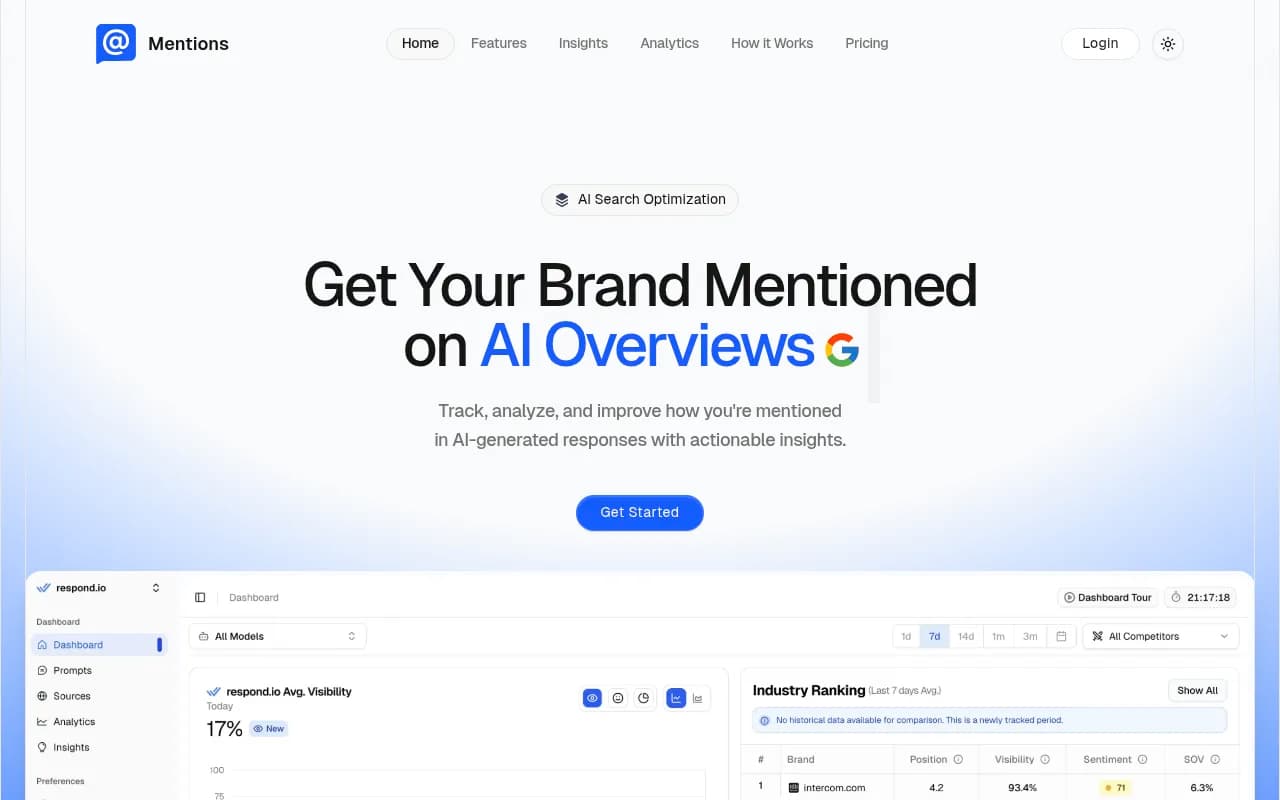
| Mentions.so | Simple brand tracking | Easy setup | Basic feature set |
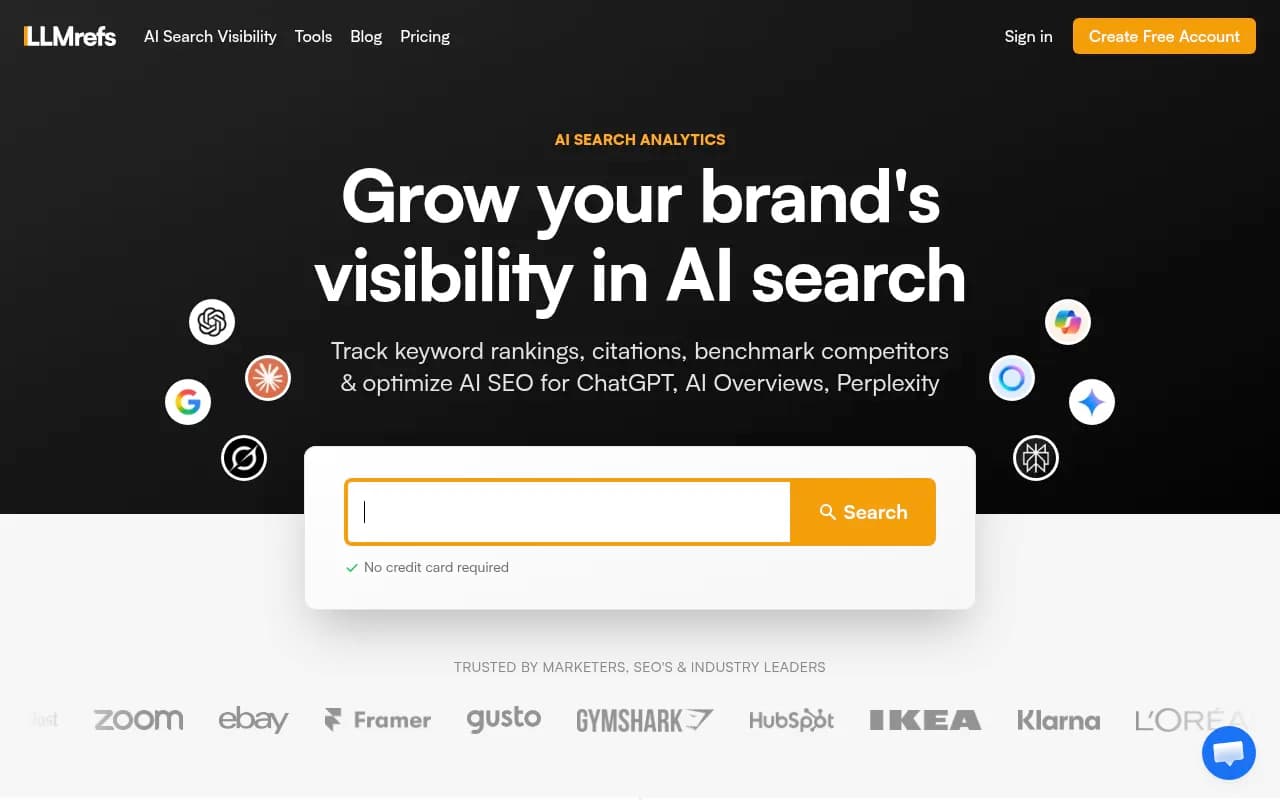
| LLMrefs | Citation tracking | Good citation data | Limited optimization features |
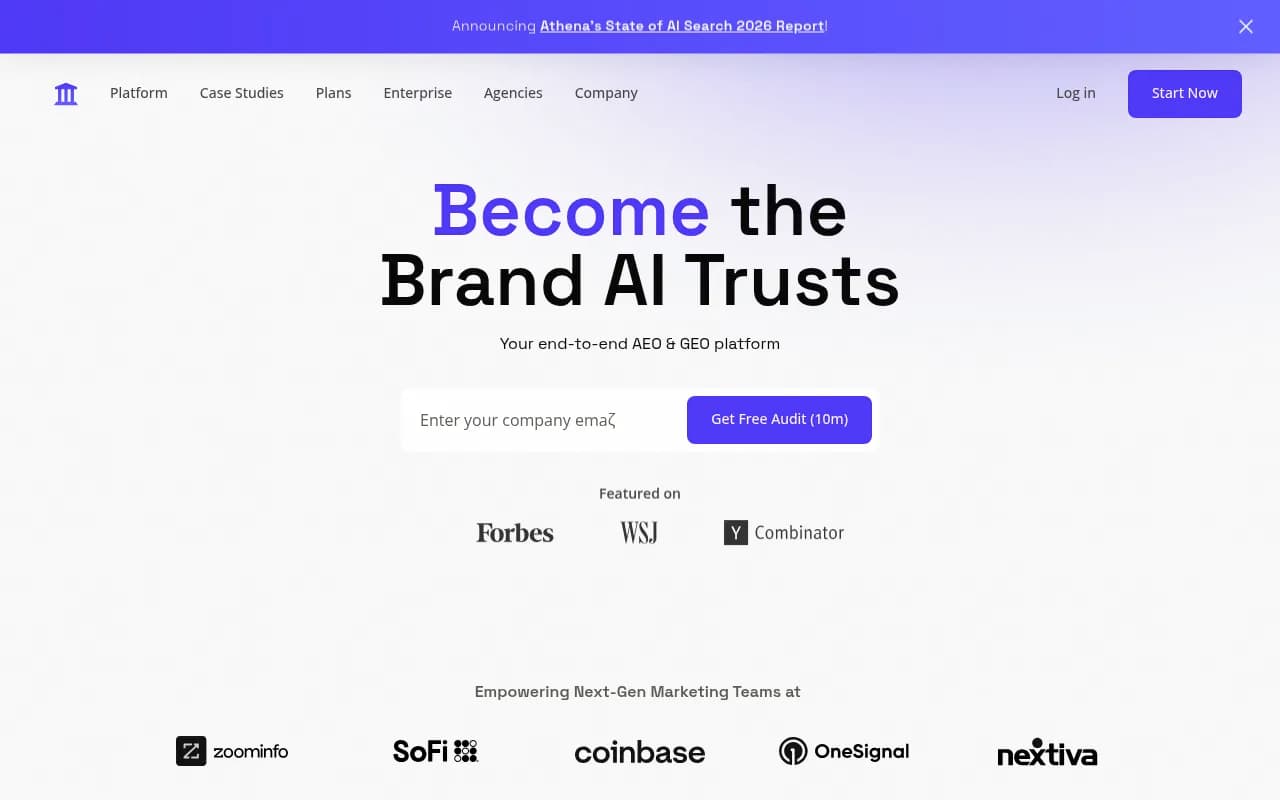
| Athena HQ | Mid-market monitoring | Clean UI | Monitoring-focused |
| Scrunch AI | AI visibility tracking | Broad model coverage | Less depth on content gaps |


The honest take: most of these tools are good at showing you data. The harder problem is knowing what to do with it. If your team has the bandwidth to translate monitoring data into content strategy and execution, a cheaper monitoring-only tool might be fine. If you need the loop to close automatically -- track, identify gaps, generate content, measure results -- you need something more integrated.
Step 5: Handle model-specific quirks without going crazy
Each AI model has tendencies worth knowing about.
ChatGPT tends to favor brands with strong third-party coverage -- reviews, press mentions, and citations from authoritative domains. It's also more likely to cite specific statistics and data points. If you're invisible in ChatGPT, the fix is usually more third-party presence and more data-backed content.
Perplexity is heavily citation-driven and shows its sources. This is actually useful -- you can see exactly which pages it's pulling from and why. If your pages aren't being cited, check whether they're being crawled (Promptwatch's AI crawler logs show this directly), whether they're structured clearly, and whether they have the specific information Perplexity users are looking for.
Google AI Overviews follows Google's existing authority signals more closely than other models. Strong traditional SEO -- E-E-A-T signals, authoritative backlinks, clear authorship -- matters more here than for other models.
Claude tends to be more cautious about recommending specific brands and more likely to present balanced comparisons. Getting cited in Claude often requires content that acknowledges tradeoffs honestly rather than pure promotional material.
Grok pulls heavily from X/Twitter conversations. If your brand has an active presence there and is discussed positively by credible accounts, that feeds into Grok's recommendations.
The practical implication: you can't write one piece of content and expect it to work equally across all 10 models. But you also can't write 10 different versions of everything. The middle path is writing content that's genuinely comprehensive and well-structured -- that tends to perform across models -- while doing targeted work for the models where you have specific gaps.
Step 6: Connect visibility to revenue
This is the step that most teams skip, and it's the one that justifies the budget.
AI visibility without attribution is just a vanity metric. You need to be able to say "our AI visibility improvements drove X sessions, which converted at Y%, which generated Z revenue." That requires:
- A way to identify AI-referred traffic (different from organic search traffic)
- Conversion tracking on that traffic segment
- A feedback loop that connects content performance to visibility scores
The technical setup varies. Some platforms use a JavaScript snippet to tag AI-referred sessions. Others use server log analysis to identify AI crawler activity. Google Search Console integration can help with Google AI Overviews specifically. The point is to close the loop so you're not just optimizing for visibility scores in a vacuum.
When you can show that AI-referred traffic converts at 5x the rate of organic traffic (a figure that's been cited in multiple 2026 analyses), the business case for investing in AI visibility becomes straightforward.
Putting it together: a practical 30-day start
If you're starting from scratch, here's a realistic sequence:
Week 1: Set up monitoring. Pick your 20-30 most important prompts. Run them across the models you care about. Document your baseline visibility scores and note any inaccurate information.
Week 2: Map your content gaps. Identify the 5-10 prompts where competitors are visible and you're not. Prioritize by query volume and purchase intent.
Week 3: Create your first batch of gap-filling content. Focus on the highest-priority gaps. Make it specific, data-backed, and structured for citation.
Week 4: Publish, set up your monitoring cadence, and start tracking. Don't expect immediate results -- there's a lag. But you'll start seeing movement within 4-6 weeks.
The goal isn't to be everywhere at once. It's to systematically close the gaps that matter most, measure what's working, and build a repeatable process. That's how you scale AI brand mentions without losing your mind -- not by doing more, but by doing the right things in the right order.