Key takeaways
- Most sites built or scaled with AI tools have a content problem, not a traffic problem. The fix is a four-bucket sort (rewrite, redirect, noindex, delete), not more publishing.
- Real case studies, from a SaaS blog that cut 4,200 pages to e-commerce sites that deindexed thousands of zero-traffic product pages, show 30-100%+ organic gains within a few months, though outcomes vary and some sites see flat results for a quarter first.
- AI Overviews and ChatGPT are shifting what they cite: how-tos and documentation are gaining share while thin product pages, landing pages, and social posts are losing it, which should shape what you rewrite content into, not just whether you rewrite it.
- Markdown mirrors of your content have essentially zero payoff in AI search citations (0.05% share), so don't waste time publishing .md versions of blog posts hoping AI will prefer them.
- Mid-authority sites (DR 46-90) already earn roughly two-thirds of ChatGPT's citations, so a smaller site that prunes ruthlessly and sharpens what's left has a real shot at citation, not just a bigger competitor.
Why your site is probably full of AI slop, even if you didn't mean it to be
Somewhere between 2023 and now, a huge number of sites quietly filled up with pages nobody would call good. Not spam, exactly. Just... thin. Generic. Written to hit a word count and a keyword, not to answer a question a human actually asked. A lot of it came from AI tools used without a second pass: draft, publish, repeat. Some of it predates AI entirely and is just old, outdated editorial cruft from a content strategy that changed three managers ago.```
Either way, the symptoms look the same. Flat or declining organic traffic despite a growing page count. A blog directory with thousands of URLs and a traffic distribution so skewed that 90% of pages get almost nothing. That's not a guess, by the way, an analysis of 847 million indexed pages found that 90.63% receive zero organic traffic in a given month, and only 0.21% pull in 1,000+ monthly visits. If your site looks like that graph, you're not alone, and you're not doomed. You just have work to do.
What changed the calculus in 2026 is that doing nothing got more expensive. Google's helpful content guidance already treats a site holistically. A pile of weak pages doesn't sit quietly in a corner, it drags on the parts of your site that are genuinely good, because Google evaluates site-level signals, not just page-level ones. And AI Overviews have started eating the informational clicks that used to justify keeping a thin definitional page around. If a page used to get 200 visits a month from a "what is X" query and now gets 12 because ChatGPT or AI Overviews just answer it, that page has stopped earning its keep.

The four-bucket decision tree
The fastest way to get unstuck on a slop cleanup is to stop treating every page as a unique judgment call. Sort everything into one of four buckets, and let the data make most of the decision for you.
Bucket 1: rewrite
Ask whether the URL targets a query the business actually wants to rank for, and whether the topic is still relevant. If yes, rewrite it in place. Don't redirect it, don't delete it, keep the URL. Good candidates target a commercial or high-intent keyword that still gets searched, have at least one referring domain worth preserving, sit squarely in your topical lane, and are simply outdated, thin, or badly structured rather than fundamentally wrong for your site.
For most SaaS and service businesses this is the biggest bucket, often 50-60% of candidates. The trap here is the lazy rewrite: swap the year in the title, tweak two sentences, republish. That kind of rewrite decays again within six months because you haven't actually changed anything a reader or an AI crawler would notice. Budget the same time for a real rewrite as you would for a brand-new post, because that's genuinely what it takes to fix a page that's been quietly failing for years.
Bucket 2: redirect
This is for pages with real link equity or brand value but no future as a standalone URL, usually because the topic has merged into a stronger page or the query volume has dried up entirely. Redirect to the single most relevant live page, not to your homepage as a catch-all. One agency redirected around 300 obsolete posts to a client's homepage and watched Google treat nearly all of them as soft 404s within three weeks, wiping out the equity they were trying to save. A redirect that ignores user intent is basically a delete with extra server overhead.
Bucket 3: noindex
Use this for pages you want to keep live for users (internal tools, legacy documentation, low-traffic tag or category pages) but don't want competing for a search slot. Be careful with your thresholds here. One team noindexed every tag page with fewer than ten posts when the real cutoff should have been four, and lost a chunk of long-tail rankings from tag pages that were quietly useful entry points. It took Google a month to recrawl and reverse the damage.
Bucket 4: delete
For pages with no referring domains, no traffic, off-topic content, or coverage of something that no longer exists (an old feature, a discontinued product, an event from 2019). Use a 410 (Gone) response rather than a plain 404 for intentional removals, it signals to crawlers that the removal is deliberate and tends to get the URL dropped from the index faster.
| Bucket | When to use it | Common mistake |
|---|---|---|
| Rewrite | Query still matters, page just underperforms | Lazy "date swap" rewrites that decay again in months |
| Redirect | Real link equity, topic merged elsewhere | Mass-redirecting everything to the homepage |
| Noindex | Useful for users, not worth a search slot | Thresholds set too aggressively, killing long-tail pages |
| Delete (410) | No traffic, no links, no relevance | Deleting a page without checking traffic first |
Mistakes worth avoiding, because someone already made them
Beyond the redirect-to-homepage and over-eager noindex problems above, one recurring failure is deleting on gut feel instead of data. One team redirected an old comparison page that looked thin on paper, four hundred words, an easy call. It turned out to be sitting at position three for a niche term and bringing in 700 visits a month. They hadn't segmented the export by traffic before making the call. The fix is simple: any page pulling more than roughly 50 visits a month gets a manual review, no matter how badly it scores on an automated thinness check.
The other mistake is social, not technical: not warning your dev team. A sudden spike of deletions showing up in a monitoring dashboard looks like a bug to anyone who wasn't looped in, and more than one cleanup has been rolled back entirely because of it. Brief the team in advance and label every deleted URL in the changelog before anyone touches production.
What the data actually says happens when you prune
The upside isn't theoretical. A 12-year-old B2B SaaS blog with 6,800 indexed URLs, flat traffic for two years, ran the full audit: Search Console data joined with a crawl and referring-domain data, one row per URL. The split landed at 17% rewrite, 14% redirect, 9% noindex, and 59% delete, with about 2,800 of the deletes being product-update posts describing features that no longer existed. Deletes and noindex went out first, in batches, watched daily for crawl errors. Redirects and rewrites followed over the next two months. Organic clicks moved from a flat 14,000 a month to 19,200, and conversions rose about 31%.
Other documented cases follow a similar shape. An e-commerce brand deindexed a low-performing blog subdomain that was dragging on domain-wide signals and saw organic sessions roughly double. A large e-commerce catalog pruned over 11,000 product pages with zero traffic out of 20,000+ and gained 31% organic traffic and 28% revenue year over year. Not every cleanup produces a lift this size, some sit flat for twelve weeks before climbing, a couple land closer to 8-12%, but a careful, redirect-disciplined prune rarely seems to lose traffic outright.
Worth a caveat, though: pruning isn't a universal shield. HouseFresh, an independent review site that kept content updated and hands-on tested, lost 91% of its Google traffic after the March 2024 core update anyway, and broader analysis found 84% of independent web creators tracked between 2023 and 2025 saw Google traffic losses, 43% of them losing more than 80%. Pruning improves your odds. It doesn't guarantee an outcome, especially if the underlying issue is algorithmic trust rather than page quality.
How AI search is changing which pages deserve a rewrite
This is the part a 2022-era pruning playbook misses entirely. AI answer engines don't reward content the same way classic Google rankings did, and that should change what you rewrite pages into.
Promptwatch's citation-type tracking shows the format mix AI engines cite is moving fast. In ChatGPT Search, how-to content roughly doubled its citation share in a nine-day stretch in August 2026, going from about 4.3% to 9.1%, while documentation pages climbed from 3.3% to 8.2%. Meanwhile landing pages fell from around 20% to under 12%, and social posts collapsed from 4.4% to under 1% the same day Reddit's citation share in ChatGPT cratered. In Google AI Overviews, product pages overtook listicles as the most-cited format in late July 2026, ending the month at 17.9% versus 16.2%, while listicles have been sliding from a Q1 average near 26% down to 18%.
The practical read for a pruning project: if a page is being chased purely because it ranked for a definitional query, and AI now answers that query directly above the fold with no real shot at citing you, delete or noindex it rather than rewriting it. If the query is one AI is actively summarizing and citing sources for, particularly how-to or documentation-style content right now, that's exactly the bucket worth a serious rewrite, because the citation slot is realistically winnable. And if you've got three or more pages fragmenting authority on one topic, consolidate into the strongest one and redirect the rest rather than rewriting all three.
One myth worth killing early: publishing markdown mirrors of your blog posts to chase AI citations does essentially nothing. Across a sample spanning ChatGPT, Claude, Perplexity, and AI Overviews, HTML pages account for 99.94% of citations versus 0.05% for markdown files, roughly a 2,000-to-1 ratio. Markdown matters for AI coding agents, not for the consumer AI search citations you're trying to earn back.

Another useful data point if you're worried a smaller site can't compete: ChatGPT's citation share by domain rank shows DR 46-90 sites earning roughly two-thirds of all citations, while the very biggest sites (DR 91-100) dropped from about 7% to 3% of citations in mid-August 2026. You don't need to out-rank the internet's largest publishers to get cited. You need pages that are genuinely useful on a topic you're credible in.
Tools for running the audit
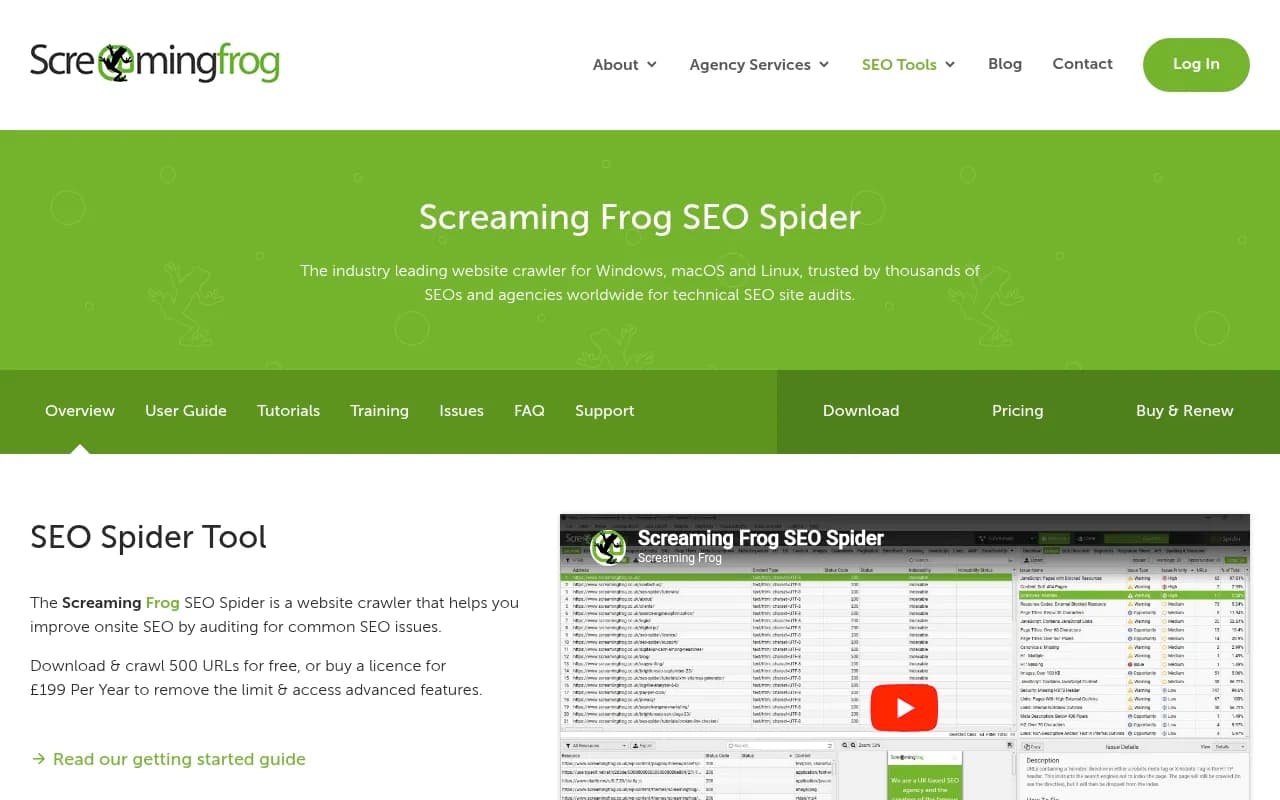
You don't need a custom pipeline to do this well, though the scale of your site determines how much automation helps. For a data-driven audit, pull page-level performance from Google Search Console, cross it with a crawl from a tool like Screaming Frog SEO Spider, and layer in referring-domain data from a backlink tool.
If you want a purpose-built decay-detection layer rather than stitching spreadsheets together, tools built for this exist now. Something worth checking before committing to a manual process.
| Approach | Best for | Limitation |
|---|---|---|
| Manual review (spreadsheet + eyeballs) | Sites under ~1,000 pages | Doesn't scale, subjective, slow |
| Data-driven scoring (GSC + crawl + backlinks) | Most sites, the recommended core method | Needs someone to build and maintain the sheet |
| LLM/embeddings-based semantic clustering | Finding duplicate or cannibalizing content at scale | Requires technical setup, has its own scoring bias |
One caution on AI detection tools if you're trying to flag which existing pages were AI-slopped in the first place: treat detector output as a directional signal only. Independent testing has found wildly inconsistent false-positive rates across tools and even across writer demographics, with one 2026 study finding AI detectors flagged human-written essays by non-native English speakers at a 61.3% false-positive rate versus 5.1% for native speakers on the same test. Never delete or rewrite a page based on a detector score alone, pair it with a manual quality read.
Once you've pruned, what to actually write
A rewrite that just fills in more words in the same generic voice is the same slop with a new coat of paint. If you're using AI tools to help draft the rewrite, the fix isn't to avoid AI entirely, it's to make sure a human's judgment, voice, and firsthand expertise sit at the center of the finished page rather than being an afterthought layered on top of a generic draft.
For content briefs and structure, tools like Clearscope or Frase can help you see what a topic actually needs to cover before you write.

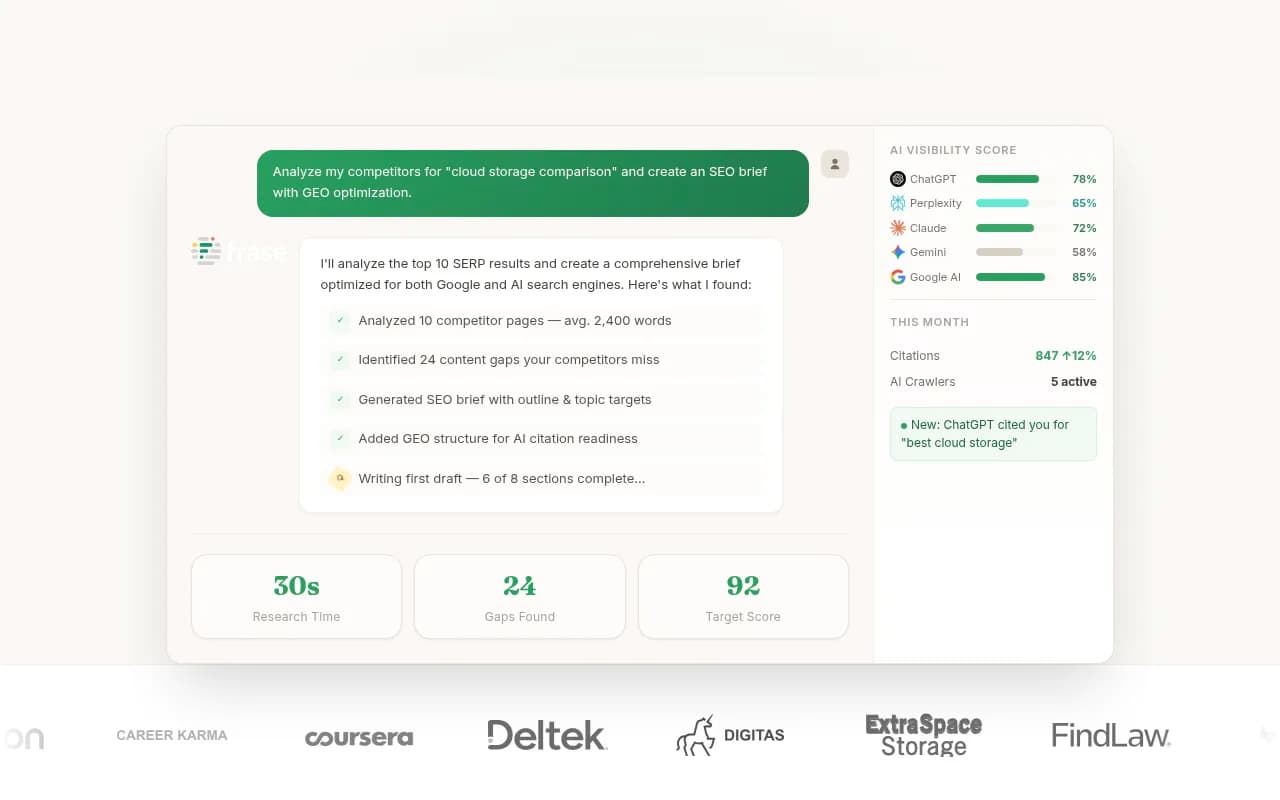
If you're rewriting with an eye specifically toward AI search citations rather than classic rankings, tracking how your rewritten pages perform in ChatGPT, Perplexity, and AI Overviews over the following weeks tells you whether the rewrite actually worked, not just whether it ranks. Promptwatch tracks citation pickup across those engines alongside the crawler logs that show whether AI bots are even reading your new pages, which is the piece most pruning playbooks skip entirely.

For a broader view of GEO-focused tools beyond Promptwatch, the directory at bestgeosoftware.com is worth a look if you want to compare options for ongoing AI visibility tracking once the cleanup is done.
What to do this week
Start small, build the muscle, then scale it up.
- Export the last 16 months of page-level performance from Search Console for your main content directory.
- In a spreadsheet, add a column for clicks per month averaged across the period, then sort ascending.
- Count every URL averaging under three clicks a month. If that's more than 15% of your indexed pages, you have a real pruning opportunity.
- Take the bottom 50 URLs by this metric and tag each one rewrite, redirect, noindex, or delete using the decision tree above.
- Execute only the ten clearest deletes first, no backlinks, no traffic, off-topic or obsolete, and pull them from your sitemap.
- Wait four weeks. Check Search Console for any unexpected drop in impressions elsewhere before touching the next batch.
- If nothing broke, repeat with the next 50, then the next 100, scaling up as your confidence in the process grows.
The point isn't to purge your site in a weekend. It's to prove the process works on a small, reversible batch before you trust it with thousands of URLs. Most of the horror stories in content pruning come from skipping that step, not from pruning being a bad idea in the first place.