Key takeaways
- Start from topics and buyer questions, not from a plan tier. Your prompt count should fall out of your market, not the vendor's pricing page.
- A realistic starting set for one brand is 30 to 50 prompts. Large multi-market brands need several hundred.
- Every vendor defines a "prompt" differently. Convert every quote into AI responses per month before you compare.
- Sampling depth matters as much as prompt count. One run per prompt gives you a misleadingly precise number.
- Pilot 20 to 40 prompts before signing anything, then scale up.
Why the prompt count question is harder than it looks
Every AI visibility vendor sells roughly the same thing: repeated queries against AI answer engines, plus a record of what came back. The price depends on how many queries you get, on how many engines, and how often they re-run.
So "50 prompts" on one pricing page and "50 prompts" on another can be very different products. One vendor might run each prompt once a week on a single engine. Another runs it daily across eight engines and three countries. The second one consumes 50 times or more of the underlying volume.
A Reddit thread in r/GEO_optimization put the problem well: asking whether you need 15 or 100 prompts is putting the cart before the horse. You first need to know which topics matter. I agree with that. A prompt count is the output of a planning exercise, not an input.
Step 1: Map topics before prompts
Write down the 5 to 10 topics where an AI recommendation would actually cost or win you money. For a project management SaaS, that might be "project management for agencies", "Asana alternatives", "resource planning software", and so on. For a local business, it is services plus locations.
Skip topics where you have no product, no content, and no plan to build either. Tracking them produces charts, not decisions.
Sort topics by business value
Give each topic a simple score: revenue relevance (1 to 3) and your current ability to compete (1 to 3). Topics that score high on relevance deserve more prompts. Topics that score low on both can wait for a later phase.
Step 2: Turn topics into prompt types
For each topic, you usually need prompts in a few buckets:
- Organic discovery prompts, such as "best CRM for small agencies"
- Brand-specific prompts, such as "is [your brand] good for X"
- Competitor comparison prompts, such as "[your brand] vs [competitor]"
- Use-case or problem prompts, such as "how do I automate invoicing for freelancers"
Three to six prompts per topic is a sensible range. Eight topics at five prompts each gives you 40, which lands right in the 30 to 50 range that Branded Agency recommends for a repeatable baseline test.
Add variants only where they change the answer
Slightly reworded versions of the same question tend to return similar answers. Do not pad your count with them. Add variants when the intent changes, when the persona changes (a CFO asks differently from a marketer), or when the region changes.
Also remember that a tracked prompt is not the same as the searches behind it. Promptwatch Data on ChatGPT query fanouts shows that one prompt can trigger several separate web searches, and the depth changes over time. A separate report found that on August 8, 2026 ChatGPT started using the site: operator at scale, with searches per response nearly doubling. The same prompt can retrieve different sources from one period to the next, which is one reason to track a prompt repeatedly rather than once.
Step 3: Multiply by engines, countries, and frequency
This is where quotes diverge. The formula that makes vendors comparable is:
responses per month = prompts x engines x countries/languages x runs per month
A 50-prompt set on 5 engines, in 2 countries, run daily (30 runs) is 15,000 responses a month. The same 50 prompts on one engine, one country, weekly is about 200. That is a 75x difference, and both could be sold as "50 prompts".
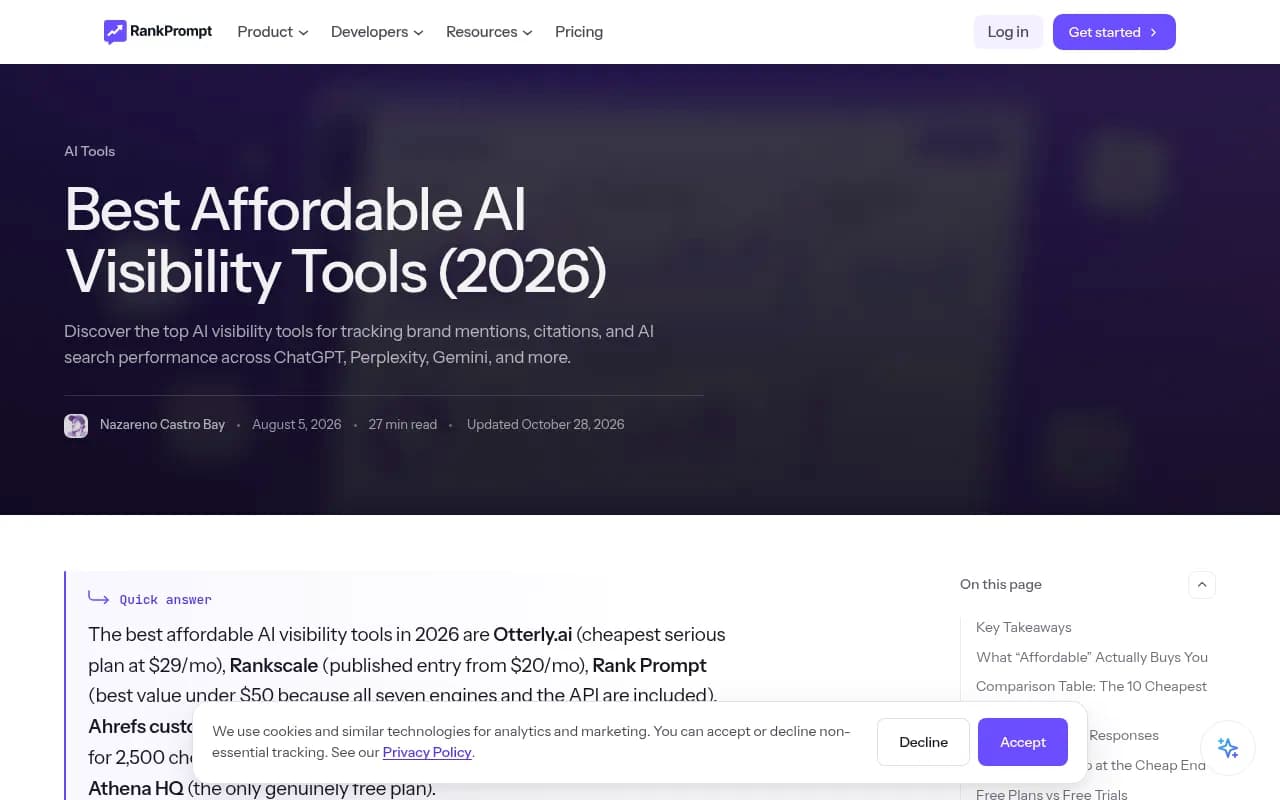
Rank Prompt's July 2026 comparison of affordable tools found the real unit price ranges from roughly $10 to $109 per 1,000 AI responses, an 11x spread. Rank Prompt builds one of those tools and says so, so treat the exact numbers as vendor-authored, but the spread is a useful warning. The cheapest sticker price is not always the cheapest measurement.
Why sampling depth matters
A 2026 statistical study of Perplexity, OpenAI's search and Gemini, cited in that comparison, sampled the same queries every ten minutes. It found citation rankings are unstable across samples, and that single-run metrics give a misleadingly precise picture. If your plan only checks each prompt once a week, expect noisy trends. Fewer prompts run more often usually beat many prompts run once.
Step 4: Account for engines that behave differently
Citation slots differ by engine. Promptwatch Data on average sources per response (dated September 2025) found ChatGPT cites about 5 sources per web-search answer, while Google AI Overviews and Perplexity cite about 10. Copilot swung widely before settling at the low end. Visibility percentages are not directly comparable across engines, so give each engine you care about enough prompts to read on its own.
A useful shortcut: pick your two or three priority engines first. Buy coverage for those, and treat the rest as a bonus.
Step 5: Compare the quotes
Here is a quick worksheet pattern. Fill it in for each vendor on your shortlist.
| Question | Why it matters |
|---|---|
| What counts as one prompt? | Some vendors count each engine or country separately |
| How many responses are included per month? | The only number that is comparable across vendors |
| How often does each prompt run? | Daily vs weekly changes sample size dramatically |
| Which engines are included on this tier? | Cheap plans often gate engines first |
| Are countries, seats, and exports included? | These are the next things cut |
| What happens when I exceed the limit? | Overage pricing or hard stops |
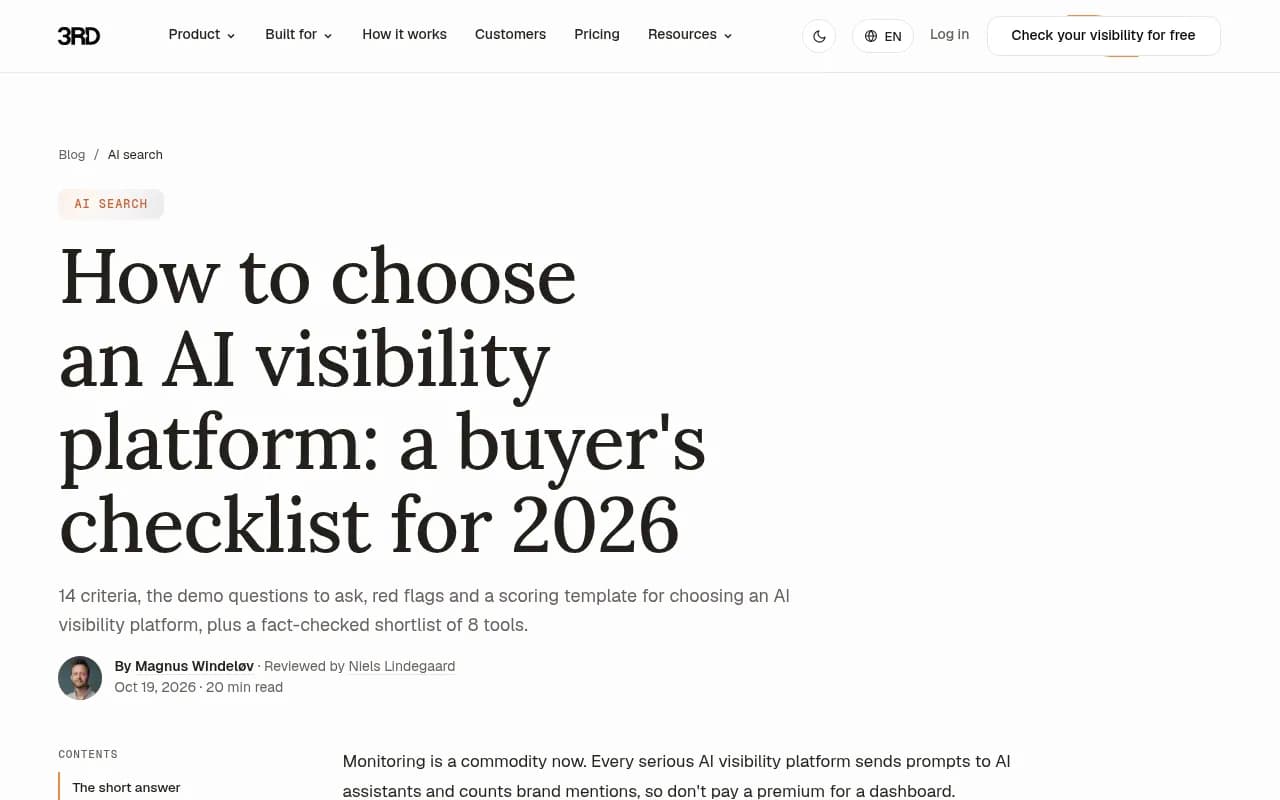
Get3rd's buyer checklist makes the same point: convert every quote into answers per month before you compare, then pilot before you sign.
Step 6: Sizing by team type
These are rules of thumb, not vendor data. Adjust to your market.
| Situation | Starting prompts | Notes |
|---|---|---|
| Small brand, one product line | 20 to 40 | Focus on 3 to 5 topics, 1 or 2 engines |
| Mid-size SaaS or ecommerce | 50 to 150 | Add competitor and persona variants |
| Multi-location or multi-country | 150 to 400 | Responses scale with every location or language |
| Agency with several clients | Per client, 30 to 100 | Look for plans with unlimited projects or prompts |
| Enterprise, many brands | 400+ | Negotiate custom volumes |
Agencies should check that pricing is per response or per project, not per prompt per client, or costs balloon quickly.
Step 7: Pilot before you commit
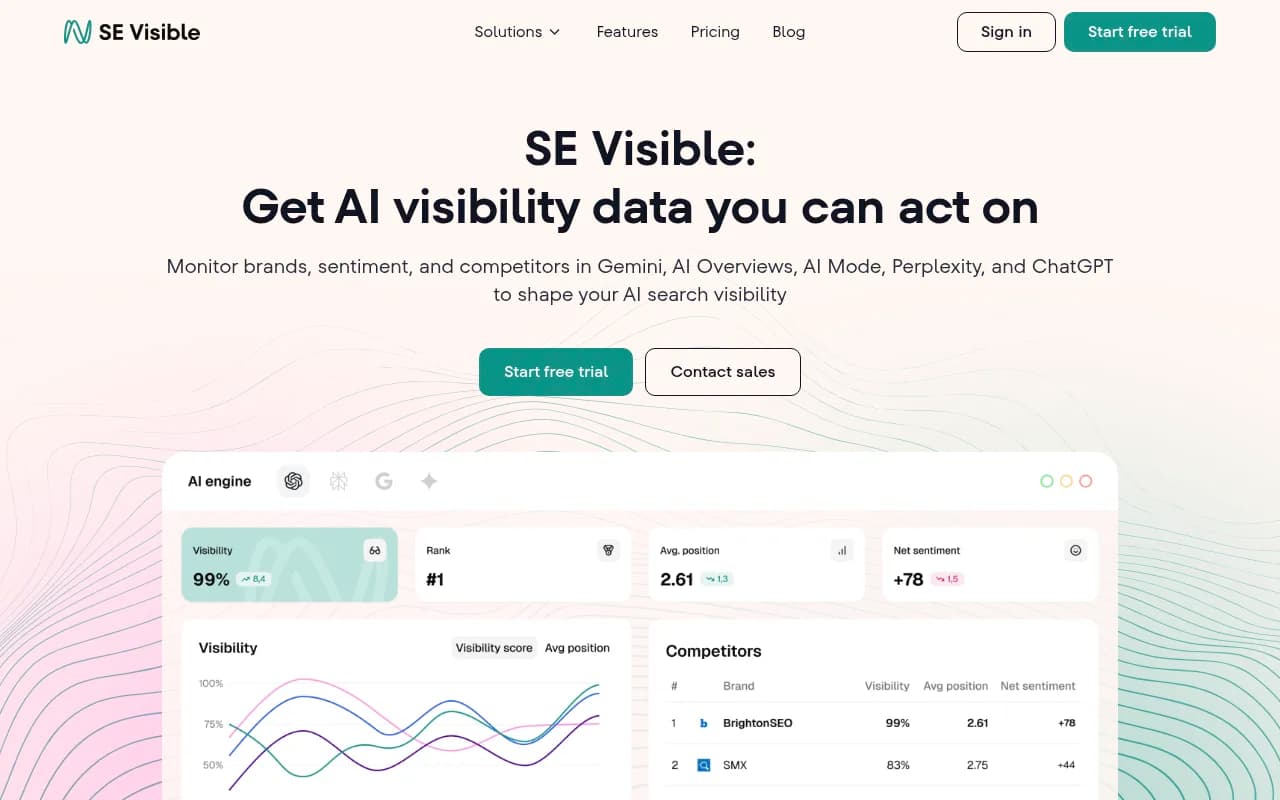
SE Visible's buyer guide suggests picking 20 prompts you care about and running them yourself in ChatGPT and Gemini during the trial. Do it. Compare what the tool reports with what you see. If the platform cannot show you the actual answer, the engine that produced it, and the sources cited, the score is hard to trust.
Get3rd recommends a pilot of 20 to 40 prompts. A workable plan:
- Week one: load 20 to 40 prompts across your top topics, including 2 or 3 competitors.
- Week two: check run-to-run variance. If the same prompt swings wildly, you need more frequent runs or more samples.
- Decide which prompts earned their place by producing something you can act on, and cut the rest.
- Only then choose the plan tier that covers the pruned set with about 20% headroom.
If you want a free baseline before any of that, several tools offer one. Amplitude's free analysis and similar no-login scans can show roughly where you stand.

Tools worth shortlisting once you know your number
Once you have a prompt count and a responses-per-month figure, you can compare plans fairly. A few starting points from the catalog:
Promptwatch prices by prompts and responses, which makes the math easy. Its Essential plan lists 50 prompts and 6,000 responses a month across all models, Professional lists 150 prompts and 18,000 responses, and Business lists 350 prompts and 42,000 responses. Agency plans have unlimited prompts and projects with response caps instead. That prompt-to-response ratio is exactly the conversion you want vendors to show. Confirm current numbers at promptwatch.com/pricing.

Otterly.AI is a lower-priced entry point for basic tracking.

Peec AI focuses on monitoring with daily tracking.

Rankscale and Athena HQ are also worth a look at the budget end; Rank Prompt's comparison lists Athena HQ as having the only genuinely free plan in its set.

SE Visible lets you drill from a score to a topic to a single prompt and read the actual answers.
For a wider view, the directory at bestgeosoftware.com lists more GEO platforms by category.
Common mistakes
- Buying by sticker price. A $29 plan and a $95 plan may differ 10x in responses.
- Tracking too many vague prompts. Fifty generic questions tell you less than twenty tied to revenue.
- Ignoring frequency. Weekly single runs are too thin for trend decisions.
- Forgetting growth. Prompts multiply when you add countries, languages, or competitors.
- Never pruning. Review the set quarterly and drop prompts that never inform a decision.
A quick calculation example
Say you run a B2B SaaS with 4 core topics. You write 6 prompts each (24), add 8 competitor comparison prompts (32), and 8 persona variants (40). You care about ChatGPT, Google AI Overviews, and Perplexity in one country, run daily.
40 x 3 x 1 x 30 = 3,600 responses a month.
Now you can ask each vendor: does the plan include at least 3,600 responses on those three engines, with room to grow? That question is far easier to answer than "is 50 prompts enough?"
Final checklist
- List 5 to 10 revenue-linked topics.
- Write 3 to 6 prompts per topic, covering organic, brand, and competitor intent.
- Choose priority engines, countries, and run frequency.
- Compute responses per month and ask every vendor for the same number.
- Pilot 20 to 40 prompts, verify against manual checks, then size the plan with headroom.
Start with the pilot set this week. Your real prompt count will be clearer after two weeks of data than after any pricing page.