Key takeaways
- B2B buyers complete roughly 80% of their research journey before ever speaking to a salesperson, and AI search engines like ChatGPT, Perplexity, and Gemini are increasingly doing the summarizing
- GEO (Generative Engine Optimization) helps SaaS companies get cited in those AI-generated answers, which means influencing buyers before they ever fill out a demo form
- The companies seeing the biggest sales cycle compression are those treating GEO as a full-funnel strategy, not just a traffic play
- Answer Gap Analysis -- finding which prompts your competitors appear for but you don't -- is the most direct way to identify where you're losing deals silently
- Tracking AI visibility at the page level, and connecting it to pipeline, is what separates GEO programs that get budget from those that get cut
Why the B2B sales cycle problem is getting worse before it gets better
The average B2B SaaS sales cycle hasn't shortened on its own. If anything, buying committees have grown, scrutiny has increased, and buyers are more skeptical than ever of vendor-led content. According to research from Design Revision, buyers now self-educate through roughly 80% of their journey before engaging sales. That's not a new stat, but what's changed is where that self-education happens.
Two years ago, a buyer researching project management software would Google "best project management tools for remote teams," click through a few listicles, maybe read a G2 review page, and eventually land on your site. Today, a meaningful chunk of that same research happens in ChatGPT, Perplexity, or Google AI Overviews. The buyer types a question, gets a synthesized answer with a handful of cited sources, and forms an opinion before they've visited a single vendor website.
If your brand isn't in those citations, you don't exist for that buyer. And if a competitor is consistently cited while you're not, they're building trust with your prospect before you've had a chance to say a word.
That's the core GEO problem for B2B SaaS in 2026. And it's also the core opportunity.
What GEO actually does for a sales cycle
GEO isn't magic. It doesn't replace good sales process, strong product-market fit, or a capable SDR team. What it does is compress the awareness-to-consideration phase by making your brand part of the answer a buyer gets when they're actively researching.
Think about the difference between these two scenarios:
A prospect asks ChatGPT "what's the best way to reduce customer churn for a mid-market SaaS company?" In scenario one, the AI cites three articles -- none of them yours. The prospect reads those, forms a mental shortlist, and eventually books demos with those vendors. Your SDR cold-calls them two weeks later and gets a polite "we're already in conversations with a few vendors."
In scenario two, your company's article on churn reduction frameworks is one of the three citations. The prospect reads it, finds it genuinely useful, and your brand is already on their shortlist before the demo request even lands in your CRM.
That's the sales cycle compression GEO delivers. Not by making deals close faster once they're in pipeline, but by moving prospects from unaware to "already considering you" before the first sales touchpoint.
The three places GEO shortens the cycle
1. Top-of-funnel: getting into the consideration set early
Most B2B SaaS companies have invested heavily in SEO content targeting bottom-funnel keywords. "Best [category] software," "[competitor] alternatives," "[use case] tools." That content still matters, but AI search engines don't just surface keyword-matched pages. They cite pages that comprehensively answer specific questions.
This means the content that gets cited in AI answers is often more specific and more educational than what ranks in traditional search. A piece on "how to calculate customer acquisition cost for a PLG company" will get cited more readily than a generic "what is CAC" article. The more precisely your content answers a real buyer question, the more likely it is to appear in AI-generated responses.
The practical implication: map out the questions your buyers are actually asking during their research phase, not just the keywords they're searching. Then create content that answers those questions directly and thoroughly.
2. Mid-funnel: building credibility before the first call
One of the most underrated effects of AI citation is what it does to buyer perception. When a prospect sees your brand cited by ChatGPT or Perplexity, there's an implicit endorsement happening. The AI "chose" your content as the best answer. That's a credibility signal that's hard to manufacture through traditional marketing.
Sales teams at companies with strong GEO programs report a noticeable difference in the quality of inbound conversations. Prospects arrive already familiar with the company's perspective, already having consumed their content, and often already partially sold on the approach. The first call becomes a qualification and fit conversation rather than an education session.
This is what Purple Path's research on GTM shifts describes as "trust built before the first touchpoint." Buyers who've encountered your brand in AI answers multiple times during their research are warmer leads, full stop.
3. Bottom-funnel: winning comparison queries
The bottom of the funnel is where GEO gets really tactical. Buyers at decision stage are asking AI engines things like "how does [your product] compare to [competitor]?" or "what are the limitations of [competitor]?" If your content isn't shaping those answers, your competitor's content might be.
This is where Answer Gap Analysis becomes a direct revenue tool. By identifying which comparison and evaluation prompts your competitors are visible for but you're not, you can prioritize content creation that directly influences late-stage buying decisions.
How to actually implement GEO for sales cycle compression
Start with prompt research, not keyword research
Traditional SEO starts with keyword volume. GEO starts with prompts -- the actual questions buyers type into AI engines. These are often longer, more conversational, and more specific than traditional search queries.
The research process looks like this: identify your buyer personas, map out the questions they'd ask at each stage of their research journey, then check which of those questions currently return answers that cite competitors but not you. Those gaps are your content priorities.
Tools like Promptwatch make this systematic -- the Answer Gap Analysis feature shows you exactly which prompts your competitors are appearing in that you're not, so you're not guessing about where the gaps are.

Create content engineered for citation, not just traffic
There's a meaningful difference between content that ranks in traditional search and content that gets cited in AI answers. AI models tend to cite content that:
- Directly answers a specific question in the first few paragraphs
- Uses clear structure (headers, numbered lists, defined terms)
- Covers a topic with enough depth that the AI can extract a useful summary
- Comes from a domain with existing credibility signals (backlinks, citations, author expertise)
This doesn't mean abandoning SEO best practices. It means layering GEO intent on top of them. Write for the human reader first, but structure the content so an AI can parse and cite it easily.
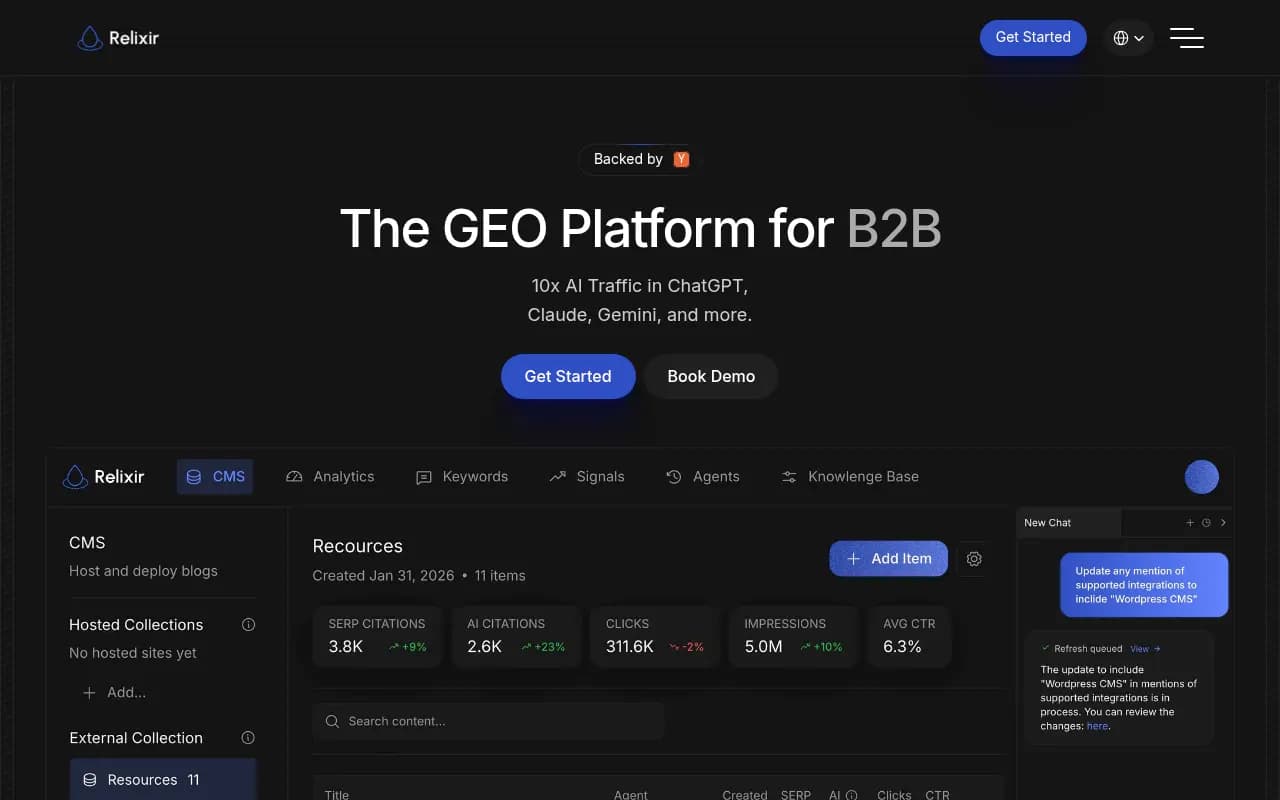
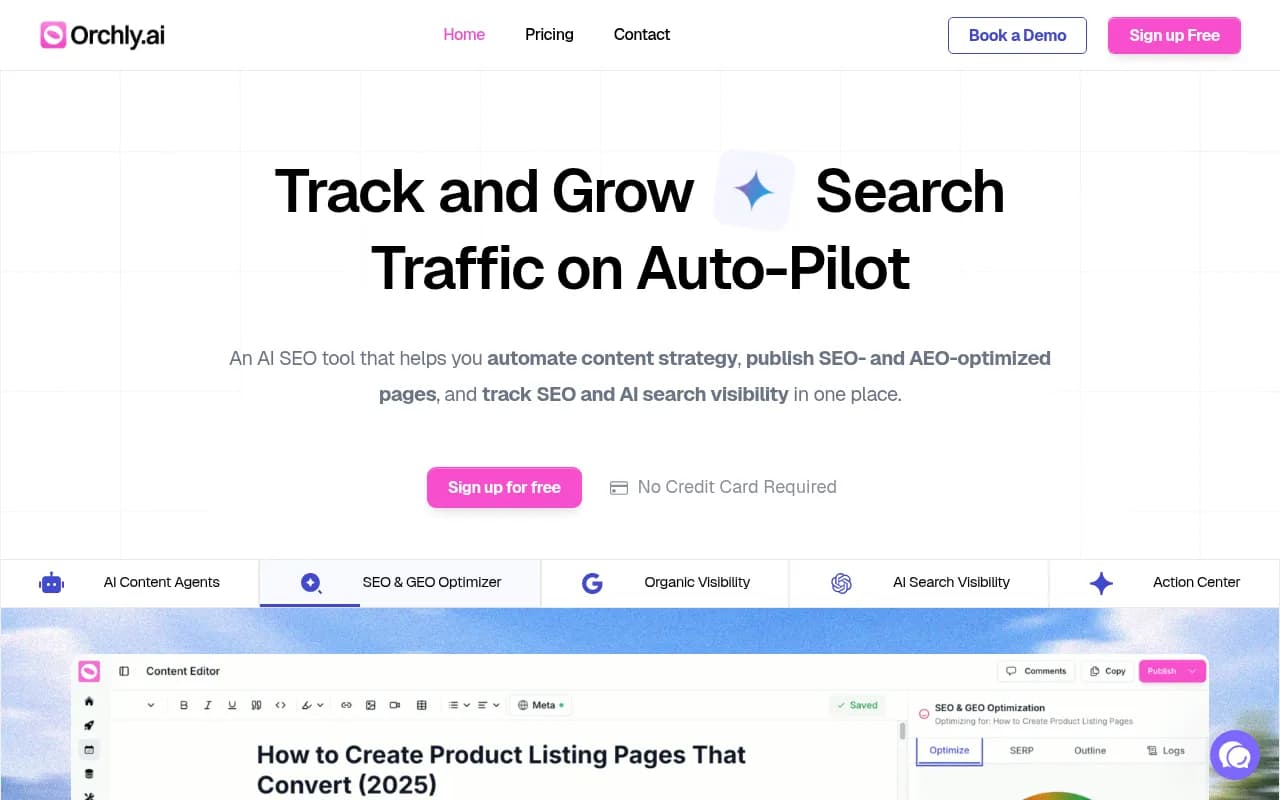
For teams that need to produce this content at scale, platforms like Relixir and Orchly.ai can help automate the creation of citation-optimized content.
Track AI visibility at the page and prompt level
You can't optimize what you don't measure. Most B2B SaaS marketing teams are still measuring GEO success with vanity metrics -- "we appeared in ChatGPT" -- rather than the granular data that actually drives decisions.
What you want to track:
- Which specific pages are being cited, by which AI models, and how often
- Which prompts are driving those citations
- How your visibility compares to competitors across different AI engines
- Whether AI visibility is correlating with pipeline and revenue
The last point is the hardest but most important. If you can connect AI citations to actual website visits (via server logs, a tracking snippet, or GSC integration) and then connect those visits to pipeline, you have a business case for GEO investment that will survive any budget conversation.
Fix your technical foundation
AI crawlers behave differently from Googlebot. They hit pages more frequently, sometimes encounter JavaScript rendering issues, and may not index content that's behind authentication or loaded dynamically. If your site has technical issues that prevent AI crawlers from reading your content, no amount of content optimization will help.
Checking your AI crawler logs -- seeing which pages ChatGPT, Perplexity, and Claude are actually crawling, what errors they're hitting, and how often they return -- is a step most teams skip entirely. It's also one of the highest-leverage technical fixes available.
The content types that compress sales cycles fastest
Not all GEO content is equal for sales cycle purposes. Based on what's working for B2B SaaS companies in 2026, these formats tend to have the most direct impact:
Comparison content -- "X vs Y" and "[category] alternatives" articles are heavily cited in AI responses to evaluation-stage queries. If you don't own this content for your category, someone else will.
Use case specifics -- Articles that address a specific use case for a specific buyer type ("churn reduction for PLG companies" vs "churn reduction") get cited more often because they answer more specific questions.
Framework and methodology content -- Content that introduces a named framework or methodology gets cited repeatedly because AI models use it as a reference point. If you can coin a term or framework that becomes the standard way to describe a problem in your category, you'll get cited every time someone asks about that problem.
FAQ and objection-handling content -- Buyers ask AI engines the same questions they'd ask a salesperson: "Is [product] worth it?" "What are the downsides of [approach]?" Content that addresses these questions honestly tends to get cited because it's genuinely useful.
What the best B2B SaaS GEO programs look like in practice
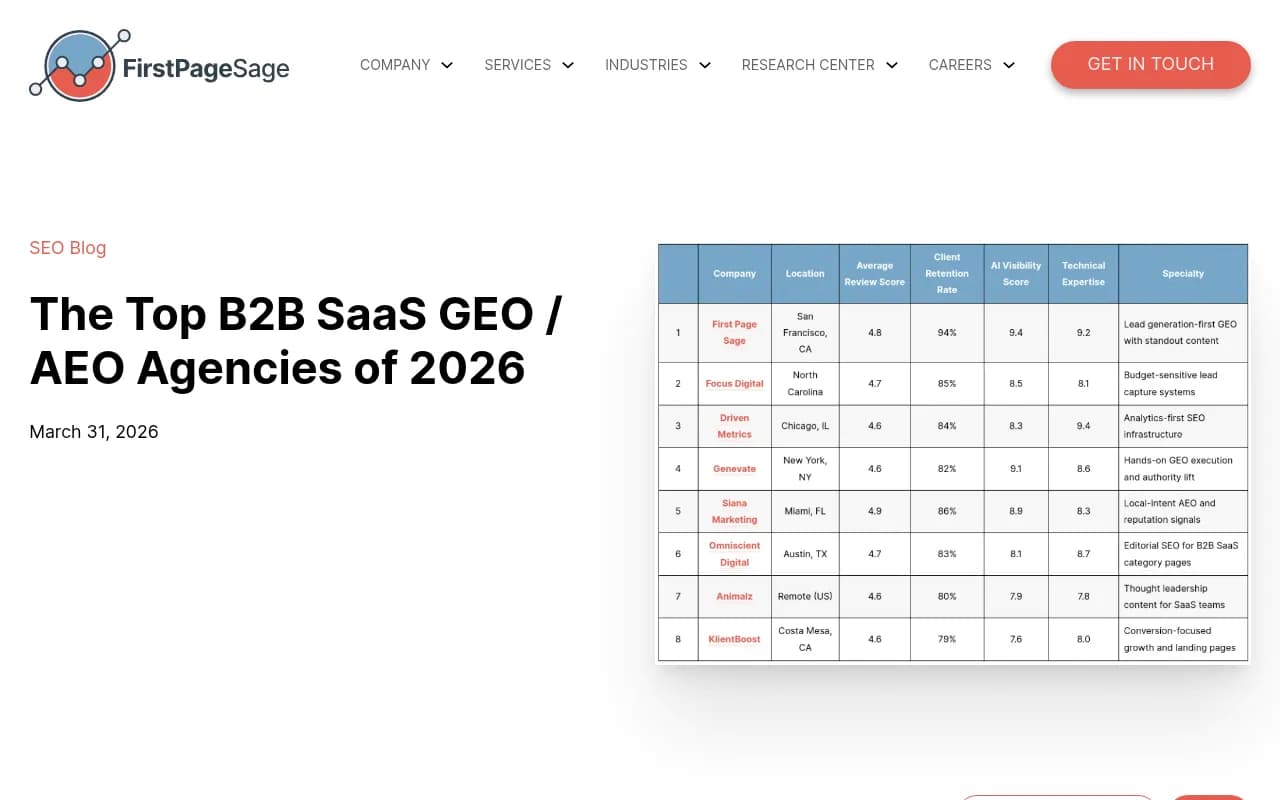
First Page Sage's 2026 review of B2B SaaS GEO agencies found that the highest-performing programs share a few characteristics: they treat AI visibility as a measurable business metric (not a marketing experiment), they produce content with genuine depth rather than AI-generated filler, and they close the loop between content creation and revenue attribution.
The companies that are seeing real sales cycle compression aren't just publishing more content. They're being strategic about which prompts to target, which pages to optimize, and how to measure whether any of it is working.
That loop -- find gaps, create content, track results -- is what separates a GEO program that shortens sales cycles from one that just generates reports.
Tools worth knowing for B2B SaaS GEO
The GEO tooling landscape has matured considerably. Here's a practical breakdown of what different tools are useful for:
| Tool | Best for | Key strength |
|---|---|---|
| Promptwatch | End-to-end GEO (tracking + content + attribution) | Answer Gap Analysis, AI crawler logs, content generation |
| Profound | Enterprise AI visibility monitoring | Deep LLM tracking across multiple models |
| Relixir | GEO content generation + analysis | All-in-one with content creation |
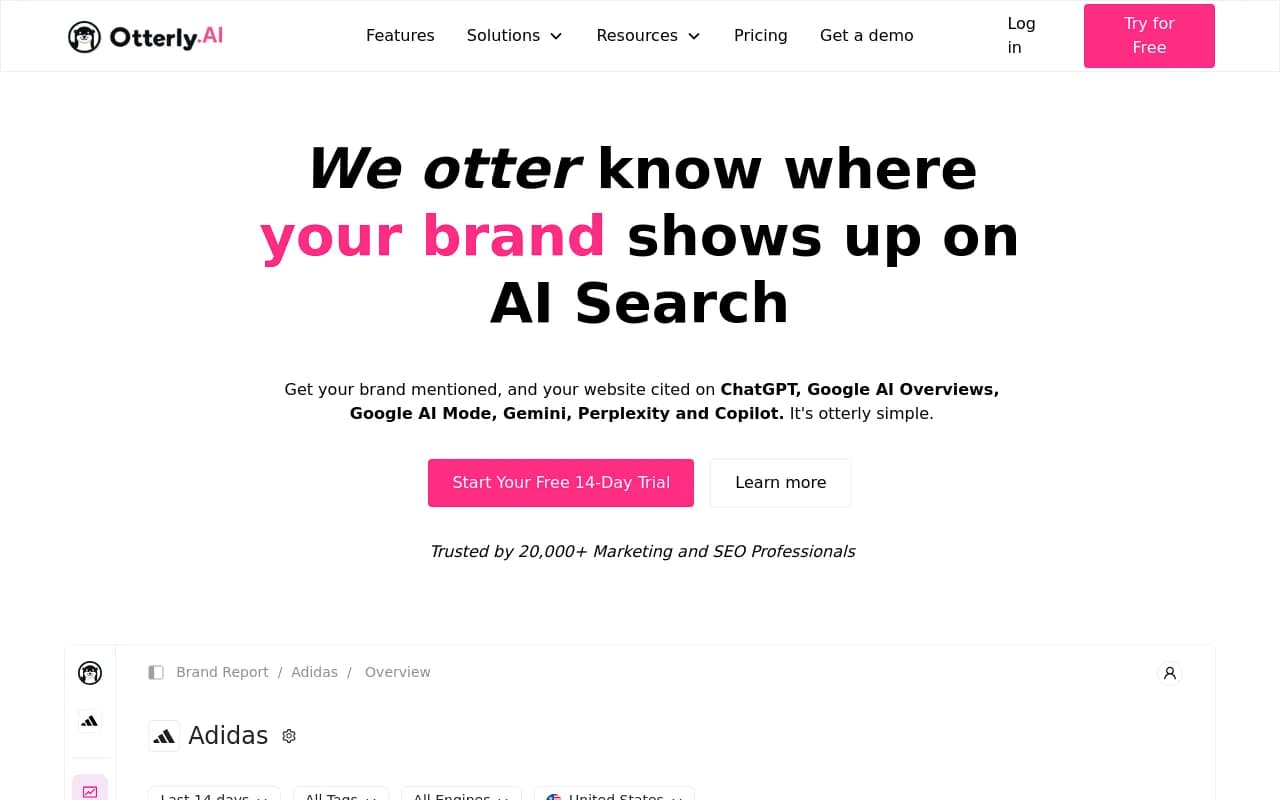
| Otterly.AI | Budget-friendly monitoring | Simple, affordable tracking |
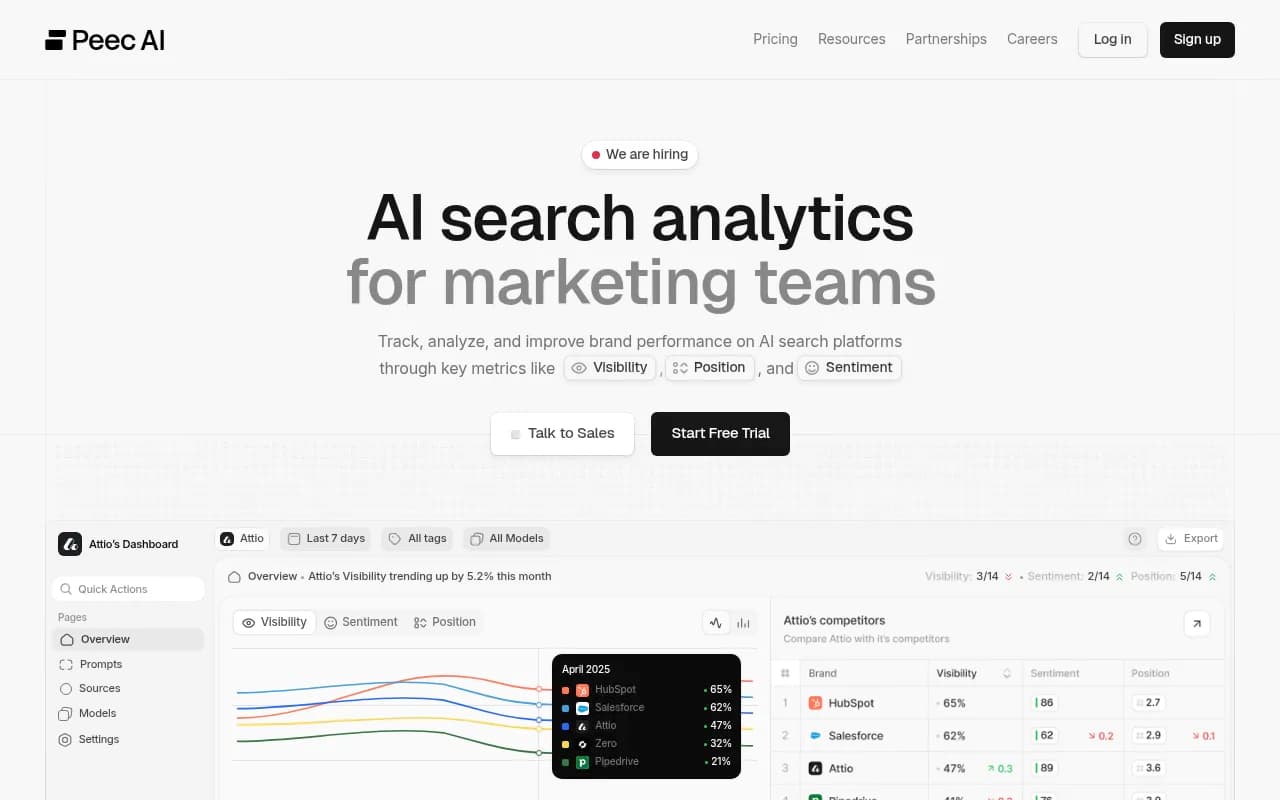
| Peec AI | Multi-language visibility | International GEO programs |
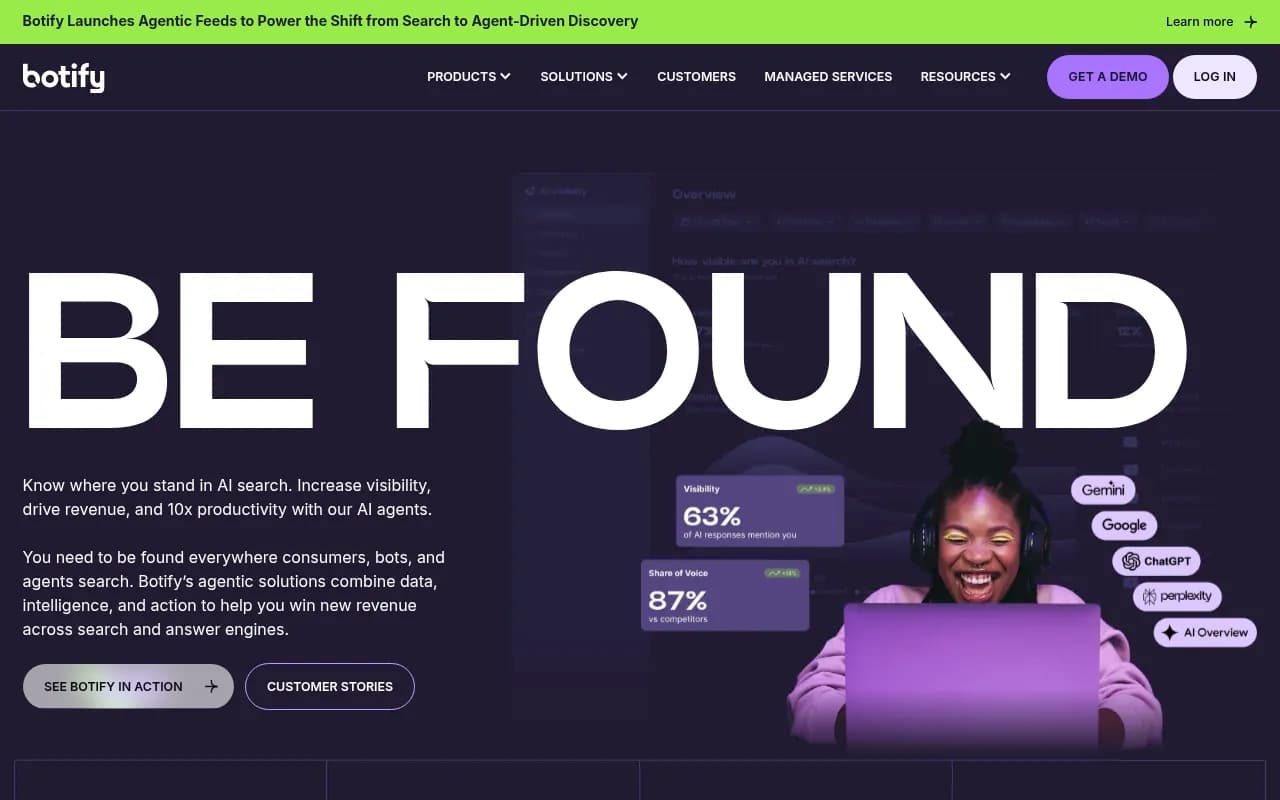
| Botify | Technical SEO + AI crawl optimization | Enterprise technical foundation |
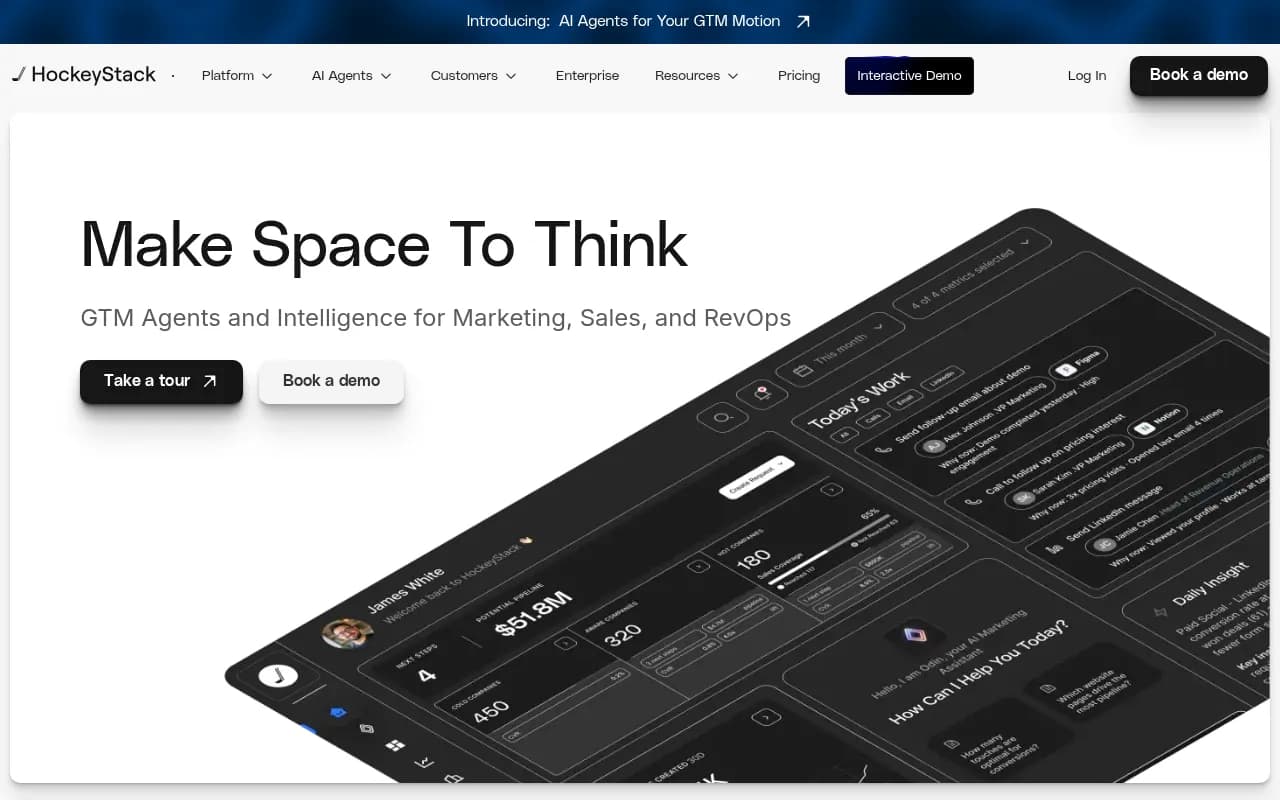
| HockeyStack | Pipeline attribution | Connecting visibility to revenue |
For most B2B SaaS marketing teams, the biggest gap isn't awareness of the GEO opportunity -- it's having a system that connects content creation to measurable pipeline impact. That's where a platform like Promptwatch earns its place: it's built around the full loop rather than just the monitoring piece.
Common mistakes B2B SaaS teams make with GEO
Treating GEO as a separate strategy from SEO. The content that ranks in traditional search and the content that gets cited in AI answers overlaps significantly. Teams that run these as separate programs end up duplicating effort and missing synergies.
Optimizing for AI visibility without tracking attribution. If you can't show that AI citations are driving pipeline, GEO will always be a "nice to have" that gets cut when budgets tighten. Build attribution from day one.
Chasing volume over relevance. Publishing 50 articles to appear in AI answers for generic queries won't shorten your sales cycle. Publishing 10 articles that answer the specific questions your buyers ask during evaluation will. Quality and specificity beat volume every time.
Ignoring competitor visibility. Your GEO strategy should be informed by what your competitors are being cited for. If a competitor is consistently cited in responses to your highest-value prompts, that's a direct threat to your pipeline -- and a clear content priority.
Neglecting technical crawlability. AI engines can't cite content they can't read. Checking that your key pages are being crawled correctly by AI bots is basic hygiene that most teams haven't done yet.
The bottom line
GEO's impact on B2B sales cycles isn't theoretical in 2026. Buyers are using AI search engines as a primary research tool, and the brands that show up in those answers are building trust and consideration before the first sales touchpoint. That translates directly into warmer leads, shorter time-to-demo, and faster closes.
The companies getting the most out of GEO are treating it as a measurable revenue program, not a content marketing experiment. They know which prompts they need to win, they create content specifically engineered to get cited, and they track whether that visibility is actually moving pipeline. That's the standard worth building toward.