Key takeaways
- GetMint.ai is a dedicated AI visibility monitor with solid multi-LLM tracking, but limited optimization capabilities beyond the dashboard.
- SE Ranking is a full SEO suite that has added AI visibility features -- useful if you want one platform for traditional and AI search, but the AI tracking depth is shallower than dedicated tools.
- Promptwatch is the only one of the three built around optimization, not just monitoring -- it finds content gaps, generates content engineered to get cited, and tracks whether that content actually drives traffic.
- If AI search is a primary growth channel for your team in 2026, a monitoring-only tool will tell you what's wrong but leave you to figure out the fix yourself.
The AI search conversation has shifted. A year ago, teams were asking "should we care about ChatGPT visibility?" Now they're asking "why are our competitors showing up and we're not?" That's a different question, and it requires a different kind of tool.
This comparison looks at three platforms that have positioned themselves around AI visibility, but from very different angles: GetMint.ai, SE Ranking (and its companion product SE Visible), and Promptwatch. They're not really competing for the same buyer -- and understanding why helps you figure out which one actually fits your situation.
What each tool is actually trying to do
Before getting into features, it's worth being honest about what problem each tool was built to solve.
GetMint.ai is a focused AI visibility tracker. It monitors how your brand appears across AI search engines, tracks citation share, and gives you competitive benchmarks. The core value is awareness: knowing where you stand.
SE Ranking is a traditional SEO platform used by over a million professionals. It added AI visibility tracking through a companion product called SE Visible. The pitch is consolidation -- one platform for rank tracking, site audits, backlink analysis, and now AI monitoring.
Promptwatch is built around a different premise: monitoring alone doesn't move the needle. The platform finds gaps (which prompts your competitors answer but you don't), generates content designed to close those gaps, and tracks whether that content actually gets cited and drives traffic.

Feature comparison
Here's a side-by-side look at the core capabilities across all three:
| Feature | GetMint.ai | SE Ranking / SE Visible | Promptwatch |
|---|---|---|---|
| Multi-LLM monitoring | Yes | Yes (SE Visible) | Yes (10 models) |
| Google AI Overviews | Yes | Yes | Yes |
| Competitor benchmarking | Yes | Yes | Yes |
| Content gap analysis | Limited | No | Yes (Answer Gap Analysis) |
| AI content generation | No | No | Yes (built-in writing agent) |
| Crawler logs (AI bots) | No | No | Yes |
| Prompt volume/difficulty | No | No | Yes |
| Reddit/YouTube tracking | No | No | Yes |
| ChatGPT Shopping tracking | No | No | Yes |
| Traffic attribution | No | Partial (via GSC) | Yes (snippet, GSC, server logs) |
| Page-level citation tracking | Limited | Limited | Yes |
| Multi-language/region | Yes | Yes | Yes |
| Agency/white-label | Limited | Yes | Yes |
| Pricing starts at | ~$49/mo | ~$65/mo (SE Ranking) | $99/mo |
The table tells a clear story. All three track AI visibility. Only one of them helps you do something about it.
GetMint.ai: solid monitoring, limited action
GetMint.ai does the core job well. You set up your brand, add competitors, define the prompts you care about, and it runs them across ChatGPT, Perplexity, Gemini, and other models on a schedule. The dashboard shows citation rates, sentiment, and how you compare to competitors over time.
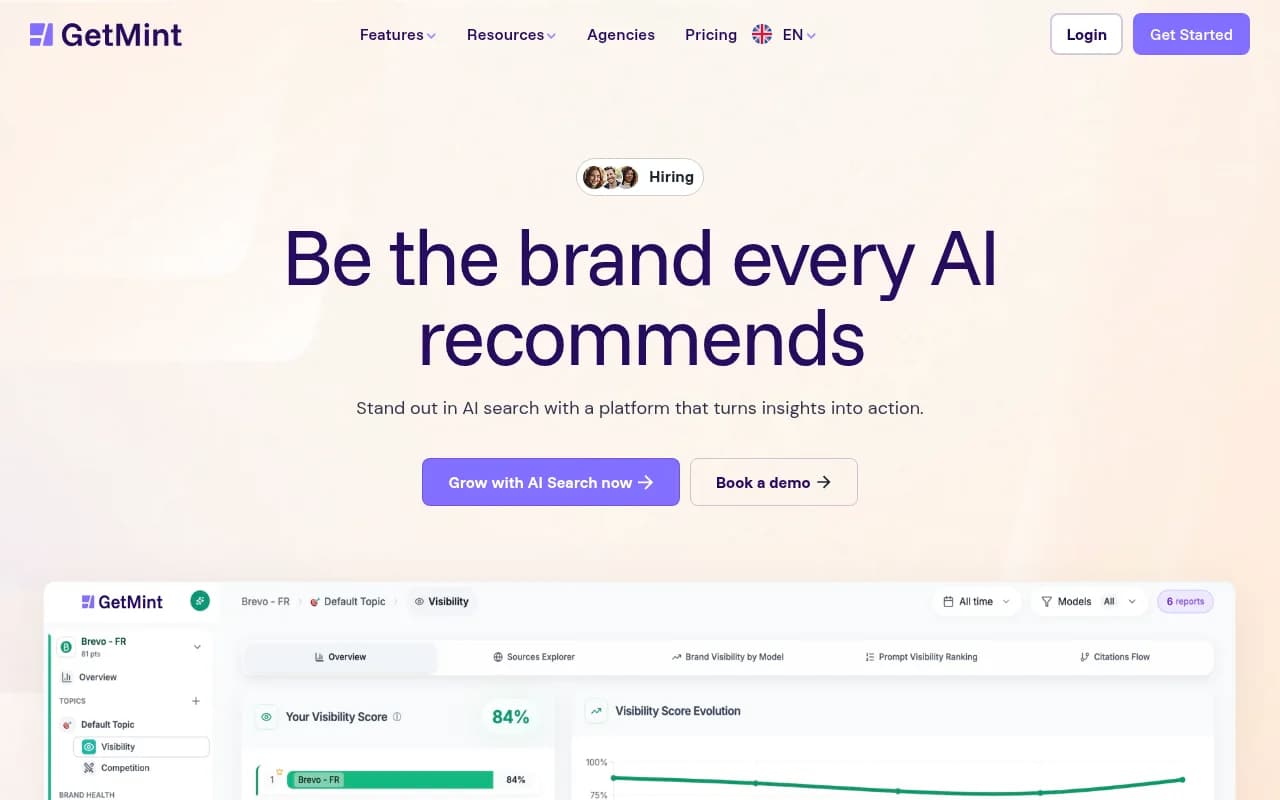
For teams just getting started with AI visibility -- maybe you've been asked by leadership to "figure out the ChatGPT thing" -- GetMint.ai is a reasonable entry point. The interface is clean, setup is fast, and the data is actionable enough to start conversations internally.
The limitation shows up when you ask "okay, now what?" GetMint.ai will tell you that a competitor is being cited for a prompt you're missing. It won't tell you what content to create, where to publish it, or how to structure it to get cited. That gap is real, and it's where most monitoring-only tools leave teams stranded.
SE Ranking: the consolidation play
SE Ranking has been building its SEO suite for years, and it's genuinely good at traditional search. Rank tracking, site audits, backlink analysis, keyword research -- the core toolkit is solid and competitively priced compared to Semrush or Ahrefs.
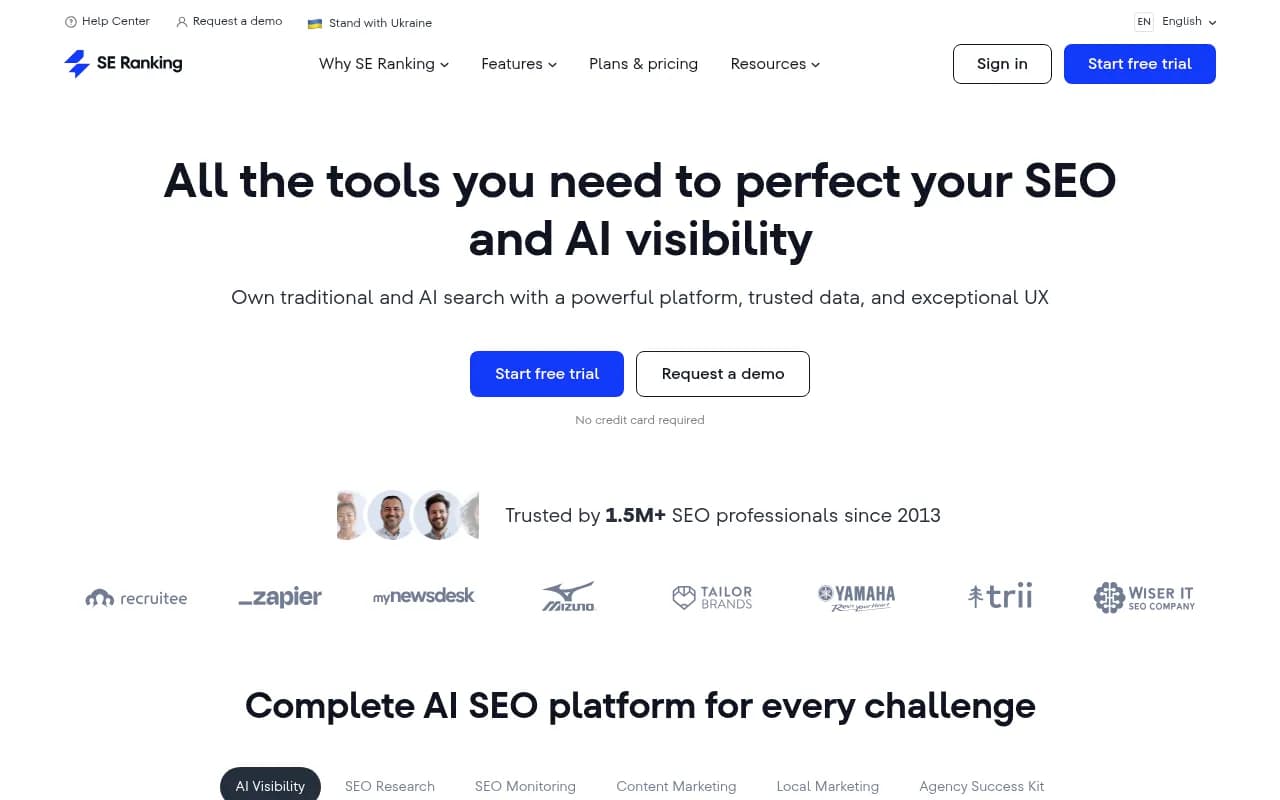
The AI visibility piece lives in SE Visible, a companion product that monitors brand mentions across AI search engines. If you're already paying for SE Ranking and want to add AI monitoring without adopting a new platform, SE Visible is a reasonable extension.
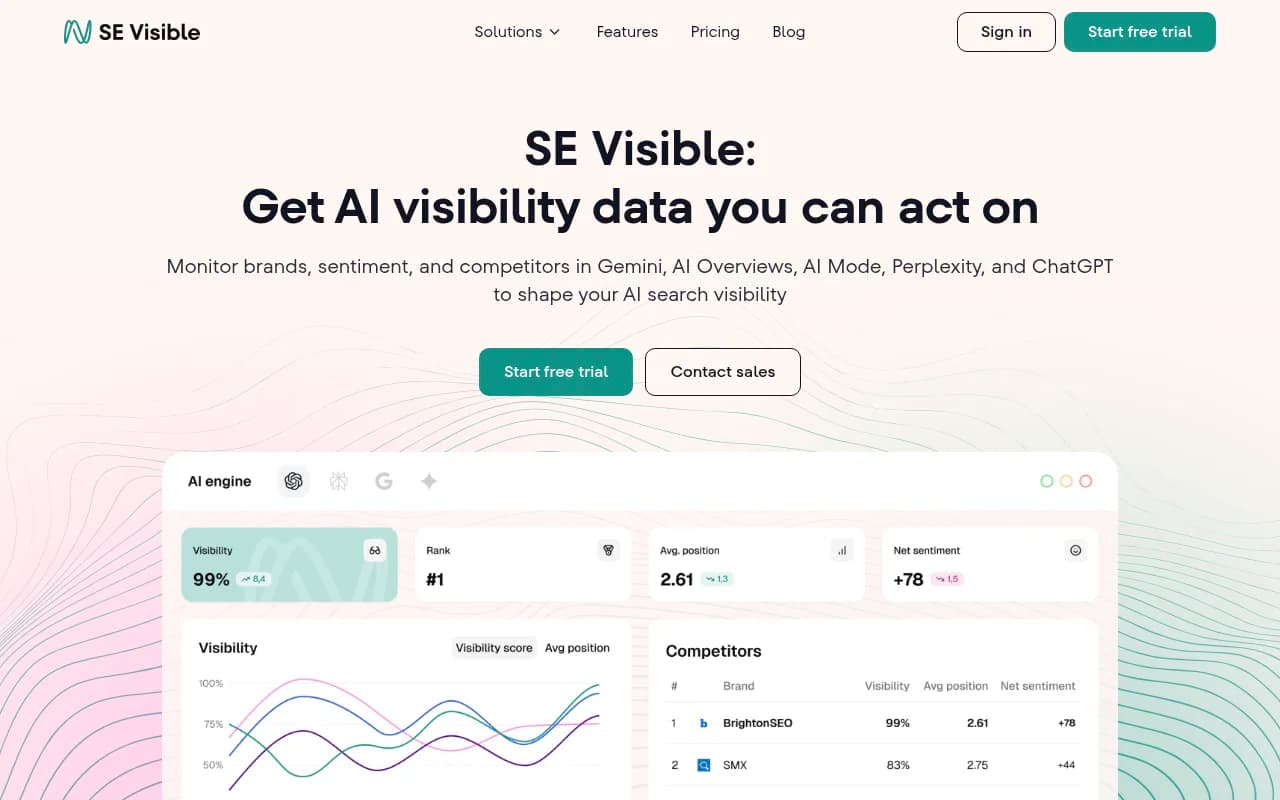
But there's a real trade-off here. SE Ranking's AI features are shallower than dedicated platforms. The prompt library is more limited, there's no content gap analysis, and the optimization workflow essentially stops at "here's what the AI said about you." For teams where traditional SEO is still the primary channel and AI visibility is a secondary concern, that's probably fine. For teams where AI search is becoming a primary acquisition channel, it's not enough.
The other thing worth noting: SE Ranking's AI visibility data and its traditional SEO data don't really talk to each other in a meaningful way yet. You can see both in one interface, but the insights don't compound. It's more like two separate dashboards than an integrated view of your search presence.
Promptwatch: the optimization loop
Promptwatch takes a different approach to the whole problem. The core idea is that visibility in AI search is a content problem -- AI models cite sources because those sources answer questions well. If you're not being cited, it's usually because you don't have content that answers the questions buyers are asking.
The platform's Answer Gap Analysis shows you exactly which prompts competitors are visible for that you're not. Not just "you're missing this topic" -- it shows the specific questions, the prompts that are driving those citations, and volume estimates so you can prioritize which gaps are worth closing first.
From there, the built-in writing agent generates content grounded in real citation data. It's not generic AI writing -- it's structured around what AI models actually cite, which topics and angles appear in responses, and what your competitors are doing that's working. The output is articles, listicles, and comparisons designed to get cited, not just to rank on Google.
Then the tracking closes the loop. Page-level citation tracking shows which of your pages are being cited, by which models, and how often. Traffic attribution connects that visibility to actual sessions and conversions, either through a code snippet, Google Search Console integration, or server log analysis.
That cycle -- find gaps, create content, track results -- is what separates Promptwatch from the other two. GetMint.ai and SE Visible show you the problem. Promptwatch shows you the problem and helps you fix it.
A few capabilities that don't have equivalents in the other tools:
- AI crawler logs: real-time logs of when ChatGPT, Claude, Perplexity, and other AI crawlers visit your site, which pages they read, and any errors they encounter. This is genuinely useful for diagnosing why certain pages aren't being cited.
- Query fan-outs: shows how a single prompt branches into sub-queries, which helps you understand the full content territory around a topic.
- Reddit and YouTube tracking: surfaces discussions on those platforms that directly influence AI recommendations. Most platforms ignore this entirely, even though Reddit threads are heavily cited by multiple AI models.
- ChatGPT Shopping tracking: monitors when your brand appears in ChatGPT's product recommendations and shopping carousels -- a surface that's growing fast in 2026.
Who should use which tool
This isn't a case where one tool is objectively better for everyone. The right choice depends on what you're actually trying to accomplish.
GetMint.ai makes sense if:
- You need basic AI visibility monitoring at a lower price point
- You're in an early stage of understanding your AI search presence
- You have a separate content team that can act on the data independently
SE Ranking makes sense if:
- You're already paying for SE Ranking and want AI visibility added without a new vendor
- Traditional SEO is your primary channel and AI visibility is supplementary
- You want a single platform for rank tracking, audits, and basic AI monitoring
Promptwatch makes sense if:
- AI search is a primary or growing acquisition channel for your brand
- You want to move from monitoring to actually improving your visibility
- You need to connect AI visibility to traffic and revenue, not just citation counts
- You're running an agency and need to show clients measurable results from GEO work
The monitoring-only trap
One thing worth saying directly: in 2026, monitoring-only AI visibility tools are becoming a harder sell. The data they provide is real and useful, but the gap between "here's your visibility score" and "here's how to improve it" is where most teams get stuck.
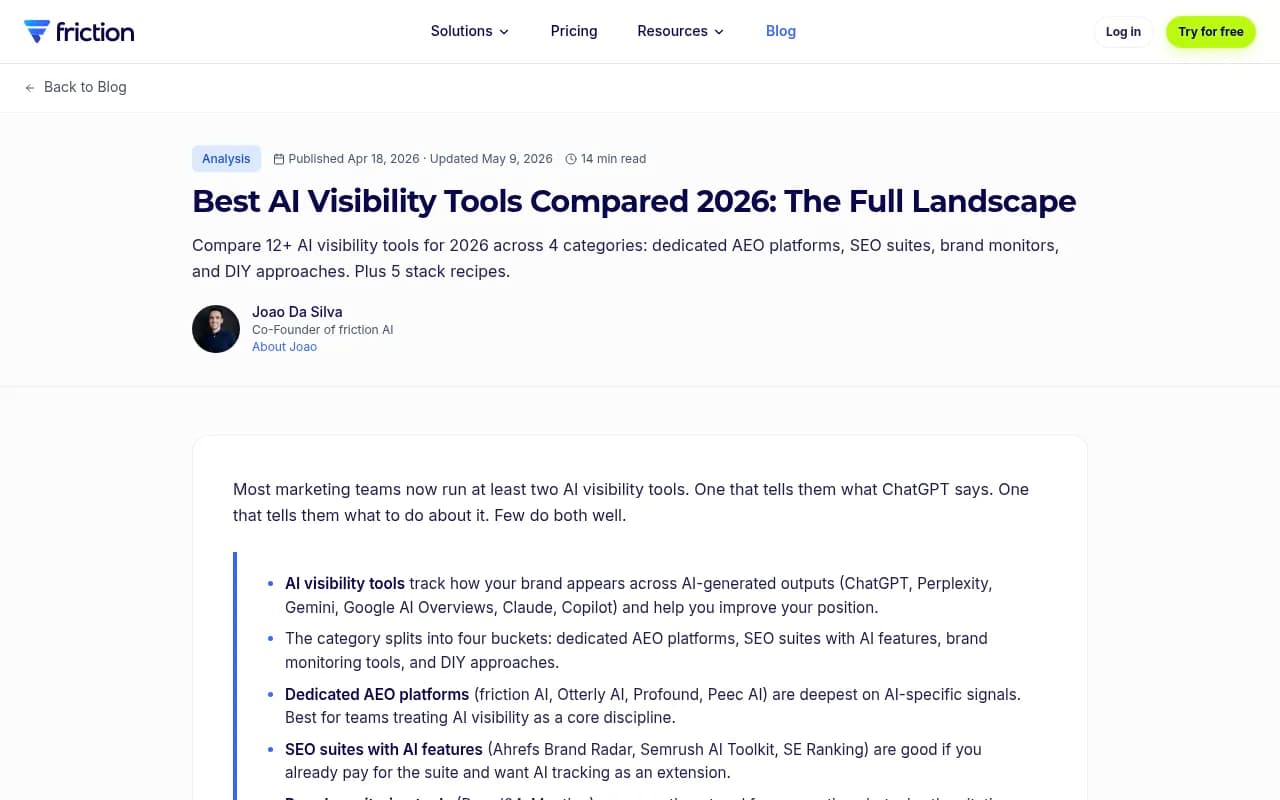
Research from multiple 2026 comparisons of AI visibility platforms -- including analysis from frictionai.co and searchinfluence.com -- consistently notes that the tools creating the most value are the ones that connect monitoring to action. Knowing you have a 12% citation rate on competitor-relevant prompts is only useful if you know what to do next.
That's not a knock on GetMint.ai or SE Ranking specifically -- it's a structural limitation of the monitoring-only category. Both tools are doing what they're designed to do. The question is whether what they're designed to do is enough for where AI search is heading.
Pricing reality check
Pricing across these tools is genuinely different in structure, not just in number.
SE Ranking's base plan starts around $65/month for traditional SEO features. SE Visible is an add-on, and the cost depends on how many prompts and models you want to track. For a mid-sized team tracking AI visibility seriously, you're likely looking at $150-200/month combined.
GetMint.ai's entry pricing is lower, roughly $49/month for basic monitoring, which makes it accessible for smaller teams or individuals who just want to get started.
Promptwatch's Essential plan is $99/month (1 site, 50 prompts, 5 articles per month). The Professional plan at $249/month adds crawler logs, more prompts, and city/state-level tracking. Business is $579/month for 5 sites and 350 prompts. There's a free trial available.
The honest comparison: Promptwatch costs more at the entry level, but it's doing more. If you're paying $49/month for monitoring and then spending 10 hours a month manually figuring out what content to create based on that data, the math changes.
Bottom line
GetMint.ai, SE Ranking, and Promptwatch are three different answers to the same underlying question: how do you stay visible as AI search takes over more of the buyer journey?
GetMint.ai answers it with clean monitoring. SE Ranking answers it with consolidation into an existing SEO workflow. Promptwatch answers it with an optimization loop that goes from gap identification to content creation to traffic attribution.
For most teams treating AI visibility as a serious growth channel in 2026, monitoring is the starting point, not the destination. The tools that help you act on what you find are the ones that will actually move the numbers.
If you're evaluating where to start, Promptwatch's free trial is worth running alongside whatever you're currently using -- not to replace your SEO stack, but to see what the gap between "tracking" and "optimizing" actually looks like in practice.