Key takeaways
- GetMint.ai, Scrunch, and Peec AI all monitor brand visibility across AI search engines like ChatGPT and Perplexity -- but all three stop at data collection.
- None of the three offer content gap analysis, AI content generation, or crawler log access -- the tools you actually need to improve your visibility, not just observe it.
- Peec AI is the most limited of the three, with no trend data, no crawler insights, and a narrow model coverage.
- Scrunch has the most polished monitoring experience but still leaves you with a dashboard and no clear path to action.
- GetMint positions itself as more action-oriented than Scrunch, but its content creation features are relatively thin compared to full-stack platforms.
- If you want a platform that closes the loop -- from gap analysis to content creation to traffic attribution -- you'll need something beyond all three.
There's a pattern in the GEO tool market right now. A company launches an AI visibility tracker, builds a clean dashboard showing your brand mentions across ChatGPT, Perplexity, and Gemini, and calls it a day. The data looks impressive. The charts are satisfying. And then... nothing. You know you're invisible for a hundred prompts. You just don't know what to do about it.
GetMint.ai, Scrunch, and Peec AI all fall into this category to varying degrees. They're monitoring tools. Good ones, in some cases. But monitoring is only the first step, and if that's where your tool stops, you're paying for a problem statement without a solution.
This guide breaks down what each tool actually does, where each genuinely shines, and where the gaps are -- so you can make an informed decision rather than signing up for something that leaves you stuck.
What these three tools have in common
Before getting into the differences, it's worth naming the shared DNA. All three tools:
- Track brand mentions and citations across major AI models (ChatGPT, Perplexity, Claude, Gemini, and others)
- Show you share of voice metrics against competitors
- Let you set up prompts or queries to monitor
- Provide dashboards with visibility scores over time
That's a meaningful starting point. In 2024, most brands had no idea whether ChatGPT was recommending them or their competitors. These tools solved that blind spot. The question in 2026 is whether solving the blind spot is enough -- or whether you need a tool that also helps you act on what it finds.
Peec AI: simple monitoring, limited depth
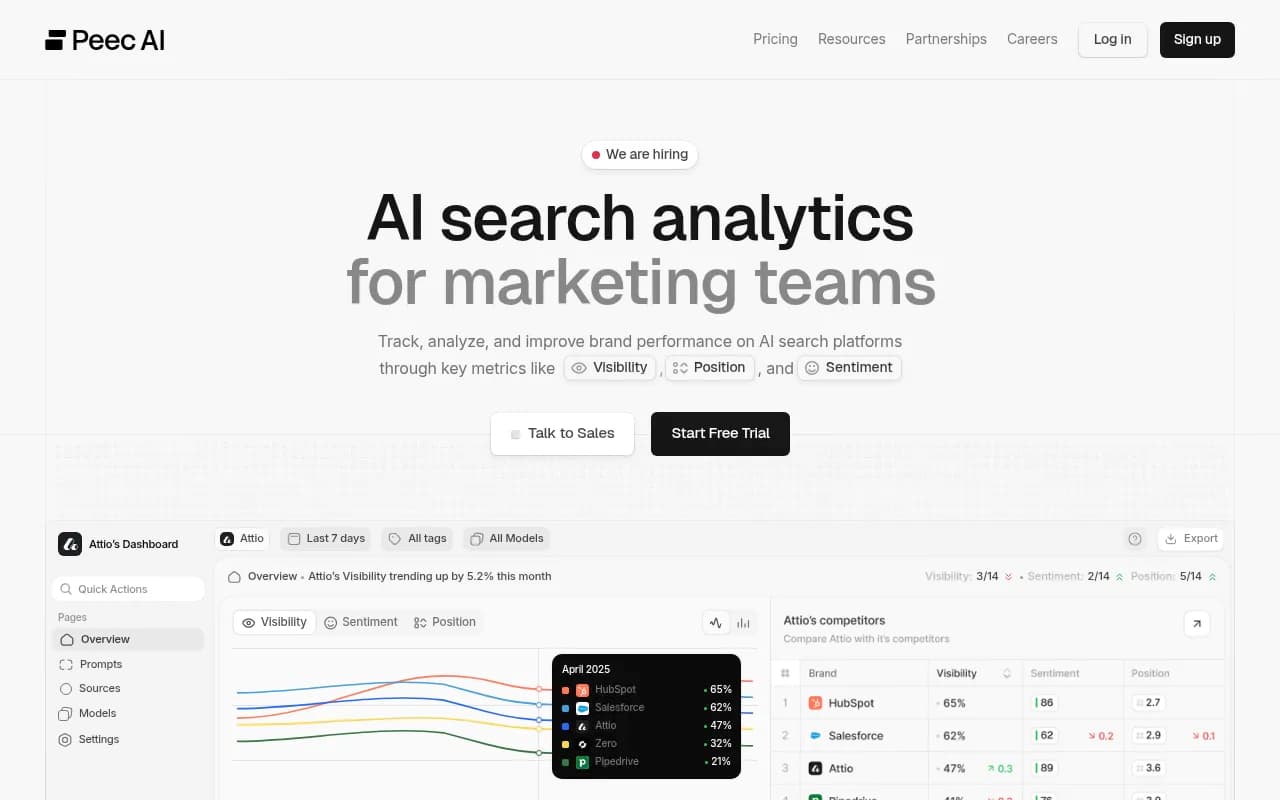
Peec AI is the most stripped-back of the three. It tracks brand mentions across a handful of AI models and surfaces a visibility score, which makes it easy to understand at a glance. Setup is quick, and the interface doesn't overwhelm you with options.
The problem is what's missing. According to Zapier's 2026 roundup of AI visibility tools, Peec AI is "notably lacking actionable insights, trend data, and AI crawler visibility insights." That's a significant list of absences for a tool in this category.
Specifically:
- No trend data means you can't see whether your visibility is improving or declining over time -- you just get a snapshot.
- No crawler insights means you have no idea which of your pages AI models are actually reading, or whether they're encountering errors when they try.
- No content gap analysis means you can't identify which prompts competitors rank for that you don't.
- No content generation means even if you could identify the gaps, the tool won't help you fill them.
Peec AI also only tracks a limited number of AI models compared to more comprehensive platforms. If your audience uses Grok, DeepSeek, or Copilot, you may be flying blind on those channels.
Who it works for: teams that want the simplest possible entry point into AI visibility monitoring, with minimal setup and no need for deep analysis. If you just want to know whether your brand name shows up in ChatGPT responses, Peec AI gets you there cheaply.
Who it doesn't work for: anyone who wants to understand why they're visible (or not), or who wants to do anything about it.
Scrunch: polished monitoring with enterprise ambitions
Scrunch has the most mature monitoring experience of the three. The platform tracks brand mentions across AI assistants, surfaces sentiment data, and lets you compare your visibility against competitors in a reasonably sophisticated way.
Where Scrunch stands out is in the quality of its data presentation. The dashboards are clean, the competitor comparisons are easy to read, and the platform handles multi-brand setups reasonably well -- which makes it attractive to agencies managing multiple clients.
But Scrunch has a ceiling. Multiple independent comparisons in 2026 have noted that it doesn't offer:
- Content gap analysis (which prompts are you missing vs competitors?)
- AI content generation or optimization recommendations
- AI crawler logs (which pages are AI bots visiting on your site?)
- Reddit or YouTube source tracking (where are AI models pulling their citations from?)
- Traffic attribution (is your AI visibility actually driving visitors?)
The GetMint.ai blog -- admittedly not a neutral source -- positions Scrunch as a pure analytics play and argues that brands need to "do more than analyze." That framing is self-serving, but it's not wrong. Scrunch gives you a very good view of the problem. It doesn't give you a path to fixing it.
Pricing for Scrunch sits at the higher end of the monitoring-only category, which makes the absence of optimization features more noticeable. You're paying enterprise-adjacent prices for a dashboard.
Who it works for: brands and agencies that need clean, shareable reporting on AI visibility and want a polished competitor comparison view. Good for stakeholder reporting and board-level visibility metrics.
Who it doesn't work for: teams that want to move from "we know we're invisible" to "we're doing something about it."
GetMint.ai: monitoring with content creation ambitions
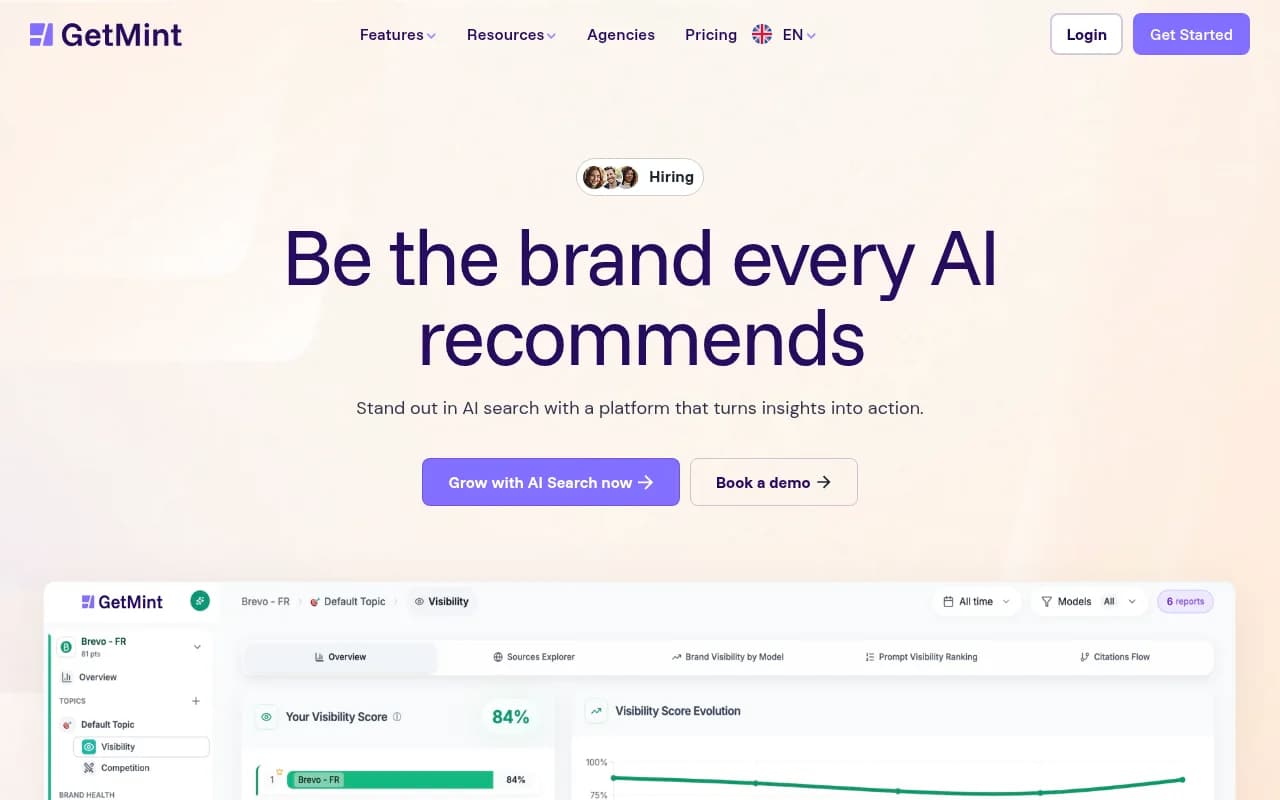
GetMint.ai occupies an interesting middle position. It monitors AI visibility like the other two, but it also markets itself as a content creation platform -- which puts it closer to the action-oriented end of the spectrum than Scrunch or Peec AI.
The pitch is that GetMint helps you identify where you're missing from AI responses and then create content to fill those gaps. That's the right idea. The question is how well it executes.
From what's publicly available, GetMint's content creation features are real but relatively lightweight. The platform can suggest content to create and help you draft it, but it doesn't appear to ground that content in deep citation data (i.e., analyzing what sources AI models actually cite and why). It also doesn't offer:
- AI crawler logs showing which of your pages AI bots are reading
- Prompt volume and difficulty scoring (so you can prioritize which gaps to fill first)
- Query fan-out analysis (how one prompt branches into related sub-queries)
- Traffic attribution connecting AI visibility to actual revenue
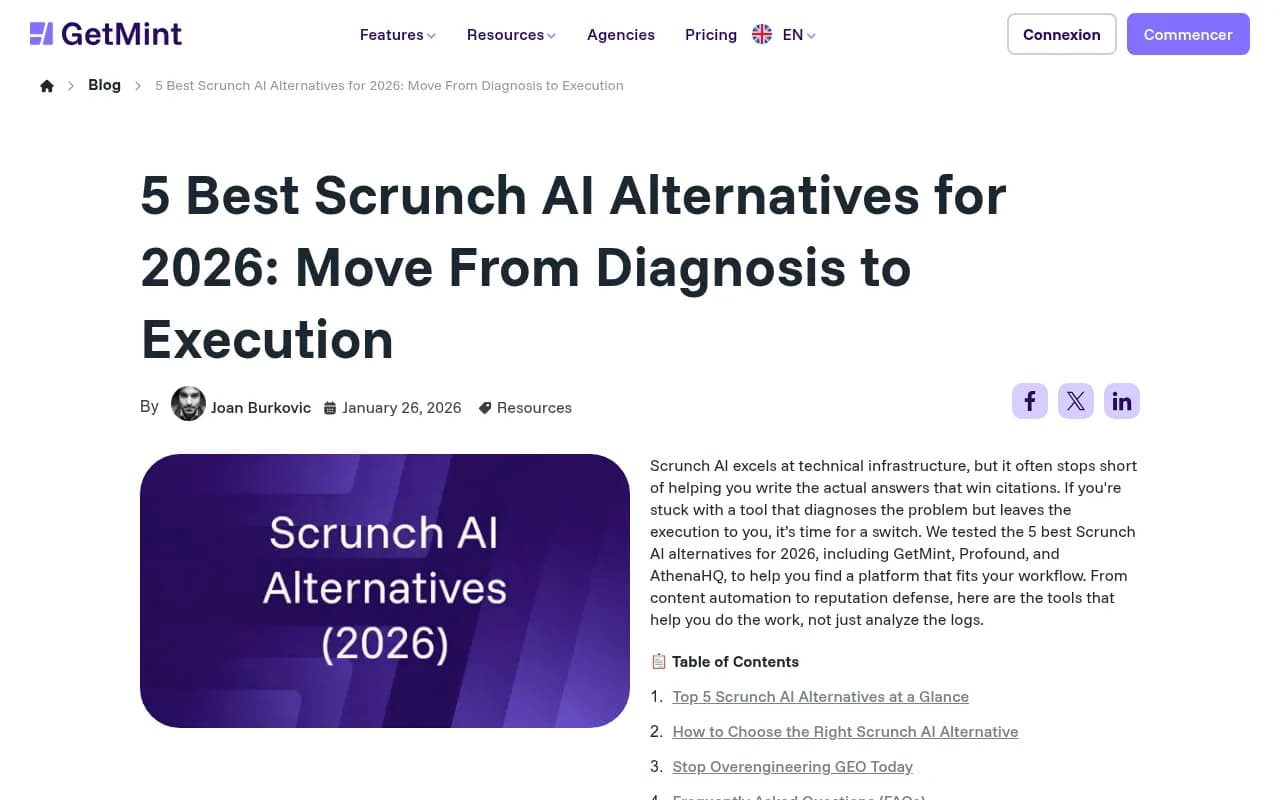
GetMint is also notable for positioning itself explicitly against Scrunch -- its own resources page lists "5 Best Scrunch AI Alternatives" and puts itself at number one. That kind of competitive positioning tells you something about where GetMint sees itself in the market: as the more action-oriented alternative to pure monitoring tools. Whether the product fully delivers on that promise is a separate question.
Who it works for: teams that want monitoring plus some content creation support in one tool, and don't need deep citation data or crawler-level insights.
Who it doesn't work for: teams that need the full loop -- gap analysis grounded in real citation data, AI-optimized content generation, crawler logs, and traffic attribution all in one place.
Side-by-side comparison
Here's how the three tools stack up across the features that matter most in 2026:
| Feature | Peec AI | Scrunch | GetMint.ai |
|---|---|---|---|
| Brand mention tracking | Yes | Yes | Yes |
| Competitor share of voice | Limited | Yes | Yes |
| Trend data over time | No | Yes | Yes |
| Multi-model coverage | Limited | Yes | Yes |
| Content gap analysis | No | No | Partial |
| AI content generation | No | No | Partial |
| AI crawler logs | No | No | No |
| Prompt volume/difficulty | No | No | No |
| Reddit/YouTube source tracking | No | No | No |
| Traffic attribution | No | No | No |
| ChatGPT Shopping tracking | No | No | No |
| Query fan-out analysis | No | No | No |
| Pricing transparency | Low | Medium | Medium |
The pattern is hard to miss. All three tools handle the monitoring layer reasonably well. None of them help you close the loop.
What all three are missing: the action layer
The monitoring-only model made sense in 2024 when brands were just waking up to the fact that AI search existed and they needed to understand their position. In 2026, that's table stakes. The real question isn't "am I visible?" -- it's "what do I do about it?"
The action layer has a few distinct components that none of these three tools fully address:
Content gap analysis grounded in real data
Knowing you're invisible for a prompt is only useful if you know what content you'd need to create to become visible. That requires analyzing what AI models actually cite -- which pages, which domains, which Reddit threads, which YouTube videos -- and identifying the specific topics your site is missing. Without that, "create more content" is advice, not a strategy.
AI-optimized content generation
Even if you identify the gaps, writing content that gets cited by AI models is different from writing content that ranks in Google. AI models cite sources that directly answer specific questions, that are structured clearly, and that cover topics comprehensively. A content generator that doesn't understand citation patterns is just a generic writing tool.
Crawler log visibility
AI models send their own crawlers to read your website before deciding whether to cite you. If those crawlers are hitting errors, getting blocked, or never visiting certain pages, you're invisible for reasons that have nothing to do with your content quality. None of the three tools here show you this data.
Traffic attribution
The ultimate question any marketing team needs to answer is: is this working? That means connecting AI visibility to actual website traffic and revenue -- not just tracking mention counts. Without attribution, you're optimizing for a metric that may or may not correlate with business outcomes.
What to use instead (or alongside)
If you need the full loop -- monitoring, gap analysis, content creation, and attribution -- the honest answer is that you need a platform built around optimization, not just observation.
Promptwatch is worth looking at here. It's one of the few platforms that explicitly builds around the action loop: find the gaps, create content to fill them, track the results. The Answer Gap Analysis feature shows you exactly which prompts competitors rank for that you don't, the built-in AI writing agent generates content grounded in 880M+ citations analyzed, and the traffic attribution layer (via code snippet, GSC integration, or server log analysis) connects visibility to revenue. It also includes AI crawler logs -- real-time data on which pages AI bots are visiting and what errors they're encountering -- which none of the three tools in this comparison offer.

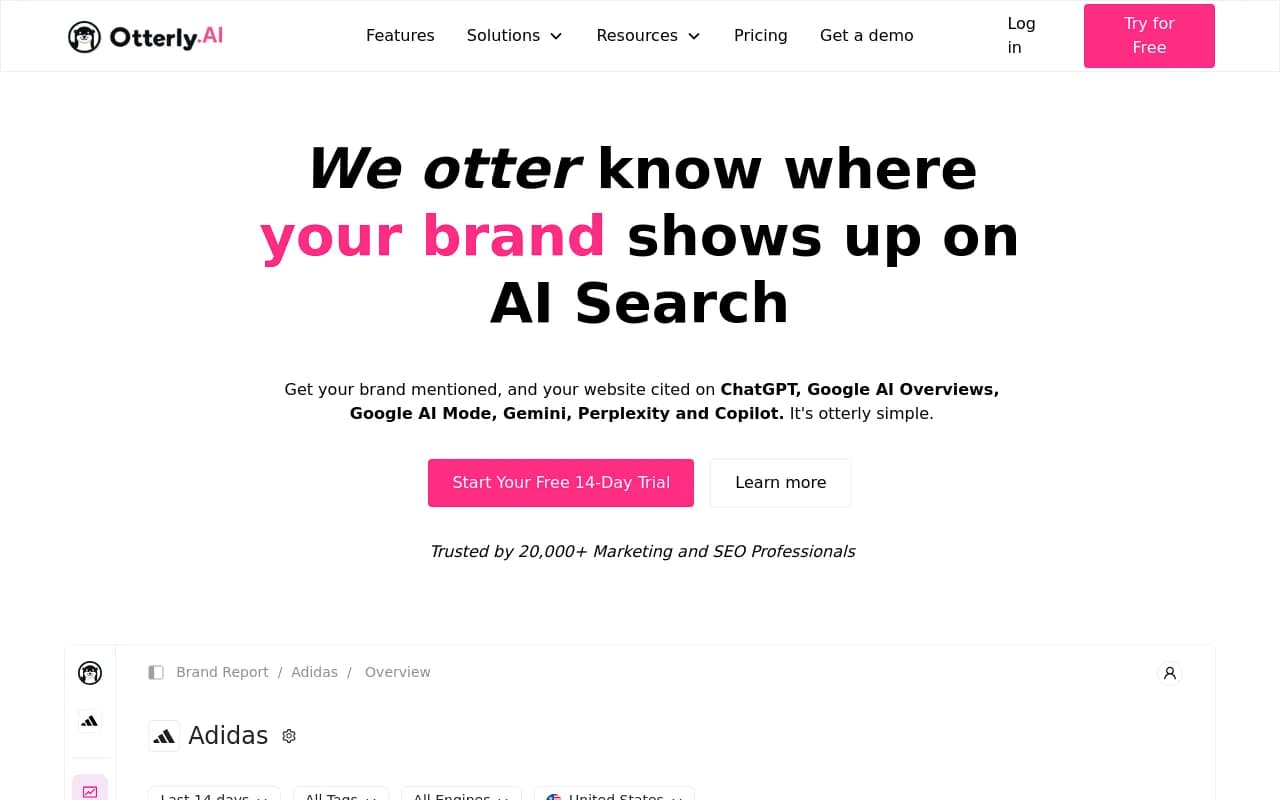
For teams that want to stay in the monitoring-only space but need better coverage, Otterly.AI is a reasonable alternative to Peec AI at a lower price point.
For enterprise teams that need deep analytics alongside monitoring, Profound has a strong feature set, though it comes at a higher price point and still lacks some of the optimization capabilities.
How to choose
The right tool depends on what stage you're at:
- If you're just starting to understand AI visibility and need a simple, low-cost entry point: Peec AI or Otterly.AI will get you oriented without overwhelming you.
- If you need clean reporting for stakeholders and competitor benchmarking: Scrunch is the most polished option in the monitoring-only category.
- If you want monitoring plus some content creation support in one tool: GetMint.ai is worth evaluating, with the caveat that its content features are less data-grounded than full-stack platforms.
- If you need to actually improve your AI visibility, not just measure it: you'll outgrow all three of these tools quickly. A platform with gap analysis, AI content generation, crawler logs, and attribution will save you time and produce better results.
The monitoring-only category served a real purpose when AI search was new. In 2026, the brands winning in AI search aren't the ones with the best dashboards -- they're the ones that identified their gaps and created content to fill them. The tool you choose should reflect that.