Key takeaways
- All three platforms track brand visibility across AI search engines like ChatGPT, Perplexity, and Gemini -- but they differ significantly in what they do with that data.
- GetMint.ai is a solid entry-level option for teams that want simple monitoring without a steep learning curve.
- Brandlight.ai sits in the "niche player" category -- useful for specific use cases but missing several capabilities that enterprise teams need.
- Promptwatch is the only one of the three that closes the full loop: find gaps, generate content, track results. It's the difference between a dashboard and an optimization platform.
Why this comparison matters in 2026
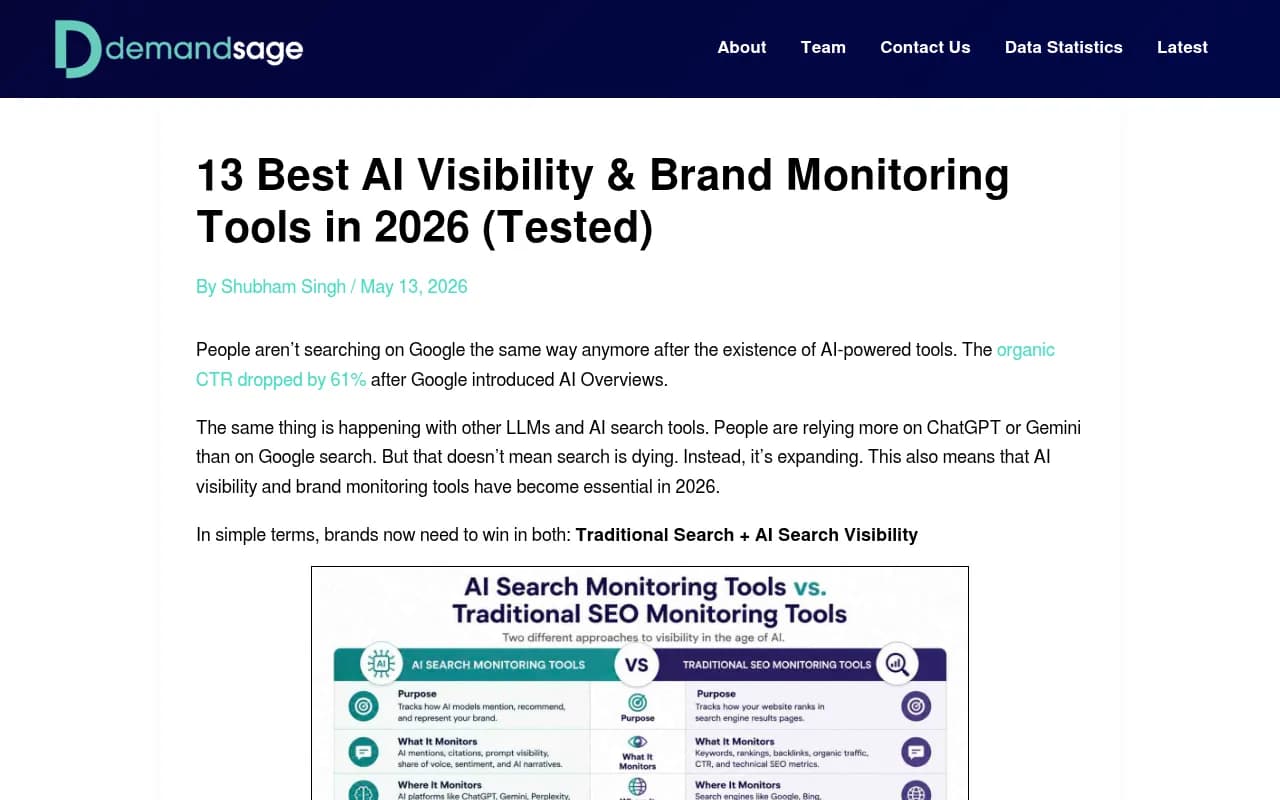
AI search has changed the game. ChatGPT, Perplexity, Claude, and Google's AI Mode now answer questions directly -- and if your brand isn't cited in those answers, you're invisible to a growing share of your audience. Organic CTR from traditional Google results dropped 61% after AI Overviews launched, according to Demandsage's 2026 analysis.
That's created a new category of software: AI brand monitoring and GEO (Generative Engine Optimization) platforms. There are now dozens of them. Three that come up regularly in buyer conversations are GetMint.ai, Brandlight.ai, and Promptwatch.
This guide compares all three honestly -- what they do well, where they fall short, and which one makes sense for different types of teams.
What each platform actually does
Before getting into the feature-by-feature breakdown, it helps to understand the fundamental design philosophy behind each tool.
GetMint.ai
GetMint is positioned as an accessible AI visibility monitoring tool. It tracks how your brand appears across major LLMs, surfaces competitor mentions, and gives you a sense of your share of voice in AI-generated responses. The interface is clean and the onboarding is quick -- you can get a baseline read on your AI visibility within a day or two.
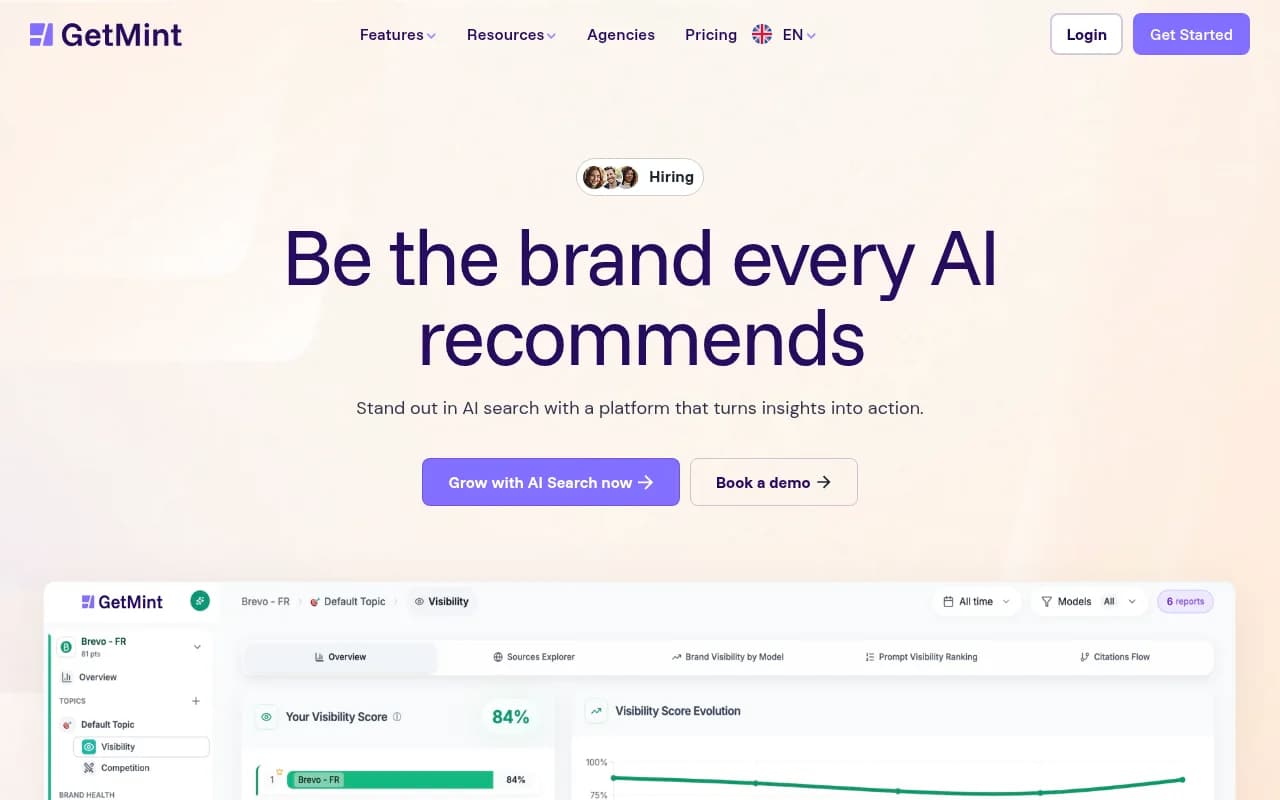
Where GetMint focuses is on the monitoring side of the equation. You can see where you're appearing, where competitors are outperforming you, and which prompts are driving visibility. What it doesn't do is tell you what to do about it. There's no content generation, no crawler log analysis, and limited attribution back to actual traffic or revenue.
For a small team that just wants to understand the landscape, that might be enough. For anyone who needs to act on the data, it's a starting point rather than a complete solution.
Brandlight.ai
Brandlight.ai takes a similar monitoring-first approach but targets slightly larger teams and agencies. It covers multiple AI models, tracks brand sentiment in AI responses, and provides competitive benchmarking.
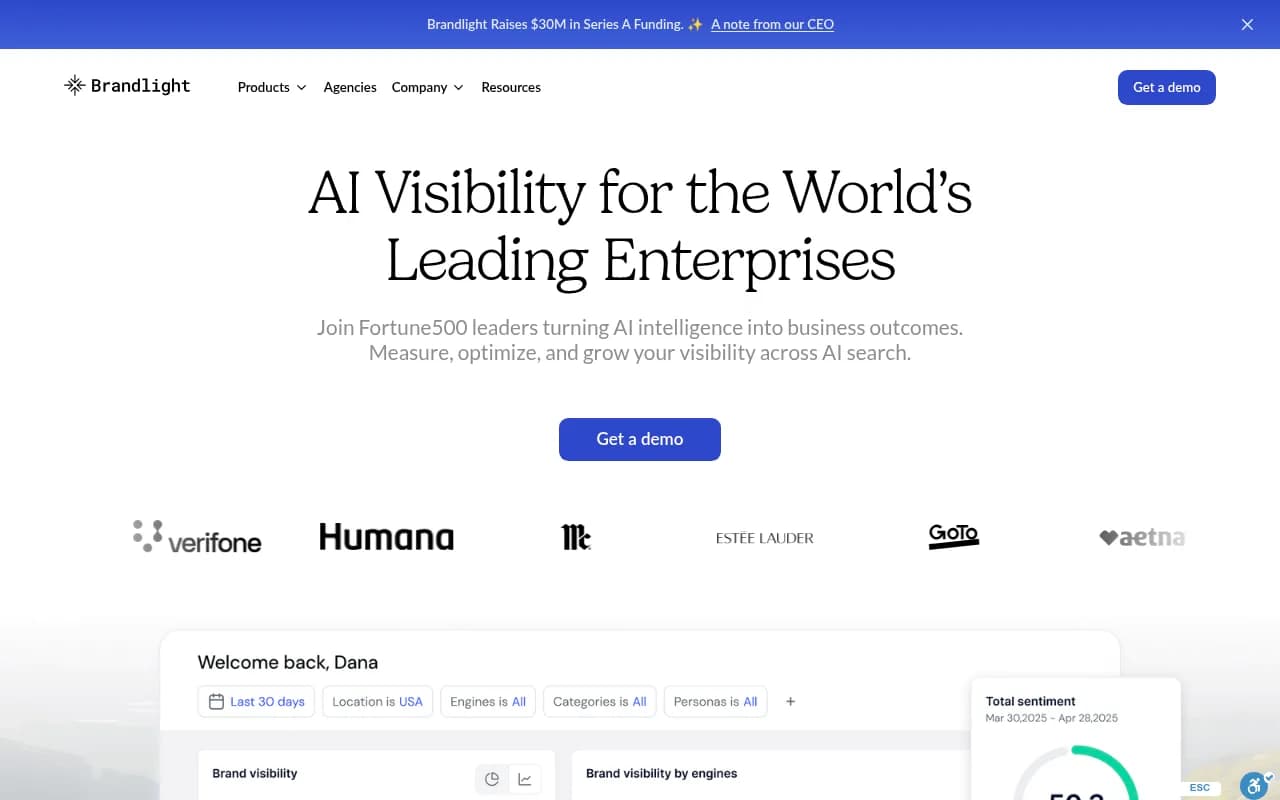
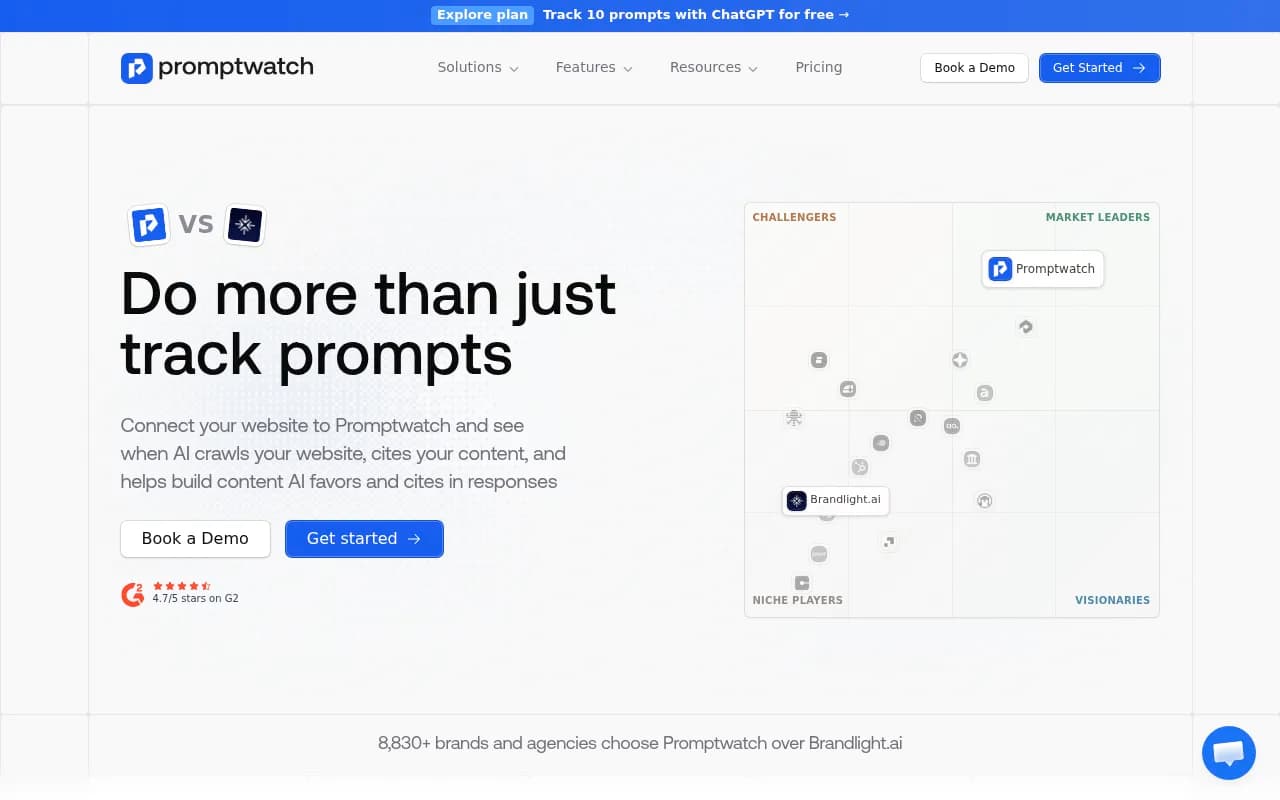
In a 2026 comparison of 12 GEO platforms, Brandlight.ai landed in the "niche player" category. The platform has genuine strengths -- the sentiment analysis is more developed than most competitors at its price point, and the UI is polished. But it's missing several capabilities that teams need when they move beyond basic monitoring: no crawler logs, no Reddit or YouTube tracking, no content generation, and limited traffic attribution.
The honest assessment: Brandlight.ai is a good tool for PR and brand teams who want to know how AI models are talking about them. It's less useful for SEO teams or content teams who need to actually improve that visibility.
Promptwatch
Promptwatch is built around a different premise. Monitoring is table stakes -- the real question is what you do with the data.

The platform covers the full cycle: identify which prompts competitors rank for that you don't (Answer Gap Analysis), generate content specifically engineered to get cited by AI models (built-in AI writing agent), and track whether that content actually improves your visibility scores. It also connects to actual traffic through a code snippet, Google Search Console integration, or server log analysis.
That's a meaningfully different product than a monitoring dashboard. It's closer to what SEO tools like Semrush or Ahrefs do for traditional search -- except built specifically for AI search.
Feature comparison
Here's how the three platforms stack up across the features that matter most:
| Feature | GetMint.ai | Brandlight.ai | Promptwatch |
|---|---|---|---|
| AI model coverage | 4-6 models | 5-7 models | 10 models (ChatGPT, Claude, Perplexity, Gemini, Grok, DeepSeek, Copilot, Meta AI, Google AI Overviews, Google AI Mode) |
| Prompt volume & difficulty scoring | Limited | No | Yes |
| Answer Gap Analysis | No | No | Yes |
| AI content generation | No | No | Yes (built-in writing agent) |
| Crawler log analysis | No | No | Yes |
| Reddit & YouTube tracking | No | No | Yes |
| ChatGPT Shopping tracking | No | No | Yes |
| Traffic attribution | No | Limited | Yes (snippet, GSC, server logs) |
| Competitor heatmaps | Basic | Yes | Yes |
| Multi-language / multi-region | Limited | Yes | Yes |
| Page-level citation tracking | No | No | Yes |
| Query fan-out analysis | No | No | Yes |
| Free trial | Yes | Limited | Yes |
| Starting price | ~$49/mo | ~$99/mo | $99/mo (Essential) |
The gap in capabilities is significant, particularly once you get past basic monitoring. GetMint and Brandlight both show you what's happening. Promptwatch shows you what's happening and helps you change it.
Pricing breakdown
Pricing in this category changes frequently, so treat these as directional rather than exact figures.
| Platform | Entry tier | Mid tier | Enterprise |
|---|---|---|---|
| GetMint.ai | ~$49/mo | ~$149/mo | Custom |
| Brandlight.ai | ~$99/mo | ~$299/mo | Custom |
| Promptwatch | $99/mo (Essential: 1 site, 50 prompts, 5 articles) | $249/mo (Professional: 2 sites, 150 prompts, 15 articles, crawler logs) | $579/mo Business / Custom Agency |
On pure price, GetMint has the lowest entry point. But price-per-feature tells a different story. Promptwatch's $249/mo Professional plan includes crawler logs, content generation, traffic attribution, and Reddit tracking -- capabilities that GetMint and Brandlight don't offer at any price tier.
If you're comparing "monitoring only" plans, GetMint is cheaper. If you're comparing what you can actually accomplish with the tool, the math changes.
Who each platform is right for
GetMint.ai is a good fit if...
- You're a small team or solo marketer just starting to track AI visibility
- Budget is the primary constraint and you need something functional at a low price
- You want a simple dashboard without a lot of configuration
- You don't need to generate content or connect visibility to revenue
Brandlight.ai is a good fit if...
- You're a PR or brand team focused on sentiment and reputation in AI responses
- You need competitive benchmarking across multiple AI models
- You want a polished interface and don't need deep technical features
- Your primary question is "how is AI talking about us?" rather than "how do we improve it?"
Promptwatch is a good fit if...
- You need to actually improve your AI visibility, not just measure it
- You're an SEO, content, or growth team that needs to act on data
- You want to understand which content gaps are costing you citations
- You need to connect AI visibility to traffic and revenue
- You're running multiple sites or managing clients (agency plans available)
- You want crawler logs to understand how AI bots are reading your site
The monitoring-only problem
This is worth addressing directly, because it's the core issue with most tools in this category.
Knowing that you're invisible in ChatGPT for a given prompt is useful information. But it doesn't tell you why, and it doesn't help you fix it. Most platforms in the AI visibility space stop at the "here's your score" stage. That's fine as a starting point, but it creates a frustrating loop: you see the problem, you don't know what to do, you check back next month to see if it got better on its own.
GetMint and Brandlight both have this limitation. They're diagnostic tools without a treatment plan.
Promptwatch's Answer Gap Analysis addresses this directly. It shows you the specific prompts where competitors are getting cited and you're not, then surfaces what content you'd need to create to compete for those prompts. The built-in writing agent then generates that content -- not generic blog posts, but articles structured around the citation patterns that AI models actually respond to, based on analysis of 880M+ citations.
That's the difference between a monitoring tool and an optimization platform.
What the broader market looks like
For context, GetMint, Brandlight, and Promptwatch exist within a larger ecosystem of AI visibility tools. The market has grown fast and there's a lot of noise.
Some other tools worth knowing about:
- Otterly.AI is the most affordable option in the monitoring-only category, starting around $29/mo. Good for very small teams.
- Profound is strong for enterprise teams, particularly for AI narrative and reputation monitoring, with solid agency features.
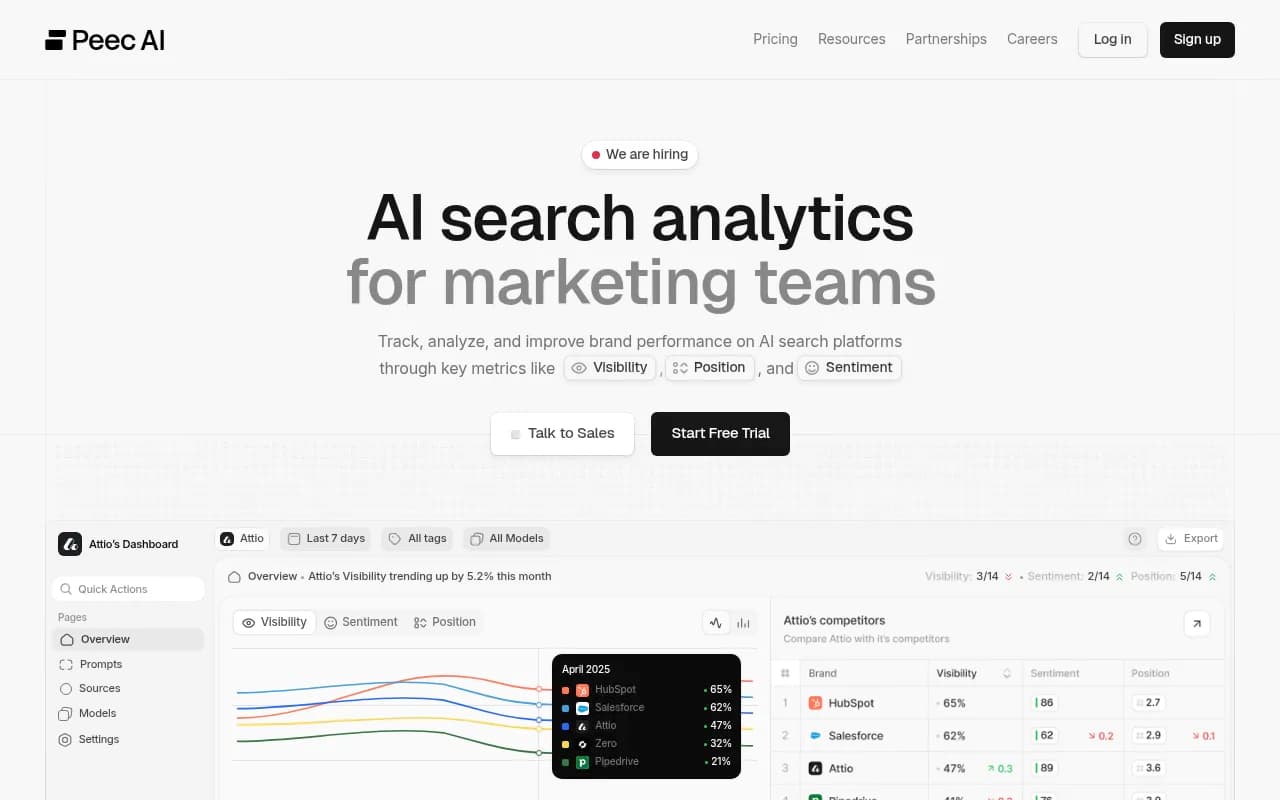
- Peec AI is lightweight and easy to use, similar positioning to GetMint.
- Scrunch AI focuses on AI discoverability optimization with a slightly different angle on the content problem.
None of these close the full monitoring-to-optimization loop the way Promptwatch does, but they're worth evaluating depending on your specific needs and budget.
Practical questions to ask before buying
Before committing to any of these platforms, it's worth running through a few questions:
What's your actual goal? If you just want to know your current AI visibility score, any of the three will work. If you want to improve it, you need a platform with content tools and attribution.
How many AI models matter to you? If your audience is primarily using ChatGPT and Perplexity, a tool that covers those two well might be sufficient. If you need coverage across 10 models including regional ones like DeepSeek or Mistral, that narrows the field.
Do you need to prove ROI? If you're reporting to a CMO or client, you need traffic attribution -- the ability to connect AI citations to actual visits and conversions. GetMint and Brandlight don't offer this. Promptwatch does.
Are you managing multiple brands or clients? Agency use cases require multi-site management, white-labeling, and client reporting. Check whether the platform's agency tier actually supports your workflow.
How technical is your team? Crawler logs and server log analysis are powerful but require some technical comfort. If your team is non-technical, you might not use those features even if they're available.
The bottom line
GetMint.ai and Brandlight.ai are both legitimate tools for teams that need basic AI visibility monitoring. GetMint is simpler and cheaper; Brandlight has better sentiment analysis and a more polished interface. Neither will help you actually improve your AI search rankings.
Promptwatch is a different category of product. It's more expensive than GetMint at the entry level, but it's the only one of the three that gives you a path from "we're invisible in AI search" to "here's the content we published, here's how our visibility improved, here's the traffic it drove."
For teams that are serious about AI search as a channel -- not just curious about it -- that distinction matters a lot.
If you're just starting out and want to understand the landscape before committing, GetMint's low entry price makes it a reasonable first step. But most teams that start there end up needing more within a few months.