Key takeaways
- Across 55 travel brands, Gradial found an average mention rate of 43.3% but a URL citation rate of only 15.8%. Being named is easy. Being linked is hard.
- In Promptwatch's October 2026 travel data, no Dutch domain appears among the top 17 cited sites. Citations are dominated by English-language booking, review and guide sites.
- Product and landing pages earn 39% of all ChatGPT citations, so your park, destination and accommodation pages are the main asset to fix.
- Third-party listings and reviews (Skyscanner, Tripadvisor, Trustpilot and similar) matter as much as your own site.
- Nobody has published clean Dutch holiday park citation data yet. Measure your own brand rather than trusting generic claims.
Why this matters for Dutch holiday and travel brands
The Netherlands has a dense travel market: holiday park operators, tour companies, booking platforms, attractions, and short-break sites. Many of them have strong brand recognition at home and a very capable SEO team. And yet when someone asks ChatGPT "which holiday park in the Netherlands is best for a family with toddlers", it is not obvious that any of them get a link.
I want to be upfront about something. I could not find published, verified data on Dutch holiday parks specifically, or on the Dutch travel market in AI answers. So this guide does not claim to know how any named Dutch brand performs. What it does is take the best available travel-wide data, point out where the Dutch market likely differs, and give you a practical way to measure it yourself.
What the data says about travel in AI answers
Mentions are not citations
Gradial's July 2026 study is the clearest picture so far. It ran 20 to 25 queries across 7 AI providers for each of 55 travel and hospitality brands, producing 140 searches per brand. The average brand mention rate was 43.3%. The average URL citation rate was 15.8%.
The extremes are worth reading slowly. A major car rental brand had a 76% mention rate and a 0% citation rate. A leading theme park resort came in at 71% mention and 0% citation. The highest mention rate in the dataset, 84%, converted to only 24% citations. Four brands had a flat zero citation rate.
For a holiday park operator, the theme park example is the uncomfortable one. Big, well-known brands with strong consumer awareness can still be named without ever being linked. Brand strength gets you into the sentence. It does not get you the link.
Travel is a high-citation category, but traffic lags
One LinkedIn analysis noted that ChatGPT includes a web citation in 22.6% of travel answers, higher than most categories, but that the traffic often gets booked as "direct" or brand search, so the channel looks free in analytics. That is a single practitioner's post, not a formal study, so treat it as a signal. Still, it matches what many teams see: AI influence shows up in your data as unexplained brand searches.
Travelers start with inspiration
Profound's July 2026 travel report analysed prompt volumes and found that nearly half (48.6%) of travel prompts are general planning, 40.1% focus on inspiration, and only 8% signal that the searcher is ready to book. Many people ask the assistant to plan the whole trip.
For a holiday park, that changes the target. The prompt is rarely "book a cottage at Park X". It is "where should we go for a long weekend with two kids in October" and the answer list is built before anyone thinks of your brand.
Who ChatGPT actually cites for travel
Promptwatch Data's October 2026 travel report covers organic travel prompts from Sep 28 to Oct 4, 2026. Citations are spread over a very long tail, so individual shares look small. The top of the list:
| Domain | Share of travel citations |
|---|---|
| Skyscanner (.net and .com) | 0.78% |
| Going.com | 0.52% |
| Tripadvisor | 0.49% |
| Kayak | 0.37% |
| Airbnb | 0.27% |
| 0.27% | |
| Expedia, Lonely Planet, Time Out | 0.13% each |
The top 17 domains together earn 4.18% of all travel citations. By source type, booking and search sites take 2.42%, reviews and advice sites 0.86%, guides and reference 0.37%, Reddit 0.27%, tours 0.16% and government 0.1%.
Two things stand out for a Dutch reader. First, the list is overwhelmingly English-language and US or UK. No Dutch domain makes the top 17. Second, that does not mean Dutch brands cannot be cited. It means the aggregate data is not Dutch-specific, and Dutch-language prompts probably pull from a different pool. I cannot tell you which one from this data, and I would be suspicious of anyone who says they can without running the prompts.
Also worth knowing: the same report's recommendations are to keep listings accurate on booking and search platforms, collect reviews on Tripadvisor and Trustpilot, get featured in guides like Lonely Planet and Time Out, and watch deal sites in your market.
What content gets cited
Promptwatch's content type data (Sep 28 to Oct 4, 2026) splits ChatGPT citations by page type:
| Content type | Share of all citations |
|---|---|
| Product pages | 22.4% |
| Landing pages | 16.8% |
| Listicles | 13.6% |
| How-to guides | 8.7% |
| Documentation | 7.5% |
| Comparisons | 5.9% |
| News | 5.7% |
| FAQ pages | 3.3% |
| Reviews | 1.7% |
Product and landing pages together take 39%. For commercial "best X" prompts, product pages hit 26.0% and landing pages 20.6%. That is good news for operators, because these are the pages you control: the park page, the accommodation type page, the destination page.
And freshness differs by type. Promptwatch's content half-life data shows landing pages and docs staying cited longest, while news loses half its pages within 36 days. A seasonal news post about this summer's offers is a poor investment for citations. A well-maintained evergreen page about family cottages is a good one.
A practical playbook for Dutch holiday park and travel brands
1. Build complete product and landing pages
Every accommodation type, park, and destination should have a page with the facts an assistant would want: capacity, facilities, distance to attractions, season, price ranges, accessibility, pet policy. Complete, factual, and consistent beats clever. If a page says "unforgettable family experiences" and nothing else, there is nothing to cite.
2. Publish comparison and FAQ pages
Comparison pages (5.9% of citations) and FAQ pages (3.3%) are underused in this sector. A page that honestly compares your cottage types, or answers "which park is best for toddlers versus teenagers", maps directly onto how people phrase prompts. Write them in Dutch and English if you serve both audiences.
3. Handle your third-party footprint
Citation share goes to booking, review and guide sites. So:
- Check your listings on the platforms that appear in your market's AI answers, and keep descriptions and prices consistent with your site.
- Collect reviews on Tripadvisor and Trustpilot. Reviews are only 1.7% of citations overall, but they feed the answer even when they are not linked.
- Pursue coverage in guides and listicles. Listicles are 13.6% of citations, and someone else's "best parks for families" list is a route into the answer.
For review management, tools like Trustpilot and Birdeye are options.
4. Fix the technical side
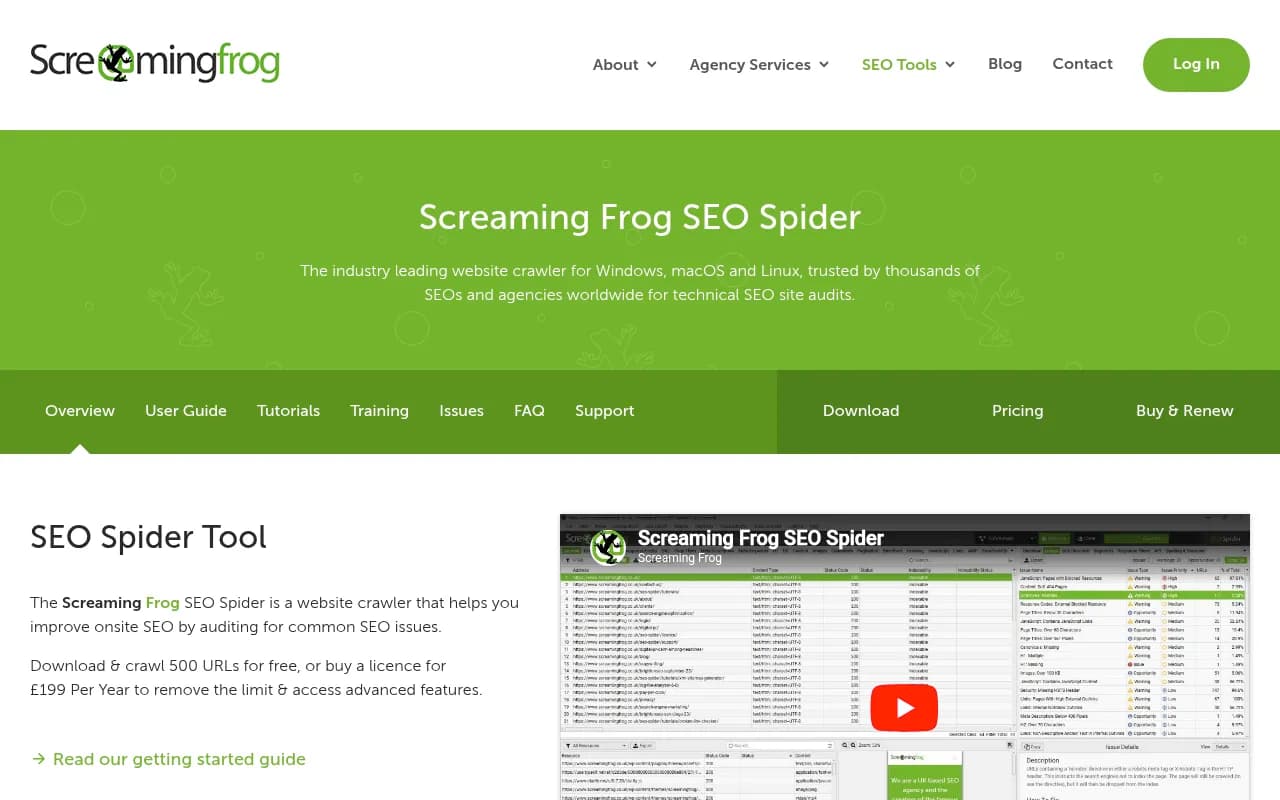
If AI crawlers cannot read your pages, none of the above works. Booking engines that render everything client-side are a common culprit. Check robots.txt for AI bots, make sure key facts are in the HTML, and use structured data where it fits. A crawler like Screaming Frog helps with the audit, and Schema App handles structured data at scale.
5. Investigate the zero-citation trap
Gradial noted a case where a brand's own domain was the single most cited across its report, yet its official citation rate still came back at 0%. The reasons are in the study, but the lesson is general: look at which URLs and domains are actually being cited, not just a headline rate. Subdomains, booking engines on separate domains and regional sites can split your presence.
Measuring your own visibility
Because the research gap is real, the useful move is to run your own prompts. Build a list of 30 to 50 realistic questions in Dutch and English: inspiration prompts ("leuk park voor een weekend met kinderen"), comparison prompts, and branded prompts. Run them daily across ChatGPT, Gemini, Perplexity and Google AI Overviews, and record mention, position and cited URL.
Promptwatch tracks the real interfaces of those assistants by country and language, and shows which of your pages get cited and which third-party sites AI relies on in your category. Its crawler logs also show whether AI bots can reach your site at all.

There are other options. The table below is a quick orientation, not a ranking.
| Tool | Good for | Notes |
|---|---|---|
| Promptwatch | Tracking plus content and crawler data | Real-UI tracking, crawler logs, content gap analysis |
| Profound | Enterprise monitoring | Published the travel prompt volume research |
| Peec AI | Basic prompt tracking | Monitoring only |
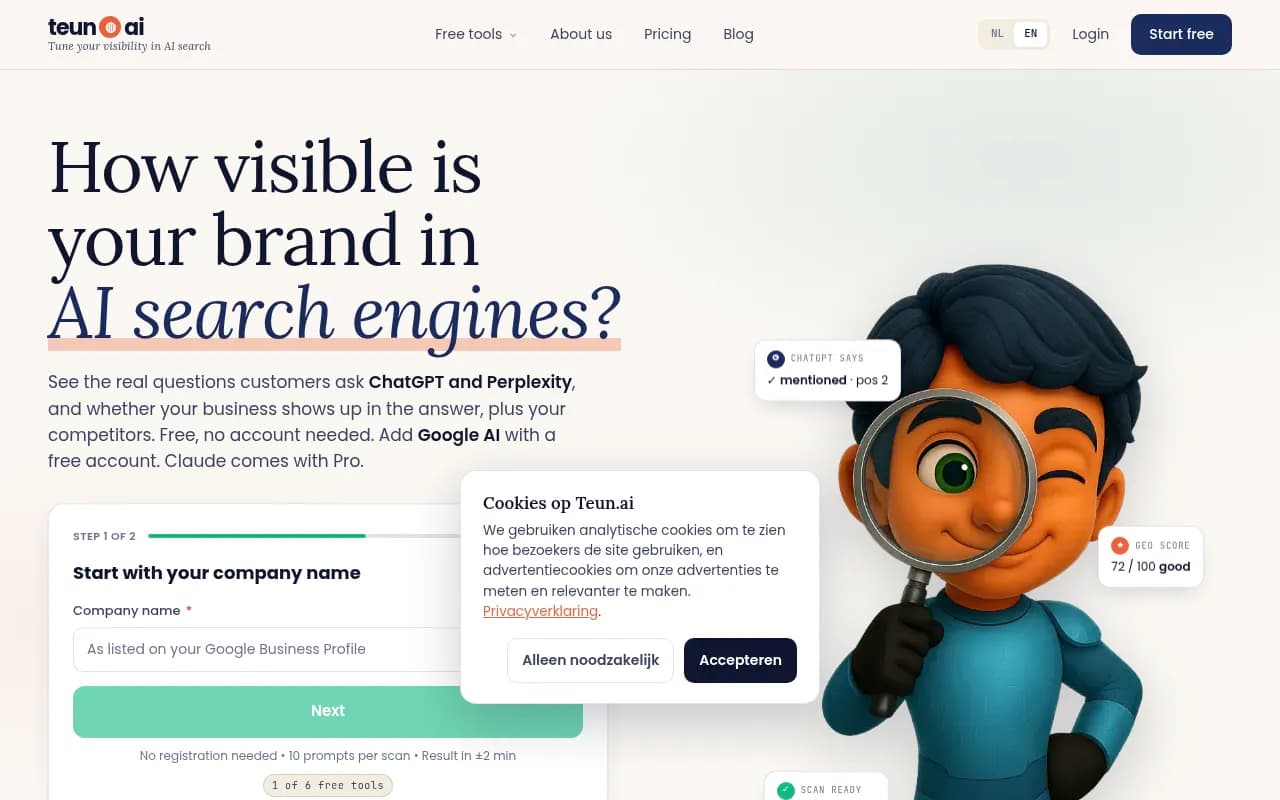
| Teun.ai | Dutch-market checks | Dutch toolkit with free rank checks |
| Otterly.AI | Budget tracking | Lighter feature set |



For a wider list, the GEO software directory at bestgeosoftware.com is a good place to browse.
The prompt wording matters more than people expect. Dutch prompts, English prompts from Dutch IPs and English prompts from the UK can return different sources. Track them separately, and look at citation rank as well as mention rate.
What to expect, and what not to
Do not expect a quick traffic spike. AI influence often lands as direct traffic and brand searches, so watch those alongside referral data from AI platforms. Do not expect your brand name alone to carry you either; Gradial's data shows the best-known names can sit at 0% citation. And do not copy US or UK benchmarks as if they described the Dutch market, because the Promptwatch travel report itself shows no Dutch domains in the top citation list.
What you can do is treat the next quarter as a measurement exercise. Baseline your prompts, fix the product and landing pages, tidy your third-party listings, and re-run the same prompts every week. If you would rather hand that work to specialists, an agency like 1001 SEO Media covers technical SEO and generative engine optimization.
Summary checklist
- Run 30 to 50 Dutch and English travel prompts and record mentions and cited URLs.
- Rewrite thin product and landing pages with complete, factual detail.
- Add comparison and FAQ pages.
- Align listings and reviews on booking and review platforms.
- Check that AI crawlers can read your site and booking flow.
- Re-measure weekly, and keep a separate view for each language.
The brands that get cited will be the ones whose pages answer the question the traveler actually asked, in the language they asked it in.