Key takeaways
- Social listening measures what people publish about your brand. AI visibility platforms measure what AI engines say when a buyer asks about you. The two signals differ and need different fixes.
- Social platforms are a small input to AI answers. Promptwatch Data (Oct 11 to Nov 9, 2026) shows social sites made up 0.64% of ChatGPT citations, 1.94% for Perplexity and 13.16% for Google AI Overviews.
- Most teams end up needing both. Start with the category that matches your biggest risk: reputation and PR crises, or invisibility in AI recommendations.
- Survey-based trackers cover a third gap: what the people who never post think about you.
- Pick a tool by who owns the problem. Social, PR and comms teams buy listening. SEO, content and brand teams buy AI visibility.
Two products that share the word brand
When a vendor says it tracks brand perception in 2026, it could mean one of two very different things. Classic social listening indexes human conversation: posts, news, reviews, forums. It reports volume, reach, sentiment and share of voice. AI visibility monitoring, often called GEO or AEO tracking, records what ChatGPT, Gemini, Perplexity and Google AI Overviews say when someone asks a question about your category.
Buying the wrong one first is the expensive mistake. A demo booked by the wrong team wastes a procurement cycle, because the data, the metrics and the people who act on them are all different. Social listening usually lives with social, PR and comms. AI visibility usually lives with SEO, content and brand.
The money tells a similar story. One market report cited by Brand24 values social listening at $12.15 billion in 2026. Research Intelo puts the much smaller GEO platform market at $420 million in 2025, growing at a projected 38.5% CAGR. Different markets, different speeds, different buyers.
What social listening actually tells you
Social listening tools crawl public posts, news, blogs, forums and review sites. They answer questions like: how many people mentioned us this week, was the tone positive, which topics are rising, and is a crisis forming.
That is genuinely useful. If a pricing change triggers a wave of angry threads, you want an alert within the hour, not a quarterly report. It also covers competitors, influencers and campaign reactions.
The limit is that it only sees people who talk. GWI makes the point well in its brand tracking guide: social listening measures what people say online, while survey-based tracking asks representative samples directly, and only the latter tells you what the silent majority thinks.
Tools worth knowing
Brandwatch is the heavyweight for historical data depth and audience analysis. [tool:meltwater]
Meltwater leads on media monitoring breadth and now bundles AI answer tracking through its GenAI Lens. Parse.gl's 2026 analysis of AI-answer citations found Meltwater cited in 54% of answers about enterprise social listening, Brandwatch in 40% and Talkwalker in 22%. Note that this measures how often AI mentions each vendor, not how good the product is.
Brand24 is the more affordable pick, with real-time listening across 25M+ sources and an AI Visibility add-on. Talkwalker is strong on visual analytics such as logo and image recognition.
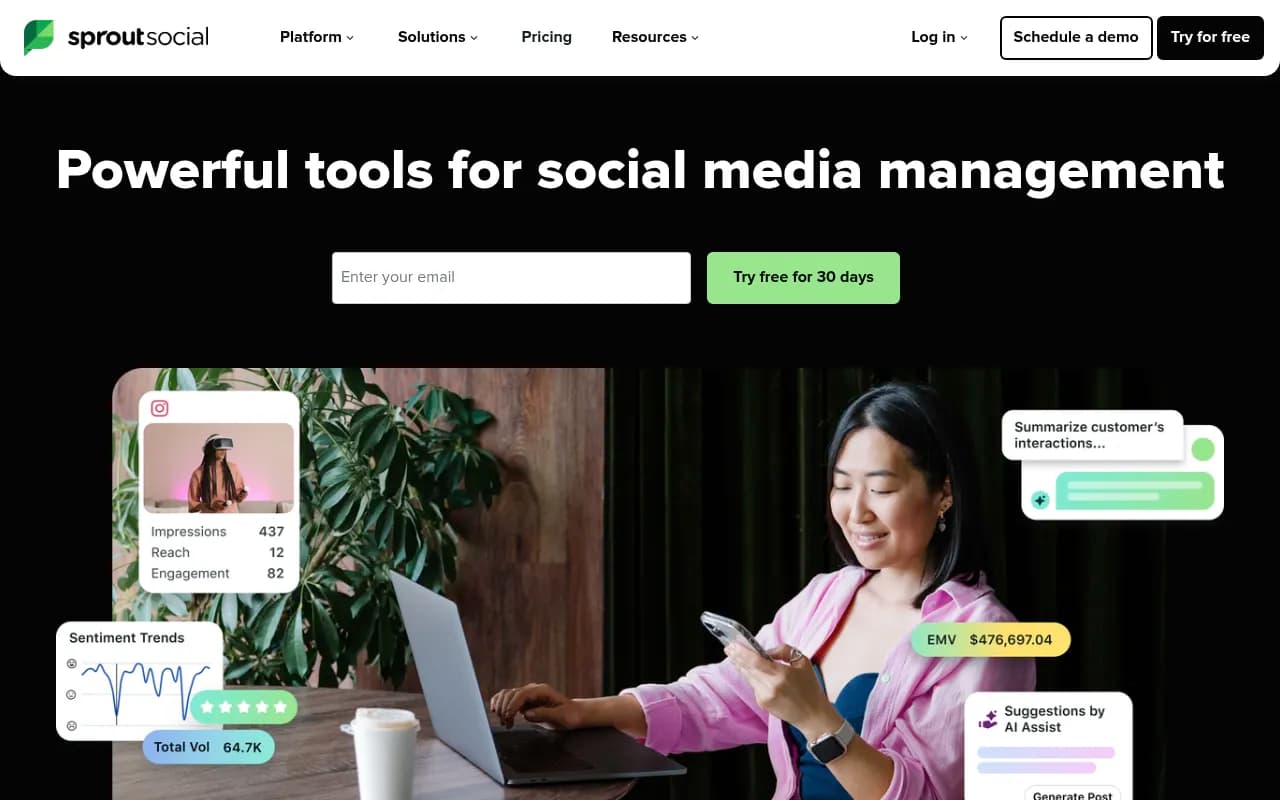
Sprout Social suits teams that want listening built into a publishing and engagement workflow. For multi-location brands whose perception lives in reviews, [tool:birdeye] and [tool:reputation-com] cover review and listing reputation, and [tool:konnect-insights] is another listening option.
What AI visibility platforms tell you
AI visibility platforms ask the models the questions your buyers ask, then record whether you are mentioned, in what position, with what tone, and which sources the answer cites. The output is a picture of how AI systems frame your brand before a buyer ever reaches your site.
This matters because the answer is often final. Brands appear, vanish or get reframed inside a generated response, and a hallucinated fact about your pricing or features can sit there for weeks without a single social post to flag it.
Two details from Promptwatch Data are worth keeping in mind. First, the average-sources-per-response report shows ChatGPT cites about 5 sources per web-search answer, while Google AI Overviews and Perplexity sit near 10. Few slots means every citation is contested. Second, Promptwatch's content type data shows product pages are the most cited type in ChatGPT at 22.4% (Sep 28 to Oct 4, 2026). Your own pages matter more than chatter about them.
Why the two signals diverge
Here is the part that surprised me when I looked at the numbers. You might assume that heavy social conversation feeds AI answers. Mostly it does not.
Promptwatch's November 2026 social media citation report (Oct 11 to Nov 9, 2026) found social platforms made up:
| AI engine | Share of citations from social platforms | Biggest social source |
|---|---|---|
| Google AI Overviews | 13.16% | YouTube (6.71%) |
| Perplexity | 1.94% | Reddit (0.82%) |
| ChatGPT | 0.64% | Reddit (0.40%) |
AI Overviews cites social platforms roughly 20 times as often as ChatGPT, and in AI Overviews YouTube alone outweighs the other six tracked platforms combined. One caveat: the October comparison covered 7 days and November covered 30, so treat the month-over-month change loosely.
The practical reading: a social listening dashboard can show glowing sentiment while ChatGPT recommends a competitor, because ChatGPT is drawing on your site, listicles, guides and comparison pages. The reverse also happens. Reddit's share of ChatGPT citations collapsed from about 4% to 0.5% in August 2026, so a brand that built its reputation on Reddit threads lost a lever overnight, with no change in what people were saying.
Side-by-side comparison
| Dimension | Social listening | Survey-based tracking | AI visibility platforms |
|---|---|---|---|
| What it measures | Published human conversation | Awareness and consideration in representative samples | What AI engines say and cite |
| Typical owner | Social, PR, comms | Brand and research | SEO, GEO, content, brand |
| Key metrics | Volume, reach, sentiment, share of voice | Awareness, consideration, usage | Visibility, position, citations, sentiment |
| Fixes a problem by | Responding, PR, community work | Campaign and positioning changes | Content, crawlability, third-party sources |
| Blind spot | People who never post | Speed, granular detail | Offline and private opinion |
| Example tools | Brandwatch, Meltwater, Brand24 | GWI, Latana | Promptwatch, Profound, Peec AI |
Picking AI visibility tools
The AI side of the market is crowded. Frequently mentioned names include Profound, Peec AI, Otterly.AI, AthenaHQ, Scrunch, Semrush and Ahrefs Brand Radar. Their depth varies a lot, so decide what you need before comparing.
If the goal is brand perception specifically, look for four things:
- Sentiment and claim-level analysis, so you can see what AI says about pricing, features and support, not just whether you were named
- Citation data showing which pages and third-party sources shape the answer
- Real interface data rather than API-only output, because user-facing answers can differ
- A way to act on findings, not just a score
Promptwatch covers that list. Its Brand Narrative feature extracts the individual claims AI makes about you and competitors, groups them under themes like Pricing, Features and Support, and scores each theme from 0 to 100. Fact Check (Business plan and up) lets you mark a claim inaccurate and then finds which crawled pages on your site state it, so you know where the model is learning the wrong thing. It tracks the real interfaces of ChatGPT, Google AI Overviews, AI Mode, Gemini, Perplexity, Copilot and others, and goes beyond monitoring with a Content Agent that writes and publishes fixes, then checks whether they got cited.

Plans start at $95/mo for Essential, with a 7-day free trial on monthly billing and a free AI visibility report if you want a quick look first. Confirm current pricing at promptwatch.com/pricing.
Other options in the catalog worth a look:

Profound is aimed at enterprises and leads on engine coverage, at a higher price.

Peec AI is a monitoring-focused tracker with unlimited seats and daily refresh, but it stops short of optimization.

Otterly.AI is the budget pick for basic tracking.
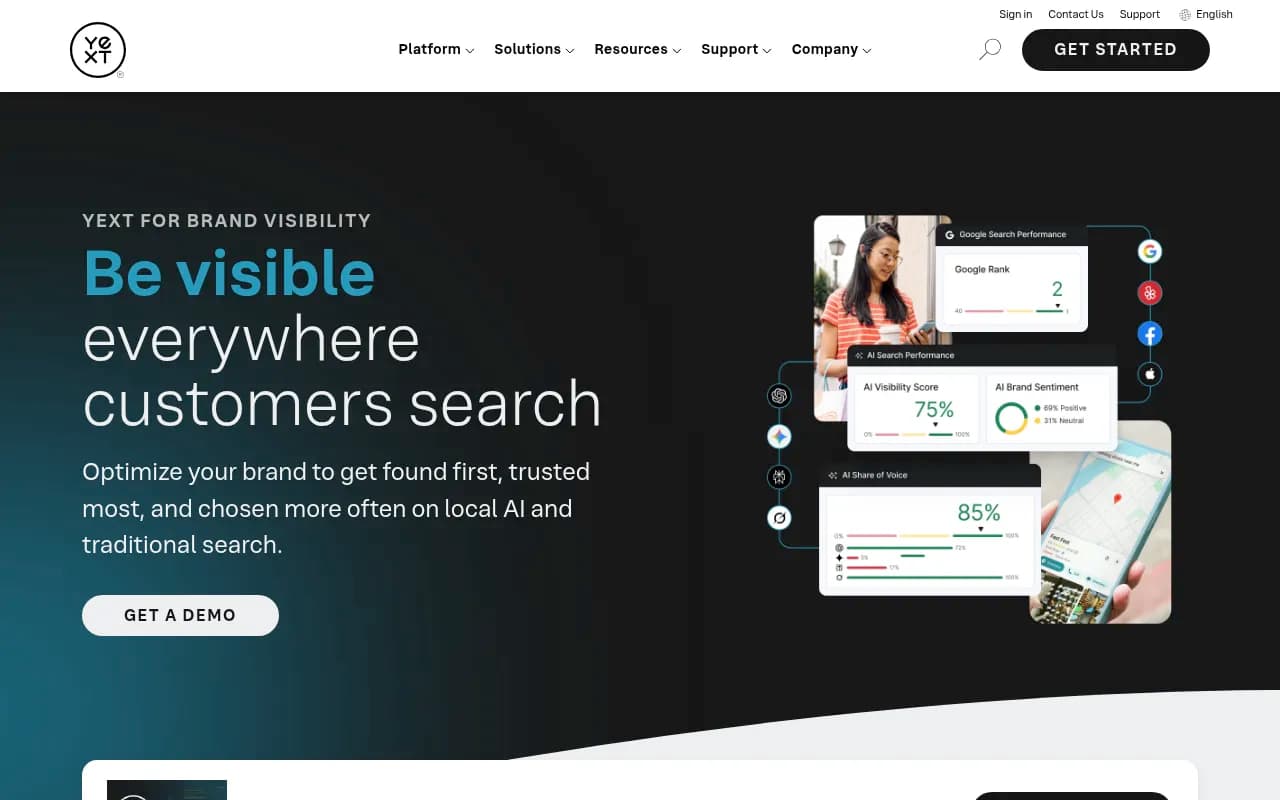
Yext suits multi-location brands that need location-level visibility.
For a wider list, the directory at bestgeosoftware.com catalogs GEO software by category.
Overlap tools that straddle both worlds
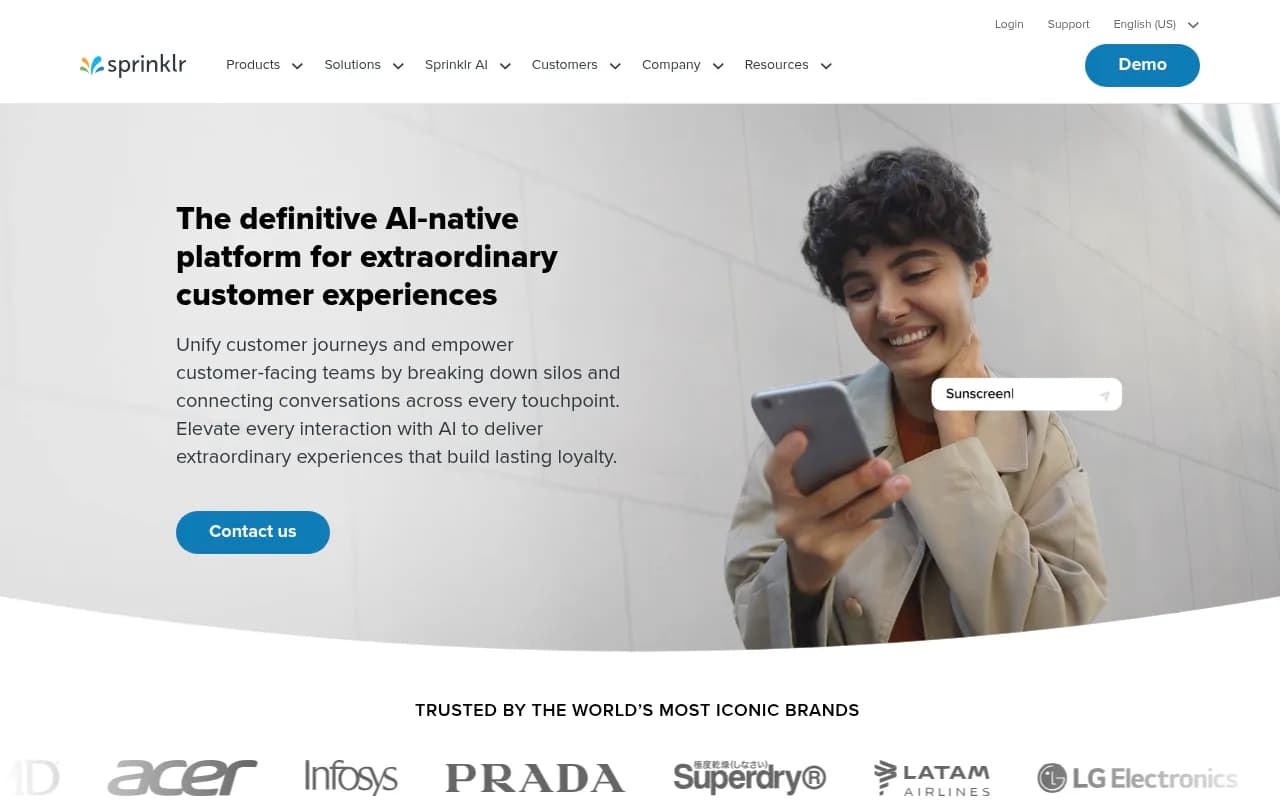
Some vendors are trying to sell you one contract for both jobs. Meltwater with GenAI Lens, Talkwalker with LLM Insights, Sprinklr with LLM Insights, Brand24 with its AI Visibility add-on, and Ipsos Synthesio with AI Visibility all bolt AI answer monitoring onto a listening core.
These consolidate vendors and make sense when AI tracking is a secondary need. The tradeoff is depth. Dedicated GEO platforms go further on prompt volumes, query fan-outs, crawler logs, citation analysis and content workflows. Likewise, SEO suites like [tool:semrush] and [tool:ahrefs-brand-radar] add AI tracking but typically work from fixed prompt sets.
My rule of thumb: if AI search drives a measurable share of your pipeline, a bolt-on will frustrate you within a quarter.
A maturity model for running both
A useful way to sequence the spend, adapted from SearchFit's 2026 framework, is to scale with how much AI visibility you already have.
Level 1: reactive
Brands under roughly 5% AI visibility. Basic brand alerts on major social platforms, plus a manual quarterly audit of the top 20 queries in ChatGPT and Perplexity. Separate silos are fine at this stage.
Level 2: strategic
Brands at 5 to 15% visibility who are watching competitors gain. Full keyword and sentiment listening across social and forums, plus automated weekly monitoring of 100+ prompts across the major engines with alerts on drops. Produce one combined weekly report that puts AI citation share next to social share of voice.
Level 3: operational
Brands and agencies where AI answers drive a large share of conversions. Listening gets narrative detection and crisis scoring. AI tracking connects to crawler logs, visitor analytics and publishing workflows, so a visibility change maps to traffic and revenue. The TreeHouse team behind Pararius, for example, grew AI search to about 25% of organic conversions by fixing crawler access and publishing proprietary data, which is a Level 3 loop, not a dashboard.
How to choose: a short decision guide
- Your biggest fear is a PR crisis or viral complaint: start with social listening.
- Your biggest fear is competitors being recommended instead of you in ChatGPT: start with AI visibility.
- You need to know what non-posters think, or defend a number in a board meeting: add survey-based tracking.
- You cannot tell whether a perception problem is real or an artifact of how AI describes you: run both for one quarter and compare.
- You are an agency: look for unlimited projects and white-label reporting. Promptwatch's Kick-off, Growth and Scale agency plans start at $199/mo.
If you would rather hand the whole programme to specialists, an agency such as 1001 SEO Media runs GEO and digital PR work together, which is where the two signals meet. Browse more software in the category at surferstack.com.
Fixing what you find
The two categories also fix problems differently, and that is the part dashboards skip.
A negative social trend is usually answered with communication: a reply, a statement, a product fix, a community effort. A bad AI answer is usually answered with content and access. Check whether AI crawlers can read your pages, publish pages that state the correct facts, earn mentions on the third-party sources the model already cites, and re-measure.
For the technical side, free tools help. The Agentic Readiness Check shows which AI crawlers can reach your site, and the AI crawler logs feature shows which pages bots actually read. For ChatGPT specifically, Promptwatch's data says visibility depends more on your own site and on listicles, guides and comparisons than on social posts.
Common mistakes
- Treating one AI check as a result. Answers vary run to run, so you need repeated sampling.
- Reading high social sentiment as proof that AI describes you well.
- Letting the two dashboards sit in separate teams with no shared report.
- Judging vendors by how often AI cites them. The parse.gl figures measure citation frequency, not quality.
- Buying an enterprise listening contract when the real gap is that ChatGPT never mentions you.
Bottom line
Social listening, survey tracking and AI visibility each answer a different version of the question "what do people think of us?" Start with the one matching your sharpest risk, add the next when budget allows, and put both on one weekly report. If AI answers influence your pipeline, test the AI side with a free visibility report this week, since that is the signal most teams have never looked at.