Key takeaways
- Google AI shopping results (product panels in AI Mode, AI Overviews and the Gemini app) are harder to track than text citations. Few tools say outright that they capture the product panel.
- Google's own Merchant Center AI performance insights are the only first-party source. They are aggregated for your own feed and don't show which competitors win a given prompt.
- Third-party options split into AI visibility platforms (Searchable, LLM Pulse, Goodie, Promptwatch) and rank trackers that added AI Overview tracking (SE Ranking, Seobility, AccuRanker, Keyword.com).
- Almost every comparison list online is written by a vendor that ranks itself first. Test with your own prompts before paying.
- Pair tracking with feed hygiene: complete attributes, accurate price and availability, clean Product schema.
What counts as a Google AI shopping result
When someone types a buying question into Google, the answer can now include a product panel instead of (or next to) a paragraph of text. You see this in AI Mode most clearly, less often in AI Overviews, and in the Gemini app. The products come from Google's Shopping Graph, which GrowByData's guide puts at more than 50 billion listings, with over 2 billion refreshed hourly. Agentic checkout in AI Mode for eligible US merchants has been rolling out since November 2025.
This matters because a shopping panel is a different surface from a citation. A citation is a link in a source list. A panel is a set of product cards that a shopper can click straight to a merchant. You can be cited in the text and absent from the panel, or the reverse.
GrowByData ran its own small sample: Google Shopping product links appeared on 71 of 130 AI Mode placements and 16 of 66 AI Overview placements. It is a vendor-run sample, so treat it as a hint, not a benchmark. But the direction makes sense. AI Mode leans on product panels much more than AI Overviews do.
Why tracking this is awkward
I went looking for an independent head-to-head test of tools on shopping-panel tracking. I didn't find one. What exists is a pile of listicles from vendors: Searchable ranks Searchable first, LLM Pulse ranks LLM Pulse first, Otterly's guide leads with Otterly. That doesn't make the tools bad. It does mean the claims are untested.
A second problem is that most "AI Overview tracker" products were built to answer: does this keyword trigger an overview, and is my domain cited? Searchable's own comparison notes that most tools only record whether a citation is present, not its position. Product panels are a further step away from that.
A third problem is volatility. Platforms tune when shopping features appear. Promptwatch Data's ChatGPT shopping report shows ChatGPT attaching shopping features to only a low single-digit share of web-search responses, with the rate roughly doubling overnight in late May and falling back weeks later. That is ChatGPT, not Google, and I'm using it only as adjacent evidence. But the lesson transfers: a sudden jump or drop in your tracker can be a platform change, not your own performance.
Start with Google's own data: Merchant Center AI performance insights
Before paying for anything, check Merchant Center. Google is rolling out AI performance insights there, covered by Search Engine Land and documented on Google's help page. The reported pieces:
- Share-of-voice insights that benchmark you against similar retailers
- Shopping funnel performance across discovery, evaluation and purchase
- Product term insights showing popular conversational shopping queries
- Product attribute insights that flag incomplete attributes like color, material or style
Per GrowByData's summary, surfaces include AI Mode, AI Overviews and the Gemini app. Availability was described as the U.S., Canada, Australia, India and New Zealand "in the coming months" around May 2026, so confirm the current rollout for your account.
The limitation is plain: it is aggregated data about your own feed. It won't tell you that a competitor's running shoe replaced yours for a specific prompt. For that you need an outside tracker. (Search Engine Land is owned by Semrush, which it discloses on the page.)
If you also care about the organic side, Google Search Console is the free baseline for clicks and impressions.
The tools worth considering
AI visibility platforms
These track a prompt set across several engines and report mentions, citations and sometimes product presence.
Promptwatch is the one I'd look at first if shopping is a revenue line for you, mostly because it goes past monitoring. It has a ChatGPT Shopping tracker that records product cards and alerts you when competitors appear instead of you, plus AI Shopping and Ads Radar for sponsored placements. I'll be straight about the gap: its published data covers ChatGPT shopping, not Google AI Mode panels, so ask for a demo against your own Google prompts. Where it helps beyond tracking is the follow-through. Its crawler logs, citation data and Action Board point at what to fix, and the Content Agent can publish the fix. Pricing starts at $95/mo (Essential) with a free tier, and you should confirm on promptwatch.com/pricing.

Searchable has an AI Shopping feature and a free Agent Shopping Audit tool. I didn't verify either page in detail. Its AI Overview tracker starts at $125/mo with daily refresh and covers ChatGPT, Perplexity and six other engines. Its data point is useful context: of 80,525 prompt-and-domain pairs cited by AI Overviews in its data, only 25.2% were also cited by ChatGPT. Different engines, different sources.
LLM Pulse lists ChatGPT Shopping and ChatGPT Entities tracking and includes AI Mode in its base plan, from EUR 49/mo with daily or weekly refresh. It ranks itself first in its own list, so weigh that.
Goodie says it scans AI-generated shopping panels in near real time across AI Mode, Gemini and agentic product listings. That is a vendor claim and I found no pricing. It is one of the few that speaks directly to panels, so it earns a trial.
Otterly.AI covers Google AI Overviews, ChatGPT and Perplexity, and is positioned as an affordable monitor. Nothing I found says it captures shopping panels specifically.

Rank trackers with AI Overview tracking
These suit teams that want classic rankings and AI presence side by side. They are weaker on shopping panels, so think of them as the citation and keyword layer.
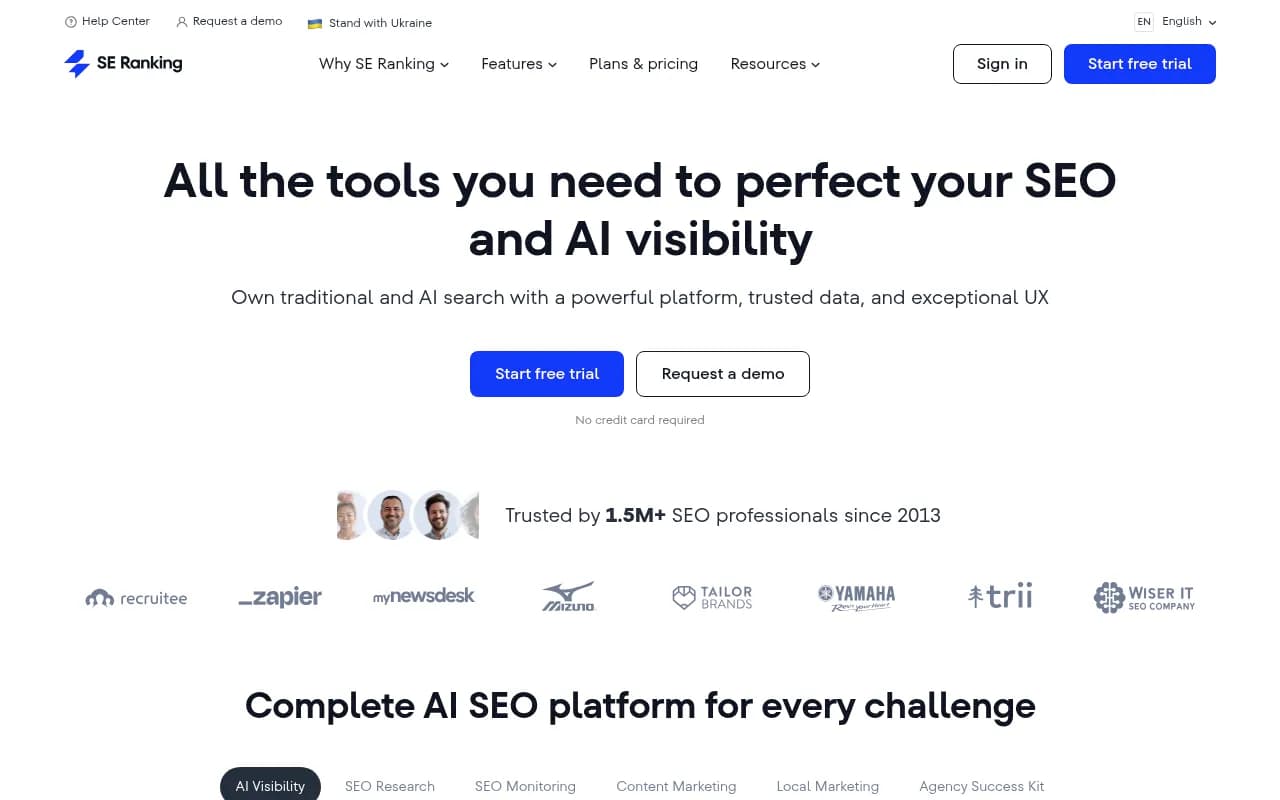
- SE Ranking tracks AI snippet appearances and your site's presence in AI Overviews at keyword level.
- Seobility tracks AI Overviews daily on desktop and every three days on mobile, from $69.90/mo, with organic rank alongside.
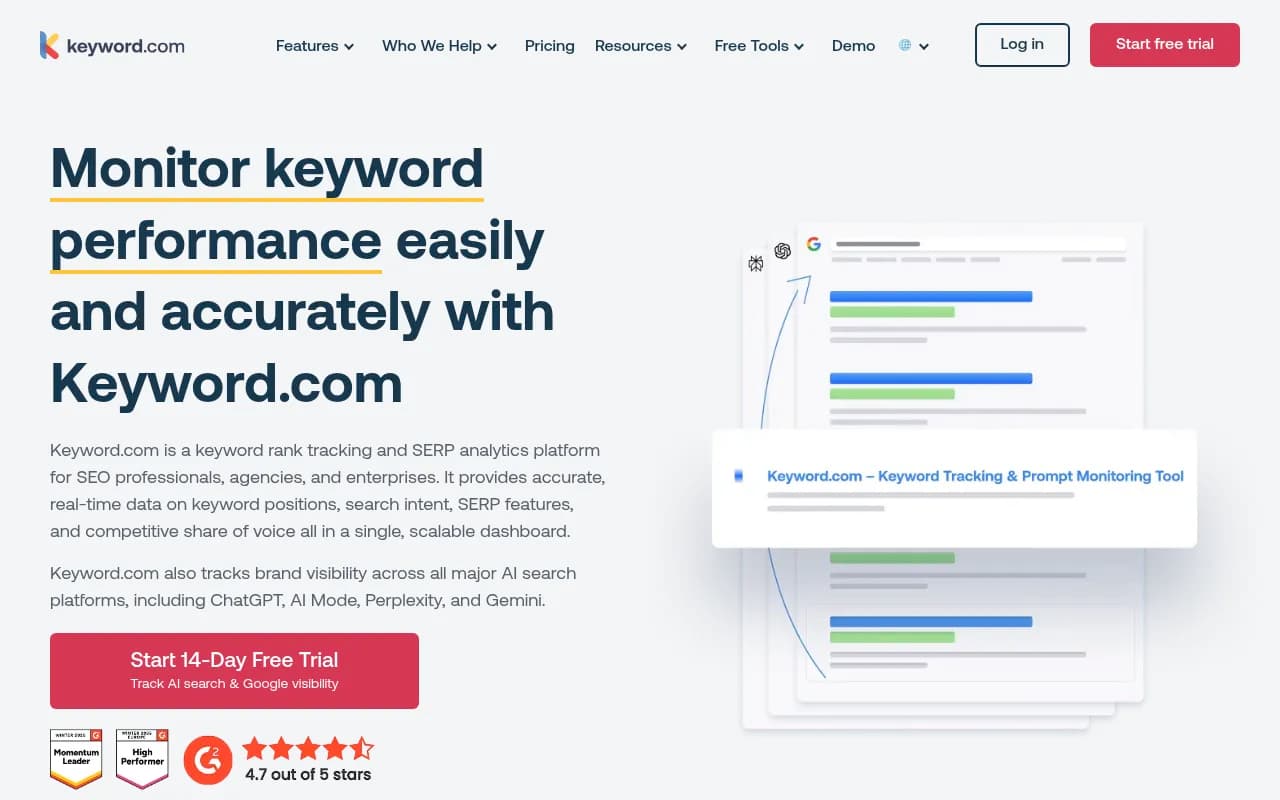
- Keyword.com is cheap and agency-friendly, but I saw its entry price quoted as both $4/mo and $69/mo. Verify before you budget.
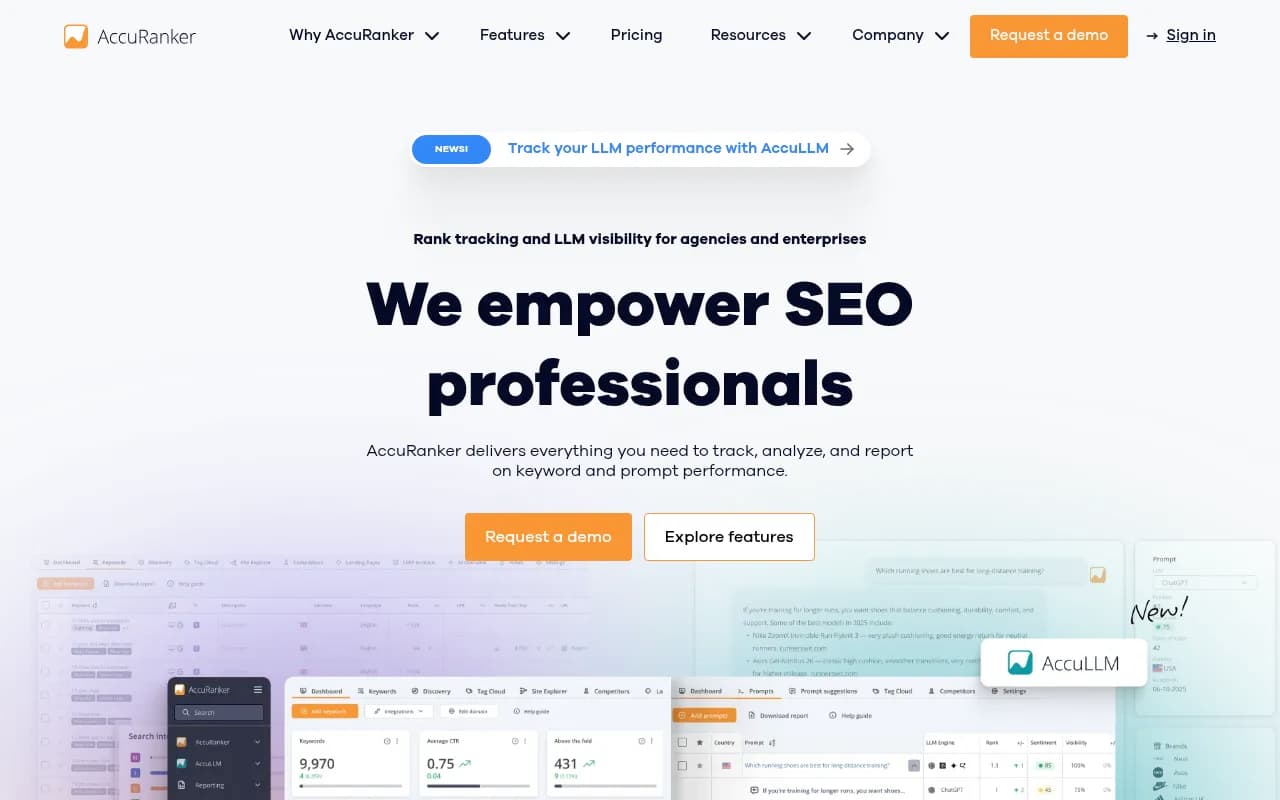
- AccuRanker suits high-volume agency tracking, from about $224/mo with on-demand refresh.
- ZipTie connects to Google Search Console, so AI Overview visibility, rankings, clicks and impressions sit in one place, from $42.75/mo.
- AIclicks is the budget pick for a small keyword set, at $59/mo with daily checks.
For a broader look at the category, the GEO software directory lists many more options.
Comparison table
Prices are vendor-published and unverified. Check each site.
| Tool | Type | Google AI surfaces | Shopping-specific claim | Refresh | Entry price |
|---|---|---|---|---|---|
| Promptwatch | AI visibility and optimization | AI Overviews, AI Mode, Gemini and more | ChatGPT Shopping tracking, Ads Radar | Per plan | Free tier, then $95/mo |
| Searchable | AI visibility | AI Overviews plus 8 other engines | AI Shopping feature, free audit (unverified) | Daily | $125/mo |
| LLM Pulse | AI visibility | AI Mode, AI Overviews | ChatGPT Shopping and Entities | Daily or weekly | EUR 49/mo |
| Goodie | AI visibility | AI Mode, Gemini | Says it scans shopping panels | Near real time (claimed) | Not found |
| Otterly.AI | AI monitor | AI Overviews | None found | Varies | Not verified |
| SE Ranking | Rank tracker | AI Overviews | None found | Varies | Not verified |
| Seobility | Rank tracker | AI Overviews | None found | Daily desktop | $69.90/mo |
| ZipTie | AI visibility plus GSC | AI Overviews | None found | Varies | $42.75/mo |
| AIclicks | AI monitor | AI Overviews | None found | Daily | $59/mo |
| AccuRanker | Rank tracker | AI Overviews | None found | On demand | $224/mo |
A practical setup
1. Fix the feed first
A tracker can't help a product that Google can't read. Complete the structured attributes Merchant Center flags (color, material, style), keep price and availability accurate, and publish complete Product schema. Promptwatch's advice for ChatGPT runs along the same lines, and its citation content type data shows product pages as the most cited type in ChatGPT at 22.4% of citations (Sep 28 to Oct 4, 2026), rising to 26.0% for commercial prompts. Again, that is ChatGPT. It is a reasonable signal that product-page completeness matters, not proof about Google.
2. Build a prompt set that sounds like buyers
Use conversational commercial prompts, not head keywords: "best waterproof hiking boots for wide feet under $150". Merchant Center's product term insights are a good source of real phrasing. Keep 30 to 50 prompts to start.
3. Record the panel, not just the citation
For each prompt, note three things: does a product panel appear, which brands fill it, and are you in it. If your chosen tool can't capture panels, do a weekly manual check on 10 priority prompts in AI Mode and log it in a spreadsheet. Unglamorous, but it gives you ground truth to test the tool against.
4. Compare tool output to your manual log
Run a two-week trial. If a vendor's report disagrees with what you see in the browser, ask why. This is the independent test nobody has published, so you have to run it yourself.
5. Read changes with caution
Before reacting to a swing, check whether several competitors moved too. Platform tuning, like the ChatGPT trigger-rate steps, can explain a lot.
Which one should you pick
- Retailer with a Merchant Center account: turn on AI performance insights first, then add one external tracker.
- Brand that sells across ChatGPT and Google: an AI visibility platform with shopping tracking, such as Promptwatch, Searchable or LLM Pulse.
- Agency with many clients and tight margins: a rank tracker with AI Overview support (Keyword.com, AccuRanker, SE Ranking), and manual panel checks for key accounts.
- Small shop on a budget: AIclicks or ZipTie for AI Overview presence, plus a spreadsheet for panels.
If you want help interpreting the data and acting on it, an agency like 1001 SEO Media works across technical SEO and generative engine optimization, though a good in-house setup can do much of this alone.
Bottom line
No tool I found has independently proven it tracks Google's shopping panels end to end. Start with Merchant Center, trial two vendors against a manual log of your own prompts, and spend your effort on feed quality, because that is the part you control.