Key takeaways
- Most scheduling tools gate the features agencies actually need, client approvals and white-label reporting, behind a higher-priced tier. Check where that line sits before you commit.
- Billing models vary wildly: per-seat (Hootsuite, Sprout Social), per-channel (Buffer), per-workspace (Planable), or flat account-bands (SocialPilot, Metricool). The wrong model can quietly double your costs as you add clients.
- Hootsuite only unlocks approval workflows on its $399/user/month Advanced plan. If approvals are your main bottleneck, that's an expensive way to get there.
- SocialPilot and Metricool offer the best cost-per-client ratio for agencies on tighter retainers, while Sprout Social and Agorapulse make more sense once clients demand deep analytics and social listening.
- The real failure point for most agencies isn't the scheduling tool, it's approval workflows sprawling across email, Slack, and spreadsheets once you pass five clients.
Why this decision is harder than it looks
If you run an agency, you already know the scheduling tool isn't really the product. The product is the workflow: content gets drafted, a client looks at it, someone revises it, someone else finally hits publish, and then a report goes out that makes the whole thing look effortless. The tool is just the pipe all of that runs through.
The problem is that most social media tools were built for a single brand managing its own accounts, not an agency running fifteen of them at once. So the features that matter most to agencies, client-level approvals, white-label reporting, and pricing that doesn't punish you for adding your eleventh client, tend to sit behind the most expensive tier, or aren't there at all. I've dug through current 2026 pricing pages for the tools agencies actually use and mapped out where those walls are.
What actually matters when you manage multiple clients
Before comparing tools, it's worth being honest about what you're solving for. Five things come up over and over in agency workflows:
- Bulk scheduling that lets you batch content across clients instead of building every post by hand
- Approval workflows clients can use without logging into a separate app or emailing you screenshots
- Reporting that's genuinely client-ready, not something you reformat for an hour before sending
- A pricing structure that scales fairly as you add clients, rather than by seat
- Enough platform coverage (and API reliability) that you're not fighting posting limits mid-month
That last point matters more in 2026 than it used to. Instagram's API caps accounts at roughly 100 posts per 24 hours, X killed its flat-rate developer plans in February and now charges per post ($0.20 for posts with a URL, $0.015 for plain text), and LinkedIn's approval process for its Community Management API is famously slow. Any scheduling tool you pick inherits these constraints, no vendor can post around them.
The tools worth putting on your shortlist
Hootsuite
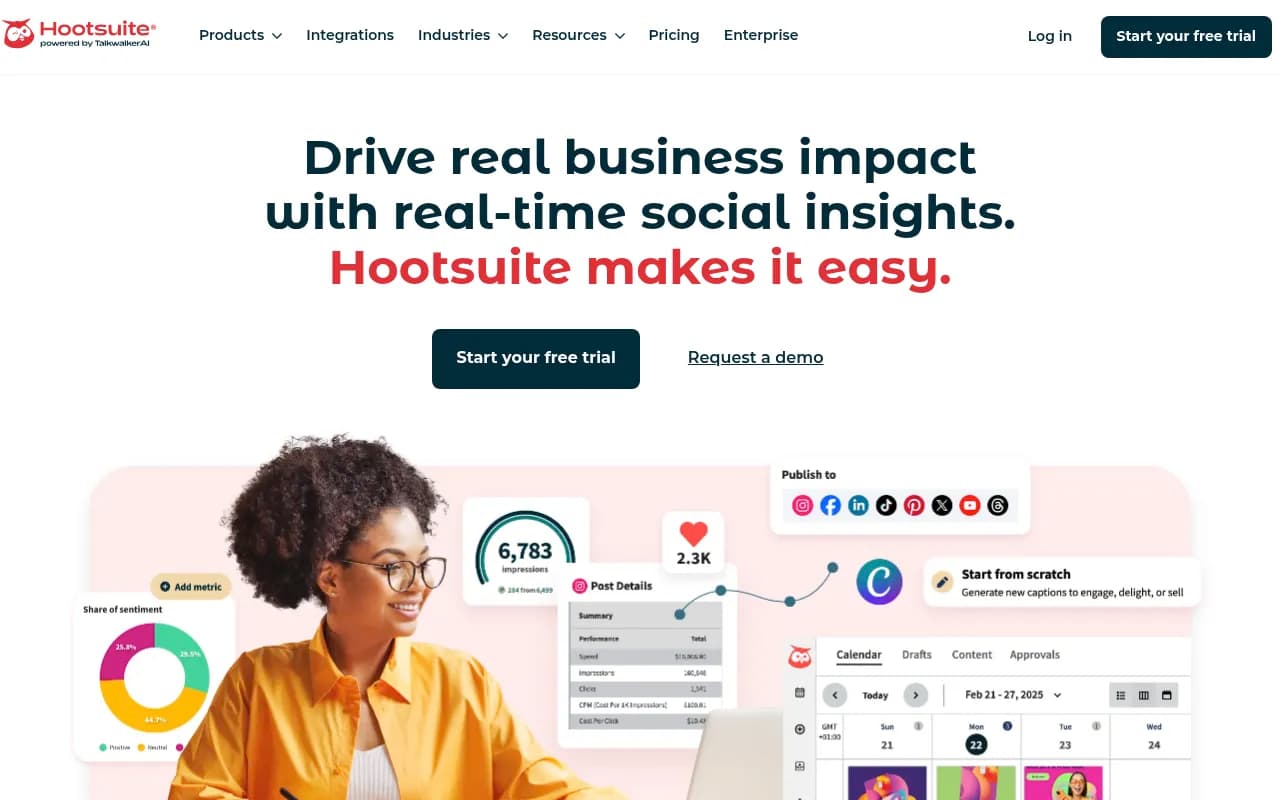
Hootsuite is still the name most clients recognize, and its dedicated client account management makes it workable for agencies overseeing a high volume of accounts. The catch is pricing. Standard runs $99/user/month and Professional $199/user/month, but approval workflows only show up on the $399/user/month Advanced tier. A three-person team on Advanced runs $1,197/month before you've onboarded a single client. Third-party spend data from Spendhound shows average SMB Hootsuite spend rose almost 67% year over year in 2026, which suggests smaller customers are being pushed toward pricier tiers.
Who it's for: agencies with enough retainer revenue to absorb enterprise-level pricing and clients who specifically expect Hootsuite reporting.
Sprout Social
Sprout added a new Essentials tier in 2026 at $79/seat/month, but it's publishing-only and caps at 5 social profiles, not realistic for most agency accounts. The actual agency floor is Professional at $299/seat/month, which removes the profile cap and adds competitor and paid insights. A five-person team on Professional runs close to $18,000 a year before add-ons like Premium Analytics or Social Listening, which are sold separately.
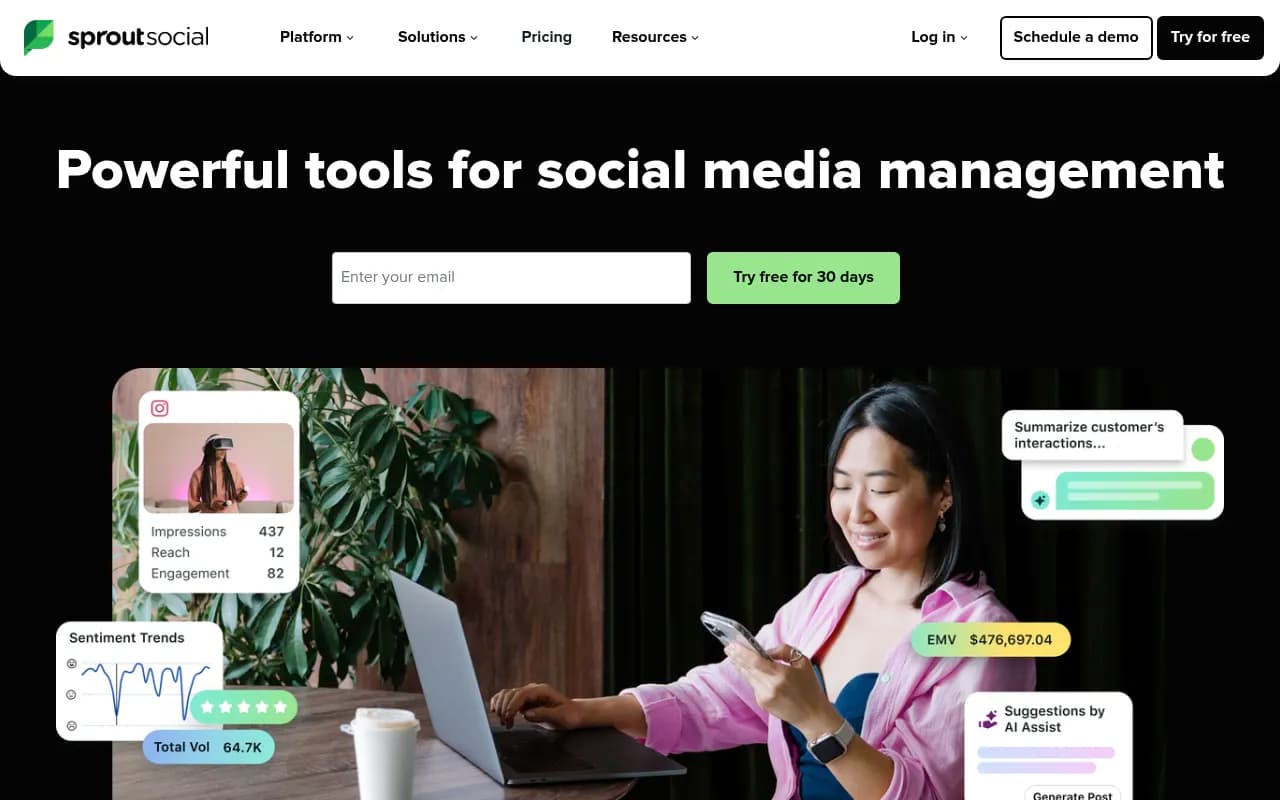
Sprout's own 2026 Agency Pricing & Packaging Report found agencies are at what it calls an inflection point: client workloads are growing faster than pricing structures can absorb, and margins need clearer guardrails as software costs climb. That tracks with what the pricing tiers actually show.
Who it's for: agencies that need enterprise-grade analytics and social listening and can price that cost into retainers.
SocialPilot
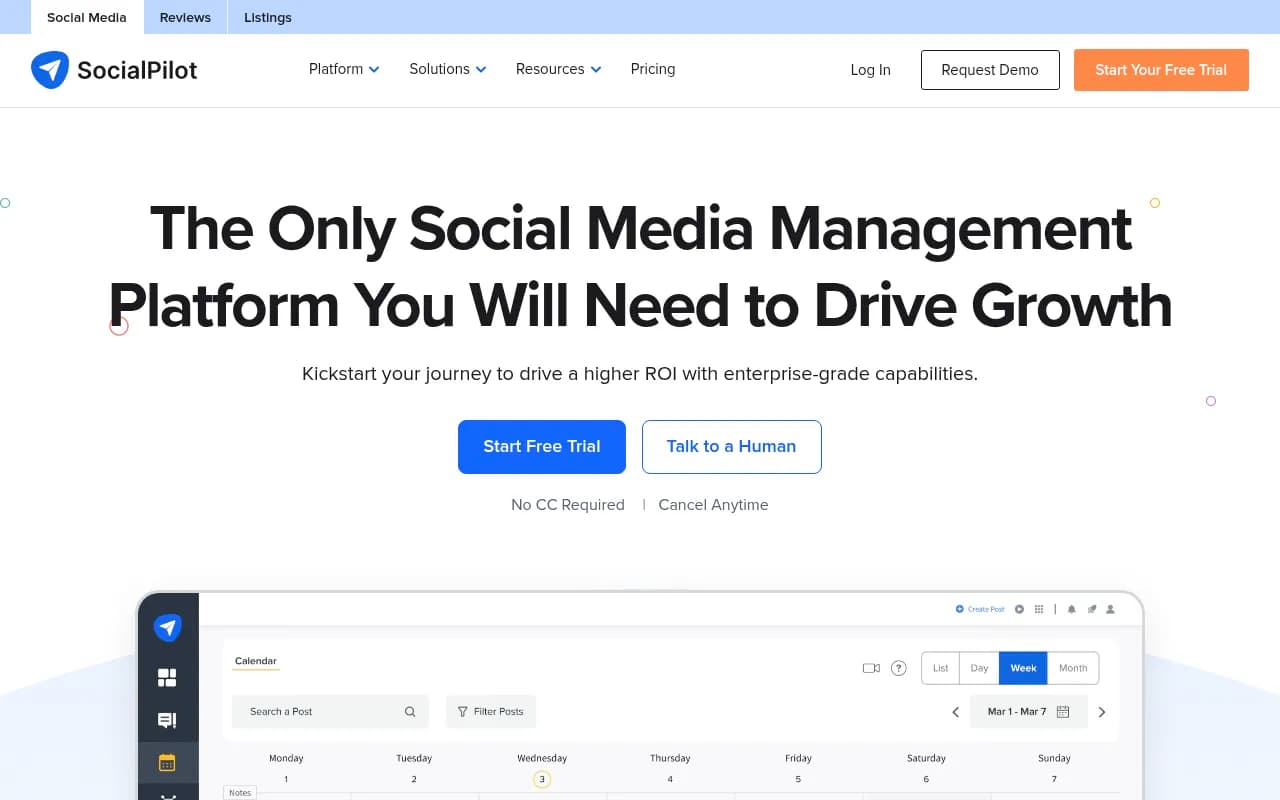
This is the one I'd point most growing agencies toward first. Essentials starts at $30/month for 7 accounts and one user, but client approval and white-label reports don't unlock until Premium at $85-100/month, still a fraction of what Hootsuite or Sprout charge for the same capability. Premium also includes unlimited client seats, bulk scheduling for up to 500 posts at once, and advanced analytics.
Who it's for: agencies managing multiple clients that need white-label reporting and real bulk scheduling without enterprise-level costs.
Buffer
Buffer prices per channel rather than per seat, which agency owners genuinely like because you're not paying for users who barely log in. Essentials is $5/channel/month but limits you to a single user account, so approval workflows really require the Team plan at $10/channel/month. One agency testimonial on Buffer's own pricing page put it plainly: per-channel pricing lets them drop a client's channel from billing the moment that client leaves, rather than eating the seat cost. Third-party modeling puts a 50-channel agency around $213/month on Team with volume pricing.
Who it's for: lean agencies with a manageable channel count who want predictable, scalable costs and don't need heavy analytics.
Zoho Social
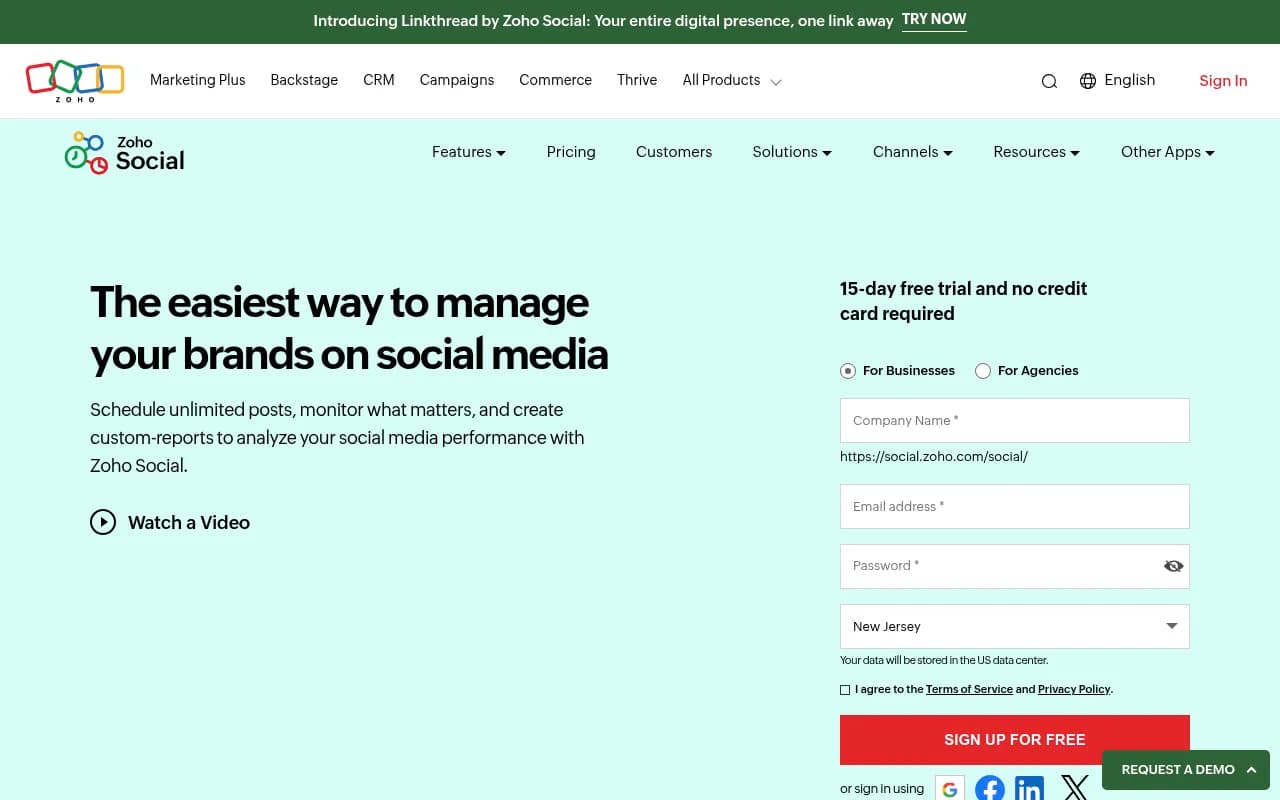
Zoho has a purpose-built Agency tier, which is rarer than it sounds. Pricing is inconsistent across sources right now, Zoho's own page lists it around $230/month while third-party breakdowns put it closer to $320/month for 10 brands and 140 channels with 5 team members, so confirm the live number before quoting a client. Agency Plus scales to 20 brands and 280 channels. Both tiers include white-label reporting, client invites, and a client-facing portal view.
Who it's for: agencies that want a flat, all-in-one agency package rather than assembling add-ons piecemeal.
Metricool
Often overlooked, but genuinely cheap for agencies handling smaller, single-network clients. Starter is $20/month annually for up to 5 brands, and Advanced (from $53/month for 15 brands) is where team access and approvals actually unlock. Billing is by brand-count band rather than per seat, which suits agencies running lots of small local business clients.
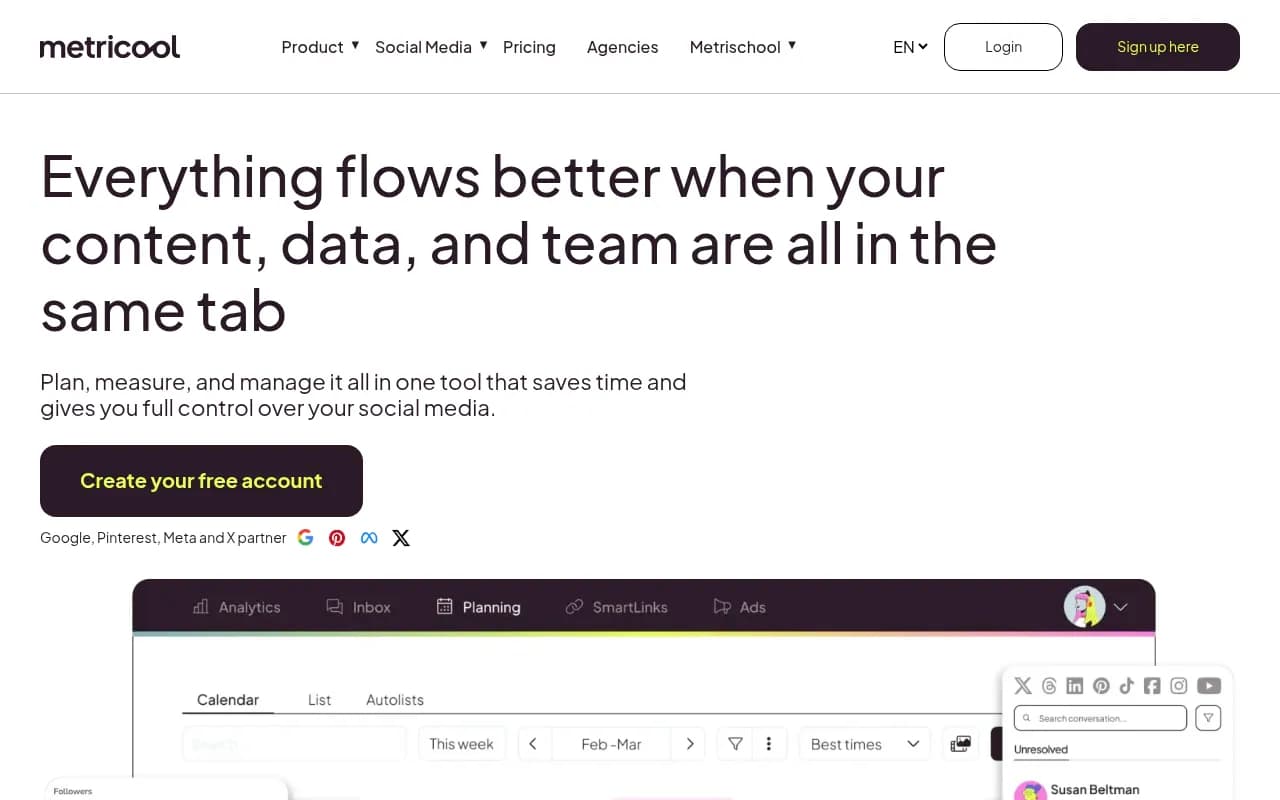
Who it's for: agencies managing many small clients with modest posting volume per account.
Agorapulse
Agorapulse rounds out the list as a solid middle ground, a unified inbox alongside scheduling and reporting, without the enterprise price tag of Hootsuite or Sprout's top tiers.
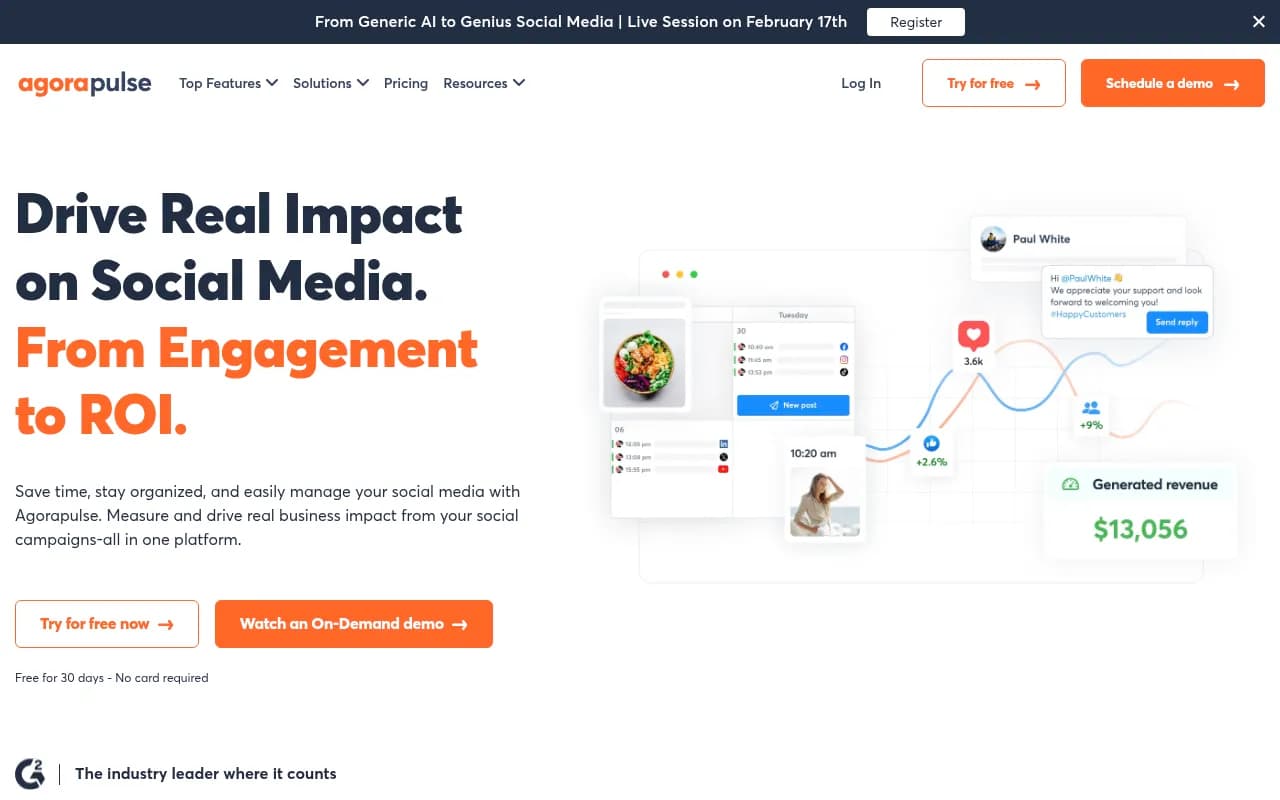
Who it's for: agencies that want inbox management and scheduling in one tool without a heavy analytics upsell.
Pricing and feature comparison
| Tool | Entry paid tier | Tier where approvals/white-label unlock | Billing unit |
|---|---|---|---|
| Hootsuite | $99/user/mo | $399/user/mo (Advanced) | Per seat |
| Sprout Social | $79/seat/mo (publishing only) | $299/seat/mo (Professional) | Per seat |
| SocialPilot | $30/mo | $85-100/mo (Premium) | Flat / account band |
| Buffer | $5/channel/mo | $10/channel/mo (Team) | Per channel |
| Zoho Social | $15/mo (non-agency) | $230-320/mo (Agency tier) | Flat agency tier |
| Metricool | $20/mo (5 brands) | $53-85/mo (Advanced) | Brand-count band |
A rough rule of thumb from this table: if approvals are your bottleneck and your budget is tight, SocialPilot and Metricool get you there for under $100/month. If you need enterprise analytics and social listening baked in, budget for Sprout Social's Professional tier or Hootsuite's Advanced tier, and price your retainers accordingly.
Where agencies actually break down, and it's rarely the tool
Here's the part that surprised me digging through this research: the tool you pick matters less than how disciplined your approval process is. A common failure mode kicks in once an agency passes about five clients, content starts living in email, spreadsheets, and Slack simultaneously, and nobody can say for certain what's actually approved. Marq's approval-workflow benchmarking suggests low-risk content should clear review in 2-3 days and high-risk or legal-reviewed content in 5-7 days; if it's taking two weeks, the problem is almost always unclear ownership or a missing backup approver, not the content itself.
A related red flag: if your team averages three or more revision rounds per asset, that's usually an upstream problem, vague briefs, missing brand assets, or compliance requirements that weren't locked into templates from the start. No scheduling tool fixes a bad brief.
White-label reporting deserves a specific callout too. It's often described as the margin lever that makes $5,000-$25,000/month retainers sustainable without burning out your team, clients genuinely shouldn't be able to tell the dashboard isn't yours. But at real scale (50+ clients generating hundreds of thousands of data rows), reporting stops being a checkbox feature and becomes infrastructure you have to actively manage.
How to actually decide
Before you sign up for anything, map your current workflow on paper: how many clients, who needs access at each one, how approvals currently happen (even if it's messy), what reports you're contractually obligated to deliver, and which platforms matter most to each account. Then match that against the pricing table above rather than the marketing page.
If you're under ten clients and cost-sensitive, start with SocialPilot or Metricool. If your clients expect deep analytics, competitor tracking, and social listening as part of the retainer, Sprout Social's Professional tier is the realistic floor, budget for it rather than fighting the price. Hootsuite makes sense mainly if you're already locked into it contractually or need its brand recognition for enterprise clients who ask for it by name.
Whatever you pick, the tool you'll actually stick with is the one your team uses consistently and your clients don't complain about, not the one with the longest feature list.