Key takeaways
- Scrunch's Core plan is $250/month for 125 prompts, 5,000 responses, and only 4 AI engines; going past 5 user licenses or adding Claude, Gemini, Meta AI, Grok, or Google AI Mode means moving to a custom Enterprise quote.
- Sitecore acquired Scrunch in June 2026 for a reported ~$225M, which has shifted the product roadmap toward "agentic web optimization" for enterprise accounts rather than self-serve simplicity.
- Enterprise-lane competitors like Profound, Bluefish AI, and Evertune also hide pricing behind a demo call, and reported contract values swing wildly, from roughly $30K/year to $500K+/year for what's nominally the same "Enterprise" label.
- Self-serve alternatives (Peec AI, Otterly.ai, Menra, Rankscale) publish full pricing tiers and mostly offer unlimited users, which changes the real cost-per-seat math for large marketing teams.
- The fix isn't just finding a cheaper tool. It's finding one that closes the loop from "here's your visibility score" to "here's the content we published to fix it," because monitoring-only tools are the most common complaint across every vendor in this category.
Why pricing came up as the first objection
I went through a dozen vendor comparison pages while researching this, and a pattern kept repeating: whoever wrote the piece usually buried the pricing question somewhere in the middle, after three paragraphs about "AI-driven discovery" and "the evolving answer engine landscape." But when you actually read what enterprise buyers are asking in forums and RFPs, pricing transparency is the first question, not the fifth.
Here's why. Scrunch's Core plan lists at $250/month (or $300/month billed monthly instead of annually), covering 125 unique prompts, 5,000 responses, 5 site audits, and 5 user licenses across 4 engines: ChatGPT, Perplexity, Google AI Overviews, and Copilot. That looks reasonable next to a $250/month SaaS subscription. Then you try to add Claude, Gemini, Meta AI, Grok, or Google AI Mode, or you need a sixth login for someone on the content team, and you're told to talk to sales. There's no published number for what happens next.
That's not unique to Scrunch. It's the default packaging model across most of the enterprise-lane AI visibility category, and it's worth understanding before you sign anything.
What changed at Scrunch in 2026
Sitecore acquired Scrunch in June 2026, in a deal Bloomberg reported at roughly $225M (a figure neither company has confirmed). Scrunch now operates as "a Sitecore company," and the acquisition pushed the platform further into enterprise territory: SOC 2 compliance, a sales-led motion, and a new Enterprise-only tier called AXP (Agent Experience Platform) built around preparing websites for AI agents, not just AI answers.
That's a legitimate, forward-looking bet. But it also means Scrunch's roadmap now serves companies with procurement teams and multi-month buying cycles, which is a different customer than the marketing director trying to get budget approved for next quarter without three rounds of demo calls first.
The pricing opacity problem, beyond just Scrunch
The uncomfortable part of researching this category is realizing that "custom pricing" doesn't mean the same thing twice. I found reported enterprise contract values spanning:
- Scrunch: $250/month Core, unknown Enterprise figure
- Profound: free trial, then Enterprise-only (Profound appears to have quietly dropped its public self-serve tiers in 2026, leaving just Trial and Enterprise)
- Bluefish AI: no published pricing, but reported enterprise contracts of $100,000 to $500,000+ per year depending on segment
- Evertune: a published Pro plan at $800/month for 100,000 tracked prompts across 11 models, with content generation bundled in
So "Enterprise" from Bluefish and "Enterprise" from Scrunch could mean a 10x difference in actual spend. Nobody tells you that until you're several calls deep.
On top of that, packaging isn't apples-to-apples even when the sticker price looks similar. Peec AI meters by prompt count, model selection, and number of projects. Profound layers "agent credits" on top of prompt tracking. Evertune bundles AI-optimized content articles into its prompt allowance. Scrunch bundles site audits and page-level optimizations into its tier structure. Two $250/month plans from two different vendors can buy meaningfully different capability.
Per-seat pricing is the hidden cost lever nobody budgets for
Here's the thing that trips up enterprise teams specifically: per-user licensing. Scrunch's Core plan caps out at 5 user licenses before you have to move tiers. Bluefish AI runs on a per-seat model as well. Compare that to Peec AI and Otterly.ai, both of which offer unlimited users on every published tier, from the cheapest plan up.
If your content team, SEO lead, and three regional marketing managers all need dashboard access, the effective cost-per-user gap between a per-seat vendor and an unlimited-seat vendor can be the difference between a tool that scales with your org and one that quietly becomes five separate subscriptions. This mirrors a broader enterprise AI buying pattern flagged by CFO-facing research: hidden costs tend to show up in per-user license sprawl, per-module add-ons, and consumption pricing that looks fine in a pilot and then balloons once the workflow goes into production.
Scrunch alternatives compared
| Tool | Published pricing | Engines on entry tier | Seats | Best for |
|---|---|---|---|---|
| Scrunch (baseline) | $250/mo Core, Enterprise custom | 4 (9 on Enterprise) | 5 licenses on Core | Teams that want agent-readiness and already have procurement support |
| Peec AI | $95/mo Starter, up to $495/mo Advanced | 3 chosen models | Unlimited on every tier | Teams that want full transparency without a sales call |
| Otterly.ai | $29/mo Lite, up to $489/mo Premium | 4 core engines | Unlimited on every tier | Budget-conscious teams that still want daily tracking |
| Rankscale | EUR20/mo to EUR780/mo | 17+ claimed engines | Not seat-capped | Broadest engine coverage at the lowest published entry price |
| Profound | Free trial, then Enterprise-only | Up to 9 engines on Enterprise | Unlimited seats | Enterprises that can absorb a custom-quote process |
| Evertune | $800/mo Pro | Up to 11 models | Unlimited | Teams that want prompt tracking and AI-optimized content bundled |
| Bluefish AI | Not published ($100K-$500K+/yr reported) | Custom | Per-seat | Fortune 500 teams with dedicated procurement |
| Promptwatch | $95/mo Essential, $245/mo Professional, $579/mo Business | All major LLMs including ChatGPT, Gemini, Claude, Perplexity, Grok, Copilot, AI Overviews, AI Mode | Not seat-capped on core plans | Teams that want visibility data plus automated content execution |
What to actually check before you sign anything
Based on what's publicly verifiable across these vendors, here's a practical checklist:
- Ask for the price of the tier above the one you're being sold, before you sign. If it's "custom," ask for a range, not a promise to "work with your budget."
- Count your actual seats. If you need more than 5 dashboard logins, per-seat pricing changes your math fast.
- Ask what's bundled versus what's an add-on. Site audits, content generation, and extra engines are sometimes included and sometimes billed separately.
- Confirm which AI engines are on your actual tier, not the vendor's marketing page. Scrunch's Core plan covers 4 engines; the 9-engine claim only applies to Enterprise.
- Ask what happens after monitoring. If the answer is "you get a dashboard and a report," ask who on your team is going to turn that into published content, and how long that takes.
Monitoring versus doing something about it
The pricing conversation matters, but it's downstream of a bigger complaint that shows up across nearly every Scrunch review I found: the gap between knowing where your brand stands in AI search and knowing what to do about it. One frustrated user summed it up on Reddit: tools "blur together... decent for tracking, but I'm still waiting to find one that actually helps make better decisions, not just dump data."
This is the real reason pricing transparency became the first question enterprise teams ask. If a $250/month tool and a $95/month tool both give you the same kind of dashboard, with a citation count and a sentiment score and not much else, the price difference is almost beside the point. The real question is whether the tool closes the loop: does it tell you why you're invisible, and does it help fix it, or does it just tell you that you are.
This is where Promptwatch takes a different approach than most of the names in this comparison. It publishes full pricing (Essential at $95/month, Professional at $245/month, Business at $579/month), tracks all major AI engines including Reddit and YouTube citations that most competitors skip entirely, and shows AI crawler logs so you can see exactly when ChatGPTBot, ClaudeBot, or PerplexityBot hit your site and what they read. But the part that actually answers the "now what" complaint is its Content Agents: they plan, write, and publish GEO-optimized content directly to your CMS on a schedule, with Unified Actions turning your visibility data into a prioritized to-do list instead of a static report. Crisp, one of its customers, used this to scale to 5-10 published articles per day and saw 2x higher conversion from AI traffic compared to other channels.

Don't assume you need top-tier domain authority to compete
One data point worth knowing before you overpay for an "enterprise-grade" platform out of fear: Promptwatch's citation share analysis by domain rank found that mid-authority domains, DR 46 to 90, together held roughly 65% of ChatGPT Search's citation share in August 2026, while the very top tier (DR 91-100) actually dropped from about 7% in week one to around 3% by mid-August. You can read the full breakdown in Promptwatch's ChatGPT citation share by domain rank data. The takeaway: you don't need a Fortune 500 domain authority score to get cited. What matters more is whether your content is structured for how AI engines actually retrieve and cite it, which is a content and technical SEO problem, not purely a budget problem.
Engine behavior also varies a lot in how forgiving it is. Promptwatch's average sources per response data shows ChatGPT typically cites around 5 sources per web-search response, while Google AI Overviews and Perplexity cite roughly 10, twice as many slots. That means AI Overviews and Perplexity are generally more forgiving entry points for mid-authority brands than ChatGPT, where competition for a citation slot is tighter.
Other alternatives worth knowing about
If you're specifically shopping the self-serve, transparent-pricing lane, a few more names come up consistently in comparisons:
- Otterly.AI starts at $29/month and is a genuinely budget option if you just need basic prompt tracking across 4 engines with unlimited team members.

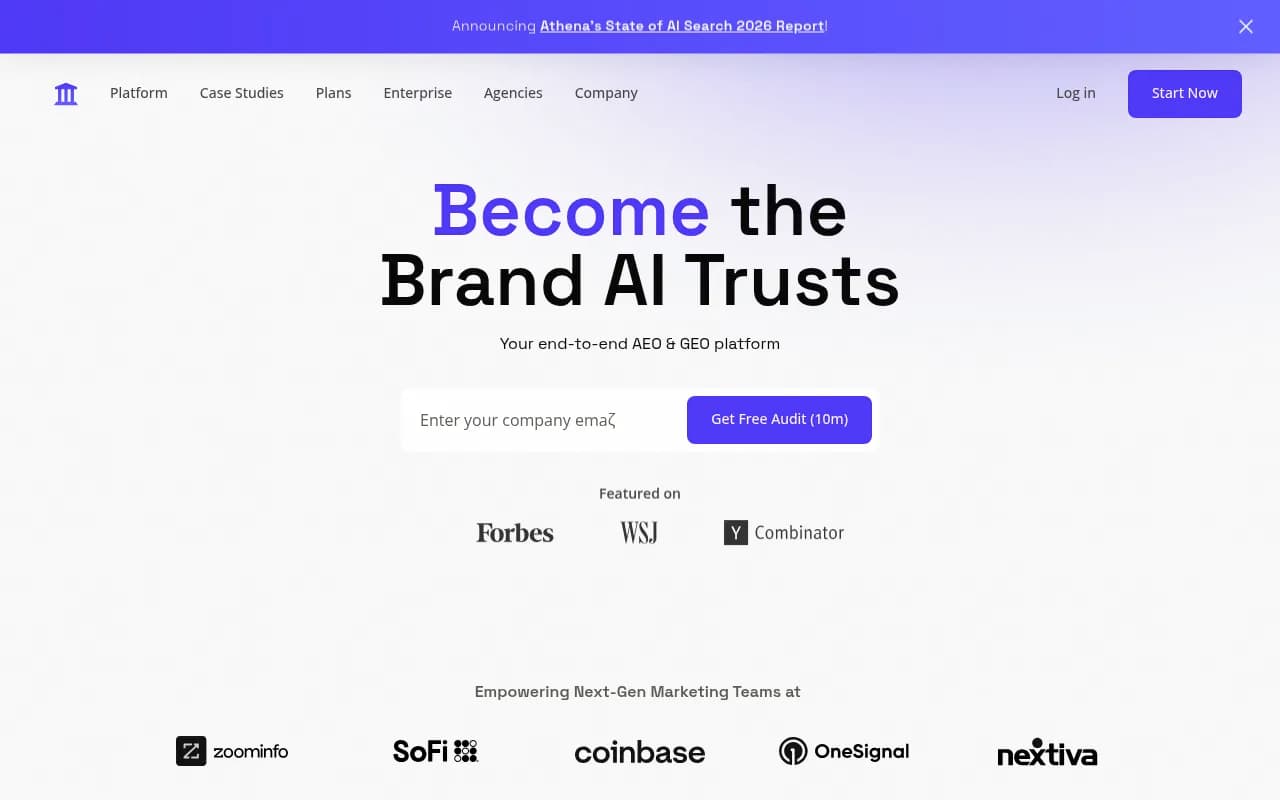
- AthenaHQ has a free entry tier and is built around a systematic AEO command center rather than raw monitoring.
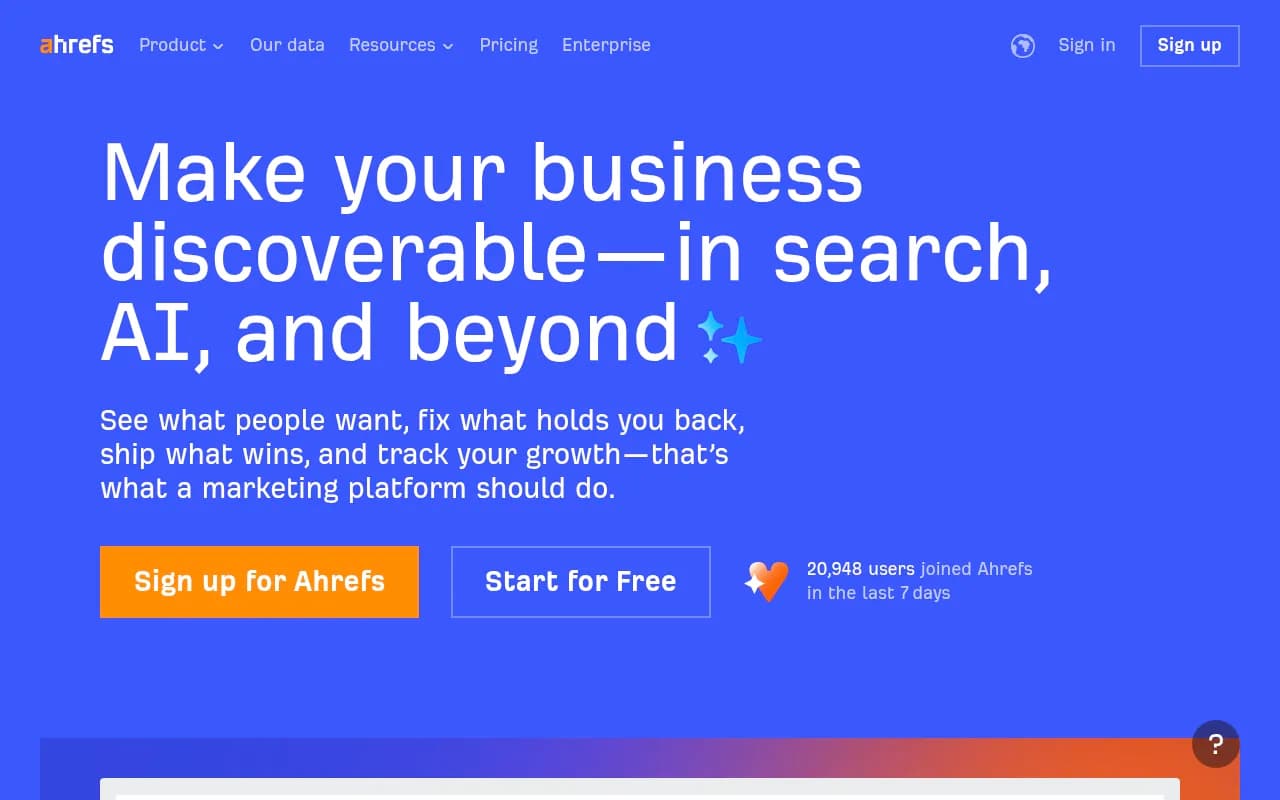
- Ahrefs Brand Radar takes a different approach entirely: instead of synthetic prompts, it uses 243M+ real "People Also Ask" queries, which is worth considering if you're skeptical of made-up prompt sets.
If you want to browse the wider category beyond this shortlist, the GEO software directory at bestgeosoftware.com covers a broader set of platforms with side-by-side comparisons, and agenticseotools.com is a good next stop if your priority is finding tools that take action rather than just report data.
The bottom line
Scrunch isn't a bad platform. It has SOC 2 compliance, a genuinely early lead on agent-readiness, and a customer case study from Akamai citing a 364% jump in non-branded prompt visibility. But the acquisition by Sitecore has pushed it further into enterprise sales-cycle territory, and the Core plan's engine and seat limits mean many teams end up in a custom quote faster than they expected.
If pricing transparency and seat flexibility are what you're actually optimizing for, Peec AI, Otterly.ai, and Rankscale answer that directly with published tiers and unlimited users. If you want visibility data that turns into published content without a separate content team scrambling to interpret a dashboard, that's the gap Promptwatch is built to close. Either way, don't let "Enterprise, contact sales" be the last question you ask. Make it the first.