Key takeaways
- GEO platforms started as single-purpose tools that check whether ChatGPT cites your brand. Many have quietly turned into full marketing operating systems, and your invoice grew with them.
- Profound's own changelog is the clearest paper trail: Agent Analytics, ChatGPT Shopping tracking, Content Optimization, Workflows, an Agent Template Marketplace, FactCheck, and an Ads Studio all landed in an 18-month window, alongside funding rounds that jumped from $35M to $96M to $180M.
- Feature-gating is the quieter version of scope creep: entry-tier plans track one engine and a handful of prompts, then push you toward a $399+/month plan just to get the features the vendor is known for.
- There are roughly 47 GEO and AEO tools on the market right now, and the core mechanic, scheduled prompts plus stored responses plus a dashboard, can be built by one developer in a few weeks. Bolting on extra modules is how vendors try to avoid looking like a commodity.
- The fix isn't refusing all new features. It's matching the platform to your actual bottleneck (measurement, workflow, technical readiness, or execution) instead of buying the broadest bundle available.
The pattern you've probably already noticed
You signed a contract for an AI visibility tool. You wanted one thing: know if ChatGPT, Perplexity, and Google's AI Overviews mention your brand, and see it slipping if a competitor pulls ahead. Eight months later you're logging into a platform with an ads manager, a content marketplace, a sentiment engine, a workflow builder, and a button that says "orchestrate your marketing team." Nobody asked for most of it. It showed up anyway, usually behind a new pricing tier you're now being nudged toward.
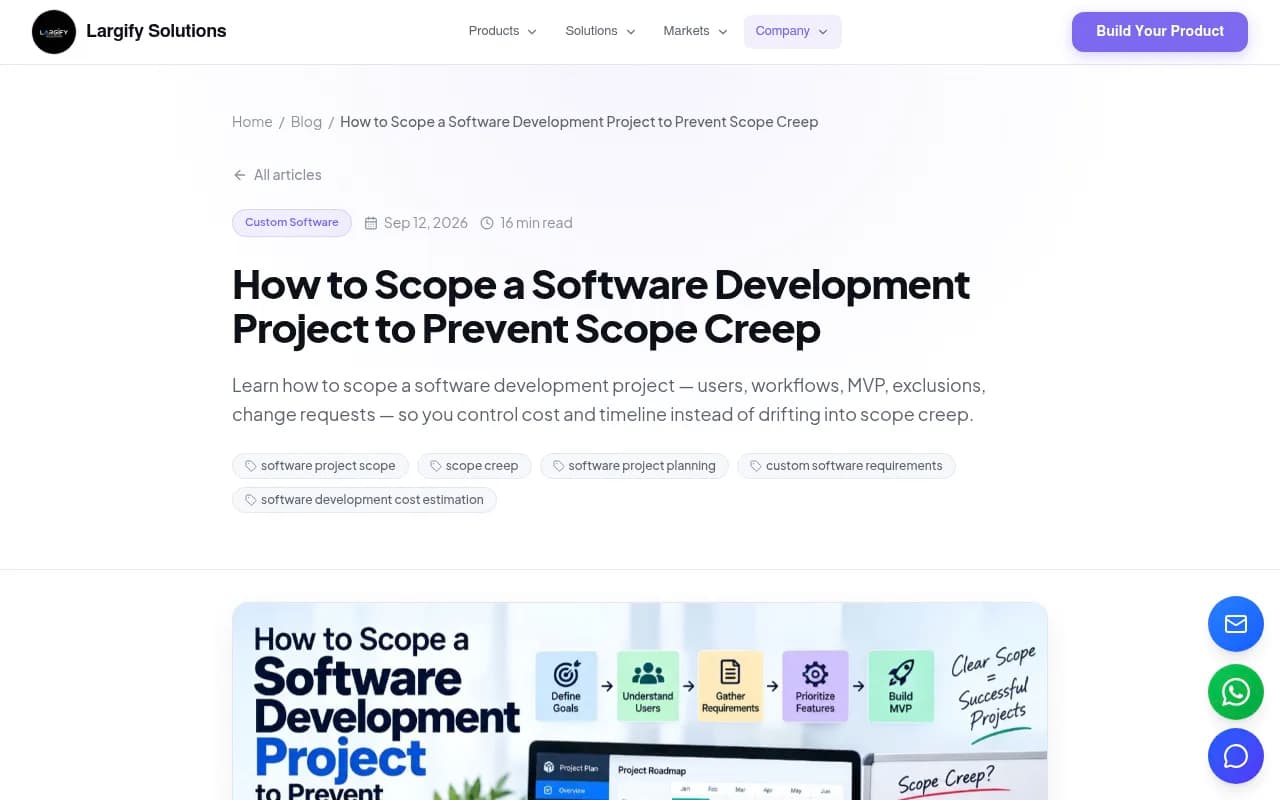
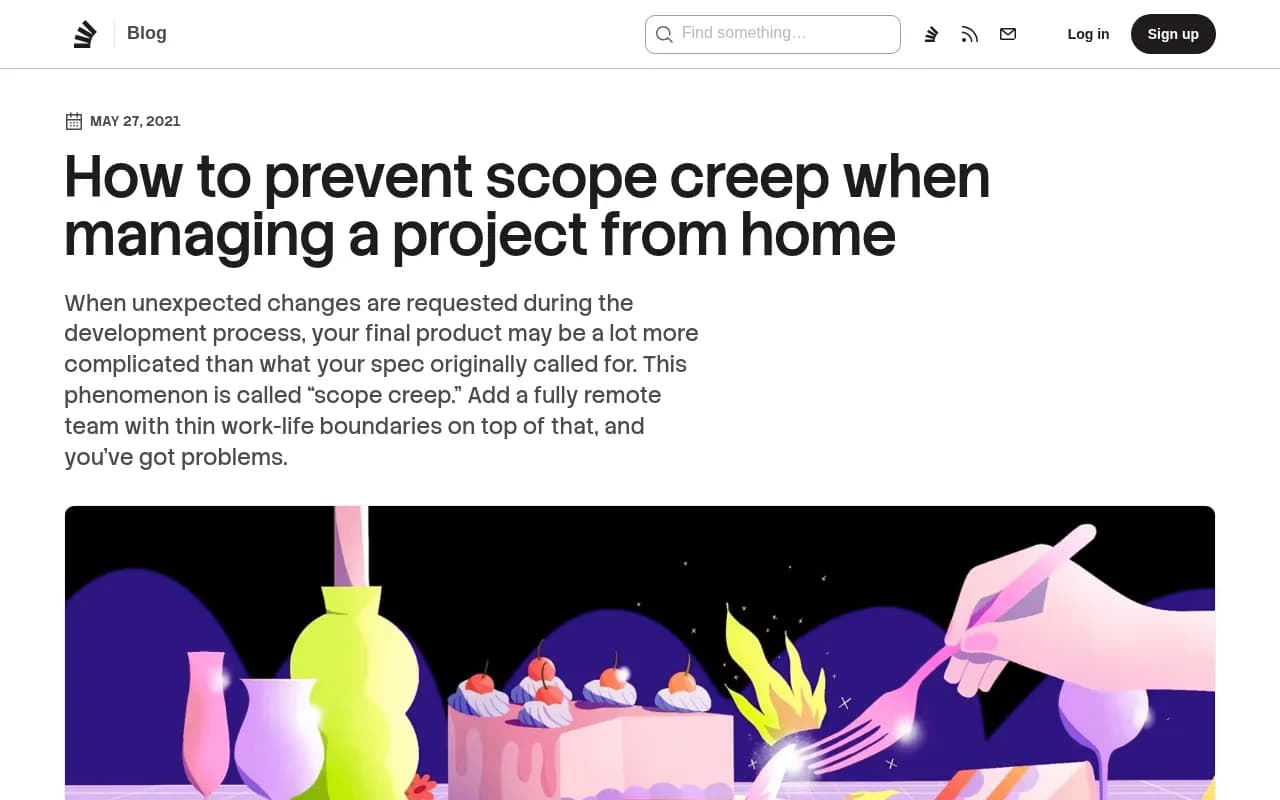
This isn't unique to GEO software. Classic project management literature calls it scope creep: the gradual, unauthorized expansion of what a tool or project is supposed to do, without a matching adjustment to what you pay or how your team works. The Stack Overflow engineering blog frames it as a change in specifications that happens mid-project without the corresponding adjustment in time and resources. Largify Solutions puts it more bluntly in their guide to scoping software projects: scope creep isn't caused by adding features, it's caused by adding features without controlling their impact.
What's specific to enterprise GEO is the speed and the stakes. These platforms are selling into budgets that used to belong to SEO and brand monitoring line items, and the underlying AI search ecosystem changes fast enough that vendors have a built-in excuse for every new module: "the AI search landscape moved, so we had to add this." Sometimes that's true. Often it's a justification for chasing a bigger contract value.
Why GEO vendors keep adding things you didn't ask for
Three forces push in the same direction, and none of them are conspiracy theories, they're just how venture-funded software companies behave.
The market is genuinely crowded and genuinely volatile
An analysis by Tim Soulo counted roughly 47 GEO and AEO vendors competing for the same budget line as of 2026, everyone from Ahrefs and Semrush bolting on AI modules to pure-play startups like Scrunch, Otterly, and Profound. The underlying mechanic, scheduled prompts against a handful of LLMs, stored responses, a dashboard, is something a single developer can build in weeks. That's a scary thing to admit if you're trying to raise a Series C, so vendors differentiate by piling on features that are harder to copy: crawler log analysis, content generation, workflow automation, shopping trackers.
The AI platforms themselves don't sit still either. Promptwatch's own research on average sources cited per AI response found Microsoft Copilot's citation count swinging from under two sources per response to nearly seventeen within a few weeks. When the ground moves that fast, "we had to build a new module to keep tracking this properly" is a legitimate argument, at least some of the time. It's also a convenient one.
Funding rounds come with growth expectations that a monitoring tool can't satisfy alone
Profound is the clearest documented case, not because it's unusually aggressive, but because its own newsroom and changelog lay out the trajectory in public. The company raised a $3.5M seed in August 2024, a $20M Series A in June 2025, a $35M Series B two months later, a $96M Series C at a $1B valuation in February 2026, and a $180M Series D at $1.8B just seven months after that. You don't grow a valuation that fast by staying a citation tracker.
CEO James Cadwallader said it plainly in the Series D announcement: "Profound started as an analytics platform for marketers to understand how buyers discover their brands through AI. Today, they're using our Agents to research, write, and report. Now, we're delivering AI Marketer as an Agent orchestrator that works alongside every function of your marketing team." That's an honest description of scope creep, stated as a growth strategy rather than a confession. The newest addition, an Ads Studio for managing paid campaigns across OpenAI, Google, and Meta ad managers, takes the product from measuring organic visibility into running paid media spend. If you bought Profound to check your AEO score, you did not sign up to also manage ad budgets through the same vendor.
The feature timeline reads like a checklist of scope expansion: Agent Analytics (Feb 2025), ChatGPT Shopping tracking (Apr 2025), Claude support (Aug 2025), Content Optimization (Aug-Sep 2025), Profound Workflows (Dec 2025), a sentiment rebuild plus reusable prompt Skills and an Agent Template Marketplace (all June 2026), a FactCheck accuracy auditor (July 2026), and Ads Studio plus AI Marketer (September 2026). Individually, every one of those is defensible. Cumulatively, the product that started as "track my brand in ChatGPT" now integrates with Adobe Experience Manager, Contentful, Webflow, WordPress, Sanity, Shopify, Slack, Notion, and Vercel v0. That's not a visibility tool anymore, that's a content operations platform with a visibility feature.
Pricing tiers turn feature-gating into a soft version of the same problem
Scope creep usually means a vendor adds things you didn't ask for. There's a mirror-image problem in enterprise GEO: vendors gate the things you did ask for behind a tier you didn't budget for.
Profound's own public pricing illustrates it. The entry $99/month Starter plan tracks ChatGPT only, caps you at 50 prompts and 1,500 responses a month, and gives you one seat with no exports. One reviewer at Geoptie called it "a single-engine orientation tier, not a working plan," and said it functions mainly as a funnel toward the $399/month Growth plan. Growth is where multi-engine tracking, the Opportunities panel, Agents, and exports actually unlock, but even that plan only covers three engines (ChatGPT, Perplexity, Google AI Overviews) out of ten-plus that exist, and caps AI-generated content at three articles a month. Full coverage of Claude, Gemini, Copilot, Meta AI, Grok, and DeepSeek sits behind a custom-priced Enterprise tier you can only reach through a sales call.
A reviewer at GetMint summarized the practical effect: "The feature limitations in the lower-cost tiers mean that most startups, SMBs, and agencies will find themselves paying a premium for an incomplete toolset." G2 reviews echo the same frustration in plainer language, with users noting there's "a lot of data to go through" and that "the price can be off-putting at first, especially if you are not a large company."
None of this is unique to Profound, it's just the best-documented example because the company publishes a detailed changelog. Reviewers comparing enterprise GEO pricing broadly put the category average around $337/month, with full-featured plans from several vendors running noticeably above that once you add the engines, seats, and content generation most teams actually need.
A quick pricing comparison across enterprise GEO platforms
| Platform | Entry price | What's actually included at entry | Where the real scope sits |
|---|---|---|---|
| Profound | $99/mo (1 engine) | 50 prompts, 1,500 responses, 1 seat, no exports | $399/mo Growth (3 engines), Enterprise (10 engines, custom) |
| Scrunch AI | $250/mo | 4 engines, audits only | Enterprise tier (9 engines) adds nothing on execution |
| Ahrefs Brand Radar | $199/mo per index | 5 engines, prompts derived from real search data | Additional indexes/brands billed separately |
| Otterly AI | $29/mo (Lite, 15 prompts) | 6 engines, GEO Audit | $489/mo Premium unlocks 400 prompts and Workspaces |
| Writesonic GEO | ~$295/mo | 9+ engines, Action Center | GEO features gated behind Professional plan |
| BrightEdge AI Catalyst | $10,000+/mo | 3+ engines, Copilot recommendations | Enterprise-only, no lower tier |
| Goodie AI | $399/mo (annual) | Up to 12 engines, workflow action layer | Enterprise custom for larger orgs |
Source: pricing comparisons compiled by Bermawy and Botfusions; check each vendor's current pricing page before buying, since enterprise GEO pricing moves often.
The pattern across nearly every row: engine coverage, seats, exports, API access, and any kind of "do something about it" feature are tiered aggressively. You're rarely buying the full picture at the sticker price you first saw.
Scope creep vs. genuine, useful evolution
It's worth being fair here. Not every new feature is bloat. The distinction that matters, borrowed from general project management advice, is whether the addition changes your cost or workflow without you agreeing to it, or whether it's an optional upgrade you can ignore.
Breeze's writeup on scope creep draws a useful line between two things that get confused: gold plating, where a team adds polish nobody asked for because it's self-inflicted and fixable with discipline, and harmful scope creep, which is work added because nobody stopped to ask whether it belonged. A vendor adding Claude support to their engine coverage is closer to a genuine improvement, most buyers wanted that. A vendor repositioning your citation tracker as an ad-buying platform and restructuring pricing tiers around it is closer to the harmful kind, because it changes what you're paying for and what your team is expected to use.
The question to ask about any new module: did this get added because the underlying AI search behavior changed and my use case actually needs it, or did this get added because the vendor needed a bigger number to put in the next funding deck.
How to buy without paying for scope you'll never use
One framework worth borrowing, described by Meikai in their 2026 enterprise GEO comparison, is to sort your actual need into one of four buying situations before you take a single demo call:
- Measurement-led: you genuinely don't know how you're represented in AI answers yet, and that's the whole job.
- Workflow-led: you already know roughly what needs fixing, and you need speed producing content or fixes, not more dashboards.
- Technical-readiness-led: you suspect AI crawlers can't retrieve or parse your pages properly, and you need crawl logs and technical diagnostics, not a content marketplace.
- Execution-led: you know what to do, but no one on your team owns actually doing it, so you need a platform that executes, not one that just tells you what's wrong.
Matching the platform to the bottleneck you actually have, instead of buying the broadest available bundle, is the single most effective way to avoid paying enterprise prices for features that sit unused. The same source warns against choosing a platform based on one blended visibility score across all AI engines, since Perplexity, ChatGPT, and Google AI Mode can move in completely opposite directions for the same content change, and an average of the three describes none of them.
Before signing anything, it's worth checking:
- Where do the tracked prompts come from? Synthetic, vendor-generated prompt lists behave very differently from prompts sourced from real search query data.
- Is reporting broken out per AI engine, or is it blended into one score that hides which platforms are actually improving or declining?
- If a plan advertises execution features (CMS publishing, approval workflows, audit history), does your team actually have someone who will own using them, or will you pay for automation nobody runs?
- What does the next pricing tier unlock, and is that the tier you'll actually need within six months, not the one the sales rep is quoting you today?
If your actual need is narrow, pure visibility tracking without the workflow and ads layers, tools like Otterly AI, Peec AI, or AthenaHQ stay closer to the original monitoring job, while platforms like Promptwatch sit at the other end: an end-to-end stack that includes crawler log analytics, citation trend data across Reddit and YouTube, and a Content Agent that plans and publishes fixes to your CMS, built so the added scope is functional rather than decorative. The point isn't that bigger is automatically worse, it's that you should know which one you're buying before the invoice tells you.

For teams evaluating the wider field, the directory at bestgeosoftware.com breaks down GEO platforms by what they actually execute versus what they only monitor, which is a faster way to sort the 47-vendor market than sitting through demo after demo.
A short honesty check before you renew
If your GEO contract has grown since you signed it, pull up the feature list from your original sales deck and compare it line by line to what the vendor is pitching you now. If half the new modules are things your team has never logged into, that's not a reason to panic-cancel, but it is a reason to ask for a pricing conversation before auto-renewal, not after. Vendors that built genuinely useful new capability, better engine coverage, real crawler diagnostics, working content automation, will have no problem justifying the price increase with usage data. Vendors that just added an ads manager because their last funding round demanded a bigger total addressable market usually can't.