Key takeaways
- Radarkit is a solid AI visibility tracker, but it's primarily a monitoring tool — it shows you where you're missing, not how to fix it.
- The most important differentiator in 2026 isn't how many LLMs a platform monitors, it's whether the platform helps you act on what it finds.
- Platforms like Promptwatch close the full loop: find gaps, generate content, track results.
- If you're an agency, a content team, or a brand that needs to move fast, a monitoring-only tool will leave you with dashboards and no clear next step.
- Budget and use case matter: some alternatives here are cheaper and simpler; others are more powerful but cost more.
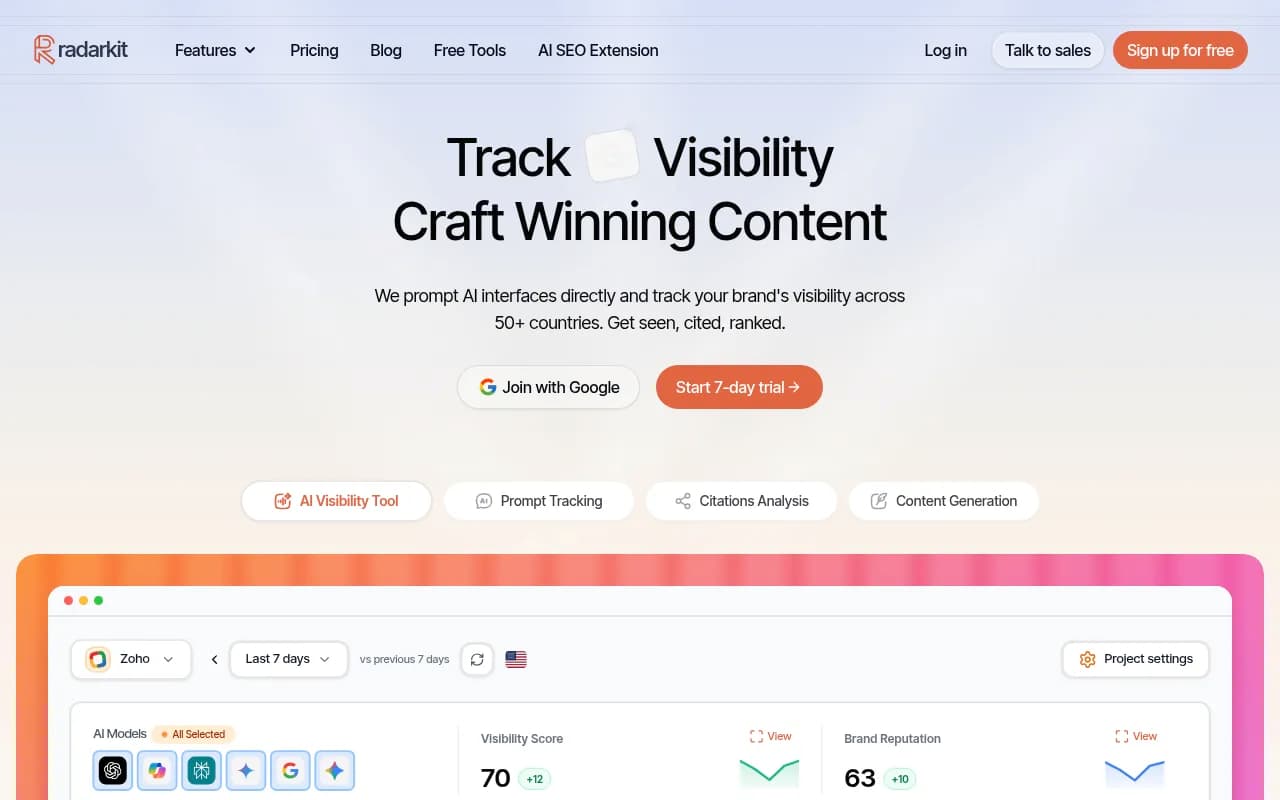
Radarkit has built a decent reputation as an LLM visibility tracker. It monitors how your brand appears across major AI engines, gives you competitive benchmarking, and surfaces prompt-level insights. For teams that just want to know where they stand, it does the job.
But "knowing where you stand" is increasingly the easy part. The harder question is: what do you do about it?
That's where Radarkit runs into its limits. Like most monitoring-first platforms, it shows you the gap but doesn't help you close it. There's no content generation, no answer gap analysis, no AI crawler logs, and no traffic attribution to connect visibility to revenue. You get the data. You're on your own for the rest.
If you've hit that ceiling with Radarkit, or you're evaluating it against alternatives before committing, this guide breaks down the best options in 2026 — with a focus on platforms that go beyond dashboards.
What to actually look for in a Radarkit alternative
Before jumping into the list, it's worth being clear about what separates a good AI visibility platform from a great one in 2026. The baseline features (prompt tracking, brand mention monitoring, competitor comparisons, multi-LLM coverage) are now table stakes. Nearly every platform on this list has them.
The real differentiators are:
- Content gap analysis: Can the platform tell you which prompts competitors rank for that you don't, and why?
- Content generation: Does it help you create content designed to get cited by AI models, or do you have to figure that out yourself?
- AI crawler logs: Can you see which pages ChatGPT, Claude, and Perplexity are actually crawling on your site?
- Traffic attribution: Can you connect AI visibility to actual website visits and revenue?
- Prompt intelligence: Does it show prompt volume, difficulty, and how queries fan out into sub-queries?
The more of these a platform covers, the more it functions as an optimization tool rather than a monitoring tool. That distinction matters a lot when you're trying to justify the spend.
The best Radarkit alternatives in 2026
1. Promptwatch — best for the full optimization loop
Promptwatch is the most complete platform in this space right now. It monitors 10 AI models (ChatGPT, Claude, Perplexity, Gemini, Grok, DeepSeek, Copilot, Meta AI, Google AI Overviews, and Google AI Mode), but the monitoring is almost secondary to what it does with the data.
The core workflow is: find the gaps, create content to fill them, then track whether that content gets cited. The Answer Gap Analysis shows you exactly which prompts your competitors appear for that you don't. The built-in AI writing agent then generates articles, listicles, and comparisons grounded in 880M+ citations analyzed — not generic SEO filler, but content engineered to get cited by AI models. Then page-level tracking shows whether it's working.
On top of that: real-time AI crawler logs (so you can see which pages ChatGPT and Perplexity are reading and fix indexing errors), prompt volume and difficulty scores, query fan-outs, Reddit and YouTube citation tracking, ChatGPT Shopping monitoring, and traffic attribution via GSC integration or server logs.
It's used by 6,700+ brands and agencies including Booking.com and Center Parcs. Pricing starts at $99/month for the Essential plan (1 site, 50 prompts, 5 articles), with Professional at $249/month and Business at $579/month. Free trial available.

2. Profound — best for enterprise teams with budget
Profound is a well-regarded platform aimed at larger organizations. It covers the major LLMs, has solid competitive benchmarking, and gives enterprise teams structured reporting workflows. The feature set is strong and the data quality is generally good.
Where it falls short relative to Promptwatch: no Reddit tracking, no ChatGPT Shopping monitoring, and the price point is significantly higher. It's also more monitoring-oriented — you get good data, but content optimization and generation aren't core to the product. For a large brand with a dedicated SEO team that can act on the data independently, Profound works well. For teams that need the platform to help them close the loop, it's less complete.
3. Scrunch AI — best for brand narrative monitoring
Scrunch AI focuses on how AI models talk about your brand, not just whether they mention you. It captures full answer snapshots, tracks sentiment and language patterns over time, and gives you a qualitative view of your AI presence that pure mention-counting tools miss.
This is genuinely useful for brand teams that care about narrative control — understanding whether AI models are describing your product accurately, positively, or in ways that need correcting. The limitation is that it's still primarily a monitoring and analysis tool. Content optimization isn't built in.
4. Athena HQ — best for teams that want prioritized action recommendations
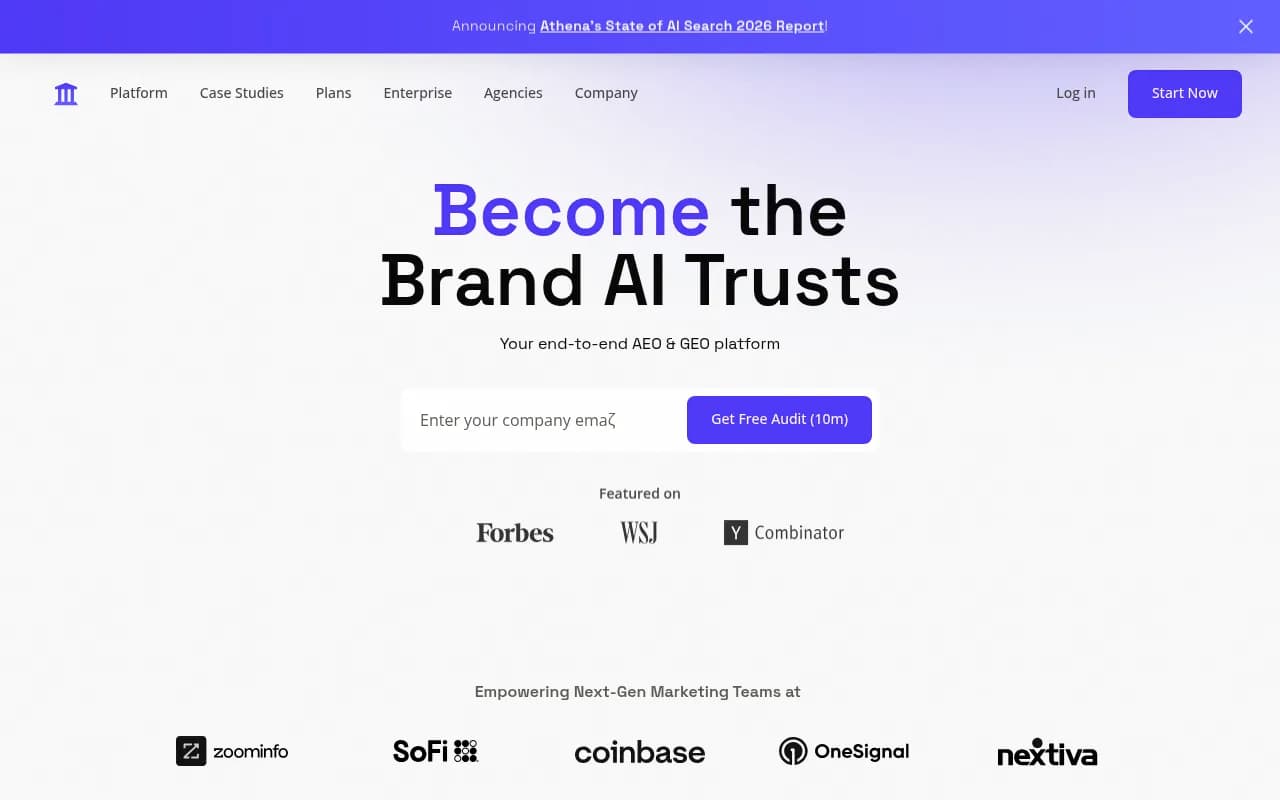
AthenaHQ sits somewhere between a monitoring tool and an optimization platform. It monitors visibility across 8+ AI search engines and, importantly, tries to turn that data into prioritized recommendations rather than just raw metrics. For larger teams that need structured guidance on where to focus, this is more useful than a plain dashboard.
The gap compared to Promptwatch is that AthenaHQ doesn't generate content for you. It tells you what to do; you still have to do it. There's also no AI crawler log functionality and no traffic attribution. But as a step up from pure monitoring, it's a meaningful one.
5. Otterly.AI — best budget option for basic monitoring
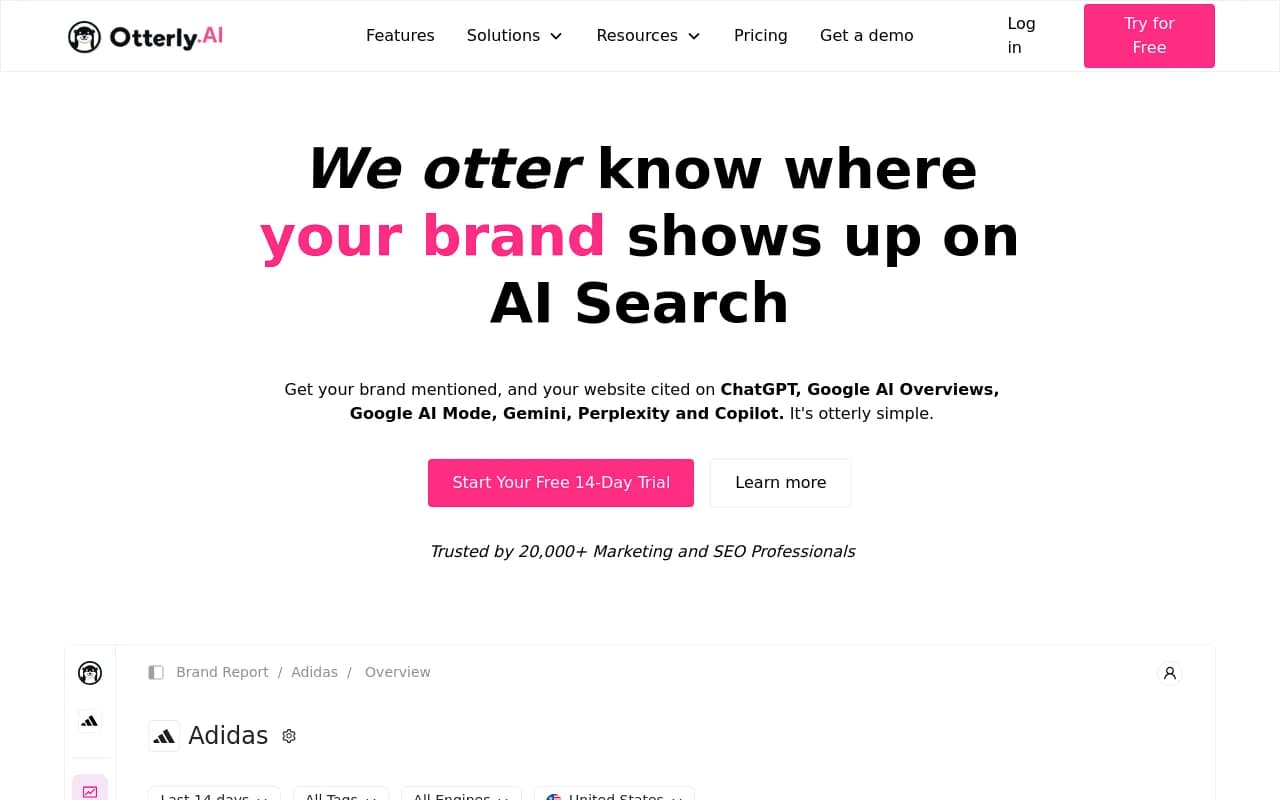
Otterly.AI is one of the more affordable options in the space. It covers the main LLMs, tracks brand mentions and competitor visibility, and gives you the core prompt-tracking workflow without a lot of complexity. For small teams or solo marketers who just need a baseline view of their AI visibility without spending much, it's a reasonable starting point.
The honest caveat: it's monitoring-only. No crawler logs, no content generation, no visitor analytics, no traffic attribution. If you outgrow "just knowing where you stand," you'll outgrow Otterly.AI quickly.
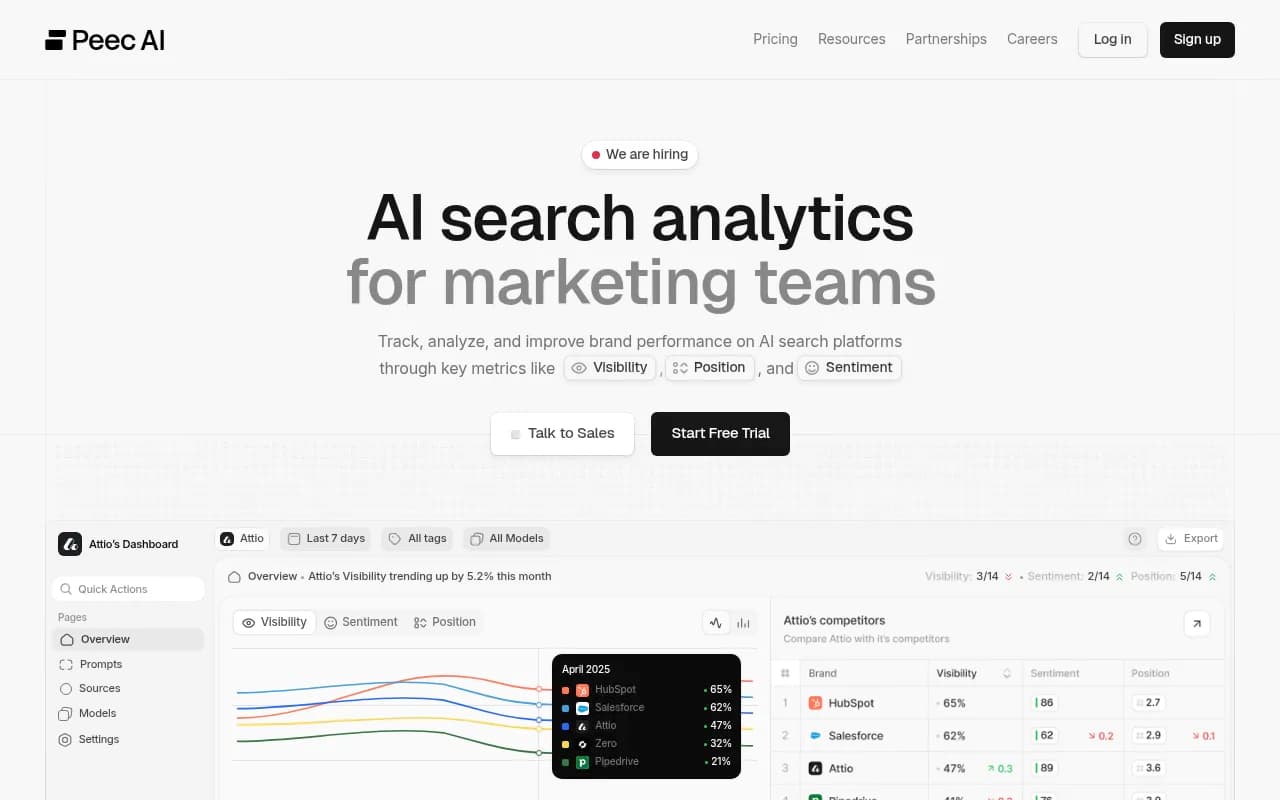
6. Peec AI — best for multi-language monitoring
Peec AI has built a strong reputation for multi-language AI visibility tracking. If you're operating in multiple markets and need to monitor how AI models talk about your brand in French, German, Spanish, or other languages, Peec AI handles this better than most.
It's a clean, focused monitoring tool with good share-of-voice metrics and competitive comparisons. Like Otterly.AI, it doesn't extend into content optimization territory — but for the specific use case of international brand monitoring, it's worth a look.
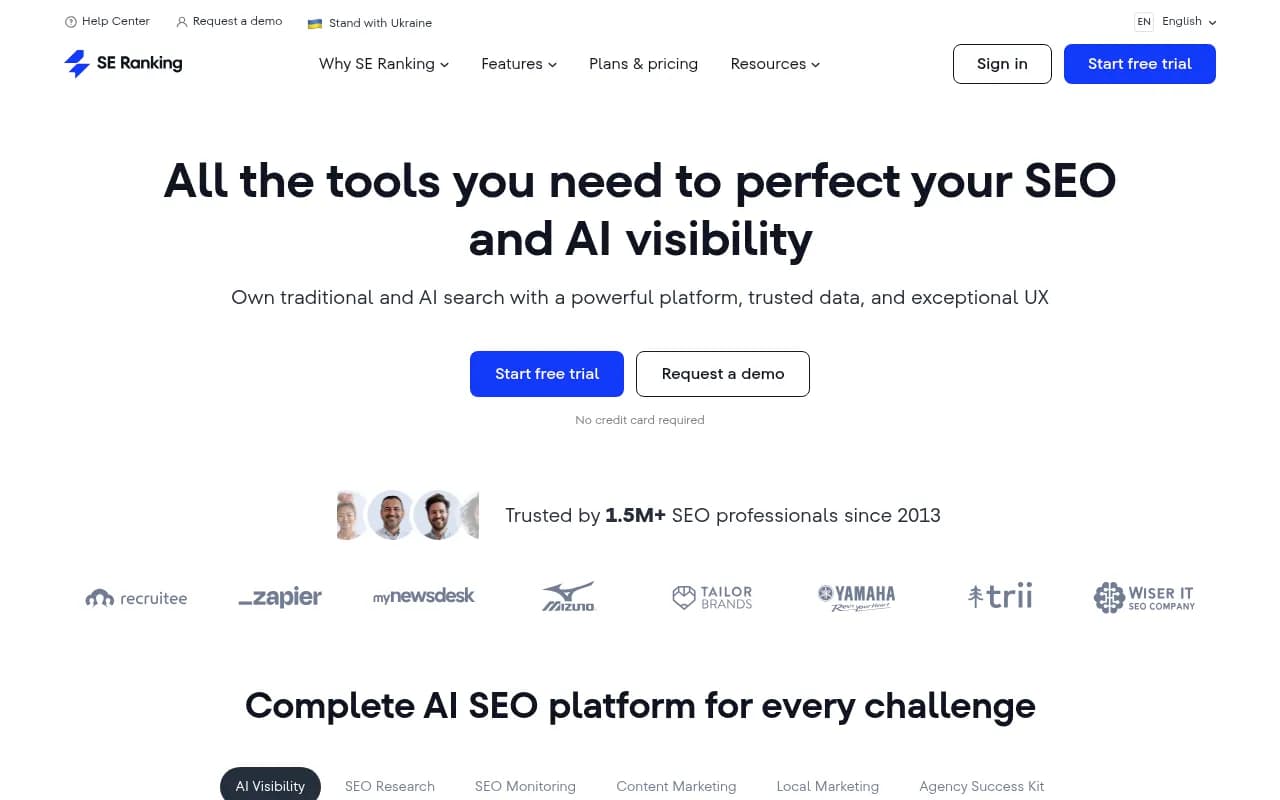
7. SE Ranking AI Visibility — best for teams already using SE Ranking for SEO
SE Ranking's AI visibility module makes sense if you're already in their ecosystem. It plugs AI answer tracking directly into your existing rank tracking and SEO workflows, so you're not managing a separate tool. The integration is the main selling point — the AI visibility features themselves are fairly standard.
If you're not already an SE Ranking customer, there's less reason to start here specifically for AI visibility. But for existing users who want to add LLM monitoring without switching platforms, it's a practical option.
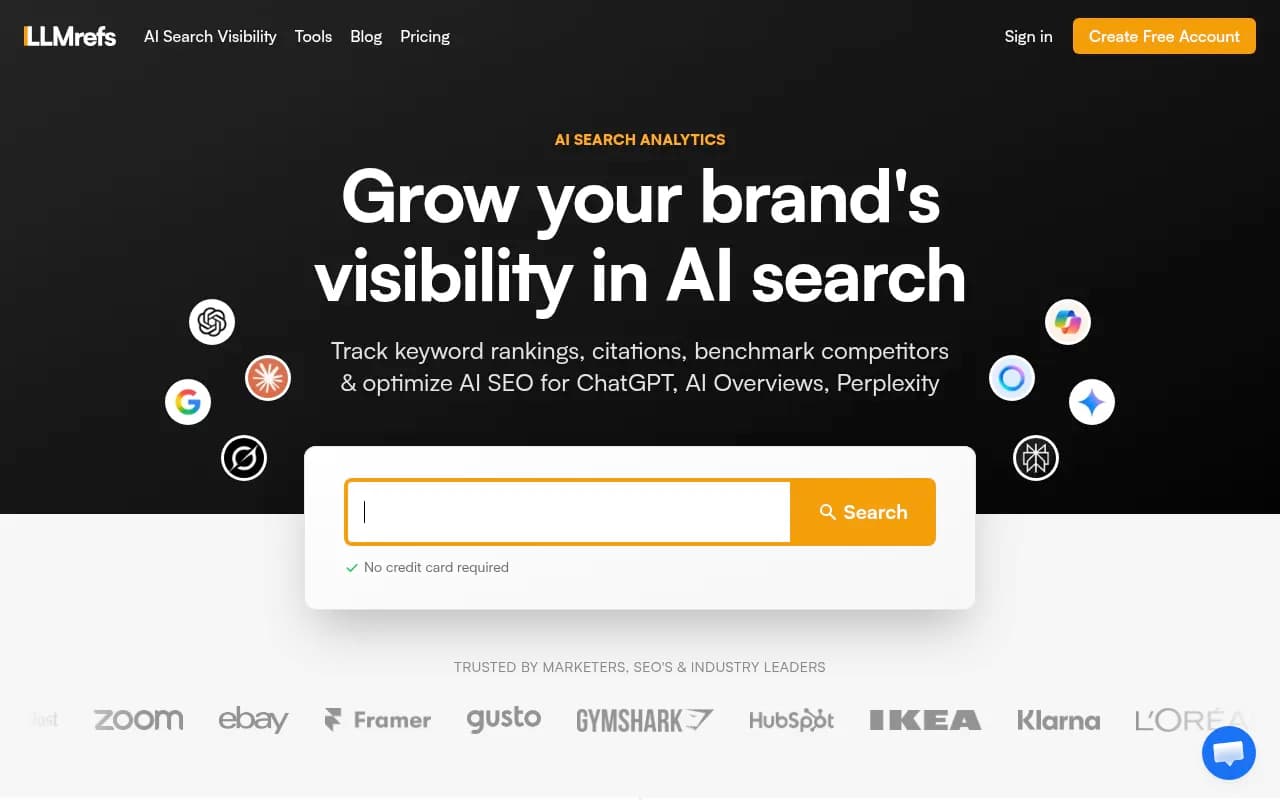
8. LLMrefs — best for citation source analysis
LLMrefs specializes in a specific and genuinely useful question: which URLs and domains are AI models actually citing? Rather than just tracking brand mentions, it maps the citation sources behind AI answers — so you can see which of your pages are being referenced, which competitor pages are getting cited instead of yours, and where publishing new content would have the most impact.
This is a more tactical, research-oriented tool than a full platform. It pairs well with a content optimization workflow, but it's not a complete solution on its own.
How these platforms compare
Here's a direct comparison across the features that matter most in 2026:
| Platform | Content generation | Answer gap analysis | AI crawler logs | Traffic attribution | Prompt volume data | Multi-LLM coverage | Starting price |
|---|---|---|---|---|---|---|---|
| Promptwatch | Yes | Yes | Yes | Yes | Yes | 10 models | $99/mo |
| Radarkit | No | No | No | No | Limited | Multiple | Varies |
| Profound | No | Limited | No | No | No | Multiple | Higher |
| Scrunch AI | No | No | No | No | No | Multiple | Varies |
| Athena HQ | No | Yes | No | No | Limited | 8+ models | Varies |
| Otterly.AI | No | No | No | No | No | Multiple | Lower |
| Peec AI | No | No | No | No | No | Multiple | Varies |
| SE Ranking AI | No | No | No | No | No | Multiple | Bundled |
| LLMrefs | No | Partial | No | No | No | Multiple | Varies |
The pattern is pretty clear. Most platforms in this space are monitoring tools. Promptwatch is the outlier that covers the full cycle from discovery to content creation to tracking.
The monitoring-only trap
It's worth saying directly: monitoring-only tools aren't useless. Knowing your AI visibility score, seeing competitor benchmarks, and tracking trends over time is valuable baseline information. If you're just starting out with GEO (Generative Engine Optimization), a simpler tool might be exactly what you need.
The problem shows up when you've been monitoring for a few months and your visibility hasn't improved. You know you're invisible for certain prompts. You know competitors are getting cited instead of you. But the tool can't tell you what content to create, can't generate it for you, and can't show you whether your new content is actually getting picked up by AI crawlers.
That's the monitoring-only trap. You have data, but no clear path from data to results.
The platforms that break out of this trap are the ones that connect visibility data to content creation and then to traffic attribution. That's a much shorter list.
Which alternative should you choose?
The honest answer depends on what you actually need:
-
If you want the most complete platform and are willing to pay for it, Promptwatch covers everything from gap analysis to content generation to crawler logs to traffic attribution. It's the only platform in this comparison rated as a leader across all categories in a 2026 review of 12 GEO platforms.
-
If you're at an enterprise with a large budget and a dedicated team that can act on data independently, Profound is a credible option with strong reporting.
-
If you're primarily concerned with brand narrative and sentiment in AI answers, Scrunch AI does that better than most.
-
If you're on a tight budget and just need basic monitoring, Otterly.AI gets you started without much friction.
-
If you're already in the SE Ranking ecosystem, their AI visibility module is the path of least resistance.
-
If you need multi-language coverage as a primary requirement, Peec AI is worth evaluating.
The one thing I'd push back on is the idea that you can "start with monitoring and add optimization later." In practice, teams that start with monitoring-only tools tend to stay there, because switching costs are real and the data from one platform doesn't transfer to another. If content optimization is something you'll eventually need, it's worth starting with a platform that already has it.
Final thought
Radarkit is a reasonable tool for teams that want LLM visibility data without a lot of complexity. But the space has moved fast in 2026, and the gap between "we track your visibility" and "we help you improve it" has become the most important distinction in this category.
If you're evaluating alternatives, the question to ask every vendor is simple: after I see my visibility score, what does your platform actually help me do about it? The answer will tell you everything you need to know.