Key takeaways
- Most AI visibility tools only monitor — they show you where your brand is missing but don't help you fix it. The best alternatives go further.
- Promptwatch is the only platform rated "Leader" across all categories in a 2026 comparison of 12 GEO platforms, covering monitoring, content generation, and crawler analytics in one place.
- If budget is the main concern, Otterly.AI and Peec AI offer solid entry-level monitoring starting under $100/month.
- For enterprise teams that need deep prompt research and competitive analysis, Profound and AthenaHQ are worth evaluating.
- The tools that deliver the most value in 2026 are the ones that close the loop: find gaps, create content, track results.
Nimt.ai sits in the growing category of AI search visibility tools — platforms that track how often your brand appears when someone asks ChatGPT, Perplexity, Gemini, or Claude a question. It's a useful idea. But if you've found yourself hitting its limits, whether that's in model coverage, content optimization features, or just the depth of data it provides, you're not alone.
The category has matured fast. In 2024, most of these tools were basic dashboards. By mid-2026, the gap between the best and the rest is significant. Some platforms now track crawler behavior, generate content from prompt data, and attribute AI-driven traffic to revenue. Others are still just showing you a mention count.
This guide ranks the best Nimt.ai alternatives based on what actually matters: how many AI models they cover, whether they help you do something with the data, and whether the price makes sense for what you get.
How to think about AI visibility tools in 2026
Before jumping into the list, it's worth being clear about what separates a good tool from a mediocre one.
The basic function — querying AI models with prompts and reporting whether your brand appeared — is now table stakes. Every tool on this list does that. The real differentiator is what happens next.
A monitoring-only tool tells you "you appeared in 12% of responses for this prompt." That's useful context. But it doesn't tell you why you're missing from the other 88%, which pages AI models are actually reading on your site, or what content you need to create to close the gap.
The tools worth paying for in 2026 are the ones that answer those follow-up questions. Keep that in mind as you read through the options below.
The best Nimt.ai alternatives in 2026
1. Promptwatch — best overall for AI search visibility and optimization
Promptwatch is the most complete platform in this category right now. It tracks 10 AI models (ChatGPT, Perplexity, Claude, Gemini, Google AI Overviews, Google AI Mode, Grok, DeepSeek, Copilot, and Meta AI), which is more than most competitors. But the model count isn't the main reason it leads.
What makes Promptwatch different is that it's built around an action loop rather than a reporting loop. The Answer Gap Analysis shows you exactly which prompts competitors are visible for that you're not — not as a vague "you're missing coverage here" warning, but as a specific list of questions AI models are answering without citing you. From there, Content Agents generate articles, listicles, and comparison pages grounded in that prompt data. Then page-level tracking shows whether those new pages actually get crawled and cited.
A few things that stand out compared to Nimt.ai and most other alternatives:
- AI Crawler Logs show which pages ChatGPT, Claude, and Perplexity are actually reading on your site, how often they return, and what errors they hit. This is rare — most tools have no visibility into crawler behavior at all.
- Prompt Intelligence includes volume estimates and difficulty scores, so you can prioritize which gaps to close first.
- Reddit and YouTube tracking surfaces discussions that directly influence AI recommendations, a channel most competitors ignore.
- ChatGPT Shopping tracking monitors when your brand appears in product recommendation carousels.
Pricing starts at $99/month for the Essential plan (1 site, 50 prompts, 5 articles), $249/month for Professional (2 sites, 150 prompts, crawler logs), and $579/month for Business (5 sites, 350 prompts). A free trial is available.

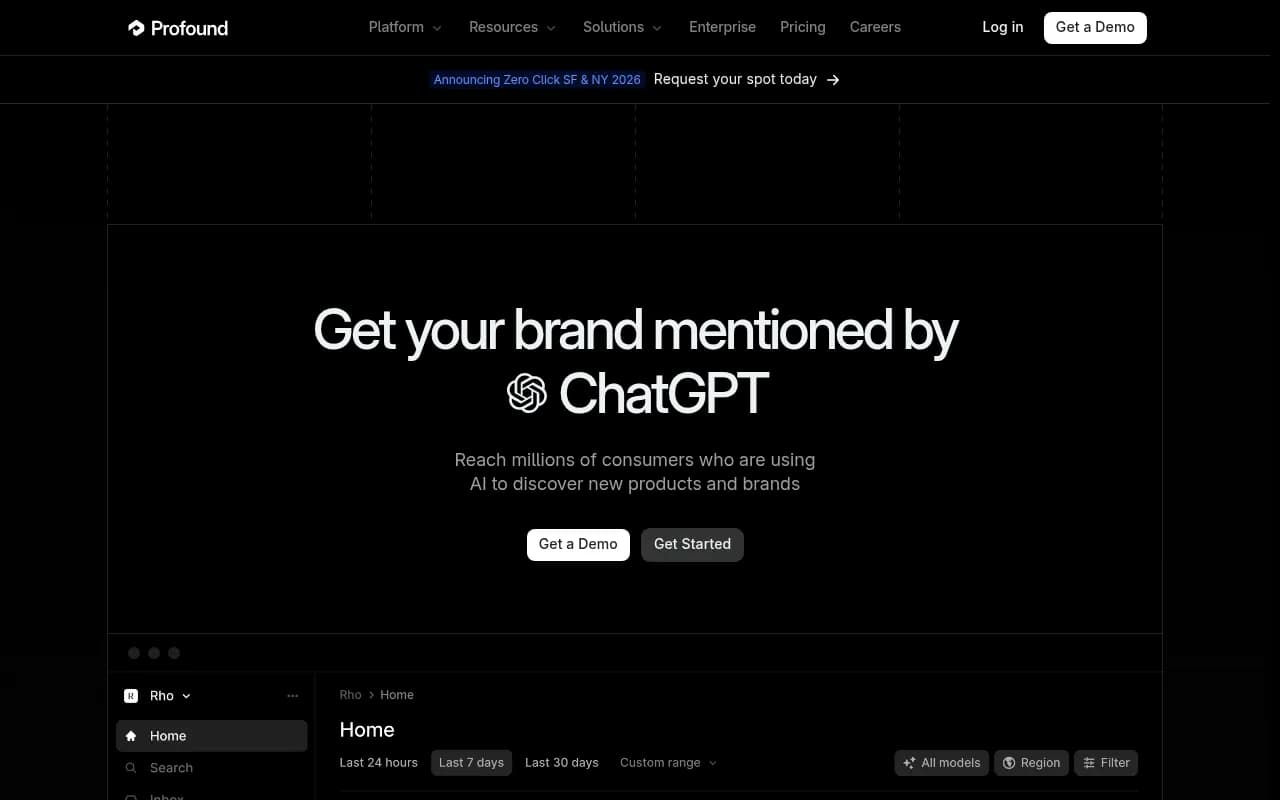
2. Profound — best for enterprise prompt research
Profound has strong prompt research capabilities and covers up to 10 AI models at the enterprise tier. It's well-suited for large brands that need to understand the full competitive landscape across many prompts before deciding where to invest.
The main limitation compared to Promptwatch is that Profound is primarily a monitoring and research platform. It doesn't have content generation built in, and there's no crawler log functionality. You'll get excellent data on where you stand, but the path from insight to action requires other tools.
Pricing starts at $99/month, with enterprise pricing available for larger prompt volumes.
3. Otterly.AI — best for budget-conscious teams
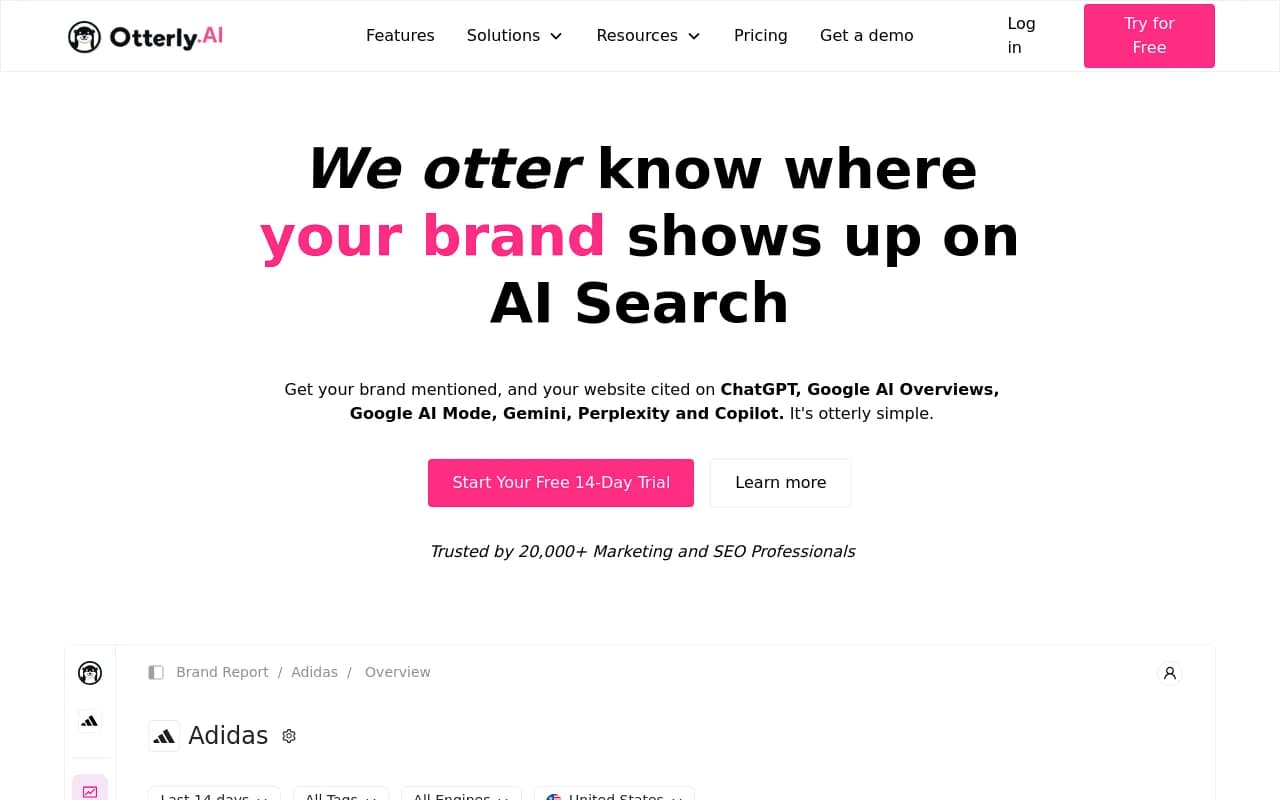
Otterly.AI is the most affordable option on this list, starting at $29/month. For a small team or solo marketer who just needs to know whether their brand is showing up in AI responses, it does the job.
Coverage is more limited — four AI models on the base plan — and there's no content optimization or crawler analytics. But if you're early in your AI visibility journey and want to start tracking without a big commitment, Otterly.AI is a reasonable starting point.
4. Peec AI — best for flexible model selection
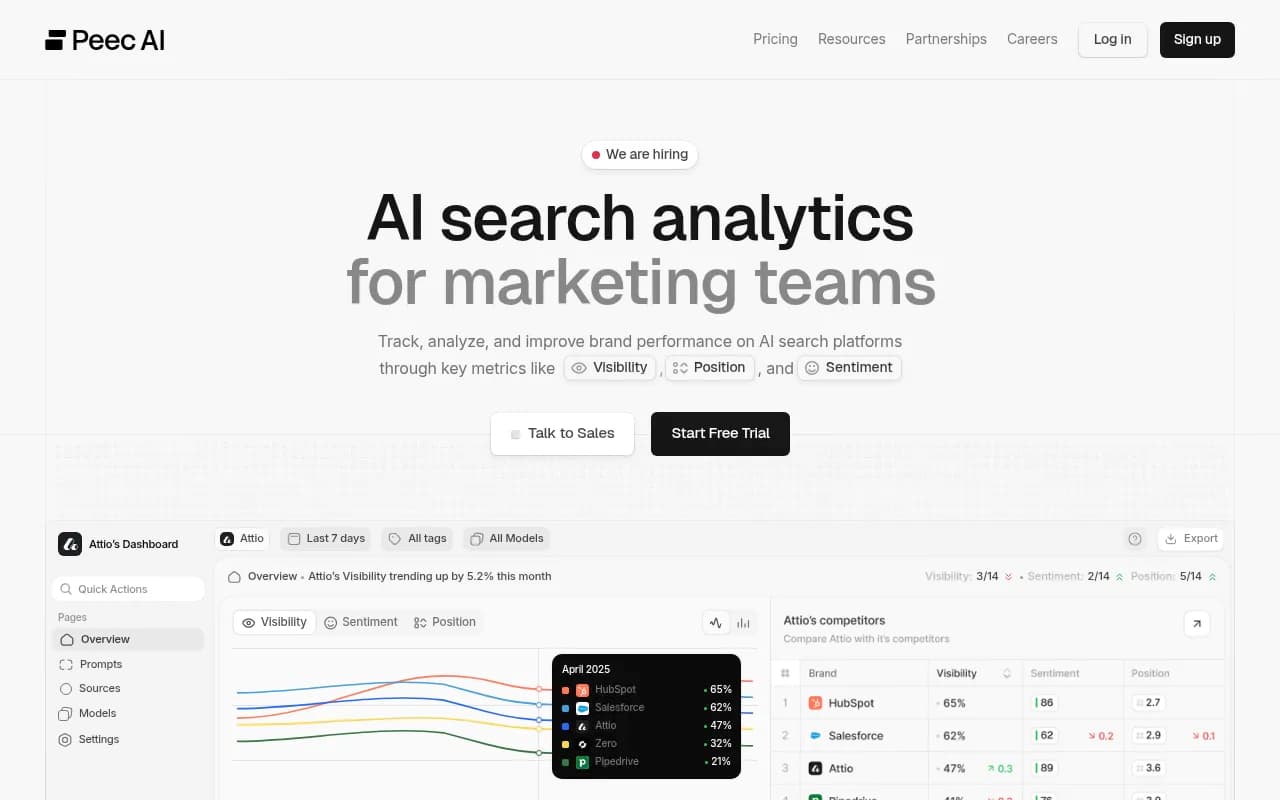
Peec AI lets you choose which AI models to track, which is useful if your audience is concentrated on specific platforms. Coverage goes up to 10 models, and pricing starts at €85/month — more affordable than most mid-tier options.
Like Otterly.AI, Peec AI is primarily a monitoring tool. It doesn't generate content or provide crawler logs. But the flexibility in model selection and the reasonable price point make it worth considering if you have specific monitoring needs.
5. AthenaHQ — best for brand narrative and positioning
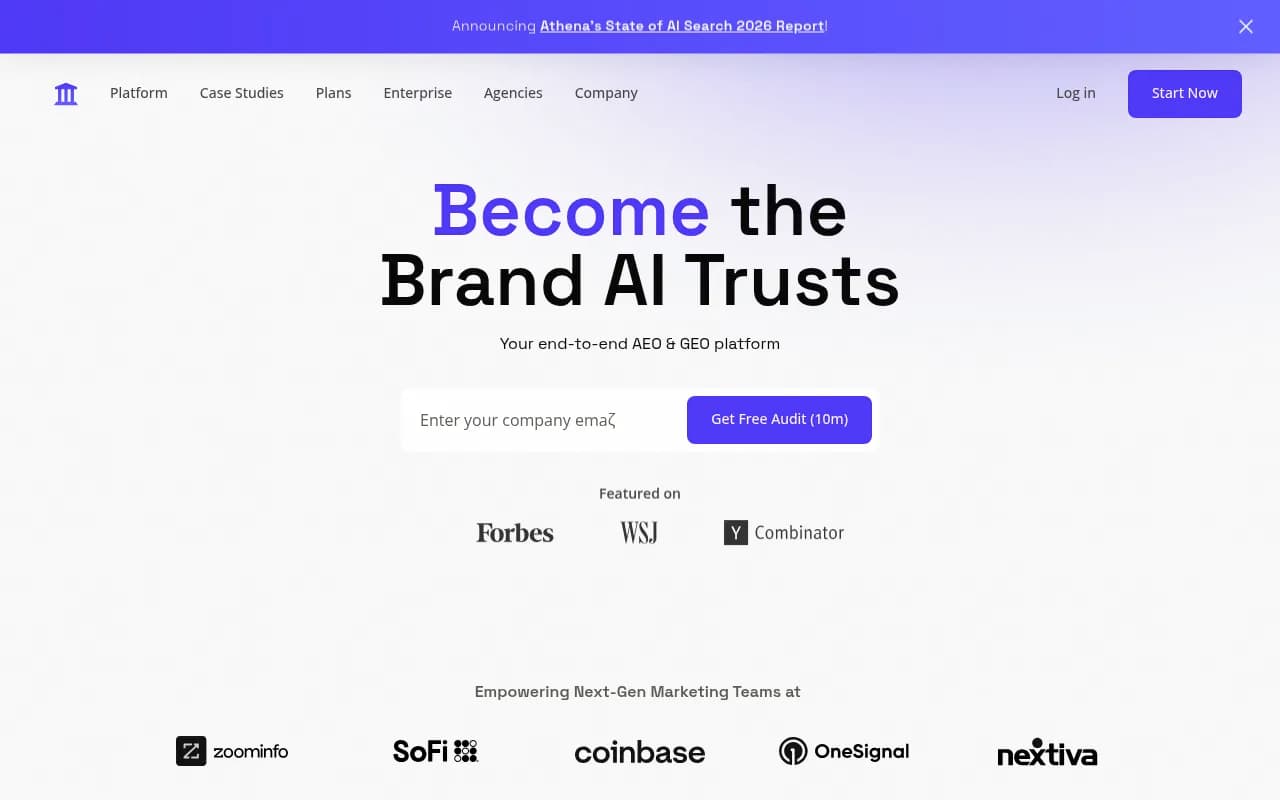
AthenaHQ takes a slightly different angle. Rather than focusing purely on mention counts and citation rates, it emphasizes how your brand is being described in AI responses — the narrative, the sentiment, the positioning relative to competitors.
This makes it a good fit for brands where the quality of AI mentions matters as much as the quantity. A brand being mentioned in a negative or inaccurate context is worse than not being mentioned at all, and AthenaHQ is better than most at surfacing those nuances.
It covers 8+ AI models and has solid competitive analysis features. The trade-off is that it's monitoring-focused — content generation and crawler analytics aren't part of the package.
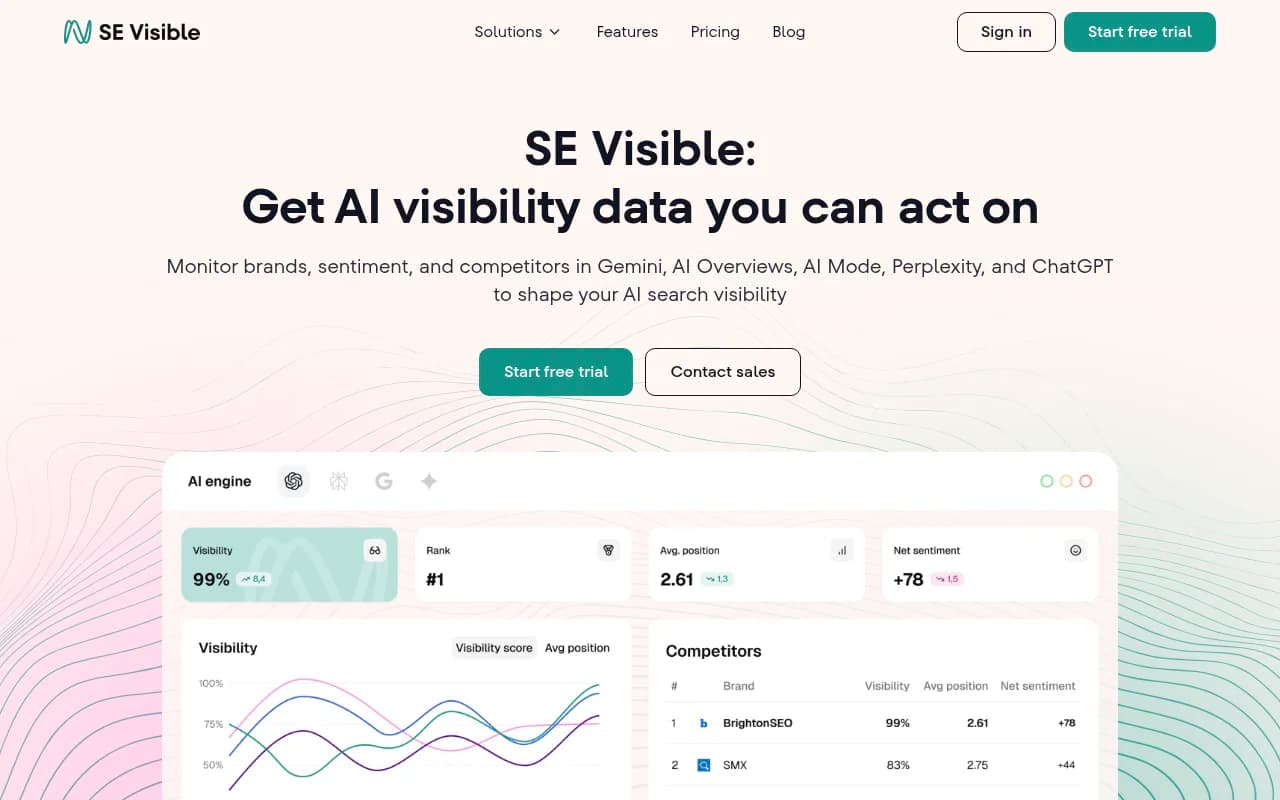
6. SE Visible — best for multi-brand and multi-country tracking
SE Visible (from SE Ranking) covers 5 AI models and is built with multi-brand, multi-country use cases in mind. If you're managing visibility for multiple brands or need to track how AI responses differ across regions and languages, it handles that well.
The pricing at $99/month is competitive for what you get, and the integration with SE Ranking's broader SEO toolkit is useful if you're already in that ecosystem.
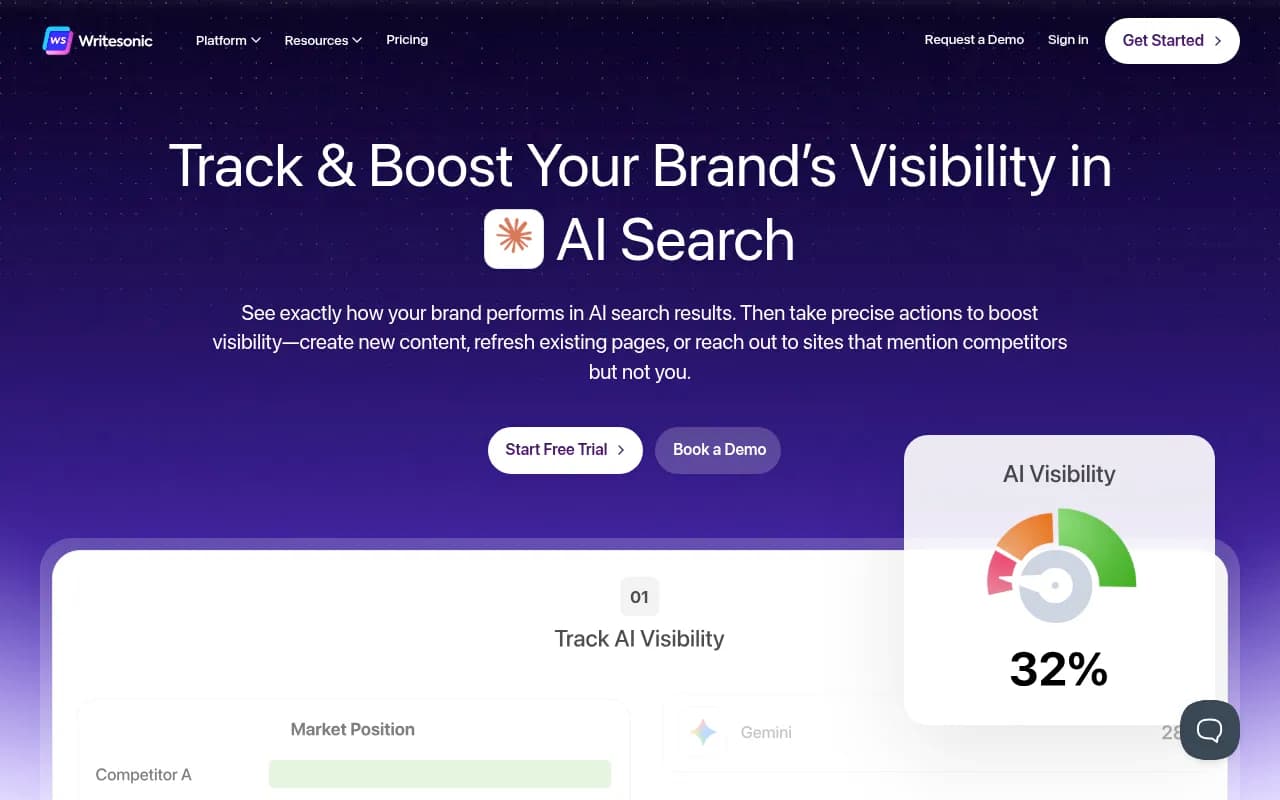
7. Writesonic — best for combining content creation with visibility tracking
Writesonic has expanded beyond its origins as an AI writing tool to include AI search visibility tracking. It's an interesting option if you want content generation and monitoring in one place without paying for a full GEO platform.
The tracking capabilities aren't as deep as Promptwatch or Profound — prompt intelligence, crawler logs, and competitor heatmaps are missing. But if your primary need is creating content and you want some visibility data alongside it, Writesonic covers both reasonably well.
8. Nightwatch — best for teams that want SEO and AI monitoring together
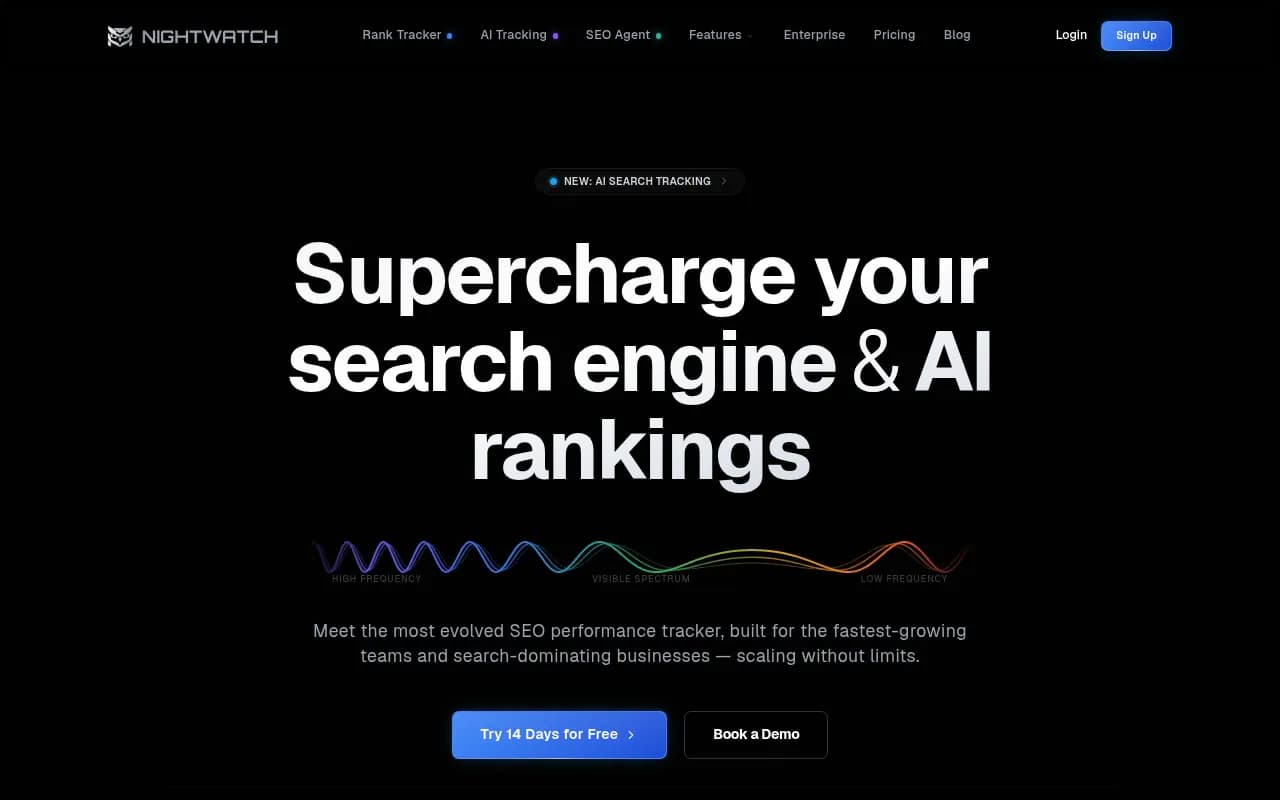
Nightwatch is primarily an SEO rank tracker that added AI visibility monitoring as an add-on. The base plan starts at $32/month, with the AI monitoring add-on at $99/month.
For teams that are still heavily invested in traditional SEO and want to add AI visibility tracking without switching platforms, Nightwatch is a practical option. The AI monitoring features are less sophisticated than dedicated GEO platforms, but the combined SEO and AI data in one tool has real workflow value.
9. Scrunch AI — best for mid-market brands
Scrunch AI covers the core monitoring use case well — brand mentions, share of voice, sentiment, and citation tracking across major AI models. It's positioned for mid-market brands that need more than a basic tracker but aren't ready for enterprise pricing.
10. LLM Pulse — lightweight tracking for smaller teams
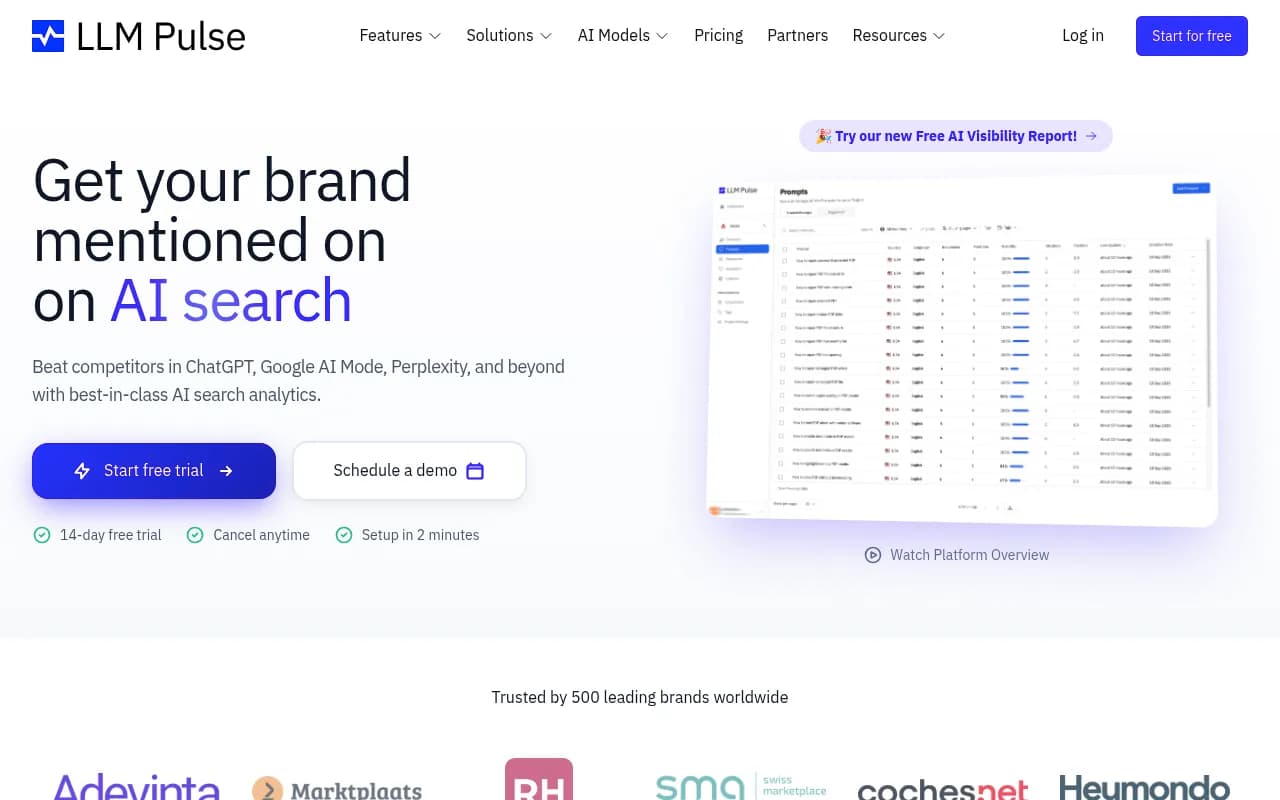
LLM Pulse is a straightforward option for tracking brand visibility across ChatGPT, Perplexity, and other major models. It's lighter on features than most options here, but the simplicity can be an advantage for teams that don't need a full platform.
Comparison table
| Tool | AI models tracked | Content generation | Crawler logs | Starting price | Best for |
|---|---|---|---|---|---|
| Promptwatch | 10 | Yes | Yes | $99/mo | End-to-end GEO optimization |
| Profound | Up to 10 | No | No | $99/mo | Enterprise prompt research |
| Otterly.AI | 4 (base) | No | No | $29/mo | Budget monitoring |
| Peec AI | Up to 10 | No | No | €85/mo | Flexible model selection |
| AthenaHQ | 8+ | No | No | Custom | Brand narrative and positioning |
| SE Visible | 5 | No | No | $99/mo | Multi-brand, multi-country |
| Writesonic | Varies | Yes | No | Varies | Content + basic tracking |
| Nightwatch | 4 | No | No | $32/mo + $99 add-on | SEO + AI in one tool |
| Scrunch AI | Varies | No | No | Custom | Mid-market monitoring |
| LLM Pulse | Varies | No | No | Varies | Lightweight tracking |
What to look for when switching from Nimt.ai
A few things worth checking before you commit to a new platform:
Model coverage. If you're only tracking 3-4 AI models, you're missing a significant portion of the picture. ChatGPT, Perplexity, Google AI Overviews, Claude, and Gemini are the minimum set worth tracking in 2026. Some platforms charge extra for additional models, so read the pricing carefully.
Prompt volume limits. Most tools price by the number of prompts you can track. A small brand might get by with 50 prompts. An agency managing multiple clients will need hundreds. Make sure the plan you're evaluating matches your actual prompt volume, not just the entry-level demo.
Content optimization features. This is where most tools fall short. Monitoring tells you where you're invisible. Content optimization tells you what to do about it. If a tool can't help you create content that closes the gaps it identifies, you're paying for a report, not a solution.
Crawler analytics. Knowing that AI models aren't citing you is one thing. Knowing that they're crawling your site but not finding the right content — or hitting errors — is much more actionable. Very few platforms offer this, and it's one of the clearest signs of a mature platform vs. a basic tracker.
Traffic attribution. Eventually, you'll need to justify the spend. Platforms that connect AI visibility to actual traffic and revenue make that conversation much easier.
The monitoring-only problem
Most tools on this list — and most tools in the category generally — are monitoring platforms. They're good at telling you what's happening. They're not built to help you change it.
That gap matters more than it used to. In early 2025, just knowing your AI visibility score was novel enough to be valuable. By mid-2026, that data is table stakes. The brands pulling ahead are the ones using that data to systematically create content that AI models want to cite.
The tools that close that loop — where the monitoring data feeds directly into content creation, and the content creation feeds back into improved visibility scores — are the ones worth investing in. Promptwatch is the clearest example of that approach right now, but it's worth evaluating any platform you're considering against that standard.
Which alternative should you choose?
If you want the most complete platform and are serious about improving your AI search visibility (not just measuring it), Promptwatch is the strongest option. The combination of monitoring, content generation, and crawler analytics is genuinely hard to find elsewhere.
If budget is the primary constraint, start with Otterly.AI or Peec AI. They won't help you optimize, but they'll give you a clear picture of where you stand.
If you're an enterprise team with complex prompt research needs, Profound is worth a serious look — just plan for the content optimization work to happen in a separate tool.
And if brand narrative and sentiment matter as much as raw mention counts, AthenaHQ's positioning-focused approach is worth evaluating alongside the more metrics-heavy options.
The right choice depends on where you are in your AI visibility journey. But whatever you pick, make sure it does more than show you a dashboard.