Key takeaways
- Nightwatch is primarily a traditional SEO rank tracker with an AI add-on -- it wasn't built from the ground up for LLM visibility
- Most AI search monitoring tools fall into two camps: monitoring-only dashboards and full optimization platforms that help you act on what you find
- The best alternative depends on your use case: agencies need multi-client reporting, enterprises need governance, and growth teams need content gap analysis
- Tools like Promptwatch go beyond tracking to help you find gaps, generate content, and close the loop with traffic attribution
- Pricing ranges from $29/mo (Otterly.AI) to $2,500+/mo (SEOClarity), so there's a fit for every budget
Why look beyond Nightwatch for AI search?
Nightwatch is a well-regarded rank tracker. It's accurate, affordable (starting at $39/mo), and has added an AI monitoring add-on that covers some LLM visibility basics. For agencies doing traditional SEO with a side of AI curiosity, it works fine.
But here's the problem: AI search monitoring isn't a feature you bolt onto a rank tracker. It's a fundamentally different discipline. When ChatGPT answers a question about "best project management tools," it doesn't consult a ranking index -- it draws on training data, citations, entity signals, and content patterns. Knowing your Google position tells you almost nothing about whether you'll appear in that answer.
The tools built specifically for AI visibility ask different questions: Which prompts is your brand appearing in? Which competitors are getting cited instead of you? What content is missing from your site that AI models want to reference? How does your visibility differ across ChatGPT, Perplexity, Claude, and Gemini?
That's what this guide covers -- the platforms doing this work properly in 2026.
What to look for in a Nightwatch alternative
Before jumping into the list, it's worth being clear about what separates a good AI search monitoring tool from a mediocre one.
Coverage across AI engines. ChatGPT alone isn't enough. Perplexity, Claude, Gemini, Google AI Overviews, Grok, and DeepSeek all have different citation behaviors. A tool that only monitors one or two engines will give you a distorted picture.
Prompt flexibility. Fixed prompt libraries are a limitation. The best tools let you define your own prompts -- because the questions your customers actually ask are different from generic industry queries.
Competitor benchmarking. Knowing your own visibility score in isolation isn't that useful. You need to know whether you're ahead of or behind your competitors for specific prompts.
Content gap analysis. This is where most tools fall short. Monitoring tells you there's a gap; gap analysis tells you exactly what content you need to fill it.
Traffic attribution. If you can't connect AI visibility to actual website traffic and revenue, you can't justify the investment or prove the work is paying off.
The best Nightwatch alternatives in 2026
1. Promptwatch -- best for full-cycle AI visibility optimization
Promptwatch is the most complete option on this list, and the only platform that covers the full loop: find gaps, create content, track results.

Most AI monitoring tools show you a dashboard and leave you to figure out what to do next. Promptwatch's Answer Gap Analysis shows you the specific prompts where competitors are visible but you aren't -- and then the built-in AI writing agent generates content engineered to get cited, grounded in 880M+ real citations analyzed across 10 AI engines.
The crawler logs feature is genuinely useful and rare: you can see exactly which pages ChatGPT, Perplexity, and Claude are crawling on your site, how often they return, and what errors they're hitting. Most competitors don't offer this at all.
For agencies and marketing teams that want to move from "we're tracking AI visibility" to "we're improving it," Promptwatch is the clearest path. Pricing starts at $99/mo for the Essential plan (1 site, 50 prompts, 5 articles), with Professional at $249/mo and Business at $579/mo. Free trial available.
2. Otterly.AI -- best budget option for GEO teams
Otterly.AI is one of the more affordable entry points into AI search monitoring, starting at $29/mo. It covers prompt-based tracking, GEO audits, citation tracking, and on-page recommendations.

It's a solid choice for smaller teams or agencies just getting started with GEO. The automated prompt testing is a nice touch -- you can run batches of prompts and see how responses change over time without doing it manually.
The main limitation is that it's monitoring-focused. There's no content generation, no crawler logs, and no traffic attribution. You'll get good data; you'll need to act on it yourself.
3. Peec AI -- best for cross-engine share of voice
Peec AI is built around one core metric: share of voice across AI engines. It's particularly strong for SaaS and B2B brands that want to benchmark themselves against a defined competitor set across ChatGPT, Perplexity, Gemini, and others.
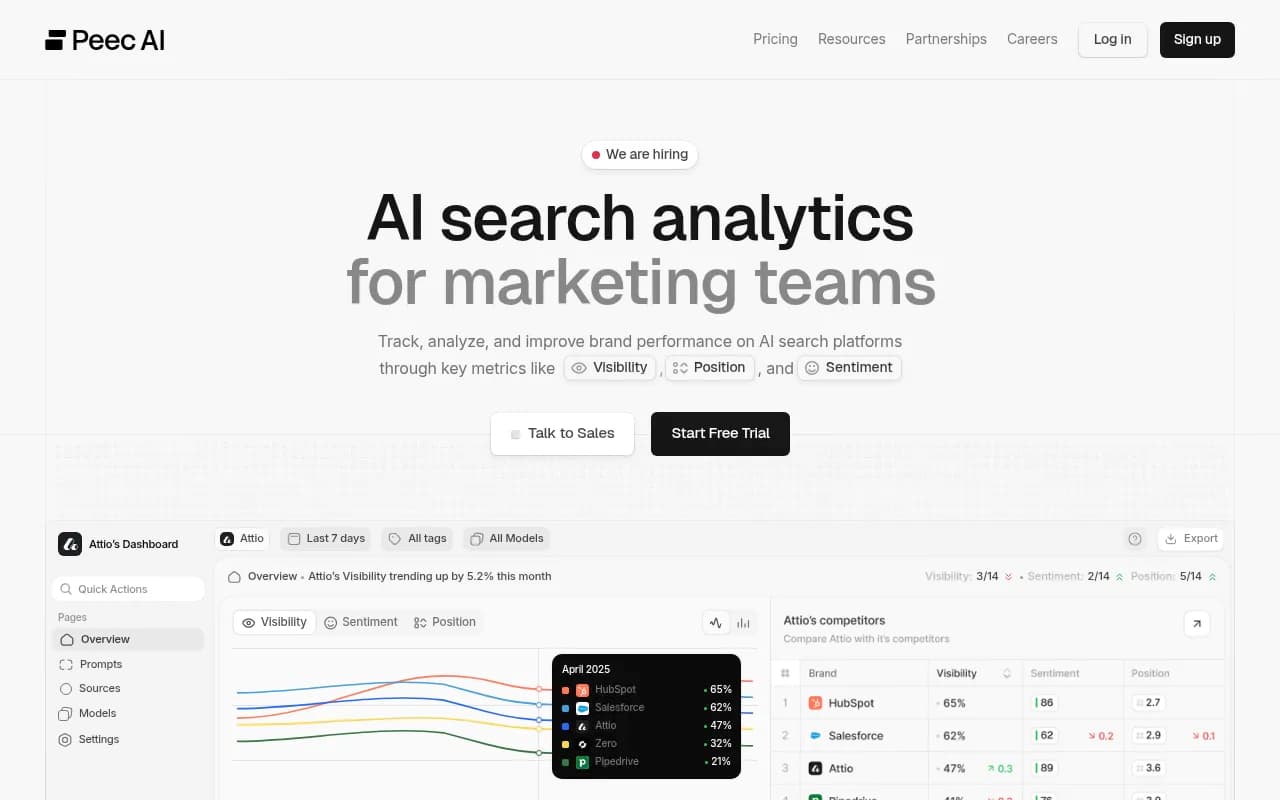
Starting at €89/mo, it's mid-range in price and strong on the reporting side. The dashboard is clean and the competitor benchmarking is easy to interpret -- useful for presenting AI visibility data to stakeholders who don't want to dig into raw data.
Like Otterly, it's a monitoring tool. No content generation, no gap analysis that tells you what to write. But for tracking and benchmarking, it's one of the better options.
4. Profound -- best for enterprise governance
Profound (also listed as Profound AI) is aimed squarely at large brands and enterprises. It has a read/write AI model, meaning it doesn't just monitor -- it can push content updates and work within content operations workflows.
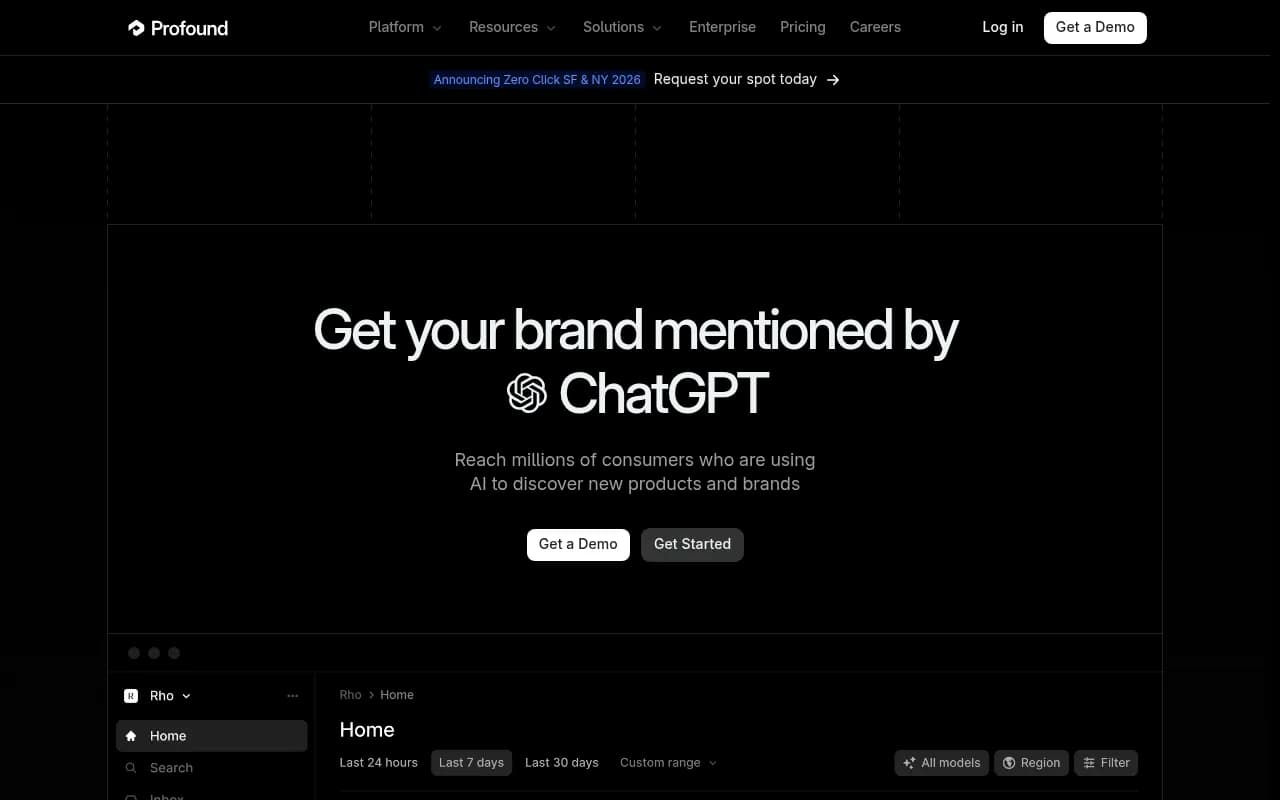
Starting at $99/mo for smaller plans but scaling significantly for enterprise, it's built for teams that need audit trails, compliance features, and integration with existing content ops processes. The feature set is strong, but the price point and complexity make it overkill for most mid-market teams.
If you're at a large brand with a dedicated SEO/GEO team and need enterprise-grade governance, Profound is worth evaluating seriously.
5. SE Visible -- best for agencies already on SE Ranking
SE Visible is SE Ranking's dedicated AI visibility product. If your agency is already paying for SE Ranking, this is the natural extension -- it covers AI Mode monitoring, brand sentiment tracking, and visibility scoring across major AI engines.
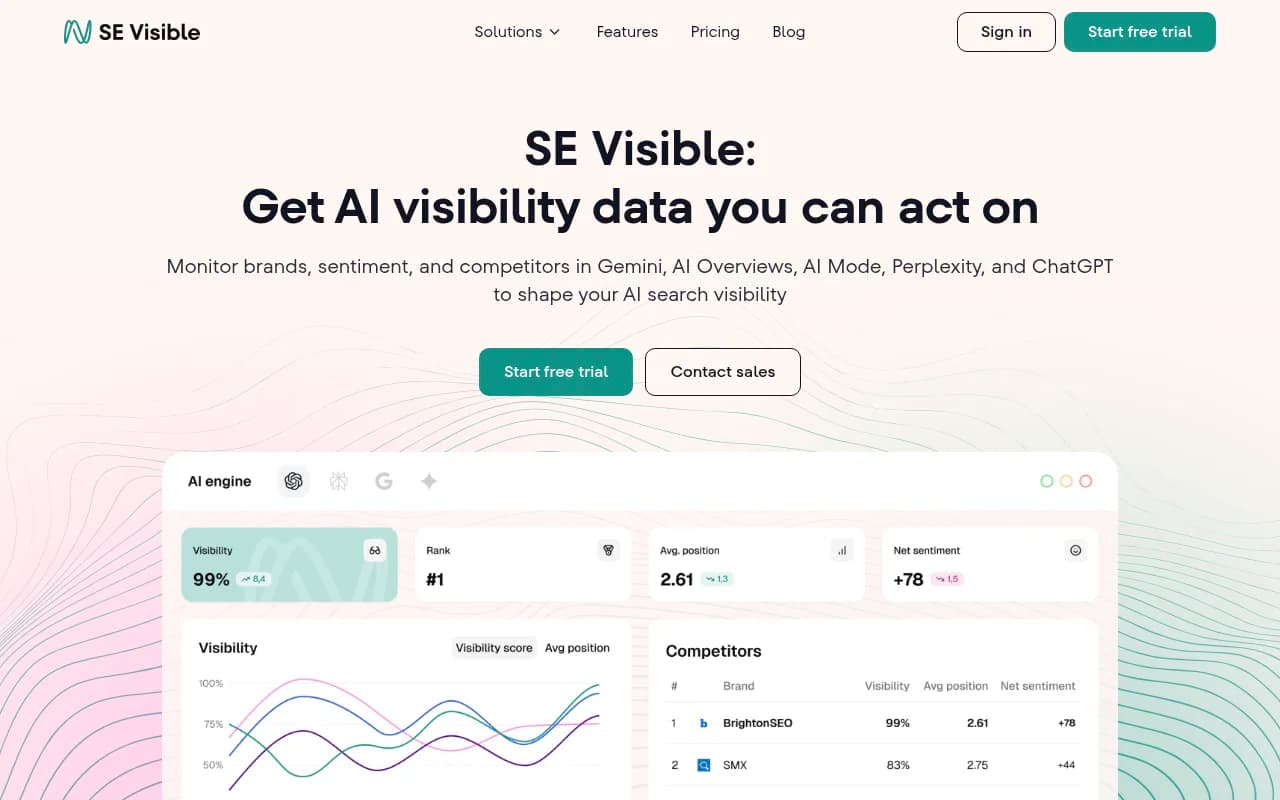
Starting at $189/mo, it's not cheap, but the integration with SE Ranking's broader SEO data is a genuine advantage. You can correlate AI visibility with traditional ranking data in ways that standalone AI monitoring tools can't.
The limitation is that it's still primarily a monitoring tool. The content optimization side is thinner than Promptwatch or Profound.
6. Scrunch AI -- best for solo operators and pilots
Scrunch AI is a lighter-weight option that works well for individuals or small teams doing an initial audit of their AI visibility. It's approachable, relatively affordable, and gives you a quick read on where you stand.
It's not built for scale -- multi-client agency workflows or enterprise use cases will quickly outgrow it. But as a starting point or a reality check before committing to a larger platform, it's useful.
7. Radarkit -- best for multi-client agency reporting
Radarkit is positioned specifically for agencies managing multiple clients. The reporting interface is designed for that use case, making it easier to track and present AI visibility data across a client portfolio.
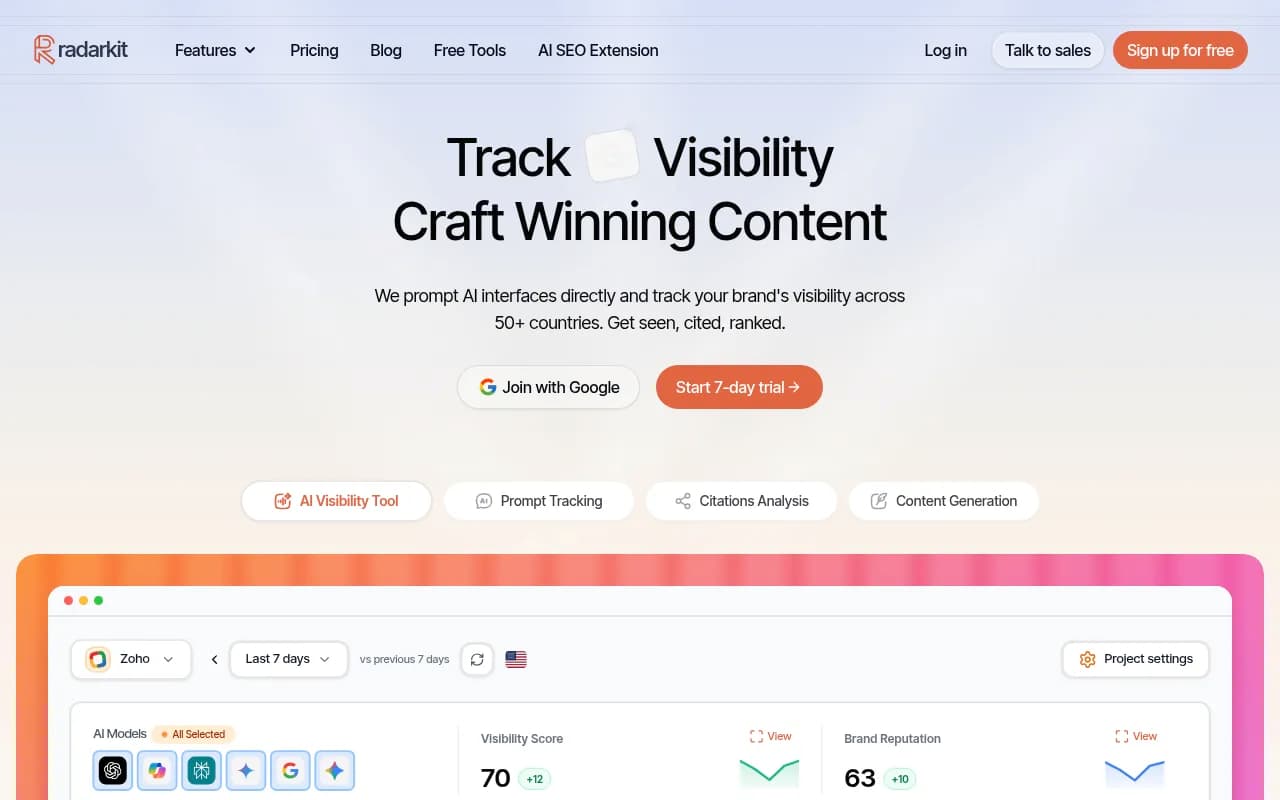
It covers the core monitoring features -- brand mentions, citation tracking, competitor benchmarking -- and the multi-client structure is genuinely better thought out than most tools that bolt on agency features as an afterthought.
8. LLMrefs -- best free/low-cost starting point
LLMrefs is one of the most accessible entry points in the market. It tracks brand visibility and rankings across ChatGPT, Perplexity, and other engines, and has a free tier that's actually useful for getting a baseline read.
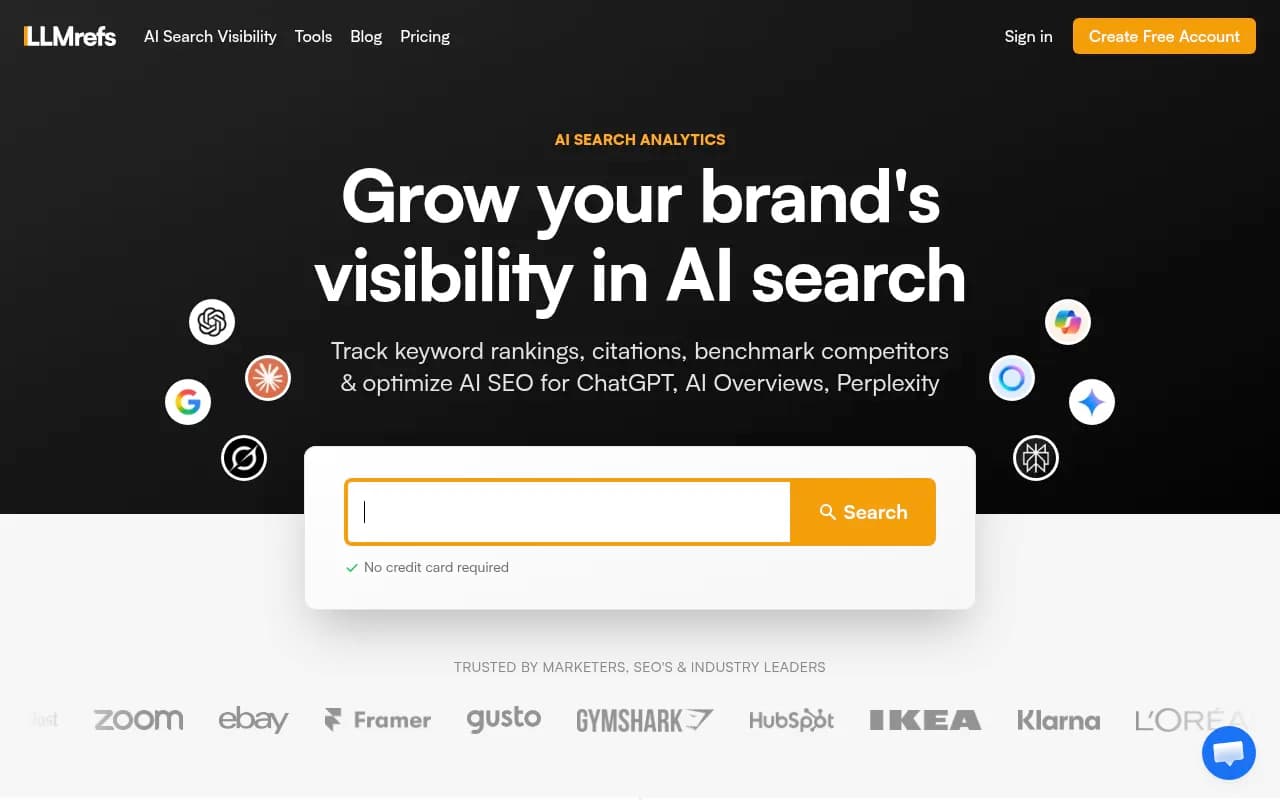
For startups, indie makers, or anyone who wants to understand AI visibility before committing budget to a paid platform, LLMrefs is a sensible first step. It won't replace a proper monitoring platform as you scale, but it's a low-risk way to start.
9. Writesonic -- best for content-led GEO workflows
Writesonic has evolved from an AI writing tool into a broader GEO platform that combines visibility tracking with content optimization workflows. It's positioned for enterprises and marketing teams that want actionable insights tied directly to content creation.
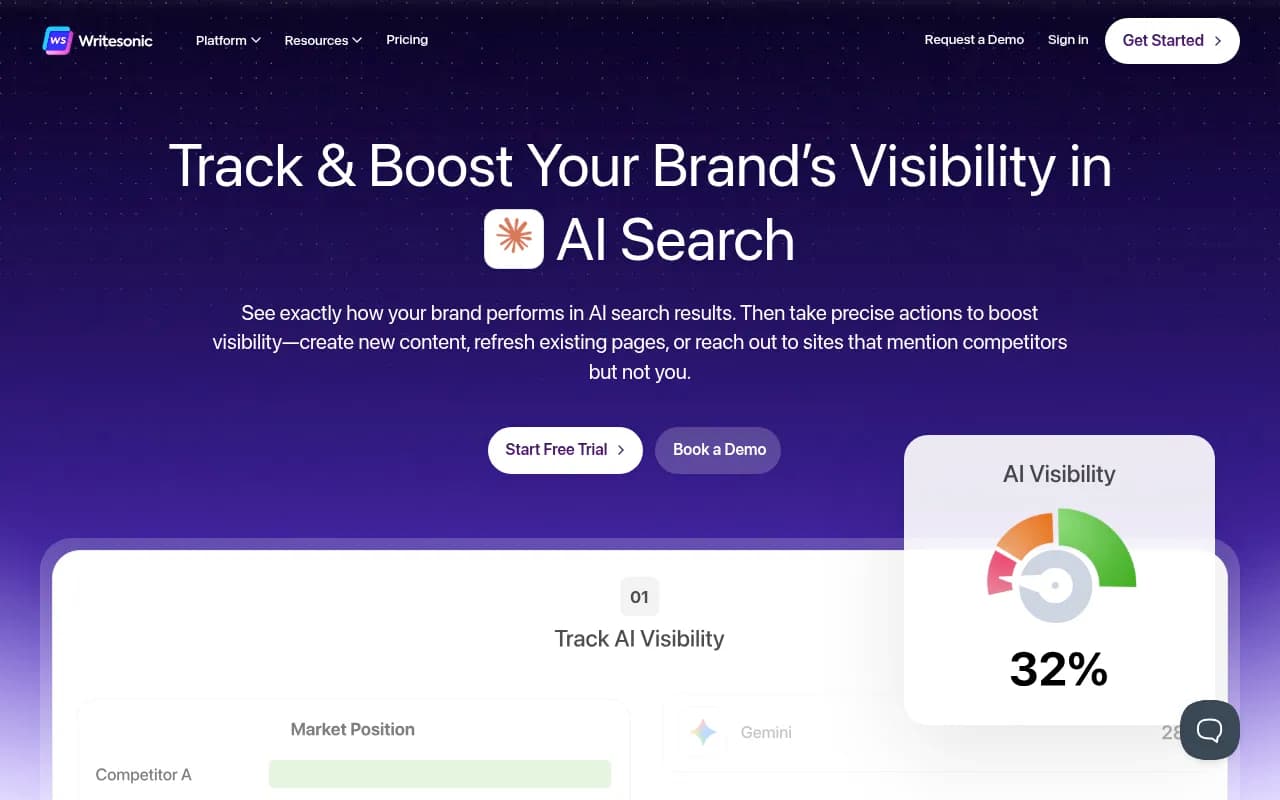
Starting at $199/mo, it sits in a similar space to Promptwatch but with a stronger heritage on the content creation side and a thinner feature set on the monitoring and attribution side. Worth evaluating if your primary workflow is content-first.
10. AthenaHQ -- best for structured monitoring without the noise
AthenaHQ covers 8+ AI search engines and has a clean interface that's easy to navigate without a lot of setup. It's monitoring-focused but does it well -- the data is reliable and the competitor comparison views are clear.
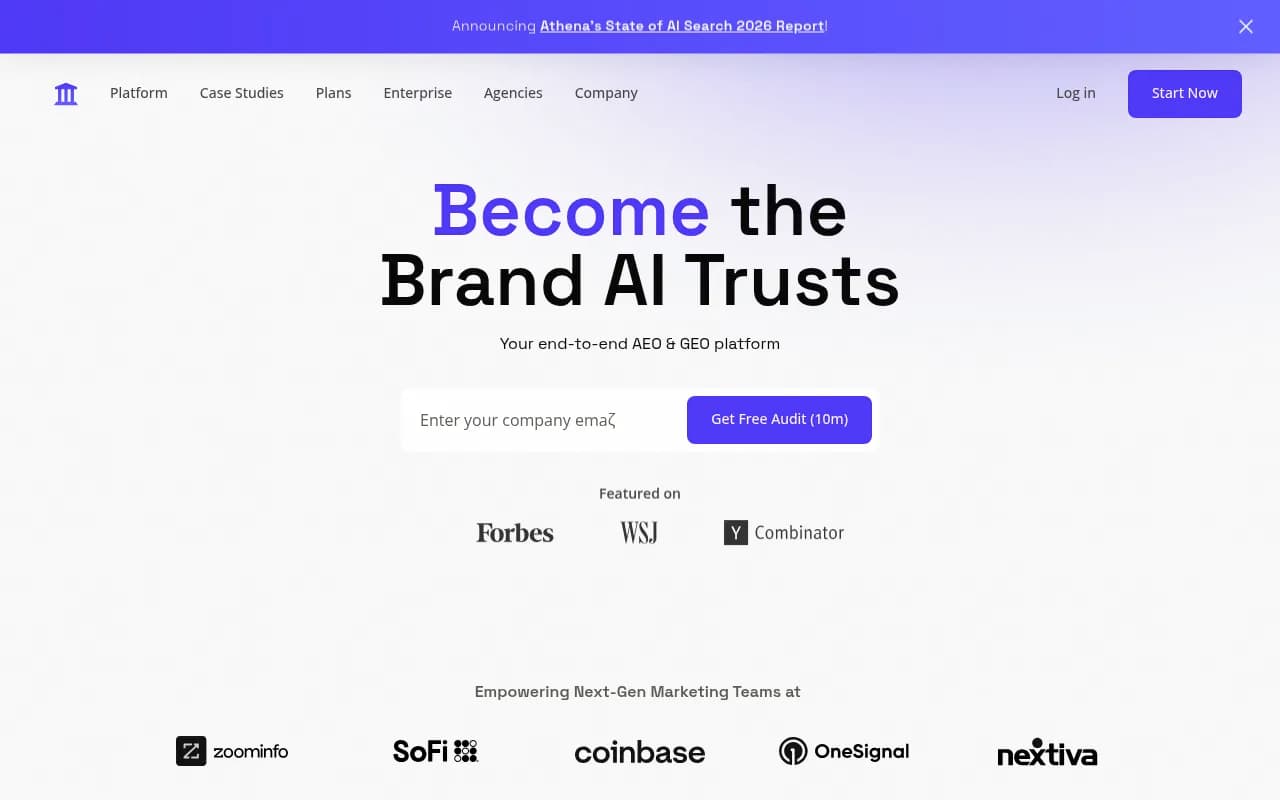
The gap is on the action side: no content generation, no crawler logs, no traffic attribution. But if you want a solid monitoring foundation and plan to handle content strategy separately, AthenaHQ is a reasonable choice.
Side-by-side comparison
| Tool | Starting price | AI engines covered | Content generation | Crawler logs | Traffic attribution | Best for |
|---|---|---|---|---|---|---|
| Promptwatch | $99/mo | 10+ | Yes | Yes | Yes | Full-cycle optimization |
| Otterly.AI | $29/mo | Multiple | No | No | No | Budget GEO monitoring |
| Peec AI | €89/mo | Multiple | No | No | No | Cross-engine share of voice |
| Profound AI | $99/mo+ | Multiple | Partial | No | No | Enterprise governance |
| SE Visible | $189/mo | Multiple | No | No | No | SE Ranking users |
| Scrunch AI | Low | Multiple | No | No | No | Solo/pilot use |
| Radarkit | Varies | Multiple | No | No | No | Agency multi-client |
| LLMrefs | Free tier | ChatGPT, Perplexity | No | No | No | Free starting point |
| Writesonic | $199/mo | Multiple | Yes | No | No | Content-led GEO |
| AthenaHQ | Varies | 8+ | No | No | No | Clean monitoring dashboard |
| Nightwatch | $39/mo + add-on | Limited | No | No | No | Traditional SEO + basic AI |
The monitoring-only trap
One pattern worth naming directly: most of the tools in this space are monitoring dashboards. They show you data. They tell you your brand appeared in 23% of relevant prompts last month, down from 31% the month before. They show you a competitor is outperforming you.
Then they stop.
What do you do with that? You need to figure out which content to create, write it, publish it, and then wait to see if it moves the needle -- all outside the tool. That's a lot of manual work, and it's where most GEO programs stall.
The tools that go beyond monitoring -- Promptwatch being the clearest example, Writesonic and Profound to a lesser extent -- are trying to close that loop. They don't just show you the gap; they help you fill it and then measure whether it worked.
That distinction matters more as AI search becomes a bigger part of how people find products and services. Monitoring your AI visibility is table stakes. Improving it is the actual job.
Which tool should you choose?
The honest answer depends on where you are and what you need.
If you're just getting started and want to understand your baseline, LLMrefs (free) or Otterly.AI ($29/mo) are low-risk entry points. You'll get a read on where you stand without a big commitment.
If you're an agency managing multiple clients, Radarkit's multi-client structure or Promptwatch's agency plans are worth a closer look. The reporting workflows matter a lot at scale.
If you're a mid-market brand that wants to actually improve AI visibility rather than just track it, Promptwatch is the most complete option. The combination of gap analysis, content generation, crawler logs, and traffic attribution means you're not just watching the numbers -- you're moving them.
If you're at an enterprise with compliance requirements and content ops workflows, Profound is the most mature option in that lane.
And if you're already deep in the SE Ranking ecosystem, SE Visible is the path of least resistance.
Nightwatch isn't a bad tool -- it's just not built for this job. The AI add-on is a starting point, not a strategy. If AI search visibility matters to your business in 2026, it deserves a dedicated platform.