Key takeaways
- AI citation behavior can flip overnight. Promptwatch's own data shows Reddit's share of ChatGPT citations fell from roughly 3.8% to under 1% in a single day on August 14, 2026, and ChatGPT's average citations per response dropped about 27% within 24 hours of the GPT-5.3 rollout in March 2026.
- Refresh cadence varies wildly by tool. Profound and Goodie AI advertise hourly or daily refresh; Ahrefs Brand Radar refreshes most LLM citation data monthly, which means it can miss an overnight cliff entirely.
- Weekly or monthly snapshots can misattribute a one-day event to the wrong week, which wrecks any attempt to tie a content change to a visibility change.
- Fast detection alone doesn't fix anything. Pair a quick-refresh tracker with a tool that turns the alert into an actual content or technical fix, which is where most pure monitoring tools stop short.
- Platform matters as much as tool choice: a Reddit citation drop that's a cliff on ChatGPT might be a slow drift on Google AI Overviews, so check engine-by-engine, not just an aggregate score.
Why detection speed is the whole game in GEO
Here's the thing nobody tells you when you buy a GEO tool: the AI platforms themselves move in ways that have nothing to do with your content. Promptwatch's analysis of ChatGPT Search around the GPT-5.3 rollout found that average citations per response dropped from roughly 6.4 to 4.7-4.9 within a single day, and never recovered over the following month. That's not a ranking drop you caused. It's a platform-wide squeeze on how many citation slots exist at all.
A few weeks later, something stranger happened. Reddit's citation share inside ChatGPT Search had been steady around 3.8% for most of July and early August 2026. Then on August 14, it collapsed to under 1%, settling at a 0.5% average, an 86% relative drop, in one day according to Promptwatch's Reddit citation tracking. Meanwhile the same Reddit decline inside Google AI Overviews was gradual, down about 11% over the same window, and AI Mode drifted down about 30% slowly rather than falling off a cliff.
That split matters for this ranking. A tool that only checks AI Overviews weekly would eventually catch the Google drift. The same tool checking ChatGPT weekly would completely miss the one-day cliff and report it, incorrectly, as a trend that developed sometime in the preceding seven days.
There's a third example worth knowing. On August 8, 2026, ChatGPT Search started using the site: operator at scale, jumping from about 0.4% to roughly 17% of all fanout queries overnight, with searches per response nearly doubling the same day, per Promptwatch's fanout data. Domain-rank citation share moved in lockstep: the highest-authority domains (DR 91-100) fell from about 7% to 5% on that same day, then to 3% less than a week later, per Promptwatch's domain-rank citation data. These aren't slow drifts you can catch with a monthly report. They're step functions.
If you want the free version of this intelligence before paying for any tool, Promptwatch's research hub at promptwatch.com/data publishes this kind of citation-share and crawler data on a rolling basis, which is worth bookmarking regardless of which tracker you end up buying.
How we ranked these tools
This isn't a ranking of overall feature depth (that list looks different). It's narrowly about one question: how fast does the tool tell you something changed? We weighed three things:
- Published refresh cadence per AI engine, since several vendors tier this (daily for Google, monthly for ChatGPT, for example).
- Alerting mechanism. A fast refresh with no alert still requires you to log in and notice. Instant or same-day notifications count for more than a dashboard you have to remember to check.
- Consistency across engines. A tool that's hourly on one platform and monthly on another only protects you on the fast lane.
The ranking: fastest to slowest
1. Profound: hourly refresh, instant alerts
Profound is the fastest dedicated GEO tool we found data on. It claims hourly data refresh across tracked prompts and platforms, with instant citation alerts when visibility changes. In a direct comparison Profound published against Ahrefs Brand Radar, the contrast is stark: Profound updates hourly, Ahrefs updates most LLM data monthly. If same-day detection of a citation cliff is your top priority and budget isn't the constraint, Profound is the benchmark everyone else gets measured against.
2. Promptwatch: real UI monitoring with crawler-level context
Promptwatch approaches detection speed differently from pure trackers. Its Agent Analytics log AI crawlers like ChatGPTBot, ClaudeBot, PerplexityBot, and GoogleOther in real time, which means you can often see a crawl-to-citation problem forming before it ever shows up as a citation drop in a weekly report. Combined with daily prompt tracking across ChatGPT, Gemini, Claude, Perplexity, Grok, and Google AI Overviews and AI Mode, plus Unified Actions that flag what changed and why, it's built for the kind of overnight shift this article is about rather than a quarterly check-in. The Agent Chat feature lets you ask "what changed since yesterday" directly against your live data instead of digging through a dashboard.

3. Goodie AI: daily refresh, enterprise retail focus
Goodie AI refreshes daily, a tier down from Profound's hourly cadence in a head-to-head comparison that specifically listed "Data Refresh: Hourly [Profound], Daily [Goodie]." It's aimed at retail and CPG brands tracking shopping assistants, and the $479/month starting price reflects that enterprise focus.
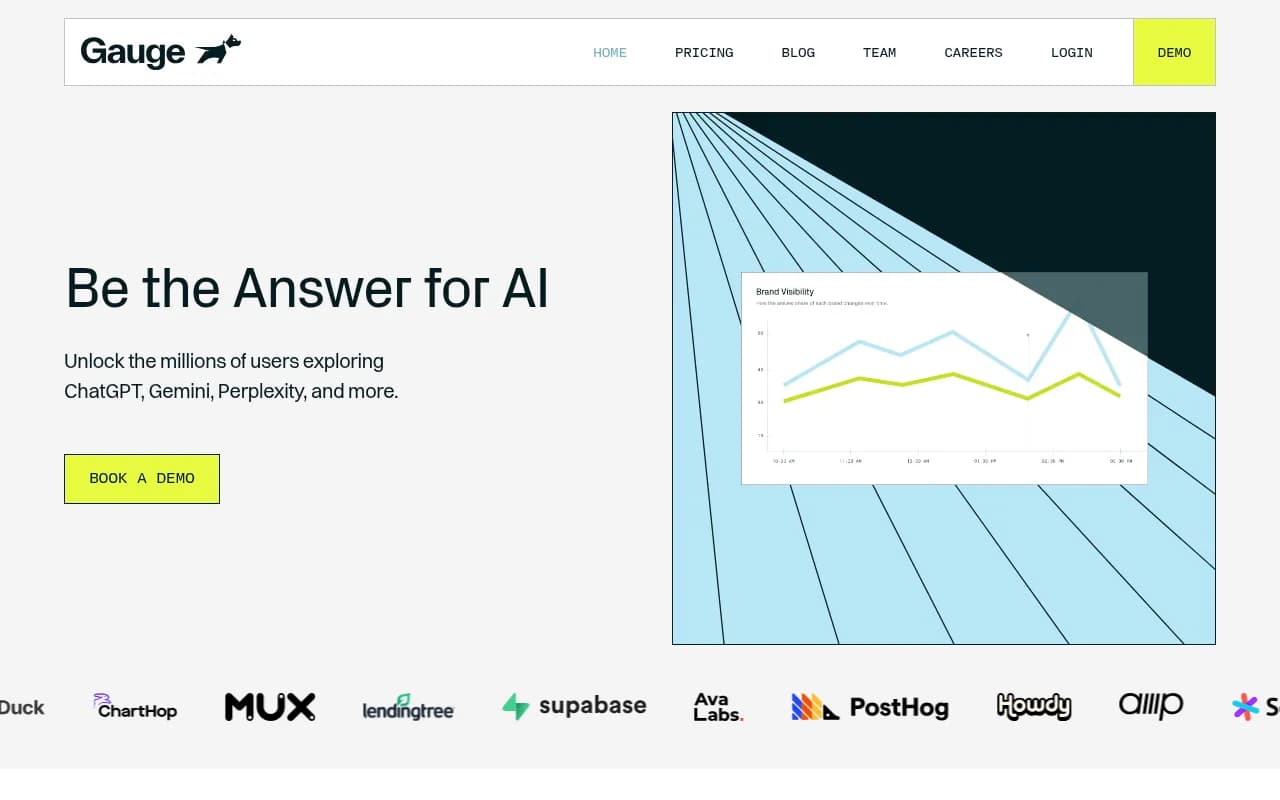
4. Gauge: daily refresh, high prompt volume
Gauge refreshes daily and runs up to 600 prompts a day across six platforms (ChatGPT, Google AI Overviews, AI Mode, Gemini, Perplexity, Microsoft Copilot), which works out to 108,000 answers a month at full volume. The daily cadence puts it in the same bracket as Goodie, just at a different price point ($599/month, 7-day trial).
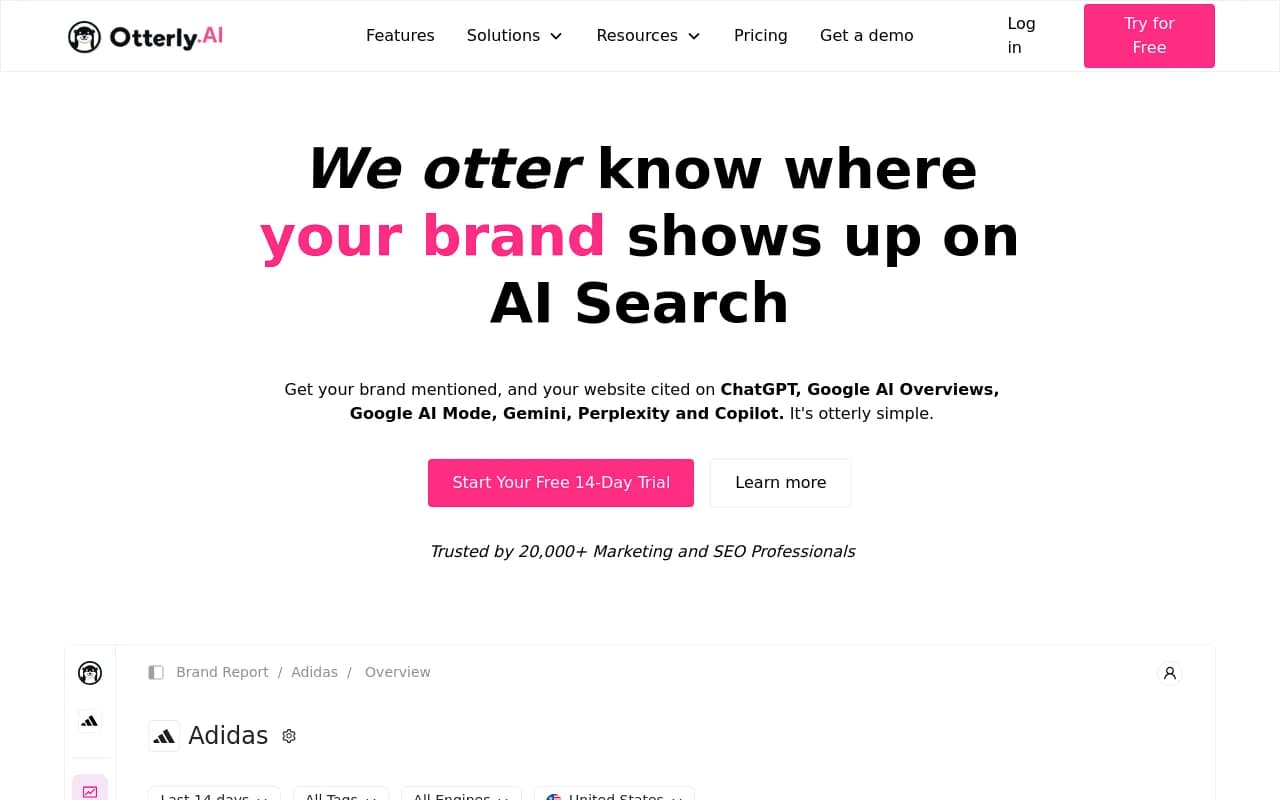
5. Otterly.AI: daily tracking, same-day alerts, cheapest entry point
Otterly.AI tracks daily across its plans and is marketed specifically around "instant alerts on visibility drops" when a competitor displaces you, rather than waiting for an end-of-month report. At $29/month for the Lite tier, it's the cheapest tool on this list that still refreshes daily, which makes it a reasonable starting point for teams that can't justify enterprise pricing but still need same-day visibility into a drop.
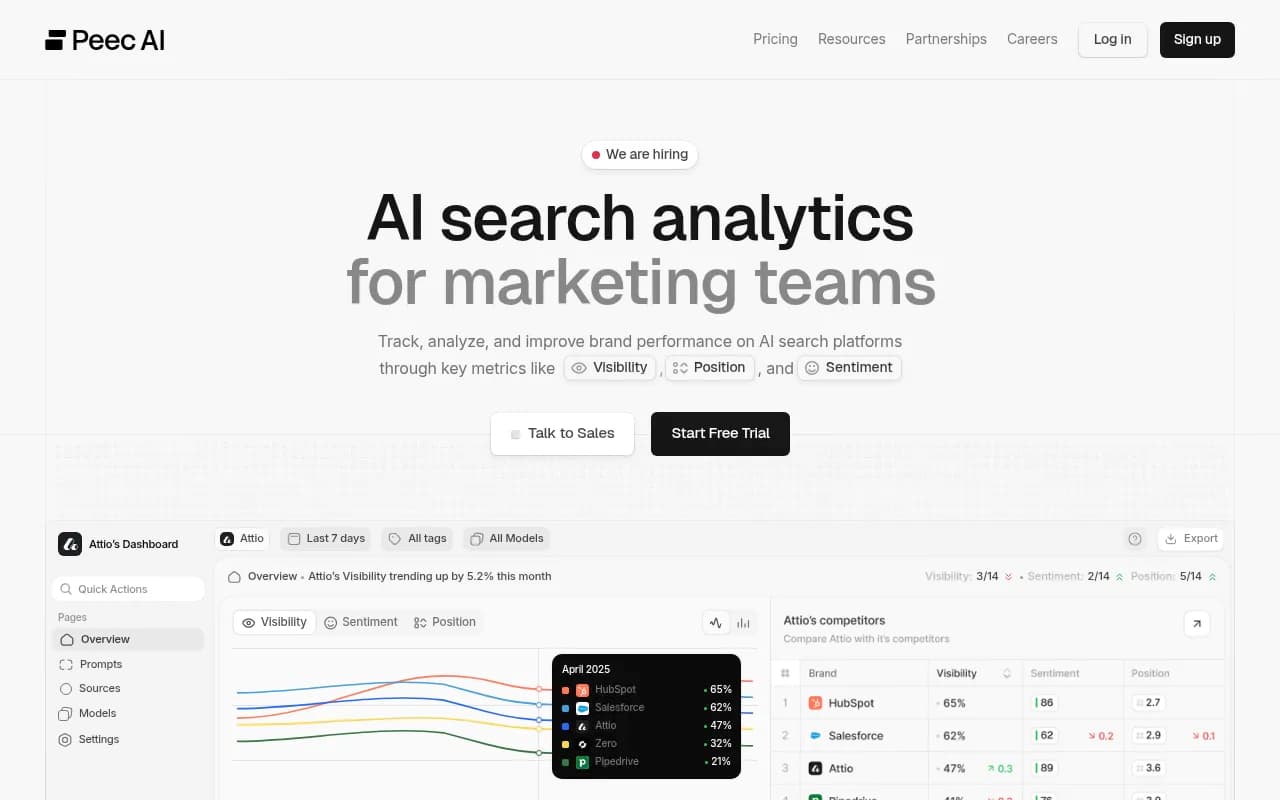
6. Peec AI: daily refresh across tiers
Peec AI refreshes daily on all plans, with the Enterprise tier able to choose between daily or weekly depending on how much prompt volume you need against it. Starting around $95/month for 50 prompts, it sits in the mid-market bracket with multilingual tracking as a specific strength.
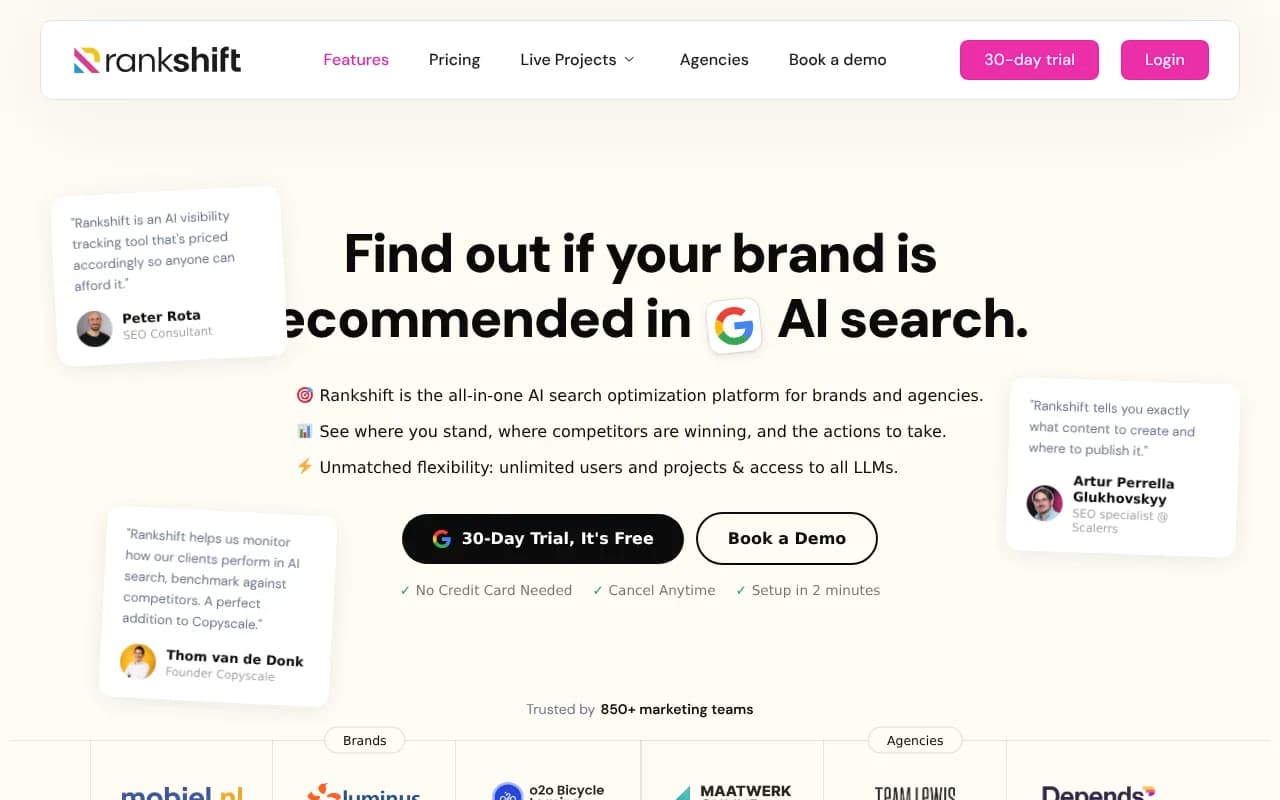
7. Rankshift: daily or weekly, user's choice
Rankshift is one of the few tools that hands you the refresh-speed decision directly: daily or weekly, depending on plan, with 150 to 850 prompts a day across tiers. That flexibility is useful if you're running a fast-moving category where you need daily checks on a handful of core prompts, but can tolerate weekly on a long tail of less volatile queries.
8. Semrush AI Visibility Toolkit: fast on paper, inconsistent in practice
Semrush is a harder one to pin down. Its marketing says the prompt database updates daily on a rolling basis and reports can run up to 300 times a day. A separate Semrush support document, though, states the underlying Brand Performance Database updates weekly. That's a meaningful gap if you're relying on the tool to catch an overnight citation cliff like the one Promptwatch documented in August 2026. Confirm with Semrush support which specific metric you're looking at before you trust a day-over-day comparison.
9. Rankscale: periodic, not fixed-daily
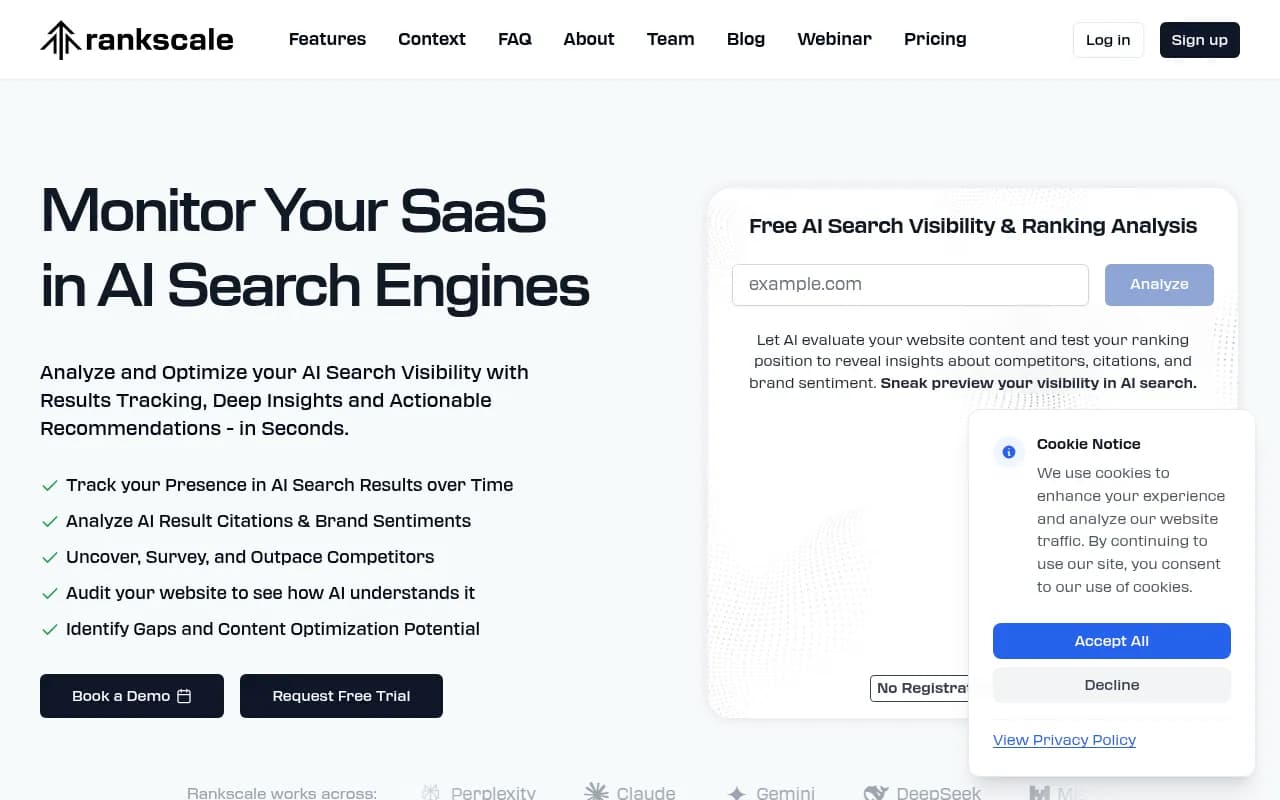
Rankscale's refresh cadence is described by third-party reviewers as "periodic" rather than a committed daily schedule, and it's credit-based rather than refresh-based, so you're trading volume against frequency manually. It's a reasonable budget option for teams that want control over what gets checked and when, but it's not built for same-day drop detection.
10. Ahrefs Brand Radar: the slowest tool on this list
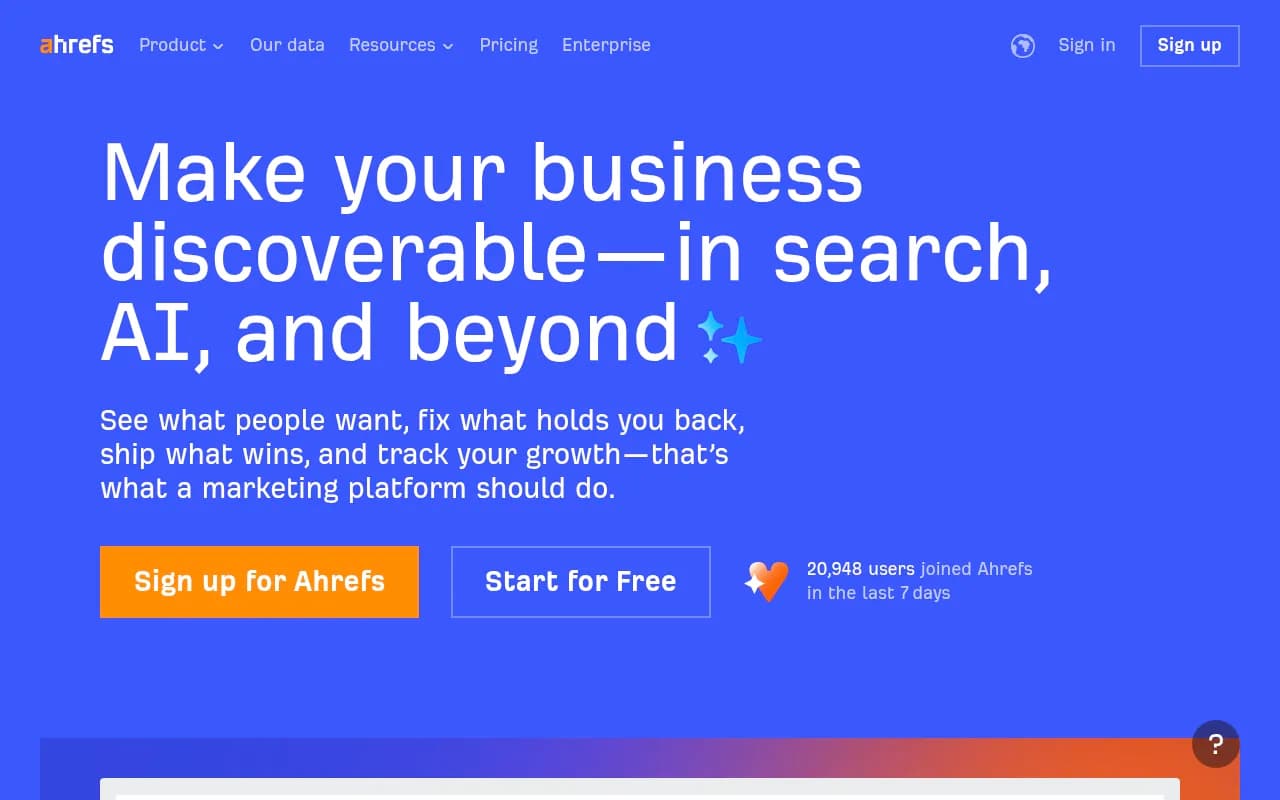
Ahrefs Brand Radar's cadence depends entirely on which engine you're looking at. Google AI Overviews refreshes frequently, but ChatGPT, Perplexity, Gemini, and Copilot are refreshed monthly, using a 90-day reporting window for stability. That's a deliberate tradeoff for prompt-volume scale rather than speed, and Ahrefs is upfront about it. But given that Promptwatch's data shows ChatGPT citation behavior can move in a single day, a monthly refresh on exactly that platform means Brand Radar will, by design, miss the kind of events this article is built around until weeks after they happen.
Comparison table: refresh speed at a glance
| Tool | Refresh cadence | Alerting | Starting price | Best for |
|---|---|---|---|---|
| Profound | Hourly, all platforms | Instant | $99/mo | Fastest possible detection |
| Promptwatch | Daily prompts + real-time crawler logs | Unified Actions, Agent Chat | $95/mo | Detection plus the fix |
| Goodie AI | Daily | Standard dashboard | $479/mo | Retail/CPG shopping assistants |
| Gauge | Daily | Standard dashboard | $599/mo | High daily prompt volume |
| Otterly.AI | Daily | Instant drop alerts | $29/mo | Lean teams, budget monitoring |
| Peec AI | Daily (weekly optional on Enterprise) | Standard dashboard | $95/mo | Multilingual visibility |
| Rankshift | Daily or weekly, user's choice | Standard dashboard | $92/mo | Flexible cadence per prompt set |
| Semrush AI Visibility Toolkit | Daily rolling prompts, weekly brand database (inconsistent) | Standard dashboard | Varies | Teams already on Semrush |
| Rankscale | Periodic, credit-based | Standard dashboard | $99/mo | Budget, manual control |
| Ahrefs Brand Radar | Monthly for most LLMs, frequent for Google AI Overviews | Standard dashboard | $398/mo | Large-scale prompt research, not speed |
What to actually do once a tool flags a drop
Detecting a drop fast is only half the job. I've seen teams get an instant alert and then spend three weeks arguing about whether it's real before doing anything. A few things worth checking the moment an alert fires:
- Is the drop isolated to one platform, or is it showing up across ChatGPT, Perplexity, and AI Overviews at once? If it's everywhere, it's probably not your content, it's the platform. Promptwatch's crawler logs are useful here because they tell you whether the AI bots even visited the page in question recently.
- Check whether a competitor suddenly got cited more, or whether the citation slots themselves just shrank (as happened platform-wide after the GPT-5.3 rollout). Those require very different responses.
- Look at the source type that dropped. If it's a format-level shift, say listicles losing share to product pages, that's a content strategy fix, not a technical one.
- If the drop coincides with a crawl error (4xx, timeout, blocked robots.txt) in your crawler logs, fix the technical issue first. No amount of content rewriting helps if the bot can't read the page.
This is where the gap between a tracker and an optimization platform shows up. A pure monitoring tool tells you the number moved. Promptwatch's Content Agents and Unified Actions turn that signal into a prioritized to-do list and, on the Professional and Business plans, can generate and publish the fix to your CMS directly rather than leaving you to translate the alert into a brief yourself.
A note on who should buy what
If you're a solo operator or small team watching one or two brands, Otterly.AI's daily refresh and instant drop alerts at $29/month cover the basics without breaking the budget. If you're running enterprise-scale monitoring across dozens of prompts and need the fastest possible signal regardless of cost, Profound's hourly refresh is the gold standard. If you want detection plus the work of actually fixing what dropped, without hiring a second platform to generate content briefs, Promptwatch's combination of daily prompt tracking, real-time crawler logs, and automated content publishing covers more of the loop than any pure tracker on this list.
For teams still shopping, the GEO software directory at bestgeosoftware.com is a good place to compare more options side by side, and the agentic SEO tools directory at agenticseotools.com is worth a look if you want tools that go further than monitoring into actually executing fixes.
Frequently asked questions
How often should I check my AI visibility if I'm not using a paid tool?
Manually, at minimum weekly, across your top five or ten prompts in ChatGPT, Perplexity, and Google AI Overviews directly. That won't catch a one-day cliff, but it's better than checking monthly, and it's free.
Is a fast refresh rate worth paying extra for?
It depends on your category's volatility. If you're in a space where AI platforms are actively changing how they fetch and cite sources, which has been true for most of 2026 according to Promptwatch's tracking, a slow refresh means you'll consistently misread the timing of real events. If your category is stable, monthly tracking might genuinely be enough.
Can a tool detect a drop before it happens?
No tool predicts platform-level model changes. What a good crawler-log feature can do is show you early warning signs, like a sudden drop in crawl frequency or a spike in errors, before the citation count itself falls.
Do all GEO tools track the same AI engines?
No. Coverage is usually tiered, and some vendors advertise Claude, Grok, or Copilot at the platform level but only unlock them on higher-priced plans. Always check the entry-tier engine list before comparing price, not just the headline feature page.
Where can I find more objective data on how AI platforms are shifting?
Promptwatch publishes ongoing citation-share and crawler research at promptwatch.com/data, updated monthly, which is a reasonable independent check against whatever your tracking tool reports.