Key takeaways
- AI engines pick agents based on verifiable local data: a clean Google Business Profile, consistent name/address/phone, recent reviews, and plain pages saying who you are and where you work.
- Most GEO tools are dashboards. For a brokerage, the useful ones show you which sources AI cites and then help you fix the gap, not just report a score.
- Solo agents can start with a cheap tracker plus a local listings tool. Brokerages with many offices and agents need prompt tracking by location, review and listings management, and some way to publish content.
- Real estate is a low-AI-Overview sector, so ChatGPT, Gemini and Perplexity matter as much as Google for agent discovery.
- Treat vendor stats (from agencies that sell GEO services) as claims, not facts. Verify with your own tracking.
Why real estate needs its own GEO approach
A seller used to Google "best realtor near me" and scroll through ten blue links plus a map pack. Now they ask ChatGPT, Gemini, Claude or Perplexity and get two or three names back. If you are not one of them, you did not lose a ranking position. You lost the whole conversation.
Real estate is a strange category for AI search. It is local, reputation-driven, and full of aggregators. A third-party roundup citing Conductor's 2026 research puts real estate at the lowest AI Overview rate of ten sectors studied, at 4.48%. I could not verify that against Conductor directly, so take it as directional. The practical reading: Google AI Overviews are not the main threat to agents yet, but chat assistants are where a growing share of "who should I hire" questions go.
An agency report from FlyDragon claims ChatGPT accounts for 42.1% of AI-driven agent discovery, with Gemini at 10.3% and Claude at 6.2%. It is a vendor selling AI SEO to agents, so I would not build a budget around those exact numbers. The direction is believable, though. Most of the action is in ChatGPT.
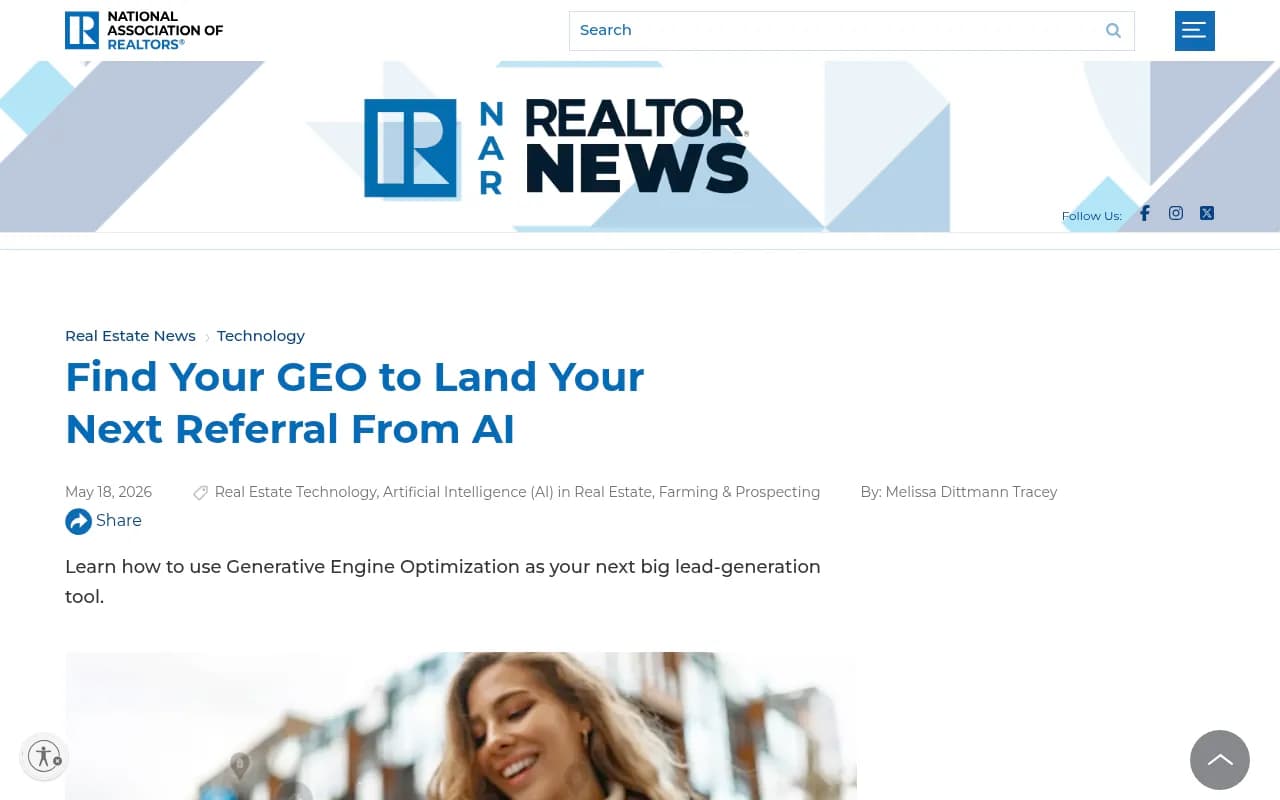
The National Association of Realtors has published its own piece on finding your GEO to land your next referral from AI, which tells you the topic has moved from SEO-nerd territory into mainstream agent education.
What AI engines actually reward in real estate
Before picking tools, know what you are trying to move. Promptwatch's data on ChatGPT citations (Sep 28 to Oct 4, 2026) is useful here. In its report on which content types ChatGPT cites:
- Product pages were 22.4% of classified citations and landing pages 16.8%, so about 39% go to pages describing what a company sells. For an agent, that means your service pages and area pages.
- Listicles took 13.6%. Getting into "best realtors in [city]" roundups matters.
- For branded prompts like "is [agent] good," reviews rise to 5.6%, more than three times their share across all prompts. FAQ pages reach 4.8%.
- Commercial prompts such as "best X" send almost 70% of citations to product pages, landing pages, listicles and comparisons.
The report's own advice is to get listed in the best-of roundups ChatGPT cites, collect reviews on trusted sites, and add an FAQ page that answers common questions. That maps neatly onto an agent's job.
Promptwatch's sources per response data (a September 2025 page, so treat it as indicative) says ChatGPT cites about 5 sources per web-search answer while AI Overviews and Perplexity cite about 10. Fewer slots in ChatGPT means more competition for each one.
A caution on local ranking weights. BulletProof, an agency that sells to agents, claims Google Business Profile is 32% of local ranking and reviews 20%. Those are vendor figures. The underlying point holds up: GBP, reviews and consistent business data are the foundation. Do that work before paying for any dashboard.
The four jobs a real estate GEO stack has to do
I find it easier to think in jobs than in tool names.
- Measure: track the prompts a buyer or seller would actually type, by city or neighborhood, across several AI engines.
- Trace: see which sources AI cites for those prompts (Zillow, Realtor.com, local news, Reddit, your own site).
- Fix the record: listings, reviews, profile data, schema.
- Publish: neighborhood pages, FAQs, market reports that AI can quote.
No single tool in the catalog does all four for a small agent at a low price. Brokerages have more budget and more pain, so they can justify a platform that spans measuring and publishing.
AI visibility platforms worth considering
Promptwatch
Promptwatch is the end-to-end option here. It tracks how ChatGPT, Gemini, Claude, Perplexity, Google AI Overviews and AI Mode, and Copilot mention and cite you, then shows where the citations come from and helps fix gaps. For a brokerage, the relevant pieces are local tracking (Business plan and up can pin a monitor to exact coordinates so ChatGPT and Google's AI surfaces answer as if asked from that spot), state and city tracking, personas so you can prompt like sellers versus first-time buyers, and the Content Agent that drafts and publishes neighborhood and FAQ pages to WordPress, Webflow or Framer.

It also has IP-verified AI crawler logs, which answer an annoying question: is ChatGPT's bot even reading my IDX site? Many IDX-heavy sites render listings in ways crawlers fail on, and that is the kind of thing you want to know before writing 40 neighborhood pages. Brokerage owners will care about Brand Narrative too, which pulls out the individual claims AI makes about your firm ("high commission," "great for first-time buyers") and scores them by theme.
Pricing, confirm at promptwatch.com/pricing: Essential is $95/mo (50 prompts), Professional is $245/mo (150 prompts, crawler logs), and Business is $579/mo (350 prompts, the automated Content Agent, state/city tracking and local targeting). Agencies serving real estate clients can look at the Kick-off ($199), Growth ($399) and Scale ($799) plans. There is a 7-day free trial on monthly billing, and a free AI visibility report if you just want a first look.
Honest take: Essential and Professional are fine for a small team. If you want the Content Agent or city-level tracking, you need Business, which is a real jump for a solo agent. A solo agent probably does not need it. A 50-agent brokerage almost certainly gets there fast.
OtterlyAI
Otterly.AI is the cheap entry point. Its listed tiers (checked Oct 1, 2026 by a third party) are Lite at $29/month for 15 prompts, Standard at $189/month for 100 prompts, and Premium at $489/month. It is a monitor. It will tell you whether you show up, but not write the neighborhood page that fixes it.

Peec AI, Profound and others
Peec AI is another monitoring-focused option, while Profound is enterprise-priced with custom quotes and aimed at large brands. For a national brokerage or franchise, Profound is worth a demo. For one local team it is more than you need. I did not verify current pricing for either, so ask for quotes.

Tibly
Tibly is pitched at AI visibility for local businesses. I have not tested it against real estate prompts, so I would trial it with ten of your own neighborhood queries and see whether the output is useful before committing.

Semrush and Ahrefs Brand Radar
If you already pay for an SEO suite, Semrush and Ahrefs Brand Radar add AI tracking cheaply. The tradeoff is fixed prompt sets and thinner AI-specific data. Fine as a second opinion.

Free checks to start with
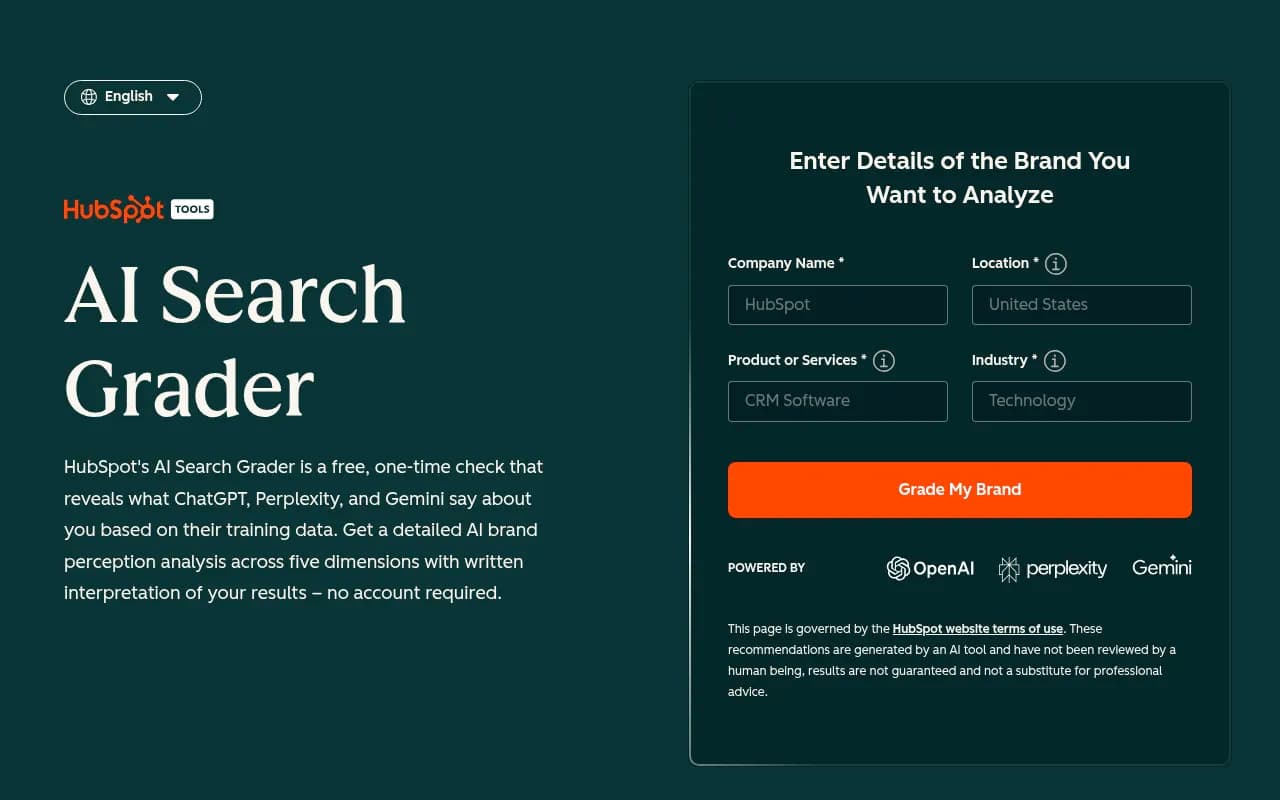
Before paying anyone, run a few free checks. AnswerGist, HubSpot AI Search Grader and RightChoice.Ai give you a quick read. These are one-off diagnostics. They tell you where you stand, not how to change it.

Local data, listings and reviews tools
This is where real estate GEO is won or lost, and where I think agents waste the least money. AI engines need to verify who you are. Mismatched name, address or phone across the web is the most common reason a business gets quietly skipped. BulletProof claims 74% of businesses get excluded over mismatches. That number is promotional, but the failure mode is real.
- BrightLocal: local SEO audits, citation checks, review tracking. Good for single-office agents and small teams.
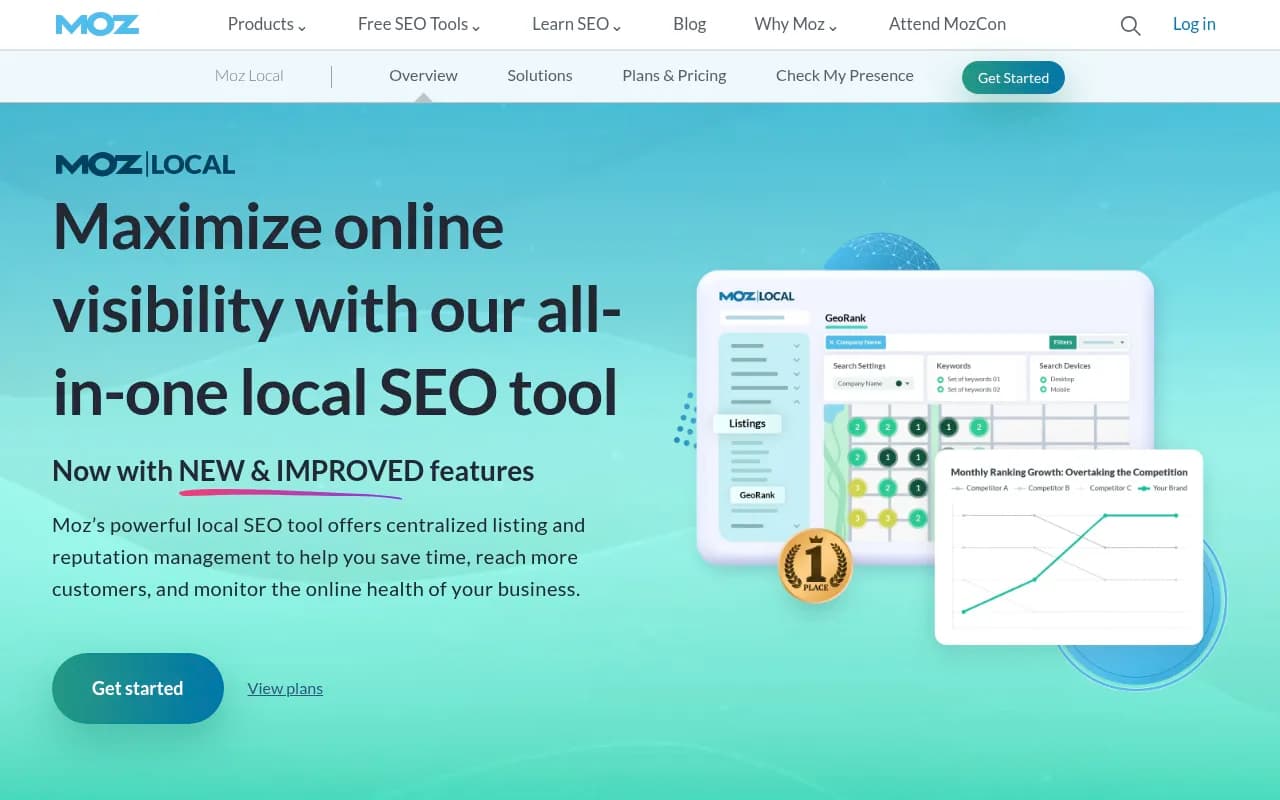
- Moz Local: sync your listings everywhere and keep them consistent.
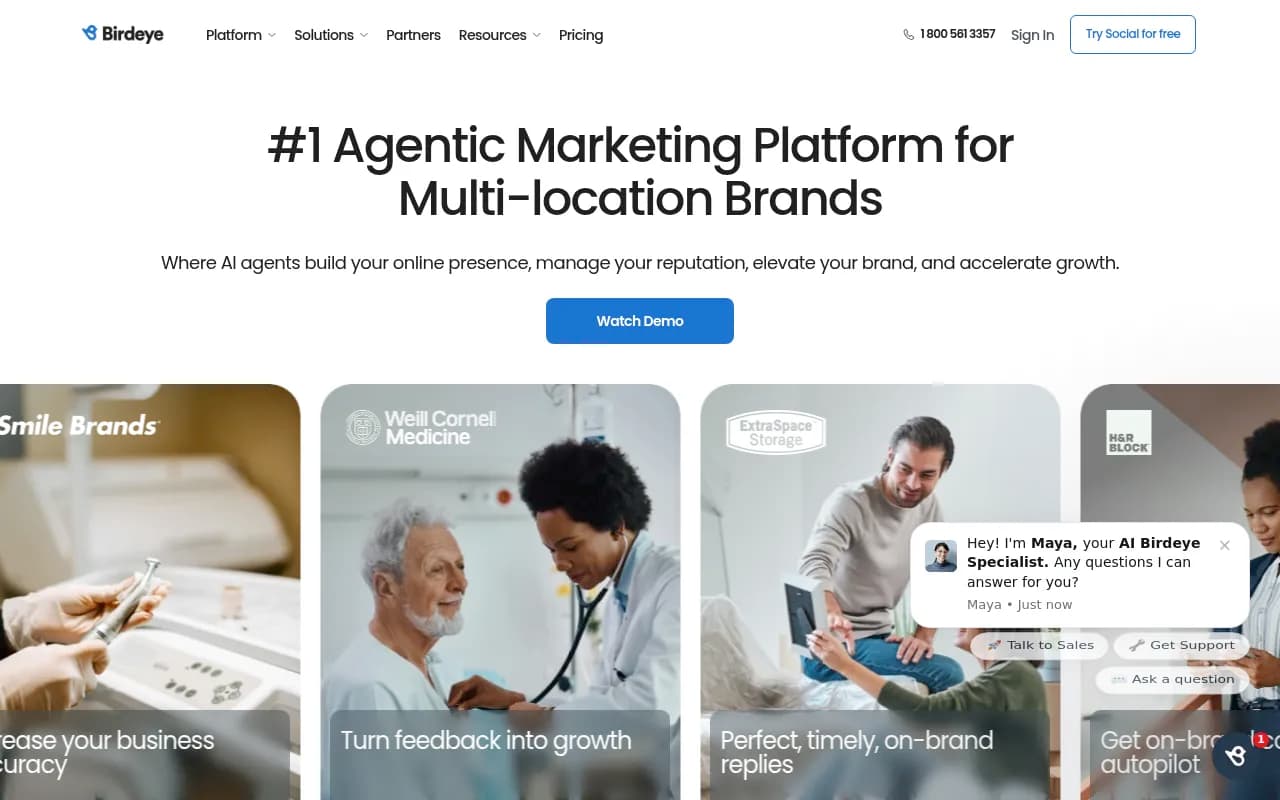
- Birdeye: reputation and review collection for multi-location businesses. Brokerages with several offices get more from this.
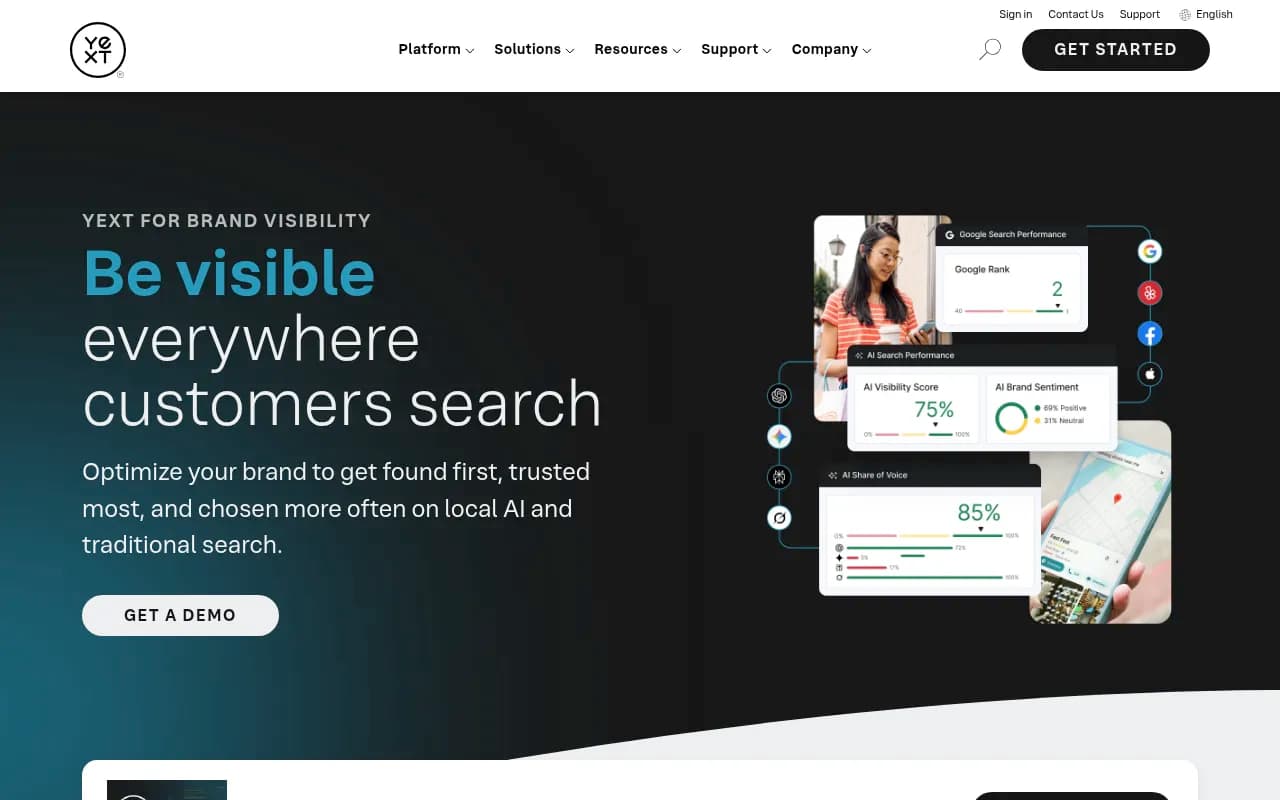
- Yext and Uberall: enterprise-scale listings and location data for franchises.
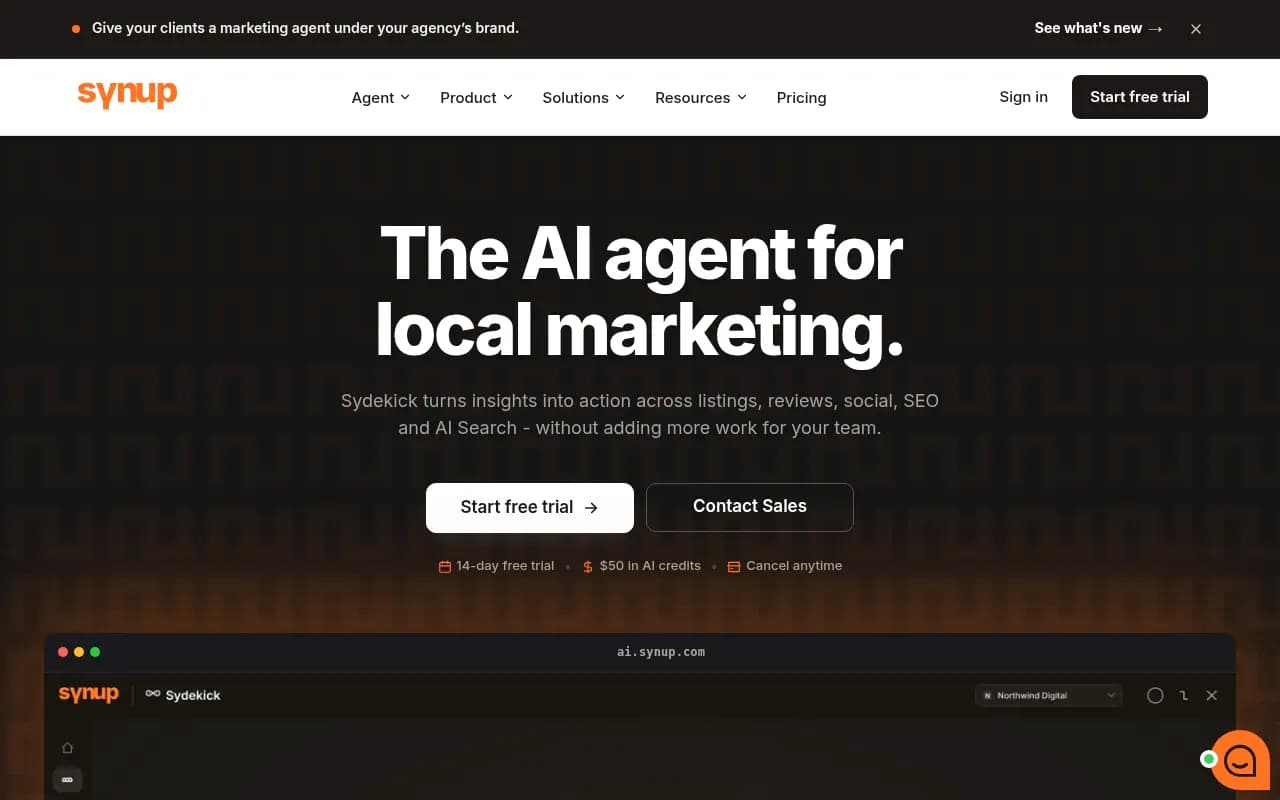
- Synup: listings, reviews and local visibility with an AI agent layer.
- NiceJob: automated review and referral requests, which suits agents who forget to ask after closing.
Reviews matter doubly because ChatGPT's branded-prompt citations lean toward them. FlyDragon claims the industry average is 11 Zillow reviews and 3 Realtor.com reviews, versus 62 and 14 for the top 10%. Again a vendor benchmark, but it shows the bar is not high. Most agents lose by simply not collecting reviews on the platforms AI reads.
Content and technical tools
Neighborhood pages, market updates and FAQ pages are what AI quotes. A few tools help:
- Schema App for structured data on a larger site.
- Screaming Frog to crawl your IDX site and find thin or duplicate pages.
- Google Search Console, which is free and shows which neighborhood queries already get impressions.
- Clearscope or Surfer SEO for content optimization once you have a draft.
A word on AI-written neighborhood pages. Generic output saying "the community offers a vibrant mix of parks and restaurants" will not get cited. AI picks pages with specific, checkable facts: median days on market, school boundaries, HOA norms, the streets you have sold on. Whatever drafts the page, put your local data in it.
Real estate AI tools that are not GEO tools
A lot of "best AI tools for real estate" lists mix categories. MoxiWorks covers tools like BoldTrail, Follow Up Boss, Lofty and Rechat, and Perspective AI's roundup groups CRMs and transaction tools by workflow. These help with follow-up and lead conversion, not with being named by an AI assistant. They are worth having, but do not mistake them for GEO.
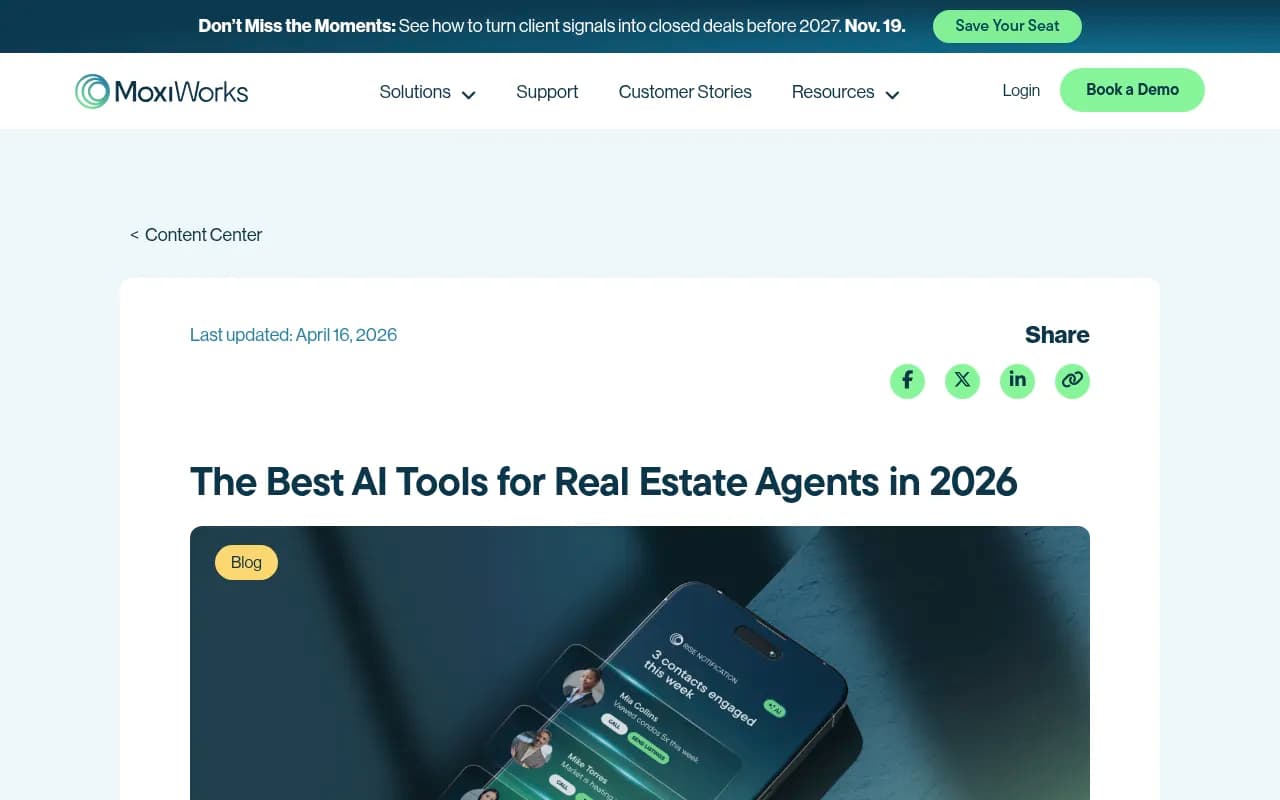
One stat from that guide stuck with me: 88% of buyers say they would use their agent again, yet only 13% do. If AI recommends you to the next person asking, that referral loop partly closes itself. That is the connection between CRM nurture and GEO.
Comparison table
| Tool | Best for | Core job | Notes |
|---|---|---|---|
| Promptwatch | Brokerages, teams, agencies | Measure, trace, publish | Local targeting and Content Agent on Business; Essential from $95/mo |
| Otterly.AI | Solo agents on a budget | Measure | Lite $29/mo, 15 prompts |
| Peec AI | Small teams | Measure | Monitoring only |
| Profound | Large franchises | Measure | Custom pricing |
| Tibly | Local-business trial | Measure | Test on real prompts |
| BrightLocal | Single office | Local data and reviews | Audits and citations |
| Birdeye | Multi-office brokerages | Reviews and reputation | Multi-location focus |
| Yext / Uberall | Franchises | Listings at scale | Enterprise pricing |
| NiceJob | Solo agents | Review requests | Simple automation |
| Schema App | Larger sites | Structured data | Needs some technical help |
Which stack for which agent
Solo agent or small team
Start with the free checks, fix your Google Business Profile, and make sure name, address and phone match everywhere. Add a review tool such as NiceJob. Then pick one tracker: Otterly at the low end, or Promptwatch Essential if you want the broader citation tracing. Track 20 to 30 prompts, such as "best realtor in [city]," "who should I hire to sell a house in [neighborhood]," and "is [your name] a good agent."
Brokerage with several offices
You have a coordination problem as much as a visibility one. Agents set up profiles inconsistently, and each office has its own review pile. Use a listings and reputation platform (Birdeye, Yext or Uberall, depending on size) and a GEO platform that tracks by city and lets you compare offices. Promptwatch's Business plan fits here with its local targeting and Content Agent. Use crawler logs to check that your IDX pages are readable by AI bots.
Agencies serving real estate clients
If you run client accounts, the agency plans on Promptwatch (unlimited projects, pitch projects) are worth a look, and the agency solutions page explains the setup. Browse the GEO software directory for alternatives if you want to compare.
What to ask before hiring a real estate GEO agency
BulletProof ranks eight agencies on its own page, with itself first, which is the obvious conflict. Its list includes Luxury Presence, First Page Sage, Pitched Agent, CiteVantage, AgentFire, InboundREM and GoFlyDragon. Treat any self-published ranking skeptically. Questions worth asking any agency:
- Which AI prompts do you track for my market, and can I see the raw responses?
- Do you do the weekly profile, review and data work, or hand me a report?
- How do you measure AI-referred leads, not just mentions?
- Is there a long-term contract?
If you want a transparent agency approach, 1001 SEO Media offers GEO and local SEO with no long-term contracts and monthly reporting, and it uses Promptwatch for AI visibility tracking. Hire whoever answers the questions above best, though.
A simple 30-day starting plan
- Week 1: audit name, address and phone across the web; claim and complete your Google Business Profile.
- Week 2: write down 25 prompts (agent discovery, agent verification, neighborhood, buyer and seller). Run them by hand in ChatGPT, Gemini and Perplexity and save the answers.
- Week 3: set up a tracker and compare. Note which sources get cited instead of you.
- Week 4: publish an FAQ page and two neighborhood pages with real local numbers, and start requesting reviews on the platforms that show up in citations.
Revisit monthly. For more tools by category, the AI rank tracking directory is a handy place to compare trackers.
Bottom line
For most agents the order of operations is: clean data, reviews, useful local pages, then measurement. For brokerages with real budget, a platform that traces citations and publishes fixes will save more time than a monitor. Start with a free check, pick the cheapest tool that answers your questions, and upgrade only when you hit a limit.