Key takeaways
- Developers ask models which library, API, or database to use. Your docs, GitHub presence, and reference pages matter more than your blog or landing pages.
- Most GEO tools were built for consumer brands tracking ChatGPT mentions. Dev tool teams also need crawler logs, citation sources, and visibility in coding agents like Codex and Claude Code.
- Promptwatch is the best all-round pick because it covers coding agent visibility, IP-verified AI crawler logs, citation analytics, and content actions in one platform.
- Lightsage is a young, devtool-specific option focused on coding agents and API usability. Its claims come from its own marketing and we could not verify them independently.
- Pure monitoring tools like Otterly and Peec work for a cheap brand check but will not tell you why you are or are not recommended.
Why developer tools are a different GEO problem
A consumer brand wants to be mentioned when someone asks for the best running shoes. A developer tool company wants to be recommended when an engineer asks "what's the best way to send transactional email from Node" and, increasingly, when a coding agent picks an SDK on the engineer's behalf.
Three things change.
Docs are the asset. Pepper Content makes the point well in its guide to GEO agencies for developer tools: docs, tutorials, and reference pages are what models retrieve, your blog is a distant second, and landing pages barely register. Accuracy is binary too. A deprecated API call in a code sample does more damage than publishing nothing.
The citation mix looks different. Promptwatch Data's ChatGPT citation report for software prompts (Sep 28 to Oct 4, 2026) found GitHub the most cited software domain at 1.2% of software citations, followed by learn.microsoft.com at 0.98% and G2 at 0.73%. Docs and help centers earned 2.64% across the charted domains, vendor sites 2.01%, and review sites and analysts 1.57%. Vendor sites plus docs earned about 3x what review sites and analysts did.
This report covers software prompts in general, not API prompts specifically, so treat it as a proxy. But the direction is clear: crawlable docs, a public GitHub presence, and complete G2 and Capterra profiles are the sources AI leans on.
Content type matters. In Promptwatch's citation share by content type data for the same week, product pages led at 22.4% and landing pages followed at 16.8%, with documentation at 7.5% overall and 8.5% for informational prompts. Docs are a smaller slice than you might expect, but the content half-life report shows landing pages and docs stay cited far longer than news, which loses half its pages within about 36 days.
The audience is partly non-human. Coding agents now recommend SDKs and read docs directly. A GEO tool that only watches ChatGPT answers misses that channel.
What to look for in a GEO tool as a dev tool company
- Coverage of coding agents (Codex, Claude Code, OpenCode), not just ChatGPT and Perplexity.
- AI crawler logs. If GPTBot or ClaudeBot hits an error on your docs, you will never be cited. Promptwatch's AI crawler traffic data shows OpenAI at 79.8% of verified AI crawler requests in the week of Aug 31 to Sep 6, 2026, down from 94.8% in June. If a provider is big in that chart but near zero in your logs, you are probably blocked.
- Citation analytics that show which of your pages, GitHub repos, and third-party posts get cited.
- Prompt-level data on what developers actually ask, including query fan-outs.
- A way to act on findings, not just a dashboard.
Comparison table
| Tool | Coding agent tracking | AI crawler logs | Content/action workflow | Best for |
|---|---|---|---|---|
| Promptwatch | Codex, Claude Code, OpenCode | Yes, IP-verified | Content Agent, Action Board | Dev tool teams that want to monitor and fix |
| Lightsage | Claims 12 coding agents (unverified) | Not confirmed | API performance testing | API companies testing agent usability |
| Profound | Not confirmed | Not confirmed | Monitoring-led | Enterprise brand monitoring |
| Otterly.AI | No | No | No | Cheap brand checks |
| AthenaHQ | No | No | Limited | Enterprise monitoring |
| Peec AI | No | No | No | Basic prompt tracking |
I have not verified pricing for any tool except where noted below, so check each vendor's pricing page before you commit.
1. Promptwatch: best overall for dev tool companies
Promptwatch is the one I would start with, mostly because it is the only platform in this list that covers both the human and agent sides of developer discovery and also closes the loop with action.

For dev tool teams, a few features carry most of the weight:
- Coding agent visibility. It tracks how Codex, Claude Code, and OpenCode recommend tools, SDKs, and docs, alongside ChatGPT, Google AI Overviews, Gemini, Perplexity, and Claude, using real user interfaces rather than only APIs.
- IP-verified crawler logs. Agent Analytics shows GPTBot, OAI-SearchBot, ClaudeBot, PerplexityBot, and others hitting your docs, which pages they read, and what errors they hit. Spoofed bots are filtered out. Integrations include Cloudflare, Vercel, Netlify, Fastly, CloudFront, and a WordPress plugin, which covers most docs hosting setups.
- Citation analytics. You can see which of your pages get cited, plus Reddit, YouTube, and LinkedIn citations that mention you. Given GitHub's lead in the software data above, knowing where AI finds you outside your own site matters.
- Prompt intelligence. Prompt volumes, difficulty scores, and query fan-outs show the exact searches AI runs for a response.
- Action. The Action Board produces a prioritized GEO to-do list, and the Content Agent can plan, write, and publish to Webflow, Framer, or WordPress. A Knowledge Base and Brand Book help keep technical content accurate and on-brand, though you will still want an engineer reviewing code samples.
Pricing runs from a free Explore tier (1 project, 10 prompts, ChatGPT only) to Essential at $95/month (50 prompts, all AI models, site audit, MCP and API) and Professional at $245/month. Business at $579/month adds the automated Content Agent. Confirm current numbers at promptwatch.com/pricing.
The honest caveat: it is a broad platform. If all you want is a quick weekly check on whether ChatGPT mentions you, it is more than you need.
2. Lightsage: a devtool-specific option worth watching
Lightsage positions itself as an AEO platform built for coding agents. Its own materials say it tracks 12 coding agents and 7 answer engines, tests whether agents can successfully call your endpoints, and runs a public leaderboard ranking 70+ APIs called the Devtool Arena. It has also been mentioned in Heavybit's DevTools Digest and says it raised $4M.
The idea of testing API usability from an agent's point of view is interesting, and it is a real gap in the broader market. But a caution: nearly everything public about Lightsage is its own marketing, including the claim that it is the only tool tracking coding agents. That claim is not accurate, since Promptwatch tracks Codex, Claude Code, and OpenCode too. Treat the rest of its claims as unverified until you see a demo with your own API.
Best for: API companies that specifically want to test how well agents can call their endpoints.
3. Profound
Profound is an enterprise AI visibility platform with strong monitoring and a well-known brand. It suits large consumer or B2B brands that want share-of-voice reporting across answer engines.
For dev tools, I could not confirm coding agent support or crawler-level analytics, and it tends to sit at higher price points. It also lacks some of the channel tracking (Reddit, YouTube, LinkedIn) that matters when developers research in communities. If you already have budget and need executive-friendly reporting, it is a reasonable shortlist item. If you need to know why your docs are not cited, ask for proof of that specific workflow.
4. Otterly.AI
Otterly.AI is an affordable prompt tracker popular with small teams and agencies.

It answers one question well: was my brand mentioned? It does not give you crawler logs, visitor analytics, or content generation. For an early-stage dev tool that wants a cheap baseline before investing further, it is fine. Expect to outgrow it.
5. AthenaHQ
Athena HQ tracks brand visibility across 8+ AI search engines and targets enterprise teams.
It is monitoring-focused. No confirmed coding agent coverage, and less on the execution side than you will want if your docs team is small and needs prioritized fixes.
6. Peec AI
Peec AI is monitoring without the optimization, as its own tagline puts it.

Good for a clean, simple view of prompts and brand mentions. Not built for diagnosing crawler issues or developer-specific channels.
7. Suite add-ons: Semrush, Ahrefs, and BrightEdge
If your SEO team already pays for a suite, the built-in AI tracking is convenient. Semrush and Ahrefs Brand Radar are the common examples, with BrightEdge on the enterprise side.

The tradeoff is depth. These tools typically use fixed prompt sets and shallow AI-specific data, and they do not give you AI crawler logs or coding agent coverage. Use them as a supplement, not as your devtool GEO platform.
How to build a practical dev tool GEO stack
You do not need seven tools. A workable setup looks like this:
- A GEO platform (Promptwatch for most teams) to track prompts, citations, crawlers, and coding agents.
- Google Search Console for classic search data per page. Promptwatch also pulls in Search Console and Bing data, so you can find pages that rank but never get cited.
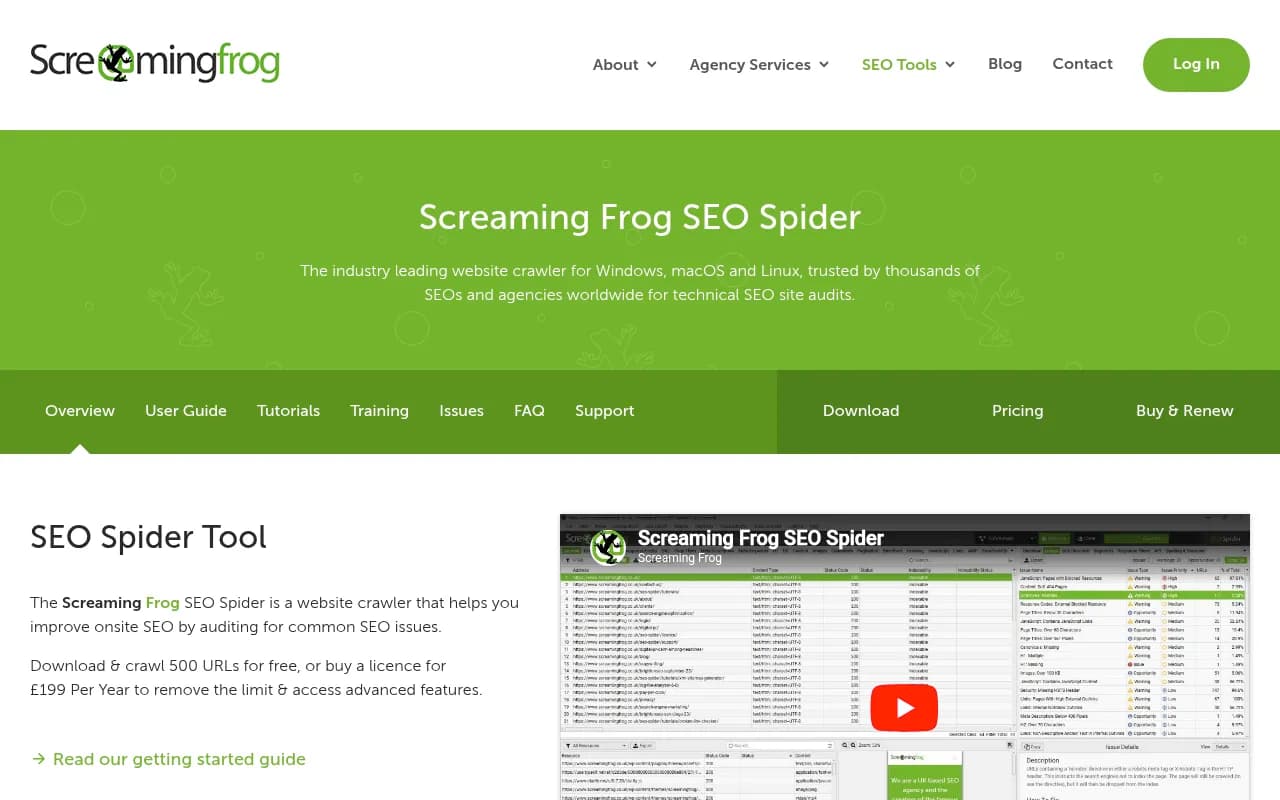
- A crawler such as Screaming Frog to catch broken docs links, orphaned pages, and missing sitemap entries.
- An engineer-owned review process for any AI-assisted docs content. Pepper's point about accuracy is the one to take seriously.
First 30 days
- Week 1: check robots.txt, CDN, and WAF rules for every AI crawler. Confirm docs are server-rendered and crawlable. Prerender.io is one option if your docs depend on heavy client-side rendering.
- Week 2: build a prompt list from real developer questions: "best X library for Y," "X vs Y," "how to do Z in Python." Add comparison and migration prompts.
- Week 3: audit your GitHub README, G2 and Capterra profiles, and Stack Overflow or Reddit presence. These are the third-party sources AI tends to pull from.
- Week 4: refresh the docs pages that get crawled but not cited. Add working code samples, current versions, and clear comparison pages.
Do you need an agency?
Some teams do. If you lack engineers who can write accurate technical content, a partner can help, but shortlist by who actually writes the content. Pepper notes that Draft.dev starts from $9,000 a month and GrowthX at $6,000, with most others quoting custom. For broader technical SEO, content, and AI search work, 1001 SEO Media is a full-service agency that uses Promptwatch for AI visibility. If you are comparing platforms yourself, the GEO software directory at bestgeosoftware.com lists more options.
Which tool should you pick?
| If you are... | Pick |
|---|---|
| A dev tool or API company wanting monitoring plus fixes | Promptwatch |
| An API company wanting to test endpoint usability for agents | Lightsage, after a proof-of-value demo |
| A large brand wanting executive reporting | Profound or AthenaHQ |
| A small team wanting a cheap baseline | Otterly.AI or Peec AI |
| Already on a big SEO suite | Semrush or Ahrefs as a supplement |
Start with crawler access. If AI systems cannot read your docs, nothing else in your GEO stack will matter. Then watch which pages and sources get cited, and fix the gaps one page at a time.