Key takeaways
- AIclicks is a solid entry-level AI visibility tool, but it lacks the depth most growing teams need -- no crawler logs, limited content optimization, and no traffic attribution.
- The best alternatives in 2026 range from monitoring-focused tools (Otterly.AI, Peec AI) to full optimization platforms (Promptwatch, Profound, Writesonic).
- If you want to go beyond tracking and actually fix your AI visibility gaps, look for platforms with content gap analysis, built-in content generation, and AI crawler monitoring.
- Agency teams should prioritize multi-client workspaces, white-label reporting, and partnership programs.
- Pricing varies widely -- from free tiers to $500+/month enterprise plans -- so matching the tool to your actual use case matters.
What AIclicks actually does (and where it falls short)
AIclicks is an AI visibility tracking tool that monitors how brands appear in AI search engines like ChatGPT, Perplexity, and Google AI Overviews. It offers brand audits, basic visibility analytics, and some generative AI content creation features. For teams just getting started with GEO (Generative Engine Optimization), it's a reasonable starting point.
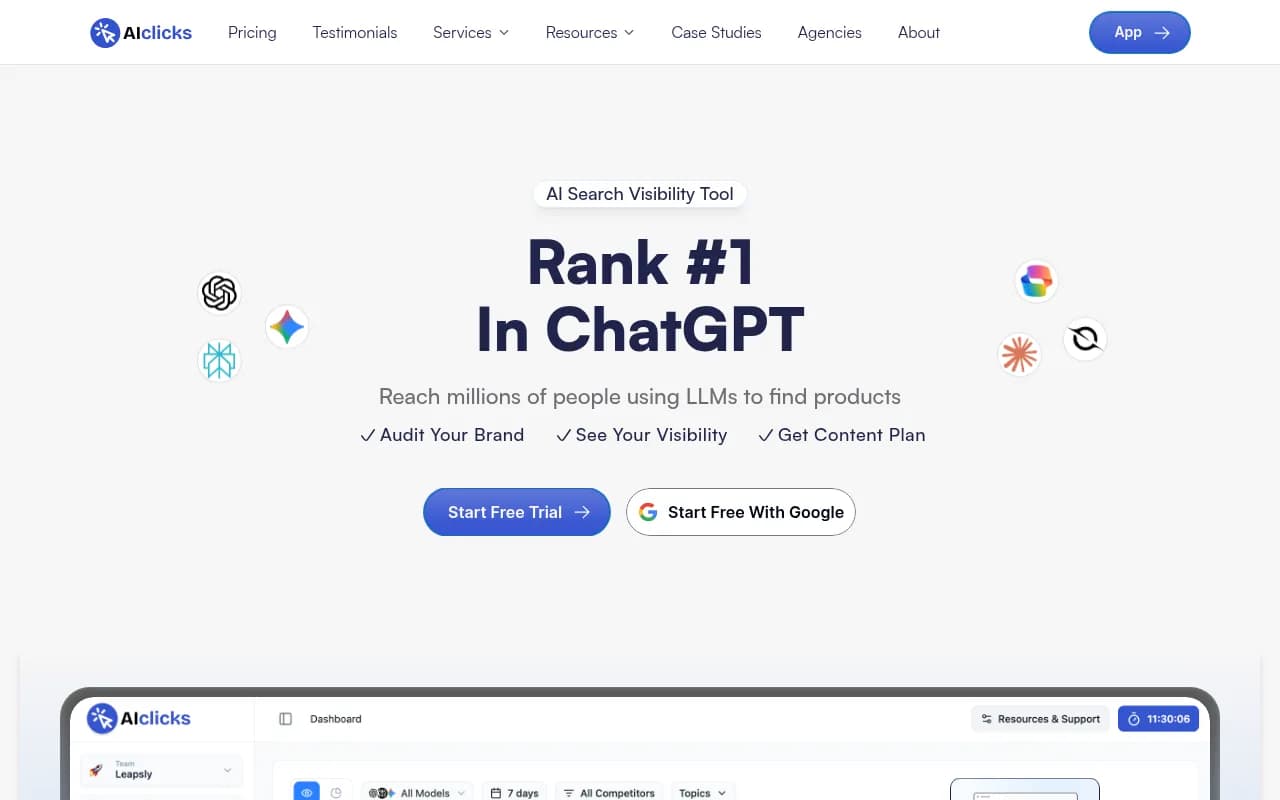
But "reasonable starting point" is also the ceiling for a lot of teams. The platform's monitoring capabilities are functional without being deep. There's no AI crawler log analysis, no prompt volume data to help you prioritize which queries to target, and the content generation side is fairly generic. If you're trying to move from "we can see we're invisible" to "we know exactly what to do about it," AIclicks doesn't take you all the way there.
G2 lists Birdeye, Semrush, and Meltwater as its top alternatives -- which tells you something about how broadly it's being categorized. Those are reputation management and traditional SEO tools, not dedicated GEO platforms. The real alternatives worth comparing are the purpose-built AI visibility tools that have emerged over the last 18 months.
How to evaluate AI visibility tools in 2026
Before diving into specific tools, it's worth being clear about what separates a good AI visibility platform from a mediocre one. The market has flooded with monitoring dashboards that show you a visibility score and then leave you staring at it. That's not enough anymore.
The questions worth asking:
- Does it track the AI models your audience actually uses (ChatGPT, Perplexity, Claude, Gemini, Google AI Overviews)?
- Does it show you why competitors are appearing where you're not -- not just that they are?
- Can it help you create content that gets cited, or does it just report on citations?
- Does it connect AI visibility to actual traffic and revenue?
- If you're an agency, does it support multi-client management and white-label reporting?
With that framework in mind, here are the strongest AIclicks alternatives in 2026.
The best AIclicks alternatives in 2026
Promptwatch -- best for teams that want to act, not just monitor
Promptwatch is the platform that most directly addresses the gap between "we can see our AI visibility" and "we can improve it." Where most tools stop at monitoring, Promptwatch is built around a three-step loop: find gaps, create content, track results.

The Answer Gap Analysis is the standout feature -- it shows you exactly which prompts competitors are being cited for that you're not, and what content your site is missing to fill those gaps. From there, the built-in AI writing agent generates articles, listicles, and comparisons grounded in real citation data (880M+ citations analyzed). This isn't generic content; it's engineered to get cited by ChatGPT, Claude, Perplexity, and other models.
What also sets it apart: AI Crawler Logs that show you in real time which AI crawlers are hitting your site, which pages they're reading, and what errors they're encountering. Most competitors don't have this at all. Add prompt volume estimates, difficulty scoring, query fan-outs, Reddit and YouTube citation tracking, and ChatGPT Shopping monitoring, and you have a platform that covers the full picture.
Pricing starts at $99/month (Essential: 1 site, 50 prompts, 5 articles), with Professional at $249/month and Business at $579/month. Used by 6,700+ brands including Booking.com and Center Parcs.
Best for: Marketing and SEO teams that need to move from visibility tracking to actual optimization.
Profound -- best for enterprise teams with dedicated analysts
Profound is one of the more mature platforms in the space, with strong answer engine monitoring, agent analytics, and prompt volume data. It's built for larger teams that have someone dedicated to analysis and reporting.
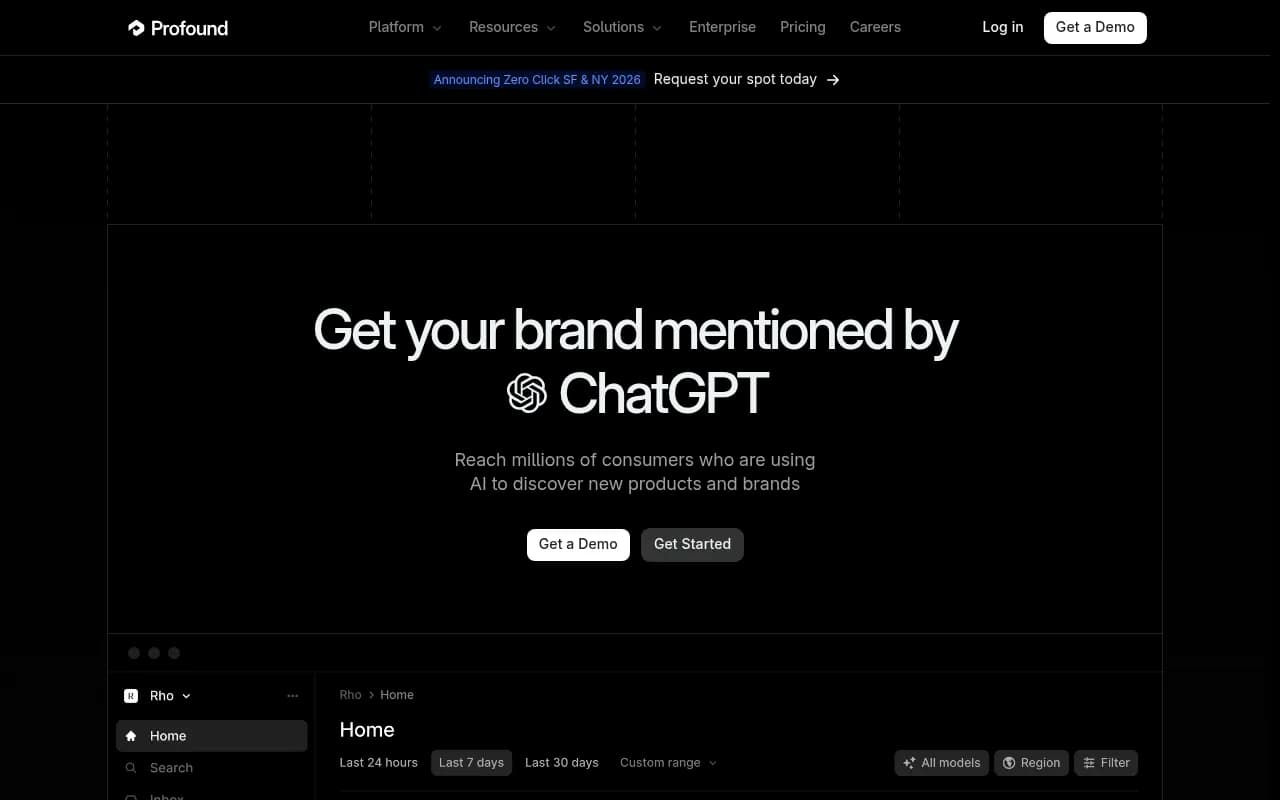
The platform covers AI Overviews, ChatGPT, Perplexity, and other models, and its research hub publishes useful data on how AI search is evolving. The agency-facing features are solid too -- client workspaces, pitch environments, and a partnership program.
Where it's less compelling: the price point is higher than most alternatives, and the content optimization side is less developed than Promptwatch's. It's more of a monitoring and analysis tool than an end-to-end optimization platform. That said, for enterprise teams that want depth of data and don't mind building their own content workflows on top, it's a strong choice.
Best for: Enterprise brands and agencies with dedicated AEO teams and larger budgets.
Writesonic -- best for teams that want AI content creation alongside visibility tracking
Writesonic started as an AI writing tool and has expanded into AI search visibility. That history shows -- the content creation side is genuinely good, and the integration between visibility data and content generation is tighter than most.
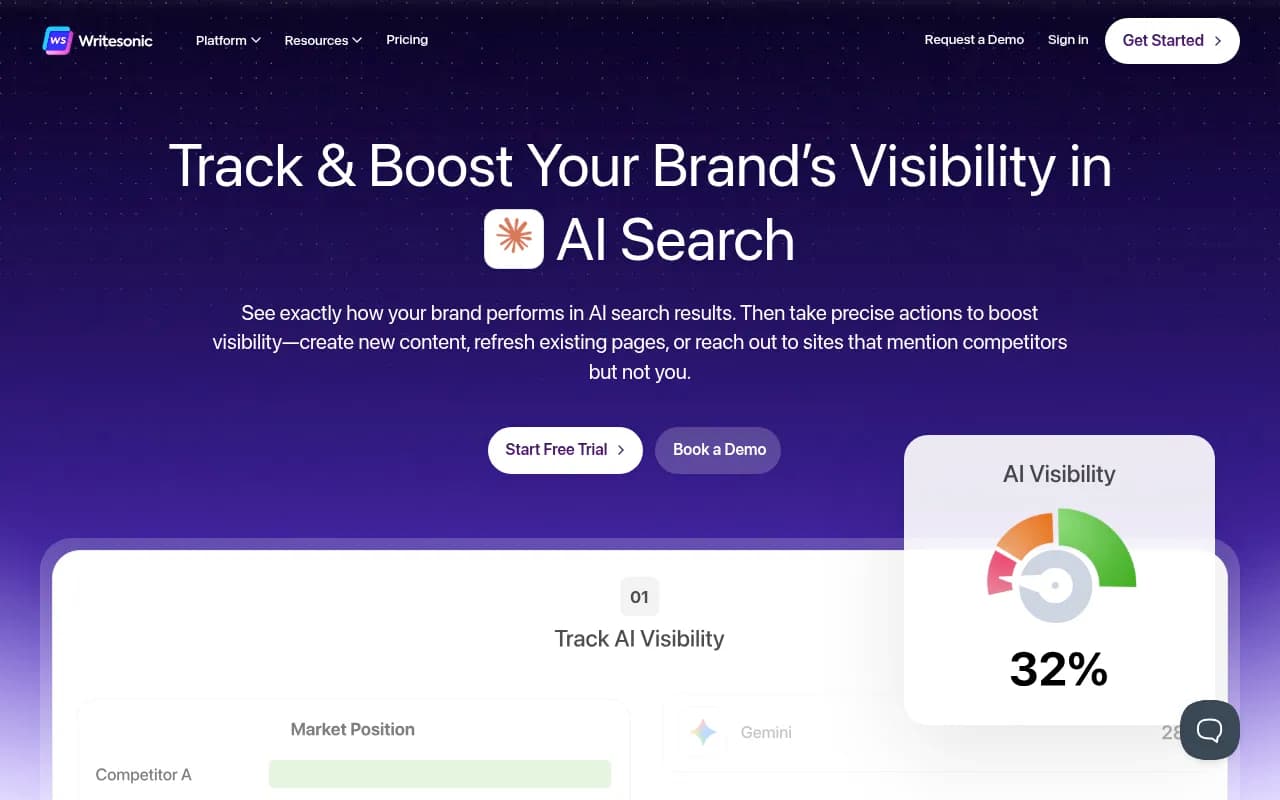
It tracks brand mentions across AI engines, surfaces content gaps, and lets you act on them without switching tools. If your primary workflow is "find what to write, then write it," Writesonic handles both steps reasonably well. It's not as deep on the monitoring side as Promptwatch or Profound, but for content-forward teams, the tradeoff makes sense.
Best for: Content teams that want visibility data and writing tools in one place.
Otterly.AI -- best budget option for basic monitoring
Otterly.AI is one of the more affordable tools in the space and covers the fundamentals: brand mention tracking across ChatGPT, Perplexity, and Google AI Overviews, with a clean dashboard and easy setup.

The honest assessment: it's a monitoring-only tool. There's no content generation, no crawler logs, no traffic attribution. If you're a small team or solo marketer who just wants to know whether your brand is showing up in AI search, Otterly.AI gets the job done without a complicated onboarding process. If you need to do anything about what you find, you'll need other tools.
Best for: Small teams and individuals who want affordable, no-frills AI visibility monitoring.
Peec AI -- best for multi-language and international tracking
Peec AI has carved out a niche in multi-language AI visibility monitoring, which matters more than people realize. AI models give different answers in different languages and regions, and most tools only track English.

If you're running campaigns across European or Latin American markets, Peec AI's multi-language support is a genuine differentiator. The platform tracks visibility across major AI models and provides sentiment analysis alongside mention tracking. Like Otterly.AI, it's primarily a monitoring tool -- the optimization side is limited -- but for international teams, it fills a real gap.
Best for: International brands and agencies tracking AI visibility across multiple languages and regions.
Scrunch -- best for mid-market teams wanting monitoring plus some optimization
Scrunch sits in the middle of the market -- more capable than Otterly.AI, less comprehensive than Promptwatch or Profound. It monitors how AI assistants like ChatGPT and Claude discuss your brand, tracks competitor visibility, and offers some content optimization guidance.
The interface is clean and the onboarding is faster than enterprise platforms. For mid-market teams that want more than basic monitoring but aren't ready to commit to a full optimization platform, Scrunch is worth evaluating. The gap analysis features are present but not as detailed as what you get with Promptwatch's Answer Gap Analysis.
Best for: Mid-market brands that want a step up from basic monitoring without enterprise complexity.
SE Ranking -- best for teams that already use traditional SEO tools
SE Ranking has added an AI Search Toolkit to its existing SEO platform, which makes it a convenient option if you're already using it for rank tracking, site audits, or keyword research.
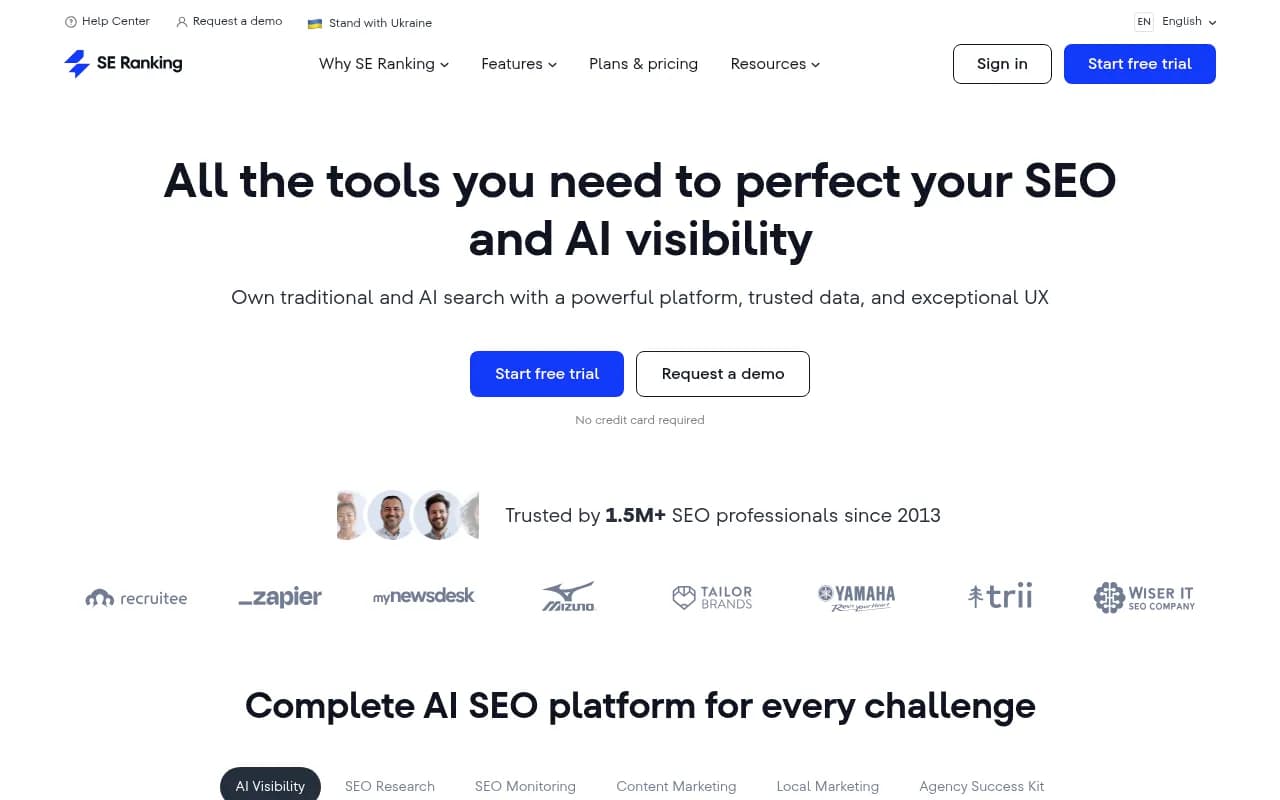
The AI visibility features are solid for a traditional SEO tool -- it tracks brand mentions in AI Overviews and other AI search results, and the integration with SE Ranking's existing data means you can see traditional and AI search performance side by side. It's not as deep as purpose-built GEO platforms, but the convenience of having everything in one place has real value.
Best for: SEO teams already using SE Ranking who want to add AI visibility tracking without adopting a new platform.
Ahrefs Brand Radar -- best for Ahrefs users wanting AI monitoring
Ahrefs Brand Radar is the AI visibility add-on for one of the most trusted names in SEO. It monitors brand mentions across AI search results and integrates with Ahrefs' existing keyword and backlink data.
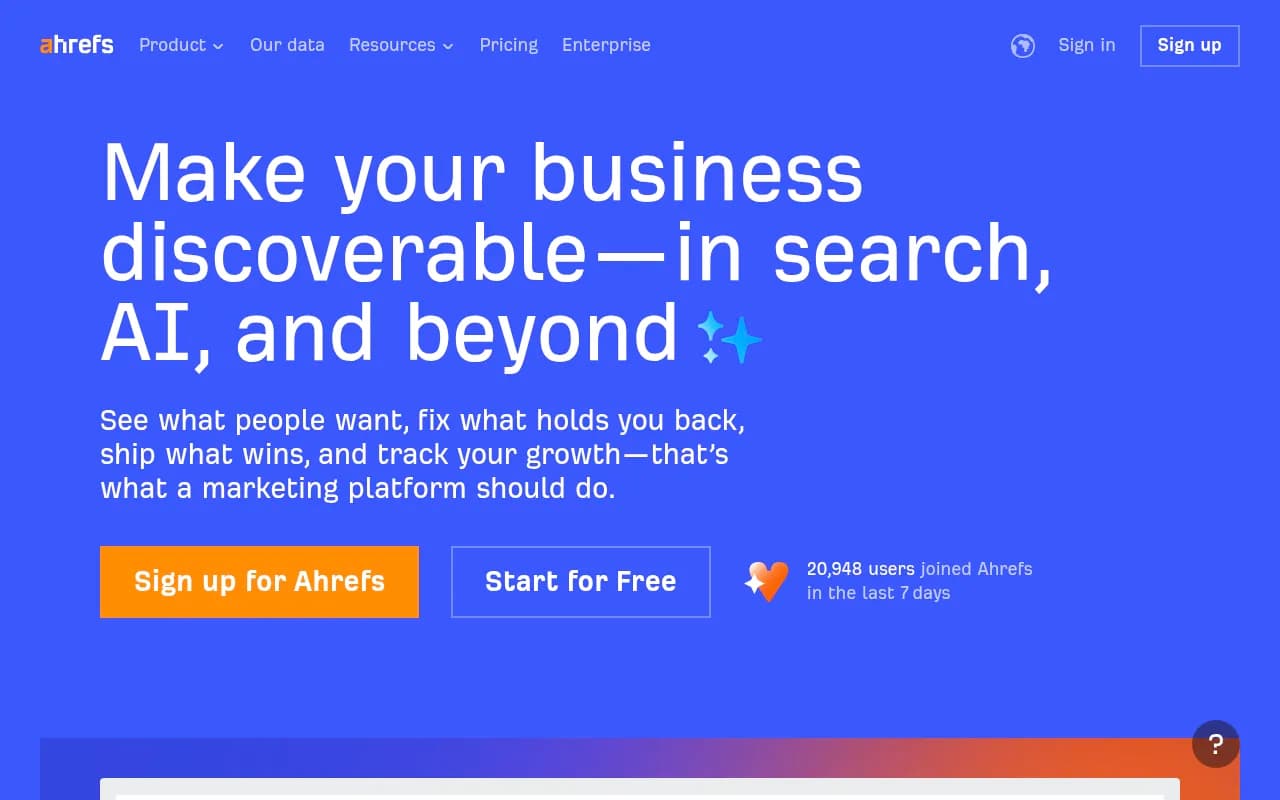
The limitations are worth knowing upfront: prompts are fixed (you can't customize which queries to track), and there's no AI traffic attribution. For teams that live in Ahrefs and want a basic read on their AI visibility, it's a low-friction addition. For teams that need to actively optimize for AI search, it's not enough on its own.
Best for: Ahrefs users who want basic AI visibility monitoring without leaving their existing workflow.
Athena HQ -- best for teams focused on brand sentiment in AI responses
Athena HQ tracks brand visibility across 8+ AI search engines with a particular focus on how brands are described -- not just whether they appear. The sentiment and positioning analysis is more detailed than most monitoring tools.
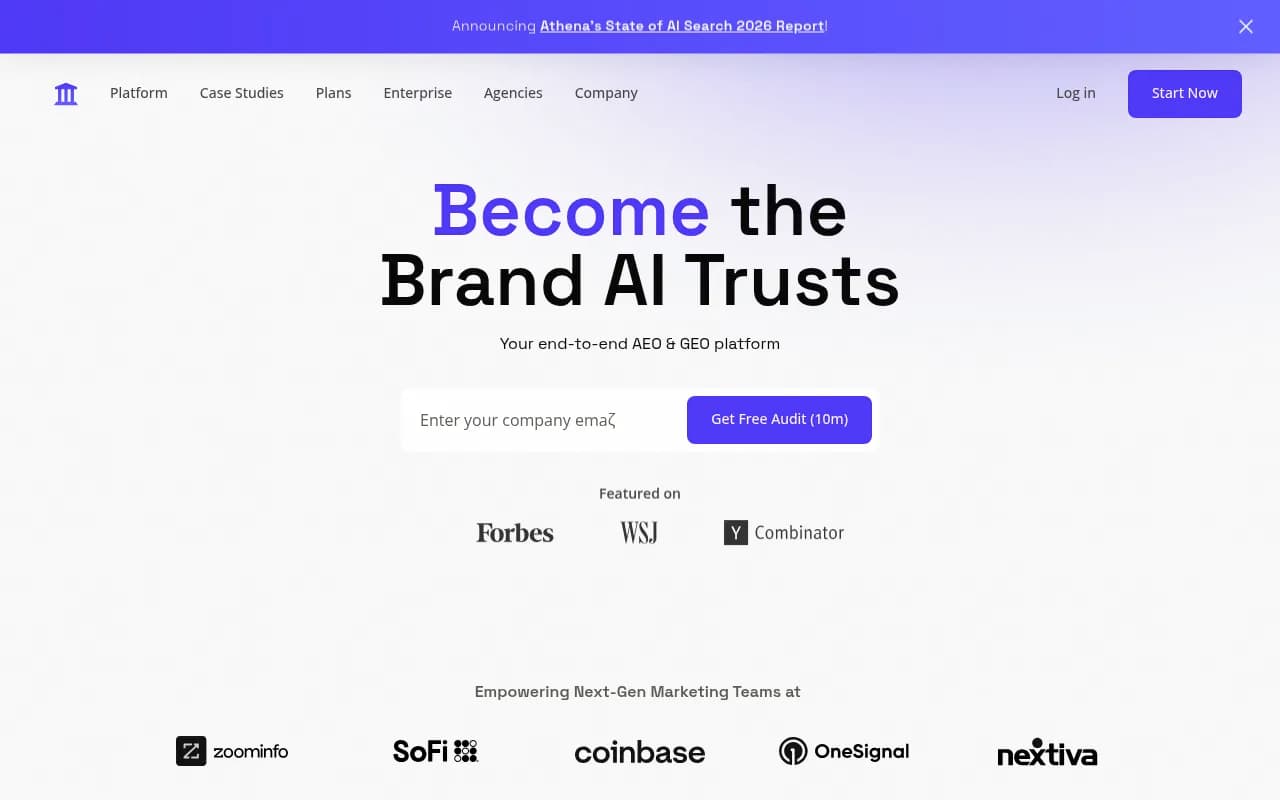
It's monitoring-focused, so the optimization side is limited. But if your primary concern is brand safety -- understanding whether AI models are describing your brand accurately and positively -- Athena HQ's depth of sentiment analysis is useful.
Best for: Brand and PR teams monitoring how AI models describe their brand, not just whether it appears.
Gauge -- best for straightforward brand tracking across AI models
Gauge is a clean, focused AI visibility tracker that covers the major AI models without a lot of complexity. It's positioned for teams that want reliable monitoring without a steep learning curve.
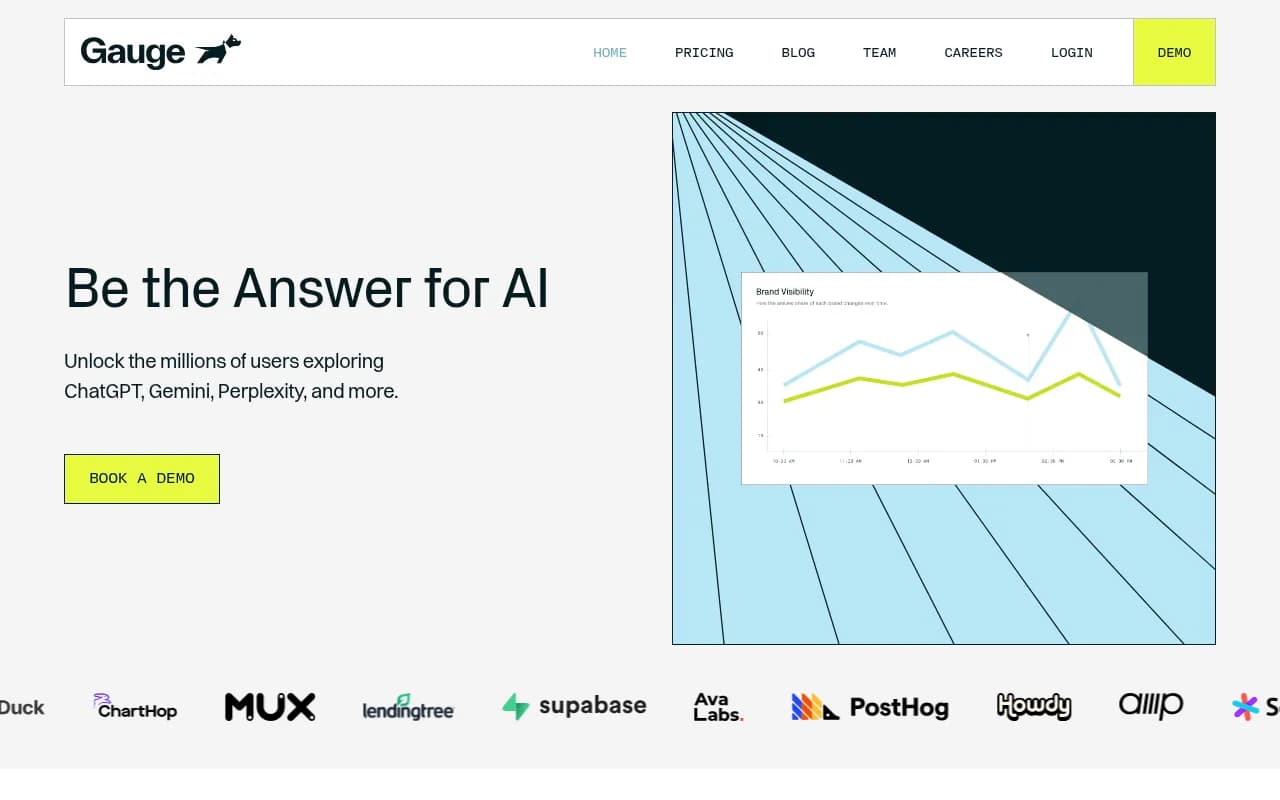
It doesn't have the depth of Promptwatch or Profound, but it's faster to set up and easier to use day-to-day. For teams that need to report on AI visibility to stakeholders without spending hours in a complex dashboard, Gauge is worth a look.
Best for: Teams that prioritize ease of use and quick reporting over deep analysis.
Feature comparison table
| Tool | Monitors AI models | Content generation | Crawler logs | Traffic attribution | Multi-language | Starting price |
|---|---|---|---|---|---|---|
| Promptwatch | 10+ | Yes (AI writing agent) | Yes | Yes | Yes | $99/mo |
| Profound | 6+ | Limited | No | Partial | Limited | Custom |
| Writesonic | 4+ | Yes | No | No | Limited | ~$99/mo |
| Otterly.AI | 4+ | No | No | No | Limited | ~$49/mo |
| Peec AI | 4+ | No | No | No | Yes | ~$49/mo |
| Scrunch | 5+ | Limited | No | No | Limited | Custom |
| SE Ranking | 3+ | No | No | No | Yes | ~$65/mo |
| Ahrefs Brand Radar | 3+ | No | No | No | Limited | Ahrefs plan |
| Athena HQ | 8+ | No | No | No | Limited | Custom |
| Gauge | 5+ | No | No | No | Limited | Custom |
| AIclicks | 4+ | Basic | No | No | Limited | Custom |
What most tools are still missing
Looking at this landscape honestly, the majority of AI visibility tools in 2026 are still primarily monitoring dashboards. They'll tell you your visibility score went up or down, show you which competitors are appearing in AI responses, and maybe surface some content gaps. Then they stop.
The harder problem -- actually improving your AI visibility in a systematic way -- requires more. You need to know which prompts to target (volume and difficulty data), what content to create (gap analysis grounded in real citation data), how AI crawlers are actually reading your site (crawler logs), and whether your efforts are driving real traffic (attribution).
That full loop is rare. Promptwatch is the most complete implementation of it right now -- the Answer Gap Analysis, AI writing agent, crawler logs, and traffic attribution work together in a way that most competitors haven't built yet. But the space is moving fast, and several tools on this list are actively building toward it.
How to choose the right alternative
A few practical filters:
If you're a solo marketer or small team on a tight budget: Otterly.AI or Peec AI give you the basics without a big commitment. You'll outgrow them, but they're fine starting points.
If you're already deep in a traditional SEO tool: SE Ranking's AI toolkit or Ahrefs Brand Radar let you add AI visibility monitoring without adopting a new platform. The depth is limited, but the convenience is real.
If you're an agency managing multiple clients: Profound has the strongest agency infrastructure. Promptwatch's Business and Agency plans also support multi-site tracking with the added benefit of content generation built in.
If you need to actually improve your AI visibility, not just measure it: Promptwatch is the most complete option. The combination of gap analysis, content generation, crawler logs, and attribution is what separates optimization from monitoring.
If content creation is your primary workflow: Writesonic's integration of visibility data and writing tools makes it a natural fit for content-forward teams.
The GEO space is still young enough that no tool is perfect. But the gap between monitoring-only dashboards and genuine optimization platforms is widening, and it's worth being deliberate about which category you're buying into.