Key takeaways
- ISO 27001 certification is rare among AI visibility vendors. Promptwatch is ISO/IEC 27001 certified and GDPR compliant, which makes procurement easier. Most others publish a DPA and little else.
- "European" should mean a signed DPA, a sub-processor list, and clear data hosting terms. A Frankfurt server alone does not cover it.
- Compliance automation tools like Vanta or Orbiq help you certify your own company. They are not AI visibility tools, so don't mix the two categories.
- Ask every vendor the same five questions before you start a trial. The checklist is below.
- Tracking is the cheap part. Pick a tool that also tells you what to fix, because European startups rarely have spare headcount.
Why compliance is part of the buying decision
A US startup can sign up for a tracker with a credit card and move on. A European one usually can't. Your legal contact asks where prompts are processed, your enterprise customers ask for your sub-processor list, and someone in procurement wants a certificate.
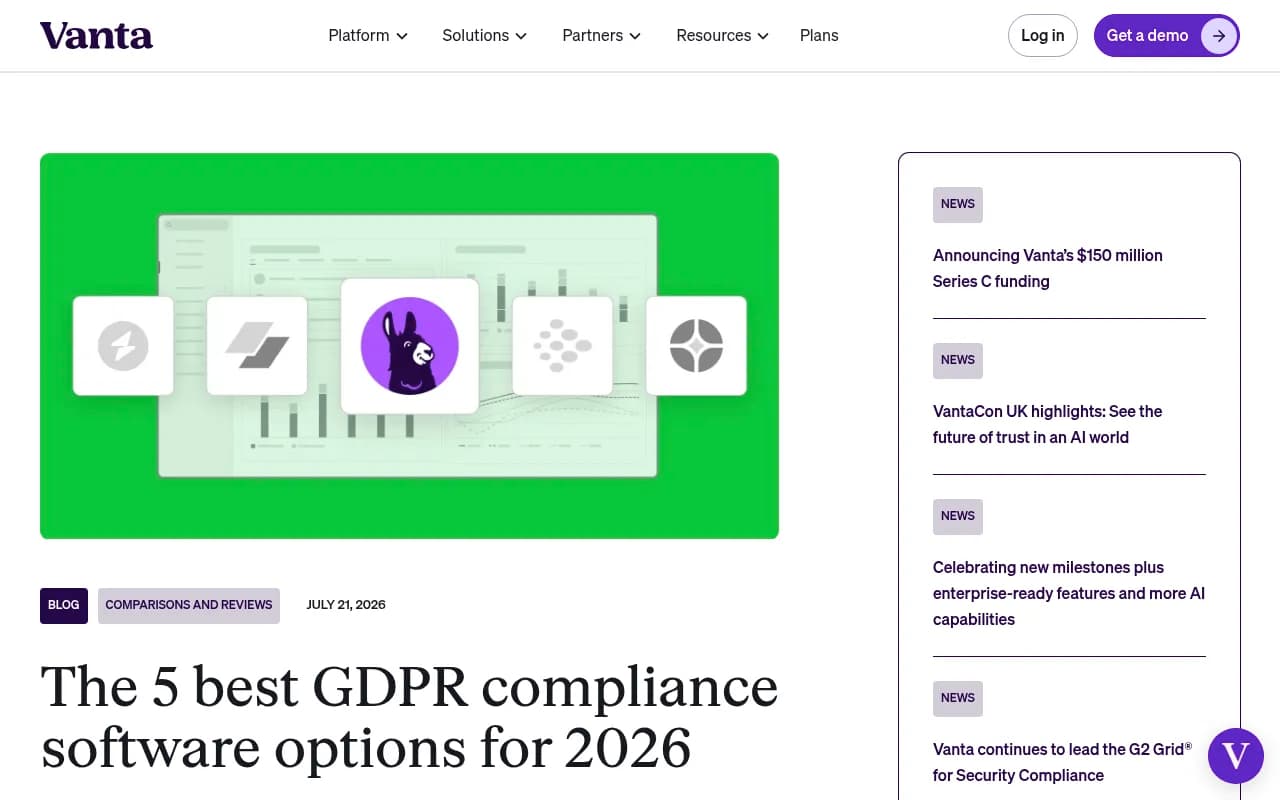
The pressure is real. The 7th edition of the GDPR Enforcement Tracker puts cumulative EU fines at roughly 6.11 billion euros as of March 1, 2026, up from 5.62 billion the year before (via Vanta's GDPR software roundup). The EU AI Act's high-risk obligations also start on August 2, 2026, and apply alongside GDPR wherever AI systems process personal data.
To be fair, an AI visibility tool does not usually process much personal data. It sends prompts to AI engines and stores the answers. But it still touches your brand data, competitor lists, analytics, and sometimes Search Console connections. That is enough for a security questionnaire to flag it.
What "European" should actually mean
The get3rd.com guide to European AI visibility platforms has a useful framing. Don't ask whether a vendor is "EU-based." Ask for documents. Their first request is blunt: "Send me the DPA and the sub-processor list."
Here is the checklist I would use with any vendor.
| What to check | Why it matters | What to ask |
|---|---|---|
| Data processing agreement | GDPR requires one when a vendor processes data for you | Can I sign your DPA before the trial ends? |
| Sub-processor list | Shows who else touches your data and where | Which AI providers and clouds do you use? |
| ISO/IEC 27001 certificate | Independent proof of an information security management system | Can I see the certificate and its scope? |
| Data location and transfers | US transfers need a legal mechanism such as SCCs | Where is data stored and where is it analysed? |
| Pen-test or security summary | Answers most of a security questionnaire in one document | Can you share the latest summary? |
Notice that ISO 27001 sits next to, not instead of, the DPA. A certificate proves a security management system exists. It does not replace a data processing agreement. You want both.
Self-claims versus certificates
Some vendors say "GDPR-compliant" on their homepage and stop there. That is a self-claim. WebGlazer, for instance, says it hosts in the EU (Latvia) with GDPR by default. That may be perfectly true, but it is a vendor statement and I could not verify it independently. Treat it as a starting point for your questions.
The get3rd.com guide is refreshingly honest about its own vendor. 3RD, based in Copenhagen, publishes a DPA for every customer, a sub-processor list, and a pen-test summary on request. It also states that it has no SOC 2 or ISO 27001 yet, and that AI analysis runs through OpenAI, Anthropic, and Google in the USA under SCCs. That level of disclosure is what you should expect from any vendor, and it is a good template for the answers you ask for.
Compliance tools are not visibility tools
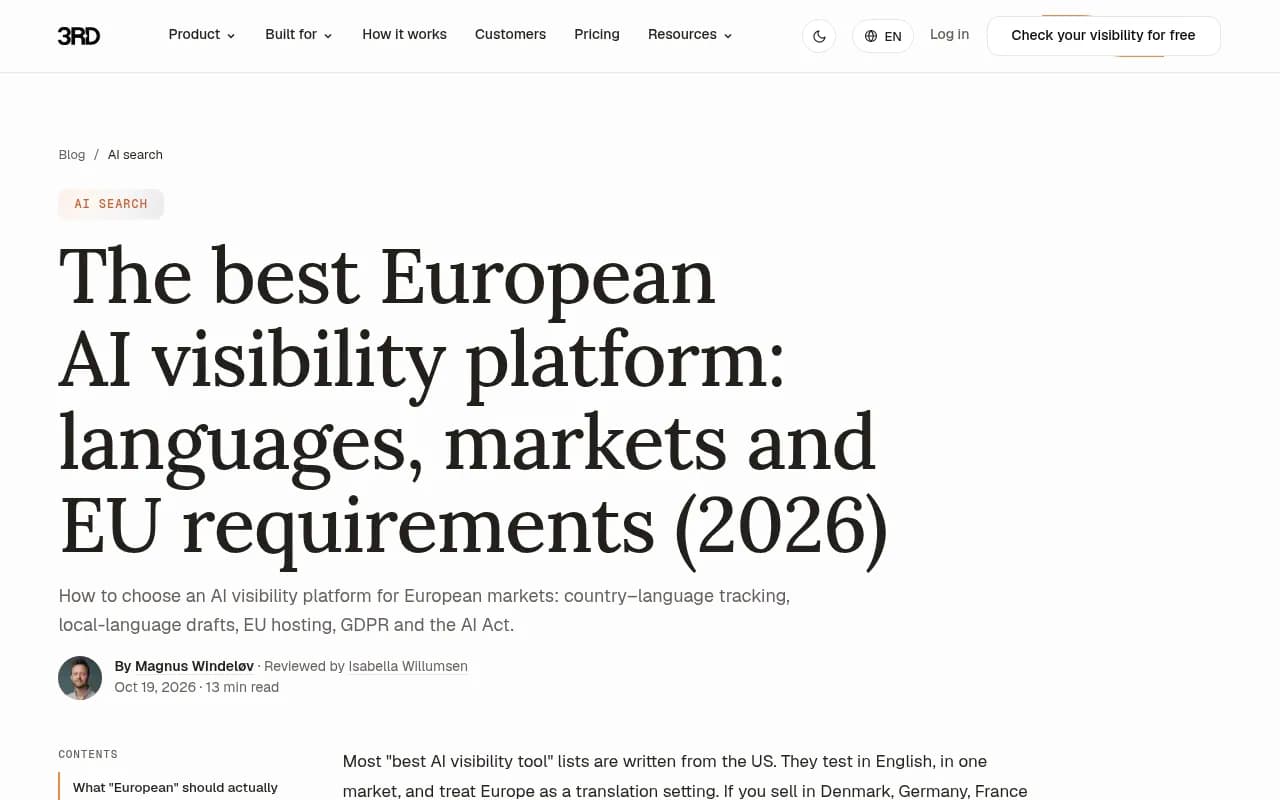
This trips people up. Search for "GDPR-compliant" and half the results are compliance automation platforms: Vanta, Drata, Secureframe, OneTrust, Orbiq, DataGuard. These help you get your own company certified. They map controls across GDPR, SOC 2, ISO 27001, and NIS2, and collect evidence continuously.
They do not tell you whether ChatGPT recommends your product.
They matter to this guide for one reason. If you are a Series A startup selling to banks or insurers, you will probably need your own ISO 27001 or SOC 2 report soon. Vanta pitches itself at exactly this stage, and Orbiq targets EU-headquartered B2B companies needing NIS2, DORA, and ISO 27001 together. French guides like the one from the French Compliance Institute also point out that the CNIL issued 83 sanctions totalling about 486.8 million euros, so the regulator is not bluffing.

Use a compliance platform for your own certification. Use an AI visibility tool for brand presence in AI answers. Then make sure the second one doesn't create new problems for the first.
The shortlist: AI visibility tools worth vetting
Promptwatch
Promptwatch is the one I would put first for a regulated or enterprise-facing European startup, mainly because the compliance paperwork is already done. Promptwatch B.V. is a Dutch company headquartered in Amsterdam (KVK 97074756), it is ISO/IEC 27001 certified and GDPR compliant, and it offers scoped API keys, owner/editor/viewer roles, and an audit log on Business and above, with SSO on Enterprise. That covers most of what a security questionnaire asks about.

The product is not just a tracker either. It monitors the real interfaces of ChatGPT, Google AI Overviews, Google AI Mode, Gemini, Perplexity, Copilot, Meta AI, and others, by country and language, which matters when you sell in Germany, France, and the Netherlands rather than one English-speaking market. It also has IP-verified AI crawler logs, visitor analytics for AI-referred traffic, a weekly site audit, and a Content Agent that plans, writes, and publishes to WordPress, Webflow, or Framer.
For a small team, that last part is the point. Crisp saw 2x higher conversion rates from AI traffic than from traditional channels, and scaled to 5 to 10 articles per day. You can start free (Explore: 1 project, 10 prompts, ChatGPT only), and paid plans run from Essential at $95/month to Business at $579/month. Check promptwatch.com/pricing for current numbers.
3RD
3RD is Copenhagen-based and built around country-and-language markets. Its Content Agent drafts per market with a native-language proofread on non-English drafts. The trade-off is stated openly in its own guide: no SOC 2 or ISO 27001 yet. If your buyers only need a DPA and a sub-processor list, that may be fine. If procurement wants a certificate, it is a gap. It is not in our catalog, so check its site directly.
WebGlazer
WebGlazer positions itself at European agencies, with EU data residency in Latvia and GDPR-by-default. Worth a look if hosting location is your hard requirement. Ask for the DPA and certification status, since I could only find the vendor's own claims.
Otterly.AI and Peec AI
Both are popular with small teams that want basic monitoring at a low price. A YouTube walkthrough of AI visibility tools recommends Peec AI for startups and small teams, and that fits its pricing. They are trackers, though. You still need to work out what to publish and fix elsewhere.


Profound and Scrunch
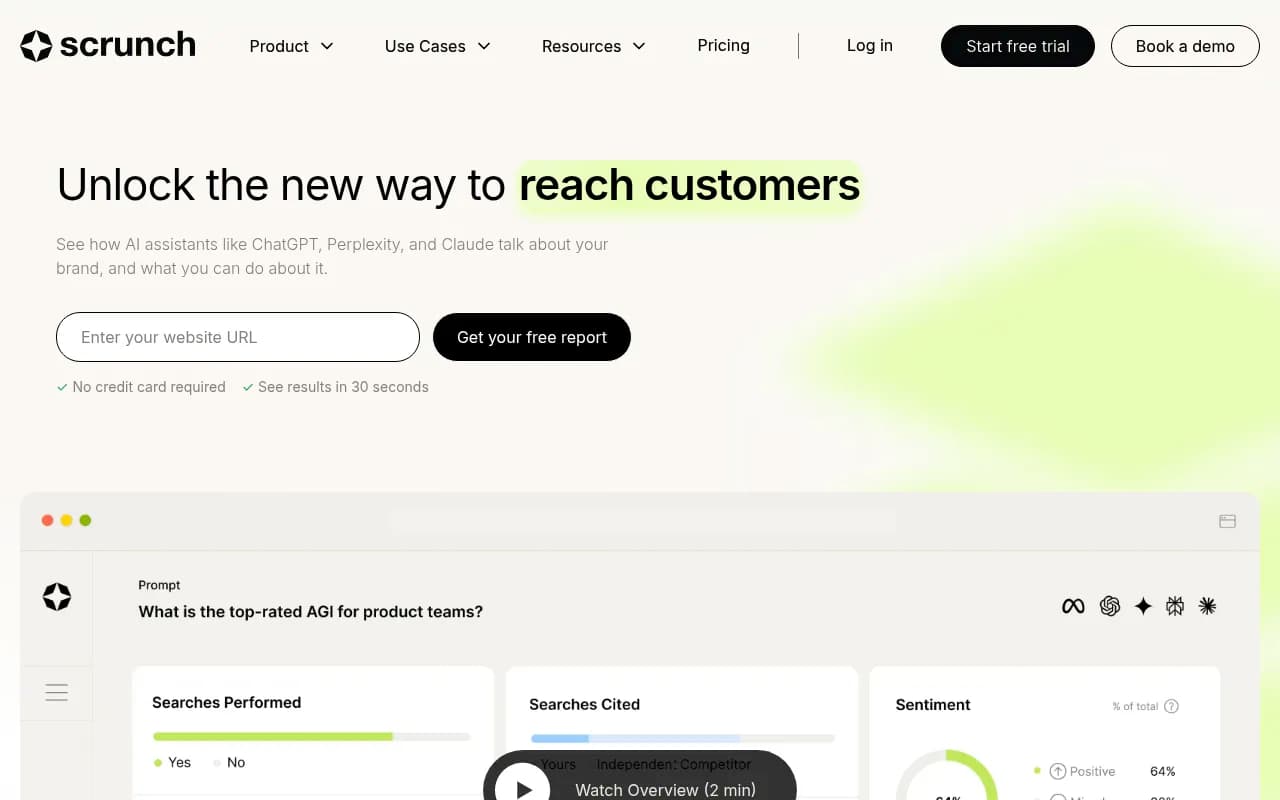
Strong monitoring, aimed at larger budgets. Profound is the enterprise name most people have heard of. Neither tracks Reddit or ChatGPT Shopping the way Promptwatch does, and neither executes content for you.

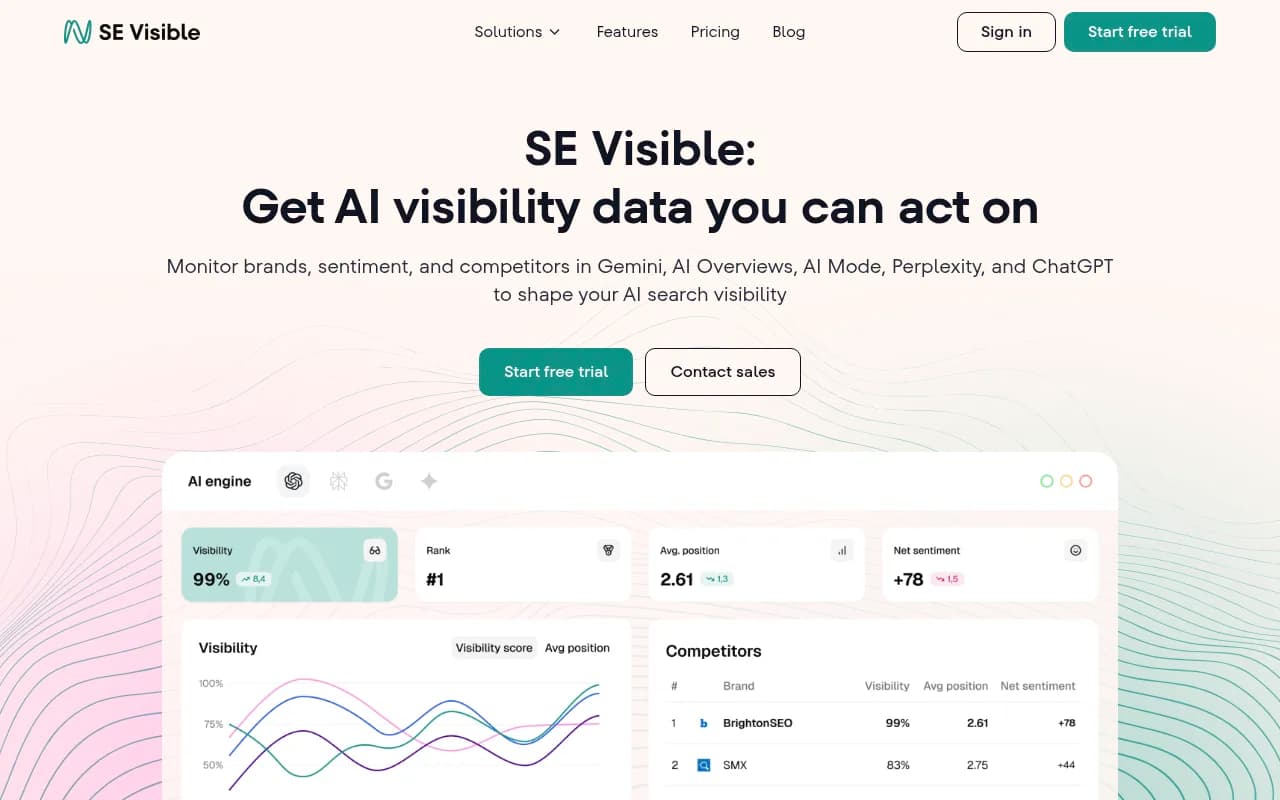
Semrush, Ahrefs Brand Radar and SE Visible
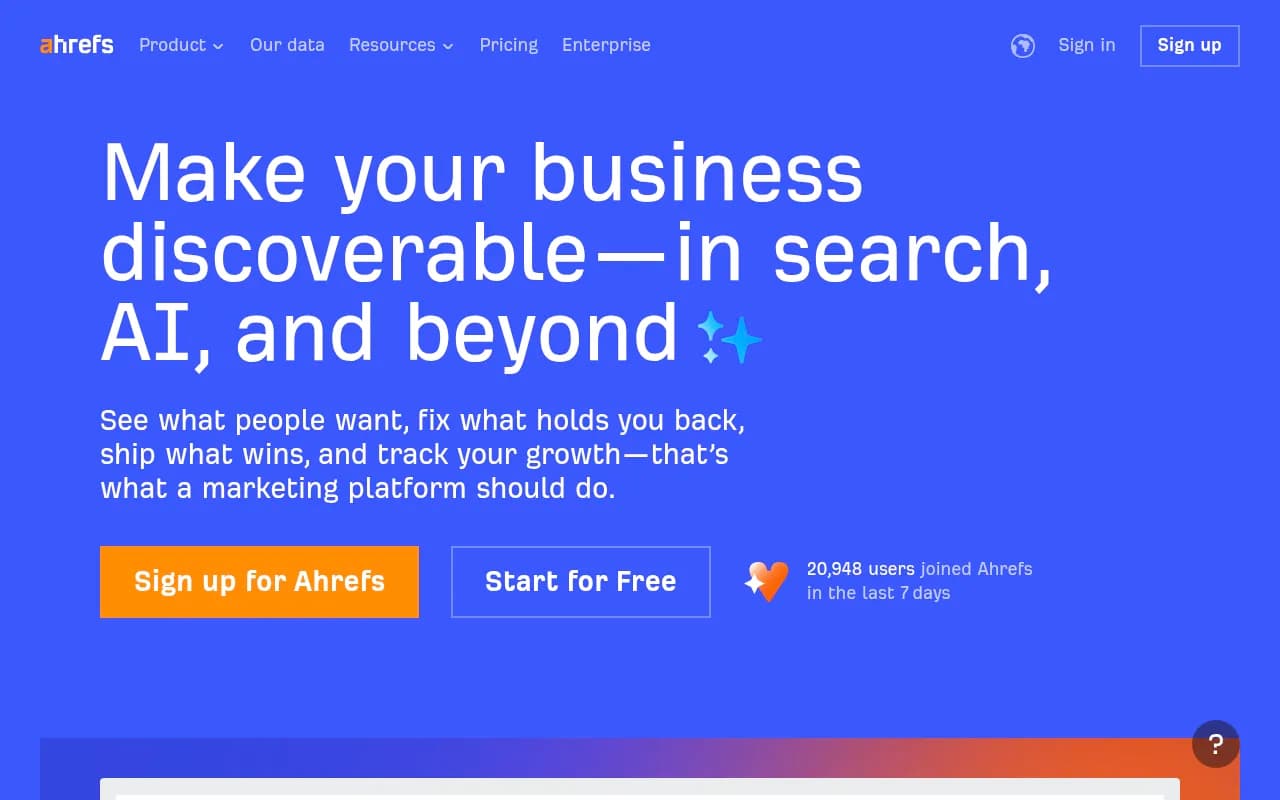
If you already pay for an SEO suite, adding AI tracking is the lowest-friction option. The catch is shallower AI-specific data and fixed prompt sets. No crawler logs, no AI traffic attribution.
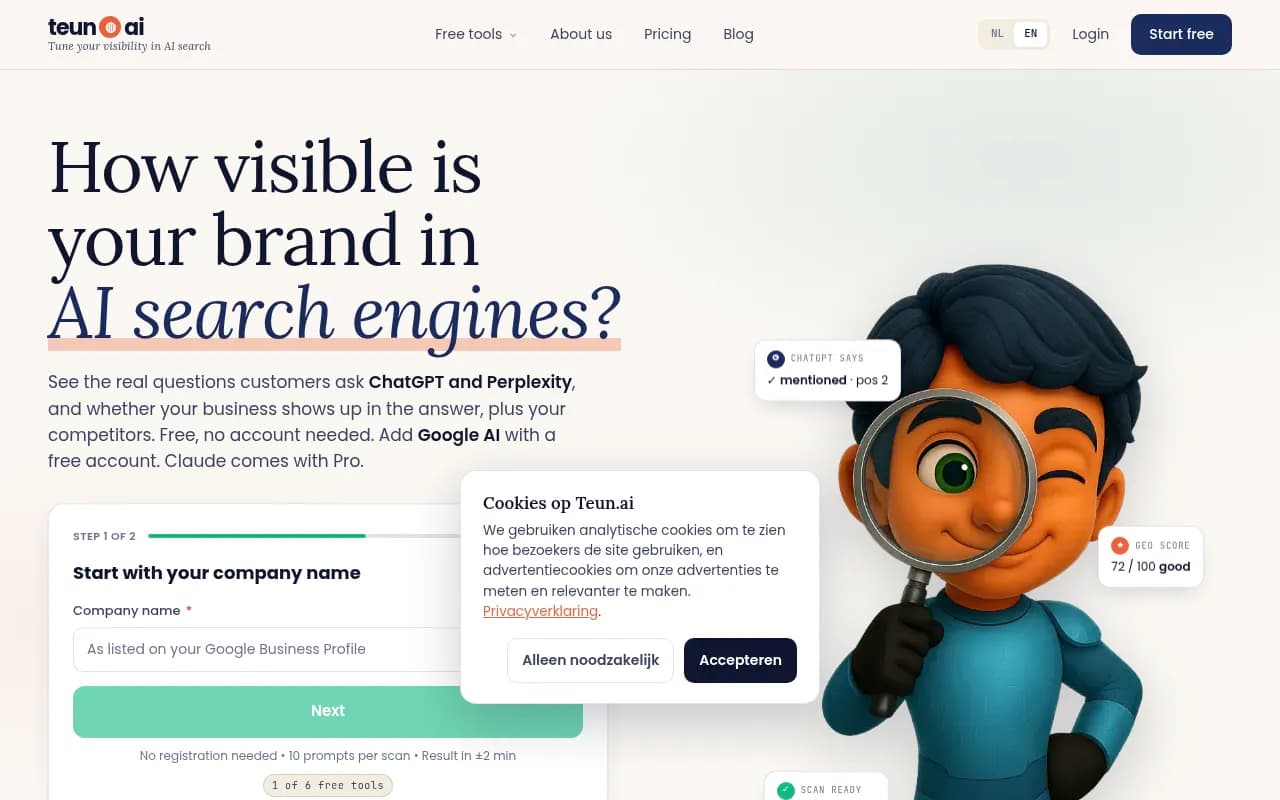
Teun.ai
A Dutch AI visibility toolkit with free rank checks. Useful for a quick first look if you operate in the Netherlands, though I would not build a program on a free checker alone.
Side-by-side comparison
| Tool | Based in | Compliance posture (as published) | Beyond monitoring? | Best for |
|---|---|---|---|---|
| Promptwatch | Amsterdam, NL | ISO/IEC 27001 certified, GDPR compliant, audit log, SSO on Enterprise | Yes: Content Agent, crawler logs, Action Board | Startups facing enterprise security reviews |
| 3RD | Copenhagen, DK | DPA, sub-processor list, pen-test summary; no ISO 27001 or SOC 2 yet | Content drafts per market | Multi-country Nordic and DACH teams |
| WebGlazer | Latvia (hosting) | EU data residency, GDPR by default (self-claim) | Not verified | Agencies that need EU hosting |
| Peec AI | Check vendor | Ask for DPA | No | Small teams on a budget |
| Otterly.AI | Check vendor | Ask for DPA | No | Basic tracking |
| Profound | US | Ask for DPA and certificates | Limited | Larger budgets |
| Semrush / Ahrefs | Various | Established vendors, ask for DPA | Limited AI-specific depth | Teams already on the suite |
Where a cell says "ask," I don't have reliable published information, and I would rather say so than guess.
How to run the vetting in one afternoon
You don't need a six-week procurement process for a tool that costs a few hundred dollars a month. Here is the short version.
- Email each shortlisted vendor the same note asking for the DPA, sub-processor list, certificate and pen-test summary.
- Read the sub-processor list for the AI providers they call and where analysis happens. US processing under SCCs is common and legal, but your DPO should know.
- Check whether the tool tracks the real user interface or API outputs. This is not a compliance question, but it decides whether the data is any good, since user-facing answers can differ from API results.
- Test with your own markets. Run prompts in the languages your customers use, not just English.
- Check what happens to your data when you leave: export formats and deletion terms.
If a vendor takes a week to send a DPA, you have learned something about how they will handle your next support ticket.
Why tracking alone is not enough
AI search is a different channel from classic SEO, and the sources it trusts shift quickly. Promptwatch Data shows that ChatGPT's reddit.com share of citations fell from about 4% to 0.5% on August 14, 2026 (report). Over Sep 28 to Oct 4, 2026, ChatGPT drew only 0.46% of its citations from social platforms, while Google AI Overviews drew 12.2% (report). A strategy built around one engine can go stale in a week.
The technical side matters just as much. Promptwatch's crawler data shows OpenAI at 79.8% of verified AI crawler requests in Aug 31 to Sep 6, 2026, down from 94.8% in mid-June (report). The advice that comes with it is simple: compare your own logs with that mix, and if a big provider is near zero in your logs, you are probably blocked by robots.txt, a CDN, or a WAF. Startups on strict Cloudflare rules hit this more than they expect.
And source counts differ by engine. Promptwatch's average sources per response tracker shows ChatGPT citing about 5 sources per web-search answer, while Google AI Overviews and Perplexity cite about 10. Fewer slots means harder competition for a citation.
So pick a tool that closes the loop from finding a gap to publishing a fix. A monitoring dashboard that nobody has time to act on is an expensive screensaver.
A note on the EU AI Act
The AI Act mostly concerns providers and deployers of AI systems, not marketing teams reading AI answers. Using a visibility tool does not make you a high-risk deployer. But if your startup builds AI features, or the tool you buy uses AI to process personal data, ask the vendor how they classify themselves. Fines can reach 35 million euros or 7% of global turnover for the worst violations, so a vague answer is a yellow flag.
Recommendations by situation
- Selling to banks, insurers or the public sector: start with Promptwatch, because the ISO 27001 certificate and audit log answer questions before they are asked.
- Seed-stage with one marketer: a lower-cost tracker works for a few months, but plan to move to something that publishes content.
- Nordic or DACH multi-market launch: put 3RD on the shortlist and ask about its certification roadmap.
- Hard EU-hosting requirement: ask WebGlazer for documents, and ask every other vendor for their sub-processor list too.
- Already on an SEO suite: try its AI add-on first and see whether crawler logs and traffic attribution are missing for you.
If you want to compare more options, the GEO software directory at bestgeosoftware.com and ai-rank-tools.com list far more trackers than fit here. And if you would rather hand the whole program to specialists, 1001 SEO Media runs GEO and AI search work for brands, using Promptwatch as its platform.
Before any trial, send the DPA request. It costs one email and settles half your shortlist.