Key takeaways
- Fashion is a hard category for AI search. Shoppers ask about occasions, fit and budget, and most product data answers none of that. A good platform has to show you which prompts you lose, not just whether your name appeared.
- Product pages and landing pages are the most cited content types in ChatGPT. For commercial "best X" prompts, product pages get 26.0% of citations and landing pages 20.6%, per Promptwatch Data (Sep 28 to Oct 4, 2026).
- Tracking alone is not enough for retail. Look for crawler logs, shopping-card tracking, and a way to turn gaps into content.
- Promptwatch is the strongest end-to-end option. Profound, Peec AI, Otterly.AI, Scrunch and Semrush cover narrower slices at different price points.
- Start with a free check before you pay for anything.
Why fashion needs its own approach to AI visibility
A shopper opens Perplexity and types: "best linen blazers for a summer wedding under $300." Three brands come back, with prices and a short rationale. If yours isn't one of them, your traditional SEO rank barely matters for that sale.
Fashion is an awkward fit for text-based assistants. Skincare maps neatly to ingredients and clinical claims. "What should I wear to a rooftop wedding in June?" involves occasion, weather, dress code, budget and body type. Most product data says "100% linen, relaxed fit" and stops there. Alhena's fashion AEO write-up cites a 2.40% conversion rate for LLM-referred fashion traffic versus 5.36% for beauty, and attributes the gap to that text-first limitation. Treat the exact figures as one vendor's number, but the mismatch is real.
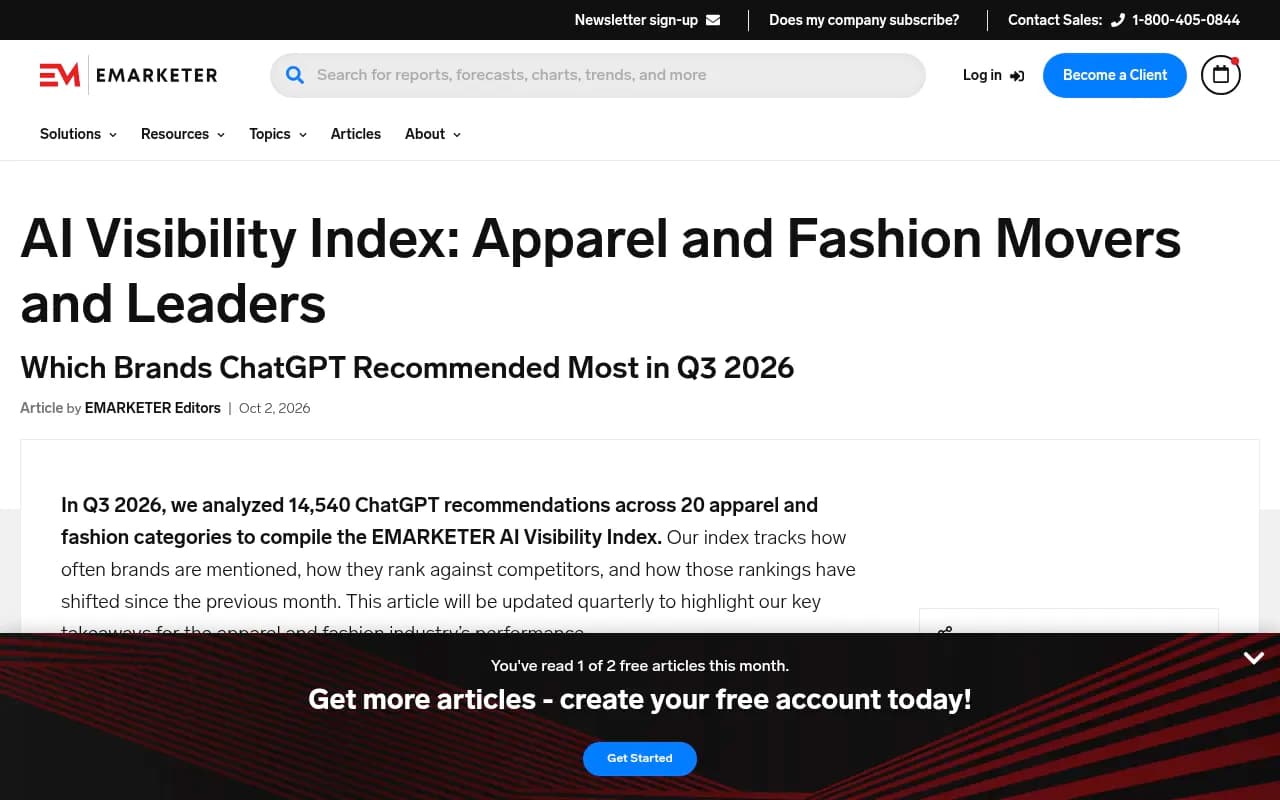
The volume is also growing. Insightland's 2026 fashion SEO guide, citing Adobe Digital Insights from April 2026, reports AI-sourced traffic to US retail sites grew 393% year over year in Q1 2026 and now converts 42% better than non-AI traffic. EMARKETER's Q3 2026 AI Visibility Index for apparel and fashion, which tracked which brands ChatGPT recommended most, is another sign that the category is being measured as a channel now. Most of the detail sits behind a paywall, so I won't quote beyond its headline.
So the question for a retailer isn't whether to track AI visibility. It's which platform fits a catalog-heavy, visual, seasonal business.
What fashion retailers should look for
Generic AI visibility checklists miss retail specifics. These are the criteria I'd weigh.
Prompt coverage that matches how people shop
You need to track occasion and use-case prompts ("what to wear to a business casual interview"), not only brand terms. Look for prompt volumes or difficulty scores so you aren't guessing which prompts matter, plus country and language tracking if you sell internationally.
Real interface data
Shopping carousels, product cards and citations can differ between the API and what a consumer sees in the actual chat interface. Platforms that capture the real UI give you a truer picture.
Shopping visibility
According to Promptwatch's ChatGPT shopping usage data (the page is dated Nov 2025, so treat it as possibly stale), shopping features show up in only a low single-digit percentage of web-search responses, but concentrate on commercial and transactional prompts. That makes it worth knowing whether your products or your competitors' fill the cards.
Crawler and technical visibility
If AI bots can't read your JavaScript-heavy category pages, nothing else matters. Crawler logs and site audits tell you whether that is happening.
Action, not just dashboards
A tracker that tells you that you're invisible for "best summer dresses" is half a product. The other half is the content brief, the refreshed product page, the roundup you need to get listed in.
What actually gets cited in fashion-style prompts
Fashion queries are mostly commercial. Promptwatch's data on which content types ChatGPT cites (Sep 28 to Oct 4, 2026) shows product pages and landing pages dominating:
| Prompt type | Product pages | Landing pages | Listicles | Comparisons |
|---|---|---|---|---|
| Commercial | 26.0% | 20.6% | 15.0% | 7.9% |
| Informational | 19.1% | 13.9% | 13.6% | n/a |
| Branded | 23.3% | 22.8% | n/a | n/a |
For branded prompts, reviews climb to 5.6%, more than three times their overall share. The practical read: your own product pages do real work, but so do third-party roundups and review sites. A platform that shows which external listicles and review pages are being cited for your category is more useful to a fashion brand than one that only counts mentions.
One more caveat from the data. The page-type mix shifts month to month, and ChatGPT's citation behavior changes often. Promptwatch's citation data by month is worth rechecking before you commit a content plan.
The platforms worth shortlisting
Promptwatch
Promptwatch is where I'd start for a retailer that wants to act on the data, not just watch it. It tracks the real interfaces of ChatGPT, Google AI Overviews, AI Mode, Gemini, Perplexity and Copilot, and it has a ChatGPT Shopping tracker that alerts you when competitors appear in shopping results instead of you. For fashion, the useful parts are prompt volumes and difficulty, query fan-outs (the actual searches ChatGPT runs), IP-verified AI crawler logs, and a content gap analysis that turns missing prompts into briefs. The Content Agent can then write and publish to Shopify-adjacent stacks like WordPress, Webflow or Framer, and tracks whether the page gets crawled and cited.

Pricing starts free (10 prompts, ChatGPT only), then $95/mo for Essential with 50 prompts across all models. Agencies serving several fashion clients can look at the Kick-off, Growth and Scale tiers. Confirm current numbers at promptwatch.com/pricing.
Profound
Profound is the enterprise name most large brands hear first, and a Nick Lafferty roundup ranked it top with a 92/100 AEO score across 10+ engines. It is strong on monitoring and reporting. It also costs more and, in my comparison of the field, lacks Reddit tracking and execution features. Reasonable for a big apparel group with a budget and an analyst team.

Peec AI and Otterly.AI
Both are lean prompt trackers. Zapier's 2026 roundup recommends Otterly.AI for affordability and Peec AI for smart suggestions. For a small DTC label that just wants to see whether it appears and how it compares to three rivals, they are fine. You will not get crawler logs or content generation, so you'll be doing the fixing yourself.


Scrunch
Scrunch monitors and optimizes how assistants describe a brand, with a focus on making your site readable to AI. Worth a look if your main concern is how your catalog is parsed.

Semrush and Ahrefs Brand Radar
If your team already lives in an SEO suite, adding AI tracking there is the path of least resistance. The trade-off is fixed prompt sets and shallower AI-specific data. Fine as a starting layer, less so as your main system.
Similarweb
Similarweb is best known for traffic intelligence. Digital Commerce 360's October 2026 roundup positions it for brands that want AI visibility next to the sites AI cites and overall web traffic. Handy for competitive benchmarking across retail rivals.
Other options in the catalog
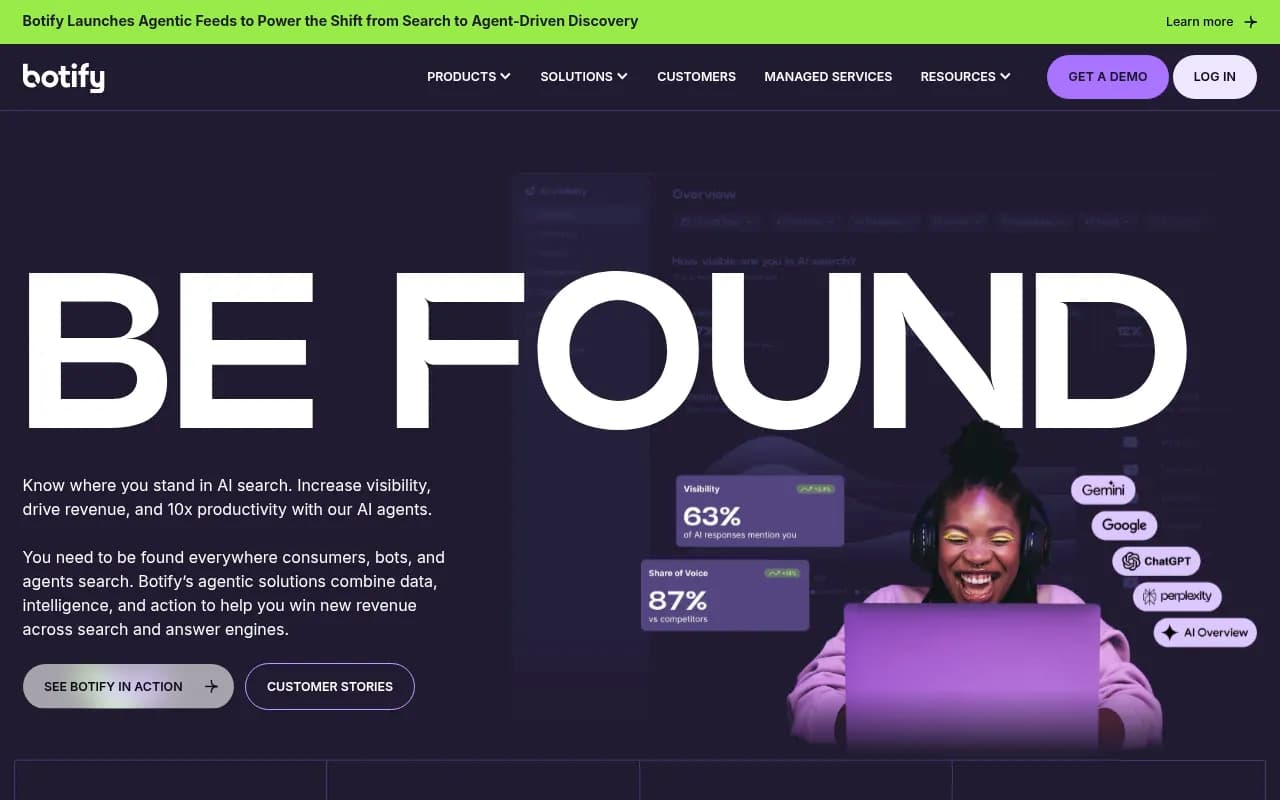
ZipTie gets Zapier's nod for deep analysis and reporting, Nudge pitches agentic commerce with AEO tooling, and Botify suits large catalogs where crawl budget and rendering are real problems.
For a wider sweep, the GEO software directory at bestgeosoftware.com lists many more.
Comparison table
| Platform | Best for | Crawler logs | Shopping tracking | Content creation |
|---|---|---|---|---|
| Promptwatch | Retailers who want to track and fix | Yes | Yes (ChatGPT Shopping) | Yes, with CMS publishing |
| Profound | Large enterprise monitoring | Limited | No | No |
| Peec AI | Simple prompt tracking | No | No | No |
| Otterly.AI | Budget monitoring | No | No | No |
| Scrunch | AI readability of your site | Partial | No | Limited |
| Semrush | Teams already on Semrush | No | No | Separate tools |
| Similarweb | Competitive traffic context | No | No | No |
Feature cells reflect what I could confirm and general positioning. Verify with each vendor before buying.
Tools that look related but aren't visibility platforms
Research for this guide surfaced several "AI tools for fashion" lists: Crescendo.ai (shopping assistant), NewArc.ai (design), PICTOFiT and Mirrago (virtual try-on), Syte (visual discovery). These are useful retail tools. They improve on-site experience, design or conversion. They do not tell you whether ChatGPT recommends your jackets. Don't let a vendor blur that line.
A practical rollout for a fashion brand
- Run a free scan first. A no-login AI visibility report or a free checker will show where you stand before you spend.
- Build a prompt set around occasions, not just brands. Think "what to wear to a summer wedding," "best waterproof jacket for commuting," "sustainable denim brands." Add your top three competitors.
- Check crawler access. Make sure AI bots can fetch your product and category pages. Complete Product schema, accurate prices and availability, and a clean merchant feed are the basics Promptwatch recommends for shopping features.
- Fix product pages for comparison. Clear pricing, materials, fit and audience. Add occasion and use-case language to descriptions, which is the tactic Alhena's guide leads with.
- Get into the roundups. Since listicles take 15.0% of commercial citations, find the "best of" articles that already get cited and pitch them. Collect reviews on trusted sites too, and add a brand FAQ page.
- Re-measure monthly. Citation behavior moves. Reddit's share of ChatGPT citations fell from about 4% to 0.5% on August 14, 2026, per Promptwatch Data, so a channel that worked in spring may not now. AI Overviews still draws 12.2% of citations from social platforms, against 0.46% for ChatGPT (Sep 28 to Oct 4, 2026), so social content may matter more for Google surfaces than for ChatGPT.
If you'd rather hire help
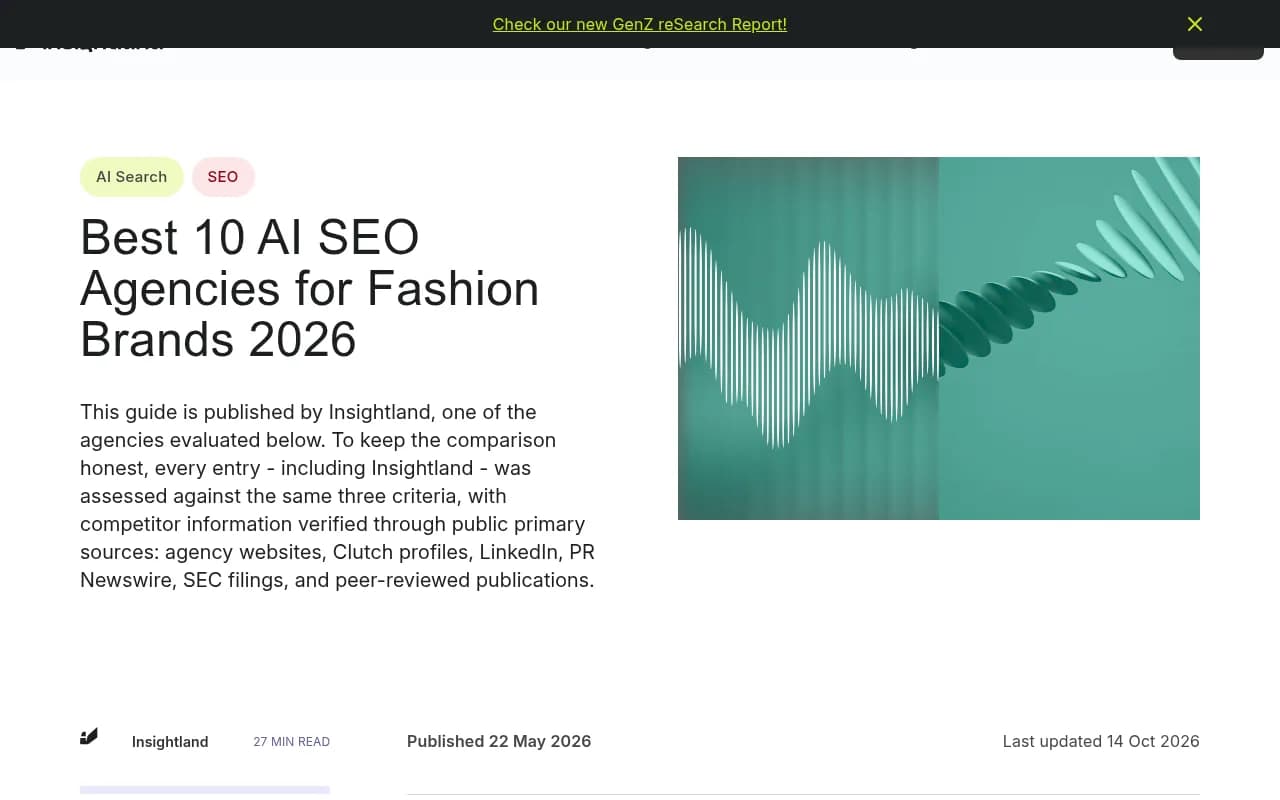
Some brands don't have an in-house team to run this. Agencies exist for it, including 1001 SEO Media, which publishes this site and runs technical SEO, content and GEO work using Promptwatch. Insightland also publishes a fashion-focused agency comparison, though note it ranks itself first, which is worth keeping in mind when reading it.
Which one should you pick
- Small DTC brand, tight budget: start with Promptwatch's free tier or Otterly.AI, and check whether you need more than monitoring.
- Mid-market retailer with a content team: Promptwatch Essential or Professional. The gap analysis and content tooling are what turn data into pages.
- Enterprise apparel group: Profound or Promptwatch Business/Enterprise, depending on whether you want reporting alone or execution too.
- Agency managing several labels: Promptwatch's agency plans, with white-label reports.
Whatever you choose, judge it on one test: after a month, can you name three specific pages you changed because of it, and see whether they got cited? If not, you bought a dashboard.