Key takeaways
- 73% of B2B buyers use AI tools like ChatGPT and Perplexity during the research process, but each engine cites sources differently -- optimizing for one won't automatically help you in the others.
- ChatGPT favors authoritative, structured content with clear statistics; Perplexity rewards freshness, Reddit presence, and direct answers; Google AI Mode requires traditional SEO foundations plus E-E-A-T signals.
- Most AI visibility platforms only monitor -- they show you where you're invisible but don't help you fix it. A handful go further with content gap analysis and generation.
- For B2B companies, the highest-priority engines are ChatGPT (67% enterprise adoption) and Copilot (58%), with Perplexity still growing fast at 18% enterprise penetration but accelerating quickly.
- The right platform depends on your team's maturity: monitoring-only tools work for early-stage tracking, but companies serious about winning AI citations need optimization capabilities too.
B2B buying has changed faster than most marketing teams have adapted. A prospect researching your category today doesn't just Google it -- they ask ChatGPT, run a comparison in Perplexity, and check what Gemini says about your competitors. By the time they fill out a demo form, they've already formed an opinion based on what AI told them.
The problem? Most B2B companies have no idea what those AI engines are saying about them, let alone whether they're being cited at all.
This guide breaks down how the major AI engines differ in their citation behavior, which ones matter most for B2B pipeline, and which visibility platforms are actually worth using in 2026.
How ChatGPT, Perplexity, and Google AI Mode cite B2B content differently
Before picking a platform, it helps to understand what you're actually optimizing for. These three engines don't work the same way, and the content that gets cited in one often gets ignored by another.
Analysis of 680 million citations across ChatGPT, Google AI Overviews, and Perplexity (from Averi's 2026 benchmarks report) reveals some clear patterns:

ChatGPT
ChatGPT tends to favor content that reads like a well-researched reference document. Think Wikipedia-style comprehensiveness: factual, structured, with clear hierarchical headings and statistics that have proper attribution. Sections around 120-180 words perform better than either very short or very long blocks. Branded domain authority matters here -- established domains with consistent publishing histories get cited more often than newer sites with similar content quality.
If your B2B website reads like a product brochure, ChatGPT probably isn't citing you. If it reads like a thorough, data-backed resource, your chances improve significantly.
Perplexity
Perplexity is a different beast. It's built around real-time search, which means freshness signals matter a lot. It also has a notable tendency to surface Reddit threads and community discussions -- which is unusual for a B2B context but increasingly important. Comparison tables with extractable data perform well, as do short lead paragraphs (40-60 words) that answer the question directly before elaborating.
The practical implication: if your brand has no presence in community discussions and your content hasn't been updated recently, Perplexity is less likely to cite you even if your content is technically good.
Google AI Mode
Google's AI Mode (which has largely replaced traditional AI Overviews for complex queries) still leans heavily on traditional SEO signals. If you're not in the top 10 organic results for a query, your chances of appearing in the AI answer drop sharply. E-E-A-T signals, schema markup, and multi-modal content (text plus images or video) all help. Cross-platform entity consistency -- your brand being described consistently across multiple sources -- is also a factor.
The short version: Google AI Mode rewards brands that have already done the SEO work. The other two engines are more willing to surface newer or less-established sources if the content quality is right.
Which AI engines should B2B companies prioritize?
The honest answer is: it depends on your buyers, but the data points to a clear starting order.
According to research across 680 million citations, enterprise buyers show the following AI tool adoption rates:
- ChatGPT: 67% of enterprises
- Microsoft Copilot: 58%
- Perplexity: 18% (but growing fast -- 89% growth in recent quarters)
- Google AI Mode: widespread but harder to attribute directly
For most B2B companies, ChatGPT and Copilot are where your buyers are right now. Perplexity is where they're heading, especially in tech-forward industries. Google AI Mode is table stakes -- you need to be there, but it's less of a new channel and more of an extension of existing SEO.
The mistake most marketing teams make is treating all AI engines as interchangeable. They're not. A strategy that gets you cited in ChatGPT won't automatically translate to Perplexity visibility, and vice versa.
What to look for in an AI visibility platform
The market has exploded with tools claiming to track "AI visibility." Most of them do roughly the same thing: run your target prompts through a set of AI engines on a schedule and report back on whether your brand appeared. That's useful, but it's only the first step.
Here's what separates a genuinely useful platform from a dashboard that just shows you bad news:
Prompt intelligence. Can the platform tell you which prompts your buyers are actually using, not just the ones you guessed? Volume estimates and difficulty scores matter for prioritization.
Competitor benchmarking. Knowing your own visibility score is less useful than knowing how you compare to the three competitors your buyers are also evaluating.
Content gap analysis. Which prompts are your competitors winning that you're not? This is where the real opportunity lives.
Content generation. Some platforms stop at telling you what's missing. The better ones help you create content that fills those gaps -- content grounded in citation data, not generic SEO templates.
Traffic attribution. Can you connect AI visibility to actual website traffic and pipeline? Without this, you're optimizing a vanity metric.
Crawler logs. Do you know which AI crawlers are hitting your site, which pages they're reading, and how often? Most teams don't, and it matters for understanding how AI engines discover your content.
The best AI visibility platforms for B2B in 2026
Here's a comparison of the platforms most relevant to B2B marketing and SEO teams:
| Platform | Best for | AI engines tracked | Content generation | Crawler logs | Starting price |
|---|---|---|---|---|---|
| Promptwatch | End-to-end optimization | 10+ | Yes (AI writing agent) | Yes | $99/mo |
| Profound | Enterprise research & analytics | 10 | No | No | $99/mo |
| Otterly.AI | Budget monitoring | 4-6 | No | No | $29/mo |
| Peec AI | Multi-model tracking | 10 | No | No | ~$85/mo |
| SE Visible (SE Ranking) | Multi-brand tracking | 5 | No | No | $99/mo |
| Nightwatch | SEO + AI combined | 4 | No | No | $32/mo + add-on |
| Evertune | Enterprise brand monitoring | Multiple | No | No | Custom |
| AthenaHQ | Monitoring-focused teams | 8+ | No | No | Custom |
Promptwatch
Promptwatch is the platform that goes furthest beyond monitoring. Where most tools show you that you're invisible for a prompt, Promptwatch shows you why and gives you the tools to fix it. The Answer Gap Analysis identifies specific prompts where competitors are being cited but you aren't. The built-in AI writing agent then generates content -- articles, listicles, comparisons -- grounded in actual citation data from 880M+ citations analyzed.
For B2B teams, the crawler logs feature is particularly useful. You can see exactly which AI crawlers (ChatGPT, Claude, Perplexity, etc.) are visiting your site, which pages they're reading, and whether they're hitting errors. Most platforms don't offer this at all.
It also tracks Reddit and YouTube as citation sources -- relevant because Perplexity in particular surfaces community content heavily. And for e-commerce-adjacent B2B (think software with product listings), ChatGPT Shopping tracking shows when your brand appears in product recommendation carousels.

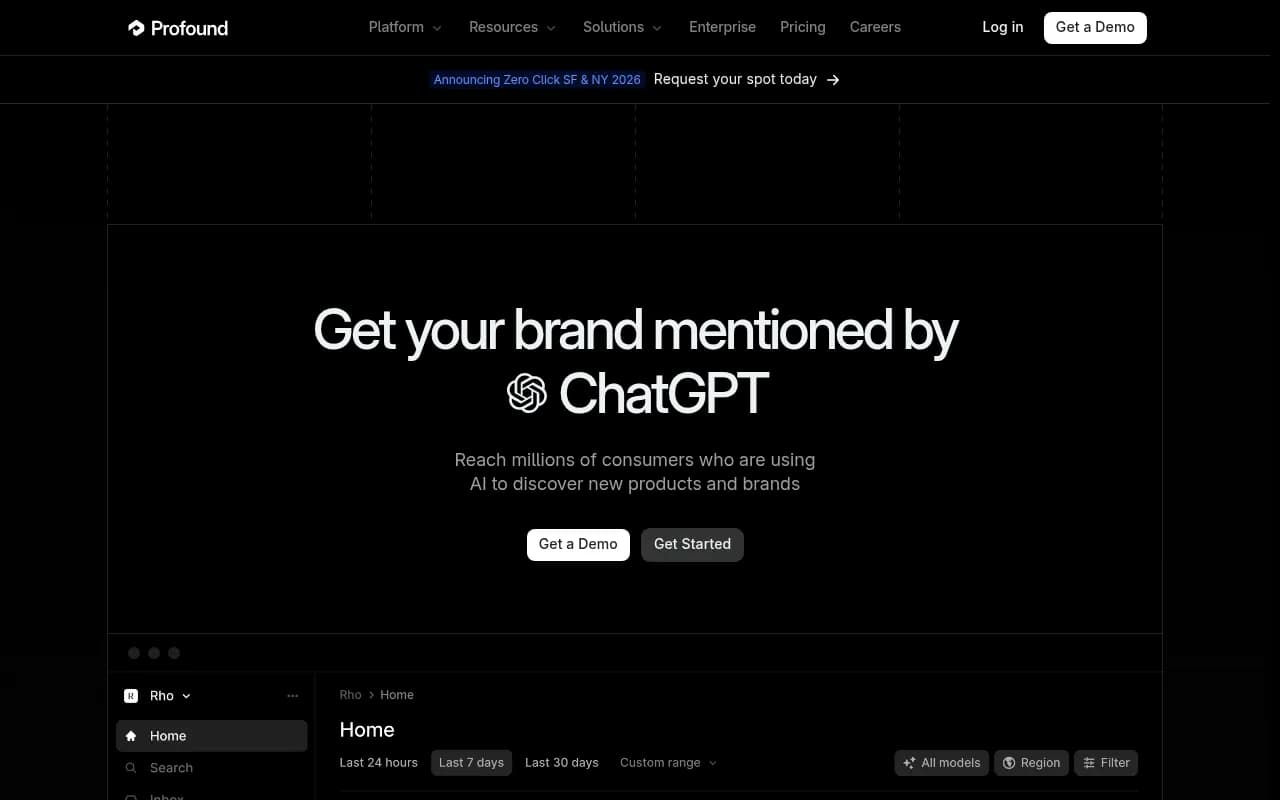
Profound
Profound is a solid enterprise option with strong research capabilities. It tracks up to 10 AI engines and provides prompt volume data, which helps with prioritization. The analytics layer is more developed than most competitors. The gap is on the action side -- it doesn't generate content or provide crawler logs, so you'll need other tools to act on what you find.
Otterly.AI
Otterly.AI is the entry point for teams that want to start tracking without a big budget. At $29/month, it covers four base AI engines with add-ons available. It won a Gartner Cool Vendor recognition in 2025, which gives it some credibility. But it's firmly a monitoring tool -- no content generation, no crawler logs, no traffic attribution. Good for getting started; limiting if you want to actually improve your visibility.

Peec AI
Peec AI offers flexible multi-model tracking with up to 10 engines available through add-ons and unlimited seats, which makes it attractive for agencies managing multiple clients. The monitoring capabilities are solid. Like most competitors, it stops short of helping you act on the data.

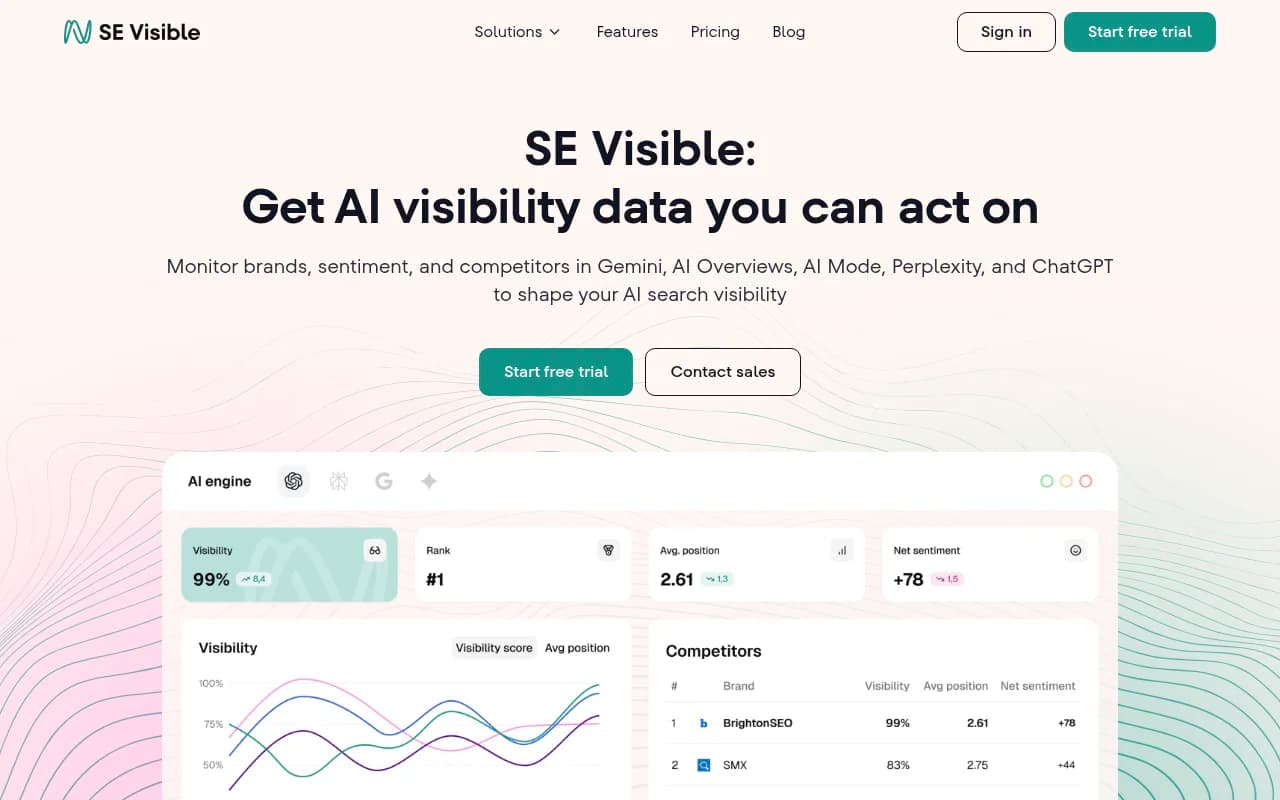
SE Visible (SE Ranking)
SE Ranking's AI visibility product tracks five engines with multi-brand dashboards and unlimited seats. It's a natural choice for teams already using SE Ranking for traditional SEO, since the data lives in one place. The AI visibility features are competent but not deep -- it covers the basics without the advanced gap analysis or content tools that more specialized platforms offer.
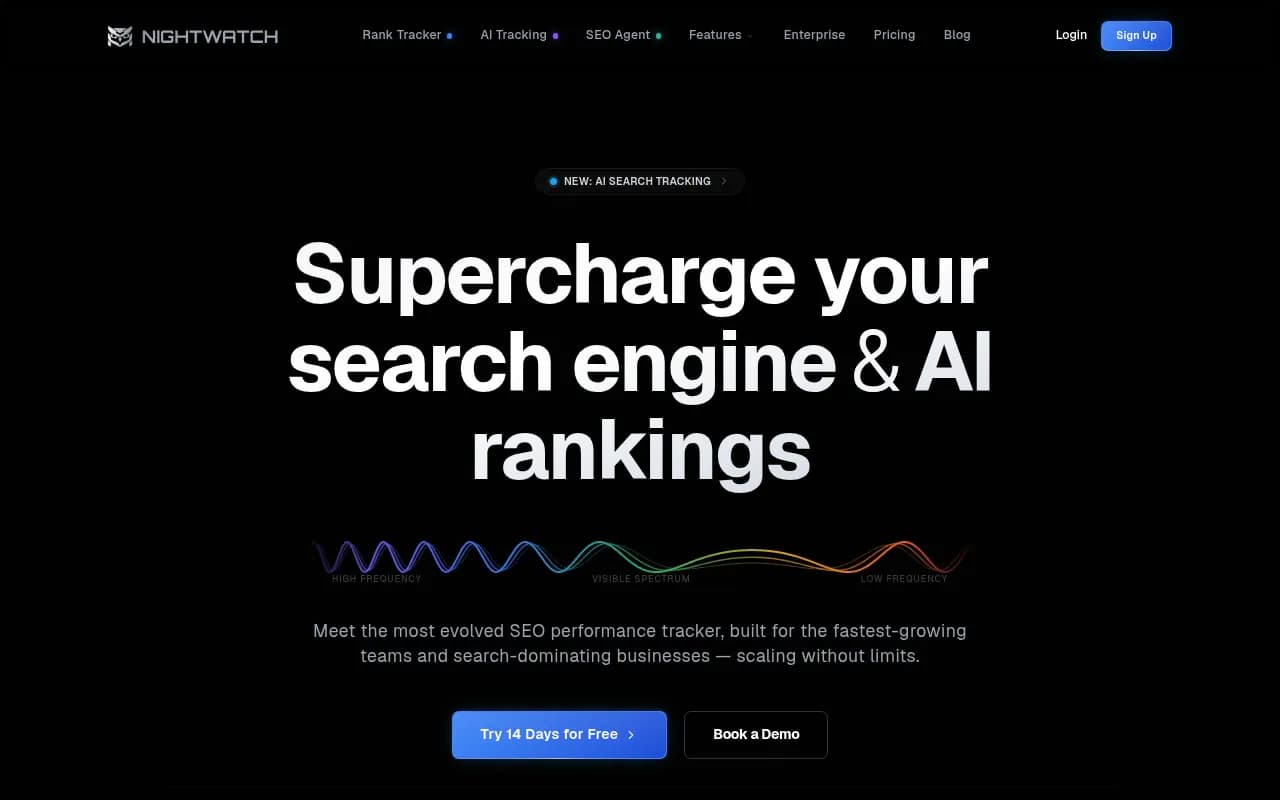
Nightwatch
Nightwatch combines traditional SERP monitoring with an AI visibility add-on, which is useful if you want both in one subscription. The AI tracking covers four engines. It's a reasonable choice for smaller B2B teams that need both SEO rank tracking and basic AI visibility without managing two separate tools.
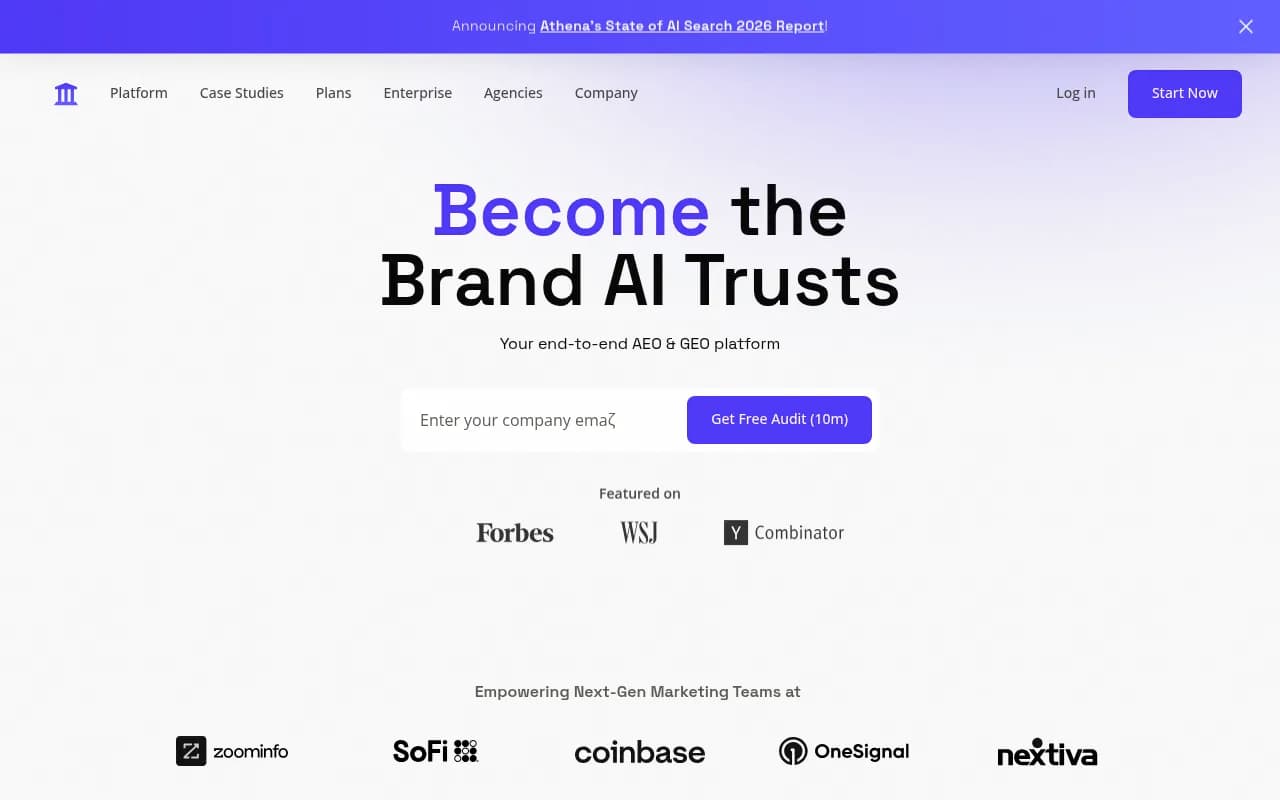
AthenaHQ
AthenaHQ covers 8+ AI search engines and has a clean interface for monitoring brand mentions and share of voice. It's monitoring-focused, which means it's good at showing you the current state but doesn't provide the content optimization or generation capabilities to change it.
How B2B companies are actually winning AI citations
The mechanics of getting cited in ChatGPT or Perplexity aren't magic -- they follow patterns that are learnable and repeatable.
Structured, answer-ready content
AI engines extract answers from content. If your pages are written as long-form narratives without clear structure, they're harder to cite. Pages with explicit question-and-answer sections, comparison tables, and short direct paragraphs get cited more often. The 40-60 word "extractable answer block" format -- a direct answer to a question before any elaboration -- is particularly effective across multiple engines.
Statistics with sourcing
Both ChatGPT and Perplexity favor content that includes specific statistics with clear attribution. "Studies show that..." gets ignored. "According to Gartner's 2025 B2B Buyer Survey, 73% of buyers..." gets cited. If your content is full of vague claims, it's competing poorly against content that cites specific numbers.
Freshness signals
Perplexity especially rewards content that's been recently updated. Adding a visible "last updated" date, refreshing statistics annually, and publishing new content regularly all help. For B2B companies with mostly static product pages, this is often the easiest quick win.
Community presence
This one surprises most B2B marketers. Perplexity surfaces Reddit threads, industry forums, and YouTube discussions as citation sources. If your brand is being discussed positively in those channels -- or if your team is contributing genuinely useful answers there -- it feeds directly into AI visibility. Ignoring community channels means ignoring a real citation source.
Competitor gap analysis
The highest-leverage activity for most B2B teams is finding the specific prompts where competitors are being cited and they aren't. These are prompts where buyers are actively researching, AI engines have already decided to answer them, and you're simply not in the conversation. Filling those gaps with targeted content is more efficient than trying to improve visibility across every possible query.
Tools like Promptwatch make this systematic -- the Answer Gap Analysis surfaces exactly these opportunities, ranked by prompt volume and difficulty.
Building a B2B AI visibility strategy
A few practical steps for teams starting from scratch:
Start by auditing what AI says about you now. Run your top 20 buyer prompts through ChatGPT, Perplexity, and Google AI Mode manually. Note which competitors appear and where you do or don't. This gives you a baseline before you invest in any platform.
Pick two or three engines to prioritize. For most B2B companies, ChatGPT and Google AI Mode are the right starting points. Add Perplexity if your buyers are in tech or research-heavy roles.
Map your content to buyer prompts, not just keywords. AI engines respond to natural language questions, not keyword-stuffed titles. Think about what your buyers actually ask: "What's the best [category] software for [use case]?", "How does [your product] compare to [competitor]?", "What should I look for when buying [category]?"
Fix the structural issues first. Before creating new content, audit existing pages for extractable answer blocks, clear headings, and cited statistics. Often, reformatting existing content produces faster results than writing new pages.
Track the results. AI visibility without attribution is just a vanity metric. Connect your visibility tracking to actual traffic and pipeline -- whether through a code snippet, Google Search Console integration, or server log analysis.
The B2B companies winning in AI search right now aren't doing anything exotic. They're publishing structured, specific, well-sourced content, keeping it fresh, and tracking what's working. The companies losing are the ones still treating AI search as a future problem.
It's not future. It's where your buyers are researching right now.