Key takeaways
- Most AI visibility tools stop at monitoring. A smaller group adds a content agent that plans, writes, and publishes to a CMS. That is the category this guide covers.
- The questions that separate them: which CMSs they publish to, whether you can review drafts before they go live, and whether the tool measures what happened after publishing.
- Promptwatch has the most complete loop in this group: gap analysis, a Content Agent, publishing to WordPress, Webflow and Framer, then crawl, citation and traffic tracking per page.
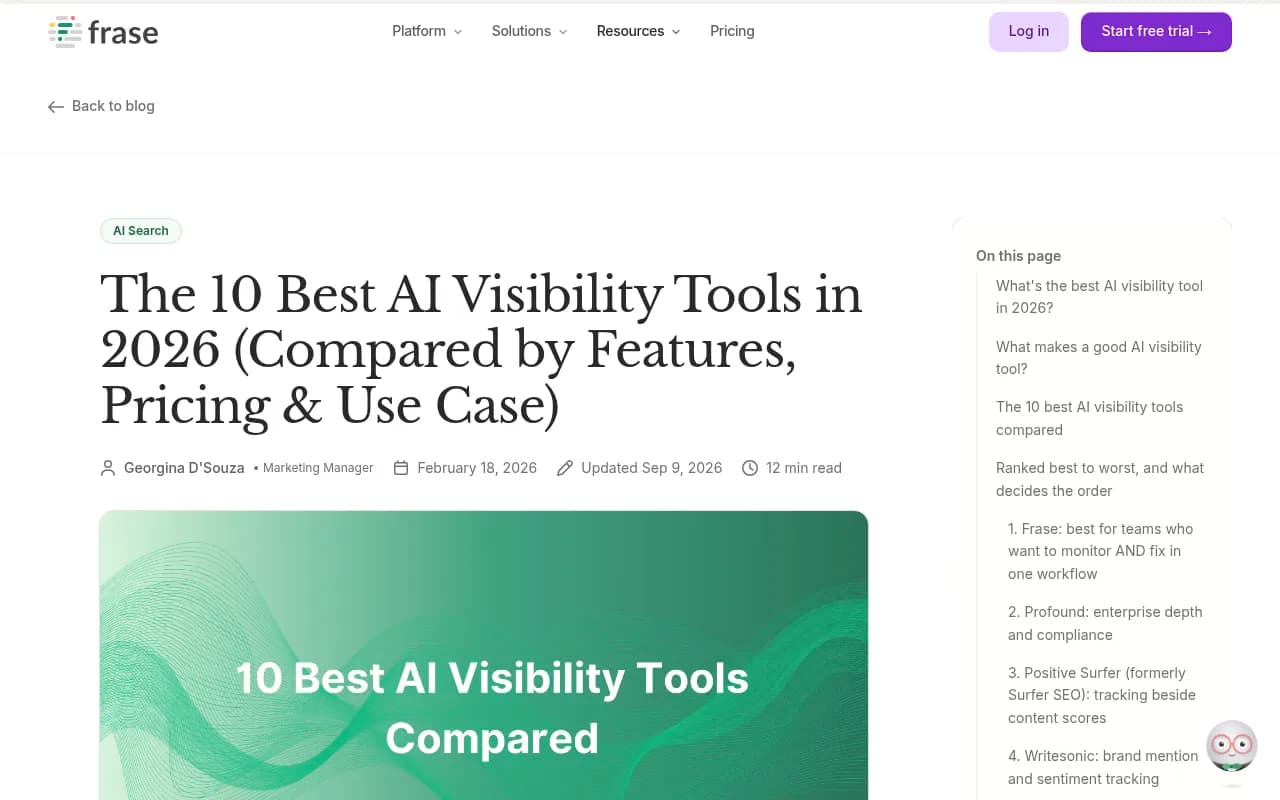
- Alternatives such as Frase, Gradial GEO, RankSpot, Searchatlas and Writesonic cover parts of the loop at different price points and depths.
- Publish by intent and plan refreshes. Promptwatch Data shows product and landing pages dominate ChatGPT citations, and news decays within weeks.
Why a content agent matters now
A dashboard that says your brand showed up in 12% of answers is useful for about a week. After that the question is what you do about it. Writing the fix by hand, formatting it, uploading it to the CMS, and then checking whether ChatGPT ever picked it up is a lot of manual steps, and most teams drop off somewhere in the middle.
That is the pitch for content agents: close the loop between insight and published page. The pitch is also where vendors get sloppy, so it is worth being precise about what the term should mean.
A real content agent does four things. It finds gaps (prompts where competitors get cited and you don't). It drafts content grounded in your brand facts and real source data. It publishes to your CMS on a schedule you control. And it checks, later, whether the page got crawled, cited, and clicked. Tools that only do the second step are AI writers. Tools that only do the first and fourth are trackers. Very few do all four.
The Frase guide that circulates in this space makes the same split: its main sorting question is whether a tool stops at the alert or helps you fix the gap. I agree with that framing, even if I'd draw the line in a different place.
What to check before you buy
CMS coverage
Sounds obvious, and is where deals fall apart. Confirm the exact CMS you use. WordPress support is common. Webflow and Framer are less so. Headless setups, Shopify blogs and custom stacks usually mean a webhook or an API, and some vendors will tell you that's "supported" when they mean "you can build it." Ask whether localized collections and field mapping work, because a tool that dumps everything into a single body field will leave you cleaning up formatting.
Review controls
Fully automated publishing sounds great until the agent publishes a page with a wrong price. You want a review inbox with approve, edit and decline, plus a hands-off mode you can switch on once you trust the output. Publish windows and a monthly budget matter too, so volume doesn't surprise you.
Grounding in your facts
Generic AI articles don't get cited. A good agent pulls from a knowledge base or brand book (positioning, facts, tone, source documents) and from live data about what AI engines already cite. Ask where the draft's facts come from.
Measurement after publishing
This is the one most buyers skip. If the platform can't show you crawler visits, citations and AI-referred traffic for each published page, you are back to guessing. Underperformers should come back as tasks.
Data source
Tools that query APIs only can show different answers than people see in the ChatGPT or AI Overviews interface. Real-UI tracking is closer to what your customers experience.
Comparison table
| Platform | Content agent | CMS publishing | Post-publish tracking | Best for |
|---|---|---|---|---|
| Promptwatch | Yes, with calendar, budget, review inbox | WordPress, Webflow, Framer | Crawler logs, citations, AI traffic per page | Teams wanting the full loop |
| Frase | Yes, research, draft, score for SEO and GEO | Publishes to CMS | Visibility tracking | Content teams already using Frase for briefs |
| Gradial GEO | Agentic, detects gaps and publishes fixes | Enterprise CMS workflows | Gap detection | Large enterprise stacks |
| RankSpot | Finds opportunities, publishes | Direct CMS publishing | Limited | Small teams wanting simple automation |
| Searchatlas LLM Visibility | Deploys fixes and content | Automated deployment | Visibility reporting | Teams already in Searchatlas |
| Writesonic | Content plus AI visibility tracking | Integrations | Tracking | Writers who want tracking bundled in |
| Profound | Monitoring-led, strong enterprise depth | Check with vendor | Citation analytics | Enterprise monitoring |
I did not verify pricing or the exact CMS list for most of these. Check each vendor's integrations page before you commit, because these change quickly.
The platforms
Promptwatch
Promptwatch is the one I'd start with if the goal is the whole loop rather than one piece of it. It tracks real interfaces (ChatGPT, Google AI Overviews, AI Mode, Gemini, Perplexity, Copilot and others) by country and language, then uses that data to drive the Content Agent.

Here is how the loop works in practice. Content gap analysis maps your pages against the prompts AI answers, with coverage scores. The Content Agent (Business and Enterprise plans) plans and writes against those gaps, with a publishing calendar, monthly budget and publish windows. Drafts land in a review inbox where you approve, edit or decline, or you can run it hands-off. Publishing goes to WordPress, Webflow (including localized collections) and Framer with AI field mapping. A Knowledge Base and Brand Book keep facts and tone consistent.
Then the part most tools lack. Published pages are tracked through IP-verified AI crawler logs, citations and AI-referred visitor analytics, and underperformers return as items on the Action Board. Crisp used this approach to scale to 5-10 articles per day and reported 2x higher conversion from AI traffic than from traditional channels.
Pricing, in USD per month: Essential is $95, Professional $245 (includes 5 AEO articles), and Business $579 (the automated Content Agent, 10 AEO articles, state and city tracking). Agency plans start at $199 but don't include the Content Agent. Confirm current numbers at promptwatch.com/pricing.
The honest downside: the full automated Content Agent sits on Business and above, so smaller teams get single-article creation and refresh rather than the scheduled agent.
Frase
Frase started as a content brief and optimization tool and has moved toward AI visibility. Its pitch is one workspace where you research the gap, draft in your brand voice, score the page for SEO and GEO, and publish to your CMS. Frase also offers free tools, an AI Visibility Checker and a GEO Score, which are handy for a first look.
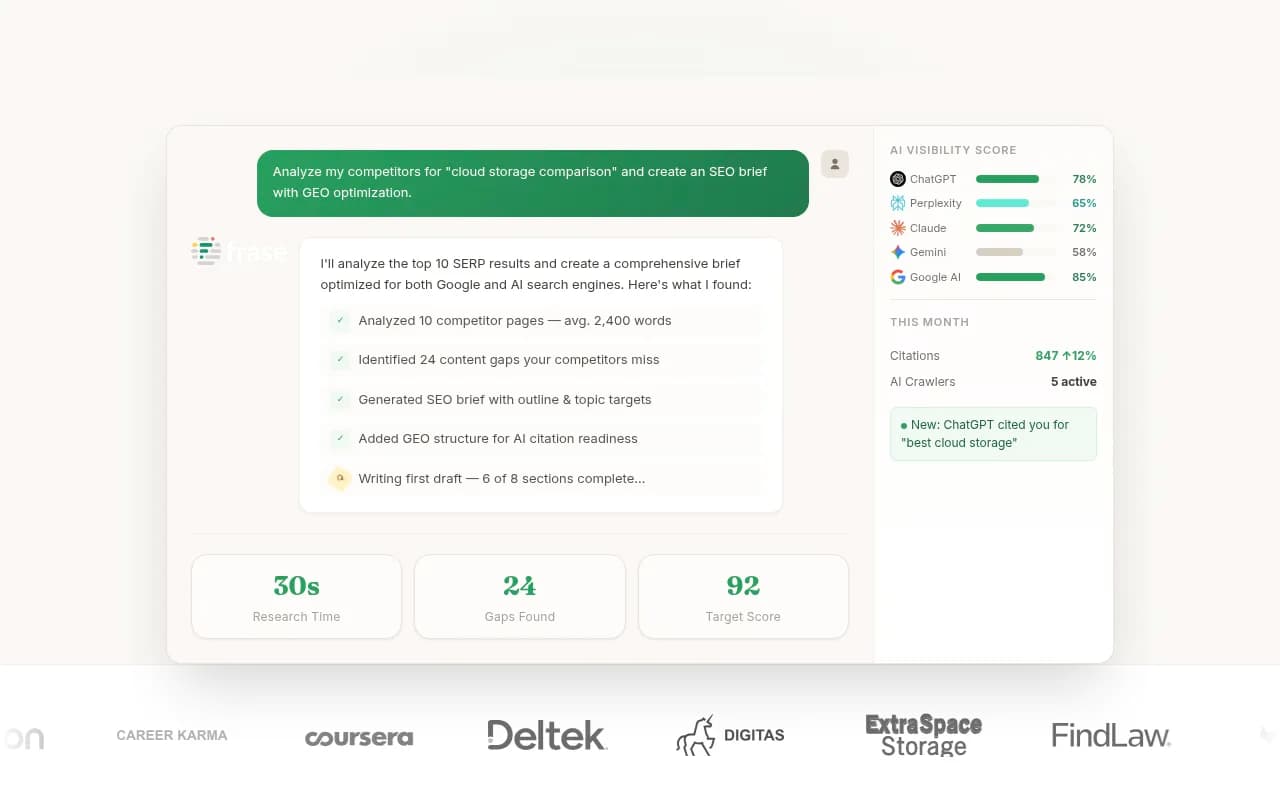
If your team already lives in Frase for content briefs, adding its visibility tracking is a natural step. Where it is thinner, based on its own positioning, is the depth of the data underneath: crawler logs and per-page AI traffic attribution aren't the headline.
Gradial GEO
Gradial describes itself as agentic GEO that detects visibility gaps and publishes the fix. It is aimed at larger organizations with complex content operations, where the publishing step runs through approvals and enterprise systems.

RankSpot
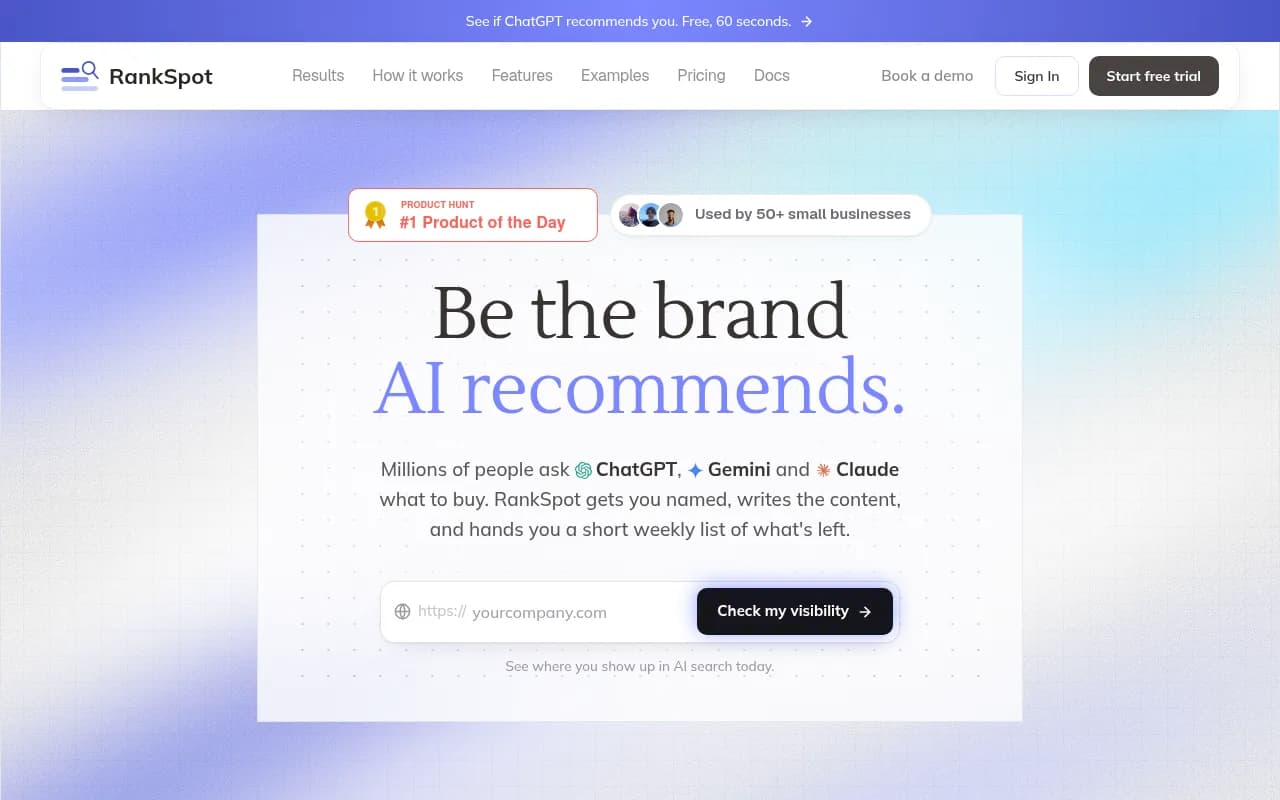
RankSpot finds SEO opportunities and publishes straight to your CMS. It is closer to an autopilot content tool than a visibility platform, which is fine if you want volume with minimal setup and don't need deep AI citation analytics.
Searchatlas LLM Visibility
Searchatlas pairs LLM visibility with its automation, deploying fixes and content directly. The appeal is consolidation if you already use it for SEO.

Writesonic
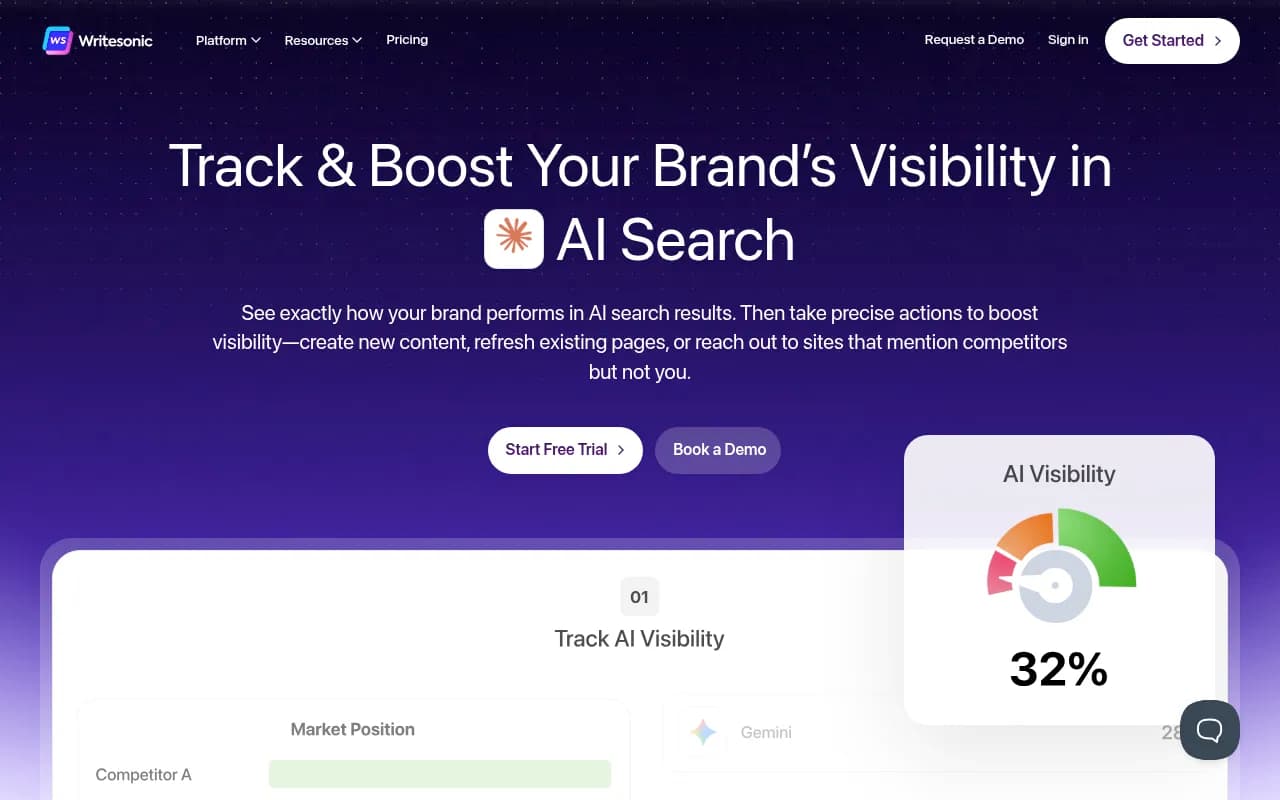
Wriesonic grew from an AI writer into a platform that tracks, optimizes and creates content for AI search. For writers who want tracking in the same tool they draft in, it is a reasonable fit.
Monitoring-first platforms worth knowing
Profound is the heavyweight for enterprise monitoring and ranks itself first in its own comparisons, which is worth keeping in mind when reading them. Peec AI and Otterly.AI are cleaner, cheaper trackers without the publishing side. If you plan to pair a tracker with a separate writing tool, they work, but you are building the loop yourself.



For a wider list, the GEO software directory at bestgeosoftware.com is a good place to browse by category.
What to publish: use citation data, not guesses
A content agent publishing the wrong content type at volume is just a faster way to waste budget. Promptwatch's data on ChatGPT citation share by content type (Sep 28 to Oct 4, 2026) gives a useful starting point:
| Content type | Share of ChatGPT citations |
|---|---|
| Product pages | 22.4% |
| Landing pages | 16.8% |
| Listicles | 13.6% |
| How-tos | 8.7% |
| Documentation | 7.5% |
| Comparisons | 5.9% |
| News | 5.7% |
For commercial prompts, product pages, landing pages, listicles and comparisons together are almost 70% of citations. For informational prompts, how-tos and docs earn a bigger slice than average. So the practical rule is to map content to prompt intent. Don't point an agent at a pile of generic blog topics and hope.
Plan refreshes from day one
Promptwatch's content half-life data tracked pages ChatGPT cited on July 6, 2026 through October 4. After 60 days, ChatGPT still cited about 69% of landing pages and 67% of docs, but only 55% of product pages, reviews and how-tos. News fell fastest: half of cited news pages were gone after 36 days.
Two takeaways for agent setup. Treat landing pages, docs and pricing pages as long-term assets. And schedule refreshes for product pages and how-tos, because they decay sooner than most people expect. Ask any vendor whether the agent can update existing pages, not just create new ones.
A sensible rollout
- Fix access first. If AI crawlers hit errors on your site, new content won't matter. Check crawler logs and run a site audit before you publish anything.
- Start with the review inbox on. Approve the first 20 or so drafts yourself and edit the brand book when you see repeated mistakes.
- Publish to a small set of intents (say, comparisons and how-tos) and watch which get crawled and cited.
- Turn on hands-off mode for the content types that consistently pass review.
- Check results monthly against AI-referred traffic and conversions, not just mention counts.
Skipping step one is the most common mistake. Free options help here, such as the Agentic Readiness Check and the AI Crawler URL Inspector from Promptwatch, or Frase's free AI Visibility Checker for a quick baseline.
Which one should you pick?
- You want the full loop with measurement, multiple CMSs and review controls: Promptwatch.
- You already use Frase for content briefs and want visibility added: Frase.
- You are enterprise with approval-heavy workflows: Gradial GEO, or Promptwatch Enterprise with managed content workflows.
- You want lightweight autopilot publishing: RankSpot.
- You only need monitoring today: Peec AI or Otterly.AI, and revisit when you are ready to act.
If you would rather hand strategy to people, 1001 SEO Media runs GEO programs for brands and uses Promptwatch as its AI visibility platform. It is the same agency that publishes this site, so weigh that accordingly.
Whatever you choose, test the claim that matters most: ask the vendor to show a page that was published by the agent, then crawled, then cited, with the dates. If they can't, you are buying a tracker with a writer attached.