Key takeaways
- Mention counts and visibility scores are not revenue proof. You need AI-referred traffic, conversions, and a link from cited pages to the content that earned them.
- Four evidence layers matter: crawler logs, citation data, visitor analytics, and CRM or analytics joins. Most tools cover one. A few cover two.
- Citation behaviour differs sharply by engine and shifts within weeks, so a single blended score will mislead you.
- Promptwatch is the most complete option for closing the loop from insight to action to measured traffic. Profound, Evertune, and Semrush each fit narrower cases.
- Many vendor roundups are written by vendors. Treat rankings from Profound, Evertune, and others as marketing, and verify pricing on each vendor's own page.
Why revenue proof is the real buying criterion
A year ago, the question in most marketing meetings was whether the brand showed up in ChatGPT at all. Now the CFO asks what it is worth. A dashboard that says your visibility score rose six points does not answer that.
Revenue proof has a specific meaning here. It is a chain: an AI system crawls your page, cites it in an answer, a person clicks, and that person converts. If a tool shows you only the second link in that chain (the mention), you are guessing about the rest.
When I look at these platforms, I split them into two groups. Prompt trackers answer "was my brand mentioned?" Platforms built for marketing leaders answer "what did this channel produce, and what should we do next?" The rest of this guide is about the second group.
What revenue proof requires from a platform
Here is the checklist I would bring to every demo.
1. AI-referred traffic and conversions
The tool should tell you how many visitors arrived from ChatGPT, Perplexity, Gemini, Claude, and Copilot, which pages they landed on, and whether they converted. Without this, you are relying on GA4 referrer guesswork, which undercounts because many AI clicks arrive without clean referrers.
2. Crawler logs
Crawler data shows whether AI systems can read your site at all. If GPTBot hits a 403 on your pricing page, no amount of content work fixes that. Ask whether logs are IP-verified, because spoofed bots inflate crawler numbers. Most monitoring-only tools have no crawler data whatsoever.
3. Real-UI data, not only API responses
What the ChatGPT interface says can differ from what the API returns. If a platform measures only API output, your reported visibility may not match what customers actually see.
4. Breakdown by prompt intent and content type
Promptwatch's data on ChatGPT citations (Sep 28 to Oct 4, 2026) shows why this matters. Across all prompts, product pages were 22.4% of citations, landing pages 16.8%, and listicles 13.6%. For commercial prompts like "best CRM for small businesses," product pages rose to 26.0% and landing pages to 20.6%. For branded prompts, reviews reached 5.6%, more than three times their share across all prompts.
If your platform cannot split by intent, you will optimize the wrong pages. A leader who funds blog posts because "content gets cited" may be ignoring the product and landing pages that carry commercial prompts.
5. Per-engine reporting
Blended scores hide real differences. In the same week, social platforms made up 0.46% of ChatGPT's citations but 12.2% of Google AI Overviews' citations. Perplexity sat at 2.7%. A single "AI visibility score" averaging those engines tells you almost nothing about where to invest. The Reddit shift was abrupt: reddit.com's share of ChatGPT citations dropped from about 4% to 0.5% on August 14, 2026. A strategy built on Reddit presence for ChatGPT would have gone stale overnight.
6. A way to act, and to measure the action
The last test is whether the platform helps you fix gaps and then checks whether the fix worked. Reporting without a to-do list leaves the work to you.
Platform comparison
This table reflects what each vendor positions itself on. Pricing and feature claims move quickly, so confirm on vendor sites before buying. I did not independently verify every claim.
| Platform | Strength | Revenue-proof gap | Best for |
|---|---|---|---|
| Promptwatch | Crawler logs, visitor analytics, citation data, content creation and publishing in one stack | Needs a plan above Essential for the automated Content Agent | Marketing teams that want visibility tied to traffic and action |
| Profound | Large-scale prompt data, enterprise reporting, agency mode | Higher price point; vendor claims of 1.9B+ prompts are self-reported | Large enterprises and agencies |
| Evertune | Enterprise GEO and brand perception analysis | Weighted toward model-level measurement rather than site-level traffic | Fortune 500 brand teams |
| Semrush | Familiar suite, AI visibility added to existing SEO workflows | Fixed prompt sets and shallower AI-specific data | Teams already living in Semrush |
| Otterly.AI | Fast, low-cost tracking | Monitoring only, no content generation | Small teams starting out |
| Scrunch | Monitoring plus serving AI-optimized pages to crawlers | Prompts are configured rather than pulled from real conversations | Teams wanting a technical delivery approach |
| AthenaHQ | Action-oriented recommendations | Limited attribution to revenue | Mid-market teams wanting prescriptive steps |
The platforms, in more detail
Promptwatch
Promptwatch is the one I would put at the top of a shortlist for this specific job, because it covers more of the chain than the others. IP-verified crawler logs show which AI bots read which pages and where they hit errors. Visitor analytics track actual traffic and conversions from ChatGPT, Perplexity, Gemini, Claude, and others. Citation data shows which of your pages get cited, and a page-level view joins crawls, citations, clicks, and Google Search Console and Bing data.

Then it acts. The Action Board produces a prioritized GEO to-do list, content gap analysis maps your pages against the prompts AI answers, and the Content Agent writes and publishes to WordPress, Webflow, or Framer, then tracks whether each published page gets crawled, cited, and clicked. That feedback loop is what most tools lack.
The customer evidence is specific. Crisp reported 2x higher conversion rates from AI traffic than from traditional channels. TreeHouse, the company behind Pararius, grew AI search to roughly 25% of its organic conversions, nearly all of it from ChatGPT, after fixing crawler access and publishing proprietary rental data.
Pricing starts with a free Explore plan (ChatGPT only), then Essential at $95 per month, Professional at $245, and Business at $579, which is where the automated Content Agent sits. Check promptwatch.com/pricing for current figures. It is ISO/IEC 27001 certified and GDPR compliant, which helps when procurement asks.
The honest caveat: it is not a classic SERP rank tracker, and the content automation only pays off if you are willing to publish at some volume.
Profound
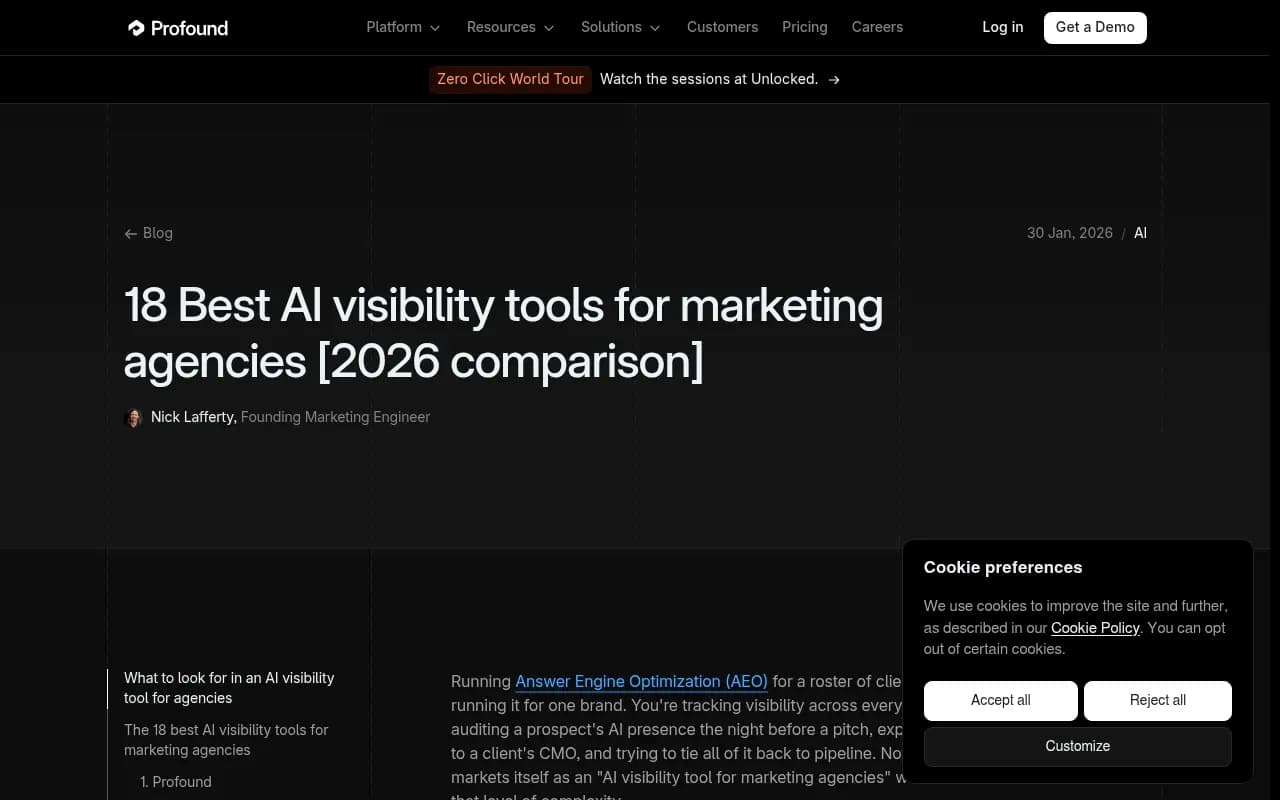
Profound is the heavyweight enterprise name. Its own comparison blog (January 2026) lists agency features such as client workspaces and pitch environments, and claims daily tracking against 1.9 billion real user prompts plus crawler-to-conversion attribution. Those are vendor claims in a vendor-written article, so ask for a live demo of the attribution before believing the headline number.
It is a strong monitoring product at a higher price point. In my reading of the competitive set, it lacks some of the dedicated Reddit, ChatGPT Shopping, and agentic execution coverage that Promptwatch includes.
Evertune
Evertune pitches enterprise GEO for large brands and publishes a ten-tool comparison (July 31, 2026). It sells AI visibility tooling, so the ranking is not neutral. Its focus on how models perceive and portray a brand suits brand and communications leaders more than performance marketers hunting for conversions.
Semrush
Semrush is the safe choice if your team already lives in it. Its AI Visibility Index tracks mentions across AI platforms, and the interface will be familiar. The trade-off is that traditional SEO suites tend to bolt AI tracking on with fixed prompt sets and thinner AI-specific data, and I see no crawler logs or AI traffic attribution comparable to purpose-built platforms.
Otterly.AI, Scrunch, and AthenaHQ
These three show up repeatedly in roundups. Otterly is cheap and quick to set up, but it is a tracker, not an optimizer. Profound's table says Otterly lacks real prompt-volume data and in-platform content generation, and says Scrunch has no content generation and configures prompts rather than pulling them from real conversations. Take that with a grain of salt, since Profound is a competitor, but the gaps are consistent with what the products emphasize.


For more options by category, the GEO software directory at bestgeosoftware.com lists a wide range of trackers.
Connecting AI visibility to pipeline
No AI visibility tool replaces your analytics stack. The best setup layers three things.
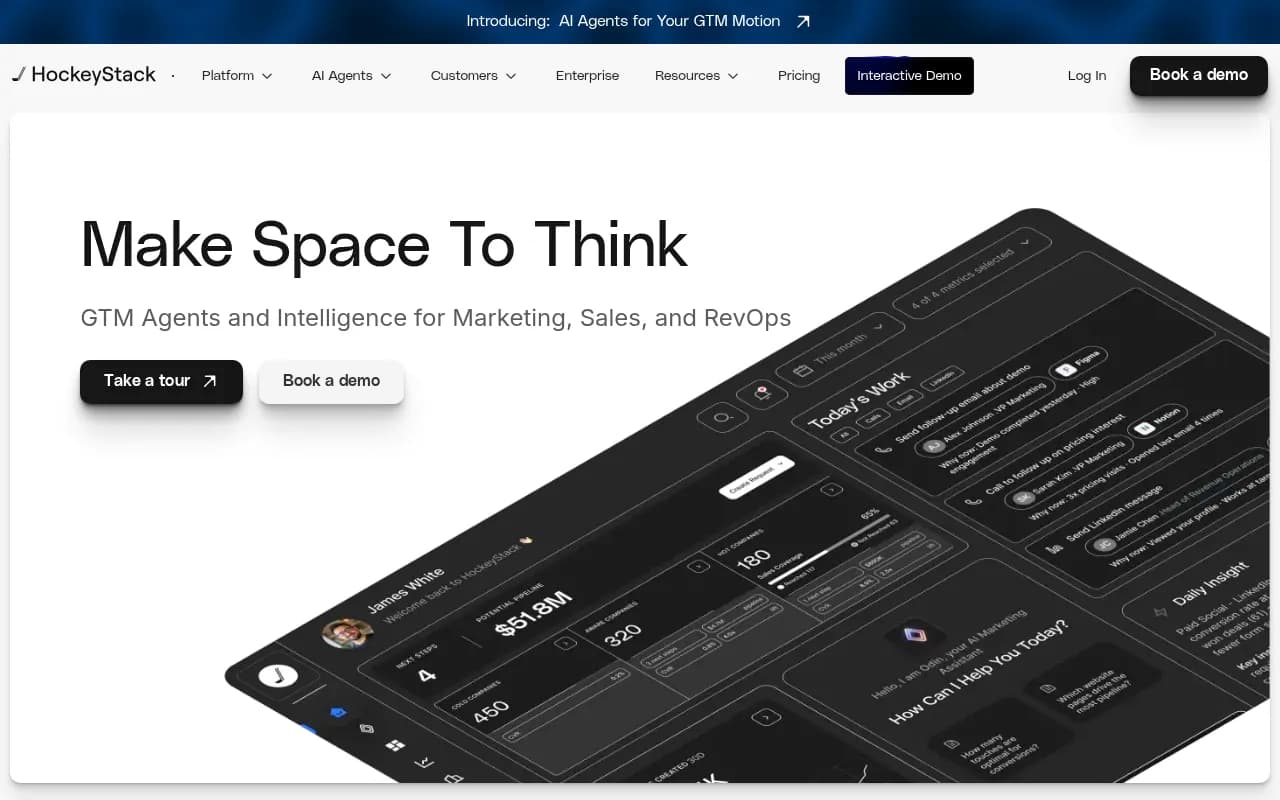
First, a visibility platform that records citations, crawls, and AI-referred sessions. Second, your web analytics and CRM, so AI-referred visitors tagged at landing can be followed through to opportunities and closed revenue. Tools like HubSpot and Salesforce can hold that downstream data, and attribution products such as HockeyStack can help stitch sessions to deals.
Third, a short list of landing pages you expect AI to send traffic to. Tag them, report on them monthly, and compare conversion against organic search. That is how you get a number like Crisp's 2x conversion figure for your own business, rather than borrowing someone else's.
Questions to ask in every demo
- Can you show AI-referred sessions and conversions for a real customer, not just mentions?
- Is the data collected from real user interfaces or from APIs?
- Are crawler logs IP-verified, and which bots do you cover?
- Can I break visibility down by engine and by prompt intent?
- What happens after you find a gap? Who writes, publishes, and measures the fix?
- How does pricing change when I add prompts, countries, or seats?
- Can I export raw data and connect it to my BI tool or CRM?
A vendor that struggles with the first and fifth questions is a monitoring tool, whatever its marketing says.
A note on freshness
AI citation behaviour does not sit still. Promptwatch's data shows landing pages and docs staying cited longest, while news pages lose half their citations within about 36 days. That affects how you report. A single quarterly snapshot is nearly useless. Weekly or daily data with annotations for known shifts, such as the August Reddit drop, gives you something your leadership can trust. More research is collected at the Promptwatch Data hub.
Who should choose what
| If you are... | Start with |
|---|---|
| A marketing leader who must show traffic and conversions from AI | Promptwatch |
| An enterprise brand team focused on perception | Evertune or Profound |
| Already standardized on a big SEO suite | Semrush, then reassess in six months |
| A small team testing the channel on a budget | Otterly.AI or Promptwatch's free Explore plan |
| An agency running many clients | Promptwatch Agencies plans or Profound's agency mode |
If you would rather hand the work to people, an agency that does GEO can run the tooling and the content. 1001 SEO Media is the agency that publishes this site, and it uses Promptwatch for AI visibility work.
Bottom line
Pick the platform that can show you a chain, not a snapshot: crawl, citation, click, conversion. Run a 30-day trial with a short list of commercial prompts, tag your landing pages, and ask each vendor to show your own data. The one that lets you defend a revenue number in a budget meeting is the one worth paying for.
Always confirm current pricing and features on each vendor's site before you sign.