Key takeaways
- A citation is a linked source inside an AI answer. A mention is your brand name in the text. Good trackers separate the two, and many cheaper ones don't.
- Findrix reports that about 65% of ChatGPT's cited links appear only in the Sources panel, not in the answer text. A tool that only reads answer text will undercount you.
- Citation counts move when the AI engine changes, not just when your content does. Promptwatch Data saw average citations per ChatGPT response fall roughly 27% after the GPT-5.3 rollout on March 4, 2026.
- Before buying, run 20 to 30 prompts by hand in ChatGPT and compare them with what the tool reports. The method is below.
- Pricing runs from $29/mo (Otterly.AI) to custom enterprise quotes (Profound). The cheapest tool is not automatically the least accurate, but it often tracks fewer engines.
A note on how this guide was built
The original title promised that every tool was checked against manual ChatGPT results. I want to be straight about what that means here. The tool details below come from vendor pages and published comparisons (mainly Findrix's October 2026 roundup, plus Promptwatch Data), not from my own hands-on test of all ten products. Where a vendor doesn't publish something, I say so. What I can give you is the manual verification method, so you can run the check on your own brand during a free trial. That check is worth more than any reviewer's ranking, because your prompts and your category are what matter.
What AI citation tracking actually measures
AI citation tracking records which web pages an AI engine links to as sources when it answers a question: which URLs, for which prompts, in which engine, and whose pages they are. It is narrower than brand monitoring, which only asks whether your name appears.
The word is overloaded. Academic citation tools (Zotero, Mendeley) and local SEO citation tools (directory listings with your name, address and phone) are different products. This guide is about links inside ChatGPT, Perplexity, Google AI Overviews, AI Mode, and Gemini answers.
Each engine shows sources differently:
- ChatGPT links sources inside the answer and also lists them in a Sources panel.
- Perplexity attaches numbered footnotes to sentences.
- Google AI Overviews and AI Mode show link cards next to the answer.
- Gemini can show source links alongside the response.
A tracker has to parse each of those on its own terms, and that is where tools quietly differ.
Ghost citations
Findrix reports that when an AI answer links to a brand's own site, the brand is not named in about 1 in 8 of those answers. That is a ghost citation: the model used your page and may have recommended someone else. If a tool only reports "cited yes/no," you can't see this. If it only checks brand names in text, you can't see it either. Look for a view like "cited but not mentioned" or a per-URL check of whether the cited page names you.
What to compare when you shop
Four things separate these tools more than any feature list:
- Engines covered, and whether data comes from the real consumer interface or an API. Answers and citations can differ between the two.
- Granularity. URL-level data tells you which page was cited. Domain-level data only tells you the site was.
- Panel vs text. Does the tool capture the Sources panel, or only links in the answer body?
- Prompt realism. Can you set personas, countries, and languages so the prompts resemble your buyers?
Promptwatch's data on how many unique domains ChatGPT cites per response adds a fifth consideration. For Sep 28 to Oct 4, 2026, 47.6% of citation-bearing ChatGPT responses cited 10 or more domains, and 52.5% of organic prompts did. With that many sources per answer, a tool that only lists your top few competitors is hiding most of the picture, and one prompt tells you very little. You need volume.
The 10 tools compared
The table mixes vendor-published facts with what Findrix reported in October 2026. Prices change often, so confirm on each vendor's site.
| Tool | Best for | Engines | Citation depth | Starts at |
|---|---|---|---|---|
| Promptwatch | Tracking, fixing, and measuring in one platform | ChatGPT, Gemini, Perplexity, Claude, AI Overviews, AI Mode, Copilot, Meta AI, more | Page-level citations, citation rank, crawler logs, content type | $95/mo (Essential) |
| Profound | Enterprise programs | Up to 9 on Enterprise | Owned vs competitor sources | Not published |
| Peec AI | URL-level reporting on a budget | 3 of your choice per plan | Citations per page, a "used" metric | ~$95/mo |
| Scrunch | Persona-based tracking | 7 on every plan | Owned tag, crawled-but-not-cited view | $250/mo (annual) |
| LLM Pulse | Many engines, low price | 5 core, more as add-ons | Visible vs background sources, cited-without-mention | EUR 49/mo |
| Ahrefs Brand Radar | Market-wide benchmarks | 6 in the AI Index | Your cited pages, "others only" view | $129/mo (Lite) |
| Otterly.AI | Low-cost entry | 4 base, 3 add-ons | Whether each cited URL names you | $29/mo |
| LLMrefs | Many small sites, flat price | 9 included | Not described | $79/mo |
| Semrush | Teams already in the Semrush suite | Varies by plan | AI visibility inside a broader SEO suite | Varies |
| Similarweb | Market intelligence context | Varies by plan | Traffic and AI referral context | Varies |
Tool by tool
Promptwatch
Promptwatch is the one on this list that goes past reporting. It collects answers from the real interfaces of ChatGPT, Google AI Overviews, AI Mode, Gemini, Perplexity, Copilot and others, then shows which of your pages get cited and where they land in the source list. It also reads IP-verified AI crawler logs, which helps you tell an access problem (bots can't read the page) from a content problem (they read it and cite someone else). From there the Action Board and Content Agent help you close gaps, and visitor analytics show whether the cited page sends traffic.
Citation Trends classifies each citation into content types and source types, which is useful for the ghost-citation problem because you can see what kind of page earns links without names. The Essential plan is $95/mo with 50 prompts; Professional is $245/mo (crawler logs start here); Business is $579/mo. There is a 7-day free trial on monthly billing, and a free AI visibility report if you just want a first look. Pricing is at promptwatch.com/pricing.

To see how it compares with specific rivals, there are head-to-head pages such as Promptwatch vs Profound and Promptwatch vs Peec.
Profound
An enterprise platform with broad engine coverage (up to nine on Enterprise, three on trial, per Findrix) and reporting on owned versus competitor sources. Pricing isn't published, so expect a sales call. Findrix notes it doesn't state whether the Sources panel is separated from answer text, which is a question worth putting to the rep directly.

Peec AI
Popular for URL-level reporting at a modest price, around $95/mo. You pick three engines per plan, which is the main trade-off. Findrix says it reports answer text only, with the panel not split out, and offers a "used" metric for how much a cited page contributed. Good if you only care about ChatGPT and one or two others.

Scrunch
Strong on personas: up to three get injected into prompts, and all seven engines are included on every plan. It flags pages that were crawled but not cited, which is a useful diagnostic. At $250/mo on annual billing it is not the cheap option.

LLM Pulse
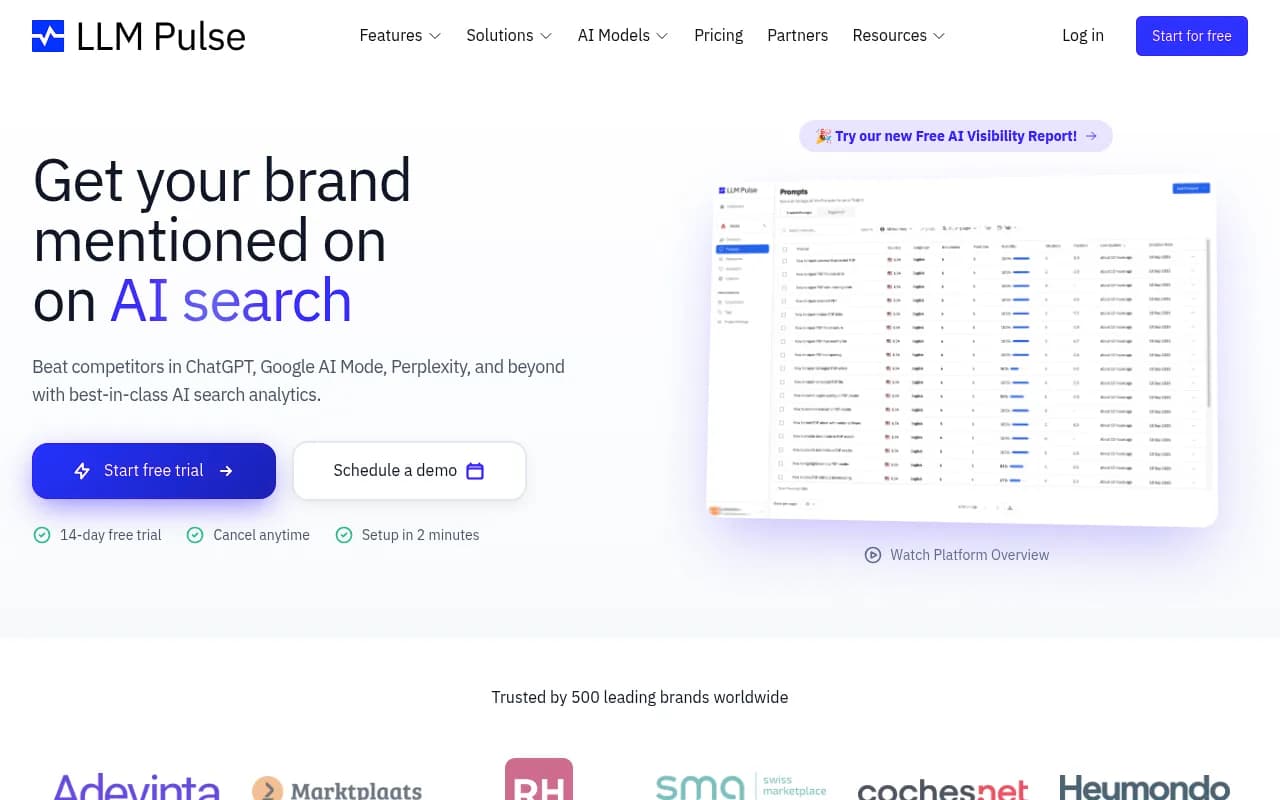
The feature that stands out is the explicit "cited without being mentioned" view, and it distinguishes visible sources from background ones. Five core engines, more as add-ons, from EUR 49 (about $58) a month. For a price this low, the ghost-citation handling is better than you'd expect.
Ahrefs Brand Radar
Best when you want a market-wide benchmark rather than tracking your own prompt list. It works from a fixed index across six engines, with Claude covered through custom prompts. The Lite tier is $129/mo. The fixed index is a strength for benchmarking and a limit if your buyers ask unusual questions.

Otterly.AI
The cheapest on the list at $29/mo, with four base engines and three add-ons. It checks whether each cited URL names you, which is the ghost-citation test at a very low price. Country can be set per prompt. Expect to outgrow the prompt limits quickly.

LLMrefs
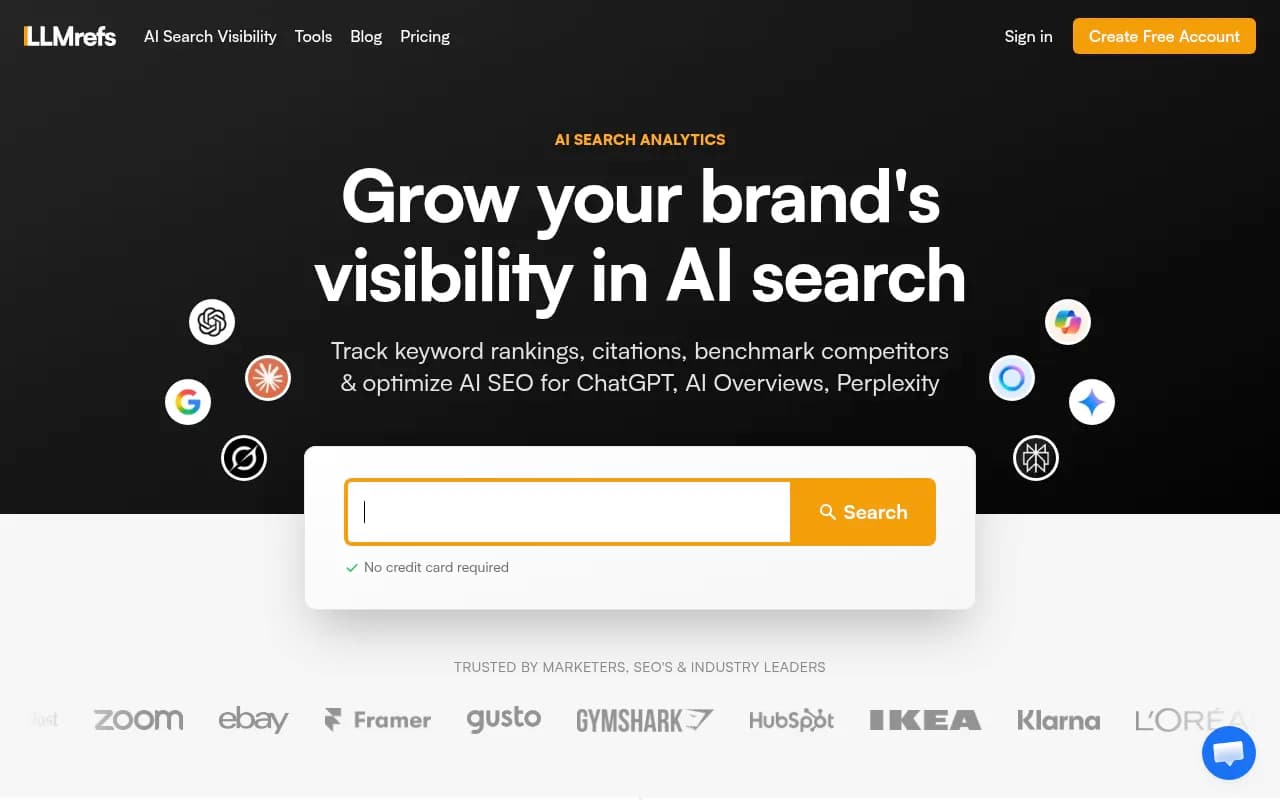
A flat $79/mo with nine engines included and many countries and languages. Findrix doesn't describe its URL-level or panel handling, so test that yourself.
Semrush and Similarweb
Both are broader suites that added AI visibility. They make sense if you already pay for them and want AI data next to traditional search or traffic data. They are less likely to give you the per-URL, per-engine detail a dedicated citation tracker does.
Findrix
Findrix is the newest tool in the roundup that most of this guide leans on, and it markets itself on proving a site works for AI answers, with ghost-citation reporting starting on its Growth plan. I haven't tried it, and it isn't in our tools catalog, so check its own site for details. Since its comparison is also its own marketing, treat its rankings with the same skepticism you'd apply to mine.
Free options worth knowing
Bing Webmaster Tools has an AI Performance report in public preview since February 10, 2026. It shows total citations, cited pages per day, and page-level counts for Microsoft Copilot and Bing AI summaries, using your own verified site. It is first-party data, which makes it a handy sanity check against any paid tracker. Google Search Console doesn't separate AI citations that cleanly, so don't expect the same there.
Per the aggregator guides, the free one-off checkers (AIclicks, Georion, and a Chrome extension) are limited: one engine, full answers behind signup, or no cited URLs. Fine for a quick look, not for tracking.
How to check a tracker against manual ChatGPT results
This is the part that makes the comparison trustworthy. Do it during any free trial.
Step 1: Pick 20 to 30 prompts
Mix three types: organic prompts with no brand named ("best CRM for a 10-person agency"), competitor comparisons, and brand-specific ones. Use the same wording in the tool and by hand.
Step 2: Run them manually, the same day
Open ChatGPT with web search on. Log the cited domains in both places: inline links and the Sources panel. Use a spreadsheet with columns for prompt, domains in text, domains in panel only, and whether your brand name appears.
A free helper here is the GEO Inspector Chrome extension from Promptwatch, which shows fetched versus cited sources and the query fan-outs for a ChatGPT response. You can read about it at promptwatch.com/features/chrome-extension.
Step 3: Compare, but expect variance
AI answers are not deterministic. Two manual runs of the same prompt will not match perfectly. So don't ask whether the tool matched your single run. Ask whether, across the whole set, it caught the same dominant domains and roughly the same rate of citing you. A tool that agrees on 70 to 80% of domains is behaving normally. One that consistently misses panel-only sources, or reports you as absent when you're clearly cited, has a capture problem.
Step 4: Check four specific failure modes
- Panel-only links missing, which would undercount you by a large margin if Findrix's 65% figure is anywhere near right for your category.
- Domain reported but no URL, when you need page-level data.
- Ghost citations reported as plain "cited," or as "not present" because the name was absent.
- Wrong country or language, which changes sources a lot.
The Reddit thread in our research is a good example of the stakes: one SEO says their tracker showed no ChatGPT presence while ChatGPT was their biggest traffic source. That mismatch is exactly what a manual check exposes.
Step 5: Cross-check with traffic and logs
Citations are a proxy. If your site analytics show ChatGPT referrals to pages the tool says are never cited, something is off. Note that ChatGPT stopped sending a referrer on October 8, 2026, so tag links with utm_source=chatgpt.com where you can. Crawler logs are the other cross-check: if an AI bot never fetched a page, it's unlikely to be cited. Promptwatch's AI crawler logs cover that, and its attribution guide explains the traffic side.
Why your numbers will jump around
Don't blame your content before checking the platform. Promptwatch Data found that average citations per ChatGPT response dropped from about 6.4 to roughly 4.7 to 4.9 after the GPT-5.3 rollout on March 4, 2026, across GPT-5.3, GPT-5.4 and GPT-5-Mini, with no recovery a month later. A tracker that reports raw citation counts would have shown a decline on every site that week. The fix is to track citations per response over time, so you can tell "we lost visibility" from "ChatGPT cites fewer sources overall."
Likewise, source mix shifts. Promptwatch's data shows reddit.com's share of ChatGPT citations collapsing from about 4% to 0.5% on August 14, 2026. If your tracker's Reddit numbers fell that day, it was working correctly.
Which tool for which job
| If you need | Start with |
|---|---|
| Tracking plus content fixes and crawler data | Promptwatch |
| Cheapest sanity check on a few prompts | Otterly.AI |
| Ghost citations on a small budget | LLM Pulse |
| Persona-heavy B2B prompts | Scrunch |
| URL-level reports, one or two engines | Peec AI |
| Market-wide benchmarks | Ahrefs Brand Radar |
| Enterprise rollout with many engines | Profound |
| Many engines at a flat price | LLMrefs |
If you want to browse beyond this list, the GEO software directory at bestgeosoftware.com and the AI rank tracking directory at ai-rank-tools.com cover far more options.
Final advice
Pick two finalists, run the 20-prompt manual check on both, and keep the one whose numbers you can explain. Track over weeks, not a single snapshot, because the platforms change underneath you. And whatever you choose, don't stop at the citation count. The useful question is what to do about the pages that get cited without your name, and the pages that never get cited at all."}