Key takeaways
- Profound is stronger on proprietary data -- its exclusive prompt volume dataset and SOC 2 Type II compliance make it the safer pick for large enterprises with strict security requirements.
- AthenaHQ wins on usability and revenue attribution, with native Shopify and GA4 integrations that connect AI visibility directly to sales.
- Both platforms are primarily monitoring-focused. Neither gives you a full content creation and optimization loop out of the box.
- Pricing is a real differentiator: Profound starts at $99/month (ChatGPT only at that tier), while AthenaHQ starts at $295/month for full multi-model coverage.
- If you need a platform that goes beyond tracking to actually help you close visibility gaps with content, you'll want to look at options like Promptwatch alongside or instead of either tool.
The GEO platform market has gotten crowded fast. Two years ago, most marketing teams had never heard of "AI visibility." Now there are dozens of tools claiming to help you rank in ChatGPT, Perplexity, and Google AI Overviews -- and Profound and AthenaHQ are consistently near the top of the shortlist for enterprise buyers.
They're both serious platforms with real customers. But they're built around different ideas of what "winning at AI search" actually means. Profound thinks the answer is better data. AthenaHQ thinks it's faster action tied to revenue. Neither is wrong, exactly -- but depending on your team's situation, one of those bets will serve you a lot better than the other.
This guide breaks down where each platform genuinely excels, where it falls short, and which type of team should pick which tool.
What each platform actually does
Profound
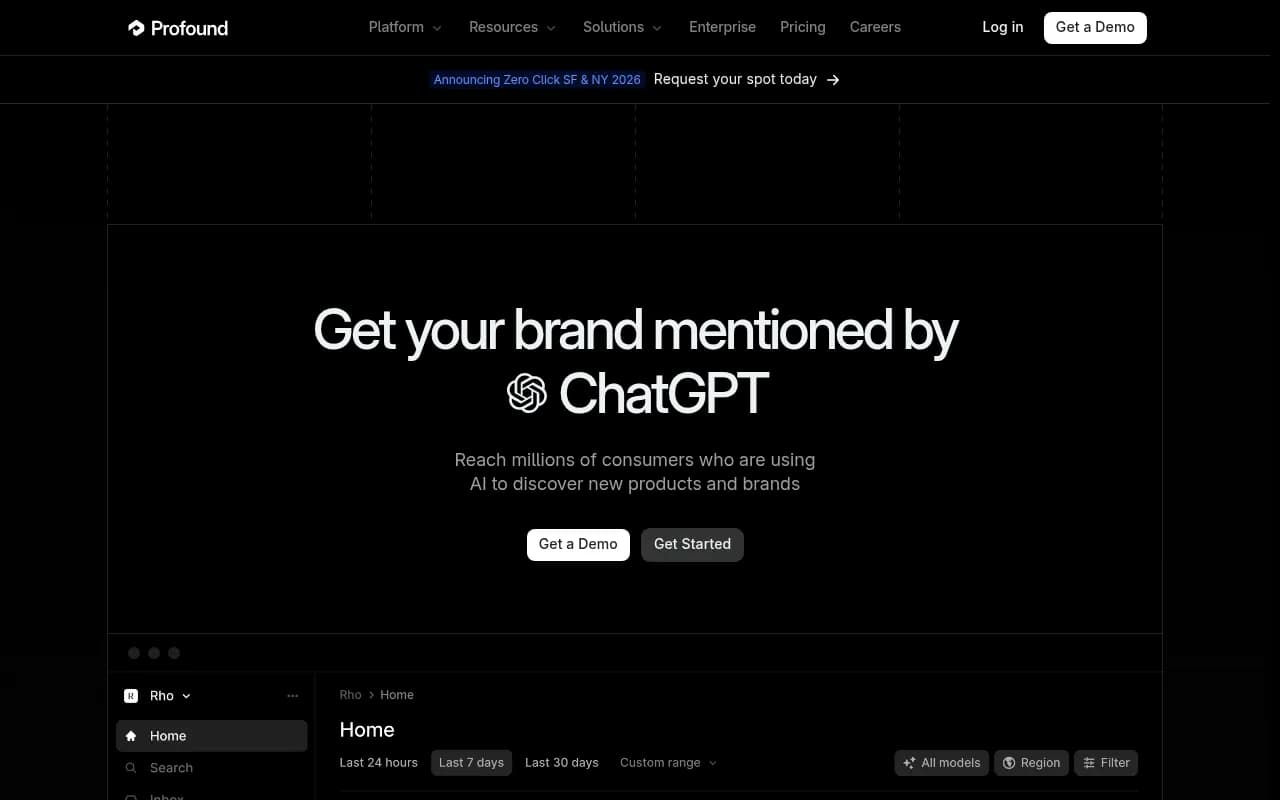
Profound is an enterprise AI visibility platform built around analytical depth. Its core value proposition is proprietary data -- specifically, a prompt volumes dataset that shows you how often real users are asking specific questions to AI models. That's genuinely rare. Most platforms in this space scrape or simulate prompt data; Profound claims to have actual volume figures.
Beyond prompt data, Profound tracks how AI models mention your brand across platforms like ChatGPT, Copilot, and Perplexity. It has an agent-based content optimization feature, GA4 integration for traffic attribution, and a shopping tracking module for product placement in AI responses.
The platform targets large enterprises. It has SOC 2 Type II certification (the more rigorous, ongoing audit standard), white-glove onboarding, and dedicated support. Customers include major brands that need compliance documentation before they can sign any software contract.
AthenaHQ
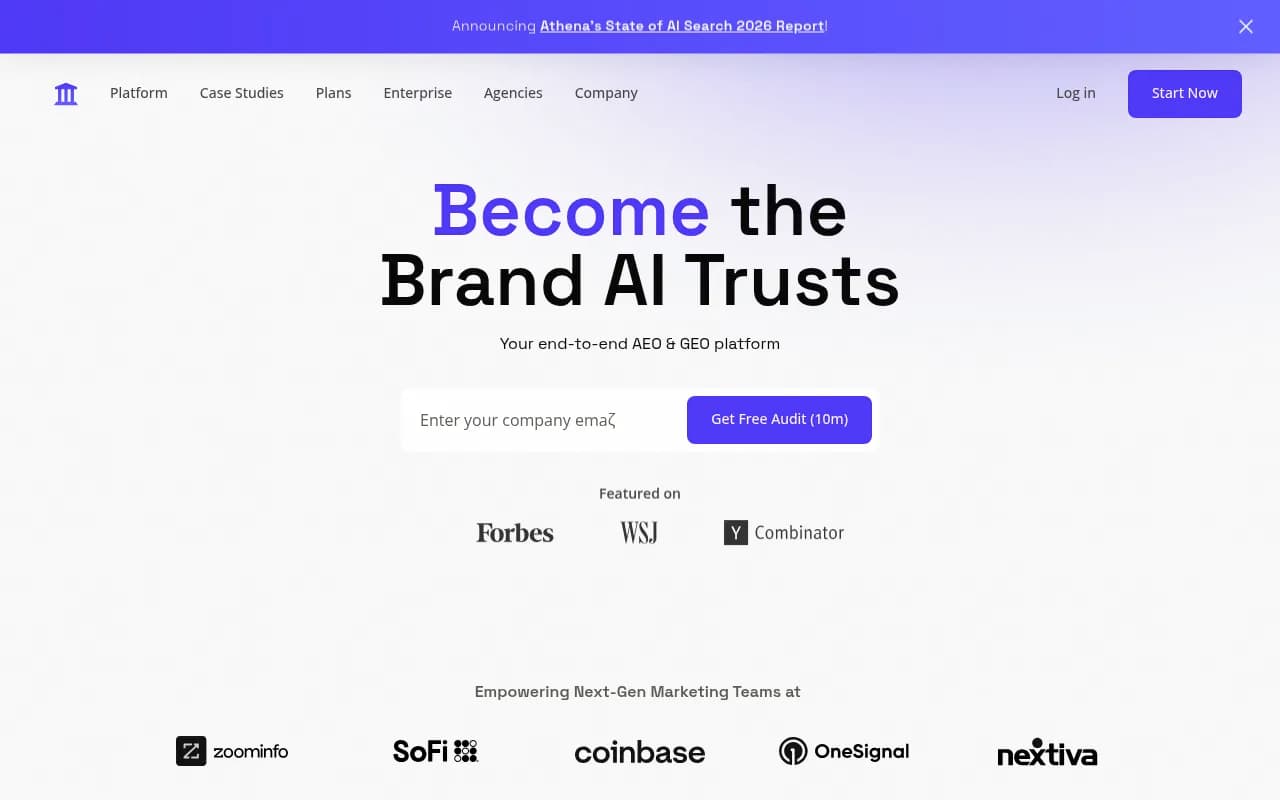
AthenaHQ positions itself as the "action on AI search" platform. Where Profound leads with data, AthenaHQ leads with workflow. Its "Action Center" is built around autonomous agents that help teams move from insight to execution -- identifying what to fix and then helping fix it.
The revenue attribution story is AthenaHQ's clearest differentiator. Native integrations with Shopify and Google Analytics let teams connect AI visibility improvements directly to revenue, which is something most GEO platforms still can't do convincingly. AthenaHQ also covers 8+ AI platforms from its base tier, whereas Profound's entry-level plan limits you to ChatGPT monitoring.
AthenaHQ has a 4.9 rating on G2 and counts SoFi, ZoomInfo, and Wix among its customers. Its interface is consistently described as more intuitive than Profound's.
Feature-by-feature comparison
| Feature | Profound | AthenaHQ |
|---|---|---|
| Starting price | $99/month (ChatGPT only) | $295/month (all 8+ AI platforms) |
| AI platform coverage at entry tier | ChatGPT only | ChatGPT, Perplexity, Gemini, Claude, and more |
| Proprietary prompt volume data | Yes | No |
| Revenue attribution | GA4 integration | Native Shopify + GA4 |
| Automated content agents | Yes | Yes (Action Center) |
| SOC 2 compliance | Type II (ongoing) | Type I (point-in-time) |
| API access | Enterprise plans only | Enterprise plans only |
| Learning curve | Steep | Low |
| G2 rating | 4.7/5 (65 reviews) | 4.9/5 (32 reviews) |
| Free plan | No | No |
| Reddit/YouTube tracking | No | No |
| AI crawler logs | No | No |
A few things jump out from this table. First, the pricing gap at the entry level is significant -- $99/month vs $295/month sounds like Profound wins, but that $99 plan only covers ChatGPT. If you need multi-model coverage (and you probably do in 2026), you're paying more with Profound than the headline suggests. Second, neither platform offers a free plan, which means you're committing real budget before you've validated the approach.
Where Profound genuinely wins
Proprietary prompt volume data
This is Profound's clearest advantage. Knowing that 40,000 people per month ask ChatGPT "what's the best project management software for remote teams" is a fundamentally different kind of intelligence than knowing you appear in 23% of responses to that query. Profound gives you both. AthenaHQ gives you the latter.
For teams doing serious content strategy -- deciding which topics to prioritize, which queries to go after first -- this data is genuinely useful. It's the difference between optimizing for visibility and optimizing for visibility that actually drives traffic.
Enterprise security and compliance
SOC 2 Type II is a meaningful distinction. Type I says "we have controls in place at this moment." Type II says "we've been audited continuously over time and our controls actually work." For enterprise procurement teams, especially in financial services, healthcare, or any regulated industry, this matters a lot. AthenaHQ's Type I certification is fine for most companies but won't clear the bar for some enterprise security reviews.
White-glove support
Profound's support model is more hands-on. If your team doesn't have a dedicated GEO specialist and you need someone to help you interpret the data and build a strategy, Profound's customer success approach is better suited to that. AthenaHQ's support is described as responsive but more startup-style -- fast, but you're expected to drive.
Where AthenaHQ genuinely wins
Revenue attribution that actually closes the loop
Most GEO platforms show you visibility metrics. AthenaHQ shows you what those visibility metrics are worth in dollars. The native Shopify integration is particularly useful for e-commerce brands -- you can see a direct line from "we appeared in 40% of AI responses for this product category" to "here's how much revenue came through that channel." That's a much easier story to tell your CFO.
Multi-model coverage from day one
AthenaHQ covers 8+ AI platforms at its base tier. You're not paying entry-level pricing and then discovering you only get one model. For teams that need to understand their visibility across ChatGPT, Perplexity, Gemini, and Claude simultaneously, AthenaHQ's pricing structure is more honest about what you're actually getting.
Ease of use
Profound's interface is consistently described as complex and steep to learn. AthenaHQ is consistently described as intuitive and actionable. This isn't a minor UX quibble -- it affects how quickly your team can actually use the platform and how much of the data ends up influencing real decisions vs. sitting in dashboards nobody checks.
Action Center agents
AthenaHQ's autonomous agents are more developed than Profound's content optimization tools. If your team wants to move from "we know we're invisible for this query" to "here's the content we need to publish" with minimal manual work, AthenaHQ's workflow is faster.
Where both platforms fall short
This is worth saying plainly: both Profound and AthenaHQ are primarily monitoring and analytics platforms. They show you where you stand. They give you some tools to act on that information. But neither one closes the full loop the way a dedicated optimization platform does.
Specifically, neither platform offers:
- AI crawler logs showing which of your pages AI bots are actually reading and indexing
- Reddit and YouTube tracking (both are significant sources that influence AI citations)
- Content gap analysis that shows you exactly which prompts competitors rank for that you don't
- A built-in content generation engine grounded in real citation data
If you're a team that needs to understand your visibility and then actually fix it at scale, you'll likely find yourself using one of these platforms alongside other tools -- or looking at a platform that was built around the full optimization cycle from the start.
Promptwatch is one example of a platform built around that complete loop: find the gaps, generate content engineered to get cited, track the results. It's worth evaluating alongside either of these tools if content creation and optimization are as important to you as monitoring.

Pricing breakdown
Neither platform is cheap, and both require you to talk to sales for enterprise pricing.
Profound's published pricing starts at $99/month, but that tier only covers ChatGPT monitoring. Full multi-model coverage requires higher tiers, and enterprise features like API access require a custom contract. The white-glove support model also suggests pricing scales significantly for larger accounts.
AthenaHQ starts at $295/month for full access to all 8+ AI platforms. That's a higher entry point but arguably more honest -- you're getting the complete product, not a limited version. Enterprise pricing is custom.
Neither offers a free plan. Both offer demos. If you're evaluating either seriously, push for a trial period with your actual brand and prompts before committing.
Which team should pick which platform
Pick Profound if:
- Your enterprise procurement process requires SOC 2 Type II certification
- Prompt volume data is central to your content strategy and you need proprietary figures
- You have a dedicated GEO or AEO specialist who can work with a complex interface
- You're in a regulated industry where compliance documentation matters more than speed
Pick AthenaHQ if:
- You need to connect AI visibility to revenue and show ROI to leadership quickly
- Your team is newer to GEO and needs a platform that's fast to learn and act on
- You're an e-commerce brand that wants native Shopify attribution
- You need multi-model coverage from day one without paying for upgrades
Consider alternatives if:
- You need content creation built into the platform, not just monitoring
- You want AI crawler logs to understand how AI bots interact with your site
- Reddit and YouTube are important channels for your brand's AI citation strategy
- You're an agency managing multiple clients and need scalable workflows
For teams in that third category, it's worth looking at the broader GEO platform landscape. A few other options worth knowing about:


The bigger picture
The honest reality in 2026 is that the GEO platform market is still maturing. Profound and AthenaHQ are both serious tools with real differentiation -- this isn't a case where one is clearly better and the other is a waste of money. They're built for different priorities.
What they share is a monitoring-first orientation. Both platforms are excellent at telling you where you stand. Where they're less developed is in helping you systematically improve that standing through content, technical optimization, and closed-loop attribution.
That gap is worth factoring into your decision. If your team's primary need right now is understanding the landscape -- how visible you are, which queries matter, how you compare to competitors -- either platform will serve you well. If you need to move fast on actually improving your visibility, you'll want to think carefully about whether monitoring alone is enough, or whether you need a platform built around the full optimization cycle.
The AI search landscape is moving quickly enough that standing still isn't really an option. Whichever platform you choose, the teams winning right now are the ones that picked something and started -- not the ones still waiting for the perfect tool.