Key takeaways
- One person can run AI visibility in about three hours a week if the routine is fixed: check, diagnose, publish, measure.
- Product pages, landing pages and comparison pages earn most ChatGPT citations, so your own site matters more than social posting.
- Reddit is no longer a reliable route into ChatGPT. Put the effort into pages you control.
- Check crawler access once a month. If AI bots are blocked, nothing else you do will matter.
- Start with free audits, track 20 to 50 prompts, and only pay for a platform when the weekly routine is working.
Why a solo founder can still win here
I have watched plenty of startups treat AI search as a project for later, when there is a marketing hire. That is backwards. AI answers are built from a short list of sources, and a small company with clear, factual pages can land on that list without a big budget.
The constraint is time, not money. You do not have a team to run monitoring dashboards, brief writers and chase backlinks. So the routine has to be small, repeatable and boring. Three hours a week, same slots, same checklist.
One caution before we start. A lot of the "AI visibility for small teams" content online is written by vendors selling a tool, including the listicles that rank for this topic. Treat their rankings as marketing. The data below comes from citation research instead.
What AI actually cites (so you know where to spend time)
Promptwatch Data looked at ChatGPT citations from Sep 28 to Oct 4, 2026 and split them by content type in its ChatGPT citation share by content type report. The findings are good news for a founder who owns a website and little else:
- Product pages were 22.4% of citations and landing pages 16.8%. Together that is about 39%.
- Listicles were 13.6%, how-to guides 8.7%, documentation 7.5%, comparisons 5.9%.
- For commercial prompts like "best CRM for small businesses", product pages, landing pages, listicles and comparisons add up to almost 70%.
- For branded prompts like "is HubSpot good for startups", reviews reach 5.6%, more than three times their share across all prompts.
Read that as a to-do list. Your product page and landing pages need to state what you do, who it is for, what it costs and how you differ, in plain factual text. Then you need a comparison page or two, and a presence in the roundups AI already cites for your category.
Social is a different story. In Promptwatch's social media citations by AI model report for the same week, social platforms made up just 0.46% of ChatGPT citations, while Google AI Overviews drew 12.2% of its citations from them. YouTube was the biggest at 4.28% in AI Overviews. And ChatGPT's Reddit share collapsed from about 4% to 0.5% on August 14, 2026, per Promptwatch's Reddit citation data.
So if you only have three hours, do not spend them farming Reddit threads for ChatGPT. Spend them on your own pages.
One more number that shapes your routine: Promptwatch's half-life report found that landing pages and docs stay cited longest, while news pages lose half their citations within about 36 days. Evergreen pages are the better bet for a person with no time to keep refreshing news-style posts.
The weekly routine at a glance
| Slot | Time | Task | Output |
|---|---|---|---|
| Monday | 30 min | Review prompt results and citations | List of 3 gaps |
| Tuesday | 30 min | Check what AI says about you, flag wrong claims | Fix list |
| Wednesday | 60 min | Write or update one page | One published page |
| Thursday | 30 min | Off-site: one roundup, directory, review or video | One placement or pitch |
| Friday | 30 min | Measure crawls, citations, AI referrals | Note in a running log |
Monthly add-on: a 30-minute crawler and robots.txt check. Quarterly: re-pick your prompts.
Setup: do this once before the routine starts
Pick 20 to 50 prompts
Write the questions your buyers ask, in their words. Mix three types:
- Commercial: "best [category] for [customer type]"
- Comparison: "[you] vs [competitor]"
- Branded: "is [you] good for [use case]"
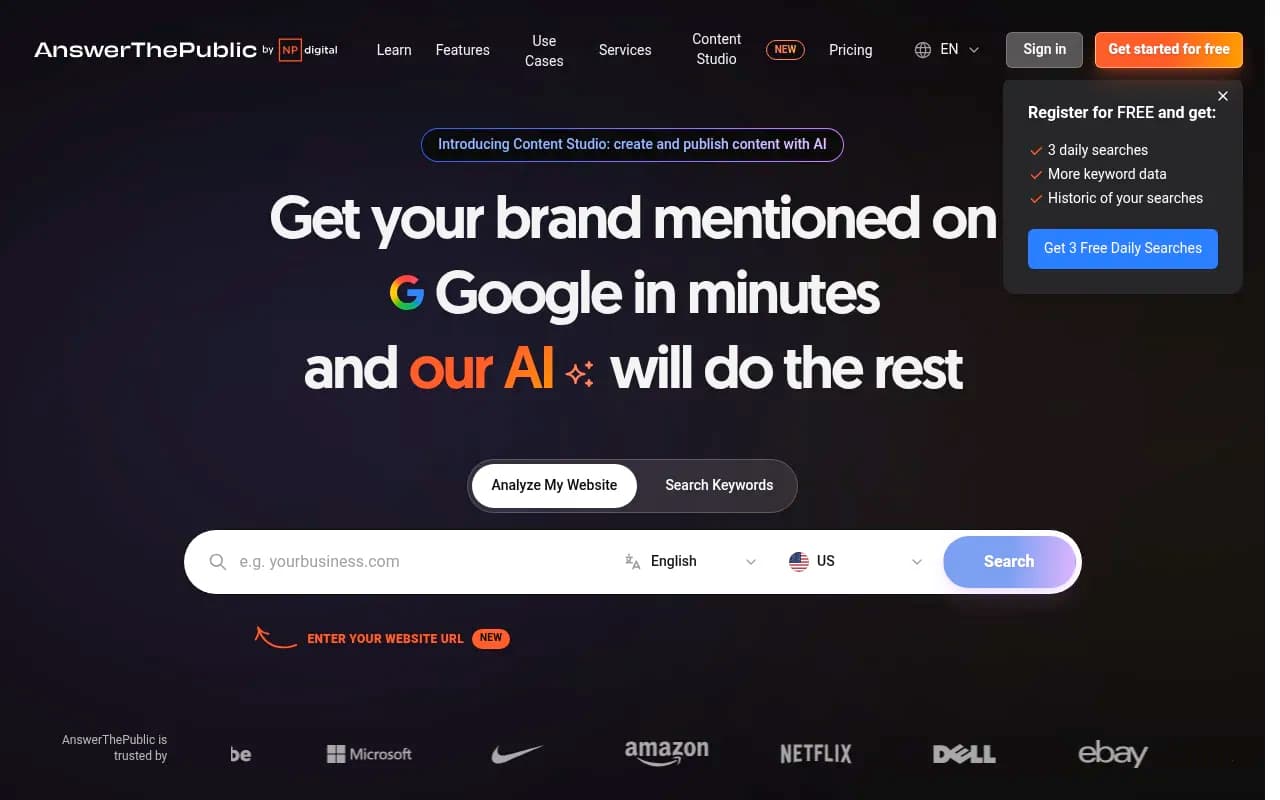
Do not track 300 prompts. You will not read the results. A solo founder needs a short list that maps to real deals. If you need ideas, a tool like AnswerThePublic or the free ChatGPT query fan-out generator can surface the follow-up searches AI runs behind a question.
Run a free baseline
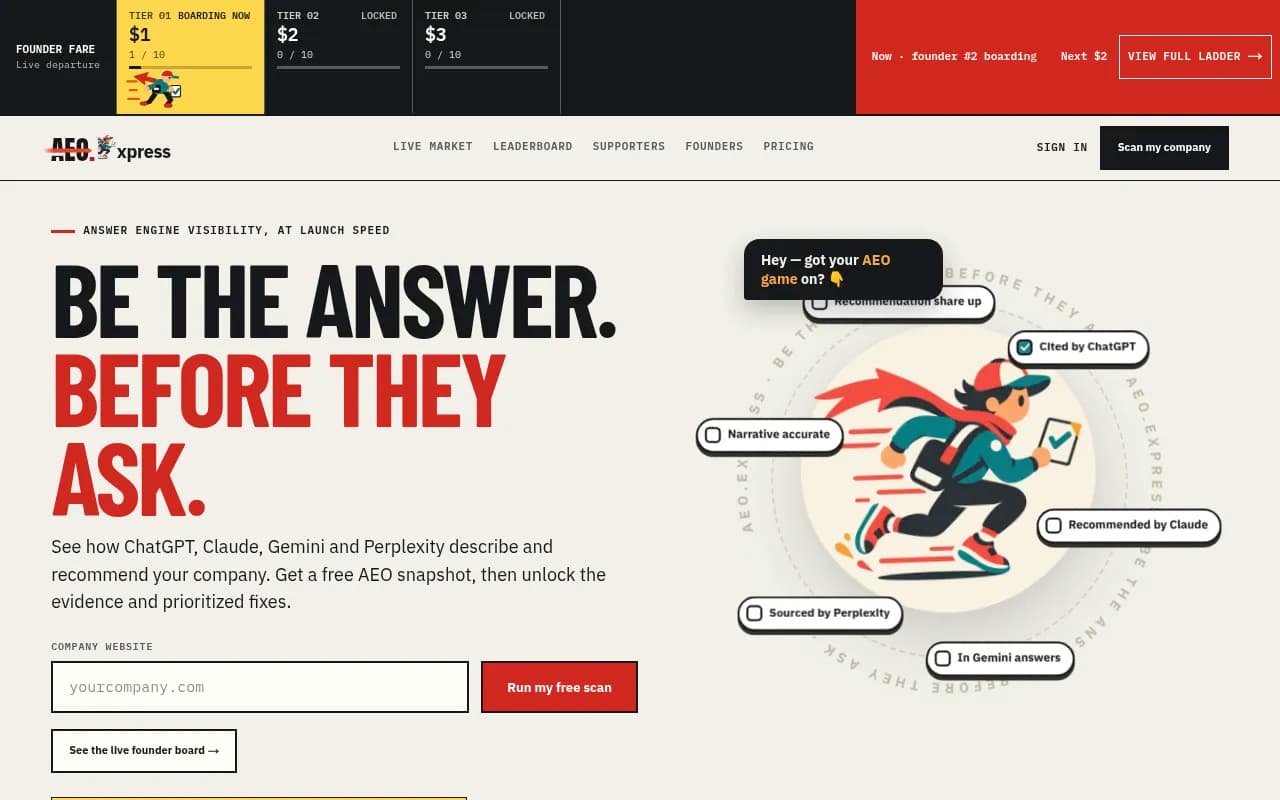
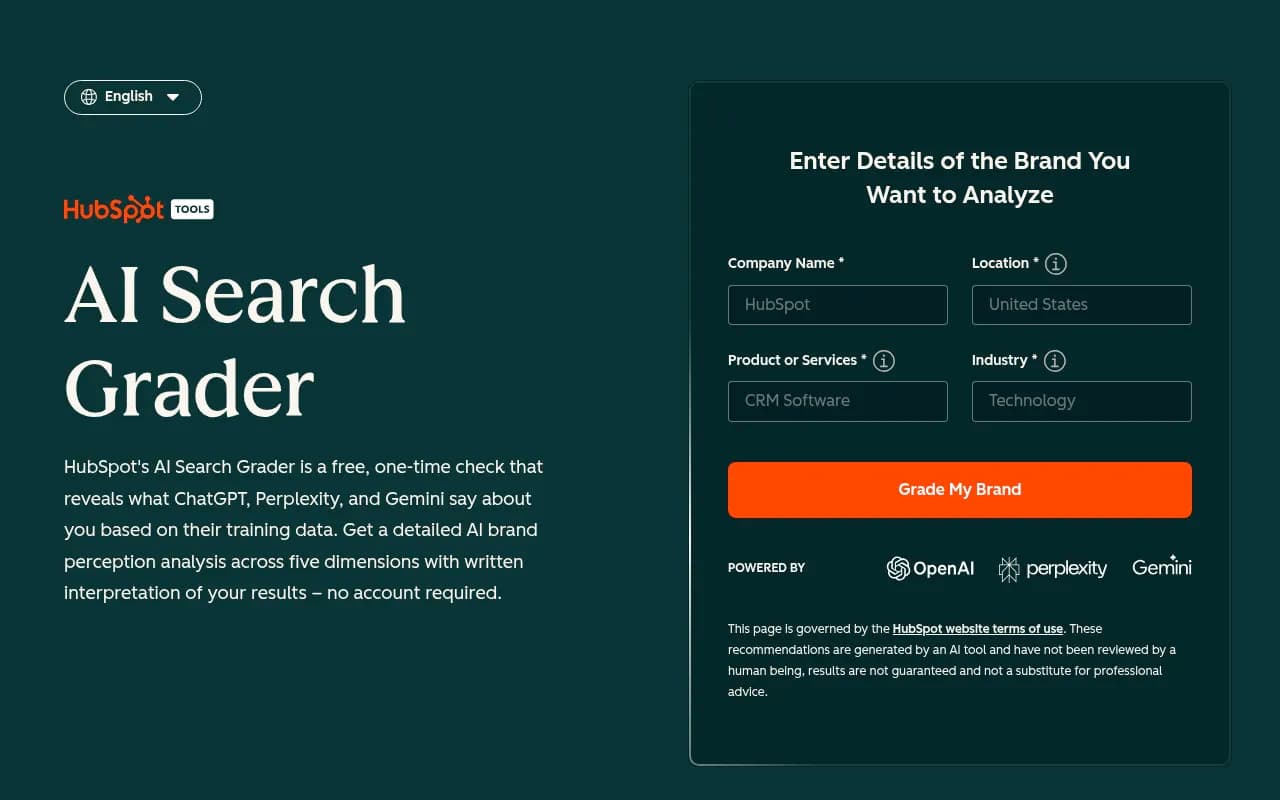
Before paying for anything, get a snapshot. The free options include Promptwatch's free AI visibility report, AEO.express, HubSpot AI Search Grader and AnswerGist. They are one-off scans, so they tell you where you stand, not how you are trending.

Check that AI crawlers can read your site
This is the step founders skip. If your CDN, WAF or robots.txt blocks AI bots, you are invisible no matter how good the content is. Promptwatch's AI crawler traffic data shows OpenAI at 79.8% of verified AI crawler requests in the week of Aug 31 to Sep 6, 2026, down from 94.8% in early June, as other providers grew. Meta-WebIndexer also jumped from about 2% to nearly 38% of tracked requests between mid-July and August 9 (Meta-WebIndexer report). The mix moves fast, so a robots.txt written in 2024 probably misses bots that matter now.
Free helpers: the Agentic Readiness Check, the Robots.txt generator for AI and the AI crawler URL inspector. If you want ongoing proof of who is crawling you, you need server or CDN logs, which is where a platform with crawler analytics earns its keep.
Connect Google Search Console
It is free, and pages that get Google impressions but few clicks are good candidates for rewriting. Set up Google Search Console if you have not.
Monday: review prompts and citations (30 minutes)
Open your tracked prompts and ask three questions:
- Am I mentioned at all?
- When I am mentioned, am I cited with a link to my own domain?
- Which competitors and which sources show up instead?
The pattern tells you what kind of problem you have. Not mentioned anywhere is a coverage problem: you need pages that match the prompt. Mentioned but never linked usually means a content or crawlability problem. Mentioned with a lukewarm description is a reputation problem.
Write down three gaps. Only three. If you leave Monday with twelve, you will do none of them.
Also note the sources AI cites. Almost half of ChatGPT responses cite 10 or more unique domains, per Promptwatch's unique domains report, so there is room for a newcomer, but you have to appear in the pages those domains publish too.
Tuesday: check what AI says about you (30 minutes)
Read five or six actual answers. Look for specific claims: your pricing, your features, who you are for, whether you still exist. AI gets small companies wrong all the time, and it often repeats whatever the oldest page about you says.
For every wrong claim, find the page the model learned it from. Usually it is one of these:
- an old pricing page or outdated blog post on your own site
- a directory listing nobody updated
- a competitor's comparison page
Fix your own pages first. Then fix the listings. Keep a simple facts file (name, pricing, features, ideal customer, founding year, integrations) and paste from it every time, so every page says the same thing.
Wednesday: publish or refresh one page (60 minutes)
One page a week is plenty. In a year that is 50 pages, which is more than most small teams manage.
Use the Monday gap list and the content-type data to pick what to write:
| If the gap is... | Write this | Why |
|---|---|---|
| Not showing for "best X for Y" | Landing page for that use case, plus a comparison page | Commercial prompts lean on product, landing, listicle and comparison pages |
| Wrong or thin brand answers | Rewrite product page and add an FAQ page | Branded prompts cite product and landing pages first |
| Missing from technical questions | Public documentation or how-to | Docs and how-tos are cited and stay cited |
| Never cited despite being crawled | Refresh with specifics: prices, numbers, screenshots | Vague pages lose to concrete ones |
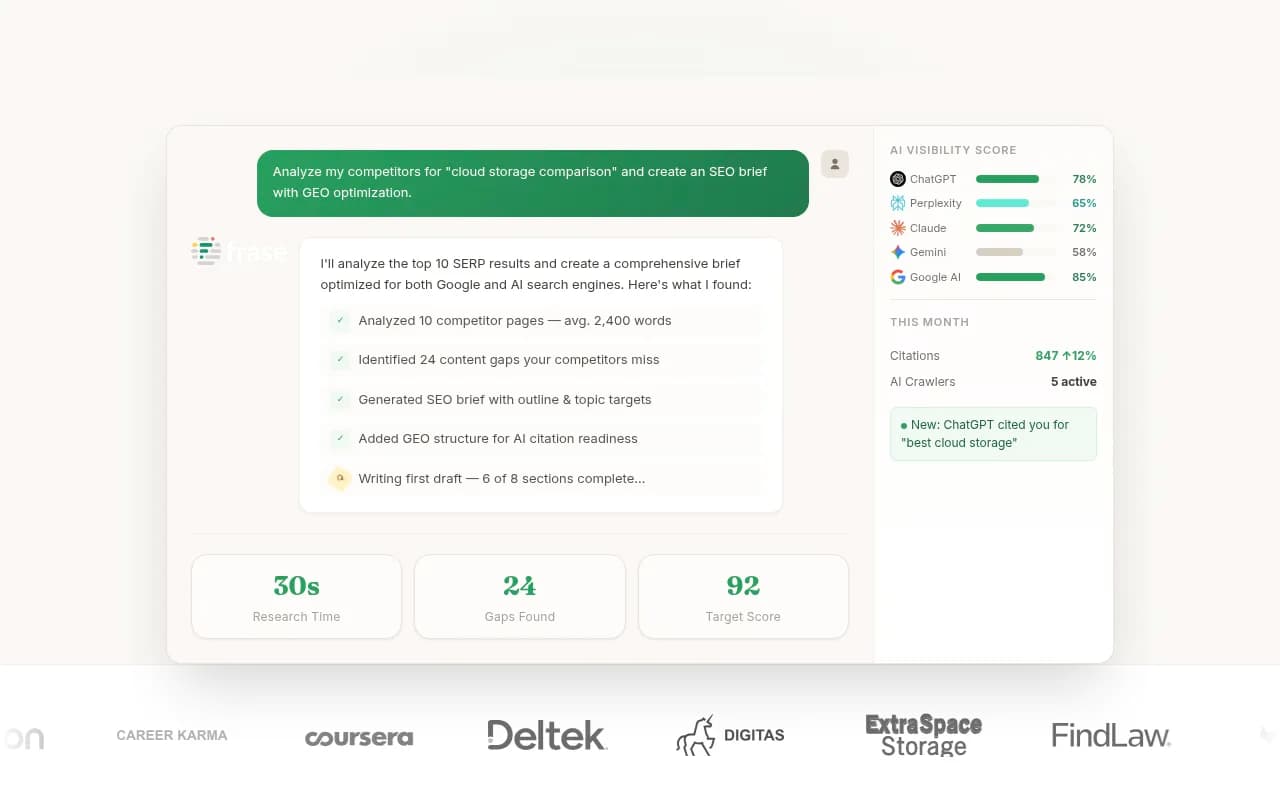
A decent AI writing assistant saves time on the first draft. ChatGPT is fine for outlining and drafting. If you want content briefs grounded in what is already cited, tools like Frase or Clearscope help with structure. Edit hard afterwards. Put in your real pricing, your real customers, your real limitations.
Publish a comparison page honestly. If a competitor is better for a certain buyer, say so. AI models quote the balanced pages, and readers trust them.
Thursday: one off-site move (30 minutes)
AI cites third-party pages heavily, especially roundups. Pick one action each week:
- Pitch the author of a "best [category]" article you are missing from
- Update your profile on the review or directory sites in your category (G2, Capterra and Trustpilot-type sites)
- Ask two happy customers for a review
- Record a short YouTube walkthrough, since YouTube is the top social source for Google AI Overviews
- Post a useful LinkedIn article if you sell B2B, since LinkedIn is ChatGPT's largest social source at about 0.3% and ties Reddit on Perplexity
Skip X. Promptwatch's data puts it at about 0.04% of citations on average. And do not buy bulk backlinks. It is a bad trade with no evidence it moves AI citations.
Friday: measure and log (30 minutes)
Check four things and write one line each in a running doc:
- Did the page I published last week get crawled by AI bots?
- Is it cited for any tracked prompt?
- Did AI-referred visits change? ChatGPT stopped sending a referrer on October 8, 2026, so tag links you control with utm_source=chatgpt.com where you can, and expect some traffic to land as direct.
- Did my mention rate on tracked prompts move?
A new page usually takes weeks to get cited, so do not panic after seven days. Look at the trend across a month. For attribution basics, the Promptwatch Academy guide on attributing AI traffic is a useful reference.
Monthly: the 30-minute technical check
- Test robots.txt, CDN and WAF rules for each AI provider. Compare your own crawler logs against the market mix. A provider that is large in the benchmark but near zero for you probably means you are blocked.
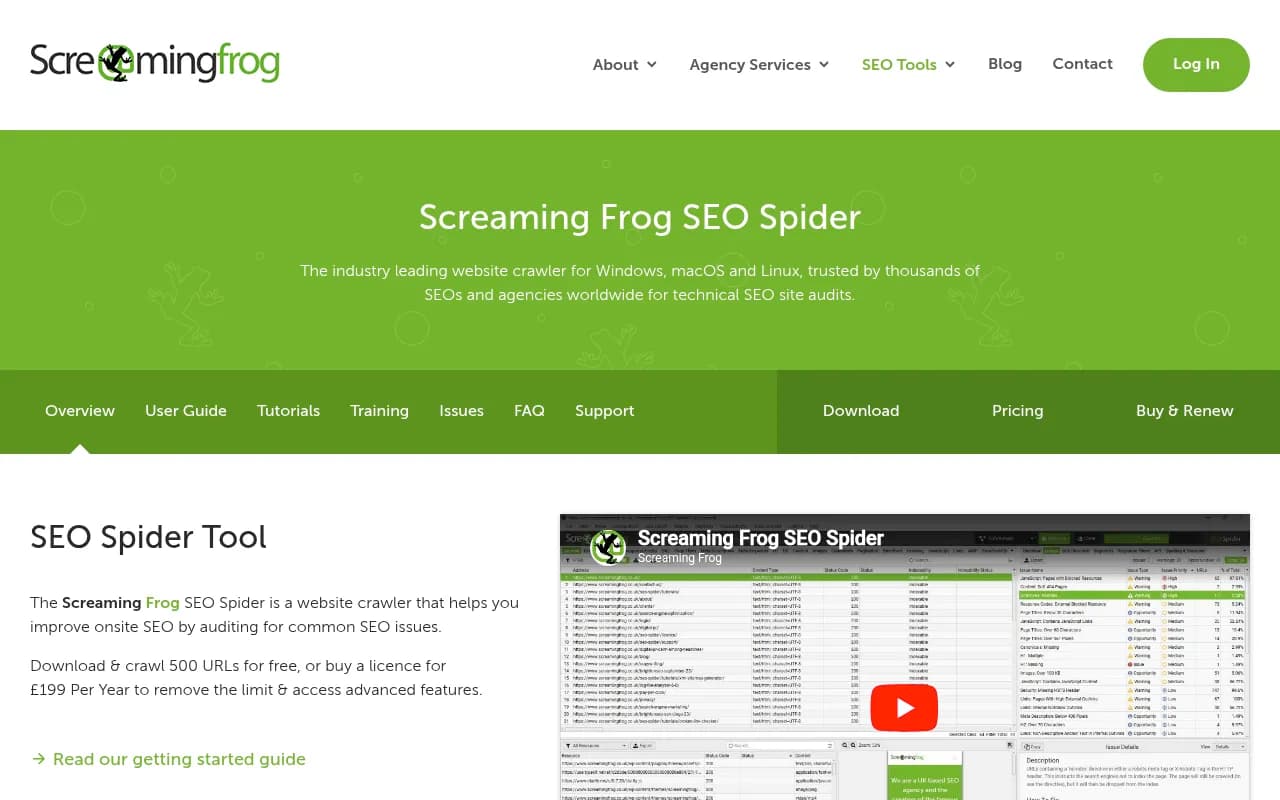
- Run a site audit for broken links, orphan pages and missing sitemap entries. Free options include Screaming Frog SEO Spider (free up to 500 URLs).
- Check your llms.txt if you have one. Treat it as a minor extra, not a strategy. Promptwatch found markdown files make up only 0.05% of AI search citations (markdown in AI search).
Choosing tools without overspending
The honest answer: for the first month, free tools and a spreadsheet are enough. Move to a platform when you are tired of manually checking answers, or when you need crawler logs and traffic attribution in one place.
The field is crowded. A rough way to sort it:
| Type | Examples | Good for | Watch out for |
|---|---|---|---|
| One-off free scans | AEO.express, AnswerGist, HubSpot AI Search Grader | Baseline snapshot | No trend data |
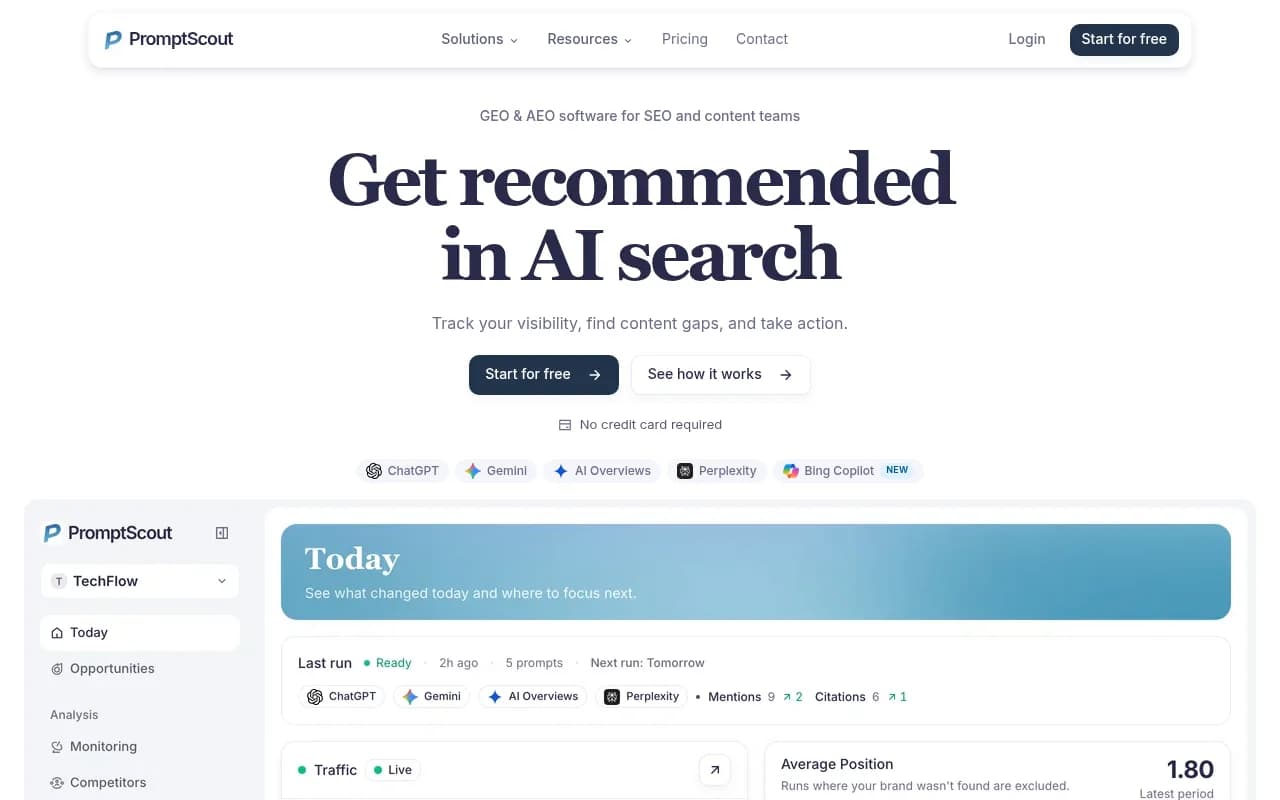
| Cheap prompt trackers | Otterly.AI, PromptScout, Peec AI | Basic mention monitoring | Mostly tell you what is wrong, not fix it |
| End-to-end platforms | Promptwatch, Profound | Tracking, crawler logs, content, measurement | Higher price, more than a solo founder may need at first |
| SEO suites with AI add-ons | Semrush, Ahrefs Brand Radar, SE Ranking | If you already pay for them | Fixed prompt sets, shallower AI data |


For a founder doing the Wednesday publishing step with no writer, Promptwatch is the option that covers the most of the loop. It tracks prompts across the real interfaces of ChatGPT, Google AI Overviews, Perplexity and others, shows which pages get cited, has IP-verified AI crawler logs so you can see whether bots read a page, and its Content Agent can draft and publish to WordPress, Webflow or Framer. Plans start at $95 a month (Essential), and the Content Agent begins at the Business tier at $579 a month, so confirm what you need at promptwatch.com/pricing. There is also a 7-day free trial on monthly billing.

If budget is tight, start at Essential and keep the Wednesday writing manual. If you do not want to buy anything yet, do the free baseline and the routine above with a spreadsheet for a month, then see whether the habit sticks. For a wider list, the GEO software directory at bestgeosoftware.com compares more options.
Common mistakes
Tracking too many prompts. Fifty you read beat five hundred you ignore.
Chasing Reddit for ChatGPT. That route has largely dried up. Reddit still appears in Google's AI surfaces, but a solo founder's hour is better spent on a landing page.
Writing news-style posts. They decay fast. Landing pages, docs and how-tos last.
Letting facts drift. If your pricing page says one thing and your G2 listing says another, AI will repeat whichever it finds first.
Checking daily. Responses vary run to run. Weekly checks and monthly trends tell you more than daily anxiety.
Skipping the crawler check. It takes thirty minutes a month and it is the cheapest way to find out you are accidentally blocking everything.
A realistic first-month plan
| Week | Focus |
|---|---|
| 1 | Pick prompts, run free baseline, fix robots.txt and crawler access |
| 2 | Rewrite product page, add FAQ, fix wrong facts across listings |
| 3 | Publish a comparison page, pitch one roundup author |
| 4 | Publish a use-case landing page, review the trend, decide on a paid tool |
By the end of the month you will have four improved pages, cleaner facts across the web and a log that shows whether anything moved. That is a better position than most startups with a marketing hire, and it fits around building the product.
When to bring in help
The routine works until you have more than one product line, several markets, or a board asking for AI-driven pipeline numbers. At that point an agency can take over the heavy parts. 1001 SEO Media runs technical SEO, content and AI search work for brands without long-term contracts, which suits a startup that wants senior help for a quarter and then wants to go back to running it in-house. Until then, three hours a week and a short prompt list will get you most of the way.