Key Takeaways
- The GEO market now has 200+ tools, so a directory or list is the right starting point. It should never be the final decision.
- Many "best GEO tools" lists are published by vendors who rank themselves first, or by publishers with a commercial tie to one tool. Check the disclosure before you trust the order.
- Match engine coverage to where your buyers actually search. Citation behavior differs a lot by engine, and a single blended score hides that.
- Prices vary between lists. Treat them as rough ranges and confirm on the vendor page.
- Narrow to three platforms, run the same prompts in each for two weeks, and pick the one your team actually opens every week.
Why shortlisting GEO software is harder than it looks
Two years ago you could name the AI visibility tools on one hand. Now one comprehensive directory counts more than 200 tools in the AI SEO category, according to Licheo. The same piece points out that claims like "monitors all major AI engines" are nearly impossible to tell apart from the outside.
So you do what everyone does. You search for "best GEO tools", open five tabs, and find five different top-three lists. That is normal. It is also the reason this guide exists: the lists disagree because they are written for different reasons, and reading them well is a skill.
The kinds of sources you will run into
Independent directories
Directories list many tools with short descriptions, categories and sometimes reviews. They are the fastest way to see how wide the market is. If you want to browse by category, the GEO software directory at bestgeosoftware.com covers GEO platforms, ai-rank-tools.com focuses on AI rank trackers, and surferstack.com is the broader software directory with reviews, alternatives and comparisons.
Directories are good for breadth. They are weak at telling you whether a tool fits your workflow, because they cannot see how you work.
Publisher listicles
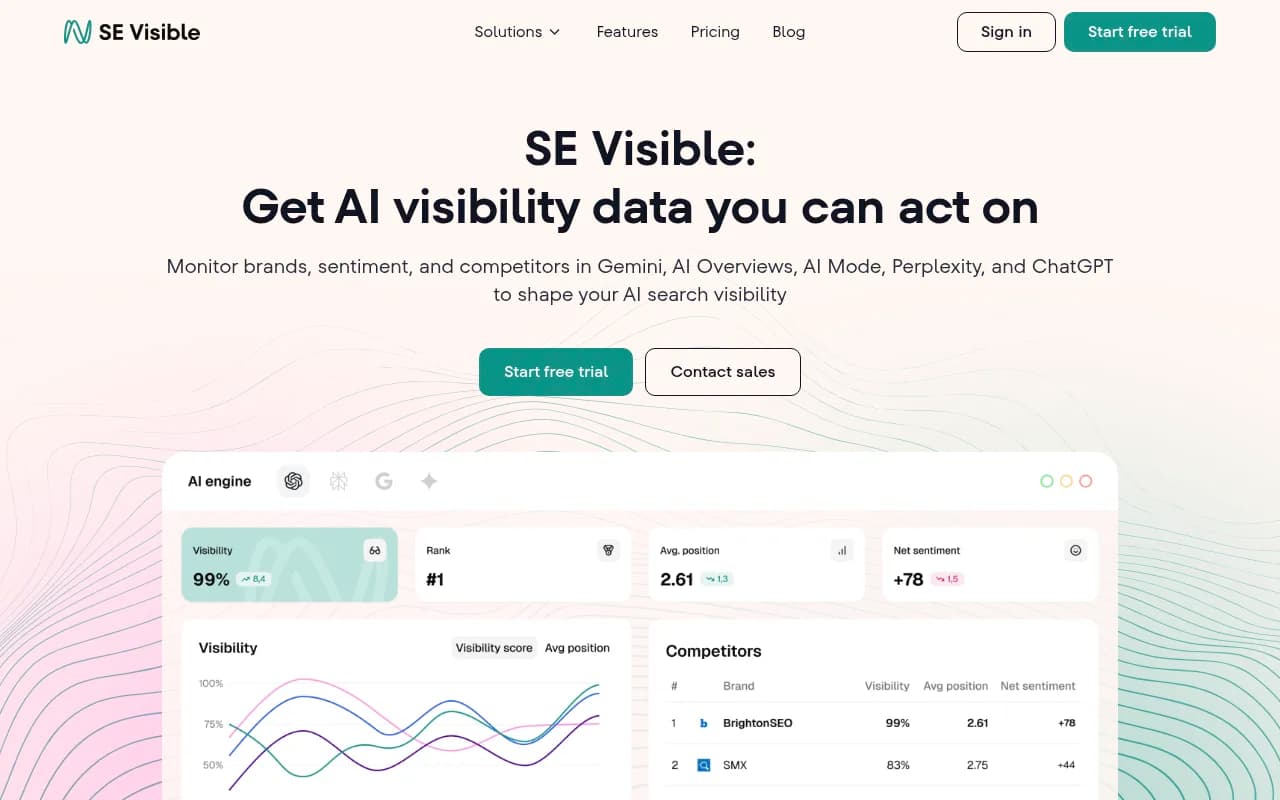
These are the "10 best GEO tools" posts. Zapier lists nine: Otterly, Peec, ZipTie, Similarweb, Petra Labs, Semrush, Ahrefs, Clearscope and Yext Scout. Straight North lists eleven and adds BrightEdge, Scrunch and AthenaHQ. Straight North also suggests small and mid-size organizations start with free tools first: Google Search Console, Bing Webmaster Tools and GA4. That is sensible advice that vendor lists rarely give.
Zapier discloses that it uses Petra Labs' software and services. Good on them for saying so, and it is exactly the kind of detail you should look for in every list.
Vendor-written lists
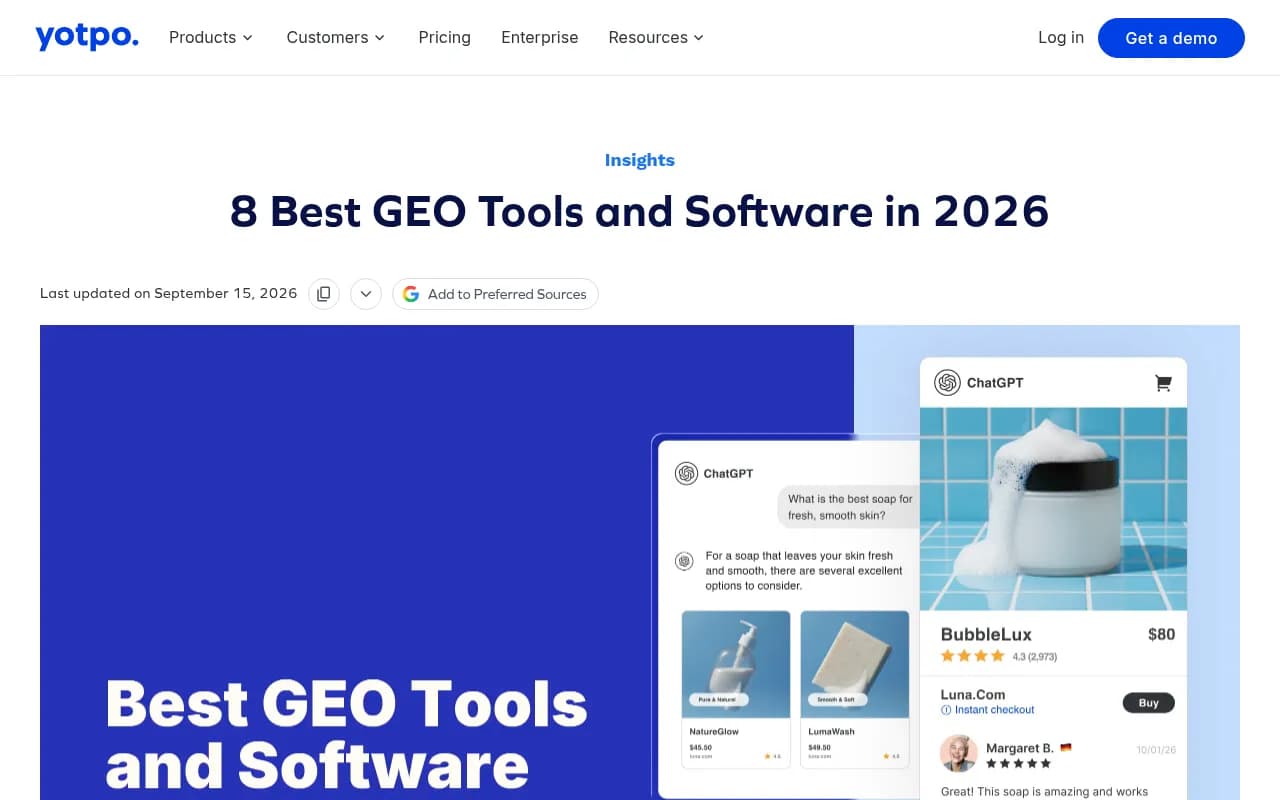
These are the most common and the most biased. Geoptie ranks itself first. ReachLLM calls itself the strongest all-around option for small businesses. Yotpo's list promotes Yotpo Discover, an ecommerce-specific platform built on reviews, verified purchases and loyalty data. Meikai openly says in its enterprise buyer's guide that it is one of the platforms listed, so it is "a vendor's point of view, not an independent benchmark".
I do not think vendor lists are useless. The Meikai disclosure is a good model, and the buying-situation framing in it is genuinely helpful. But read them as marketing with some good ideas inside.
How to read a list without getting fooled
Run every list through the same short check.
- Who published it, and is the publisher also on the list?
- Is there a disclosure about affiliate links, partnerships or software use?
- Is the date recent? Pricing and features in this category change every few months.
- Does it say how tools were tested, or just describe them from vendor pages?
- Does the ranking match a stated buying situation, or just "best overall"?
The Meikai guide frames platforms by buying situation, which I like: Bluefish is execution-led, Otterly is measurement- and technical-readiness-led, and Profound is workflow-led. That is more useful than a numbered ranking, because it tells you what you are buying.
How the lists group the market
Olostep's buyer's guide sorts tools into three tiers, and it is a handy mental model for narrowing.
| Tier | Tools named | Typical buyer |
|---|---|---|
| Enterprise | Profound, AthenaHQ, Scrunch, AirOps, Goodie, Conductor, Adobe LLM Optimizer | Large teams with dedicated GEO ownership |
| Mid-market | Peec AI, Otterly, SE Ranking / SE Visible, Writesonic, MaxAEO | Marketing teams that want analytics without enterprise contracts |
| SEO add-ons | Semrush AI Visibility Toolkit, Ahrefs Brand Radar, HubSpot AEO Grader | Teams already inside one of those suites |
This grouping leaves out an important axis: whether a tool only monitors or also helps you fix things. Olostep does mark that in its table (monitor versus both), which I appreciate. Keep that column in your own shortlist.
Tools worth knowing, by what they are good for
Below are tools from the catalog that show up repeatedly on the lists above. None of this replaces a trial.
End-to-end platforms
Promptwatch is the one that goes furthest past monitoring. It tracks ChatGPT, Gemini, Claude, Perplexity, Google AI Overviews, AI Mode, Copilot and others from the real interfaces, then traces citations, reads IP-verified AI crawler logs, and has a Content Agent that writes and publishes pages to WordPress, Webflow or Framer. Visitor analytics then show whether the traffic arrives. It is also what 1001 SEO Media uses for its own GEO work. Plans start at $95/mo for Essential, and the Content Agent begins at Business ($579/mo). Check promptwatch.com/pricing for current numbers, and the free AI visibility report is a no-login way to see where you stand first.

Profound is the best-known enterprise name. Third-party lists report Prompt Volumes, Agent Analytics for AI crawler tracking, and coverage of up to 9 engines on Enterprise. Licheo reports a Lite plan from $499/mo, while Geoptie says Enterprise pricing is custom.

Scrunch and AthenaHQ sit in the same enterprise tier. Scrunch is known for citation intelligence and its Agent Experience Platform. AthenaHQ pitches prescriptive recommendations.

Monitoring-first and budget tools
Otterly is the accessible entry point. Licheo's eight-week test saw usable data within 48 hours, against about two weeks for Profound. The tradeoff: Otterly missed some Grok and DeepSeek mentions that Profound caught, and Gemini, AI Mode and Claude are paid add-ons.

Peec AI keeps analytics and reporting focused, and ZipTie is usage-based and cheap to start.

Suite add-ons
If your team lives in a suite, the add-on is the lowest-friction test. Semrush's AI visibility product reportedly runs $99/mo per domain on annual billing and charges per user, unlike most competitors. Zapier notes that after Adobe's acquisition of Semrush it is unclear what happens to the AI Toolkit. Worth asking your rep before you commit.

Specialists
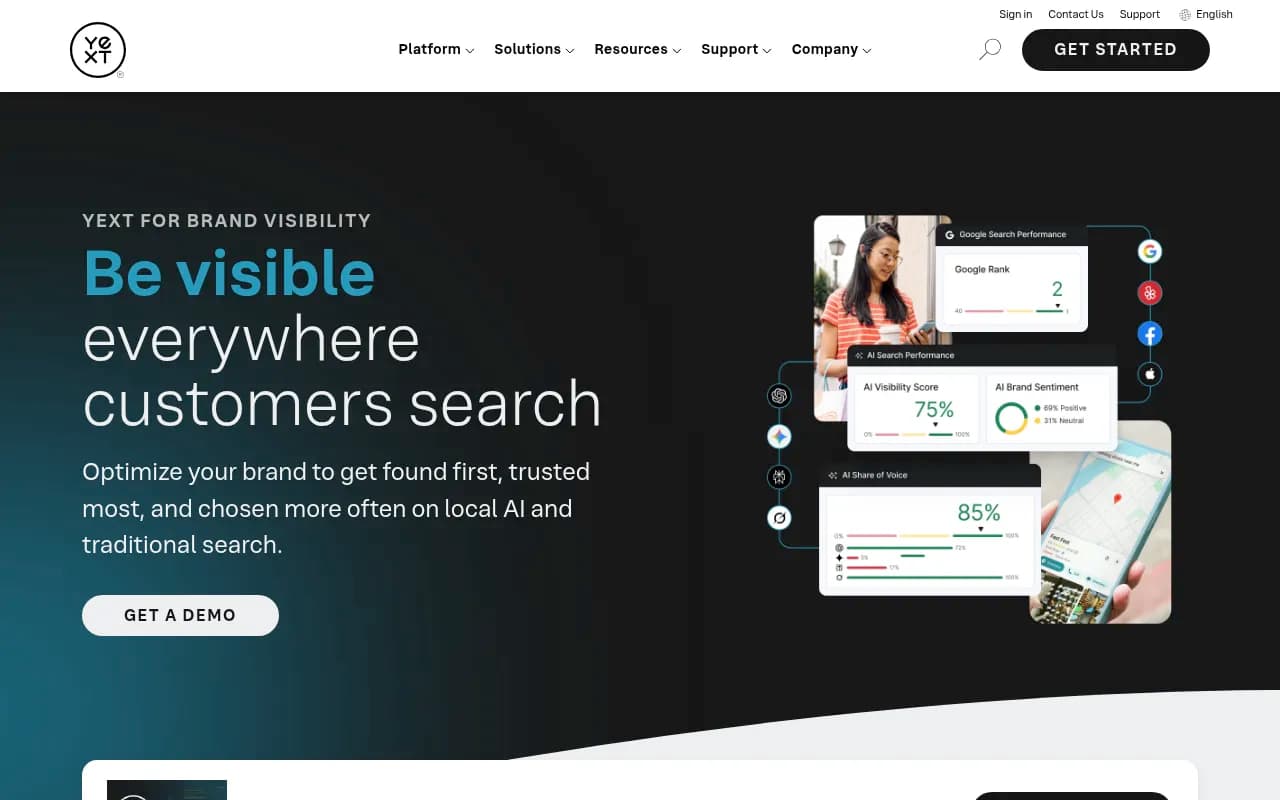
Yext Scout shows per-location visibility on a map and benchmarks against the 20 closest competitors per scan, so it suits multi-location enterprises. Yotpo Discover targets ecommerce. Bluefish positions itself around enterprise AI commerce and custom measurement.
For more options by category, the agentic SEO tools directory lists tools that act rather than just report.
Pricing snapshot, with a warning
These figures come from third-party lists and disagree with each other. Peec AI and ZipTie show different numbers on different lists, so use this only to size your budget.
| Tool | Reported entry pricing | Where it came from |
|---|---|---|
| Otterly | $29/mo Lite (15 prompts) up to $489/mo Premium (400 prompts) | Geoptie |
| Peec AI | From about $95/mo for 50 prompts | Straight North, Zapier |
| Scrunch | Core $250/mo for 125 prompts | Straight North |
| AthenaHQ | Starter $295/mo | Straight North |
| Semrush AI Visibility | $99/mo per domain, 25 custom prompts | Straight North, Zapier |
| Ahrefs Brand Radar | AI index from $199/mo | Straight North |
| Profound | Lite from $499/mo (Licheo); Enterprise custom | Licheo, Geoptie |
| Petra Labs | From $15,000/mo | Zapier |
Prompt counts, engine counts, refresh cadence and add-on engines drive the real cost far more than the sticker price. A $29 plan that excludes the engine your buyers use is not cheap.
Match engines to your audience
This is the criterion I would weight highest, and few lists treat it properly. Engines behave differently. Promptwatch Data's average sources per response report shows ChatGPT citing about 5 sources per web-search answer, while Google AI Overviews cites about 10 and Perplexity almost exactly 10 every day. Copilot's average swung from under 2 to nearly 17 within weeks before settling low.
So what? A tool that reports one blended visibility number hides the fact that ChatGPT has half as many citation slots to win. Ask each vendor whether you can split results by engine, and whether the data comes from real interfaces or only from API calls. If you want more evidence, Promptwatch's citation data hub has current reports by engine and industry.
A five-step shortlisting method
1. Write down your buying situation
Pick one: measurement, workflow, or execution. If you only need to know where you stand, a monitor is enough. If you need pages written and published, filter out anything that cannot do it.
2. Pull 8 to 10 candidates from two or three sources
Use one directory, one independent publisher list, and one vendor list for contrast. Tools that appear on all three are your real candidates.
3. Cut by hard constraints
Questions from the Yotpo and Olostep guides are useful here. Does it only monitor or also optimize? Does it need engineering, or can marketing run it? Does it work at SKU level if you sell products? Does it cover the engines your audience uses, without add-on fees?
4. Trial three with identical prompts
Load the same 30 to 50 prompts, countries and competitors in each. Free trials help: Profound's is reportedly 50 prompts daily for 7 days, and Promptwatch offers a 7-day free trial on monthly billing.
5. Judge by use, not by dashboard
Licheo's advice is blunt and right: paying $500/mo for data you check quarterly is worse than paying $29/mo for data you use weekly. After two weeks, which tool did people actually open? Which one told you what to do next?
Comparison table: what to ask each vendor
| Question | Why it matters |
|---|---|
| Which engines are included, and which are add-ons? | Base plans often exclude Gemini, AI Mode or Claude |
| Real UI data or API only? | User-facing answers and citations can differ from API output |
| Refresh cadence? | Daily versus weekly changes how noisy the data is |
| Does it show AI crawler activity? | Separates an access problem from a content problem |
| Can it publish content, or only report? | Decides whether you need a second tool |
| Is pricing per prompt, per user or per domain? | Semrush charges per user, most others do not |
| Security certifications? | Matters for enterprise procurement |
Final thought
Start with a directory for breadth, use two lists with different incentives for sanity, and let a two-week trial make the call. Three tools, same prompts, one decision. If a list cannot tell you who paid for it, discount its ranking and keep only the facts you can verify on the vendor's own page.