Key takeaways
- Ranketta positions itself as an e-commerce product-feed tool. Nothing in its public pages that I could find mentions crawler logs, and I could not verify any traffic features.
- If your question is "did GPTBot actually read this page, and did anyone click through from ChatGPT?", you need log-level crawler data plus visitor analytics.
- Promptwatch is the one tool here that connects visibility tracking, IP-verified crawler logs, AI traffic analytics and content creation in a single loop.
- Profound, Scrunch, Botify, Oncrawl and FandangoSEO cover crawler or log analysis from different angles, with different tradeoffs on price and AI-specific depth.
- Whatever you pick, compare your own logs against industry benchmarks. A crawler that is big in the benchmark but near zero in your logs usually means you are blocking it.
Why look beyond Ranketta for crawler logs
Ranketta's own blog describes it as a tool for e-commerce teams that need the fix in their product data: it rewrites titles, attributes and descriptions with a confidence score and exports the corrected feed to Google Merchant Center, Amazon and Heureka. That is a legitimate and fairly specific job. G2 lists Semrush, Birdeye and Meltwater as its top alternatives, which tells you how loosely the category gets defined.
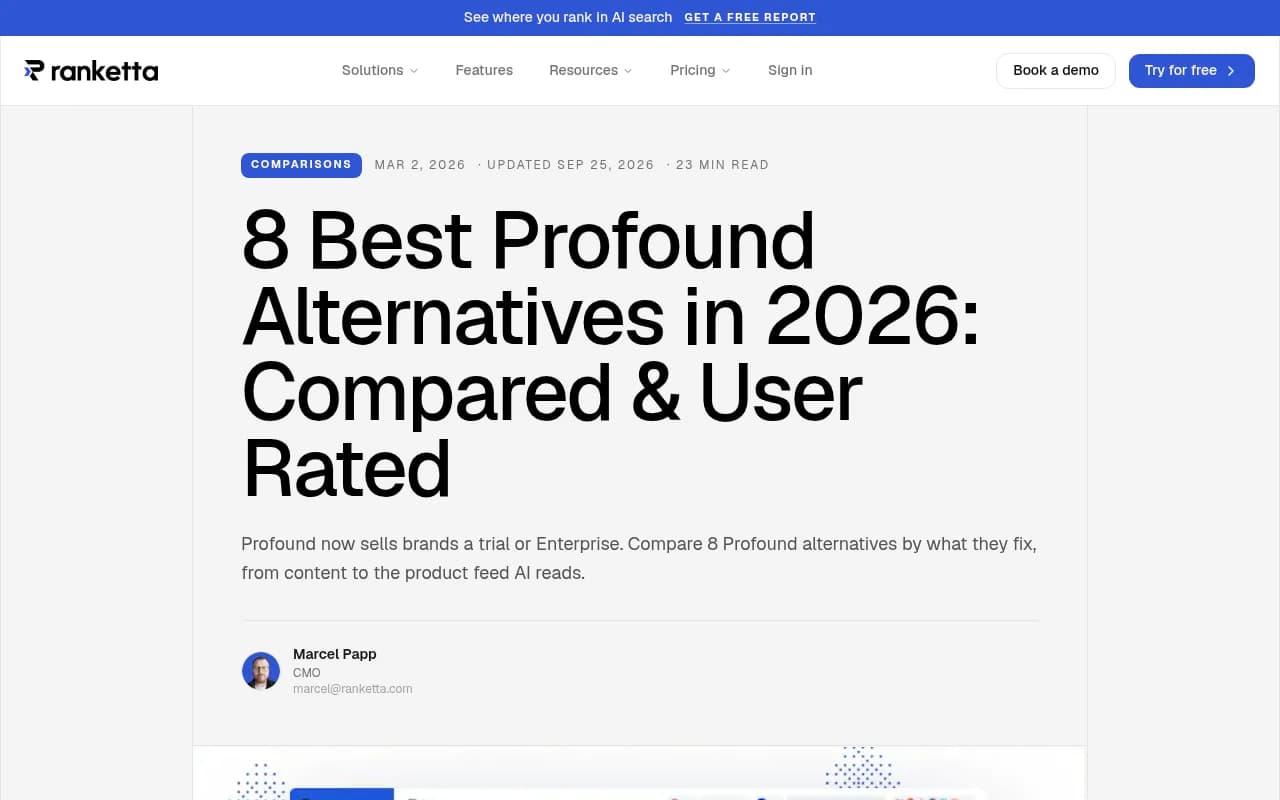
Here is the catch. In the Ranketta pages I reviewed, I did not see crawler logs or AI traffic attribution described. I did not verify whether they exist in the product, so treat this as a gap in the public material, not a confirmed missing feature. If you are evaluating it, ask them directly.
Why does this matter? Because monitoring answers ("was my brand mentioned?") is a different problem from diagnosing access ("could the bot even read the page?"). Teams that skip the second one end up rewriting content that was never fetched in the first place.
What crawler logs and traffic data actually tell you
Three questions, really.
- Which AI bots visit, and how often? GPTBot, OAI-SearchBot, ClaudeBot, PerplexityBot and others behave differently. Some crawl for training, some fetch at answer time.
- Where do they fail? 403s from a WAF, blocked robots.txt rules, JavaScript-only content, slow responses.
- Does any of it turn into visits and conversions? AI referral traffic is the only number your finance team will care about.
The mix shifts quickly, too. In Promptwatch's AI crawler traffic report (June 8 to September 6, 2026), OpenAI made up 79.8% of verified AI crawler requests in the week of August 31 to September 6, down from 94.8% in the week of June 8. Only requests whose source IP matches the operator's published ranges were counted, so spoofed user agents are excluded. Separately, Meta-WebIndexer grew from about 2% to nearly 38% of tracked AI crawler requests between mid-July and August 9, 2026. If you are still only watching GPTBot, you are missing a good chunk of what is happening.
The report's advice is worth stealing: compare your own logs against that mix. A provider that is large in the chart but near zero in your logs suggests you are blocked or unreachable for that provider.
One more wrinkle on the traffic side. ChatGPT stopped sending a referrer on October 8, 2026, so referral reports undercount it unless you tag links with utm_source=chatgpt.com and count those visits. Any tool you choose should handle that.
The 7 alternatives at a glance
| Tool | Crawler or log data | AI traffic data | Best for |
|---|---|---|---|
| Promptwatch | IP-verified AI crawler logs | Yes, visitor analytics | Teams that want to fix gaps, not just see them |
| Profound | Agent Analytics (crawler and referral tracking from logs), Standard plans and up per Ranketta's blog | Yes, per the same source | Large enterprise programs |
| Scrunch | Crawler log analysis and visitor analytics reported by Am I Cited | Yes, per that review | Brand safety and governance |
| Botify | Enterprise crawl and log analysis, with AI search visibility | Limited, verify | Large sites with SEO engineering teams |
| Oncrawl | Log file analysis at scale | Not AI-specific | Technical SEO teams |
| FandangoSEO | Crawler plus log analyzer | Not AI-specific | Mid-size technical audits |
| Screaming Frog | Log File Analyser as a separate product | No | Hands-on SEOs on a budget |
I have not verified current pricing for most of these. Check each vendor before you budget.
1. Promptwatch
Promptwatch is where I would start for this specific problem, because it is built around the full loop rather than one report. It tracks how ChatGPT, Gemini, Claude, Perplexity, Google AI Overviews and others mention and cite you, then shows the access side next to it.

On the crawler side, AI crawler logs are real-time and IP-verified. You see which pages GPTBot, ClaudeBot, PerplexityBot, Meta-WebIndexer and others read, how often, which errors they hit (with plain-language explanations), and a crawl-to-citation path with a citation rate per page. That last piece separates an access problem from a content problem, which is the whole point. Setup works through Cloudflare, AWS CloudFront, Fastly, Vercel, Netlify, Akamai, Google Cloud CDN, a custom endpoint, or the official WordPress plugin.
On the traffic side, visitor analytics report AI-referred visits and conversions from ChatGPT, Perplexity, Gemini, Claude, Copilot and more, with a setting for the utm_source=chatgpt.com situation described above. Crisp reported 2x higher conversion rates from AI traffic than from traditional channels, and TreeHouse (Pararius) reached roughly 25% of organic conversions from AI search after fixing crawler access and publishing proprietary data.
Then it does something most tools in this list do not: the Content Agent writes and publishes pages to WordPress, Webflow or Framer, and Page Tracker plus crawler logs tell you whether the new page got crawled, cited and clicked. If you do e-commerce, ChatGPT Shopping tracking is built in on Business.
Pricing, per the vendor: Essential $95/mo, Professional $245/mo, Business $579/mo. Crawler logs start on Professional (25M logs). Agencies get Kick-off $199, Growth $399 and Scale $799. There is a 7-day free trial on monthly billing, and a free AI visibility report with a crawler access check. Confirm at promptwatch.com/pricing.
Honest limits: the Content Agent and faster-than-daily tracking sit on Business, and agency plans do not include the Content Agent. If you only need a one-off log audit, it may be more than you need.
2. Profound
Profound is the big enterprise name. Ranketta's own blog says its Agent Analytics (crawler and AI referral tracking from logs) is on Standard plans and up. It collects answers from chat front-ends rather than vendor APIs and tracks up to nine engines on Enterprise.

The tradeoffs, from the same Ranketta write-up: brands now get a 7-day trial of 50 prompts on three engines, or a custom Enterprise contract. Shopping insights cover ChatGPT on Enterprise only. Compared with Promptwatch it is pricier and has no Reddit tracking or agentic publishing loop. See Promptwatch vs Profound for the detail.
3. Scrunch
Am I Cited's roundup lists Scrunch as the pick for brand safety and governance, and says crawler log analysis and visitor analytics are included. It sits in the $400+/month bracket alongside Profound Growth in that article's budget table.

Good for compliance-heavy teams. Less good if you want content production in the same product. Compare directly at Promptwatch vs Scrunch.
4. Botify
Botify comes from the technical SEO side: enterprise crawling, log analysis and now AI search visibility. If you run a site with millions of URLs and an engineering team that lives in log files, it is a natural fit.
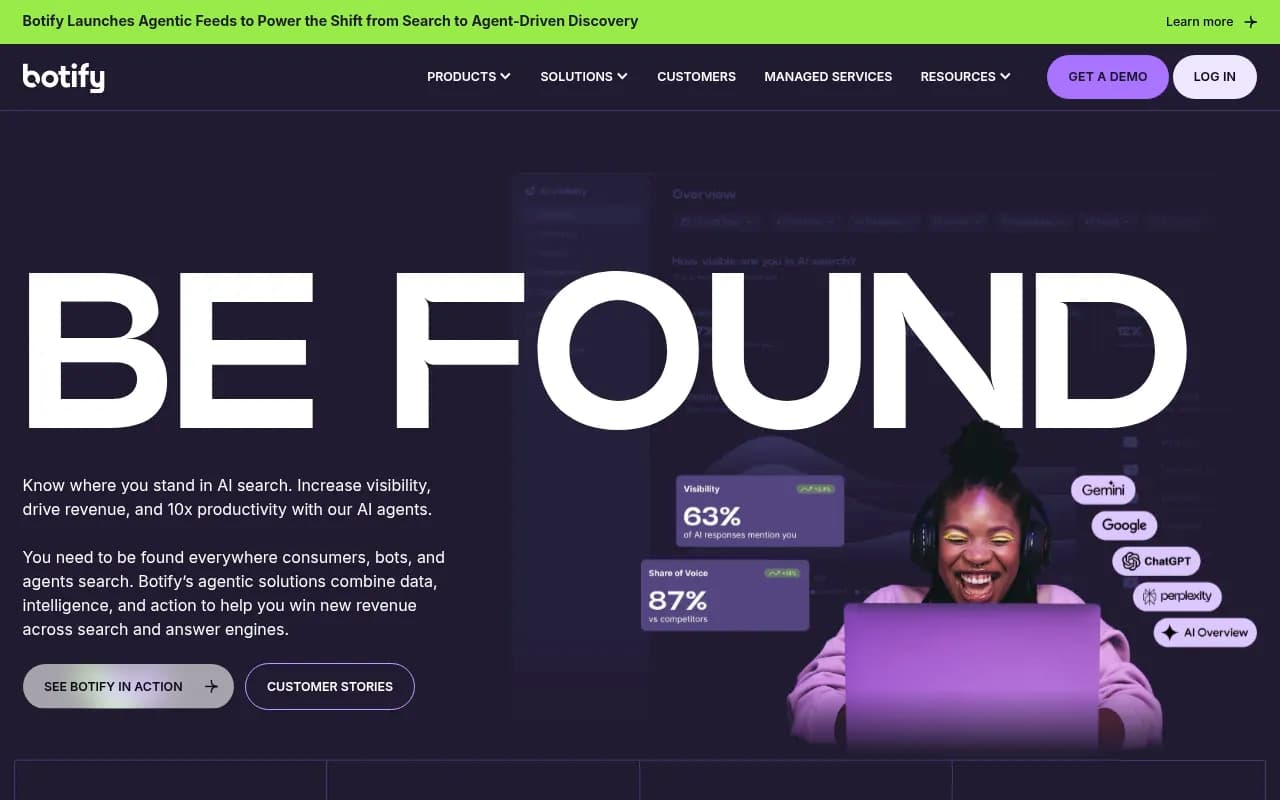
I would check how much of its log analysis is AI-bot specific versus classic Googlebot work, and what its AI referral reporting looks like. I could not verify either from the research.
5. Oncrawl
Oncrawl is a long-standing technical SEO platform known for log file analysis at scale, combining crawl data with server logs.
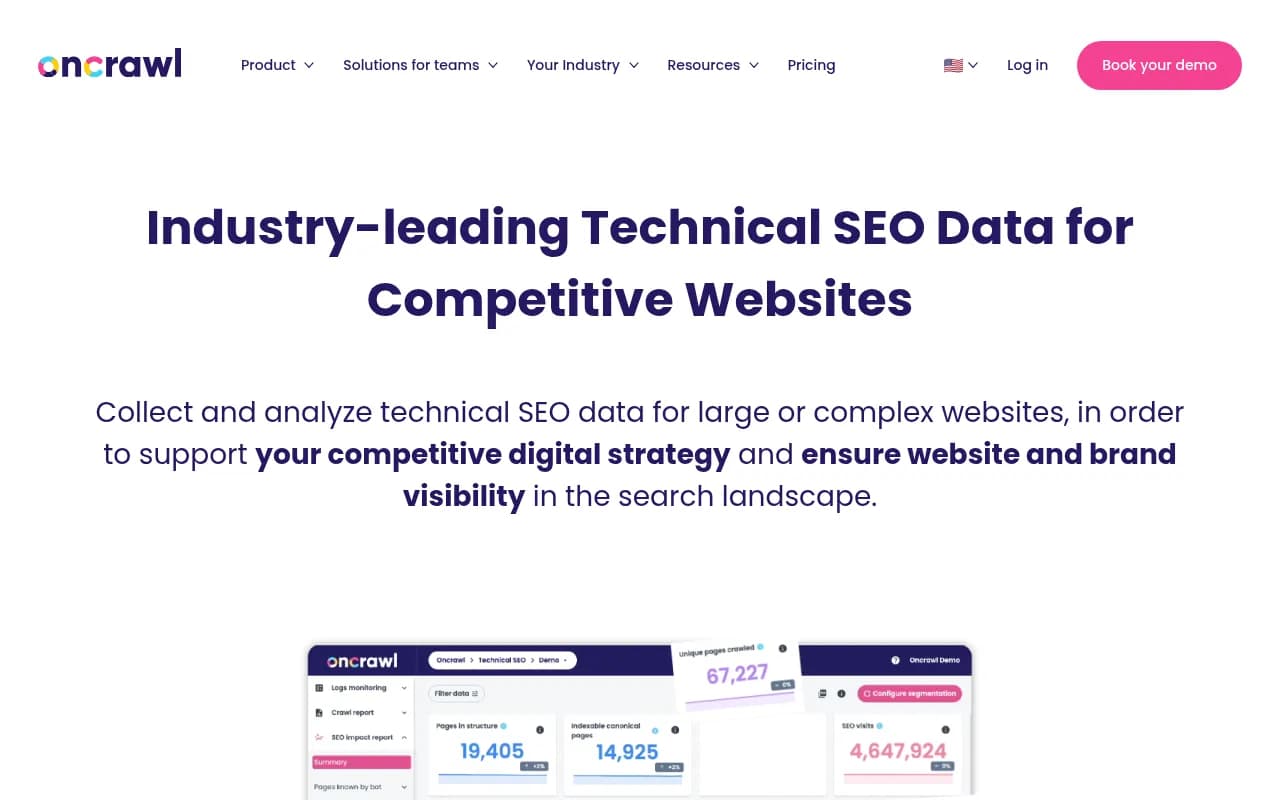
It will show you bot behavior in detail. It is not an AI visibility platform, so you would pair it with a prompt tracker to see citations.
6. FandangoSEO
FandangoSEO bills itself as a website crawler and log analyzer for technical SEO. It is a lighter option for teams that want crawl and log views without an enterprise contract.

Same caveat as Oncrawl: strong on technical access, thin on AI answer tracking.
7. Screaming Frog SEO Spider
Screaming Frog is the crawler most SEOs already own. A canlah.ai roundup of AI traffic tools lists it among the narrower-fit options. The SEO Spider crawls your site as a bot would; log analysis is handled by a separate Log File Analyser product.
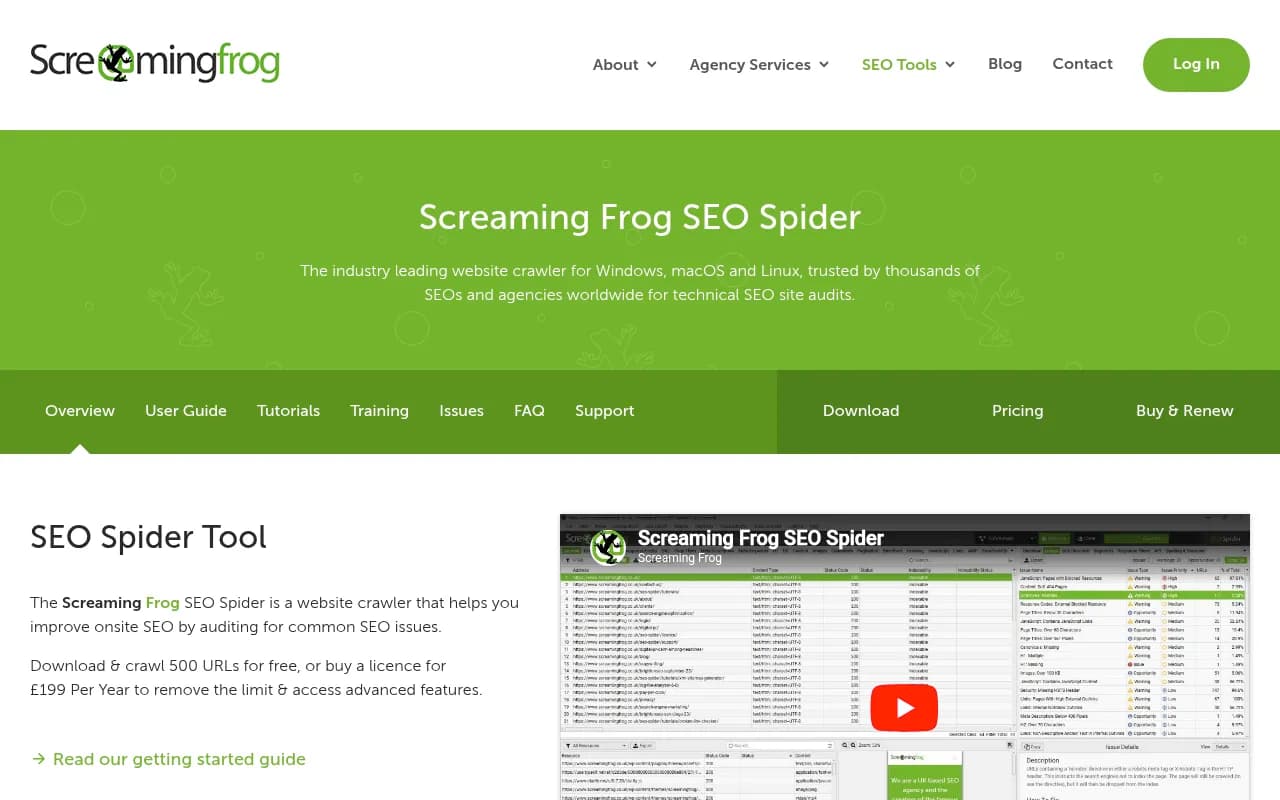
It is cheap and precise, but manual. No ongoing AI citation or traffic data.
How to choose
Pick by the question you cannot answer today.
- You cannot tell if AI bots reach your pages, and you also want citations and traffic in the same place: Promptwatch.
- You are a large enterprise with procurement requirements and budget: Profound or Scrunch, then compare security and support.
- Your problem is mostly technical site health at huge scale: Botify or Oncrawl, plus a separate AI tracker.
- You are on a tight budget and comfortable with spreadsheets: Screaming Frog or FandangoSEO.
If you want a wider field of AI trackers, the GEO software directory lists dozens more.
A quick checklist before you buy
- Ask whether crawler data comes from your real server or CDN logs, or from synthetic fetches.
- Ask how spoofed user agents are filtered. IP verification against the operator's published ranges is the right answer.
- Check that AI referrals are attributed even when the referrer is stripped.
- Confirm the tool tells you what to do next, not just a score.
- Run the free trial against a page you know is blocked, and see if it catches it.
Final word
Ranketta may be the right tool if your job is cleaning product feeds. If your job is proving that AI bots can read your site and that AI search sends revenue, you need log-level data. Start with the free crawler access check, look at your own numbers against the crawler traffic benchmarks, and let the gaps decide the shortlist.