Key takeaways
- GetMint.ai is a capable AI search visibility tracker, but it lacks the multi-client infrastructure, content generation, and gap analysis that agencies typically need at scale.
- The best alternatives combine monitoring with action: finding visibility gaps, creating content to close them, and tracking the results.
- Promptwatch is the strongest all-around pick for agencies that want to go beyond dashboards and actually improve client rankings in AI search.
- Several solid alternatives exist depending on your budget and priorities — from enterprise-grade platforms to lightweight trackers.
- Multi-client management features (white-label reporting, separate workspaces, bulk prompt tracking) vary significantly across tools, so it's worth checking before committing.
If you're running an agency and using GetMint.ai to track client visibility in AI search engines, you've probably hit a wall at some point. The tool does what it says — it monitors how brands appear in ChatGPT, Perplexity, and other LLMs. But monitoring is only half the job. Your clients want to know why they're invisible and what to do about it. That's where most single-purpose trackers fall short.
This guide covers seven alternatives worth considering in 2026, with a focus on what actually matters for agencies: multi-client support, content optimization, actionable insights, and reporting that doesn't require three hours of manual work.
What to look for in a GetMint.ai alternative
Before jumping into the list, it's worth being clear about what "better for agencies" actually means. A few things stand out:
- Multi-client workspaces or brand configurations without paying enterprise prices for each seat
- Content gap analysis that shows why a client isn't being cited, not just that they aren't
- Some form of content generation or optimization guidance — not just dashboards
- White-label or client-ready reporting
- Coverage across the AI models that matter: ChatGPT, Perplexity, Claude, Gemini, Google AI Overviews
With that in mind, here's the list.
1. Promptwatch
Promptwatch is the most complete option on this list for agencies that want to move from tracking to actually fixing things.

The core difference from GetMint.ai and most other trackers is what Promptwatch calls the action loop. First, Answer Gap Analysis shows you exactly which prompts competitors are being cited for that your client isn't. You see the specific topics and questions AI models want answers to but can't find on your client's site. Second, a built-in AI writing agent generates articles, listicles, and comparisons grounded in real citation data — not generic SEO filler, but content engineered to get cited by ChatGPT, Claude, and Perplexity. Third, page-level tracking shows which pages are being cited, how often, and by which models, so you can close the loop with traffic attribution.
For agencies specifically, Promptwatch supports multiple sites across plans, with custom agency/enterprise pricing for larger portfolios. It monitors 10 AI models including Google AI Overviews, Google AI Mode, DeepSeek, Grok, and Mistral — broader coverage than most competitors. The crawler logs feature is particularly useful: you can see exactly which AI crawlers are hitting a client's site, which pages they're reading, and any errors they're encountering. Most tools don't have this at all.
Pricing starts at $99/month for one site, $249/month for two sites (Professional, which includes crawler logs), and $579/month for five sites. Agency pricing is available on request.
The honest caveat: Promptwatch is more feature-dense than GetMint.ai, so there's a learning curve. If a client just wants a simple monthly report showing their mention rate, this might be more than they need. But for agencies trying to demonstrate ROI and actually move the needle, it's the right tool.
2. Profound AI
Profound has built a strong reputation in the enterprise AI visibility space, and their agency mode is genuinely well-designed.
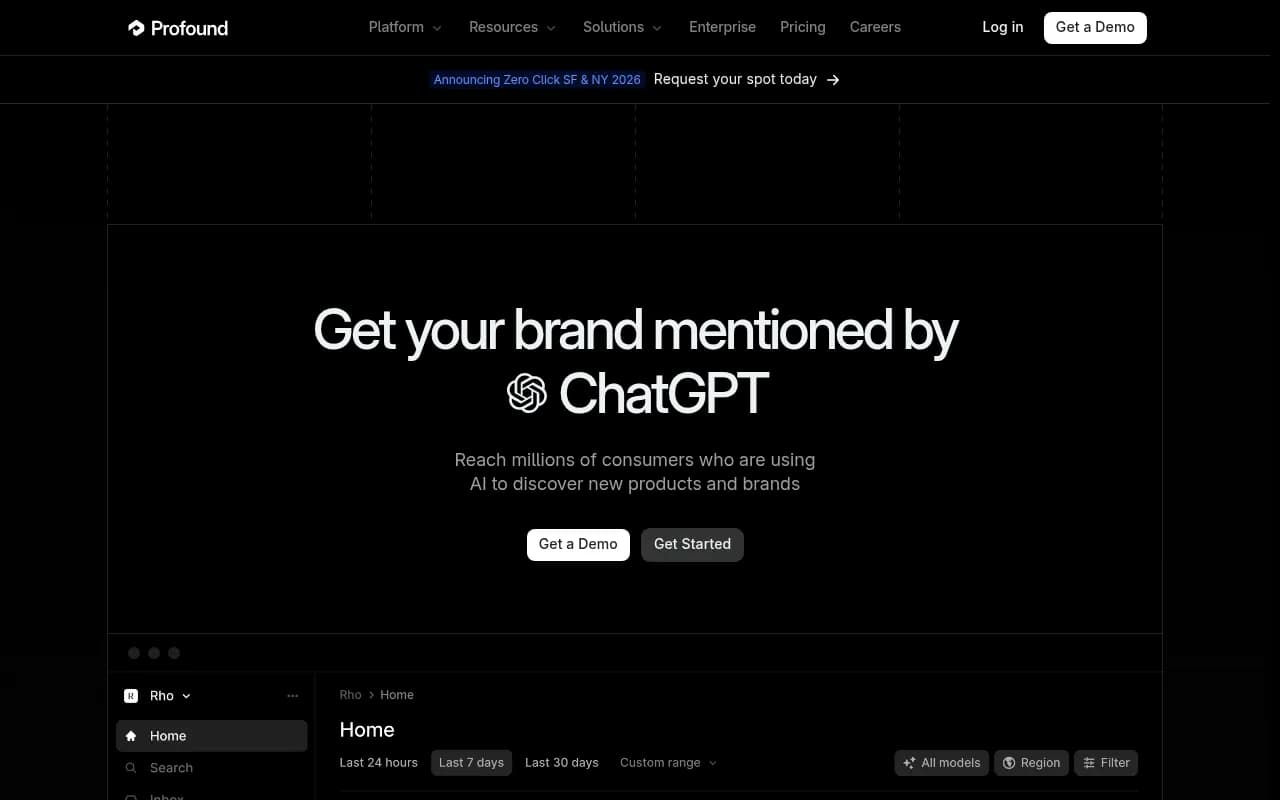
The platform includes brand configurations, pitch environments, and multi-client dashboards that make it easier to manage several accounts without constantly switching contexts. Their prompt tracking is solid, and the competitive benchmarking features give you clear data to put in front of clients.
Where Profound pulls ahead of GetMint.ai is depth of analysis. The platform surfaces which sources AI models are citing in responses, which helps you identify where to publish or optimize content for a given client. The agency-specific features — separate brand workspaces, client-ready reporting — are more polished than most tools in this category.
The tradeoff is price. Profound sits at the higher end of the market, which makes sense for enterprise accounts but can be hard to justify for smaller agency clients. If you're managing a handful of well-funded clients, it's worth a look. If you're running a high-volume agency with thinner margins, the math gets harder.
3. Athena HQ
AthenaHQ focuses on AI search monitoring with a clean interface and decent multi-brand support.
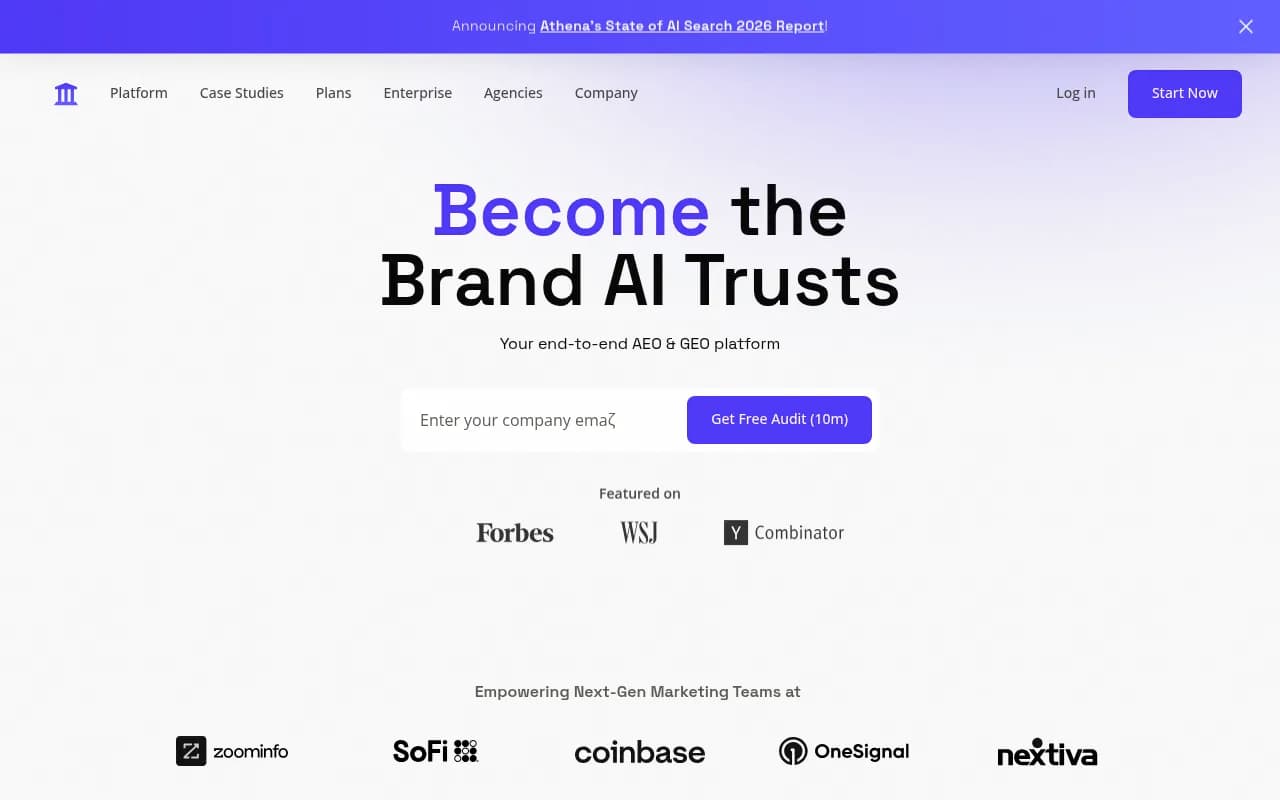
It tracks brand visibility across eight or more AI search engines and gives you sentiment analysis alongside mention tracking. The competitive comparison features are useful for showing clients how they stack up against specific competitors in AI responses.
The limitation is that AthenaHQ is primarily a monitoring tool. It shows you the data but doesn't help you act on it. There's no content generation, no gap analysis that tells you what to write, and no crawler logs. For agencies that have their own content production workflows and just need reliable tracking data to feed into them, that's fine. For agencies that want the platform to do more of the heavy lifting, it falls short.
4. Scrunch AI
Scrunch AI is worth considering if your clients are in competitive categories where understanding how AI models construct their responses matters as much as whether your brand appears.
The platform monitors how AI assistants like ChatGPT and Claude describe brands, products, and categories. It's particularly good at surfacing the narrative framing AI models use — not just "are you mentioned?" but "what are you being said about?" For reputation-sensitive clients, that distinction matters.
Multi-client support is available, and the reporting is reasonably clean. Like AthenaHQ, it's more monitoring than optimization, but the depth of response analysis is stronger than GetMint.ai's basic mention tracking.
5. Otterly.AI
If budget is a real constraint, Otterly.AI is one of the more affordable options in the AI visibility space.

It handles prompt tracking across major AI models and gives you basic visibility scores and competitor comparisons. The interface is straightforward, which is either a feature or a limitation depending on what your clients need.
The honest assessment: Otterly.AI is a monitoring-only tool. No content generation, no crawler logs, no traffic attribution. But at its price point, it can make sense for smaller agency clients who just want to know where they stand in AI search without a big monthly commitment. Think of it as a lightweight tracker rather than an optimization platform.
6. Babylove Growth
Babylove Growth takes a different angle — it's more of an AI-powered SEO and content automation platform that includes AI visibility tracking as part of a broader workflow.
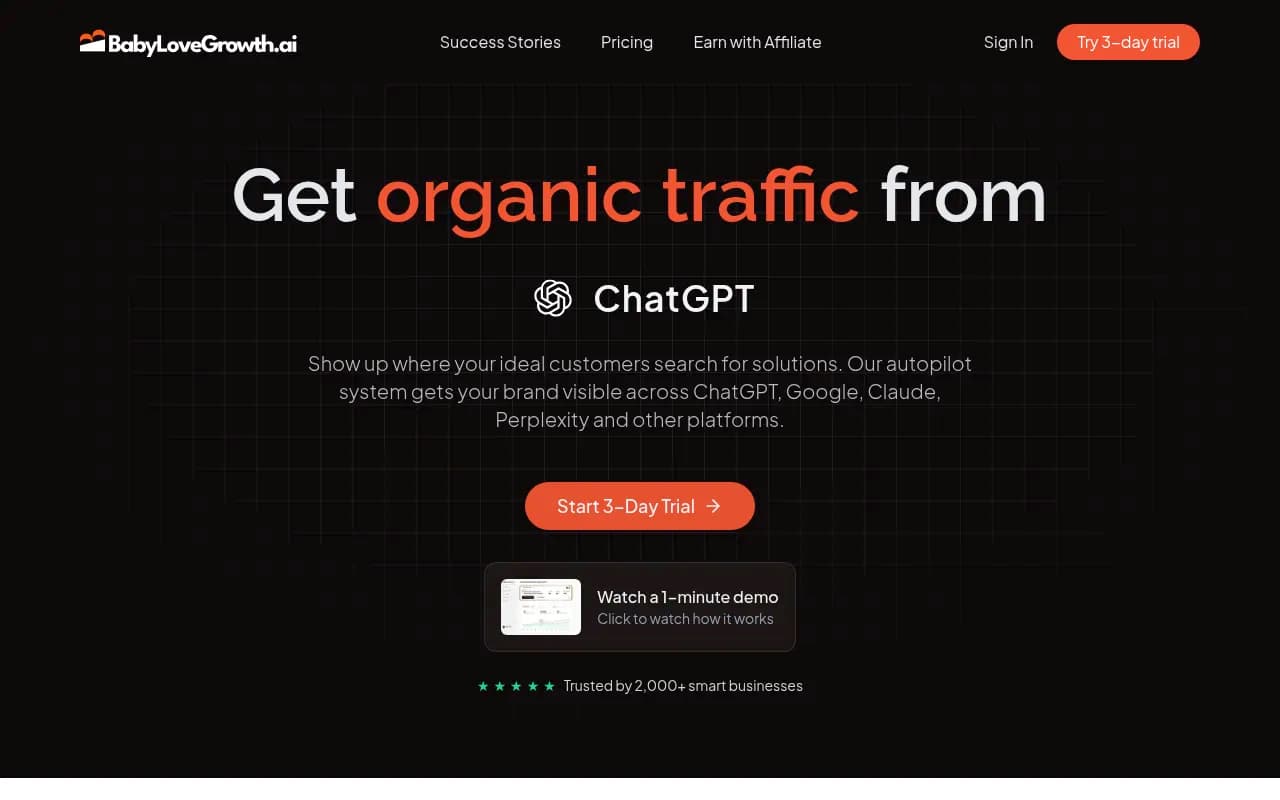
The platform generates brand-aligned articles optimized for both Google and ChatGPT, automates publishing, builds a 30-day content calendar based on ranking and citation trends, and tracks brand mentions across AI tools. For agencies that want to bundle content production with visibility tracking, it's an interesting option.
The agency plans support multiple clients and include multilingual content generation, which is useful if you're working with international brands. The GEO audit features surface technical issues affecting AI visibility, which adds another layer beyond what GetMint.ai offers.
The caveat is that Babylove Growth is more of a content production tool with visibility tracking bolted on, rather than a purpose-built GEO platform. The tracking depth isn't as granular as Promptwatch or Profound, but if content automation is a core part of your agency's service offering, the combination is appealing.
7. Rankscale
Rankscale is a newer entrant focused specifically on scaling AI visibility — hence the name.
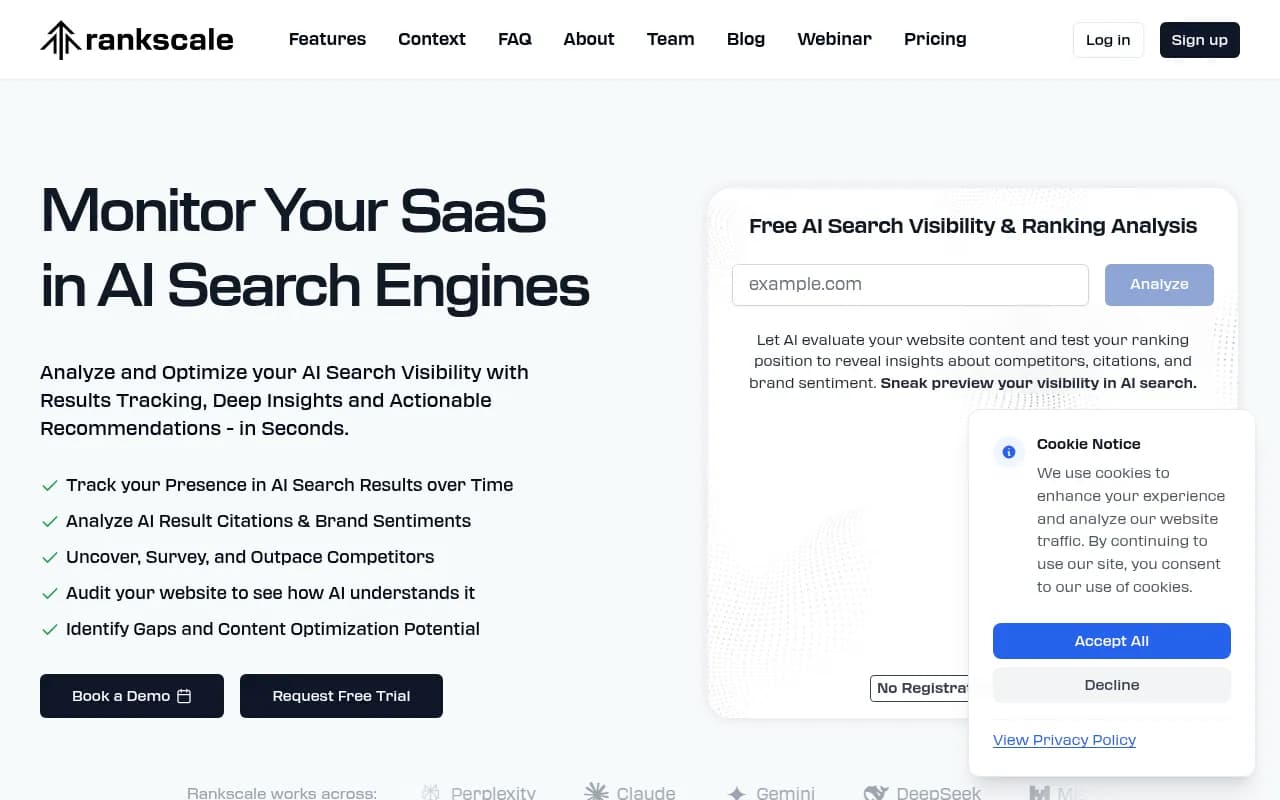
It's designed for teams that need to manage visibility optimization across multiple brands or properties without the overhead of enterprise pricing. The platform tracks AI search performance, identifies gaps, and provides guidance on content improvements.
It's less mature than some of the other options on this list, which means the feature set is still developing. But for agencies looking for a cost-effective option that goes slightly beyond pure monitoring, it's worth keeping an eye on.
How these tools compare
Here's a quick reference across the dimensions that matter most for agencies:
| Tool | Multi-client support | Content generation | Gap analysis | Crawler logs | AI models tracked | Best for |
|---|---|---|---|---|---|---|
| Promptwatch | Yes (agency pricing) | Yes (built-in AI writer) | Yes (Answer Gap Analysis) | Yes | 10 | Agencies wanting full optimization loop |
| Profound AI | Yes (agency mode) | No | Partial | No | 6+ | Enterprise clients, deep analysis |
| AthenaHQ | Yes | No | No | No | 8+ | Clean monitoring dashboards |
| Scrunch AI | Yes | No | No | No | 5+ | Reputation-sensitive clients |
| Otterly.AI | Limited | No | No | No | 5+ | Budget-conscious clients |
| Babylove Growth | Yes | Yes (content automation) | Partial | No | 4+ | Content-heavy agency workflows |
| Rankscale | Yes | Partial | Partial | No | 4+ | Growing agencies on a budget |
Which one should you actually use?
It depends on what your agency's bottleneck is.
If the problem is that you can track visibility but can't efficiently produce content to improve it, Promptwatch is the clearest answer. The combination of gap analysis and built-in content generation means you're not just reporting problems to clients — you're fixing them. That's a fundamentally different value proposition than GetMint.ai.
If you're running enterprise accounts where the client has their own content team and just needs reliable, deep monitoring data, Profound AI is worth the price premium.
If budget is tight and clients just want a visibility score they can point to, Otterly.AI gets the job done without overcomplicating things.
For agencies that sell content production as a core service, Babylove Growth's combination of content automation and visibility tracking might fit naturally into your existing workflow.
The one thing I'd push back on is the idea that any monitoring-only tool is a long-term solution for agency clients. The question clients are increasingly asking isn't "are we visible in AI search?" — it's "how do we get more visible?" Tools that can answer the second question are the ones that will justify their retainer fees.
A note on GetMint.ai itself
GetMint.ai isn't a bad tool. It tracks brand mentions across AI search engines, gives you competitive comparisons, and has a reasonably clean interface. For individual brands doing basic monitoring, it works fine.
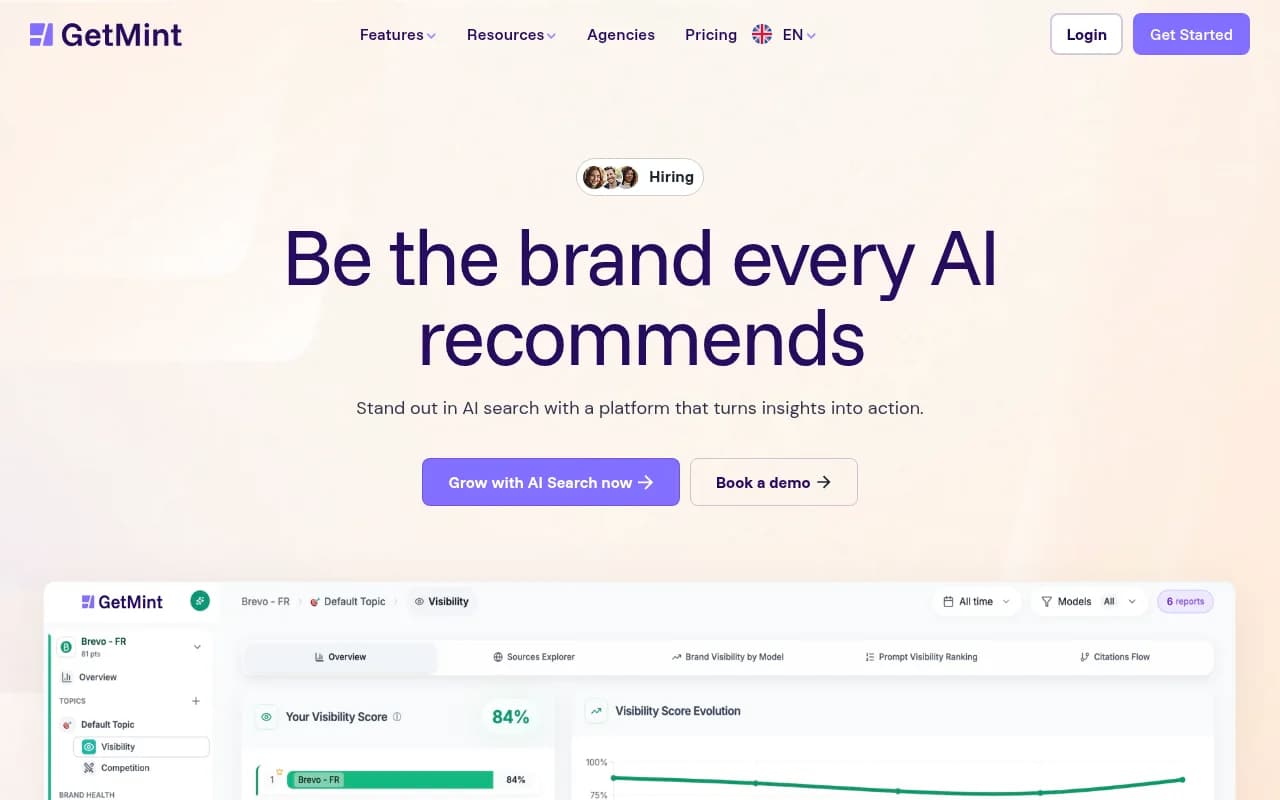
The issue for agencies is what it doesn't do: no content gap analysis, no built-in content generation, limited multi-client infrastructure, and no crawler logs. When a client asks "what do we do about this?" the tool doesn't have a good answer. That's the gap the alternatives above are trying to fill.
If you're currently using GetMint.ai and it's working for you, there's no urgent reason to switch. But if you're finding yourself doing a lot of manual work to translate monitoring data into client recommendations, one of the tools above — particularly Promptwatch — will save you significant time and make your agency's output more defensible.