Key Takeaways
- Sales intelligence tools like Apollo.io and Cognism help you find prospects, but they don't make your company visible when those prospects use AI search engines like ChatGPT, Perplexity, or Claude to research solutions
- 60% of B2B software teams already use AI across their sales processes, but most are invisible in AI-generated recommendations and comparisons
- AI search visibility requires a different approach than traditional SEO: structured content, comparison pages, direct answers to buyer questions, and consistent brand mentions across the web
- Platforms like Promptwatch track how often AI models cite your brand, identify content gaps, and help you create content that actually gets recommended by AI assistants

The Blind Spot in Your Sales Stack
Your sales team is armed with Apollo.io or Cognism. They have contact data, enrichment, intent signals, and outreach sequences. They know which accounts are in-market and which decision-makers to target. But here's the problem: none of that matters if your company doesn't exist in the AI-generated shortlists your prospects are reading.
When a VP of Sales opens ChatGPT and asks "What are the best sales intelligence platforms for mid-market B2B companies?", your $15,000/year ZoomInfo contract doesn't help you appear in that response. When a marketing director uses Claude to compare data enrichment tools, your Apollo.io subscription won't get you mentioned. You're invisible where it counts.
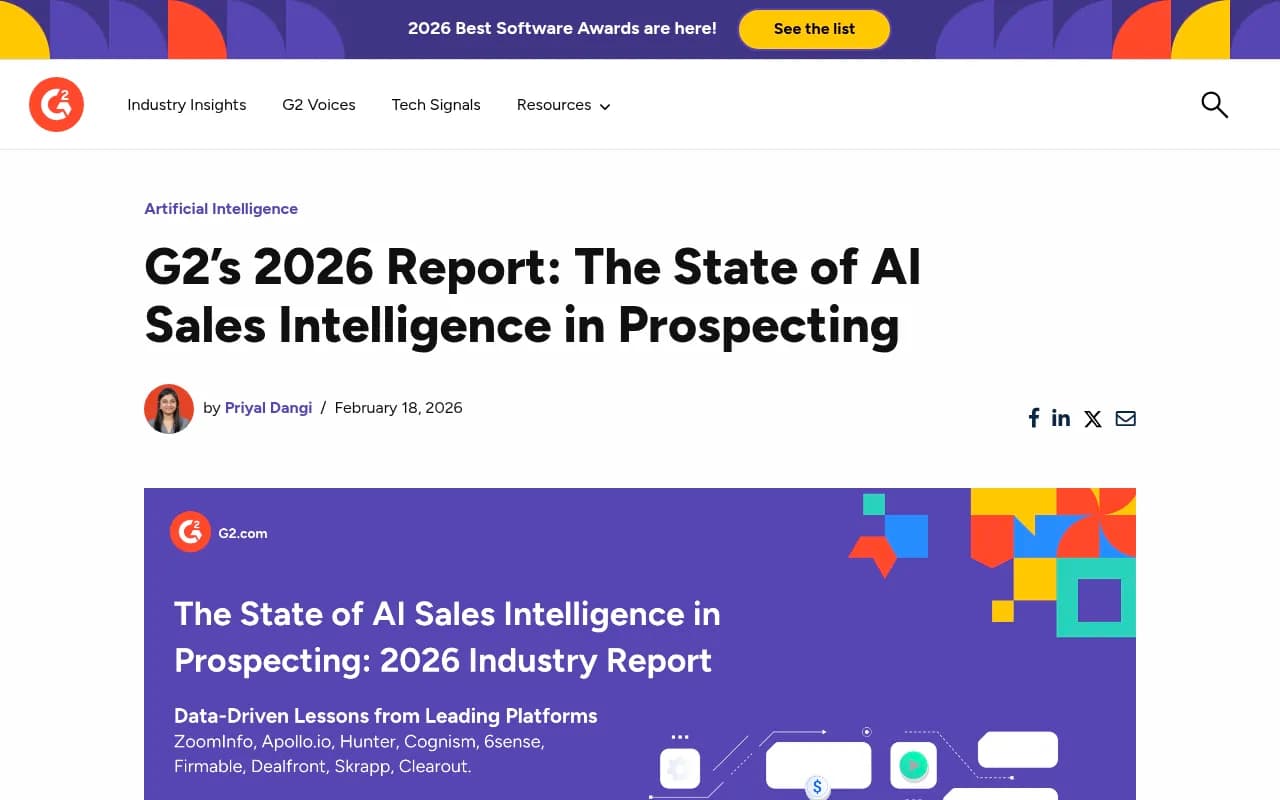
G2's 2026 report on AI sales intelligence found that while 60% of B2B software teams use AI across their sales processes, adoption is uneven. Some teams scale AI confidently while others struggle with fragmented systems. The same fragmentation exists in how companies think about visibility: they optimize for Google, invest in paid ads, and build outbound machines, but they ignore the channel where buyers are increasingly starting their research.
Why Sales Intelligence Platforms Don't Solve AI Visibility
Apollo.io and Cognism are built to solve a specific problem: finding and reaching the right people. They give you verified emails, phone numbers, org charts, technographics, and intent data. They help you execute outbound at scale. But they operate in a different layer of the funnel than AI search visibility.
Here's what they do well:
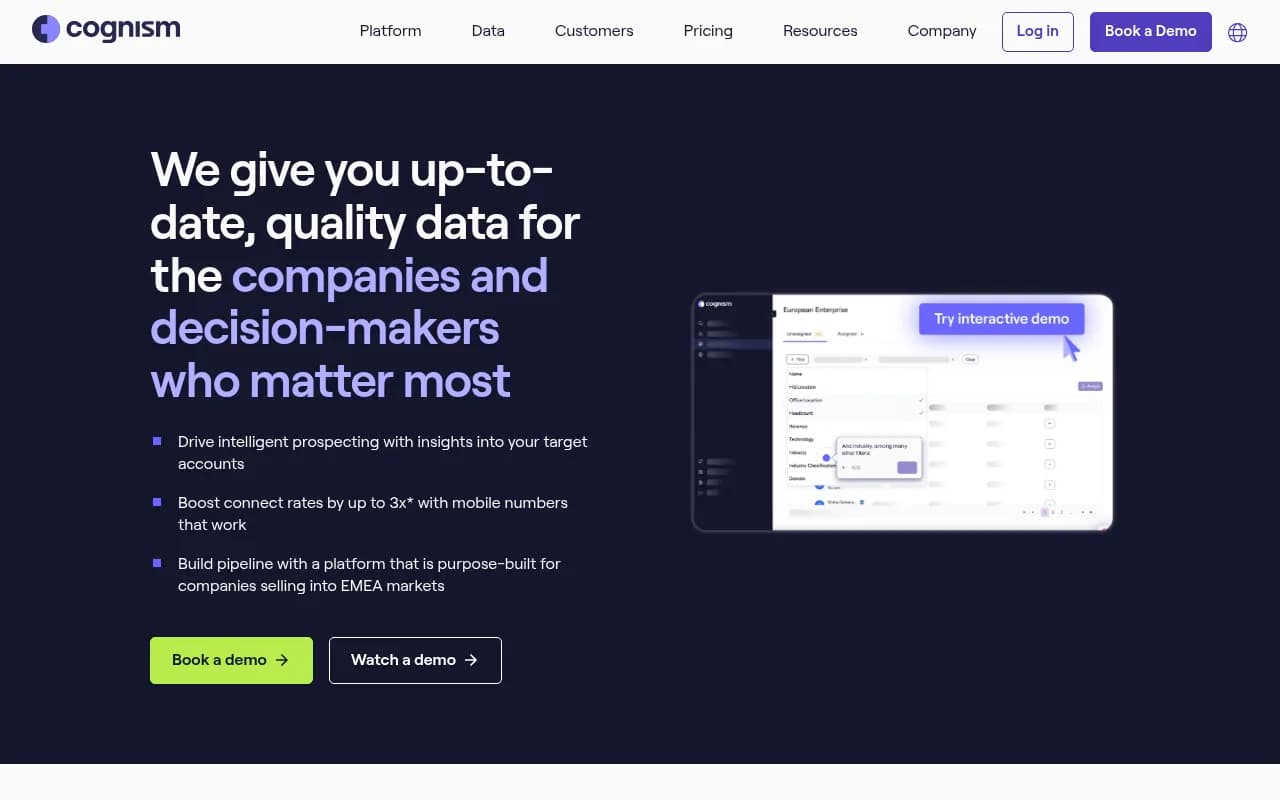
- Contact discovery: Apollo.io's database includes 275M+ contacts. Cognism offers 400M+ B2B profiles with phone-verified mobile numbers, especially strong in EMEA markets.
- Data enrichment: Both platforms enrich CRM records with firmographics, technographics, and buying signals. Cognism integrates Bombora intent data; Apollo.io offers native intent tracking.
- Outreach execution: Apollo.io combines prospecting with email sequences and a built-in dialer. Cognism integrates with Salesforce and HubSpot for workflow automation.
- Account intelligence: ZoomInfo (a common Apollo alternative) provides deep org charts and company hierarchies. Cognism offers GDPR-compliant data for European markets.
What they don't do: make your company visible when a prospect asks an AI assistant for recommendations. That requires a completely different capability set.
What AI Search Visibility Actually Means for Sales Teams
AI search visibility is about being cited, recommended, and included in AI-generated responses when buyers research solutions. It's not about ranking for keywords in Google. It's about appearing in ChatGPT's answer when someone asks "Which CRM integrates best with Apollo.io?" or showing up in Perplexity's comparison table when a prospect evaluates sales engagement platforms.
This matters because buyer behavior has shifted. A 2026 study found that B2B buyers increasingly use AI assistants for initial research, vendor discovery, and feature comparisons before they ever visit a company website or fill out a demo form. If you're not in those AI-generated shortlists, you're not in the consideration set.
Here's what drives AI visibility:
Structured, Direct Answers
AI models prefer content that directly answers specific questions. A page titled "How to integrate Apollo.io with Salesforce" that walks through the exact steps will get cited more often than a vague blog post about "maximizing your sales stack."
Comparison and Alternative Pages
When someone asks "What are the best alternatives to Cognism?", AI models pull from pages that explicitly compare tools. If you don't have comparison content on your site, you won't appear in those responses.
Consistent Brand Mentions Across the Web
AI models synthesize information from multiple sources. The more often your brand appears in relevant contexts (reviews, Reddit discussions, YouTube videos, industry blogs), the more likely you are to be recommended.
FAQ and Use-Case Content
Pages that address specific buyer questions ("Does Apollo.io work for enterprise sales teams?" or "Can Cognism track intent data in real time?") give AI models the structured information they need to cite you.
The Action Loop: How to Fix AI Invisibility
Most sales teams don't know they have an AI visibility problem until they test it themselves. Open ChatGPT and ask it to recommend sales intelligence platforms for your industry. If your company isn't mentioned, you're losing deals before they start.
Fixing this requires a systematic approach:
1. Find the Gaps
You need to know which prompts your competitors are visible for but you're not. This is where platforms like Promptwatch come in. Promptwatch's Answer Gap Analysis shows exactly which AI-generated responses include your competitors but exclude you. You see the specific prompts, the content your site is missing, and the topics AI models want answers to but can't find on your pages.
For example, if Cognism appears in responses about "GDPR-compliant sales intelligence" but your company doesn't, Promptwatch surfaces that gap and shows you what content to create.
2. Create Content That Gets Cited
Once you know the gaps, you need content that AI models will actually cite. This isn't generic SEO filler. It's structured, direct answers to the prompts where you're currently invisible.
Promptwatch's built-in AI writing agent generates articles, comparisons, and listicles grounded in real citation data (880M+ citations analyzed), prompt volumes, and competitor analysis. The content is engineered to get cited by ChatGPT, Claude, Perplexity, and other AI models because it's built from the patterns those models already reward.
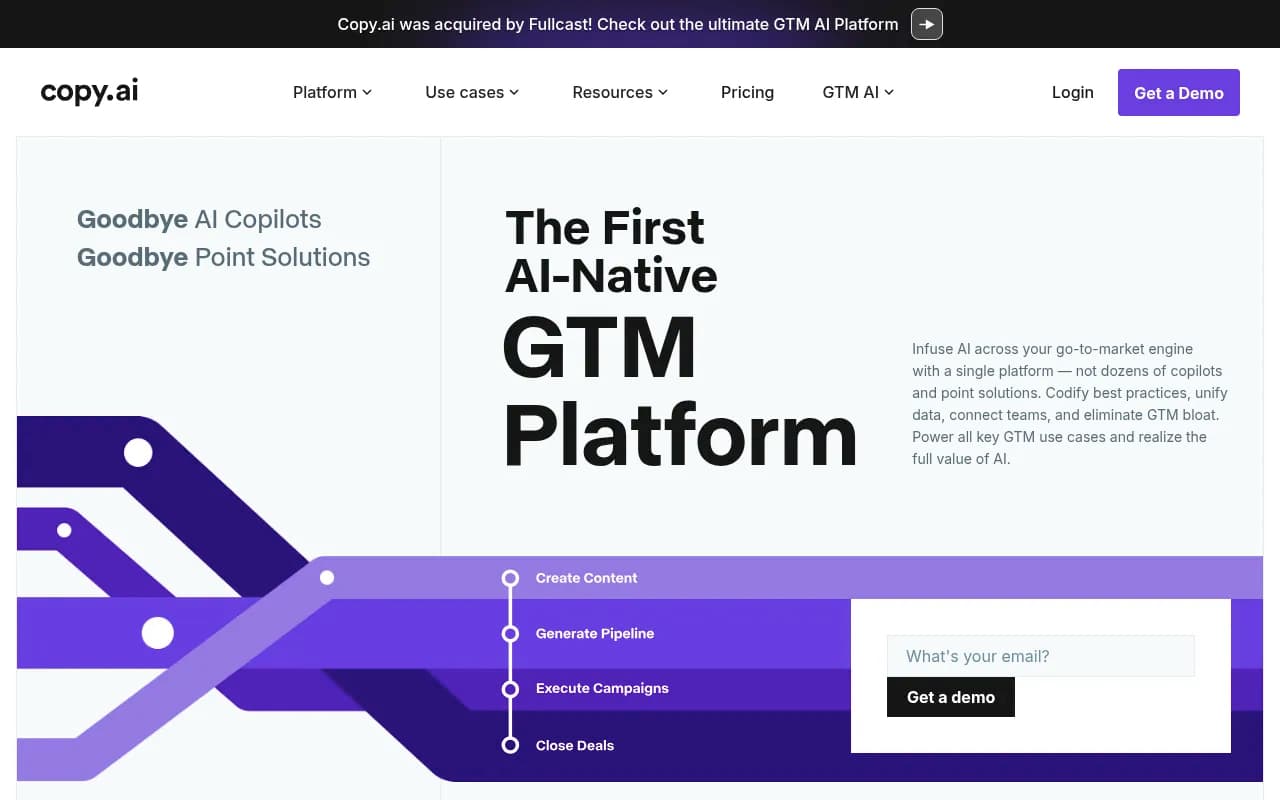
Alternatively, you can use tools like Jasper or Copy.ai to draft content, but you'll need to manually structure it for AI visibility (direct answers, comparison tables, FAQ sections).
3. Track the Results
Visibility isn't a one-time fix. You need to monitor how often AI models cite your brand, which pages are being referenced, and how your visibility changes over time.
Promptwatch tracks visibility scores across 10 AI models (ChatGPT, Perplexity, Claude, Gemini, Google AI Overviews, Meta AI, DeepSeek, Grok, Mistral, Copilot). Page-level tracking shows exactly which pages are being cited, how often, and by which models. You can close the loop with traffic attribution (code snippet, Google Search Console integration, or server log analysis) to connect visibility to actual revenue.
Other platforms that offer AI visibility tracking include:

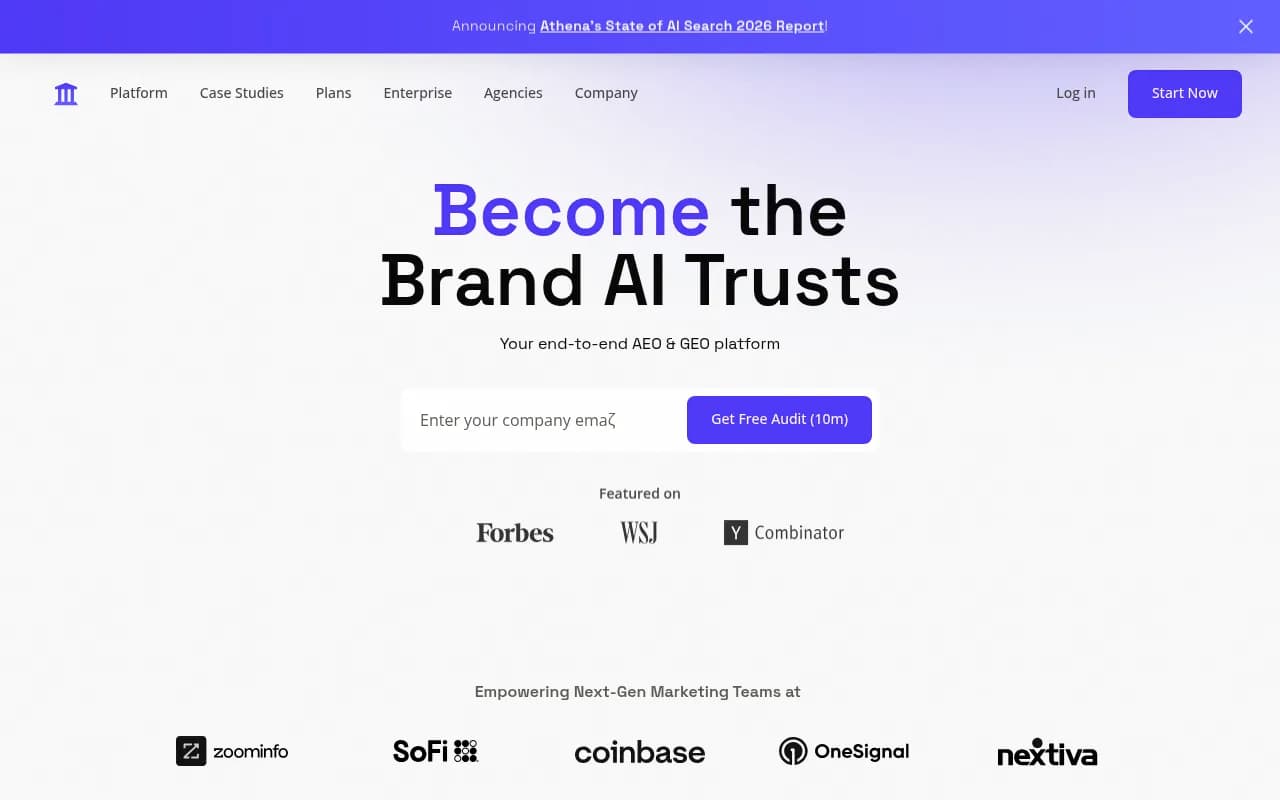
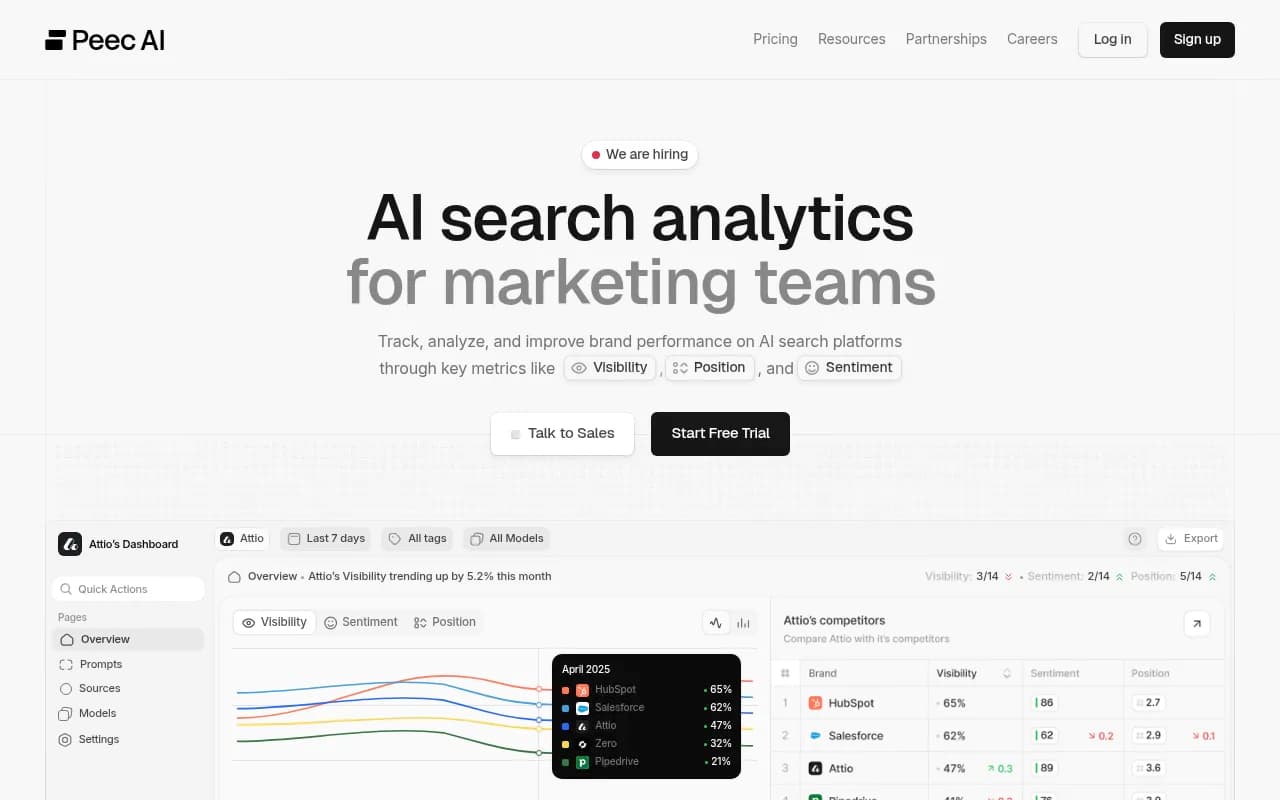
But most of these are monitoring-only dashboards. They show you the data but leave you stuck on what to do next. Promptwatch is built around the action loop: find gaps, generate content, track results.
What Apollo.io and Cognism Users Should Do Next
If you're using Apollo.io or Cognism for prospecting and outreach, you're solving half the problem. You're finding the right people and reaching them at the right time. But you're not controlling what those people see when they research your category using AI assistants.
Here's a practical roadmap:
Audit Your Current AI Visibility
Open ChatGPT, Claude, and Perplexity. Ask them to recommend tools in your category. Ask them to compare your product to competitors. Ask them specific buyer questions ("Which sales intelligence platform has the best Salesforce integration?" or "What's the most affordable alternative to ZoomInfo?"). If you're not mentioned, you have a visibility problem.
Identify High-Value Prompts
Use a platform like Promptwatch to see which prompts have high volume and low difficulty. These are the winnable opportunities where you can improve visibility quickly. For example, if "best Apollo.io alternatives for startups" gets 500 monthly prompts and you're not appearing, that's a high-value gap to fill.
Build Comparison and Alternative Pages
Create dedicated pages comparing your product to Apollo.io, Cognism, ZoomInfo, and other competitors. Include feature tables, pricing breakdowns, and use-case recommendations. AI models love structured comparisons.
| Feature | Your Product | Apollo.io | Cognism |
|---|---|---|---|
| Contact database size | X contacts | 275M+ | 400M+ |
| GDPR compliance | Yes/No | Partial | Full |
| Built-in sequences | Yes/No | Yes | No |
| Intent data | Yes/No | Yes | Bombora |
Answer Specific Buyer Questions
Build FAQ pages and use-case content that directly answer the questions buyers ask AI assistants. Examples:
- "How does [your product] integrate with Salesforce?"
- "Can [your product] track intent data in real time?"
- "What's the difference between [your product] and Apollo.io?"
Monitor Competitor Mentions
Track how often competitors like Apollo.io, Cognism, ZoomInfo, and others appear in AI-generated responses. Use this data to identify which prompts they dominate and where you have an opportunity to compete.
Optimize for Reddit and YouTube
AI models pull heavily from Reddit discussions and YouTube videos. Participate in relevant subreddits (r/sales, r/b2bmarketing, r/SaaS) and create YouTube content that addresses buyer questions. Promptwatch surfaces Reddit threads and YouTube videos that directly influence AI recommendations.
Tools That Support AI Visibility (Beyond Sales Intelligence)
While Apollo.io and Cognism handle prospecting, you need different tools to manage AI search visibility:
AI Visibility Tracking
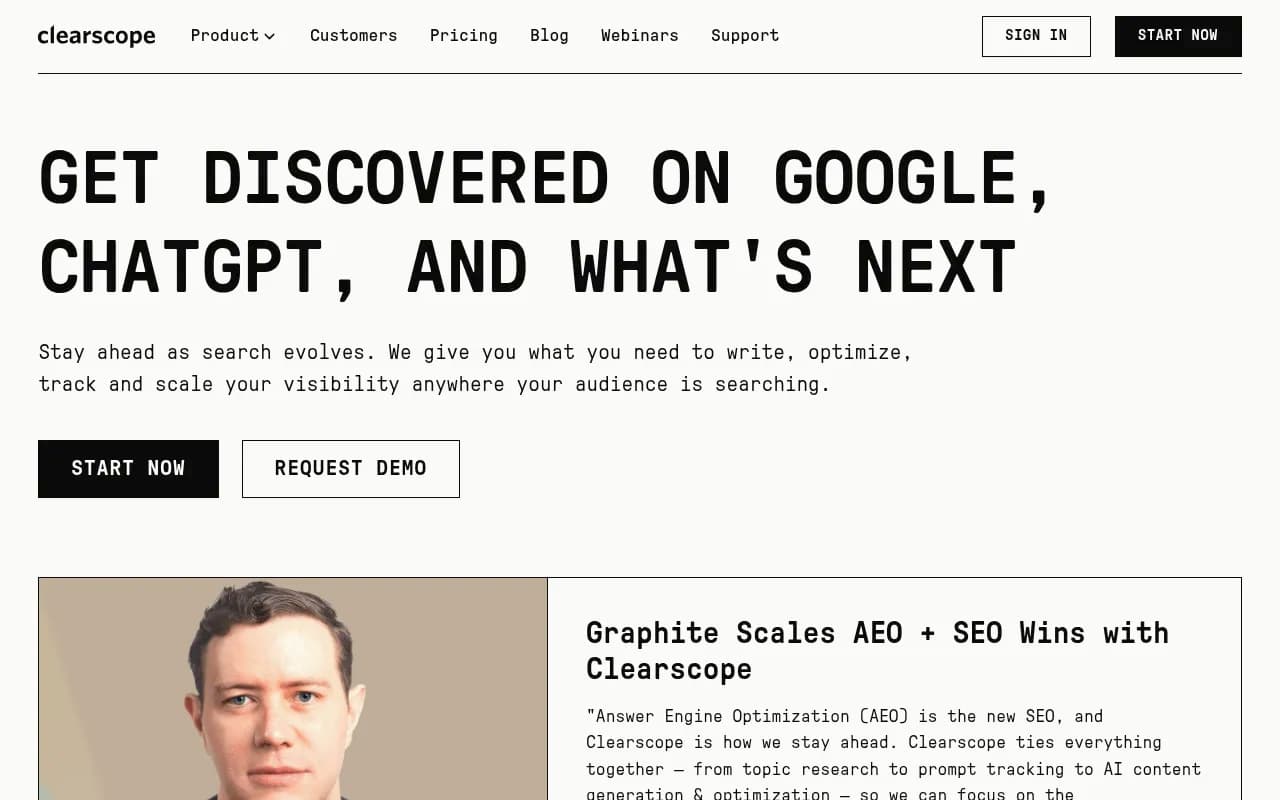
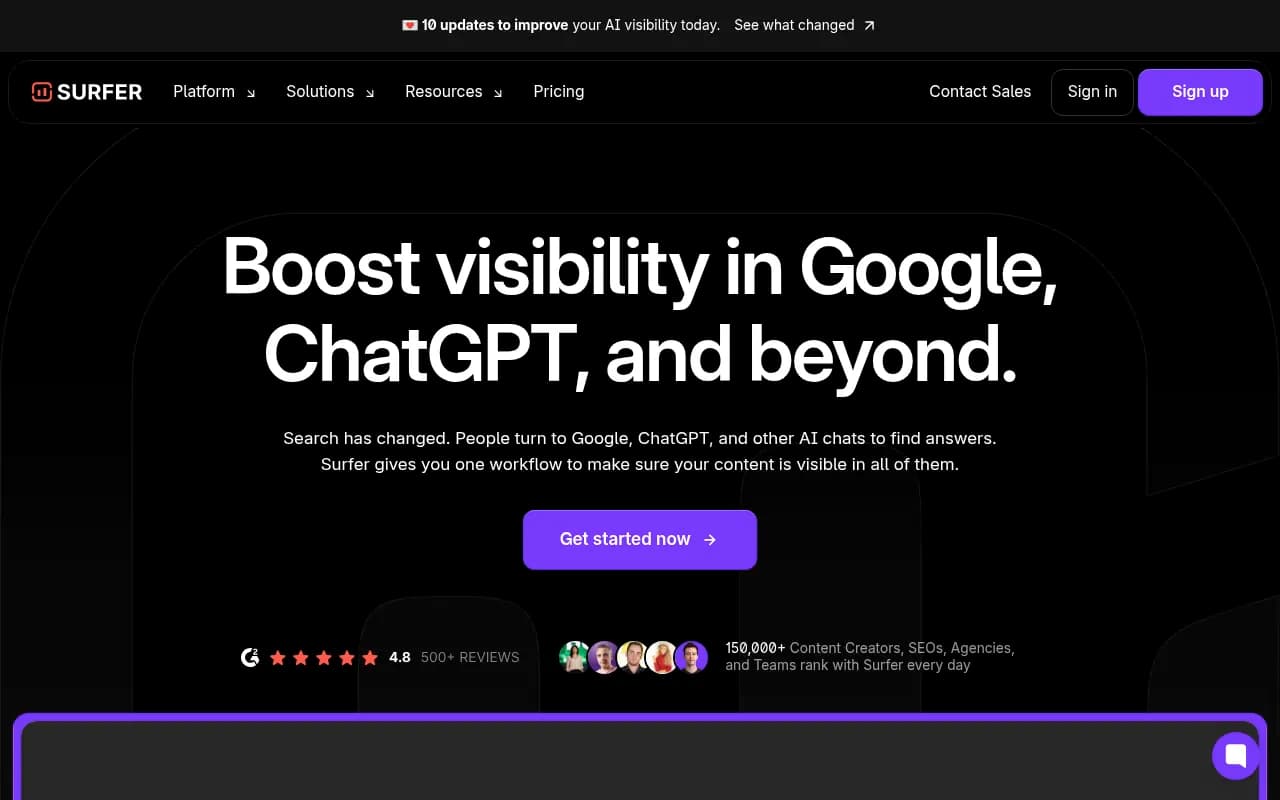
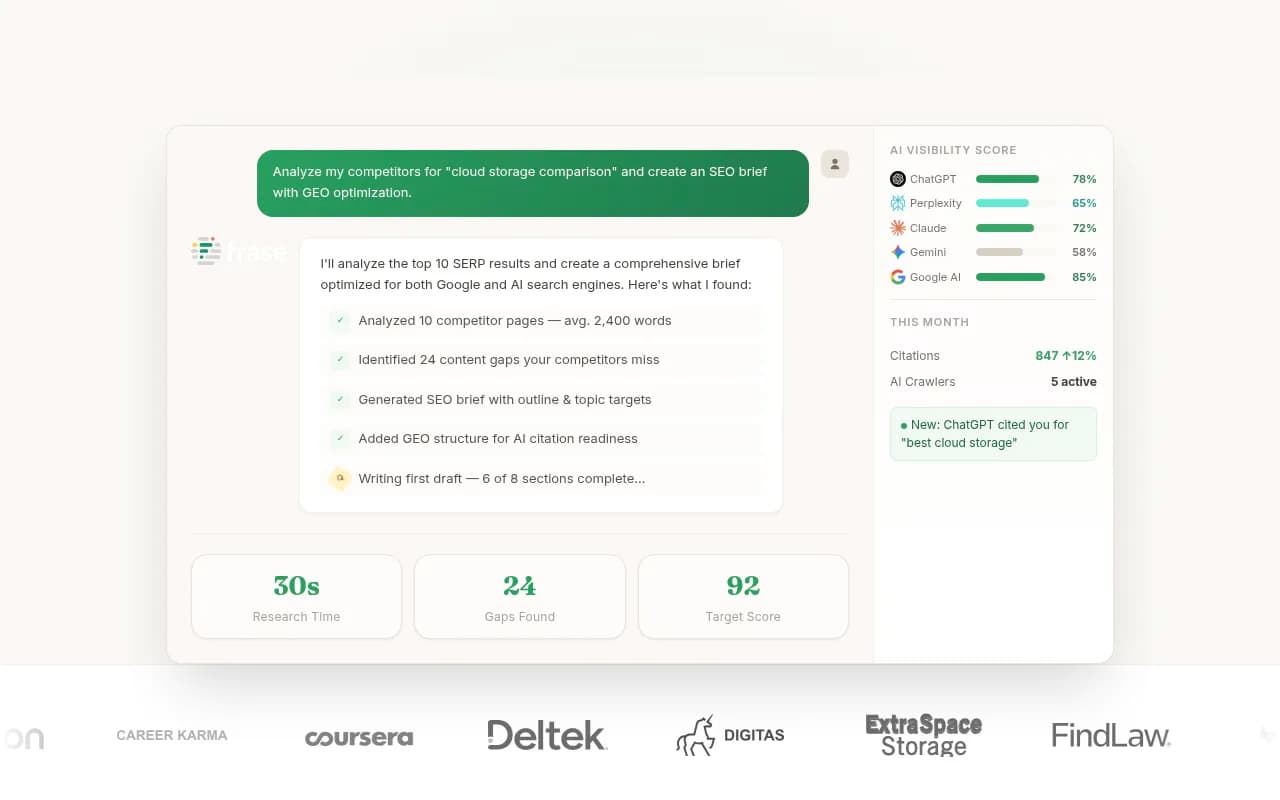
Content Optimization for AI Search
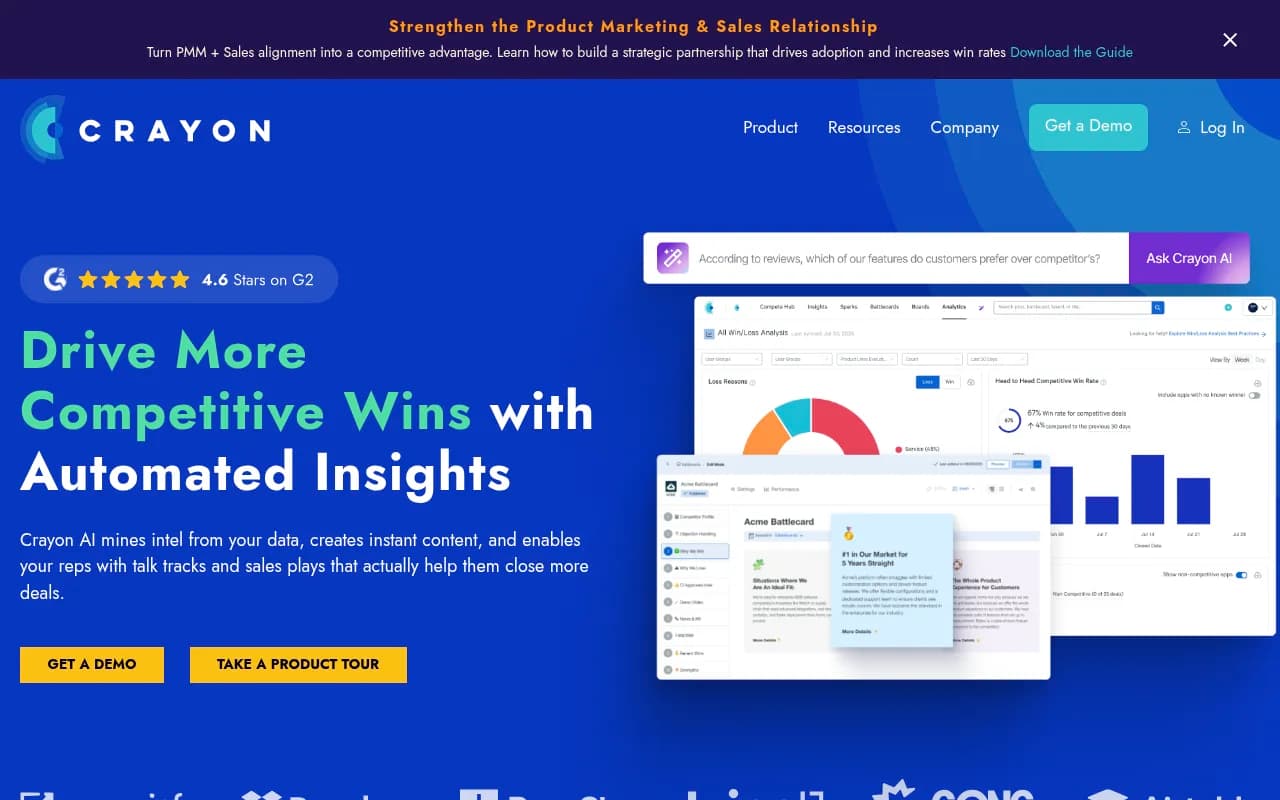
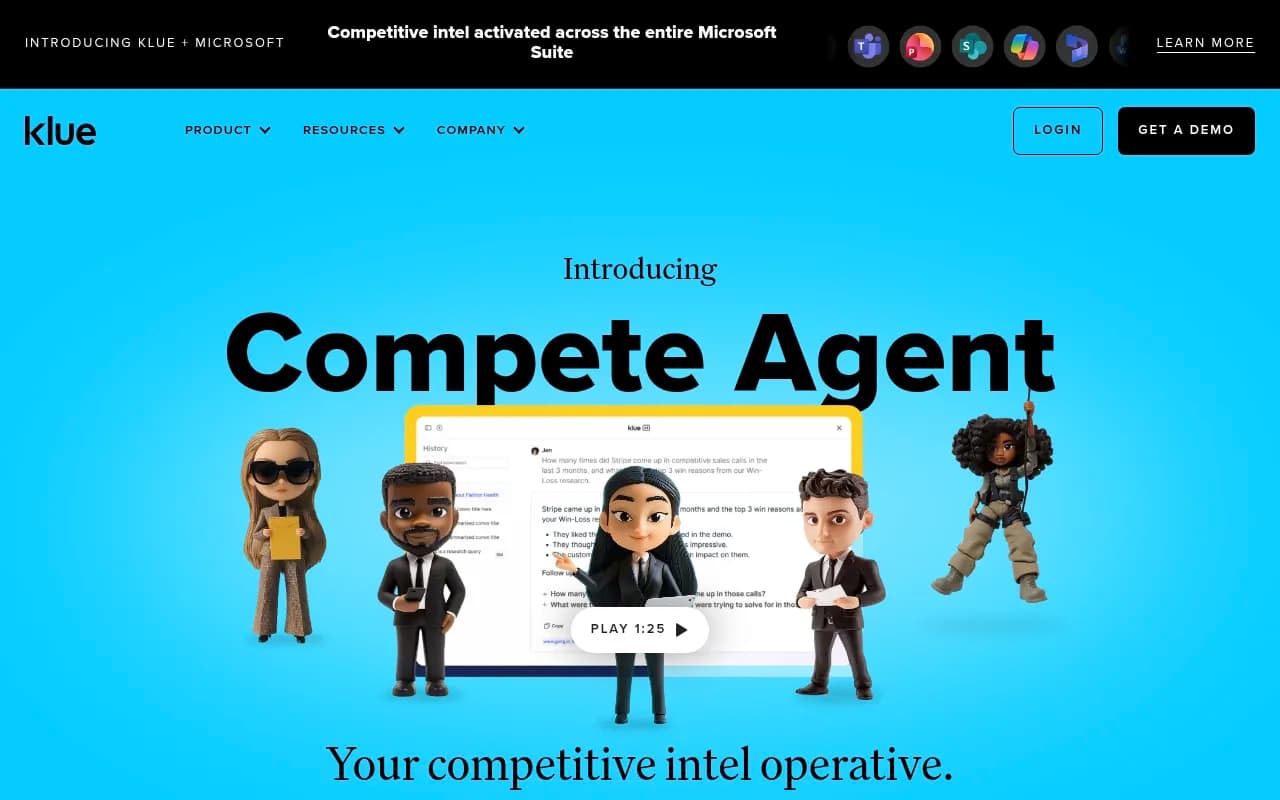
Competitive Intelligence
AI Content Generation
The Competitive Landscape: Who's Winning AI Visibility in Sales Intelligence
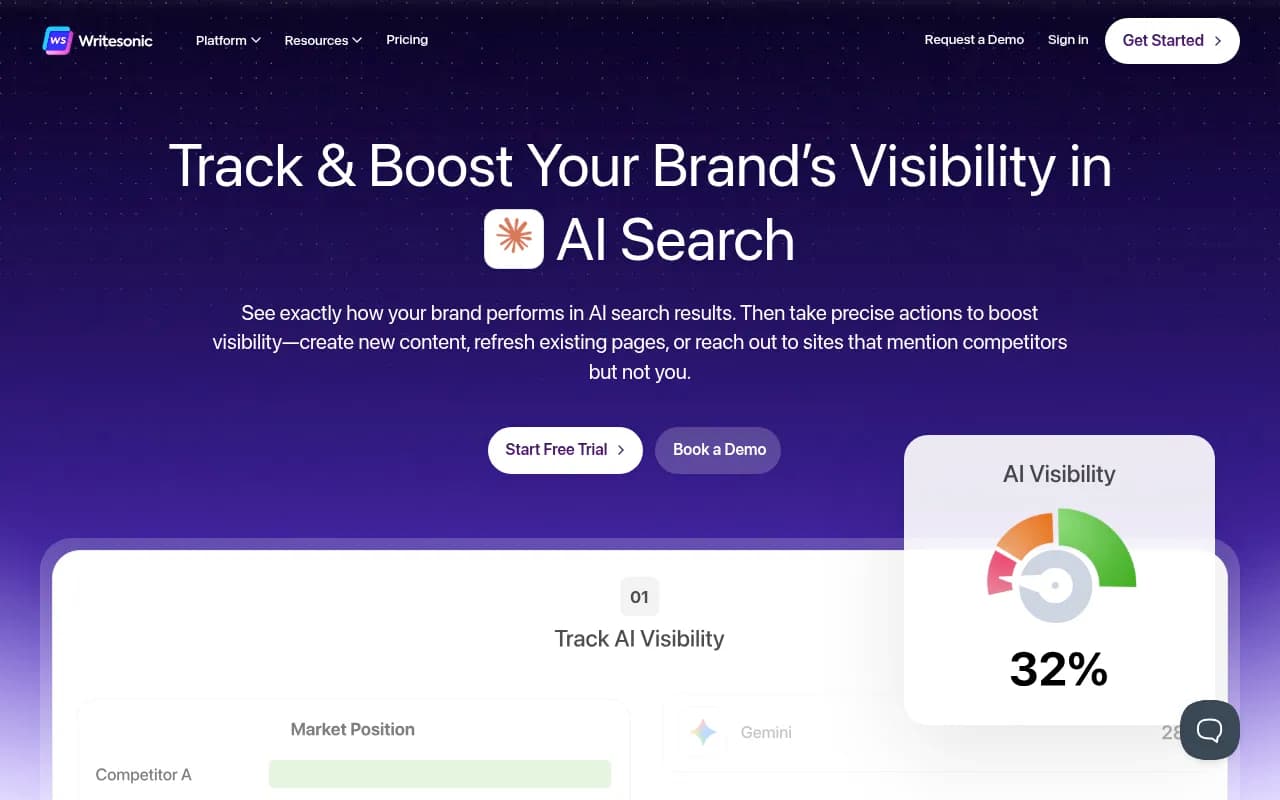
A 2026 comparison of 12 GEO platforms (Search Party, Otterly.AI, Peec.ai, Profound, AthenaHQ, Scrunch, Brandlight.ai, Bluefish, Searchable, Semrush, Ahrefs Brand Radar) found that Promptwatch is the only platform rated as a "Leader" across all categories. The core difference: most competitors are monitoring-only dashboards that show you data but leave you stuck. Promptwatch is built around taking action.
In the sales intelligence category itself, Apollo.io and Cognism are strong at what they do (contact discovery, enrichment, outreach), but they don't address AI visibility. ZoomInfo has deeper enterprise data but no AI search optimization. LinkedIn Sales Navigator helps with relationship intelligence but doesn't make you visible in AI-generated recommendations.
The gap is real. Most sales teams invest heavily in tools that help them find and reach prospects, but they ignore the channel where those prospects are increasingly starting their research.
What This Means for Sales Leaders in 2026
If you're a VP of Sales or revenue leader, here's the reality: your outbound motion is only as effective as your inbound visibility. You can have the best contact data, the most sophisticated sequences, and the highest email deliverability, but if prospects don't know you exist when they research solutions, you're fighting an uphill battle.
AI search visibility isn't a replacement for Apollo.io or Cognism. It's a complementary capability. You still need contact data, enrichment, and outreach tools. But you also need to control what prospects see when they ask ChatGPT, Claude, or Perplexity for recommendations.
The teams that win in 2026 will be the ones that close the loop: they'll use sales intelligence platforms to find and reach prospects, and they'll use AI visibility platforms to ensure those prospects discover them first.
Start by auditing your current AI visibility. Ask ChatGPT to recommend tools in your category. If you're not mentioned, you have work to do. Then build a systematic process to identify gaps, create content that gets cited, and track results over time. The action loop is simple, but most teams never start.
Don't be one of them.