Key takeaways
- Profound is a capable enterprise AI visibility platform, but its pricing and monitoring-only approach pushed many brands to look elsewhere in 2025
- The core complaint wasn't about data quality -- it was about what happens after you see the data. Most teams wanted a platform that helps them act, not just observe
- Brands that switched generally landed in one of two camps: leaner tools for smaller budgets, or more action-oriented platforms with built-in content optimization
- The GEO (Generative Engine Optimization) space matured fast in 2025, and "track your brand mentions in AI" stopped being enough of a value proposition on its own
- If your team is already producing content and just needs monitoring, Profound may still work. If you need to close the gap between insight and execution, you'll likely outgrow it
2025 was the year AI search stopped being a curiosity and became a budget line item. ChatGPT, Perplexity, Claude, and Google's AI Overviews started sending real traffic. Brands that showed up in AI-generated answers got clicks. Brands that didn't started asking uncomfortable questions in quarterly reviews.
That pressure created a boom in GEO platforms -- tools that help companies track, understand, and improve their visibility in AI search results. Profound was one of the first serious players in this space, and for a while, it was the default choice for enterprise teams that wanted to take AI visibility seriously.
But through 2025, a noticeable number of those teams started switching. Not because Profound is bad -- it isn't -- but because the category evolved faster than any single platform could keep up with, and different teams had different needs that Profound wasn't built to serve.
Here's what actually drove those decisions.
What Profound does well
Before getting into the reasons people left, it's worth being honest about what Profound gets right.
Profound has solid prompt monitoring across major AI models, clean reporting, and a reasonably intuitive interface for enterprise teams. It covers the core use case -- you give it a set of prompts, it tells you how often your brand appears in AI responses, and it tracks that over time. For teams that just needed to prove to leadership that AI visibility was worth measuring, Profound gave them a dashboard they could point to.
The platform also has decent competitor comparison features. You can see how your brand stacks up against competitors across different AI models, which is useful for benchmarking.
So why did brands leave?
The three reasons brands switched
1. It's a monitoring tool in a world that needs optimization
This is the big one. Profound shows you where you stand. It doesn't help you change where you stand.
That distinction sounds minor until you're three months into a subscription and your visibility scores haven't moved. You know you're invisible for 40 prompts your competitors own. You know which AI models aren't citing you. But Profound doesn't tell you what content to create, doesn't help you write it, and doesn't connect your publishing activity back to visibility changes.
Marketing teams in 2025 didn't just want a scoreboard. They wanted a playbook.
Platforms that built content gap analysis and AI-native content generation directly into their workflow started winning those customers. The logic is simple: if you can see exactly which prompts you're losing and then immediately generate content designed to win those prompts, you've turned a passive dashboard into an active growth tool.
Promptwatch is the clearest example of this approach -- it runs the full loop from gap identification to content generation to tracking the results of that content. That end-to-end workflow is what a lot of Profound's churned customers were looking for.

2. Pricing didn't scale down for mid-market teams
Profound is priced for enterprise. That's a deliberate positioning choice, and it's not wrong -- enterprise teams have the budget and the complexity to justify it.
But in 2025, the brands that got serious about AI visibility weren't just Fortune 500 companies. Mid-sized e-commerce brands, regional service businesses, digital agencies managing 20 client accounts -- all of them needed AI visibility tooling, and most of them couldn't justify Profound's price point.
When cheaper alternatives started offering 80% of the monitoring functionality at a fraction of the cost, the calculus changed. Teams that were paying enterprise prices for a monitoring-only tool started asking whether they could get the same data cheaper and spend the savings on content production.
3. Missing features that became table stakes
The GEO category added a lot of capabilities in 2025 that Profound was slow to match. A few that came up repeatedly in team conversations:
- AI crawler logs: Knowing which pages AI crawlers are actually reading (and which they're skipping or hitting errors on) turned out to be critical for diagnosing visibility problems. Most Profound alternatives built this in; Profound didn't prioritize it.
- Reddit and YouTube tracking: AI models cite Reddit threads and YouTube videos constantly. If you don't know which discussions are influencing AI recommendations in your category, you're missing a huge lever. Profound focused on brand mentions in AI responses but didn't surface the underlying source ecosystem.
- Traffic attribution: Knowing your AI visibility score is one thing. Connecting that score to actual website traffic and revenue is another. Teams that couldn't close that loop struggled to justify the spend internally.
- Prompt volume and difficulty data: Not all prompts are worth winning. Teams needed to know which prompts had real search volume and which were winnable given their current authority. Profound's prompt data was thin on this dimension.
Where brands actually went
The switching patterns in 2025 weren't random. Teams generally landed in one of a few categories depending on what they were optimizing for.
Teams that wanted the full optimization loop
These teams moved to platforms that combined monitoring with content gap analysis and content generation. The pitch: stop just watching your visibility score and start doing something about it.
Promptwatch was the most common destination here. Its Answer Gap Analysis shows exactly which prompts competitors are visible for that you're not, and its built-in AI writing agent generates content grounded in citation data from over 880 million analyzed citations. The combination of "here's what's missing" and "here's the content to fix it" is what monitoring-only tools can't replicate.
Scrunch AI also picked up some of this segment, particularly teams that wanted strong competitor analysis alongside content recommendations.
Teams that wanted to spend less
A meaningful chunk of Profound's churned customers weren't unhappy with the product -- they just couldn't justify the price for what they were getting. These teams moved to more affordable monitoring tools.
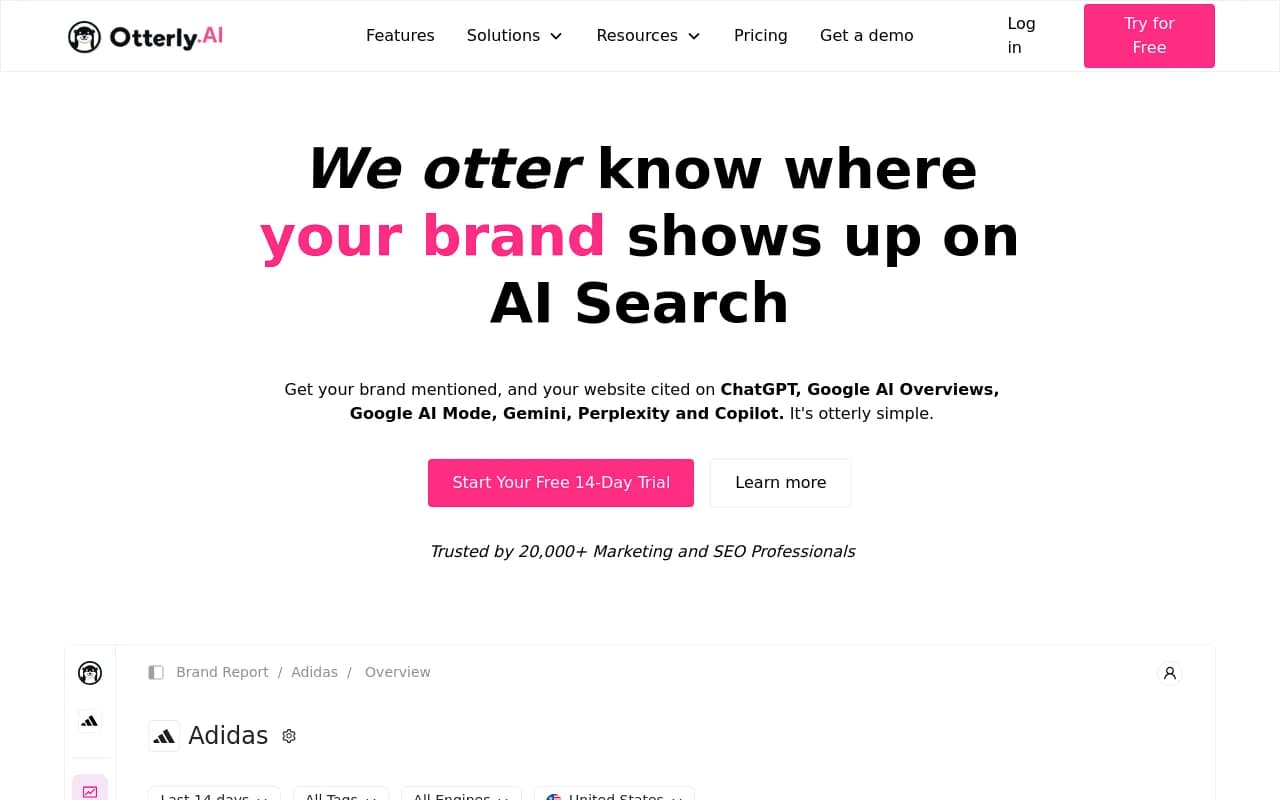
Otterly.AI became a popular landing spot for this group. It covers the core monitoring use case at a much lower price point. The tradeoff is that it's genuinely monitoring-only -- no content generation, no crawler logs, no traffic attribution. But for teams that just needed to track brand mentions in AI responses and report upward, it was enough.
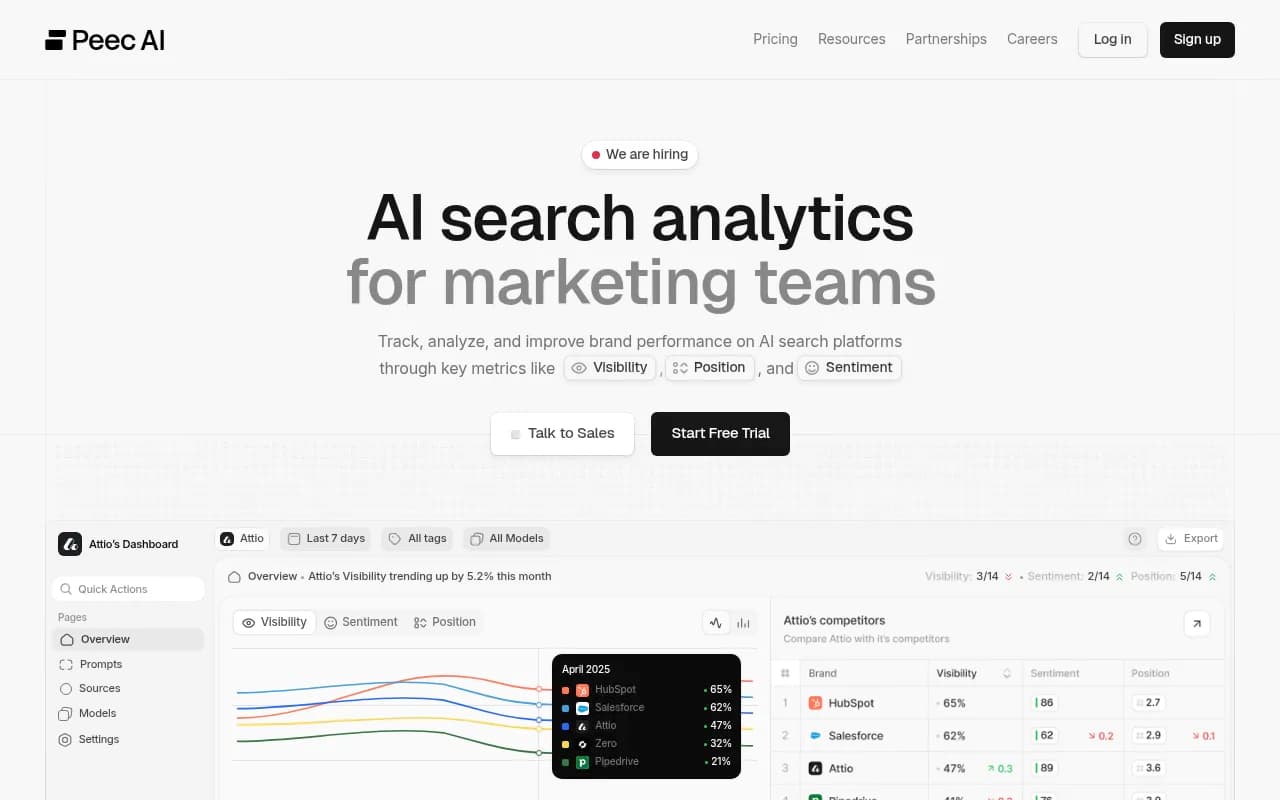
Peec AI attracted teams with multilingual needs. Its multi-language support is strong, and for brands operating across European markets, that was a meaningful differentiator.
Teams that wanted enterprise depth at a different price
Some teams didn't want to trade down on features -- they wanted comparable depth to Profound but with better value or a different feature mix.
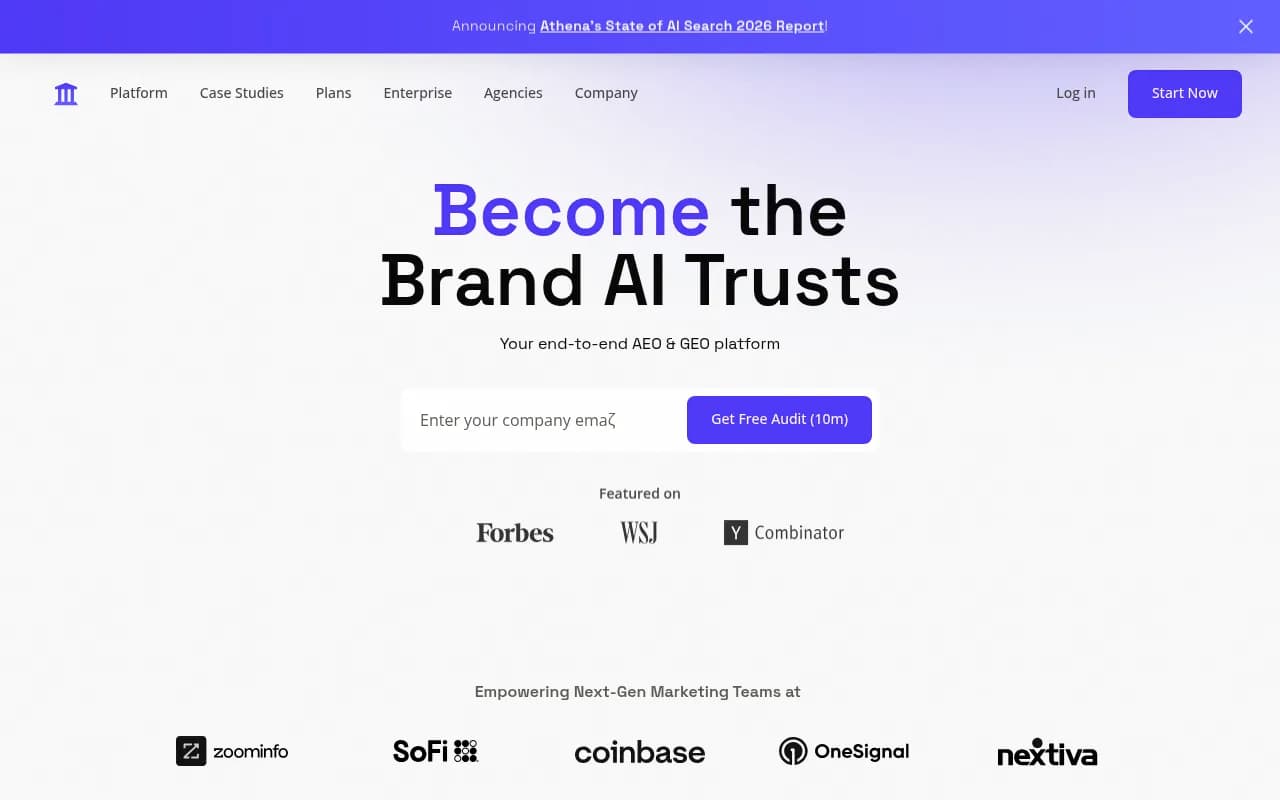
AthenaHQ positioned itself in this space, with strong monitoring across multiple AI models and solid enterprise reporting. The gap is still on the optimization side -- it's more of a monitoring platform than an action platform -- but the data quality is good.
Evertune went after Fortune 500 accounts specifically, with a focus on brand safety and sentiment tracking in AI responses. For large brands worried about how AI models characterize them (not just whether they appear), Evertune's framing resonated.
Agencies that needed multi-client management
Agencies had a specific problem: they needed to manage AI visibility across dozens of client accounts, and most platforms were built for single-brand teams.
Search Party built its product around agency workflows, with multi-client dashboards and white-label reporting. It picked up a lot of agency accounts that Profound wasn't designed to serve.
Search Party
A comparison of where things stand
| Platform | Monitoring | Content generation | Crawler logs | Prompt volume data | Reddit/YouTube tracking | Best for |
|---|---|---|---|---|---|---|
| Profound | Strong | No | No | Limited | No | Enterprise monitoring |
| Promptwatch | Strong | Yes | Yes | Yes | Yes | Full optimization loop |
| Otterly.AI | Good | No | No | No | No | Budget monitoring |
| Peec AI | Good | No | No | No | No | Multi-language teams |
| AthenaHQ | Strong | No | No | Limited | No | Enterprise monitoring |
| Evertune | Strong | No | No | No | No | Brand safety / Fortune 500 |
| Search Party | Good | No | No | No | No | Agencies |
| Scrunch AI | Good | Partial | No | No | No | Mid-market |
The pattern is clear: Profound sits in a cluster of monitoring-focused enterprise tools. The differentiation between them is mostly on price, UI, and specific feature depth. The real category split is between monitoring tools and optimization platforms -- and that's where the switching decisions got most decisive.
What this means if you're evaluating now
If you're currently on Profound and wondering whether to stay, the honest question to ask is: what happens after you see the data?
If your team has a strong content operation and just needs visibility data to inform it, Profound works fine. The monitoring is solid. You can take the insights and act on them independently.
If you're expecting the platform to help you close the gap -- to tell you what content to create and help you create it -- you'll hit a ceiling. That's not a knock on Profound specifically; it's just not what the platform was built to do.
The brands that switched and reported the most satisfaction weren't the ones that found cheaper monitoring. They were the ones that found a platform where they could see a gap on Monday and have content addressing that gap published by Thursday. That cycle -- find the gap, fix it, watch the score move -- is what turned AI visibility from a reporting exercise into a growth channel.
The GEO category in 2026 is splitting into two tiers: dashboards that tell you what's happening, and platforms that help you change it. Knowing which one you need before you sign a contract will save you a lot of time.