Key takeaways
- Pricing and billing is the topic AI gets wrong most often, according to Profound's research, and wrong numbers can scare off buyers or hand them negotiation leverage.
- In Profound's test of 7,675 responses across the Cloud 100, company pricing pages appeared in 46% of answers but were cited first in only 12%.
- Start by measuring: run the same pricing prompt across several models over a week, then log the claims, the sources, and the sentiment.
- Fixing claims means correcting the pages AI already cites, not just your own /pricing page. Pages ChatGPT cites tend to stay cited for months.
- Build a pricing answer stack: a pricing page, billing docs, an FAQ, and consistent third-party listings, all crawlable and all saying the same thing.
Why pricing claims in AI answers matter
Buyers now ask AI about price before they ever talk to sales. Profound's research puts prompts with cost or pricing keywords at 1 to 2% of all LLM queries. That sounds small until you remember how many queries that is. Its separate data shows the share of ChatGPT queries with commercial intent rising from 13.9% to 19.2% over a year.
The problem is that the answers are often unflattering and sometimes just wrong. Profound's analysis of pricing answers across the Cloud 100 found one software company with negative pricing language in 72 of 76 responses. Google AI Mode called it "notoriously opaque, premium-priced, and scales aggressively." Another, a vertical AI company with no public pricing page, had negative language in 67 of 76 responses, with AI pulling from Reddit threads and claiming a range of roughly $100 to $2,400 per user per month. That is a 24x spread for one product.
If you were a prospect, which number would you remember? Probably the scary one. And if you are the vendor, a buyer who walks into a negotiation armed with a wrong AI-generated number is a real cost.

Where AI gets its pricing information
I expected AI to go straight to the company's own pricing page. It mostly doesn't. In the Profound dataset of 7,675 responses, owned pricing pages showed up somewhere in 46% of answers but ranked first in only 12%. No company had its pricing page cited first in a majority of runs. ChatGPT was the exception that leans the other way, citing the owned page first about 38% of the time.
Promptwatch's own data points in the same direction on the content side. In Promptwatch Data's report on ChatGPT content types (Sep 28 to Oct 4, 2026), product pages made up 22.4% of classified citations and landing pages 16.8%. Pricing pages usually fall into those two buckets. Listicles were 13.6% and comparisons 5.9%, which is where third-party pricing summaries live. For commercial prompts, product pages, landing pages, listicles and comparisons together made up almost 70% of citations.
So the sources shaping your price in an AI answer typically include:
- Your pricing page, billing docs and FAQ
- Review and directory sites such as G2, Capterra and Trustpilot
- Comparison and "best of" articles written by other companies, including competitors
- Reddit threads and forum posts
- Procurement and pricing aggregators
Retrieval is getting more targeted
Another shift matters here. Promptwatch Data found that on August 8, 2026, ChatGPT began using the site: operator at scale. Those queries went from 0.37% to 16.8% of all fan-outs, and the average fan-out queries per response rose from about 1.08 to about 1.83. In practice ChatGPT can now search site:yourdomain.com pricing directly. If your pricing page is blocked, rendered only by JavaScript, or not indexed, you lose that route.
Step 1: Establish a pricing baseline
Before fixing anything, measure. Profound's playbook suggests running the prompt "Evaluate [Company Name] on pricing" through ChatGPT, Claude and Gemini once a day for a week. That is a good start and costs nothing.
Perplexity
For each response, record:
- Every specific price, tier name and billing term AI states
- Which sources are cited, and in what order
- Whether your own pricing page is cited at all
- Sentiment: positive, neutral or negative
- Which claims are simply false versus outdated versus misleading
Then widen the prompt set. Buyers do not only type "Evaluate X on pricing." They also ask:
- How much does [brand] cost for a 20-person team?
- Is [brand] cheaper than [competitor]?
- Does [brand] have hidden fees?
- Does [brand] have a free plan?
- What does [brand] cost per user per month?
Run them as different personas and in the countries you sell in, since regional pricing and currency often get muddled. Repeat the whole thing monthly. Models change behavior without warning, and one-off audits go stale quickly.
Doing it manually versus with a tool
Manual testing works for a first look. It breaks down when you need daily runs, multiple models, and an audit trail of exact quotes. That is where AI visibility platforms come in.
| Approach | What you get | Limits | Best for |
|---|---|---|---|
| Manual prompts in ChatGPT, Gemini, Perplexity | Quick read of current answers | No history, inconsistent, hard to scale | First-pass audit |
| Free audit tools | One-time snapshot of visibility | Rarely cover pricing claims specifically | Sanity check |
| Monitoring-only trackers | Mentions, sentiment, citations over time | Usually stop at reporting | Ongoing tracking |
| Platforms with claim checking and content fixes | Claims extracted, compared to your site, then rewritten | Higher plan tiers | Teams that need to correct claims at scale |
Step 2: Trace each wrong claim to its source
A wrong price almost always has a traceable origin. Look at the citations behind the answer and sort them into three buckets.
Your own pages. Does an old pricing page, a legacy blog post or a retired plan page still say the old number? Stale pages on your own domain are the most common and the easiest to fix. Check help center articles and old announcement posts too.
Third-party pages you can edit. G2, Capterra, YouTube descriptions, partner marketplaces and app directories let you update your own listing. Tools like Trustpilot matter here because review platforms are cited heavily for branded prompts. Promptwatch's content type data shows reviews at 5.6% of citations for branded prompts, more than 3x their overall share.
Third-party pages you can only influence. Reddit threads, competitor comparison pages, news articles and pricing aggregators. Here you need outreach, public replies, or a better competing source.
A competitor's comparison page is worth a special mention. If it says your product starts at a number it invented, ask for a correction. If they won't, publish your own comparison page with accurate figures, since comparisons are a cited format.
Check whether AI can actually read your pricing page
Profound found only 57% of companies in its set had AI-readable pricing pages. The quick test is simple: curl the page, or disable JavaScript, and look at what is served. If the prices only appear after client-side rendering, many crawlers see an empty shell.
Check these as well:
- Your robots.txt does not block AI crawlers you want, such as GPTBot, OAI-SearchBot, ClaudeBot or PerplexityBot
- The page is in your sitemap and returns a clean 200
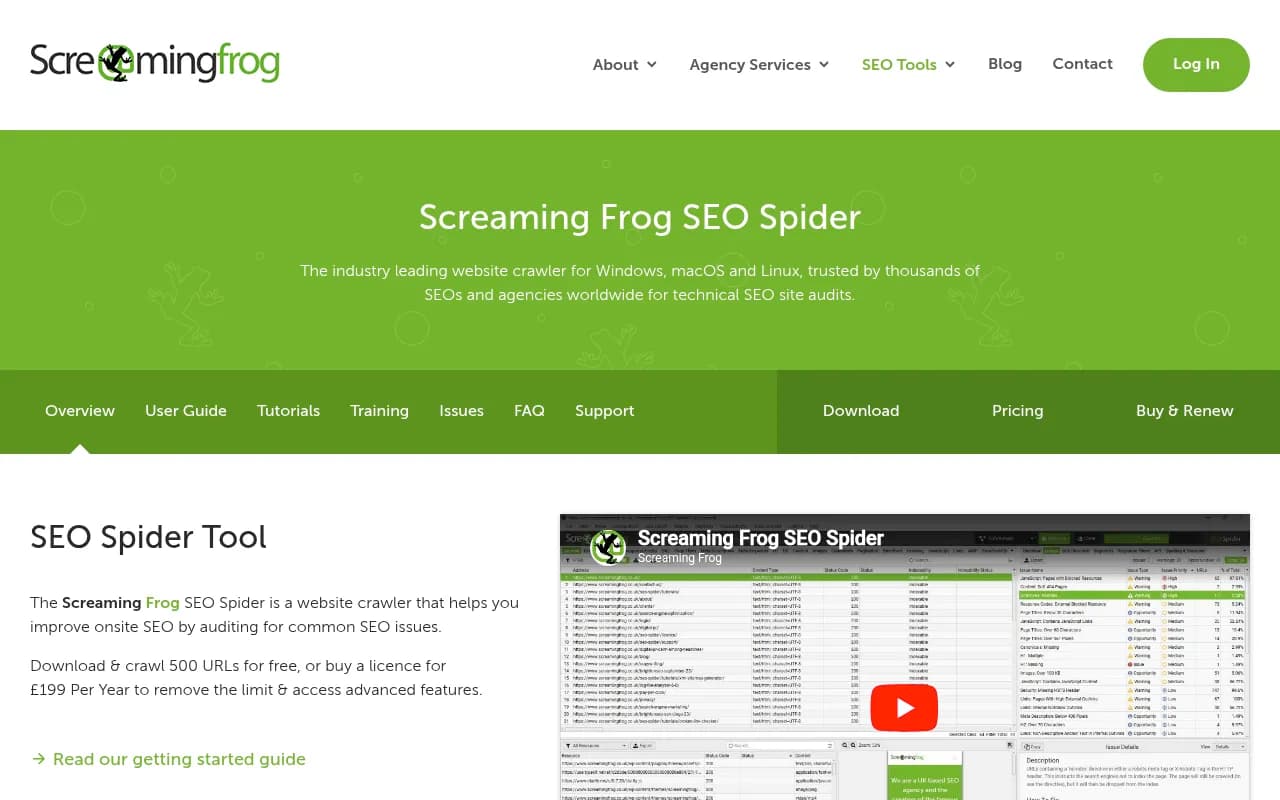
- A tool like Screaming Frog can confirm what a crawler sees
Promptwatch has a free robots.txt generator for AI and an AI crawler URL inspector for checking this without a login. Its IP-verified AI crawler logs show whether bots actually hit your pricing URL and where they fail.
Step 3: Fix the sources, in the right order
There is a timing problem that people underestimate. Promptwatch Data's content half-life report tracked pages ChatGPT cited on July 6, 2026 through October 4. After 60 days, 69% of landing pages and 67% of docs were still cited, and product pages reached half-life at roughly 74 to 77 days. A wrong price on a page ChatGPT already cites can stick around for months. Don't wait for it to fade. Correct the cited pages directly.
A workable order of operations:
- Fix your own pricing page, billing docs and FAQ so they agree with each other.
- Remove or redirect legacy pages that still show old plans.
- Update every listing you control (G2, Capterra, marketplaces, YouTube).
- Reach out to publishers and aggregators with the correct number and a link to your canonical page.
- Publish content that fills gaps, such as a "how our pricing works" explainer or a comparison page.
- Re-test the same prompts and see what changed.
Build a pricing answer stack
Profound's strongest observation is that winners build a stack, not a page. Plaid is its example. AI answers cited multiple Plaid-owned sources: billing docs in 70% of answers, the pricing page in 64%, and FAQs in 50%. Plaid does not publish all dollar amounts, so those pages explain why, cover costly edge cases, and segment by plan type. That gives AI an authoritative explanation even without a price list.
Here is what to put in each layer.
| Layer | What it should contain | Why AI cites it |
|---|---|---|
| Pricing page (/pricing) | Plans, a concrete entry price or free tier, "best for" language, visible last-updated date | Primary source for "how much" prompts |
| Billing docs | Billable events, minimums, overages, commitments, cancellation, regional premiums | Answers hidden-cost questions |
| FAQ | Plain-language answers to real objections, such as "is there a free plan" | Quotable, self-contained blocks |
| Comparison page | Honest side-by-side with named competitors | Cited for commercial prompts |
| Third-party listings | The same figures as your site | Builds consensus across sources |
A few writing habits help. Use descriptive headings, short definitions, tables and bullets. Put an "is it ready for AI" mindset into the copy: phrases like "best for small teams" or "predictable monthly costs" give models evaluation language to reuse. Offer at least one concrete entry point, because "contact sales" with no anchor pushes AI toward Reddit guesses. If you truly can't publish prices, say so and explain what drives cost.
Optional extras like llms.txt or Markdown versions of your pricing may help retrieval. Profound says it can't prove causal impact, and Promptwatch Data shows markdown files are just 0.05% of AI search citations, so treat these as nice-to-haves, not the fix. Promptwatch also offers a free llms.txt generator if you want to try it.
Step 4: Verify and keep monitoring
Correcting a claim is not finished until a fresh run of the same prompts shows the new number. Give it a few weeks, since crawling and citation refresh take time, then compare against your baseline. Track three things: the accuracy of stated prices, whether your owned pages are cited and how early, and sentiment on pricing language.
Promptwatch is one platform built for this loop. Its Brand Narrative feature pulls the individual claims AI makes about you out of tracked responses and groups repeated ones under themes like Pricing. Fact Check, on Business and higher plans, lets you mark a claim Accurate or Inaccurate, then reads the pages crawled from your site to find the ones that state it or its opposite, with quotes and a recommended next step. In the product's demo, a claim that pricing "starts at $99/month" was flagged as conflicting with the brand's own $199 per seat page, and a third-party comparison page was tagged as spreading it. That demo uses sample data, not a study, but it shows the workflow clearly.

Promptwatch also runs prompts through the real interfaces of ChatGPT, Google AI Overviews, Google AI Mode, Gemini, Perplexity and Copilot, so the answers match what buyers see rather than what an API returns. Its Content Agent can rewrite conflicting sentences and publish to WordPress, Webflow or Framer, and visitor analytics show whether corrected pages actually send traffic. Pricing starts at $95 a month for Essential, with Fact Check and the Content Agent on Business at $579 a month, so confirm current details at promptwatch.com/pricing. A 7-day free trial and a free AI visibility report are the low-commitment ways in.
Other options exist if you want to compare monitoring approaches. Profound, Scrunch, Otterly.AI and Peec AI all track mentions and citations to varying depths, and the GEO software directory at bestgeosoftware.com lists many more.


What to do about Reddit and review sites
These are the awkward ones. Reddit threads can feed wrong numbers into AI answers, as the vertical AI example showed. But citation patterns shift. Promptwatch Data recorded reddit.com's share of ChatGPT citations falling from roughly 4% to 0.5% on August 14, 2026, while Google surfaces declined more gradually. Don't assume Reddit matters equally everywhere. Check the citations in each model before investing time.
Where a thread does matter, reply publicly with the accurate figure and a link to your pricing explainer. Be transparent about who you are. Do not astroturf. On review sites, ask real customers to mention plan and price context in reviews, and respond to reviews that cite outdated prices.
A practical checklist
- Run "Evaluate [brand] on pricing" on at least three models daily for a week.
- Log prices, sources, order of citations, and sentiment.
- Sort each wrong claim by source: owned, editable third party, or hard to reach.
- Make sure /pricing, billing docs and FAQ are crawlable without JavaScript and consistent with each other.
- Add a concrete entry point and billing mechanics (overages, minimums, cancellation).
- Add visible update dates and clean up legacy plan pages.
- Fix listings on G2, Capterra and marketplaces, then do outreach for the rest.
- Publish a comparison page and a short "how pricing works" explainer.
- Re-run the prompts after a few weeks and compare against the baseline.
- Schedule the audit monthly, or automate it.
If you would rather hand this off, an agency that handles GEO can run the audit and outreach for you. 1001 SEO Media is the agency behind this site and works on exactly this kind of AI search visibility problem.
Final thoughts
The uncomfortable part of this topic is that you do not control the sentence AI writes about your price. You control the evidence it reads. Profound's data shows owned pages are cited first in a minority of answers, and Promptwatch's half-life data shows stale evidence lingers. So the work is unglamorous: one consistent set of numbers across your pricing page, billing docs, FAQ and every listing, readable by a bot with JavaScript off, then re-tested on a schedule. Start with the one-week baseline this afternoon. You will probably find at least one claim that surprises you.