Key takeaways
- ChatGPT ads went from zero to appearing in around 30% of daily web-search responses between February and August 2026, according to Promptwatch's tracking data.
- Perplexity tested sponsored follow-up questions for over a year, then killed advertising entirely in February 2026 to chase subscription revenue instead. Any tool advertising a "Perplexity ads tracker" is watching a feature that no longer exists.
- Different tools report wildly different ChatGPT ad frequencies (9.2% to 26%) because they count differently -- some only measure web-search-grounded responses with citations, others sample broader query sets.
- Dedicated ad-intelligence tools like Similarweb AI Ads and Cognizo show who is advertising and what their creative looks like. Broader AI-visibility platforms like Promptwatch track ad presence alongside organic citation data, which matters more if you're trying to understand the full picture on a given prompt.
- Most mainstream brand-monitoring tools (Ahrefs Brand Radar, Semrush AI Visibility Toolkit) don't track paid placements at all -- so a clean organic citation report can hide the fact that a competitor bought their way into the same answer.
Why this suddenly matters
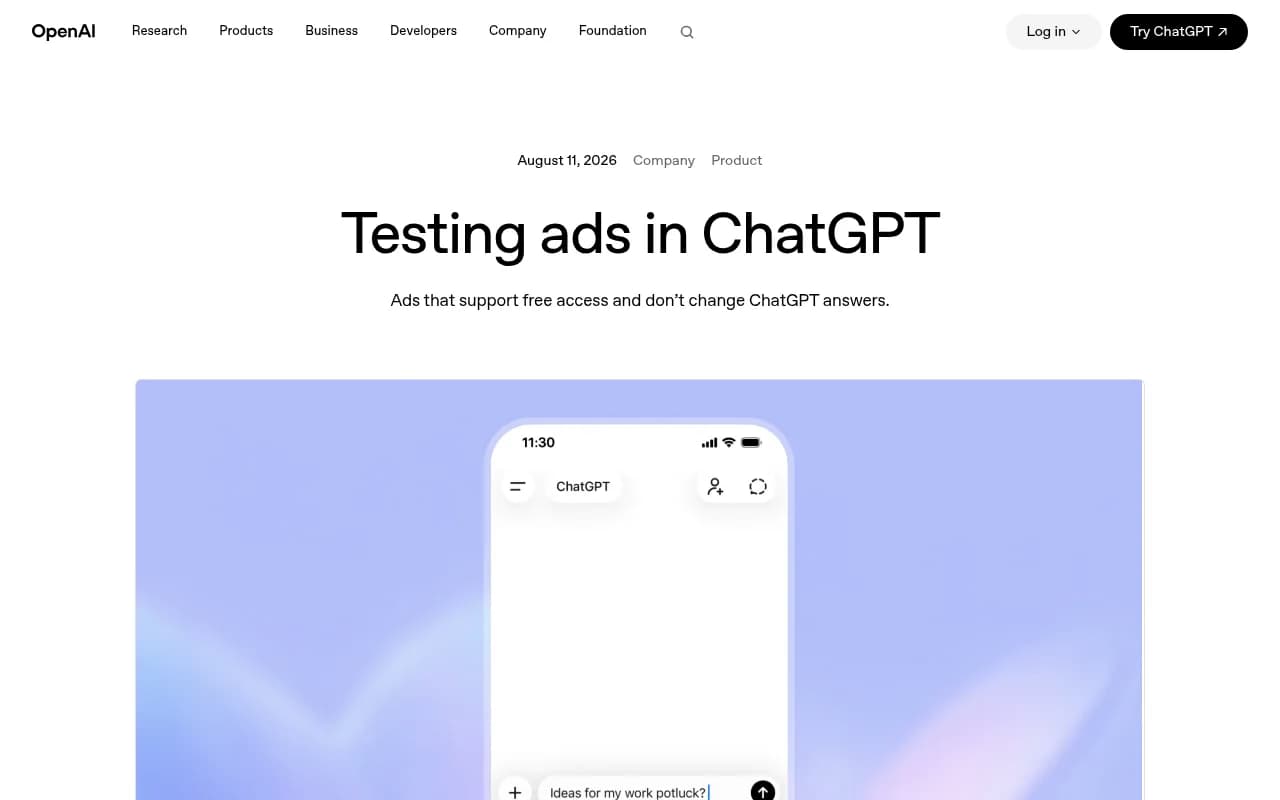
For most of 2025, tracking your brand in ChatGPT meant tracking mentions and citations. Nobody was worrying about ads because there weren't any. That changed fast. OpenAI began testing ads in ChatGPT on February 9, 2026, starting with logged-in Free and Go-tier users in the US. By August, the pilot had expanded to the UK, Mexico, Brazil, Japan, and South Korea, with more markets promised before year end.
The pace of adoption is the part that caught a lot of marketers off guard. Ads didn't creep in gradually -- they went from a small test to a real chunk of ChatGPT's answer surface in a few months. Promptwatch's own 90-day tracking (May 20 to August 17, 2026) shows ads appeared in an average of 20.1% of web-search ChatGPT responses over that window, but the daily rate has climbed as high as 43.9% and has sat consistently above 30% since July 1. Over just the past 30 days of that window, the daily average sat at 29.6%, up 22.6% from the prior month. That's not a slow ramp. That's a platform that flipped a switch and kept turning it up.
Meanwhile Perplexity went the opposite direction. It spent 2024 and most of 2025 testing sponsored follow-up questions with brands like Whole Foods and Indeed, then abandoned the whole thing in February 2026, reportedly over user trust concerns. Perplexity is now chasing $500 million in annualized subscription revenue instead of ad dollars, positioning itself as the ad-free alternative to ChatGPT. If you're evaluating a tool that claims to monitor Perplexity ads, that's a red flag worth checking -- there's nothing current to monitor there.
What "tracking ads inside AI answers" actually means
Before picking a tool, it helps to separate three distinct jobs that get lumped together under "AI ads tracking":
- Presence tracking -- how often do ads show up at all, on which prompt types, in which markets. This is a frequency and trend question.
- Advertiser intelligence -- who is buying the placement, what does their ad copy and landing page look like, how does their share of voice compare to competitors.
- Attribution -- once someone clicks an ad inside ChatGPT, does it convert, and how does that spend perform against other channels.
No single tool nails all three cheaply. Understanding which job you actually need solved will save you from paying enterprise prices for a report you don't use.
The tools, compared
| Tool | What it actually tracks | Coverage | Pricing signal | Best for |
|---|---|---|---|---|
| Similarweb AI Ads | Ad presence + advertiser identity, creative, landing pages, share of voice | ChatGPT, Google AI Mode, AI Overviews (Copilot planned) | Enterprise, sales-led, not published | Advertisers who need competitor creative intelligence |
| Cognizo | Ad tracking tied to organic AEO visibility and attribution (Conversions API, GSC, Google Ads) | ChatGPT ads + organic across 10 AI engines | $499-$899/mo, custom enterprise | Teams that want paid and organic AI visibility in one loop |
| GrowByData | Ad presence layered on top of paid+organic Google search intelligence | ChatGPT, Google AI Overviews/Mode, Perplexity (organic only) | Not published, enterprise | Search teams already using it for Google Ads/SEO |
| Promptwatch | Ad presence and frequency trends, integrated with full AI-visibility stack (citations, crawler logs, content agents) | ChatGPT, Gemini, Claude, Perplexity, AI Overviews, AI Mode, Grok, and more | $95-$579/mo, enterprise custom | Brands that want ad context inside a broader GEO program |
| Otterly.AI | Lightweight organic + basic AI-search monitoring, not ad-specific | ChatGPT, Perplexity, Google AI Overview | Plans from $29/mo up to $1,000+/mo | Small teams on a budget who mainly care about mentions |
A quick honesty check on those percentages: Similarweb's Generative AI Landscape report put ChatGPT's ad rate at roughly 26% of Free/Go-tier responses. GrowByData's own panel found just 9.2% of tracked prompts returned a sponsored ad in June 2026. Promptwatch's rolling average lands around 20-30% depending on the week. None of these numbers are wrong exactly -- they're measuring different samples, different tiers, different time windows, and (in some cases) different definitions of what counts as an "ad-eligible" response. If a vendor hands you a single ad-frequency number without explaining the methodology behind it, ask.
Similarweb AI Ads: the advertiser-intelligence specialist
Similarweb launched a dedicated AI Ads data set on August 17, 2026, aimed squarely at advertisers rather than brand-monitoring teams. It's built on real user panel data rather than synthetic bot queries, which is a real differentiator -- Similarweb argues that most ads fire later in a multi-turn conversation, after the user's intent shifts from research to purchase decision, and a single-turn bot query simply won't see that ad ever appear.
The numbers behind the launch are worth noting: Similarweb tracked 5,171 unique ChatGPT advertisers globally by June 2026, and active advertisers jumped 46% in a single week after OpenAI lowered its minimum ad spend threshold. At that snapshot, Monday.com held just over 5% of global ChatGPT ad impressions -- a concentrated auction, not a mature one. If you're deciding whether to bid on ChatGPT Ads yourself, this kind of competitive density data is genuinely useful. If you just want to know whether ads are showing up on your brand's prompts, it's overkill and the pricing (sales-led, unpublished) reflects that.
Cognizo: pairing ad tracking with organic visibility
Cognizo makes an argument worth sitting with: brands cited in the organic answer are often the same ones eligible for the ad slot on that query. Its pitch is that you shouldn't separate your organic AEO strategy from your ChatGPT Ads strategy, because winning one increasingly helps you win the other.
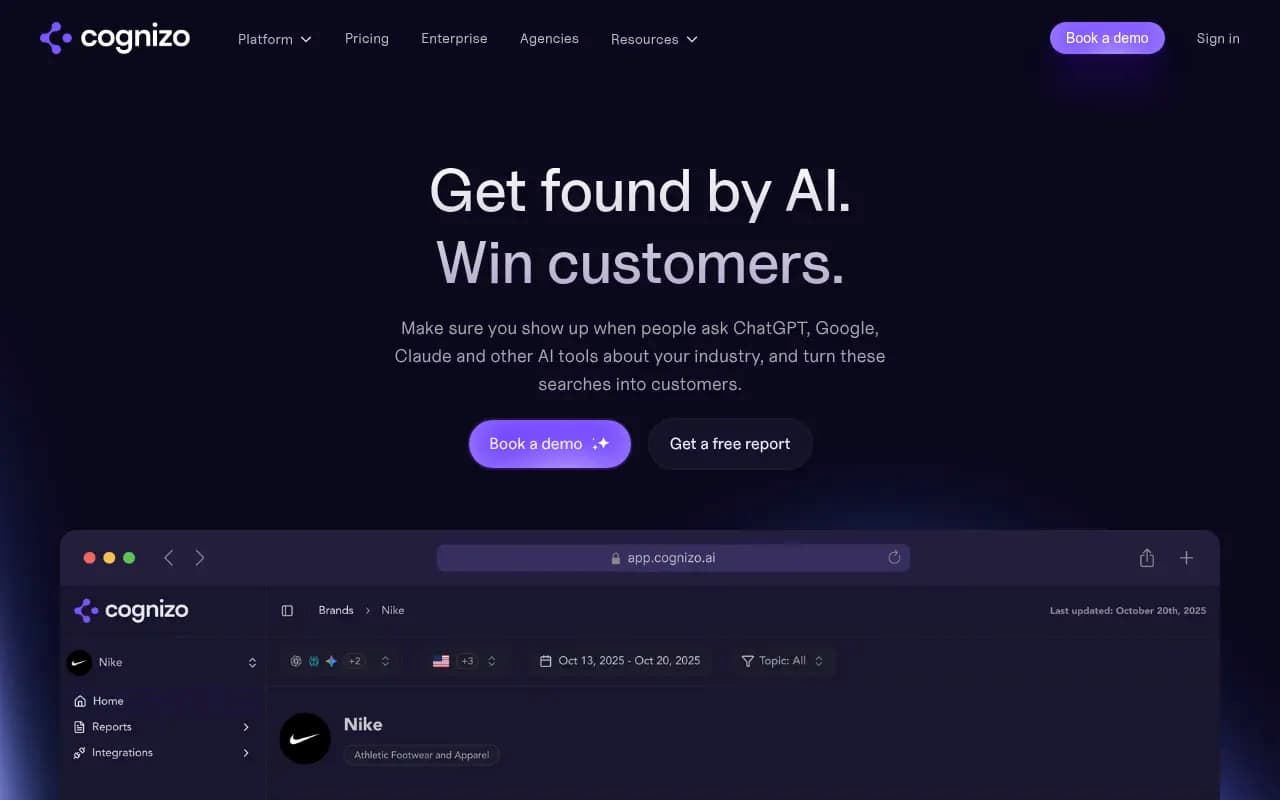
Practically, Cognizo pulls together competitor ad creative and copy, identifies high-intent pre-purchase prompts worth bidding on, and connects OpenAI's Conversions API alongside Google Search Console and Google Ads data into one attribution view. Pricing runs from a $499/month self-directed Platform tier to $899/month for an Autopilot tier that runs research, prompt planning, and content publishing with an AI agent. That's a meaningful spend for a smaller team, but if you're already running ChatGPT Ads and need to know whether the spend is actually converting, it solves a real gap.
GrowByData: the paid-search team's angle
GrowByData came at this from the Google Ads side first, then layered AI surfaces on top. Its own data (9.2% ad rate on tracked ChatGPT prompts in June 2026) is the most conservative of the bunch, which the company attributes to a narrower, higher-quality prompt sample. Its more useful contribution to this space is a warning: don't fold paid-placement tracking into your existing organic brand-monitoring dashboard. A competitor can be losing organic ground on a prompt and still be buying their way past you on the exact same query. Treat the two as separate competitive risks, not one combined score.
Where Promptwatch fits
Promptwatch doesn't (yet) publish advertiser-identity or ad-creative data the way Similarweb does -- it's not trying to be an ad-intelligence tool first. What it does track is ad presence as one signal inside a much broader AI visibility stack: citation trends across 20+ source types, AI crawler logs showing exactly when ChatGPTBot or PerplexityBot hit your pages, Reddit and YouTube citation tracking, and ChatGPT Shopping/Ads Radar to flag when sponsored placements or product cards show up on prompts you care about.

That combination matters if you're the kind of team that wants one dashboard answering "are we visible, why aren't we, and is a competitor now paying to be visible where we're not." Promptwatch's own methodology note is worth repeating for anyone comparing tools: its ad count only includes responses where ChatGPT actually searched the web, returned at least one citation, and completed ad extraction. That's a stricter bar than some competitors use, and it's part of why the numbers differ across vendors. Its practical advice tracks with what most of the tools above also recommend: check ad visibility across multiple days rather than trusting a single snapshot, since daily rates swing widely, and pay attention to which advertisers actually win the slot on prompts relevant to your brand, not just whether an ad showed up at all.
Promptwatch also tracks the ChatGPT Shopping feature separately, which is a related but distinct signal. Shopping product cards appear on a low single-digit percentage of all responses overall, but the rate concentrates heavily on commercial and transactional prompts, and OpenAI appears to actively tune when the feature surfaces rather than letting it run organically -- Promptwatch's data shows the rate roughly doubling overnight in late May 2026 before falling back weeks later.
A gap most people miss: organic-only tools can't see this at all
Here's the thing that trips up a lot of marketing teams: most AI-visibility tools you already use for citation tracking, including Ahrefs Brand Radar and Semrush's AI Visibility Toolkit, only track organic mentions and citations. Paid placements sit completely outside their data. So you can have a clean, improving citation report from your existing tool while a competitor is quietly buying the ad slot on the exact same prompts, and you'd never know. If ad tracking matters to your category, you need a tool that explicitly says it counts ads, not one that just happens to also show citations.
Attribution: the piece nobody's ad-presence tool solves alone
Knowing an ad exists is different from knowing whether it worked. OpenAI has shipped a Conversions API and measurement pixel alongside a self-serve ChatGPT Ads Manager with CPC bidding, similar in concept to what Meta and Google offer. Third-party measurement platforms like Singular now support reporting at the campaign and ad-group level through OpenAI's reporting API, plus CAPI event forwarding for offline conversions. If your actual goal is proving ROAS on ChatGPT ad spend, you'll likely need this attribution layer regardless of which presence-tracking tool you pick, since none of the tools above do end-to-end conversion measurement on their own except Cognizo, which explicitly wires it in.
Practical recommendations
If you're an advertiser actively bidding on ChatGPT Ads and need to see competitor creative: start with Similarweb AI Ads, budget-permitting, since it's the only tool here built specifically for that job.
If you're running ads and organic content together and want one system that ties spend to pipeline: Cognizo's attribution stack is the more complete answer, even though it costs more than a pure monitoring tool.
If you already use an AI-visibility platform for citations, crawler logs, and content optimization and just want ad presence as one more signal in that same dashboard rather than a separate subscription: Promptwatch folds it in without requiring a dedicated ad-tracking tool on top.
If your budget is genuinely small and you mostly need a sanity check on whether ads are showing up at all: a lighter tool like Otterly.AI covers basic ChatGPT and Perplexity monitoring at $29/month, though it wasn't built to break out ad-specific data the way the dedicated tools above are.
One last thing worth remembering: whatever tool you pick, don't trust a single day's ad-frequency number, and don't assume Perplexity coverage in any tool's spec sheet means anything current. The AI search advertising picture is still moving month to month, and the vendors publishing daily data, like Promptwatch's ChatGPT ads tracking, are more useful for spotting trend shifts than any static report will be. If you want to go deeper on the broader GEO and AI-visibility tooling market beyond ads specifically, the directory at bestgeosoftware.com is a reasonable place to keep browsing options.