Key takeaways
- A real handoff has five layers: who legally owns the accounts, who has access, what's mid-flight, what evidence/history exists, and how you prove the new hire actually knows what they're doing before the old one leaves.
- Brand voice drift during a handoff is almost always a documentation problem, not a talent problem. New hires default to generic marketing-speak when nobody hands them a voice guide with real examples.
- Social media managers stay in the role for roughly 1-2 years on average, which means most companies will do this handoff more than once. Treat it as a repeatable process, not a one-off scramble.
- Use the first 30 days for absorption and shadowing, not independent publishing. The tone mistakes that stick around for years usually happen in week one.
- Role-based access and approval workflows (not shared passwords) are what actually protect you when someone leaves.
Why social media handoffs go wrong
Here's the uncomfortable truth: most social media handoffs aren't really handoffs. They're a Slack message with a login, a Google Doc nobody's opened since 2023, and a goodbye coffee. Then three weeks later the new hire posts something that technically follows the content calendar but reads like it was written by a different company, because it was.
The root cause isn't usually skill. It's that brand voice lives in someone's head, not in a document, and when that someone leaves, the voice leaves with them. Marketing writer Brand Russo put it plainly: inconsistent onboarding is a direct cause of voice drift, because new team members don't get clear guidance on writing standards, which leads to tone shifts or messaging gaps.
There's also a structural reason this keeps happening. Social media manager tenure averages roughly 1 to 2 years, well below the broader US median employee tenure of 4.1 years as of January 2026. Burnout and comparatively modest pay (the role averages around $55,000 a year per Glassdoor data) are commonly cited drivers. If your org runs social media in-house, you should assume you'll do this handoff again, probably sooner than you'd like. That argues for building a checklist once and reusing it, rather than reinventing the process under deadline pressure every time.
The five layers of a real handoff
A genuinely complete handoff covers five distinct layers. Skipping any one of them is how companies end up locked out of their own Instagram account, or discover six months later that the old hire's personal email is still the recovery contact on the business Facebook page.
1. Authority
Who legally owns the accounts? This is the business or organization entity, not the person who happened to set up the page. Confirm the business portfolio owner, the admin list, and the account recovery contact. Don't confuse "knows the password" with ownership. Verify this through platform settings and any existing agency or employment agreements, and resolve ambiguity before the old hire's last day, not after.
2. Access
Inventory every platform role, scheduler connection, connected third-party app, and service account tied to the departing employee. This includes things people forget: a Zapier integration pulling from the Instagram API, a Canva Brand Kit shared under a personal login, a TikTok Business Center seat.
3. Work in progress
Document every queued post, pending approval, open community request, and any failed or stuck publishing job, along with the timezone settings the scheduler is running on. A handoff that doesn't capture this is how a half-finished campaign gets abandoned or, worse, published with the wrong caption three weeks later.
4. Evidence
Transfer the source files: original images and video, usage rights and model releases, influencer contracts, and any record of past decisions (why a campaign got pulled, why a certain hashtag is banned internally, who approved the last rebrand). This is the institutional memory that keeps a new hire from repeating old mistakes.
5. Acceptance
Don't call the handoff done because an invite email went out. Make the new hire prove access works: have them log into the business portfolio under their own credentials, view the correct page, create a draft post, upload test media, submit it for approval, confirm the calendar shows the right timezone, and locate a previously failed post. Only after that test succeeds should you remove the old hire's access and rotate shared credentials.
In Meta Business Suite specifically, offboarding means a full-control portfolio member goes to Settings, then People, selects the departing person, and removes them, rather than just changing a shared password (which doesn't actually revoke platform-level permissions anyway).
The pre-handoff checklist
Before day one, someone, usually the outgoing employee's manager, should assemble:
- A current list of every social account, with login method, 2FA setup, and recovery contact
- The brand voice and style guide (more on building one below)
- The last 90 days of the content calendar, including anything scheduled but not yet published
- A list of recurring partners: agencies, influencers, freelance designers, with contact info and contract terms
- Performance history: what's worked, what's flopped, and why, in plain language rather than just a spreadsheet of numbers
- A named verification owner, the person who will sign off that the new hire's access actually works before anyone's credentials get revoked
Assign explicit roles
PostTempo's handoff framework names four roles worth borrowing even for small teams: the outgoing lead who explains the current state, the incoming lead who receives access and personally runs the acceptance tests, the organizational owner who can authorize changes and resolve ownership disputes, and the verification owner who confirms the handoff is actually complete. On a two-person marketing team these might collapse into one or two people, but keep the responsibilities explicit even if the headcount is small.
During the transition window, it's worth freezing non-essential changes to account settings, publishing schedules, and connected apps, and routing anything urgent through whoever owns the handoff. Keep a simple change log: timestamp, what changed, who requested it, who approved it, who made the change, and how it was verified.
Building a brand voice guide the new hire can actually use
This is where most handoffs fall apart, because "brand voice" tends to live as a vibe rather than a document. A useable brand voice guide needs to go past a list of adjectives.
A solid structure, borrowed from Human.Marketing's brand voice framework, looks like this:
- Brand positioning: why the brand exists, what it promises, how it's different from competitors
- Voice (personality): concrete descriptors, plus an explicit "we are not X" list with examples of tone the brand avoids
- Tone (situational flex): how the voice shifts when responding to a complaint versus celebrating a launch versus handling a crisis
- Audience personas: who the brand is actually talking to on each platform
- Style mechanics: punctuation habits, emoji use (or lack of it), sentence length, capitalization, how numbers and dates are formatted
The single highest-leverage addition here is including "bad" examples, actual sentences that break the voice, right next to good ones. Abstract adjectives like "friendly" or "bold" mean nothing to someone who's never worked at the company. A side-by-side example of how your brand would and wouldn't respond to an angry customer comment teaches tone in a way a word list never will.
Mailchimp's well-known approach keeps this simple: a short, fixed set of brand adjectives that every new writer checks their drafts against. Simple works, as long as it's actually written down and actually used.
One more thing worth saying out loud to whoever builds this guide: everyone touching branded content should follow it, not just the social media hire. Freelance designers, a PR agency, the customer support team answering DMs. The guide earns its keep as a training tool precisely because it lets new people get up to speed without a human translator standing over their shoulder.
A 30-60-90 day plan for the new hire
Onboarding frameworks consistently point to a learning-first first 30 days, built around 1:1s and absorbing context, before expecting independent output. Applied to social media specifically:
Days 1-30: absorb, don't publish independently. Shadow the outgoing hire if overlap is possible. Read the brand voice guide twice. Draft posts that get reviewed before going live, every time, no exceptions, even for "easy" posts. Sit in on at least one customer service escalation to see how the brand actually talks when things go wrong.
Days 31-60: publish with a safety net. Start owning the content calendar day-to-day, but keep a lightweight approval step for anything outside routine posts: campaigns, responses to criticism, anything involving a partner brand. This is also the point to start tracking engagement patterns and flagging anything that feels off before it compounds.
Days 61-90: full ownership, scheduled review. Remove the approval bottleneck for routine content but schedule a monthly voice audit, someone other than the new hire reads a sample of recent posts against the style guide and flags drift early, while it's still an easy fix.
Tools that make the access part less painful
The handoff itself is a process problem, but the right tooling turns "revoke the old hire's access, onboard the new one" from a scramble into a five-minute task. The feature that matters most here is role-based access combined with approval workflows, so a new hire can draft and get sign-off without ever touching the actual account credentials.
Buffer's Team plan runs $10 per channel per month and includes unlimited team members with access levels and content-approval workflows, which makes it one of the cheaper ways to get real governance rather than a shared login everyone memorizes.

Hootsuite bundles approval workflows, asset management, and a content library starting at its Professional tier, and its Enterprise plan adds SSO and Hootsuite Academy training, useful if the new hire needs structured platform training as part of onboarding.
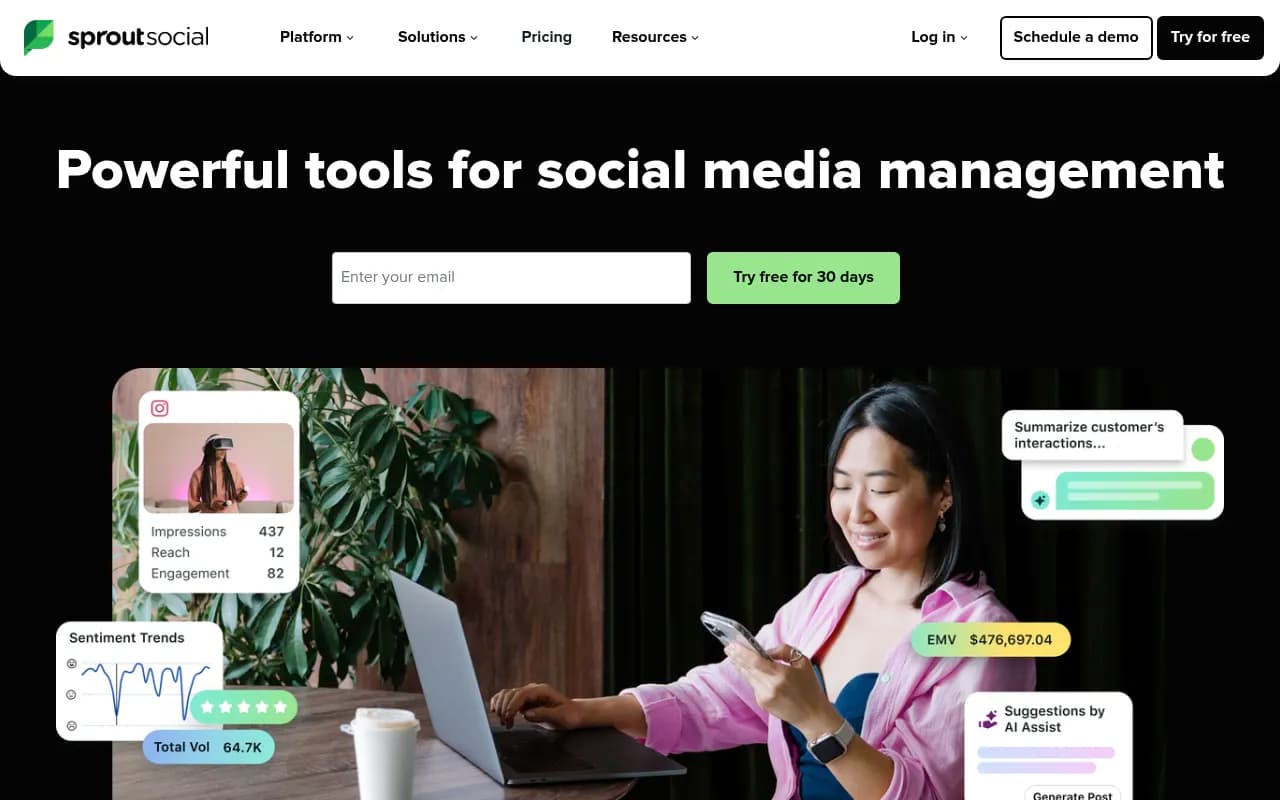
Sprout Social's higher tiers add message tagging, sentiment analysis, and team productivity reporting, handy for a manager trying to spot voice drift across a growing team, not just a solo handoff.
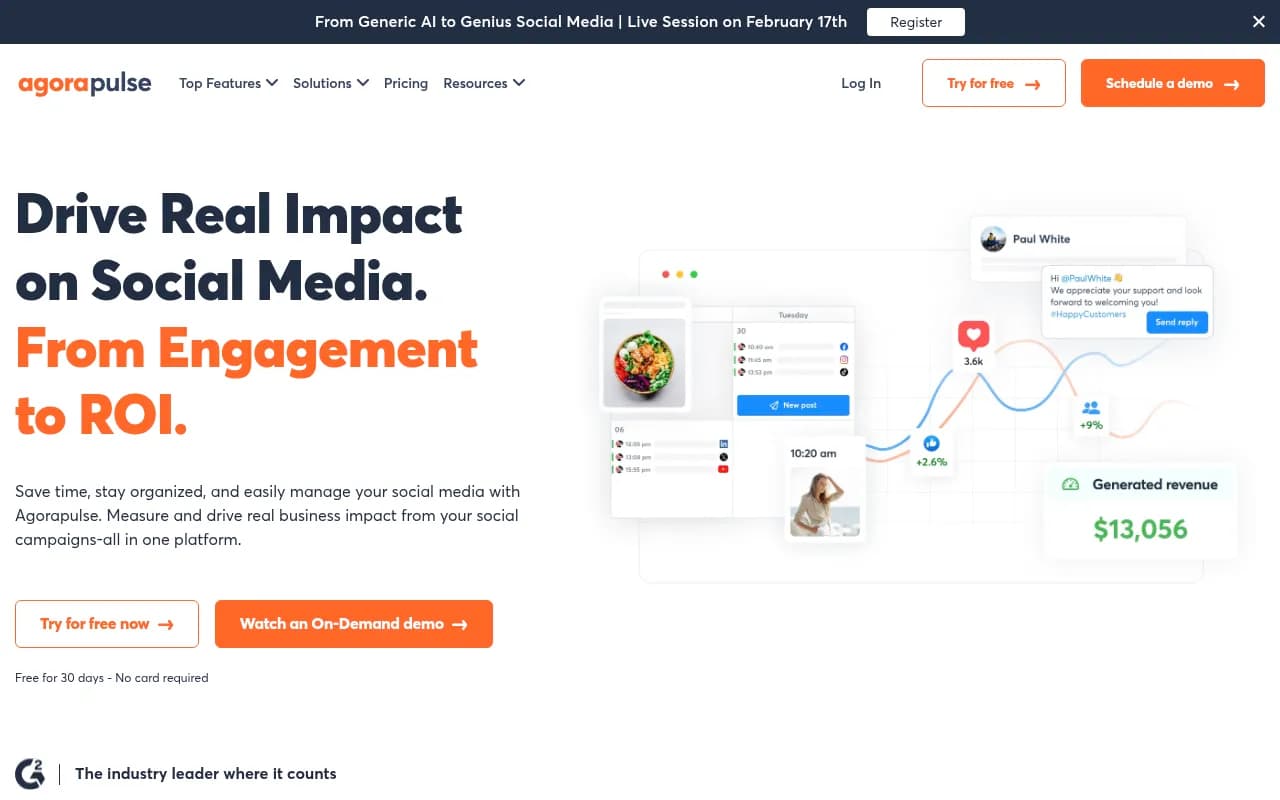
Agorapulse is worth a look for teams that want a unified inbox plus approval queues without jumping straight to Sprout or Hootsuite's higher-priced tiers.
For the brand voice guide itself, a shared workspace like Notion keeps the style guide, past campaign notes, and the onboarding plan in one place that's actually searchable, rather than a PDF nobody can find six months later.
And for brand asset consistency, Canva's Brand Kit feature is worth transferring properly during the handoff so the new hire isn't rebuilding templates from scratch or guessing at the exact brand colors.
Tool comparison for handoff governance
| Tool | Approval workflows | Role-based access | Starting price | Best for |
|---|---|---|---|---|
| Buffer | Team plan only | Yes, Team plan | $10/channel/mo | Small teams wanting cheap governance |
| Hootsuite | Yes, Professional+ | Yes | $99/user/mo | Teams that also want built-in training |
| Sprout Social | Yes, higher tiers | Yes | $79/seat/mo (basic tier lacks approvals) | Larger teams tracking sentiment and voice |
| Agorapulse | Yes | Yes | Varies by plan | Mid-size teams wanting a unified inbox |
If your organization manages social for multiple brands or locations, it's worth browsing a broader directory of options like the one at surferstack.com, since the right fit often depends on how many accounts and approvers you actually need.
A condensed handoff checklist
Pulling it together into something you can actually run through on a Monday morning:
- Confirm account ownership versus publishing roles, and fix any ambiguity before the old hire's last day
- Inventory every platform login, scheduler connection, and connected app
- Document scheduled posts, pending approvals, and any failed jobs, with timezones noted
- Hand over source files, usage rights, contracts, and decision history
- Share the brand voice guide, including "bad" examples, not just adjectives
- Have the new hire pass a hands-on access test before removing old credentials
- Set a 30-60-90 day plan with an approval safety net for the first 60 days
- Schedule a recurring voice audit after the new hire takes full ownership
- Remove old access and rotate shared credentials only after acceptance is verified
None of this is complicated on its own. What causes the damage is skipping steps under time pressure, usually because the old hire already left and nobody wrote any of this down while they were still around to ask. Build the checklist once, store it somewhere everyone can find, and the next handoff takes a fraction of the effort, and a fraction of the brand voice risk.