Key takeaways
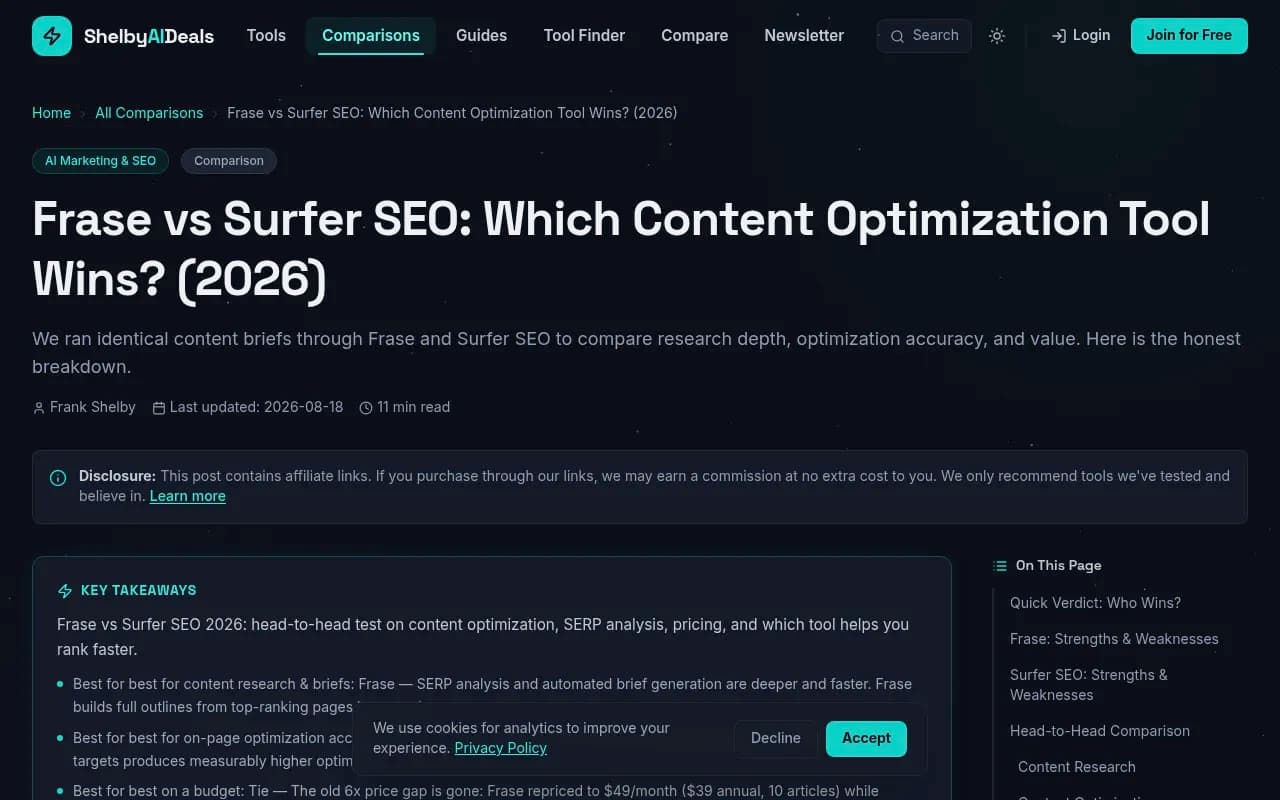
- Frase starts at $39/mo billed yearly and puts SEO and GEO scores in the same editor. Surfer starts at $49/mo (Discovery) and adds prompt tracking from $99/mo (Standard).
- Surfer is still the stronger pick for per-page SERP depth, document volume, and team features like API access. Frase is stronger on research-to-publish workflow and content decay fixes.
- Frase's claim of AI visibility across five engines from the entry tier is only partly true. Starter covers ChatGPT and Google AI. Perplexity arrives on Professional, and Claude and Gemini on Scale.
- Several popular comparisons (Shelby-ai, Velocity) use outdated pricing and say Frase has no AI tracking. Check current pricing pages before trusting them.
- Neither tool has independent evidence that it raises AI citations. Treat both as workflow tools, and pair them with a dedicated AI visibility tracker.
The short version
I went through the vendor pages, the affiliate comparison sites, and the live pricing for both tools. The honest summary is that the old framing, "Surfer for depth, Frase for cheap research," is out of date. Frase repriced. Surfer restructured its plans. Both now say they handle AI search. The differences that matter in 2026 are about what happens after a score appears on screen.
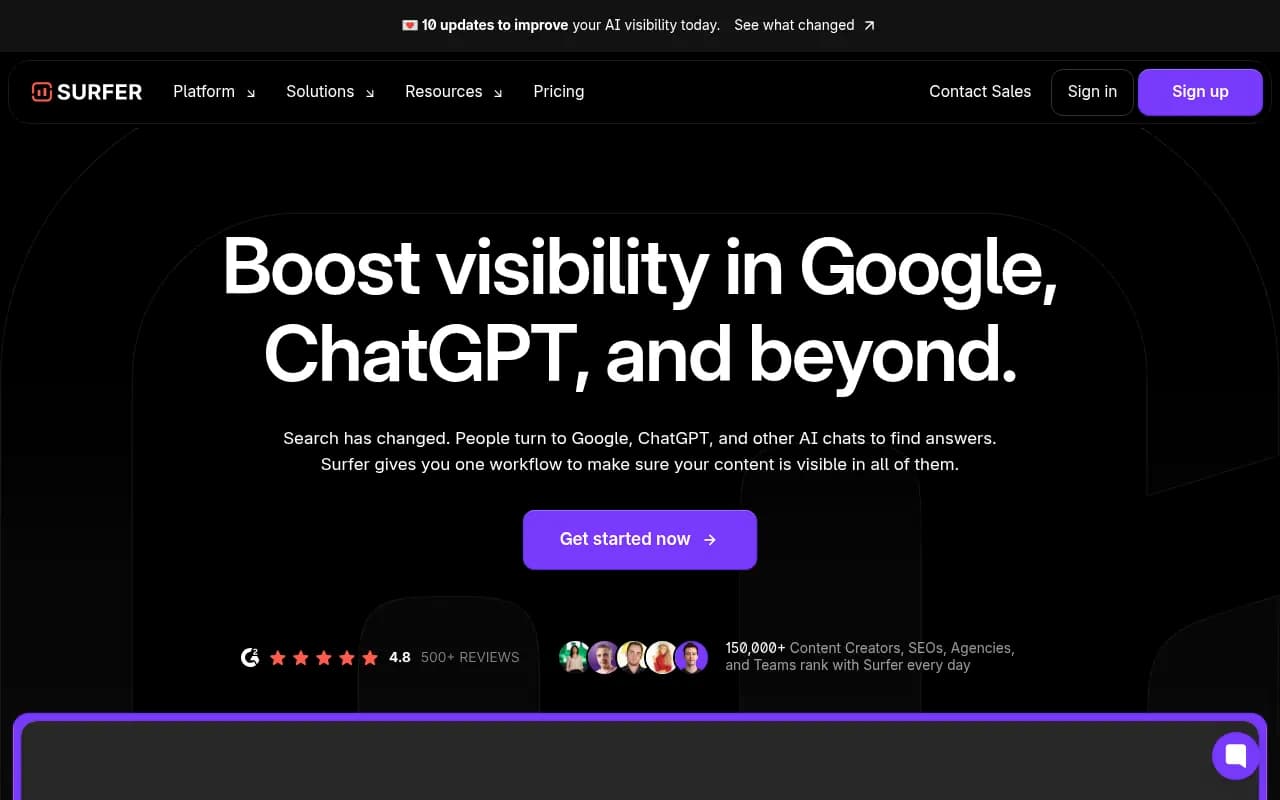
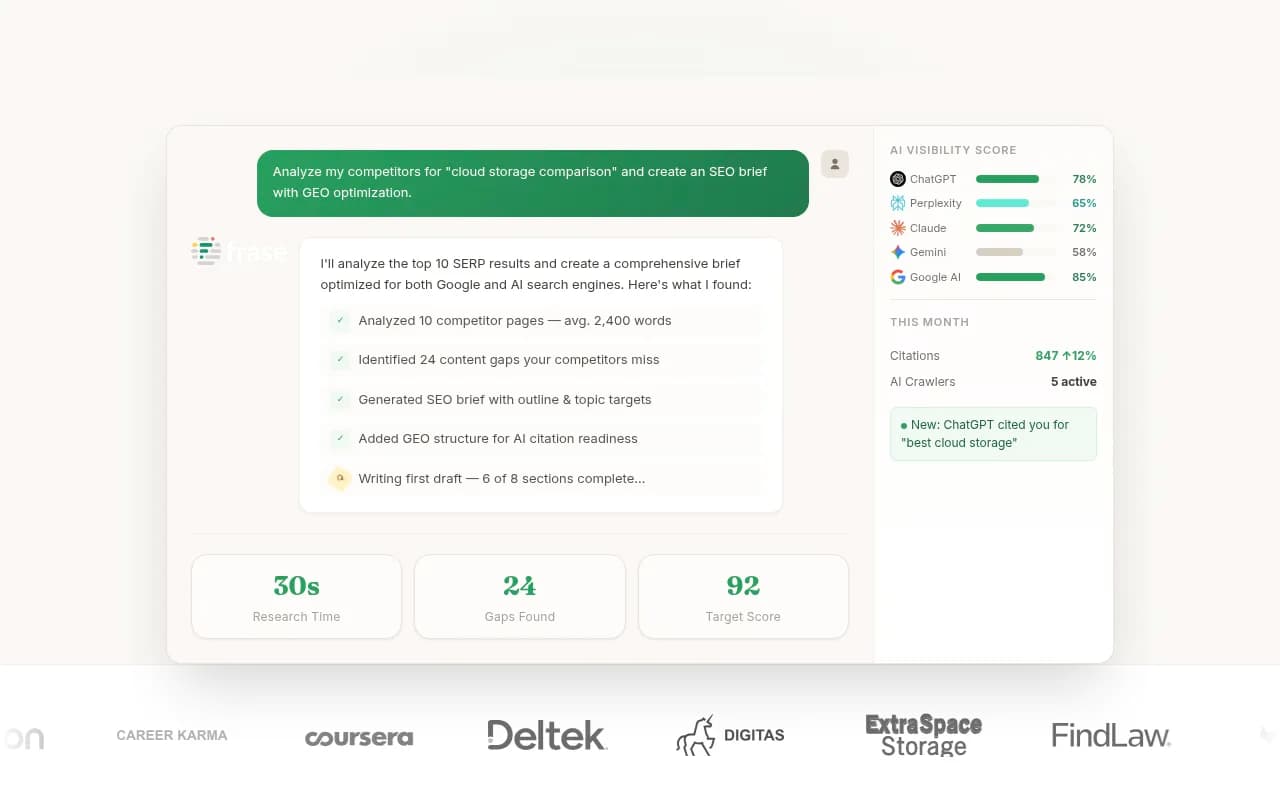
Surfer SEO scores a page against the top results and gives you a number to chase. Frase tries to run the loop: research, draft, publish, watch, and redraft when a page slips.
If you want a verdict: pick Surfer if you optimize lots of pages for competitive Google terms and need volume and team features. Pick Frase if you are a solo operator or small team who wants the research and drafting included and wants AI tracking inside the same product. And if AI search is your main goal, consider a dedicated tracker alongside either one.
Be careful with older comparisons
This topic is full of stale content. A few examples from the research:
- One affiliate comparison still quotes Surfer at $89 (Essential), $129 (Scale) and $219 (Scale AI). Surfer's current plans are Discovery, Standard, Pro and Peace of Mind.
- The same pages quote Frase at $15/month. That plan no longer exists. Frase now starts at $49 monthly or $39 billed yearly.
- Two comparison sites say Frase has no equivalent to Surfer's AI prompt tracking. Frase now includes AI Visibility on every plan. Those pages appear to predate it.
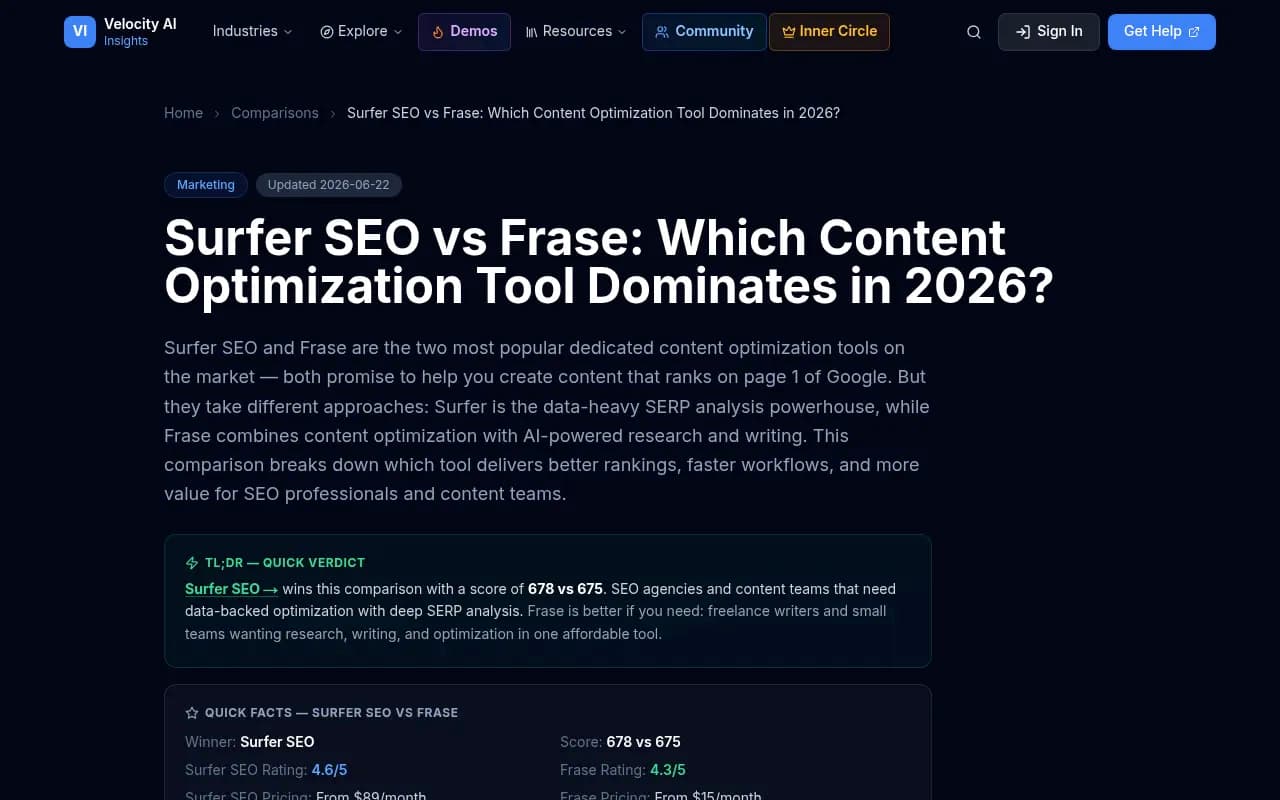
- Velocity AI Insights scores the pair "678 vs 675" and claims Surfer-optimized articles ranked 2-3 positions higher. I could not find a methodology behind either number, and the site links to Surfer through an affiliate URL.
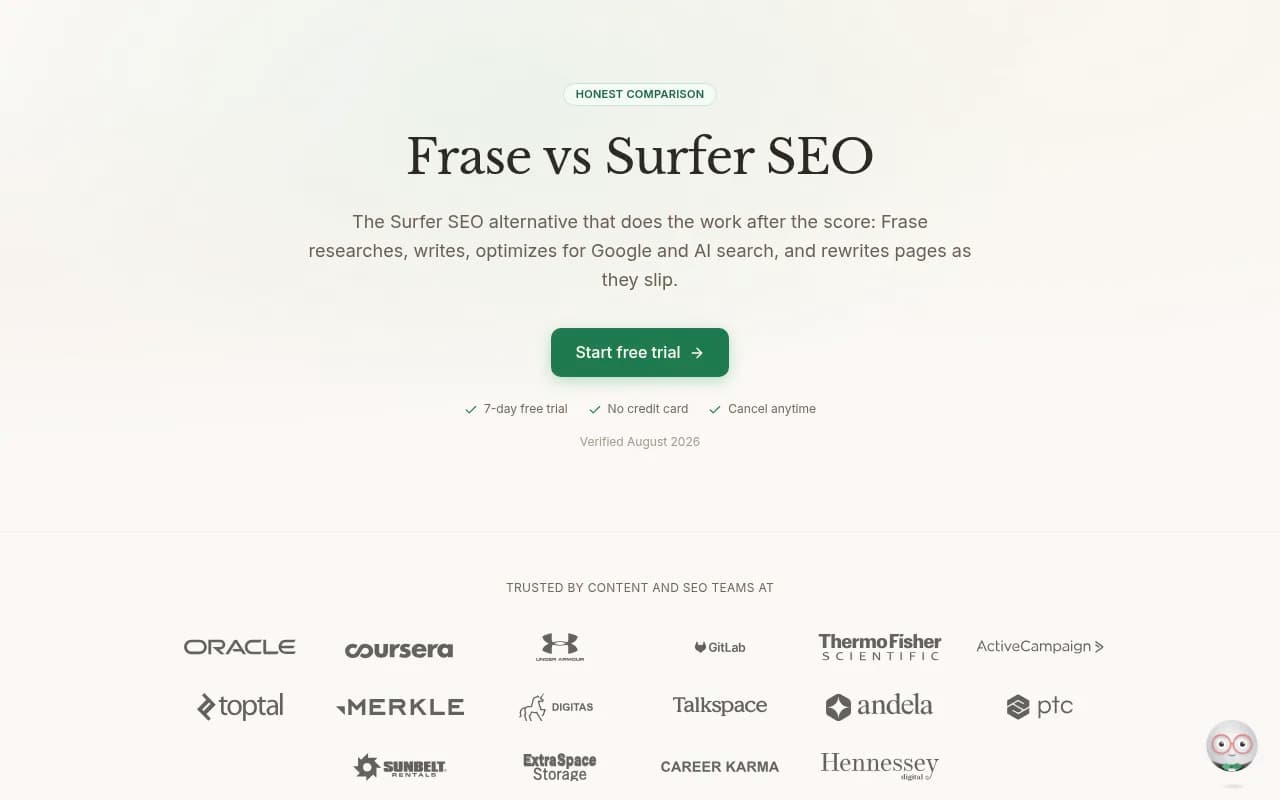
On the other side, Frase's own comparison page is vendor marketing. Its claim that Surfer sells a separate tracker is true (there is an $82/mo standalone plan), but "we do the whole loop" is a sales line, not a test result.
Pricing compared (verified against official pricing pages)
Both vendors change plans often, so confirm on their pricing pages before you buy.
Frase
| Plan | Price (yearly / monthly) | Key limits | AI Visibility engines |
|---|---|---|---|
| Starter | $39 / $49 | 1 seat, 1 site, 10 articles, 50 audit pages, Content Guard on 10 pages | ChatGPT, Google AI |
| Professional | $103 / $129 | 3 seats, 5 sites, 40 articles, 250 audit pages, Content Guard on 75 pages | Adds Perplexity |
| Scale | $239 / $299 | 5 seats, 10 domains, 100 articles, 1,000 audit pages, Content Guard on 300 pages | Adds Claude, Gemini |
| Enterprise | Custom | White-label, SSO/SAML, SLA, custom API | Custom |
All plans include a 7-day free trial with no card. An MCP server and CLI are available on every plan. Frase also sells FraseCMS hosting (free up to 100k page views, $19/mo and $99/mo above that) with structured data and llms.txt included.
Surfer SEO
| Plan | Price (billed yearly) | Documents | AI prompt tracking |
|---|---|---|---|
| Discovery | $49/mo | 120 | None, but includes AI SEO optimization guidelines |
| Standard | $99/mo | 360 | 25 prompts, weekly (ChatGPT only shown) |
| Pro | $182/mo | Higher tier | 50 prompts, daily, across ChatGPT, Perplexity, Google, AI Overviews, Gemini |
| Peace of Mind | $299/mo | Unlimited (fair use likely) | 100 prompts, daily |
| AI Search Analytics (standalone) | $82/mo | n/a | 50 prompts, daily, with Mention Gap and Brand Sentiment |
Surfer also lists Enterprise with SSO and white-label. Pro adds 1-click internal linking, a cannibalization report, MCP and a Contentful integration. Peace of Mind adds API access, Zapier and a dedicated success manager.
What the pricing actually tells you
At the entry level, Frase is $10 cheaper per month on yearly billing and includes AI tracking. Surfer's Discovery plan gives you far more documents (120 versus 10 articles), but no prompt tracking. To track AI prompts in Surfer you need Standard at $99, or the $82 standalone add-on.
That said, Frase does not publish prompt counts on its pricing page, so I can't tell you how its tracking depth compares to Surfer's 25 prompts. Ask before you buy, or test it in the trial.
Content optimization and scoring
This is where Surfer has the stronger reputation, and it is probably still earned. Surfer grades a draft against top-ranking pages in real time, with NLP-driven term suggestions, a SERP analyzer, an audit tool and keyword clustering. Reviewers who use both tend to say the same thing: Surfer gives more granular on-page targets.
Frase's editor gives you a Topic Score that rates content against the top twenty Google results, and now adds a GEO score beside it. The pitch is dual scoring: one number for Google, one for AI answer engines. One reviewer at thedoublethink said Frase cut their content production time noticeably, while Surfer gave them no real time savings on new content.
Two cautions here. First, over-optimizing against any score pushes writers toward formulaic text. Second, I did not find any independent test showing that a higher Surfer score or a higher Frase GEO score actually produces more citations in ChatGPT or Perplexity. Frase's own FAQ is refreshingly blunt that no tool ranks you inside a trial.
Research, writing and the publishing loop
Frase's strongest argument is workflow. It generates briefs from the SERP, writes drafts, and then watches published pages. Content Guard flags pages that are decaying in Google and drafts a fix from the page's own research. You approve it, or let it run automatically on pages hosted in FraseCMS. Frase Answers, a conversational widget for your own site, turns visitor questions without a matching page into new content suggestions.
Surfer works at the document level. You write or generate a draft, optimize it, then track it. Surfer AI can draft articles, and 1-click optimization and internal linking help on the higher plans. What it surfaces is mostly a report. Turning that into a published change is on you or your team.
Which of these is better depends on where your bottleneck is. If research and drafting eat your week, Frase's loop saves time. If you already have writers and need rigor and volume, Surfer's depth wins.
AI search: what each tool really does
| Capability | Frase | Surfer SEO |
|---|---|---|
| GEO score in editor | Yes, alongside SEO score | AI search guidelines in editor |
| AI prompt tracking on cheapest plan | Yes (ChatGPT, Google AI) | No (Discovery has none) |
| Cheapest plan with prompt tracking | Starter, $39/mo yearly | Standard, $99/mo yearly (25 prompts) |
| All five major engines | Scale tier ($239/mo yearly) | Pro tier ($182/mo yearly) |
| Standalone AI tracker | No | $82/mo yearly |
| AI crawler monitoring | Professional and up | Not listed |
| Fix drafted from tracking data | Content Guard | Left to you |
So the verdicts you read online conflict because each is describing a different tier. Frase is cheaper to start with AI tracking. Surfer reaches full multi-engine coverage on a cheaper tier than Frase does. Neither is the clear winner outright.
What neither tool tells you about ChatGPT
There is a bigger problem with using a content optimizer as your AI search strategy. Both tools are built around scoring articles against search results. But ChatGPT does not cite mostly articles.
In Promptwatch Data's report on which content types ChatGPT cites (Sep 28 to Oct 4, 2026), product pages were the most cited type at 22.4% of classified citations. Landing pages followed at 16.8%, listicles at 13.6%, how-tos at 8.7%, comparisons at 5.9% and news at 5.7%. For commercial prompts, product pages, landing pages, listicles and comparisons together made up almost 70% of citations.
Content age matters too. In Promptwatch's content half-life data, landing pages and docs stayed cited the longest, while news lost half its pages within 36 days.
The practical implication: an editor that grades blog posts against the SERP covers only part of what gets cited. Your product pages, landing pages, docs and comparison pages need the same attention, and neither Surfer nor Frase is designed around that mapping. Plan content by prompt intent first, then use the optimizer for the pieces where it helps.
Adding a dedicated AI visibility tracker
If AI citations are the goal, bolting on a tracker built for the job makes sense. Tools like Promptwatch track real ChatGPT, Gemini, Perplexity and AI Overviews interfaces, and show crawler activity and prompt data that an editor plugin can't. Many teams keep Surfer or Frase for drafting and use a tracker like that for measurement.

Other options from the same category include Otterly.AI for budget tracking and Profound for enterprise.


For a wider look, the GEO software directory at bestgeosoftware.com lists more tools in this category.
Other content optimizers worth a look
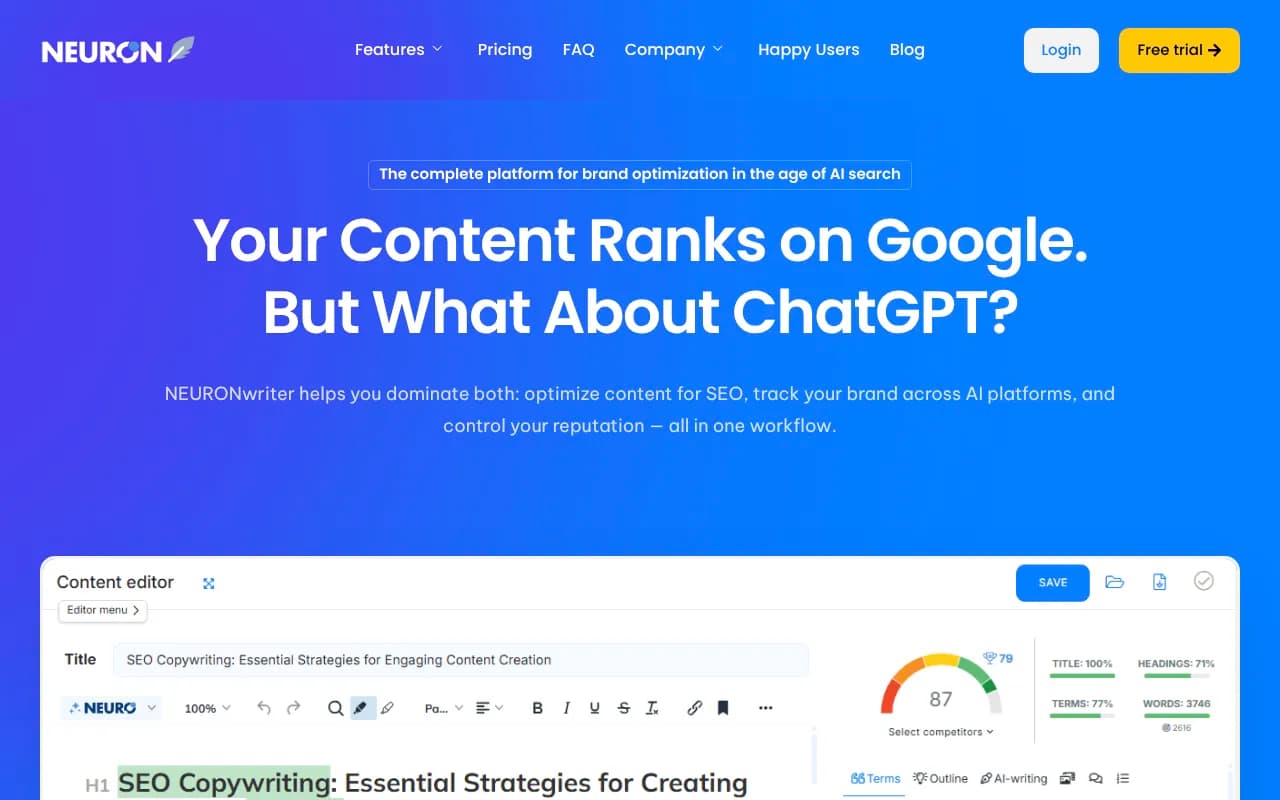
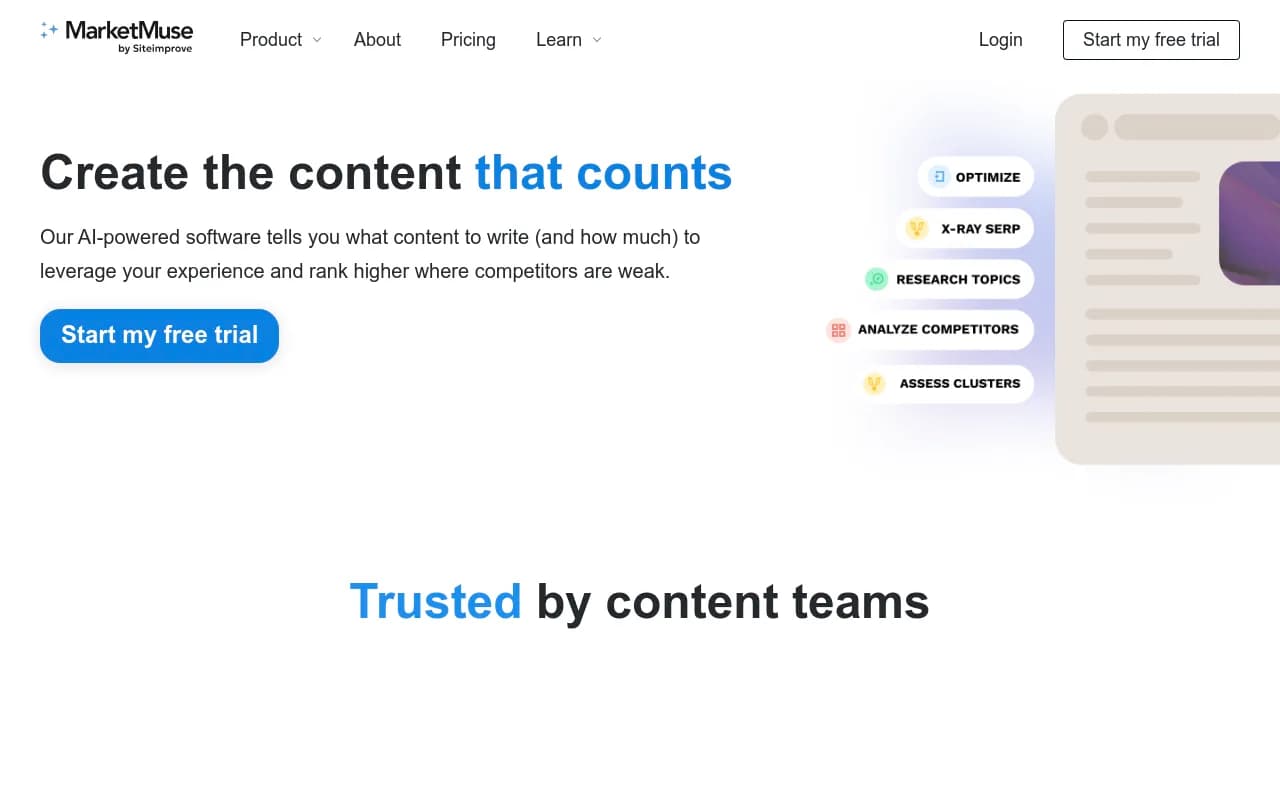
If neither tool fits, the field is crowded. Clearscope is the premium, editorial-quality option, NeuronWriter and Rankability are cheaper alternatives, and MarketMuse is stronger on strategy.

Who should pick which
Choose Frase if
- You are a solo writer, freelancer, or small team and want research, drafting, scoring and AI tracking in one product.
- You want decay detection and drafted fixes without building the workflow yourself.
- You can live with 10 articles per month on Starter, or step up to Professional.
Choose Surfer SEO if
- You optimize a lot of pages. 120 documents on the $49 plan is far more volume than Frase's entry tier.
- You need deeper SERP analysis, cannibalization reports, API access or Contentful integration.
- You run an agency and want a dedicated success manager or a standalone AI tracker with Mention Gap and Brand Sentiment.
Choose neither alone if
- Your goal is mainly AI citations for product, landing and comparison pages. Add a dedicated tracker and plan content by prompt.
How to test them in a week
- Pick one existing page and one new topic.
- Run the new topic through Frase's 7-day trial: brief, draft, score.
- Optimize the existing page in Surfer (use a Discovery plan or trial) and compare the recommendations.
- Write down 10 prompts a buyer would ask, then check manually in ChatGPT and Perplexity whether you appear.
- Re-check after a few weeks. Scores are an input. Citations and traffic are the result.
Bottom line
Surfer is the deeper on-page tool with more volume and team features. Frase is the cheaper way into a combined research, writing and AI tracking workflow, with a decay-fixing loop Surfer doesn't match. Neither has independent proof it raises AI citations, so judge them by workflow fit and budget, then measure results with a tracker. For more tools in the general category, browse surferstack.com.