Key takeaways
- Searchable and Scrunch are both AI brand monitoring tools, but Scrunch leans more toward AEO optimization at volume while Searchable focuses on brand visibility tracking.
- Neither tool offers the full action loop (monitor → find gaps → create content → track results) that more complete platforms provide.
- Scrunch starts at around $199/month; Searchable's pricing is less publicly documented.
- For marketing teams that want to do something with their data, not just look at it, both tools have real limitations compared to platforms that include content generation and gap analysis.
- If you're choosing between these two, your decision comes down to whether you need optimization workflows or straightforward monitoring.
AI brand monitoring went from "nice to have" to genuinely necessary in about 18 months. When someone asks ChatGPT for a software recommendation, or asks Perplexity which agency to hire, the answer they get is shaped by what AI models have indexed, cited, and decided to trust. If your brand isn't in that answer, the conversation happened without you.
That's the gap Searchable and Scrunch are both trying to fill. They track how your brand appears (or doesn't) in AI-generated responses across models like ChatGPT, Claude, Gemini, and Perplexity. They measure share of voice, surface competitor mentions, and help you understand where you stand in the new search landscape.
But "AI brand monitoring" covers a lot of ground, and these two tools approach it differently. This guide breaks down what each one actually does, where they're strong, where they're weak, and which makes more sense depending on what your team actually needs.
What Searchable does
Searchable positions itself as a brand visibility monitoring tool for AI search. The core promise is straightforward: you connect your brand, define the prompts and topics you care about, and it tracks how often you appear in AI-generated answers across the major models.
The interface is built around visibility scores and share-of-voice metrics. You can see how your brand compares to competitors for specific queries, and the tool surfaces which AI models are mentioning you and which aren't. For teams that are just getting started with AI visibility, that's a useful starting point.
Where Searchable is more limited is in what happens after you see the data. The platform is primarily a monitoring dashboard. It tells you where you're visible and where you're not, but it doesn't give you much to work with in terms of fixing the gaps. There's no built-in content generation, no prompt gap analysis that shows you what to write, and no crawler log data to help you understand how AI models are actually reading your site.
That's not necessarily a dealbreaker for every team. If you're at the stage where you just need to understand your baseline and report on it, Searchable can do that job.
What Scrunch does
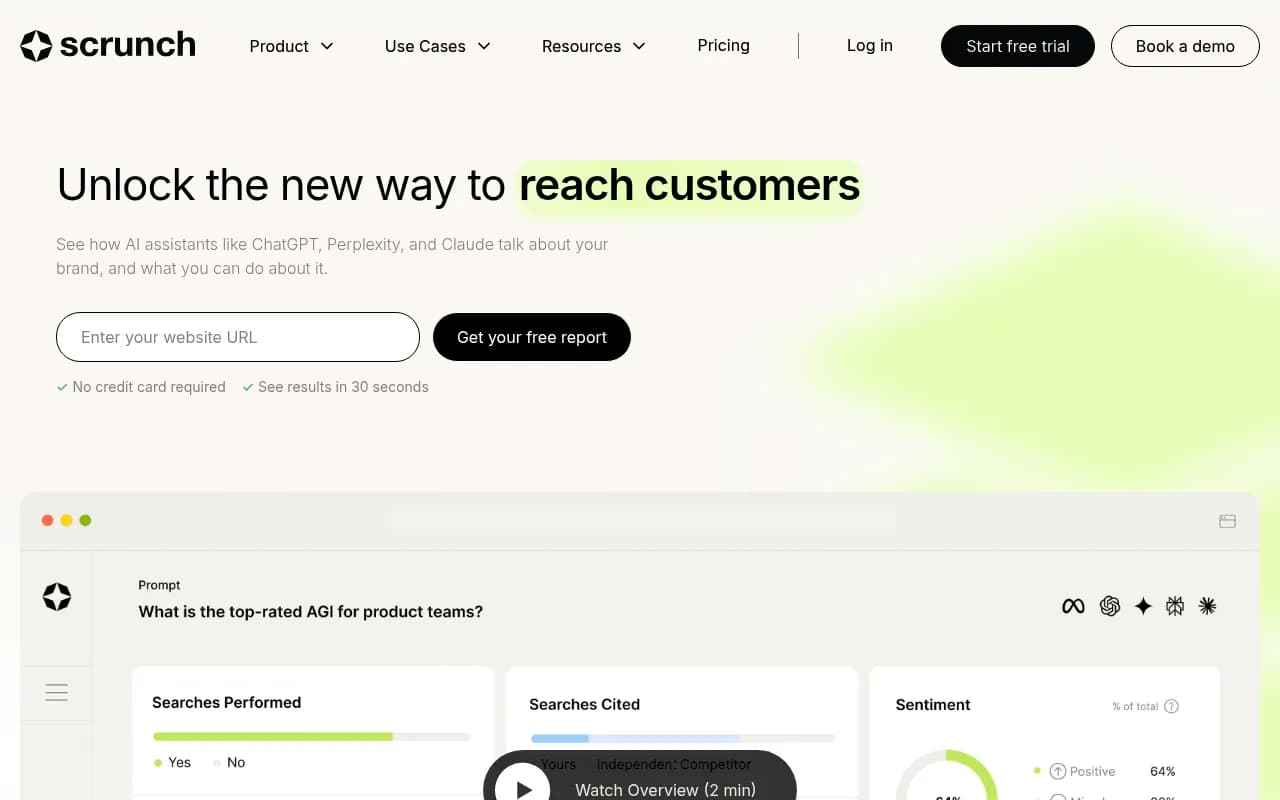
Scrunch (also referred to as Scrunch AI) has a similar core function but leans more into AEO (Answer Engine Optimization) workflows. It tracks brand mentions across AI models, measures visibility, and surfaces competitor data. But it also has some optimization features layered on top of the monitoring.
According to multiple 2026 roundups, Scrunch is particularly suited to teams running AI visibility at volume. It handles prompt tracking at scale reasonably well, and the interface is designed for teams that are actively trying to improve their AI search presence, not just observe it.
Pricing for Scrunch sits at around $199/month, which puts it in the mid-tier range for this category. That's not cheap for a monitoring tool, but it's not enterprise pricing either.
The gaps in Scrunch are similar to Searchable in some ways. Reddit and YouTube tracking, which matter because AI models frequently cite content from those platforms, isn't a core feature. Crawler log analysis, which shows you exactly how AI bots are crawling your site and what errors they're hitting, is also absent. And while Scrunch has some optimization features, it doesn't have a full content generation workflow built around citation data.
Side-by-side comparison
Here's how the two tools stack up across the features that matter most to marketing teams in 2026:
| Feature | Searchable | Scrunch |
|---|---|---|
| AI model coverage | Multiple LLMs | Multiple LLMs |
| Brand mention tracking | Yes | Yes |
| Competitor share-of-voice | Yes | Yes |
| Prompt gap analysis | Limited | Limited |
| Content generation | No | No |
| Crawler log analysis | No | No |
| Reddit/YouTube tracking | No | No |
| ChatGPT Shopping tracking | No | No |
| Traffic attribution | No | No |
| Pricing | Not publicly listed | ~$199/mo |
| Best for | Visibility monitoring | AEO optimization at volume |
The honest read here: both tools are primarily monitoring dashboards. They show you data. What you do with that data is largely up to you.
Where both tools fall short
The bigger issue with both Searchable and Scrunch isn't any single missing feature. It's the gap between seeing a problem and being able to fix it.
Most marketing teams don't just want to know that a competitor is getting cited more often. They want to know which specific content is driving those citations, what topics they're missing, and what to write next. That's where monitoring-only tools hit a wall.
Neither Searchable nor Scrunch gives you:
- A content gap analysis that shows exactly which prompts competitors rank for but you don't
- A writing tool that generates content engineered to get cited by AI models (not just generic SEO content)
- Page-level tracking that shows which of your specific pages are being cited, and by which models
- AI crawler logs that reveal how ChatGPT, Claude, and Perplexity are actually crawling your site
- Traffic attribution that connects AI visibility to actual revenue
This isn't a minor gap. For a marketing team trying to justify budget and show results, "here's your visibility score" is a starting point, not an outcome.
How they compare to the broader market
The AI visibility tool market has matured quickly in 2026. There are now clear tiers: monitoring-only tools, hybrid tools with some optimization features, and full-cycle platforms that take you from gap identification through content creation to results tracking.
Searchable and Scrunch sit in the first or second tier depending on how you use them. They're useful for understanding where you stand, but they're not built to move you forward.
For context, here's how they fit into the wider landscape:
| Tool | Monitoring | Gap analysis | Content generation | Crawler logs | Starting price |
|---|---|---|---|---|---|
| Searchable | Yes | Limited | No | No | Not listed |
| Scrunch | Yes | Limited | No | No | ~$199/mo |
| Otterly.AI | Yes | No | No | No | $29/mo |
| Peec AI | Yes | No | No | No | €89/mo |
| Profound | Yes | Yes | No | No | $499/mo |
| Promptwatch | Yes | Yes | Yes | Yes | $99/mo |
Promptwatch is worth mentioning here because it's one of the few platforms that actually closes the loop. It doesn't just show you where you're invisible. It shows you which prompts competitors are winning that you're not, generates content designed to get cited based on 880M+ analyzed citations, and then tracks whether that content actually starts showing up in AI responses.

That's a meaningfully different product from a monitoring dashboard, and it's worth understanding the distinction before you commit to a tool.
Which tool should you choose?
If you're choosing specifically between Searchable and Scrunch, here's the practical breakdown:
Choose Searchable if you're early in your AI visibility journey, you need a simple dashboard to report on brand mentions, and you don't yet have a workflow for acting on the data. It's a reasonable starting point for teams that just want to understand their baseline.
Choose Scrunch if you're running AI visibility work at some scale, you want more optimization-oriented features layered on top of monitoring, and you're comfortable building your own content workflows outside the tool.
Consider alternatives if you need the full picture: gap analysis, content generation, crawler logs, and traffic attribution in one place. The monitoring-only approach will eventually hit a ceiling when leadership asks what you're doing about the gaps you've found.
A few other tools worth knowing
The AI visibility space has a lot of options right now. A few others that come up frequently in 2026 comparisons:
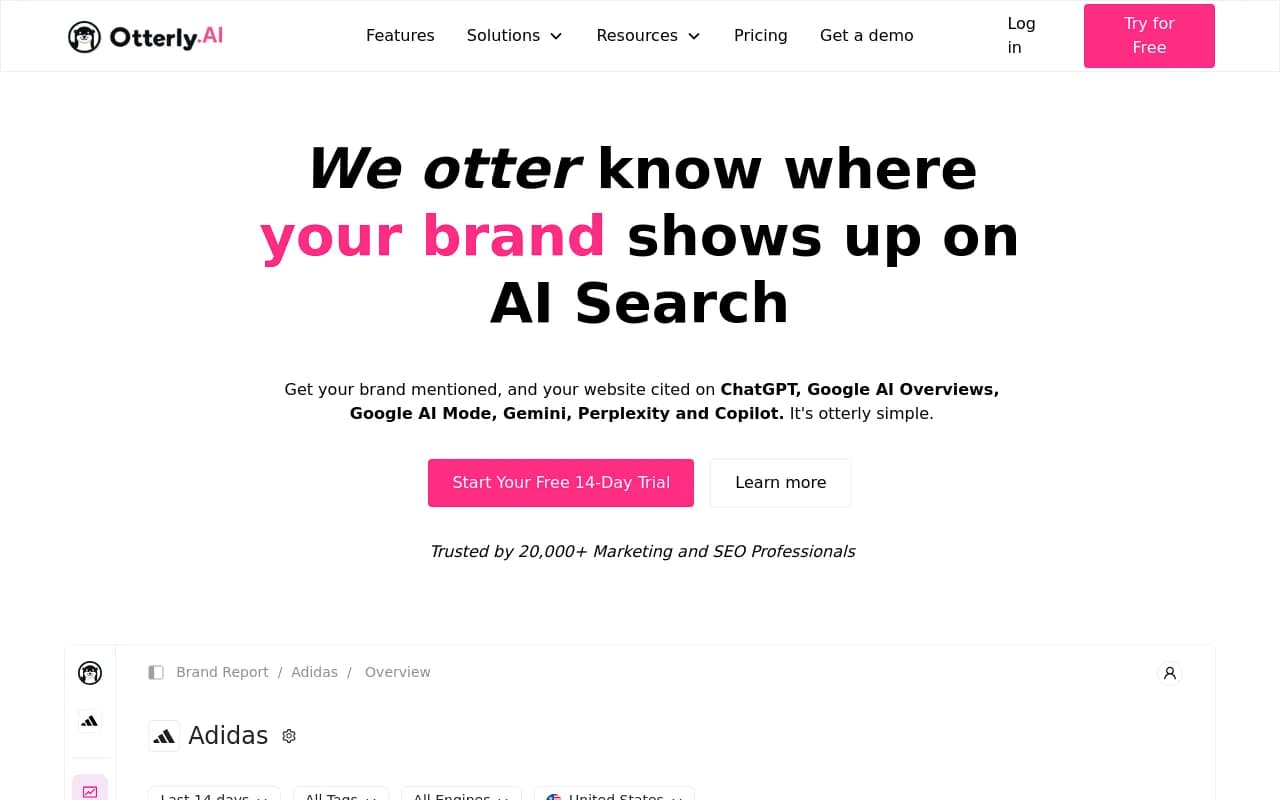
Otterly.AI is the most affordable entry point in the category at $29/month. It's monitoring-only, but it's a low-risk way to start tracking AI visibility before committing to a more expensive platform.
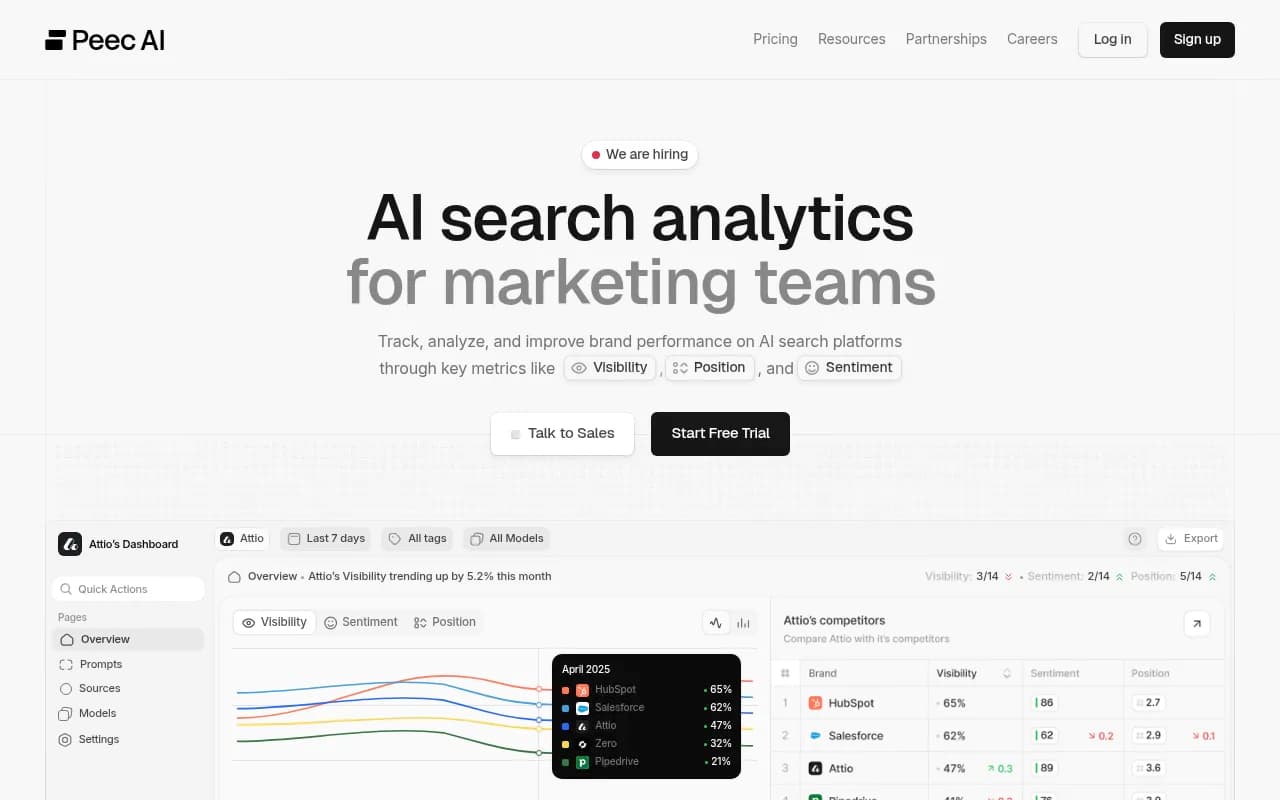
Peec AI is strong for teams with international audiences. Multi-language tracking is genuinely good, and at €89/month it's reasonably priced for what it does.
Profound is the enterprise option. It has strong compliance features and handles large-scale monitoring well, but at $499/month it's priced for teams with real budget and real scale.
Athena HQ focuses on sentiment analysis and is particularly popular with CPG brands. Good for teams where brand perception matters as much as mention frequency.
The real question to ask before you buy
Before picking any AI visibility tool, it's worth being honest about what you actually need right now.
If your team is just getting started with AI search monitoring, any of these tools will give you more visibility than you have today. Start simple, learn what the data tells you, and upgrade when you outgrow it.
If you're past the "what's our baseline" stage and you're trying to actually improve your AI search presence, a monitoring-only tool will frustrate you. You'll see the gaps but have no systematic way to close them. That's when the distinction between a dashboard and an optimization platform starts to matter in practice.
Searchable and Scrunch are both legitimate tools for the monitoring use case. Just be clear-eyed about where monitoring ends and optimization begins, because that's where the real work happens.